


Quick Summary: Website development for contractors involves creating a professional online presence that showcases services, builds credibility, and generates qualified leads. A well-designed contractor website should include project galleries, service descriptions, client testimonials, clear contact forms, and mobile-responsive design optimized for local search. For contractors looking to grow their business, investing in a strategic website with proper SEO implementation typically costs between $2,500 and $10,000 for initial setup, while registering a business typically costs less than $300.
The construction industry runs on reputation and results. But here’s the thing — when a potential client searches for contractors in their area, can they find your business? Or are they finding competitors who invested in a professional website while your crew keeps relying on referrals and yard signs?
The construction market is shifting. Homeowners increasingly start their contractor search online, not through the phonebook or neighborhood recommendations. In most cases, the total cost to register a business will be less than $300, though fees vary depending on state and business structure, making the barrier to establishing a legitimate online presence surprisingly low.
This guide breaks down everything contractors need to know about website development — from core features that convert visitors into clients to SEO strategies that get your site ranking above competitors. Whether you’re a general contractor, remodeler, roofer, or specialized tradesperson, understanding how to build and optimize a contractor website can directly impact your bottom line.
Why Contractor Websites Matter More Than Ever
Look, plenty of contractors have built successful businesses on word-of-mouth alone. That worked for decades. But the market dynamics have changed.
Today’s homeowners research extensively before hiring. They compare multiple contractors, read reviews, examine portfolios, and verify credentials — all before picking up the phone. Without a website, your business doesn’t exist in that research phase.
The shift isn’t just about being visible. A professional website establishes credibility in ways that a Facebook page or directory listing can’t match. When prospects compare a contractor with a detailed, professional website against one without any online presence, the perception gap is massive.
First Impressions Happen Online
Community discussions reveal a consistent pattern: contractors without websites lose jobs to competitors who have them, even when the no-website contractor has better credentials. The psychology is straightforward — prospects question why an established business wouldn’t invest in basic online presence.
Think about it from the homeowner’s perspective. They’re about to spend thousands, sometimes tens of thousands, on a project. They want confidence that the contractor is legitimate, professional, and capable. A polished website signals all three.
Real talk: saying “we’re too busy for a website” sends the wrong message. It suggests the business isn’t planning for growth, can’t adapt to market changes, or doesn’t value customer convenience.
Lead Generation Shifts From Reactive to Proactive
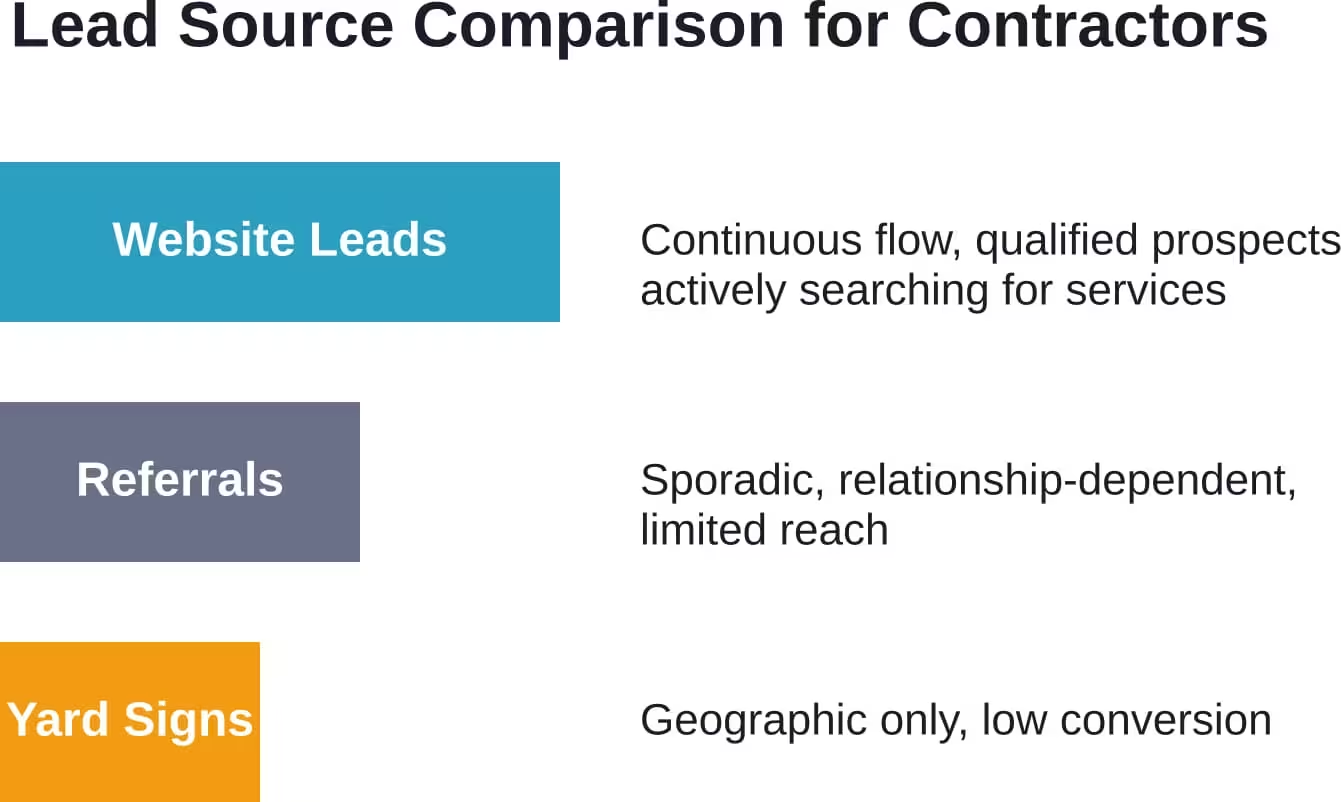
Referrals are great, but they’re reactive. Someone has to remember your company and actively recommend you. Website-based lead generation is proactive — capturing prospects actively searching for services right now.
The math changes significantly. Referrals trickle in when past clients happen to talk to someone who needs work done. Website leads flow continuously from search engines, directory listings, and social media traffic, all pointing back to your central hub.
And here’s what matters: website leads often come from prospects ready to move forward. They’ve already done preliminary research, ruled out competitors, and chose to contact your business specifically. That’s a warmer lead than a cold referral.
Essential Features Every Contractor Website Needs
Not all websites work equally well for contractors. The construction industry has specific requirements that differ from retail, professional services, or e-commerce sites.
Building a contractor website isn’t about flashy animations or complex functionality. It’s about clearly communicating capabilities, building trust, and making it dead simple for prospects to contact the business.
Project Portfolio and Before-After Galleries
This is non-negotiable. Prospects want to see actual work, not stock photos or generic descriptions. A comprehensive project gallery demonstrates capabilities better than any written description.
Organize galleries by project type — kitchen remodels, bathroom renovations, roofing jobs, deck construction, whatever services the business offers. Each category should have 8-12 high-quality images minimum.
Before-and-after comparisons work particularly well for remodeling contractors. They tell a story that resonates with homeowners facing similar projects. The transformation is immediately visible and emotionally compelling.
Technical tip: optimize image file sizes. Large, uncompressed photos slow page load times, which hurts both user experience and search rankings. Compress images to under 200KB each without sacrificing visual quality.
Clear Service Descriptions With Service Area Coverage
Don’t make prospects guess what services the business offers or where it operates. Dedicated service pages for each major offering accomplish two goals: clarity for visitors and SEO value for search engines.
Each service page should explain what’s included, the typical process, timeline expectations, and what makes the company’s approach different. Skip the industry jargon — write for homeowners, not other contractors.
Geographic coverage matters tremendously for local contractor SEO. Explicitly state service areas — cities, counties, or radius from the main office. This helps search engines connect the business with location-based searches.
Client Testimonials and Reviews
Social proof drives decisions in the construction industry. Homeowners understand that contractors can show their best work in portfolios, but reviews from actual clients provide the unfiltered perspective.
Displaying reviews can boost conversion rates by up to 270%, and for higher-priced products, the conversion rate can increase by as much as 380%. The directional truth is clear: reviews matter.
Integrate testimonials throughout the site, not just on a single reviews page. Feature relevant testimonials on each service page, matching the review to the service being described.
Pull in reviews from Google Business Profile, Yelp, or industry-specific platforms. Fresh reviews signal ongoing business activity and consistent quality.
Contact Forms and Call-to-Action Placement
Here’s where many contractor websites fail: they make contacting the business harder than it should be. Every page needs clear, prominent contact options.
Include multiple contact methods — phone number, email, contact form. Different prospects have different preferences. Some want to call immediately. Others prefer filling out a form with project details.
Place the phone number in the header, visible on every page. Make it click-to-call on mobile devices, since the majority of contractor searches now happen on phones.
Contact forms should be simple: name, email, phone, project type, brief description, preferred contact method. Don’t ask for excessive details upfront — that creates friction and reduces conversion rates.
Mobile-Responsive Design
Mobile traffic dominates local contractor searches. Homeowners search while they’re looking at the problem area — standing in their outdated kitchen, staring at the leaking roof, or planning the backyard deck.
Mobile-responsive design isn’t optional anymore. Search engines prioritize mobile-friendly sites in rankings. And from a practical standpoint, sites that don’t work well on phones frustrate users who immediately bounce to competitors.
Test the website on actual mobile devices, not just desktop browser emulators. Check that images load properly, text is readable without zooming, buttons are tappable, and forms work smoothly.
| Website Feature | Primary Purpose | Impact on Lead Generation |
|---|---|---|
| Project Portfolio | Demonstrate capabilities and quality | High — builds confidence and differentiates from competitors |
| Service Descriptions | Explain offerings and set expectations | High — matches prospects to appropriate services |
| Client Reviews | Provide social proof and credibility | Very High — directly influences hiring decisions |
| Contact Forms | Capture lead information efficiently | Critical — primary conversion mechanism |
| Mobile Design | Ensure accessibility on all devices | Critical — majority of searches happen on mobile |
| Service Area Maps | Clarify geographic coverage | Medium — qualifies prospects by location |
Choosing the Right Website Development Approach
Contractors face three main paths for getting a website built: do-it-yourself website builders, hiring a specialized contractor marketing agency, or working with a general web developer.
Each approach has tradeoffs involving cost, time investment, customization, and ongoing maintenance. The right choice depends on budget, technical comfort level, and how central the website is to business growth strategy.
DIY Website Builders
Platforms like Wix, Squarespace, and GoDaddy offer templates specifically designed for contractors and construction businesses. They’re affordable, usually ranging from $15-40 per month, and require no coding knowledge.
The appeal is obvious: complete control, low cost, and the ability to make changes anytime without waiting for a developer. For contractors comfortable with technology, DIY builders can produce decent results.
But there’s a catch. Building an effective contractor website takes more than filling in a template. It requires understanding user experience, conversion optimization, local SEO, and content strategy. Most contractors underestimate this learning curve.
The risk is ending up with a website that technically exists but doesn’t generate leads. It looks okay, covers the basics, but doesn’t stand out from competitors or rank in search results. That’s the “we built our own website” trap — pride in completing the task, disappointment in the business results.
Contractor-Specialized Marketing Agencies
Agencies that focus exclusively on contractor marketing understand the industry’s specific needs. They know what converts homeowners, which features contractors need, and how to position construction services online.
These specialists handle everything — design, content creation, photography integration, SEO implementation, and ongoing optimization. The website becomes part of a broader marketing strategy including paid ads, review generation, and content marketing.
The investment is substantially higher than DIY, typically ranging from $2,500-10,000 for initial setup, plus monthly management fees. But for contractors serious about growth, the ROI can justify the expense.
According to the Associated General Contractors of America, marketing and business development take months, sometimes years, to turn into something big, requiring consistent daily implementation.
General Web Developers
Local web developers or freelancers offer a middle ground — professional design and development without the premium pricing of specialized agencies. Costs typically fall between $1,500-5,000 depending on complexity.
The challenge is that general developers may not understand contractor-specific requirements. They’ll build a functional, attractive website, but might miss crucial elements like service area optimization, project type categorization, or lead qualification features.
If choosing this route, contractors need to provide clear direction about what features matter, which competitors to study, and how the website fits into overall business development strategy. The developer handles technical execution, but the contractor drives strategic decisions.
Get a Website That Actually Brings You Jobs
Most contractor websites look fine but don’t clearly show what you do or help turn visits into real inquiries. Lengreo builds websites as part of a broader marketing and lead generation approach. Instead of treating development as a separate task, they connect it with strategy, SEO, and demand generation. Their process covers everything from research and prototyping to development, launch, and post-launch support. They mainly work with JavaScript and WordPress to keep websites flexible, scalable, and easy to maintain.
Turn Your Website Into a Working Part of Your Lead Generation
Lengreo focuses on building websites that support how your business operates and attracts clients:
- Development aligned with SEO and marketing efforts
- Flexible setup for future updates and integrations
- Full process from discovery to launch with post-launch support
If you need a website that actually supports your lead generation, talk to Lengreo and start building it the right way.
SEO Strategy for Contractor Websites
Building the website is step one. Getting it found in search results is where the real work begins.
Search engine optimization for contractors focuses on local visibility. The goal isn’t ranking nationally for broad terms like “contractor” — that’s impossible and pointless. The goal is dominating local search results when nearby homeowners search for specific services.
Keyword Research for Construction Services
Effective contractor SEO starts with understanding how prospects search. They don’t use industry terminology. They describe problems or project types in everyday language.
A homeowner doesn’t search for “residential exterior envelope restoration.” They search for “fix rotted wood siding” or “replace old siding” or “siding contractor near me.”
According to academic guidance on SEO implementation from institutions like the University of Illinois, keyword research should identify different search intents. Informational keywords indicate early-stage research. Transactional keywords signal readiness to hire. Both matter, but serve different purposes.
For contractors, transactional local keywords drive the most valuable traffic: “[service] + [location]” combinations like “bathroom remodeler Denver” or “roofing contractor Austin.” These searches come from prospects ready to contact contractors.
Build service pages targeting these specific keyword patterns. One page per major service-location combination for the primary markets served.
On-Page SEO Fundamentals
On-page optimization ensures search engines understand what each page is about and why it’s relevant for specific searches. This isn’t complicated, but it requires attention to detail.
Every service page needs a clear, keyword-focused title tag. Format: “[Service] in [Location] | [Company Name]” — for example, “Kitchen Remodeling in Portland | Smith Construction.”
Meta descriptions don’t directly impact rankings, but they influence click-through rates from search results. Write compelling descriptions that include the target keyword and a clear value proposition. Keep them under 160 characters.
Header tags structure content hierarchically. Use H1 for the main page title, H2 for major sections, H3 for subsections. Include target keywords naturally in headers, particularly H1 and H2 tags.
Content length matters for competitive keywords. Thin pages with 200 words rarely rank well. Aim for 800-1,500 words on primary service pages, providing genuinely useful information about the service, process, pricing expectations, and why the company is qualified.
Technical SEO Considerations
Technical SEO covers the behind-the-scenes factors that affect how search engines crawl, index, and rank the website. Based on authoritative sources like web.dev, critical technical elements include page load speed, mobile optimization, and proper resource loading.
Page speed directly impacts both search rankings and user experience. Slow sites frustrate visitors and get deprioritized in search results. Optimize images, minimize unnecessary scripts, and leverage browser caching.
Site structure should be simple and logical. Main navigation should include all key service pages. Internal linking between related services helps search engines understand site architecture and distributes ranking power across pages.
Schema markup provides search engines with structured data about the business — address, phone number, hours, service areas, review ratings. Implementing local business schema can enhance search result listings with rich snippets.
Local SEO Tactics
Local SEO is where contractors can compete effectively, even against larger regional or national companies. Proximity and relevance matter more than domain authority for local searches.
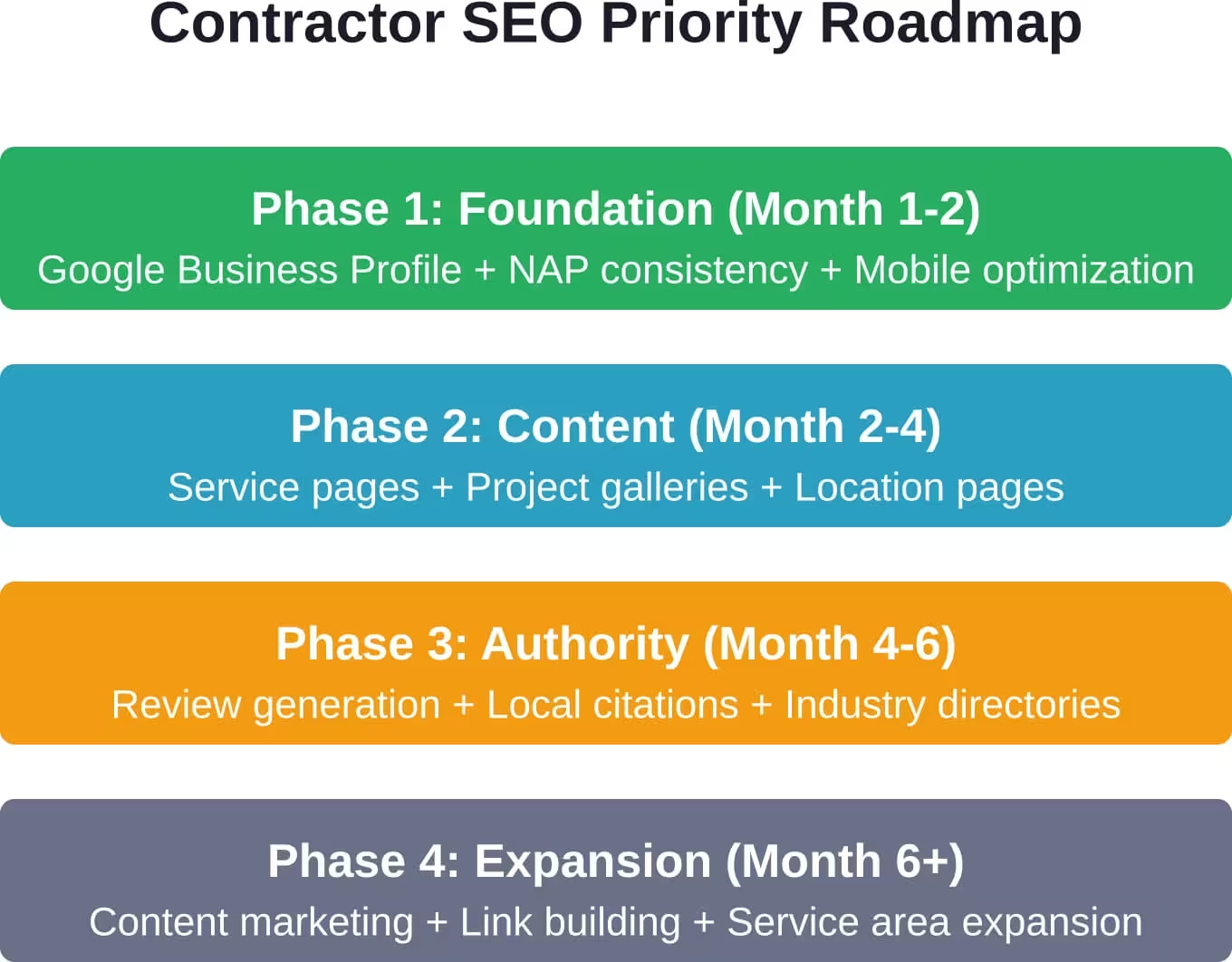
Google Business Profile optimization is foundational. Claim the listing, complete every section, choose accurate categories, upload photos regularly, and actively collect reviews. This profile often appears above website listings in local search results.
NAP consistency — Name, Address, Phone number — must be identical across the website, Google Business Profile, directory listings, and social media. Inconsistencies confuse search engines and dilute local ranking signals.
Local citations from directories like Yelp, Angie’s List, HomeAdvisor, and industry-specific platforms reinforce local presence. The quantity and quality of citations signal business legitimacy and geographic relevance to search engines.
Location-specific content strengthens local rankings. Create dedicated pages for each major service area, including city-specific information beyond just changing the location name in a template. Mention local landmarks, neighborhoods served, and area-specific considerations for the services provided.
Content Marketing for Contractors
Content marketing extends beyond the basic service pages. Strategic content attracts prospects earlier in the research phase, establishes expertise, and provides SEO value through fresh, keyword-rich material.
But wait — contractors are busy running jobs, managing crews, and estimating projects. Who has time to write blog posts?
The short answer? Content marketing for contractors doesn’t require daily blog posts. It requires strategic, high-quality content published consistently but infrequently — once or twice per month makes a substantial difference.
Content Topics That Generate Traffic
Focus content on questions prospects actually ask during the sales process. These topics have proven search demand and help position the business as an expert resource:
- How-to guides work well: “How to Choose a Kitchen Countertop Material,” “What to Ask Before Hiring a Roofing Contractor,” “How Much Does [Project Type] Cost in [Location]?”
- Project showcases tell stories: “Historic Home Renovation in [Neighborhood],” “Complete Kitchen Remodel: Planning to Completion,” “Solving [Common Problem] With [Solution].”
- Seasonal content captures timely searches: “Preparing Your Roof for Winter,” “Spring Deck Maintenance Checklist,” “Summer Home Improvement Projects.”
Video Content for Construction Projects
Video works exceptionally well for contractors. Projects are inherently visual, and video captures the scope and quality in ways that photos can’t match.
Simple project walkthroughs filmed on a smartphone generate engagement. Show the jobsite, explain what’s being done, discuss challenges encountered, and highlight the craftsmanship. No fancy editing required — authentic, informative content outperforms polished but generic videos.
Time-lapse videos of complete projects compress weeks of work into mesmerizing two-minute clips. These perform well on social media and embedded on website project pages.
Client testimonials on video carry more weight than written reviews. Seeing and hearing a satisfied homeowner describe their experience creates powerful social proof.
Integrating Paid Advertising With Website Strategy
Organic SEO takes time. Results build gradually over 3-6 months as search engines index content and rankings improve. Paid advertising generates immediate visibility while organic efforts mature.
The relationship between paid ads and website quality matters tremendously. Running ads to a poorly designed, slow, or unclear website wastes budget. The website must be ready to convert traffic before investing in paid promotion.
Google Local Service Ads for Contractors
Google Local Service Ads appear at the very top of search results, above regular paid ads and organic listings. They’re designed specifically for local service businesses, including contractors.
These ads operate on a pay-per-lead model rather than pay-per-click. The business only pays when a prospect contacts them through the ad — either calling or messaging directly.
Google screens businesses before allowing Local Service Ads, including background checks and license verification. The “Google Guaranteed” badge provides credibility that enhances conversion rates.
For contractors in competitive markets, Local Service Ads can deliver qualified leads consistently, though costs per lead vary significantly by location and service type.
Facebook and Instagram Advertising
Social media advertising works differently than search ads. Instead of capturing active search intent, social ads build awareness and reach prospects who aren’t currently searching but match the target demographic.
For contractors, highly visual ads showcasing before-after transformations, project galleries, or video walkthroughs perform best. The creative matters more on social platforms than in search ads.
Geographic and demographic targeting allows precise audience definition — homeowners within the service area, specific age ranges, income levels, and interests related to home improvement.
Social advertising complements search marketing by building brand recognition. When prospects eventually need contractor services and start searching, they’re more likely to recognize and click on businesses they’ve seen before.
Measuring Website Performance and ROI
Tracking website performance answers critical questions: Is the website generating leads? Which traffic sources produce the best prospects? Where are visitors dropping off? What content resonates?
Without measurement, there’s no way to know what’s working, what needs improvement, or whether the investment in website development is paying off.
Key Metrics for Contractor Websites
Focus on metrics that directly relate to business outcomes, not vanity metrics like total page views or social media followers.
Lead volume tracks how many contact form submissions, phone calls, and quote requests the website generates monthly. This is the primary success metric — everything else supports this number.
Conversion rate measures the percentage of visitors who become leads. Industry benchmarks for contractor websites typically range from 2-5%. Lower conversion rates indicate problems with website messaging, design, or trust signals. Higher rates suggest strong alignment between traffic and offer.
Traffic sources reveal where visitors come from — organic search, paid ads, social media, direct traffic, referrals. Understanding source quality helps allocate marketing budgets effectively.
Service page performance shows which offerings generate the most interest. This data informs both marketing focus and business development priorities.
Setting Up Tracking Properly
Google Analytics provides comprehensive website tracking at no cost. Install it correctly from day one, tracking key events like form submissions, phone number clicks, and thank-you page views.
Call tracking numbers route phone calls through a tracking service that records which marketing source prompted each call. This closes the loop on phone leads, which often represent 50-70% of contractor inquiries.
Goal tracking in Analytics marks specific actions as conversions — contact form submission, phone number click, quote request page view. Configure these goals to measure conversion rates accurately.
| Metric | What It Measures | Healthy Range | Action If Low |
|---|---|---|---|
| Monthly Leads | Total contact attempts from website | 15-50+ depending on market size | Increase traffic or improve conversion rate |
| Conversion Rate | Percentage of visitors who convert | 2-5% | Optimize calls-to-action, trust signals, messaging |
| Organic Traffic | Visitors from search engines | Growing month-over-month | Improve SEO, create more content |
| Bounce Rate | Visitors who leave immediately | 40-60% | Improve page load speed, relevance, mobile experience |
| Average Session Duration | Time visitors spend on site | 1.5-3 minutes | Improve content quality, navigation, engagement |
Common Website Development Mistakes Contractors Make
Learning from others’ mistakes saves time and money. These pitfalls appear repeatedly in contractor websites that underperform.
Using Stock Photos Instead of Real Project Images
Generic stock photos of construction workers and home interiors scream “we don’t have actual work to show.” Prospects immediately notice and question the company’s experience.
Even mediocre photos of actual projects outperform professional stock imagery. Real work demonstrates actual capabilities. Stock photos demonstrate nothing except budget for stock photos.
The fix is straightforward: photograph every project. Invest in a decent smartphone if necessary, learn basic photography techniques, and build a comprehensive library of real work.
Vague or Missing Service Area Information
“Serving the Greater Metro Area” tells prospects nothing useful. Which cities specifically? How far from the main office? Are some areas served with limitations?
Clarity prevents wasted leads from prospects outside the service area and helps SEO by giving search engines specific geographic relevance signals.
List cities served explicitly. Include a service area map if coverage is complex. For businesses serving multiple regions, create location-specific landing pages.
No Clear Differentiation From Competitors
Too many contractor websites say essentially the same things: “Quality work, competitive pricing, customer satisfaction guaranteed.” Every competitor makes identical claims.
What actually sets the business apart? Specialization in specific project types? Proprietary processes? Unusual warranties? Faster turnarounds? Better communication?
Identify genuine differentiators and feature them prominently. If there aren’t any, that’s a business strategy problem before it’s a website problem.
Neglecting Mobile Experience
Contractors often approve website designs on desktop computers, then never check mobile performance. Meanwhile, 60-70% of visitors use phones.
Mobile problems include: tiny unreadable text, buttons too small to tap accurately, forms that require excessive typing, images that load slowly or not at all, horizontal scrolling, and pop-ups that can’t be closed.
Test thoroughly on actual mobile devices — both iOS and Android, different screen sizes. Fix issues before launch, not after prospects have already bounced.
Outdated or Abandoned Content
A blog with the last post from 2022 suggests the business might also be abandoned. Outdated copyright dates, old promotional offers, or references to past seasons create subtle credibility questions.
Either commit to maintaining content regularly or don’t include date stamps that highlight when updates stopped. Timeless service pages work better than abandoned blogs.
Website Maintenance and Long-Term Strategy
Launch day is the beginning, not the end. Websites require ongoing maintenance, updates, and optimization to remain effective.
Regular Content Updates
Search engines favor websites that publish fresh content regularly. It signals active businesses rather than static brochures.
Monthly blog posts, quarterly project showcases, seasonal checklists, or annual service updates provide ongoing content refresh. Consistency matters more than volume.
Update service pages when offerings change, pricing shifts, or new capabilities are added. Keep project galleries current, replacing older work with recent projects that showcase evolving skills.
Technical Maintenance Tasks
Software updates, security patches, and plugin updates (for WordPress sites) prevent vulnerabilities and ensure continued functionality. Neglecting technical maintenance eventually leads to hacked sites, broken features, or complete crashes.
Schedule monthly technical reviews: check for broken links, test contact forms, verify backup systems, review security logs, and update any software components.
Monitor site speed quarterly. As content grows and features are added, performance can degrade without obvious symptoms. Regular speed audits identify issues before they impact rankings or user experience.
Conversion Rate Optimization
Initial websites rarely perform optimally. Continuous testing and refinement improve conversion rates over time.
Test different call-to-action wording, button colors, form field requirements, page layouts, and content arrangements. Even small improvements in conversion rate compound significantly over months.
Analyze user behavior through heatmaps and session recordings. These tools show where visitors click, how far they scroll, and where they abandon the site. Insights guide optimization priorities.
Leveraging the Website for Business Growth
The website shouldn’t exist in isolation from overall business operations. Integration with sales processes, client communication, and business development amplifies effectiveness.
Integrating With CRM Systems
Customer Relationship Management systems track leads from initial contact through project completion. Integrating website forms with CRM ensures no leads fall through cracks.
Automated lead routing sends contact form submissions immediately to the appropriate person — estimator, project manager, or owner depending on project type and size.
Lead scoring prioritizes follow-up based on project indicators. A complete contact form with detailed project description and timeline merits faster response than a minimal inquiry.
Email Marketing Integration
Website visitors who aren’t ready to hire immediately can be nurtured through email sequences. Offer valuable resources — remodeling guides, material selection checklists, budget planning tools — in exchange for email addresses.
Automated email sequences maintain contact with prospects over weeks or months as they move through the planning process. When they’re ready to hire, the business remains top-of-mind.
Past client email lists support review generation, referral requests, and seasonal maintenance reminders. Website integration makes email list building automatic rather than manual.
Using Website Data to Inform Business Strategy
Website analytics reveal which services generate the most interest, which geographic areas produce the most leads, and which marketing messages resonate.
Service pages with high traffic but low conversion rates indicate interest but unclear value proposition. Either the service description needs improvement or pricing expectations are misaligned.
Traffic patterns by season help with crew planning and marketing budget allocation. If kitchen remodel inquiries spike in January-February, intensify marketing in November-December when homeowners start planning.
Search query data shows exactly what terms prospects use when finding the website. This language should inform service descriptions, blog topics, and advertising copy.
Future-Proofing Contractor Websites
Digital marketing evolves continuously. Search algorithms change, new platforms emerge, and user expectations shift. Building flexibility into the website strategy prevents obsolescence.
Voice Search Optimization
Voice assistants increasingly mediate search, particularly on mobile devices. Voice queries differ from typed searches — they’re conversational, longer, and often phrased as questions.
Optimizing for voice search means including natural language question-and-answer content. FAQ sections address this directly, covering questions prospects actually ask: “Who are the best kitchen remodelers near me?” or “How much does a bathroom renovation cost?”
Artificial Intelligence and Chatbots
AI-powered chatbots can handle initial prospect conversations, answer basic questions, and qualify leads before human follow-up. Implementation remains optional as of 2026, but adoption is growing.
Chatbots work best for frequently asked questions about services, service areas, availability, and initial project scoping. Complex discussions still require human expertise.
Video Content Dominance
Video consumption continues growing across all demographics. Contractor websites that integrate video throughout — project showcases, service explanations, client testimonials, how-to content — align with this trend.
Platform agnosticism matters: create video content that works across the website, YouTube, Facebook, Instagram, and emerging platforms. Don’t lock content into a single distribution channel.
Conclusion: Building Your Contractor Website Strategy
Website development for contractors is no longer optional for businesses serious about growth. The homeowner journey now starts online, and contractors without professional web presence lose opportunities before prospects even know they exist.
Effective contractor websites combine strong visual portfolios, clear service descriptions, prominent trust signals, mobile-optimized design, and strategic SEO implementation. They serve as central hubs for all marketing activities while generating qualified leads continuously.
The investment — whether time for DIY development or budget for professional services — pays dividends through increased visibility, credibility, and lead flow. According to the Associated General Contractors of America, marketing and business development take months, sometimes years, to turn into something big, requiring consistent daily implementation.
Start with the fundamentals: register the business properly (in most cases, the total cost will be less than $300 depending on state and business structure), secure a professional domain name, and build a mobile-responsive site with core features contractors need. Implement local SEO basics, establish Google Business Profile, and create processes for generating client reviews.
Then commit to ongoing optimization. Add project photos regularly, publish useful content monthly, monitor performance metrics, and refine conversion elements based on actual user behavior. This consistent effort compounds over time, building a powerful marketing asset that works around the clock.
The contractors winning more profitable jobs aren’t necessarily the most skilled at their trade — they’re the ones prospects find first, trust immediately, and contact confidently. A strategic website makes that happen.
Ready to build a contractor website that generates qualified leads? Start by auditing competitor websites in your market, identifying what works and where gaps exist. Then choose a development approach that matches your budget, technical comfort level, and timeline. Whether DIY, professional developer, or specialized agency, the critical factor is getting started now rather than waiting for the “perfect” time that never comes.