


Quick Summary: Website development for coaches requires a strategic approach that combines professional design, client management tools, and marketing functionality. The right platform and structure can transform a coaching website from a simple online presence into a powerful client acquisition and business management system. Success depends on choosing the appropriate technology stack, implementing conversion-focused design elements, and integrating essential features like booking systems and testimonials.
The coaching industry has evolved dramatically over the past few years. What once required expensive custom development can now be accomplished through specialized platforms designed specifically for coaching businesses.
But here’s the thing—not all website solutions deliver the same results. The difference between a site that converts visitors into paying clients and one that sits idle comes down to strategic development choices.
Platform Selection: Finding the Right Foundation
Choosing the correct platform sets the trajectory for everything that follows. The coaching website market offers distinct options, each with specific strengths.
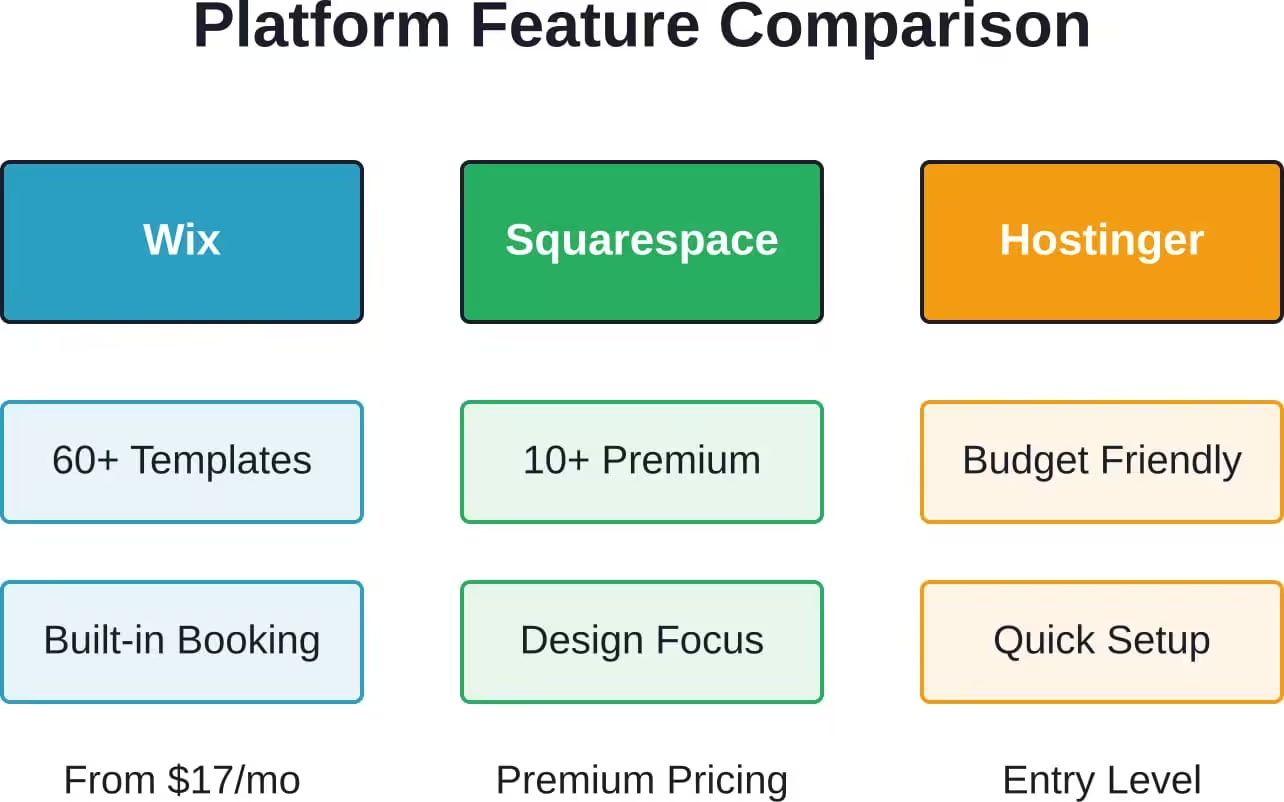
Wix stands out with over 60 coaching-specific templates and built-in appointment booking tools. The platform’s Light plan starts at $17.00 per month and includes essential features like lead capture forms and custom domain support. For coaches who need comprehensive functionality without technical complexity, this represents a solid middle ground.
Squarespace offers template designs suitable for coaching businesses. The platform emphasizes visual storytelling—particularly valuable for coaches whose brand identity depends on distinctive aesthetics. Design flexibility comes at the cost of slightly fewer coaching-specific integrations compared to competitors.
Hostinger Website Builder positions itself as the budget-conscious option. Coaches just starting out or testing business viability can access professional website features at lower entry costs. The trade-off involves fewer advanced customization options than premium alternatives.
Technical Considerations That Actually Matter
Platform evaluation extends beyond template selection. Several technical factors directly impact coaching business operations:
- Client management integration: CRM connectivity determines how effectively the site captures and nurtures leads
- Payment processing capabilities: Seamless transaction handling reduces friction in the booking process
- Calendar synchronization: Automated scheduling eliminates back-and-forth communication that wastes billable hours
- Mobile responsiveness: A significant portion of website visits now occur on mobile devices
Real talk: the cheapest platform rarely proves the most economical choice. Hidden limitations in free or entry-level plans often force mid-development platform migrations that cost more than starting with appropriate tools.
Move Beyond Platform Limits to Get a Website You Need
Platforms help you get online, but they don’t solve how your coaching business actually runs. Things like how you present your offers, guide visitors through your services, and handle bookings often end up scattered or hard to manage. Lengreo approaches website development with a focus on clarity and usability. The goal is not just to launch a site, but to make sure it’s easy to update, easy to manage, and works as a stable base as your services and offers change over time.
Turn to a Proven Development Partner to Build Your Website the Right Way
What makes Lengreo stand out:
- Strong alignment with your objectives and how your services are structured
- Proactive approach throughout the project
- Experience across different industries and business models
- Consistent delivery aligned with timelines and agreed scope
👉 Talk to Lengreo to discuss your website project and the best way to build it.
Essential Website Components for Coaching Businesses
Certain elements appear consistently on high-converting coaching websites. These aren’t optional flourishes—they’re conversion infrastructure.
Client testimonials and reviews build credibility and trust with potential clients. Dedicated testimonial sections with client success stories provide social proof that accelerates decision-making.
Appointment booking tools eliminate scheduling friction. When potential clients can view availability and book sessions without email exchanges, conversion rates increase measurably. Built-in scheduling systems synchronize with business calendars and send automated confirmations.
Clear service descriptions answer the fundamental question every visitor asks: “What specifically will I get?” Vague promises about transformation don’t convert as effectively as concrete program structures, session formats, and deliverables.
The Trust-Building Architecture
Website structure directly influences visitor trust levels. Coaching websites benefit from specific architectural elements that build authentic connections.
| Component | Purpose | Conversion Impact |
|---|---|---|
| About Page | Establishes credentials and personal connection | High—addresses “Who are you?” |
| Services Page | Details offerings, formats, and pricing | Critical—answers “What do I get?” |
| Testimonials | Provides social proof and success stories | High—validates effectiveness |
| Blog/Resources | Demonstrates expertise and improves SEO | Medium—builds authority over time |
| Contact/Booking | Facilitates immediate action | Critical—enables conversion |
Navigation clarity matters more than creativity. Visitors should locate booking options within three clicks from any page. Buried contact forms or confusing menu structures create abandonment points.
Design Principles That Drive Client Action
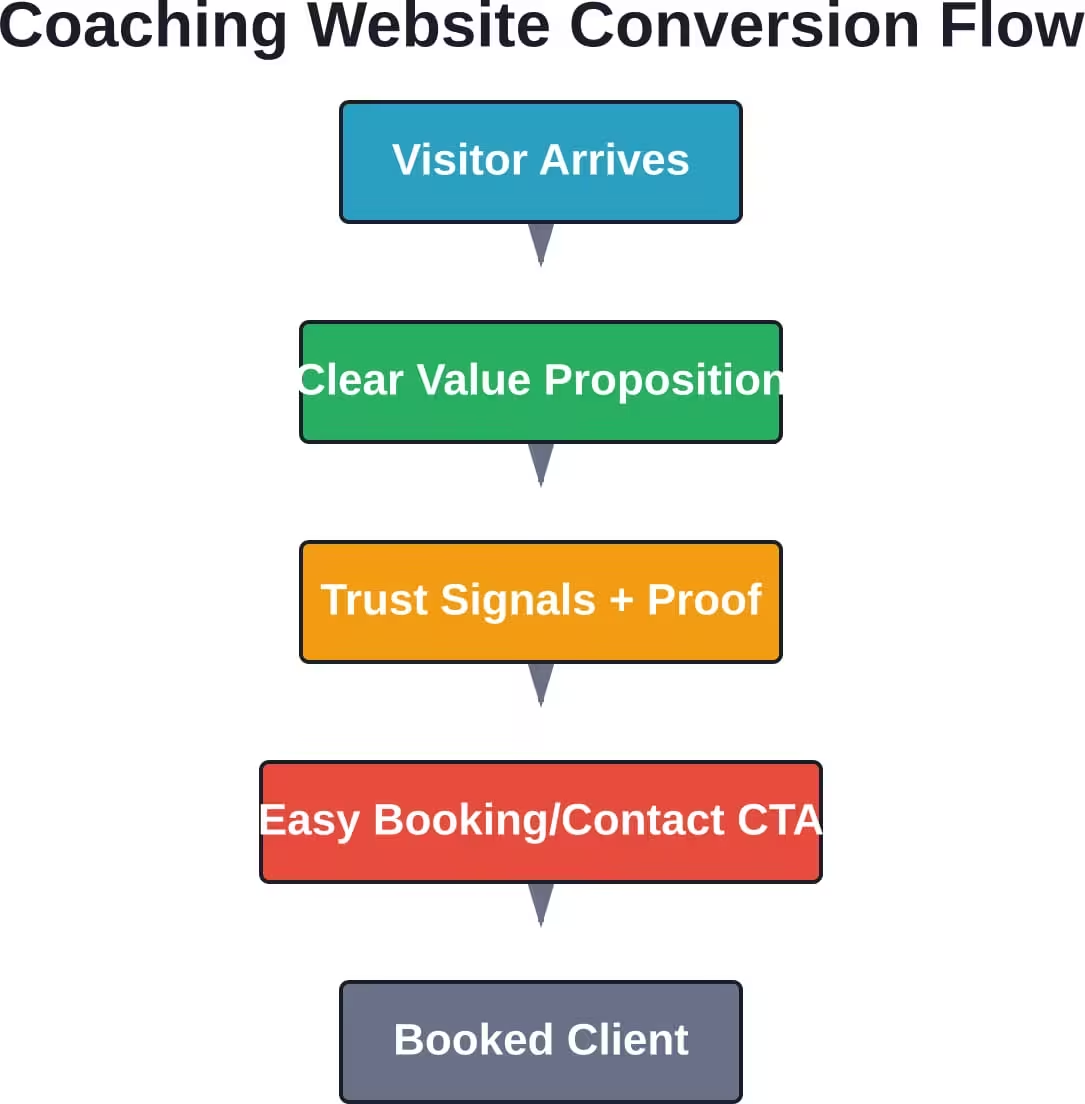
Effective coaching website design balances professional aesthetics with conversion psychology. The goal isn’t winning design awards—it’s turning visitors into booked clients.
Visual hierarchy guides attention deliberately. The most important elements—value proposition, booking call-to-action, credibility markers—should dominate visual real estate. Less critical information moves to secondary positions.
White space creates breathing room that improves comprehension. Cramming too much content into limited space overwhelms visitors and dilutes key messages. Professional sites use generous spacing to emphasize priority information.
Color psychology influences perception subtly but measurably. Blues convey trust and professionalism. Greens suggest growth and balance. Warm tones create approachable, friendly impressions. Color choices should align with coaching niche and target audience expectations.
Mobile-First Development Approaches
Mobile traffic dominates web browsing patterns. Coaching websites must deliver full functionality on smartphone screens.
Touch-friendly interface elements prevent frustration. Buttons and links need adequate size and spacing for finger-based navigation. Text must remain readable without zooming. Forms should minimize typing requirements through smart defaults and selection menus.
Load speed affects both user experience and search rankings. Image optimization, code efficiency, and hosting quality directly impact page load times. Sites that take longer than three seconds to load lose significant visitor percentages.
Business Integration and Management Tools
Modern coaching websites function as business operating systems, not just marketing brochures. Integration capabilities determine operational efficiency.
Payment processing integration streamlines financial transactions. Stripe, PayPal, and Square connectivity allows direct session purchases and package sales. Automated invoicing reduces administrative overhead and improves cash flow tracking.
Email marketing platform connections nurture leads systematically. Mailchimp, ConvertKit, and ActiveCampaign integrations enable automated follow-up sequences that keep coaching services top-of-mind without manual intervention.
CRM synchronization centralizes client information. When website inquiries flow directly into customer relationship management systems, coaches can track interaction history, preferences, and engagement patterns that inform personalized outreach.
Content Management Considerations
Regular content updates improve search visibility and demonstrate active expertise. The website platform should make content publishing straightforward.
Blog functionality supports content marketing strategies. Articles addressing client pain points attract organic search traffic and position coaches as subject matter authorities. Search engines favor regularly updated sites in ranking algorithms.
Resource libraries add value beyond direct coaching services. Downloadable guides, worksheets, or assessment tools create lead magnets that exchange valuable content for contact information. These assets feed email marketing funnels.
SEO and Discoverability Strategies
The most beautifully designed coaching website delivers zero value if potential clients can’t find it. Search engine optimization determines visibility.
Keyword research identifies search terms potential clients actually use. Tools like Google Keyword Planner reveal search volume and competition levels. Targeting specific coaching niches—executive coaching, wellness coaching, career coaching—attracts more qualified traffic than generic terms.
On-page optimization signals relevance to search engines. Title tags, meta descriptions, header structures, and image alt text should incorporate target keywords naturally. Over-optimization triggers spam filters, so balance remains essential.
Local SEO matters particularly for coaches serving specific geographic areas. Google Business Profile optimization, location-specific content, and local directory listings improve visibility for area-based searches.
Content Strategy for Organic Growth
Consistent content creation builds search authority over time. Generally speaking, coaching websites benefit from publishing one to two substantial articles monthly that address client questions comprehensively.
Long-form content performs better in search results than thin articles. Detailed guides covering specific coaching topics earn more backlinks and social shares than brief posts. Depth signals expertise to both readers and algorithms.
Internal linking strengthens site structure. Connecting related articles through contextual links helps search engines understand content relationships and keeps visitors engaged longer.
Domain Names and Branding Decisions
Domain selection establishes digital identity. The right choice supports branding and memorability.
Name-based domains work effectively for personal coaching brands. JohnSmithCoaching.com clearly identifies the practitioner and feels personal. This approach suits coaches building authority around their individual expertise.
Niche-focused domains communicate specialization. ExecutiveLeadershipCoach.com or WellnessTransformationCoach.com immediately signal focus areas. These domains can outlast individual practitioners if business models evolve toward team structures.
Domain extensions beyond .com have gained acceptance, but .com remains most recognizable. If the preferred .com isn’t available, .co or profession-specific extensions like .coach provide alternatives without significant credibility loss.
Development Timeline and Launch Strategies
Realistic timeline expectations prevent frustration. Website development spans multiple phases with distinct objectives.
Planning and strategy phases typically require one to two weeks. This covers platform selection, feature definition, content strategy development, and structural planning. Rushing this stage creates rework later.
Design and build phases vary by complexity. Template customization might take one to three weeks. Custom development extends to six to twelve weeks depending on feature complexity and integration requirements.
Content creation often becomes the bottleneck. Writing compelling copy, gathering testimonials, creating resources, and sourcing imagery takes substantial time. Allocating four to six weeks for content development prevents launch delays.
Soft Launch Versus Full Launch
Soft launches with limited promotion allow testing and refinement. Traffic from existing contacts provides initial feedback without high-stakes pressure. This approach identifies issues before broad marketing efforts begin.
Full launches coordinate website completion with marketing campaigns. Email announcements, social media promotion, and possibly paid advertising drive initial traffic. This strategy works best when the site has been thoroughly tested.
Maintenance and Continuous Improvement
Website launch marks the beginning, not the end, of development. Ongoing optimization improves performance over time.
Analytics monitoring reveals visitor behavior patterns. Google Analytics and similar tools show which pages attract attention, where visitors exit, and which content drives conversions. Data-driven adjustments outperform guesswork.
A/B testing compares variations systematically. Testing different headlines, call-to-action button placements, or form structures identifies what resonates with specific audiences. Small improvements compound significantly.
Security updates and backups protect business assets. Regular platform updates patch vulnerabilities. Automated backups ensure recovery capability if technical issues occur.
Cost Considerations and Budget Planning
Website development costs span wide ranges depending on approach and complexity. Understanding budget implications helps align expectations with reality.
| Development Approach | Typical Cost Range | Best For |
|---|---|---|
| DIY Platform Builder | $144-$600/year | New coaches testing viability |
| Template Customization | $1,000-$3,000 one-time | Established coaches needing professional presence |
| Custom Development | $5,000-$15,000+ one-time | Coaches with specific requirements or scaling businesses |
| Ongoing Maintenance | $50-$300/month | All approaches requiring updates and monitoring |
Hidden costs often emerge in integrations and premium tools. Email marketing platforms, scheduling systems, and advanced analytics add monthly recurring expenses. Budget planning should account for these operational costs beyond initial development.
Moving Forward With Website Development
Effective coaching websites combine strategic platform selection, conversion-focused design, essential business integrations, and ongoing optimization. The technology enables the coaching business—it doesn’t replace the coaching itself.
Start with clear objectives. What specific business outcomes should the website deliver? Client bookings? Email list growth? Resource distribution? Digital product sales? Defining success metrics guides every subsequent development decision.
Prioritize core functionality over peripheral features. A simple site with excellent booking experience outperforms complex sites with confusing navigation. Build the foundation solidly, then expand capabilities as business needs evolve.
The coaching industry continues growing, with more practitioners entering the market annually. Website quality increasingly differentiates successful coaches from those struggling to attract clients. Investment in professional web presence pays dividends through improved credibility, streamlined operations, and sustainable client acquisition.
Ready to build a coaching website that converts visitors into clients? Start by selecting a platform that matches current business needs while allowing room for growth. Focus development effort on the elements that directly support client acquisition and business operations. Launch strategically, measure consistently, and refine continuously based on real visitor behavior data.