Quick Summary: Website development for churches requires balancing spiritual mission with digital functionality. A well-designed church website serves as the digital front door, enabling online giving, event management, sermon streaming, and community connection. Modern church sites typically take 1 hour weekly to maintain, must meet accessibility standards, and should integrate tools for donations, calendars, and mobile optimization.
The digital landscape has fundamentally transformed how congregations connect. According to Pew Research Center data from 2023-24, 62% of U.S. adults identify as Christians. But here’s what changed: Lifeway Research found that in fall 2019, only 22% of churches streamed their entire service. By April 2020, that number jumped to 97%.
That shift wasn’t temporary. Churches discovered their websites aren’t optional anymore—they’re essential infrastructure.
The difference between a website that serves your mission and one that sits dormant? Understanding what church website development actually requires.
Why Church Websites Are Different
Church websites serve more audiences than typical organizational sites. Members need service times and event calendars. First-time visitors look for directions and what to expect. Donors want secure giving options. Volunteers need ministry information.
Sound complicated?
It doesn’t have to be. The key is recognizing that church website development isn’t about cramming every possible feature onto a page. It’s about creating clear pathways for each audience.
Most churches fall into one of two camps: they either build a cluttered site trying to serve everyone, or they create something so minimal it serves no one. The sweet spot lives between those extremes.
Build a Clear Church Website With Lengreo
Lengreo builds and improves websites, then connects them with SEO, paid ads, tracking, and lead generation. For churches, this means a website that makes service times, events, ministries, donations, and contact details easy to find.
The focus is to help visitors and members get the information they need without digging through confusing pages. Lengreo can help organize the structure, key pages, and tracking setup so the website works better for everyday church communication.
Need a Website That Helps People Find You?
Lengreo can help with:
- building or redesigning your website
- improving SEO and paid traffic setup
- setting up tracking and website structure
- refining service, event, and contact pages
👉 Contact Lengreo to discuss your website and setup.
Core Features Every Church Website Needs
Based on analysis of top-performing church websites, certain features consistently appear. Not because they’re trendy, but because they solve real problems congregations face.
Online Giving Integration
Churches that don’t offer online giving leave money—and convenience—on the table. According to Tithely data, 60% of donors choose to cover processing fees when given the option, reducing the actual cost of digital donations.
Modern giving platforms integrate directly into church websites, allowing one-time gifts, recurring donations, and fund-specific contributions. Tax receipts generate automatically. Mobile optimization ensures giving works from any device.
The technical implementation matters less than the user experience. A donation button buried three clicks deep might as well not exist.
Event Management and Calendar Systems
According to content from the Center for Online Evangelism on church website management, entering new events in a church calendar takes 10-20 minutes weekly. That’s manageable. What’s not manageable is updating events across multiple platforms manually.
Integrated calendar systems let staff update once and publish everywhere—website, mobile app, social media. Attendees can register, pay fees, and receive reminders without paper forms or phone calls.
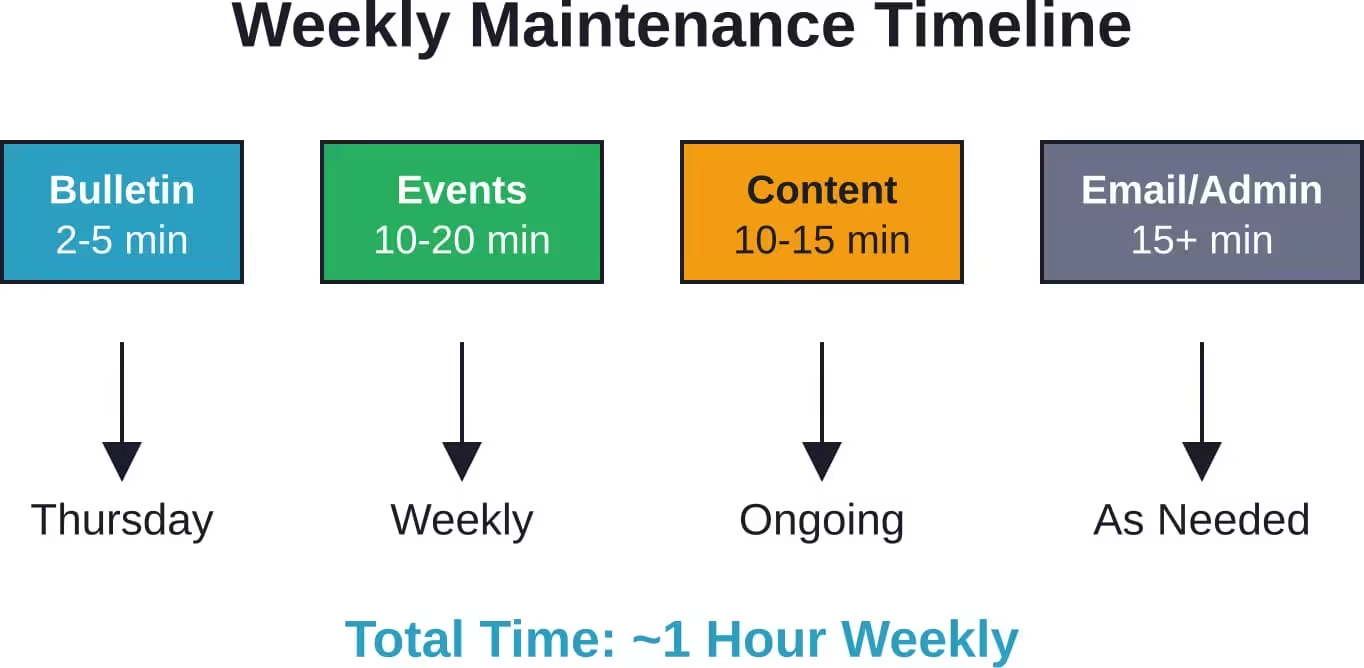
| Task | Time Required | Frequency |
|---|---|---|
| Post church bulletin | 2-5 minutes | Weekly |
| Add calendar events | 10-20 minutes | Weekly |
| Update web content | 10-15 minutes | Weekly |
| Answer emails | 5-10 minutes | Weekly |
| Maintenance tasks | 10+ minutes | Weekly |
Sermon and Media Libraries
Streaming capabilities became standard during 2020, but the value extends beyond crisis response. With over 60% of web traffic coming from mobile devices, mobile optimization is critical for reaching congregation members wherever they are.
Sermon archives let members revisit messages, share content with friends, and stay connected during travel or illness. Video hosting, audio podcasts, and transcripts accommodate different preferences.
The technical consideration: hosting video directly on church servers creates performance problems. Platforms like YouTube, Vimeo, or specialized church media services handle bandwidth and mobile delivery better.
Custom Development vs. Church Website Builders
Churches face a fundamental choice: hire developers for custom builds or use purpose-built church website platforms.
Custom development offers complete control. Designers create unique layouts. Developers build specific workflows. Everything aligns precisely with vision and brand.
But that control comes at a cost—both financial and operational. Custom sites require ongoing developer relationships for updates, security patches, and feature additions.
Church website builders flip that equation. They provide templates, integrated tools, and simplified management. Staff without technical backgrounds can update content, publish bulletins, and manage events.
The trade-off? Less flexibility. Templates constrain design options. Feature sets depend on what the platform offers.
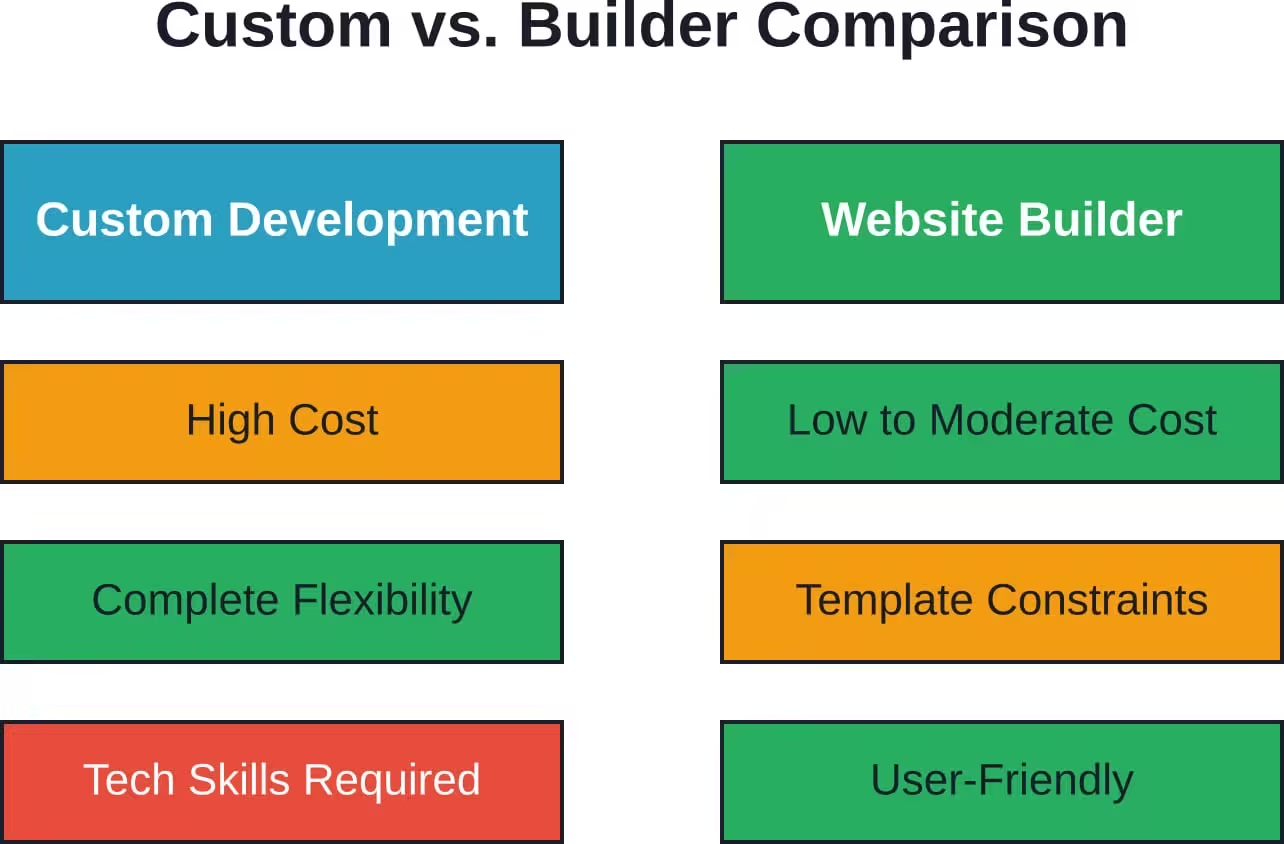
Neither approach is universally better. Large churches with dedicated staff and budgets benefit from custom development. Smaller congregations get better ROI from specialized builders.
Security and Compliance Considerations
Religious institutions increasingly face cybersecurity threats. According to CRIADV cybersecurity research, religious institutions face cybercrime threats including access to member financial data and perceived weaker cybersecurity defenses compared to corporate entities.
Churches must address three security layers:
- Data protection: Online giving platforms handle credit card information. Poor security exposes donors to fraud. Payment Card Industry Data Security Standard (PCI DSS) compliance isn’t optional—it’s required for processing donations.
- Website security: Regular software updates, SSL certificates, and secure hosting prevent common attacks. Outdated content management systems create vulnerabilities hackers exploit.
- Privacy compliance: Email lists and membership databases contain personal information. Churches must handle this data responsibly, with proper consent and security measures.
The National Institute of Standards and Technology (NIST) publishes a Cybersecurity Framework (CSF 3.0) to help organizations reduce cybersecurity risk.
Mobile Optimization Isn’t Optional
With over 60% of web traffic coming from mobile devices, mobile optimization is critical. Church websites that don’t work on phones alienate the majority of potential visitors.
But mobile optimization means more than “the site loads on a phone.” It requires rethinking entire user experiences:
Navigation must work with thumbs, not mice. Buttons need sufficient size and spacing. Forms should minimize typing. Images must load quickly on cellular connections.
Google’s search algorithm actively penalizes sites that don’t meet mobile usability standards. Poor mobile experience doesn’t just frustrate visitors—it reduces search visibility.
The solution: responsive design frameworks that automatically adapt layouts to screen sizes. Most modern church website builders include this by default. Custom sites require explicit mobile development.
Accessibility Standards for Religious Websites
Churches that preach inclusion must practice it digitally. Web accessibility ensures people with disabilities can use church websites.
While churches fall into complex legal territory regarding Americans with Disabilities Act (ADA) compliance, the moral imperative is clear. Ministry shouldn’t exclude people based on visual, auditory, or motor impairments.
Basic accessibility includes:
- Alt text describing images for screen readers
- Sufficient color contrast for low vision users
- Keyboard navigation for those who can’t use mice
- Captions on video content for deaf or hard-of-hearing viewers
- Clear heading structure for assistive technology
Web Content Accessibility Guidelines (WCAG) provide technical standards. Level AA compliance represents a reasonable target for most churches.
Tax Exemption and IRS Considerations
Churches enjoy tax-exempt status under Internal Revenue Code Section 501(c)(3), but that status comes with restrictions. IRS guidelines specify that organizations must operate exclusively for exempt purposes, with no earnings benefiting private individuals.
Website development touches these regulations in specific ways:
Political activity restrictions apply online. Churches risk tax-exempt status by endorsing candidates or making campaign contributions. Website content must avoid crossing these lines.
Donation acknowledgments for contributions of $250 or more require specific documentation. Online giving systems should generate compliant receipts automatically.
Unrelated business income becomes taxable even for exempt organizations. If a church website generates advertising revenue unrelated to exempt purposes, that income may face taxation.
The IRS doesn’t require churches to apply for 501(c)(3) recognition, but many do. Publication 557 provides detailed guidance on tax-exempt status requirements.
Content Strategy for Digital Ministry
Building the website is step one. Maintaining relevant, engaging content is the ongoing challenge.
According to Boston College research on digital ministry best practices, real community forms in digital spaces when churches approach online ministry intentionally, not as an afterthought.
Effective content strategies balance several priorities:
- Regular updates: Stale content signals neglect. Weekly bulletin posts, event updates, and blog content keep sites fresh.
- Value beyond logistics: Service times matter, but websites can offer devotionals, study resources, and community stories that deepen engagement.
- Multiple formats: Text, video, audio, and images accommodate different learning styles and access methods.
The Center for Online Evangelism recommends a one-hour weekly maintenance schedule that includes posting bulletins (2-5 minutes), adding events (10-20 minutes), and updating content (10-15 minutes).
Moving Forward With Your Church Website
The question isn’t whether churches need websites anymore. That debate ended years ago.
The real question: what kind of website will serve your specific congregation, community, and mission?
Start by identifying core needs. What problems should the website solve? Who needs to use it? What actions should they take? Answers to those questions guide every subsequent decision about platforms, features, and design.
Remember that website development isn’t a one-time project. Digital ministry requires ongoing attention, content updates, and adaptation as technology and congregation needs evolve.
Whether choosing a builder platform or investing in custom development, the goal remains constant: creating digital space where community forms, ministry happens, and people encounter the mission that defines your church.
The website is just a tool. How churches use that tool determines whether it becomes a transformative ministry asset or digital deadweight.