


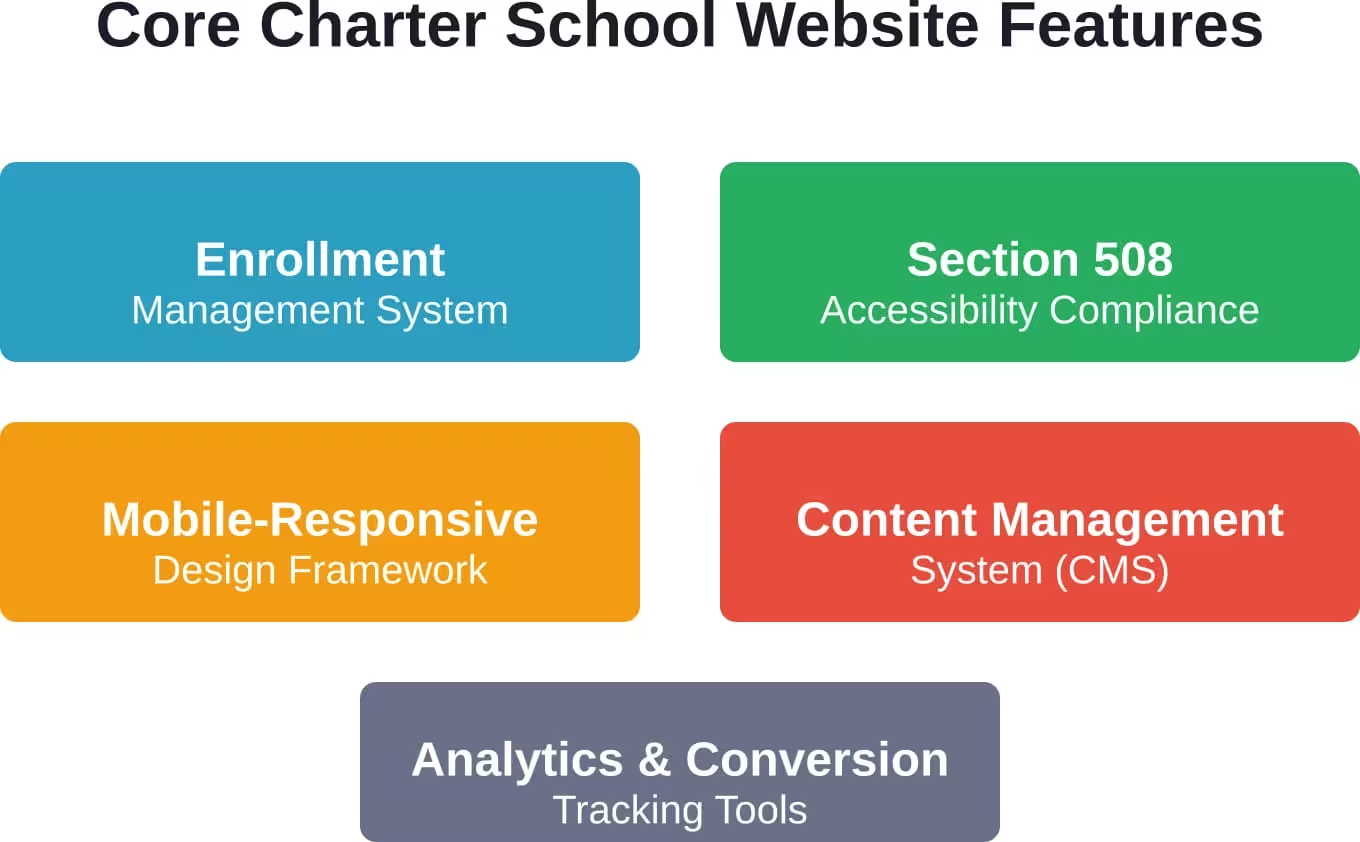
Quick Summary: Website development for charter schools requires specialized platforms that balance accessibility compliance, enrollment conversion, and community engagement. Modern charter school websites must meet Section 508 standards, offer mobile-responsive design, and integrate enrollment management tools to compete effectively for students.
A charter school website isn’t just a digital brochure. It’s the first impression parents get of your institution—and often the deciding factor in enrollment decisions.
The challenge? Building a site that serves multiple audiences simultaneously: prospective families researching options, current parents seeking information, staff needing resources, and students accessing content.
Essential Features for Charter School Websites
Charter school website development differs fundamentally from traditional business sites. The priorities shift toward community engagement, accessibility compliance, and conversion-focused design.
According to Section 508 standards, text must be resizable to at least 200 percent without loss of content or functionality. This accessibility requirement isn’t optional—it’s federal law for public-facing educational institutions.
Enrollment-Focused Design Elements
The primary goal is conversion. Prospective families should find enrollment information within two clicks from any page.
Best-performing charter school websites position enrollment calls-to-action prominently in navigation, feature student success stories on the homepage, and streamline application processes through integrated forms.
| Feature | Purpose | Priority Level |
|---|---|---|
| Online enrollment forms | Reduce application friction | Critical |
| Virtual tour integration | Showcase facilities remotely | High |
| Calendar synchronization | Keep families informed | High |
| Staff directory with photos | Build community connection | Medium |
| Multilingual content support | Serve diverse communities | Variable |
Accessibility Beyond Compliance
Research on teaching and learning websites indicates that usability testing participants often approach sites without prior familiarity. Yet many charter school sites fail basic navigation tests.
Clear headings, consistent navigation, and highly legible typography aren’t just compliance checkboxes. They’re fundamental to user experience across all audiences.
Build a Charter School Website With Lengreo
Lengreo builds and improves websites, then connects them with SEO, paid ads, tracking, and lead generation. For charter schools, this means a website that makes programs, admissions, calendars, staff details, parent resources, and contact information easy to find.
The focus is to help families understand the school before they apply or reach out. Lengreo can help organize key pages, improve traffic setup, and make enrollment or inquiry steps easier to follow.
Need a Website That Helps Families Apply?
Lengreo can help with:
- building or redesigning your website
- improving SEO and paid traffic setup
- setting up tracking and website structure
- refining program, admissions, and contact pages
👉 Contact Lengreo to discuss your website and setup.
Custom Development vs. Platform Solutions
Charter schools face a critical decision: custom website development or education-specific platforms?
Custom development offers complete control over functionality, design, and data management. But it demands ongoing technical maintenance and staff training.
Education platforms like Finalsite, Edlio, and SchoolWebmasters provide turnkey solutions with built-in features specifically designed for schools—enrollment management, event calendars, emergency alerts, and staff directories.
The trade-off? Less flexibility in exchange for faster deployment and lower technical overhead.
Content Management and Staff Training
Here’s the thing though—the most beautifully designed website fails if staff can’t update content independently.
Research on teaching and learning websites indicates that usability testing participants often approach sites without prior familiarity. Content management systems must be intuitive enough for non-technical staff to maintain event calendars, upload documents, and publish news updates.
Look for platforms with WYSIWYG editors, drag-and-drop page builders, and role-based permissions that let teachers update their classroom pages without accessing school-wide settings.
Mobile Optimization and Performance
Parents research charter schools on smartphones during commutes, lunch breaks, and evening browsing sessions. Mobile traffic consistently exceeds desktop visits for education websites.
That means responsive design isn’t optional. Every element—navigation menus, enrollment forms, photo galleries, calendar widgets—must adapt seamlessly to screen sizes from 320px smartphones to 2560px desktop monitors.
Page load speed directly impacts conversion rates. Compress images, minimize JavaScript dependencies, and implement lazy loading for content below the fold.
Security and Privacy Considerations
Charter schools handle sensitive student and family data. FERPA compliance requirements demand secure form submissions, encrypted data storage, and strict access controls.
SSL certificates are mandatory. Regular security updates protect against vulnerabilities. And backup systems ensure website recovery in case of technical failures or cyberattacks.
| Security Element | Implementation | Compliance Relevance |
|---|---|---|
| SSL/TLS encryption | HTTPS protocol sitewide | Required for FERPA |
| Form data encryption | End-to-end encryption on submissions | Protects PII |
| User authentication | Role-based access control | Limits data exposure |
| Regular security audits | Quarterly vulnerability scans | Best practice |
Measuring Website Success
How do you know if your charter school website actually drives enrollment?
Track these metrics: enrollment inquiry form completions, virtual tour engagement, time on site, bounce rate from key landing pages, and conversion paths from first visit to application submission.
Google Analytics 4 provides the foundational analytics layer. But education-specific platforms often include enrollment attribution tools that connect website visits directly to enrolled students.
Real talk: vanity metrics like total page views don’t matter. What matters is whether prospective families find the information they need and take the next step toward enrollment.
Working with Development Partners
Charter schools rarely have in-house web development teams. Selecting the right development partner determines project success.
Look for agencies with education sector experience—they understand enrollment cycles, family communication needs, and compliance requirements. Review their portfolio specifically for charter and private school projects.
Ask about post-launch support. Websites require ongoing updates, security patches, and content revisions. Clarify what’s included in initial development versus ongoing maintenance contracts.
Budget Considerations and ROI
Custom charter school website development involves upfront costs that vary based on functionality complexity and design customization.
Platform solutions typically operate on subscription models. Pricing structures vary by provider and school size; consult specific platform websites for current rates.
But here’s what actually matters: ROI. If an improved website converts even five additional students annually, the increased enrollment revenue far exceeds the development investment.
Conclusion
Charter school website development balances competing priorities: accessibility compliance, enrollment conversion, community engagement, and content management efficiency.
The most effective approach starts with understanding specific school needs—enrollment challenges, community demographics, staff technical capabilities, and budget constraints—then selecting development strategies that address those priorities.
Whether choosing custom development or education-specific platforms, the goal remains constant: creating digital experiences that convert prospective families into enrolled students while serving the existing school community effectively.