

Quick Summary: Website development for charities involves creating accessible, mission-focused digital platforms that enable nonprofits to attract donors, recruit volunteers, and communicate impact. Effective charity websites prioritize clear donation pathways, mobile responsiveness, and transparent storytelling while meeting legal disclosure requirements. Organizations can choose between DIY website builders, professional nonprofit web design agencies, or hybrid approaches depending on budget and technical capacity.
Charities operate in a competitive landscape where online presence directly influences funding success. A well-designed website doesn’t just showcase mission statements—it converts visitors into active supporters.
But here’s the challenge: most charities face budget constraints while needing professional-grade digital infrastructure. The good news? Website development for charities has evolved dramatically, offering solutions at every price point and technical skill level.
This guide walks through the essential elements of charity website development, from compliance requirements to design best practices. Whether starting from scratch or redesigning an existing site, these insights help charities maximize their digital impact.
Why Your Charity’s Website Matters More Than Ever
According to Candid research, 80% of nonprofit professionals agree that a strong digital presence is crucial for organizational success. That’s not surprising when potential donors, volunteers, and beneficiaries all start their journey with an online search.
The donation process itself has shifted dramatically online. Research cited in nonprofit web design best practices indicates that 63% of donors prefer giving via credit or debit card through website donation forms. Digital wallets (such as Apple Pay, Google Pay, and PayPal) now account for over 45% of online charitable transactions, while traditional wire transfers have declined to less than 2% in the individual giving segment.
Think about the last time someone asked about your charity. Did they visit your website first? Probably. And if that site loaded slowly, looked outdated, or made donation difficult—they might have moved on.
The Digital Profile Challenge
According to Candid, a nonprofit’s digital profile extends beyond the website itself. Email communications, social media channels, and online listings all contribute to how supporters perceive organizational credibility and mission effectiveness.
Organizations like Soles4Souls demonstrate effective transparency by showing donors exactly what their contribution achieves. On their donation page, supporters can see that $30 provides one child with a pair of shoes. That specificity builds trust and removes barriers to giving.
Build a Clear Charity Website With Lengreo
Lengreo builds and improves websites, then connects them with SEO, paid ads, tracking, and lead generation. For charities, this means a website that explains the mission, programs, impact, donation options, events, volunteer steps, and contact details clearly.
The focus is to help supporters, donors, and partners understand what the organization does and how they can get involved. Lengreo can help organize key pages, improve traffic setup, and make donation or inquiry paths easier to follow.
Need a Website That Helps Supporters Take Action?
Lengreo can help with:
- building or redesigning your website
- improving SEO and paid traffic setup
- setting up tracking and website structure
- refining donation, program, and contact pages
👉 Contact Lengreo to discuss your website and setup.
Understanding Legal Requirements for Charity Websites
Before diving into design decisions, charities must understand disclosure obligations. The IRS requires tax-exempt organizations to make certain documents publicly accessible, directly impacting website content strategy.
Under IRS regulations, every section 501(c)(3) organization must make annual information returns—Form 990 or Form 990-EZ—available for public inspection. These documents must be accessible for a three-year period beginning with the filing due date or the actual filing date, whichever comes later.
What Documents Need to Be Accessible
Tax-exempt organizations must provide public access to exemption applications filed with the IRS, including all schedules and attachments. The IRS Required Disclosures course outlines these requirements in detail for nonprofit administrators.
Many charities address this requirement by hosting PDF copies in a dedicated “Financial Transparency” or “Our Impact” section. Others link directly to third-party databases where these documents are already publicly available.
The key distinction between private foundations and public charities also matters for website messaging. Public charities generally receive greater financial support from the general public or government units and demonstrate higher levels of public interaction—points worth emphasizing in website copy.
Essential Elements of an Effective Charity Website
Not all nonprofit websites need identical features. But certain elements consistently appear on high-performing charity sites, regardless of organization size or focus area.
Clear Mission Communication
Visitors should understand the charity’s purpose within seconds of landing on the homepage. Georgetown University research on nonprofit online presence recommends using keywords naturally in articles, aiming for about 1% keyword density, and ensuring titles use keywords preferably at the beginning.
Successful charity websites front-load impact rather than organizational history. Instead of “Founded in 1985 to address community needs,” effective messaging might read: “Last year, we provided 12,000 meals to food-insecure families.”
Prominent Donation Pathways
Donation buttons should appear on every page, not just dedicated giving pages. User-friendly donation forms support multiple giving options and remain mobile-responsive so donors can contribute from any device.
The Georgetown research emphasizes keeping donation processes simple. Every additional click or form field increases abandonment rates. Consider recurring donation options prominently displayed alongside one-time gifts.
Volunteer Recruitment Tools
Volunteer sign-up forms make it easy for interested supporters to get involved. Best practices include specific opportunity descriptions, time commitment expectations, and automated confirmation emails.
Consider embedding forms directly on landing pages rather than linking to external sign-up platforms. The fewer steps potential volunteers must take, the higher completion rates climb.
Impact Storytelling and Transparency
Data transparency builds donor confidence. Successful charities showcase program outcomes with specific numbers and beneficiary stories. Charts showing program expense ratios or service delivery metrics demonstrate accountability.
Financial transparency sections should include links to annual reports, IRS Form 990s, and third-party evaluator ratings. These elements satisfy the legal requirements mentioned earlier while building stakeholder trust.
Three Approaches to Charity Website Development
Organizations typically choose from three development pathways based on budget, timeline, and technical expertise available internally.
DIY Website Builders
Website builders designed for nonprofits offer templates, hosting, and basic customization without requiring coding knowledge. These platforms typically include donation processing integrations and volunteer management tools.
The advantages? Lower costs and faster deployment. The limitations? Less customization and potential scaling constraints as organizational needs grow.
Many platforms offer free or discounted nonprofit pricing tiers. TechSoup provides access to various technology services specifically for tax-exempt organizations, including website development tools.
Professional Nonprofit Web Design Agencies
Specialized nonprofit web design companies understand sector-specific requirements like donation optimization, accessibility standards, and storytelling frameworks that resonate with charitable giving motivations.
When evaluating web design firms, community discussions suggest reviewing past nonprofit projects for specific elements. Look for user-friendly donation forms, clear navigation structures, and mobile-responsive designs in their portfolio work.
Professional development costs more upfront but delivers custom functionality, brand-aligned design, and ongoing support relationships. Organizations planning major digital campaigns or complex integrations often find this investment worthwhile.
Hybrid Approach: Builder with Professional Support
Some charities start with website builders then hire consultants for specific enhancements—custom donation flows, CRM integrations, or design refinements beyond template limitations.
This approach balances cost control with professional expertise applied where it matters most. Organizations maintain platform simplicity for content updates while achieving sophisticated functionality for critical conversion points.
Nonprofit Website Design Best Practices
Design choices directly impact whether visitors convert to donors, volunteers, or advocates. These principles apply regardless of which development approach the organization selects.
Mobile-First Design Philosophy
Mobile traffic now represents the majority of website visits for most charities. Mobile-responsive design ensures donation forms, navigation menus, and content display properly on smartphones and tablets.
Test donation flows specifically on mobile devices. If the contribution process requires excessive zooming, field re-entry, or horizontal scrolling, completion rates will suffer.
Strategic Navigation Structure
Visitors should find key pages—About, Programs, Donate, Volunteer, Contact—within two clicks from any location on the site. Dropdown menus can organize subcategories while maintaining this accessibility standard.
Navigation islands—those moments when users can’t figure out how to reach their intended destination—frustrate visitors and increase bounce rates. Regular usability testing with actual users helps identify these problems before launch.
| Navigation Element | Purpose | Best Practice |
|---|---|---|
| Sticky Donate Button | Constant giving access | Visible on all pages, contrasting color |
| Main Menu | Primary page access | Maximum 7 top-level items |
| Footer Links | Secondary navigation and legal | Include contact, privacy policy, Form 990 |
| Search Function | Content discovery | Prominent placement, filters for large sites |
| Breadcrumbs | Location awareness | Essential for sites with 15+ pages |
Loading Speed Optimization
Page speed directly affects both user experience and search engine rankings. Compress images before uploading, minimize plugin usage, and leverage browser caching to improve load times.
Georgetown University research on nonprofit web presence emphasizes checking and updating websites constantly. Even basic sites need regular maintenance to ensure correct information and optimal performance.
Accessibility Standards Compliance
Web Content Accessibility Guidelines (WCAG) compliance ensures people with disabilities can access website content. This includes proper heading hierarchy, alt text for images, sufficient color contrast, and keyboard navigation support.
Beyond ethical considerations, many jurisdictions now require digital accessibility compliance for organizations receiving public funding or serving the general public.
SEO Strategy for Charity Websites
Search engine optimization helps potential supporters discover the charity when searching for related causes, services, or giving opportunities.
Keyword Research and Implementation
According to Candid’s nonprofit SEO guidance, keyword optimization makes it easy for supporters to find organizations online. Research shows that keywords should appear naturally in page titles, preferably near the beginning, and in image alt text.
The Georgetown research specifies aiming for approximately 1% keyword density in articles—enough for search engines to understand content topics without over-optimization that triggers spam filters.
Charities should target keywords related to their mission, services provided, and geographic location. “Food bank Chicago” performs better than just “food bank” for a Chicago-based organization.
Content Strategy for Organic Reach
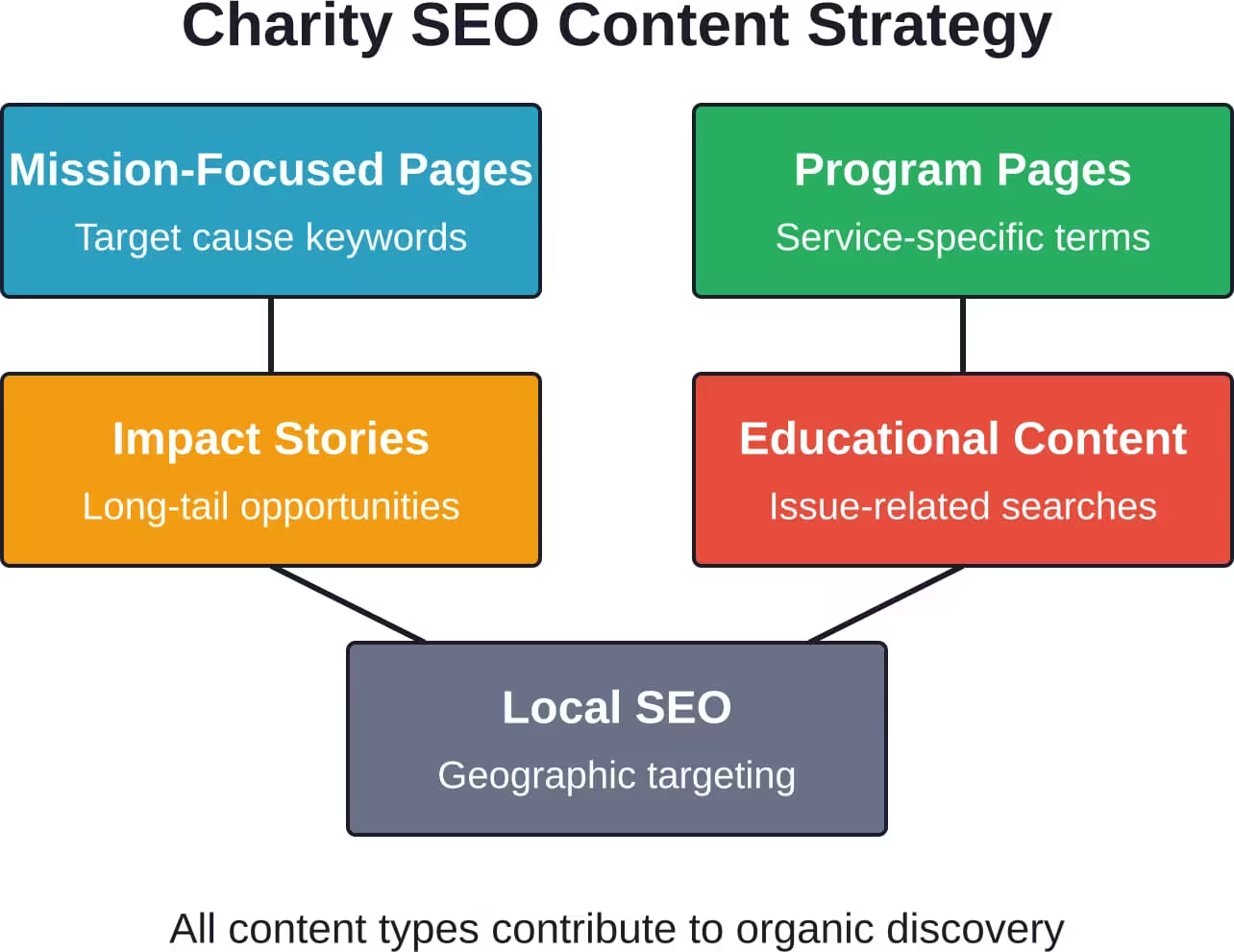
Regular content updates signal website activity to search engines. Blog posts covering program impacts, volunteer spotlights, and issue education provide indexable content that attracts organic traffic.
Content should answer questions potential supporters actually ask. What problems does the charity address? How are donations used? Who benefits from programs? Each answer becomes a potential search entry point.
Technical SEO Fundamentals
Search engines must be able to find and index website pages. This requires proper XML sitemaps, robots.txt configuration, and structured data markup for organization details.
Meta descriptions, title tags, and heading structures all contribute to search visibility. Each page should have unique, descriptive titles under 60 characters and meta descriptions between 150-160 characters.
Choosing the Right Development Partner
For charities selecting professional web design services, several evaluation criteria help identify the best-fit partner.
Nonprofit-Specific Experience
Agencies familiar with charitable sector needs understand donation psychology, regulatory requirements, and storytelling approaches that resonate with giving motivations. They’re also more likely to offer nonprofit discounts or pro bono capacity.
Review portfolio projects specifically. Do past clients include organizations of similar size and mission focus? Ask for references and check those websites’ current performance.
Service Scope and Ongoing Support
Website launch represents the beginning, not the end, of the development relationship. Clarify what happens after go-live: Who handles content updates? What is the process for adding features? Are there ongoing maintenance fees?
Some agencies offer website-as-a-service models with monthly fees covering hosting, security, updates, and support. Others deliver finished sites then transition maintenance to internal staff or separate support providers.
| Development Approach | Typical Cost Range | Best For | Key Consideration |
|---|---|---|---|
| DIY Website Builder | Free–$500/year | Small charities, limited budget | Template limitations |
| Builder + Consultant | $2,000–$8,000 | Mid-size orgs, specific needs | Integration capabilities |
| Custom Development | $10,000–$50,000+ | Established charities, complex requirements | Ongoing support terms |
| Agency Partnership | $15,000–$75,000+ | Major organizations, rebrand projects | Strategic vs. tactical focus |
Timeline and Project Management
Understand realistic timelines for design, development, content creation, and testing phases. Rushed projects often skip crucial steps like accessibility testing or cross-browser compatibility checks.
Clarify decision-making processes early. Who approves designs? How many revision rounds are included? What happens if scope expands mid-project?
Website Maintenance and Continuous Improvement
Launch day isn’t the finish line—it’s the starting point for ongoing optimization based on actual user behavior and organizational evolution.
Regular Content Updates
Stale content signals organizational inactivity. Regular updates to program pages, impact statistics, and blog content keep the site fresh for both visitors and search engines.
Georgetown University emphasizes this point: even basic websites need constant checking and updating to ensure correctness. Outdated information damages credibility more than having no information at all.
Performance Monitoring and Analytics
Website analytics reveal which pages attract traffic, where visitors drop off, and which calls-to-action convert effectively. This data guides iterative improvements over time.
Monitor donation form completion rates specifically. High abandonment rates might indicate technical problems, confusing fields, or payment processor issues that need immediate attention.
Security and Compliance Updates
Website platforms, plugins, and security protocols require regular updates. Outdated software creates vulnerabilities that hackers exploit, potentially exposing donor data and damaging organizational reputation.
Annual accessibility audits ensure ongoing WCAG compliance as content and features evolve. Regulations continue tightening, making proactive compliance cheaper than reactive fixes after complaints.
Emerging Trends in Nonprofit Web Development
The digital landscape continues evolving, creating new opportunities and challenges for charity websites.
AI and Automation in Nonprofit Digital Presence
Artificial intelligence tools now assist with content creation, donor communication, and website personalization. But Candid warns that according to the AI Equity Project, only 6.9% of surveyed nonprofits had internal policies for responsible AI use
Responsible AI implementation in the nonprofit sector means prioritizing—not replacing—human authenticity and connection that build trust with community members and supporters. Automation should handle routine tasks while freeing staff capacity for genuine relationship building.
Social Media Integration Strategy
Candid reports analyzing whether investing 30% of time in platforms like TikTok with smaller audiences (3,000 followers) proved inefficient compared to platforms with stronger engagement., while time investment in platforms with smaller audiences like TikTok—30% of time for just 3,000 followers—proved inefficient.
This data point reinforces the importance of strategic platform selection based on audience presence rather than chasing every emerging channel. Charities should integrate social feeds and sharing functionality on websites while focusing energy where supporters actually congregate.
Data Equity Considerations
As technology adoption accelerates, organizations must consider data equity—ensuring that data collection, analysis, and AI training don’t perpetuate existing biases or exclude marginalized communities.
According to Candid, among organizations familiar with data equity concepts, implementation rates remain low. This represents both a challenge and an opportunity for charities to lead in responsible technology adoption.
Common Website Development Mistakes to Avoid
Certain pitfalls repeatedly appear in nonprofit web projects. Recognizing these patterns helps charities sidestep expensive problems.
Over-Complicating Navigation
More pages don’t equal better websites. Complex navigation structures confuse visitors and bury important conversion points under layers of submenus.
Start with core pages that support organizational goals: mission explanation, program descriptions, donation pathway, volunteer opportunities, contact information. Additional pages should clearly support one of these primary objectives.
Neglecting Mobile Experience
Designing for desktop first then adapting for mobile creates friction. The mobile-first approach ensures core functionality works on constrained screens, then enhances the experience on larger displays.
Test donation forms on actual smartphones with various screen sizes. Issues that seem minor on desktop—small tap targets, horizontal scrolling—become deal-breakers on mobile devices.
Weak Calls-to-Action
Visitors need clear guidance on next steps. “Learn more” buttons lack specificity compared to “See how your $50 helps” or “Find volunteer opportunities near you.”
Every page should guide visitors toward meaningful engagement, whether that’s donating, volunteering, sharing content, or signing up for updates.
Ignoring Accessibility from the Start
Retrofitting accessibility features costs more than building them in from initial design. Alt text for images, proper heading hierarchy, and color contrast standards should be part of requirements documentation, not afterthoughts.
Measuring Website Success
Effective charities establish clear metrics for website performance then track them consistently.
Key Performance Indicators
Organizations setting a goal to increase online donations by 20% in six months need to prioritize clear, prominent donation buttons throughout the site, according to best practices identified in nonprofit web development guides.
Other important KPIs include volunteer sign-up conversion rates, email list growth, average session duration, bounce rates for key pages, and social sharing frequency.
A/B Testing for Continuous Improvement
Testing different headlines, button colors, form lengths, or imagery helps identify what resonates with the specific audience. Small improvements compound over time into significant performance gains.
Test one variable at a time to understand which changes drive results. Changing multiple elements simultaneously makes it impossible to identify what actually worked.
Qualitative Feedback Collection
Analytics reveal what happens but not why. User surveys, stakeholder interviews, and usability testing sessions provide context for quantitative data patterns.
Ask donors about their giving experience. Survey volunteers about sign-up ease. The insights gained often reveal quick fixes that significantly improve conversion rates.
Conclusion
Website development for charities represents far more than technical implementation—it’s about creating digital infrastructure that advances mission, builds supporter relationships, and drives meaningful impact.
The organizations succeeding online share common characteristics: they prioritize user experience over organizational convenience, demonstrate transparency that builds trust, optimize for mobile devices where most traffic originates, and continuously improve based on actual data rather than assumptions.
Whether choosing a DIY builder, hiring professional developers, or pursuing a hybrid approach, the key is starting with clear goals then selecting tools and partners aligned with those objectives. A simple site launched today beats a perfect site launched never.
The digital landscape will continue evolving. New platforms emerge, algorithms change, and supporter expectations shift. But the fundamentals remain constant: clear communication, easy engagement pathways, demonstrated impact, and genuine connection with the humans behind the mission.
Ready to strengthen your charity’s digital presence? Start by auditing your current website against the elements covered in this guide. Identify the biggest gaps between current state and best practices, then prioritize improvements based on potential impact. Your mission deserves a website that amplifies its reach and accelerates its impact.