


Quick Summary: Website development for aviation demands specialized expertise combining regulatory compliance, security protocols, and industry-specific functionality. Aviation websites must integrate flight scheduling systems and handle complex technical documentation while delivering intuitive experiences for diverse stakeholders—from pilots to maintenance crews to passengers.
The aviation industry doesn’t play by the same digital rules as other sectors. A website for an airline, airport, or aerospace manufacturer isn’t just a marketing brochure—it’s a mission-critical tool that connects operational systems, displays real-time flight data, and meets stringent regulatory requirements.
Building aviation websites means understanding software standards and accessibility regulations that other industries never touch. But here’s the thing: most web developers don’t know the first thing about airworthiness directives or parts manufacturer approvals.
That gap creates real problems. Generic website templates can’t handle flight operations management. Standard e-commerce platforms break when you try to integrate aircraft maintenance tracking. And don’t even think about launching without proper WCAG 2.1 AA compliance—the regulations are clear and the penalties real.
This guide breaks down everything needed to build aviation websites that actually work.
Why Aviation Website Development Requires Specialized Expertise
Aviation operates under regulatory frameworks that make healthcare look simple. Software in safety-critical aviation systems faces even stricter scrutiny. According to research from Carnegie Mellon’s Software Engineering Institute, incomplete, ambiguous, and inconsistent requirements contribute 35% of system-level defects in aerospace projects. Software costs represent a significant portion of total aerospace system costs, with substantial software budgets spent on rework.
Those numbers matter for web development because aviation websites often integrate with operational systems. A flight school’s scheduling platform connects to aircraft maintenance logs. An airport’s website pulls real-time gate information from air traffic management systems.
Breaking any of these integrations doesn’t just create user frustration—it can ground aircraft or create compliance violations.
Essential Features for Aviation Websites
Aviation websites serve multiple stakeholder groups with competing needs. Flight operations teams need instant access to maintenance logs and airworthiness directives. Passengers want booking interfaces and real-time flight status. Regulatory inspectors require audit trails and compliance documentation.
Building all that into one coherent digital experience takes planning.
Flight Operations Integration
Real-time data feeds form the backbone of functional aviation websites. Flight status displays, gate assignments, and delay notifications all pull from air traffic management systems. These integrations can’t afford downtime or data latency.
Maintenance tracking represents another critical integration point. Aircraft maintenance websites need to log work performed, track parts replacements, and maintain compliance records.
IATA’s Digital Aircraft Operations initiative supports airlines in implementing solutions for more efficient operations across flight operations, air traffic management, ground operations, aircraft maintenance activities, supply chain and logistics, and aircraft asset transfers.
Security and Performance Requirements
Aviation websites handle sensitive operational data. Flight schedules, crew assignments, maintenance records, and passenger information all require robust security controls consistent with security frameworks like NIST SP 800-53.
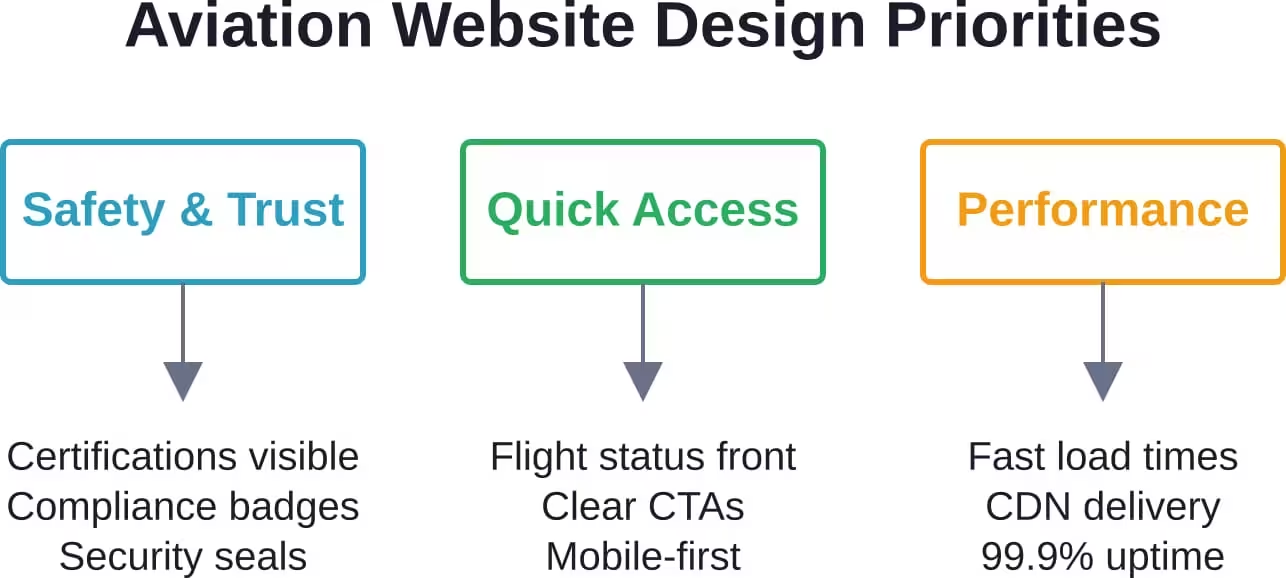
Performance matters too. Many aviation websites require 99.9% uptime SLAs to support critical operations. Global edge security through content delivery networks provides DDoS protection and reduces latency for international users.
Page load times directly impact user satisfaction, especially for mobile users checking flight status. Performance monitoring tools track load times, server response, and user experience metrics to identify bottlenecks.
Design Considerations for Aviation Companies
Aviation website design balances professionalism with functionality. The aesthetic needs to project safety, reliability, and technical competence—qualities passengers and business clients expect from aviation companies.
But design can’t compromise usability. Pilots accessing pre-flight documentation don’t have time to hunt through nested menus. Maintenance crews looking up part specifications need direct, fast access.
User Experience for Multiple Audiences
Airport websites serve everyone from first-time leisure travelers to seasoned aviation professionals. The navigation structure needs to accommodate both groups without overwhelming either.
Clear information hierarchy helps. Critical functions—flight status, bookings, emergency contacts—belong in primary navigation. Technical resources like airworthiness directives, service bulletins, and certification documents can sit in secondary menus or dedicated professional sections.
Mobile responsiveness isn’t optional. Flight crews check schedules on phones. Passengers look up gate changes on tablets. Maintenance staff pull up part diagrams on workshop devices. The site needs to work flawlessly across all screen sizes.
Brand Alignment Across Aviation Segments
Different aviation sectors require different design approaches. VIP charter services showcase luxury and exclusivity. Aircraft parts manufacturers emphasize precision and reliability. Flight schools project accessibility and safety.
The design should match the business model. High-end aviation services benefit from premium photography, sophisticated layouts, and refined typography. Industrial aviation suppliers might prioritize technical specifications, detailed product catalogs, and robust search functionality.
That said, every aviation website needs to establish trust. Safety certifications, regulatory compliance badges, and industry association memberships belong prominently on the site.
Technology Stack for Aviation Web Development
The right technology choices make or break aviation website projects. Legacy systems in aviation run on older platforms that modern web frameworks need to integrate with. At the same time, security requirements demand current patches and maintained codebases.
Content Management Systems
Specialized aviation CMS platforms handle industry-specific requirements better than generic solutions. Some aviation web development firms offer custom airport CMS solutions designed specifically for managing flight information, gate assignments, and operational updates.
Standard CMS platforms can work for aviation companies that don’t need operational integrations. The key factors are security hardening, role-based access controls, and audit logging capabilities. Aviation websites often need detailed records of who changed what content and when.
Multi-language support matters for international airports and airlines. The CMS needs robust translation workflows and the ability to manage region-specific content variations.
Integration Middleware
Aviation websites rarely stand alone. They connect to reservation systems, maintenance databases, crew scheduling platforms, parts inventory systems, and regulatory compliance tools.
Building these integrations requires middleware that can handle diverse data formats, legacy protocols, and real-time synchronization. API management platforms provide the glue between modern web frontends and older aviation operational systems.
Error handling deserves special attention. When an integration fails, the website needs graceful degradation rather than complete failure. Flight status might fall back to cached data. Booking systems should queue transactions for processing when connections restore.
Development Process for Aviation Projects
Aviation website development follows a more structured process than typical commercial web projects. The stakes are higher and the margin for error smaller.
Requirements Gathering and Stakeholder Alignment
Aviation projects involve multiple stakeholder groups with different priorities. Operations teams focus on functionality. Marketing wants compelling design. IT departments emphasize security. Compliance officers care about regulatory requirements.
Getting all these groups aligned before development starts prevents expensive rework later. Detailed requirements documentation helps, but so do working prototypes that stakeholders can interact with and critique.
Testing and Quality Assurance
Aviation websites need thorough testing across multiple dimensions. Functional testing verifies features work correctly. Integration testing confirms connections to operational systems. Security testing identifies vulnerabilities. Accessibility testing ensures compliance with WCAG standards. Performance testing validates load times and uptime.
User acceptance testing with actual aviation professionals catches issues that automated testing misses. Pilots, maintenance crews, gate agents, and other end users provide feedback based on real operational workflows.
Regression testing becomes critical as aviation websites evolve. Each update needs verification that existing integrations still function correctly and compliance requirements remain satisfied.
Common Challenges in Aviation Web Development
Aviation web projects face obstacles that don’t affect standard commercial websites. Understanding these challenges helps avoid common pitfalls.
Legacy System Integration
Many aviation companies run critical operations on systems built decades ago. These legacy platforms use outdated protocols, proprietary data formats, and architectures that predate modern web standards.
Integrating with legacy systems requires specialized expertise. Sometimes the original vendor no longer exists or supports the product. Documentation might be incomplete or outdated. APIs might not exist at all, requiring screen scraping or database replication.
The solution often involves building translation layers that convert between old and new systems. This middleware handles protocol translation, data format conversion, and error management.
Balancing Security with Usability
Aviation security requirements can create friction in user experience. Multi-factor authentication adds login steps. Data encryption increases processing time. Access controls limit content visibility.
The challenge is implementing necessary security without making the site frustrating to use. Smart defaults help—remembering authorized devices, pre-filling known information, and streamlining repeated workflows.
Security awareness training for users also matters. When aviation professionals understand why certain security measures exist, they’re more likely to follow protocols without trying to circumvent them.
Maintaining Compliance Across Jurisdictions
International aviation companies face compliance requirements that vary by country and region. European GDPR data protection rules differ from U.S. regulations. Aviation authorities in different countries have unique certification requirements.
Managing this complexity requires careful content governance. Some information might be visible only to users in specific regions. Privacy policies need to reflect local regulations. Cookie consent mechanisms must comply with regional laws.
| Challenge | Impact | Solution Approach |
|---|---|---|
| Legacy system integration | Limited data access, slow sync times | Middleware translation layers, API wrappers |
| Multi-stakeholder requirements | Conflicting priorities, scope creep | Early alignment workshops, phased delivery |
| Regulatory compliance | Development constraints, audit requirements | Compliance checklists, specialized expertise |
| Security vs. usability | User friction, support burden | Smart defaults, contextual authentication |
| Real-time data requirements | Performance bottlenecks, synchronization issues | Caching strategies, fallback mechanisms |
Specialized Aviation Website Types
Different aviation businesses need fundamentally different website capabilities. Understanding these variations helps scope projects appropriately.
Airport and FBO Websites
Airports and fixed-base operators (FBOs) need websites that serve both passengers and aviation professionals. Public-facing sections handle flight information, ground transportation, and passenger services. Professional sections provide fuel pricing, hangar availability, and operational notices.
Many airport websites integrate with airport operations databases for real-time gate assignments, baggage claim information, and security wait times. Specialized airport CMS platforms handle these integrations more cleanly than generic content management systems.
Aircraft Manufacturer and Parts Supplier Sites
Manufacturing websites emphasize technical specifications, certification documents, and parts catalogs. The site needs to handle complex product hierarchies, cross-references, and compatibility information.
E-commerce functionality for parts suppliers must verify that buyers have appropriate certifications. Not everyone can purchase aircraft components—the site needs to validate credentials and maintain compliance with Parts Manufacturer Approval requirements.
Technical documentation libraries form a critical component. Maintenance manuals, service bulletins, and airworthiness directive compliance instructions need version control and access management.
Flight School and Training Websites
Flight schools target prospective students while serving current enrollees. Marketing content explains programs, certifications, and career paths. Student portals provide scheduling, progress tracking, and learning resources.
These sites often integrate with flight scheduling systems to manage aircraft and instructor availability. Students need to book flights, track their progress toward certifications, and access ground school materials.
Becoming a commercial airline captain requires approximately 1,500 hours of logged flight time and takes roughly 5 to 10 years depending on the airline’s requirements and the pilot’s career path. Flight school websites should set realistic expectations about the commitment and timeline involved.
Content Strategy for Aviation Websites
Aviation website content serves diverse purposes—marketing to prospects, supporting existing customers, satisfying regulatory requirements, and enabling operational workflows.
Technical Documentation Management
Aviation companies generate massive amounts of technical documentation. Maintenance manuals, service bulletins, parts catalogs, training materials, and compliance documents all need to be accessible, current, and version-controlled.
The content management system needs robust document management capabilities. Version control tracks changes over time. Access controls limit sensitive documents to authorized users. Search functionality helps users find specific procedures or specifications quickly.
Metadata matters for aviation technical content. Each document should be tagged with applicable aircraft models, part numbers, regulatory references, and revision dates. This metadata powers search and ensures users find the right version of each document.
SEO for Aviation Businesses
Aviation companies need visibility in search results, but the target keywords differ significantly by business type. Flight schools compete for “pilot training” and “flight lessons.” Aircraft manufacturers target “aircraft parts” and specific model numbers. FBOs want visibility for airport codes and “aviation services.”
Local SEO matters for location-based aviation businesses. Airports, flight schools, and FBOs need a strong local search presence. This requires optimized Google Business profiles, location-specific content, and local citation building.
Technical content provides SEO opportunities that many aviation companies overlook. Detailed maintenance procedures, parts compatibility guides, and troubleshooting documentation attract aviation professionals searching for specific technical information.
Selecting an Aviation Web Development Partner
Not every web development agency can handle aviation projects. The specialized requirements demand domain expertise beyond general web development skills.
Aviation Industry Experience
Look for development firms with proven aviation experience. Review their portfolio for airport websites, airline projects, or aerospace manufacturer sites. Ask about their familiarity with aviation regulations, operational systems, and industry standards.
Some agencies specialize exclusively in aviation and airport websites. These specialists understand industry requirements without extensive education. They’ve already solved common aviation web development challenges and can apply those solutions to new projects.
Technical Capabilities
Beyond aviation knowledge, the development partner needs strong technical capabilities. Integration expertise matters for connecting to operational systems. Security experience ensures proper implementation of protection measures. Accessibility expertise delivers WCAG-compliant designs.
Ask about their development process, quality assurance procedures, and post-launch support. Aviation websites require ongoing maintenance, security updates, and feature enhancements. The development partner should provide long-term support, not just initial implementation.
References from other aviation clients provide valuable insight. Talk to their existing customers about responsiveness, technical competence, and ability to handle aviation-specific challenges.
Get Your Aviation Website Built to Support Real Conversions
In aviation, visitors usually come with a clear goal. They need specific details about services, operations, or capabilities. If that information isn’t structured properly, the website becomes difficult to use and loses its purpose. Lengreo approaches website development as a structured process that starts with research and planning, then moves through design, development, and launch. The focus is on building a site that reflects the actual business and presents information in a clear and usable way.
Build a Website Based on Clear Structure and Project Requirements
Lengreo focuses on building websites that are shaped by real project needs:
- Website structure defined by project goals and user interaction
- Content organized according to the specific business instead of pre-set templates
- Development approach adapted to project requirements
- Setup supporting ongoing updates and long-term website use
Book a consultation with Lengreo and get your aviation website built the right way.
Future Trends in Aviation Web Development
Aviation digital experiences continue evolving as new technologies mature and user expectations rise.
Artificial Intelligence Integration
AI applications in aviation websites range from chatbots answering passenger questions to predictive maintenance alerts based on usage patterns. Research from MIT suggests that aviation’s safety standards could provide models for regulating AI in healthcare and other critical domains.
The aviation industry’s long history of hard-won safety lessons created one of today’s safest activities. Autopilot systems and automated risk warnings demonstrate successful human-automation collaboration. These same principles apply to AI-powered features in aviation websites—clarity about what the automated system is doing, when it’s engaged, and how humans can intervene.
Enhanced Mobile Capabilities
Mobile devices continue displacing desktop computers for aviation tasks. Pilots check weather and file flight plans on tablets. Maintenance crews access service bulletins on workshop devices. Passengers manage entire trips through smartphone apps.
Progressive web apps (PWAs) provide app-like experiences without requiring separate native applications. For aviation companies, PWAs offer offline capability, push notifications, and fast performance while maintaining a single codebase.
Digital Operations Standards
IATA’s Digital Aircraft Operations initiative points toward increasingly digital standards for flight operations, maintenance activities, and asset transfers. Aviation websites will need to implement these emerging standards to maintain interoperability.
Blockchain technology shows promise for aircraft parts provenance tracking and maintenance record verification. Future aviation websites might integrate distributed ledger systems for parts authentication and compliance documentation.
Conclusion
Aviation website development demands specialized expertise that bridges technical web development skills with deep aviation industry knowledge. The regulatory landscape, operational integrations, and security requirements create complexity that standard commercial websites never encounter.
The investment in specialized aviation web development pays dividends through operational efficiency, regulatory compliance, and digital experiences that serve diverse stakeholder groups effectively. Whether building an airport website, aircraft manufacturer platform, or flight school portal, partnering with development teams that understand aviation’s unique requirements delivers better outcomes than trying to adapt generic web solutions.
Ready to build an aviation website that meets industry standards and operational needs? Start by evaluating development partners with proven aviation experience, technical integration capabilities, and understanding of the regulatory frameworks that govern aviation digital systems.