Quick Summary: Website development for the automotive industry combines specialized e-commerce functionality, mobile-first design, and inventory management systems tailored for auto dealers, repair shops, and parts suppliers. Modern automotive websites require fast load speeds, responsive interfaces, and seamless integration with industry-specific tools like CRM platforms and booking systems. Effective automotive web development balances technical performance with user experience to convert online browsers into customers and service appointments.
The automotive industry faces unique digital challenges. Unlike generic business websites, automotive sites need to handle complex inventory, showcase detailed vehicle specifications, and convert browsers into qualified leads—fast.
According to industry data, 95% of automotive buyers use digital platforms during their purchase journey. Mobile interactions account for 60% of automotive website traffic. That’s not just a statistic—it’s a mandate for mobile-first development.
But here’s the thing: most automotive websites fall short. They’re either template-driven platforms that lack customization or custom builds that ignore industry-specific functionality. The sweet spot? Purpose-built automotive web development that understands both the technical requirements and the buyer journey.
What Makes Automotive Website Development Different
Generic website platforms don’t cut it for auto businesses. The industry demands specialized features that standard templates can’t deliver.
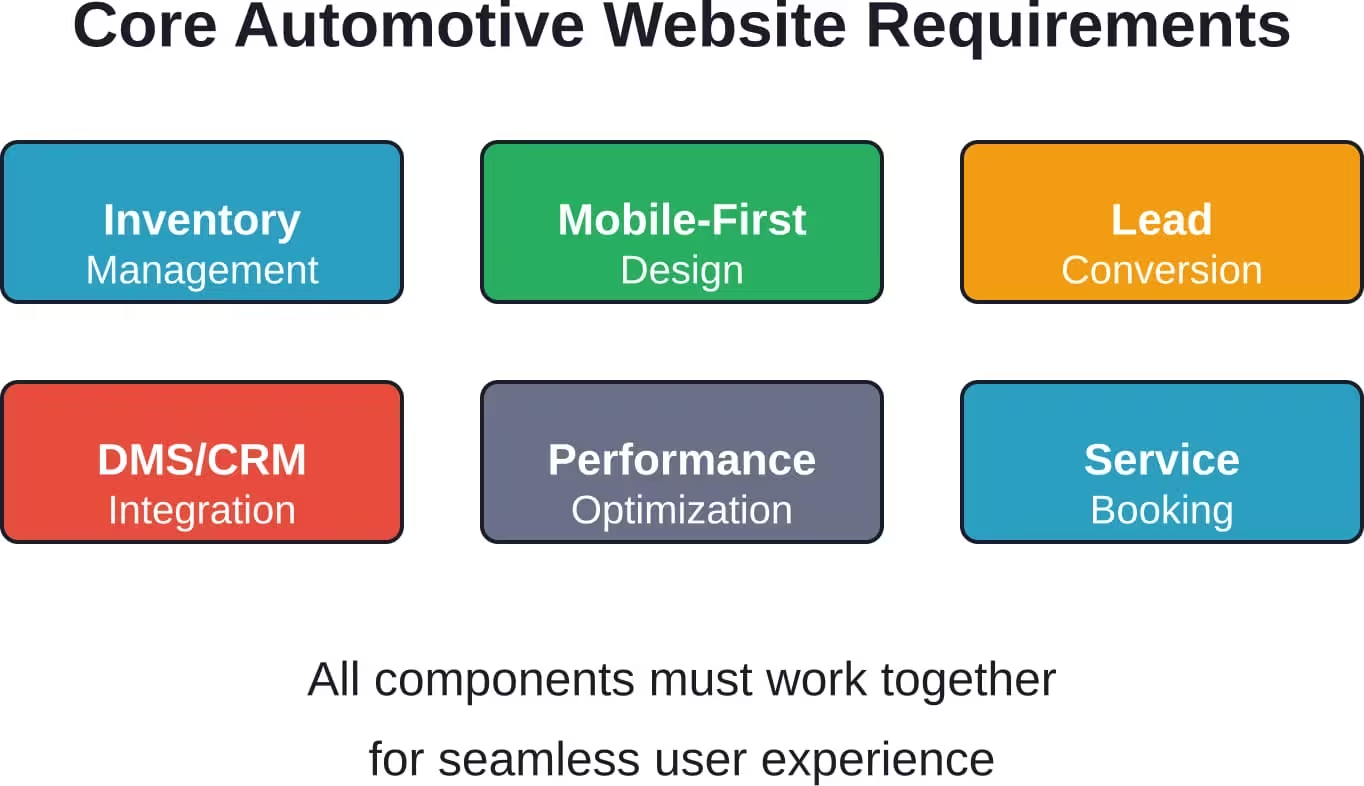
Inventory management sits at the core. Dealerships need real-time synchronization with their dealer management systems (DMS). Repair shops require service appointment booking that integrates with shop management software. Parts suppliers must handle complex product catalogs with compatibility filters.
Then there’s the conversion challenge. Automotive websites serve multiple user intents simultaneously: researching specifications, comparing models, scheduling test drives, getting service quotes, and ordering parts. Each pathway needs its own optimized flow.
Build a Better Automotive Website With Lengreo
Lengreo builds and improves websites, then connects them with SEO, paid ads, tracking, and lead generation. For automotive businesses, this means a website that presents vehicles, services, parts, financing options, locations, and inquiry forms in a clear structure.
The focus is to help buyers or service customers find what they need faster. Lengreo can help organize key pages, improve traffic setup, and make booking, quote, or contact paths easier to use.
Need a Website That Helps Customers Inquire?
Lengreo can help with:
- building or redesigning your website
- improving SEO and paid traffic setup
- setting up tracking and website structure
- refining vehicle, service, and inquiry pages
👉 Contact Lengreo to discuss your website and setup.
Custom Development vs. Platform Templates
Automotive businesses face a critical decision: use an industry platform or build custom. Both approaches have merit—but they serve different needs.
Industry platforms offer pre-built automotive functionality. They integrate with major DMS providers, include inventory feeds, and bundle hosting. The advantage? Faster deployment and lower upfront costs. The limitation? Customization constraints and ongoing platform fees.
Custom automotive web development delivers exactly what the business needs—nothing more, nothing less. Custom builds accommodate unique workflows, proprietary systems, and brand-specific experiences. The trade-off? Higher initial investment and longer development timelines.
| Aspect | Platform Templates | Custom Development |
|---|---|---|
| Launch Timeline | 2-4 weeks | 8-16 weeks |
| Initial Cost | Lower (monthly fees) | Higher (one-time build) |
| Customization | Limited to platform | Unlimited flexibility |
| Ownership | Platform-dependent | Full code ownership |
| Integrations | Pre-built options | Custom API connections |
The decision hinges on business size and digital strategy. Single-location shops often thrive on platforms. Multi-location dealerships and specialty shops with unique services typically need custom solutions.
Essential Features for Auto Dealer Websites
Dealership websites carry specific functional requirements that repair shops and parts suppliers don’t need.
Vehicle detail pages must showcase comprehensive specifications, high-resolution photo galleries, comparison tools, and financing calculators. Each listing needs to pull fresh data from inventory systems—no manual updates.
Search and filter functionality separates good dealer sites from great ones. Buyers need to narrow selections by make, model, year, price range, mileage, features, and location. Advanced filters for body style, drivetrain, fuel type, and color complete the picture.
Lead capture mechanisms should feel invisible. Forms that require ten fields kill conversions. The best dealer websites capture interest with single-field email capture, click-to-call buttons, and SMS scheduling options.
Trade-In and Financing Tools
Modern dealer sites integrate value-add tools directly. Trade-in estimators let visitors get instant valuations. Financing pre-qualification forms connect to lender APIs for real-time credit decisions.
These aren’t just nice-to-have features—they’re conversion accelerators. When visitors calculate payments and trade values on-site, they’re further down the purchase funnel before ever contacting sales.
Auto Repair Shop Website Requirements
Repair shops need different digital tools than dealerships. Service booking dominates the priority list.
Online scheduling systems must integrate with shop management software to show real-time bay availability. Customers select service types, choose time slots, and receive confirmation—all without phone calls. According to available data, automotive repair shop websites have reported conversion rates around 14.67%.
Service menus deserve special attention. Most customers don’t know automotive terminology. Websites that explain services in plain language, provide ballpark pricing, and show typical completion times build trust.
Review and Reputation Management
Social proof matters more in auto repair than almost any other industry. Customers entrust their safety to mechanics—they need confidence before booking.
Effective repair shop websites integrate review displays from Google, Yelp, and industry platforms. Fresh reviews appear automatically. Response management tools let shop owners address feedback directly from the website dashboard.
E-Commerce Solutions for Automotive Parts Suppliers
Parts suppliers face the most complex e-commerce requirements in the automotive sector.
Product catalogs run deep—thousands or tens of thousands of SKUs. Each part requires compatibility data: which makes, models, years, and trim levels it fits. Search must support both part numbers and vehicle-based queries.
Backend systems need robust inventory management across multiple warehouses. Real-time stock levels prevent backorder frustration. Shipping calculators must account for weight, dimensions, and hazmat classifications.
B2B functionality separates amateur builds from professional automotive e-commerce. Wholesale portals require tiered pricing, quote requests, bulk ordering, and account rep assignment. Payment terms vary by customer—net-30, net-60, or credit card.
Performance and Speed Optimization
Speed isn’t optional for automotive websites. Slow sites kill conversions.
Mobile performance demands particular attention given that 60% of automotive traffic comes from phones. Image optimization matters most—vehicle photos are large files. Modern automotive websites use progressive loading, WebP formats, and CDN delivery.
Database queries need optimization too. Inventory searches that scan thousands of records can lag without proper indexing. Caching strategies help—static content stays cached while inventory updates in real-time.
| Performance Metric | Target | Impact |
|---|---|---|
| Page Load Time | <3 seconds | Conversion baseline |
| Mobile Speed | <2.5 seconds | 60% of traffic |
| Server Response | <200ms | Search experience |
| Image Optimization | <200KB each | Bandwidth savings |
Choosing an Automotive Web Development Company
Not all development companies understand automotive. Industry expertise separates qualified vendors from generalists.
Look for portfolios heavy with automotive clients. Check whether they’ve built dealer sites, repair shop platforms, or parts e-commerce. Ask about DMS integrations—which systems do they connect to?
Technical capabilities matter as much as industry knowledge. Modern automotive websites require custom API development, real-time data synchronization, and complex filtering logic. Review their technology stack and development approach.
Post-launch support deserves scrutiny. Automotive websites need ongoing updates—new inventory formats, DMS upgrades, and feature additions. Confirm maintenance terms before signing contracts.
Moving Forward With Automotive Website Development
The automotive industry’s digital demands will only intensify. Customer expectations for seamless online experiences continue rising. Inventory management grows more complex. Mobile usage dominates desktop.
Businesses that invest in proper automotive website development gain competitive advantages. Better user experiences convert more visitors. Integration efficiency reduces administrative burden. Performance optimization improves search rankings.
The question isn’t whether automotive websites matter—it’s whether your website meets industry standards. Template platforms suit some businesses. Custom development serves others. But generic, outdated websites serve nobody.
Evaluate your current digital presence against the requirements outlined here. Then find an automotive web development partner who understands both the technical challenges and the business outcomes that matter.