


Quick Summary: Website development for assisted living communities requires specialized design that prioritizes accessibility, mobile responsiveness, and trust-building elements. A well-designed site should feature clear navigation, strong calls-to-action, and locally relevant content that addresses families’ concerns during their search process. Professional development typically costs between $3,500 and $10,000 depending on customization needs, with ongoing SEO and content management being essential for sustained performance.
When families start researching senior living options, they don’t grab the phone book anymore. They open a browser. That first digital impression shapes everything—whether they’ll trust your facility, schedule a tour, or keep scrolling to the next community.
Assisted living website development isn’t just about looking modern. It’s about creating a digital front door that welcomes families during one of the most stressful decisions they’ll ever make. The stakes are high, and the competition is fierce.
Here’s the thing though—most assisted living websites fail at the basics. Confusing navigation, slow load times, and generic stock photos that say nothing about the actual community. Families can smell that inauthenticity from a mile away.
Why Specialized Website Development Matters for Assisted Living
Generic web templates don’t cut it in the senior care space. The audience researching assisted living facilities spans multiple generations—adult children in their 40s and 50s making decisions for aging parents, plus tech-savvy seniors exploring options for themselves.
Both groups need specific information delivered in specific ways. Adult children want reassurance about safety protocols, staffing credentials, and care quality. Seniors themselves want to see vibrant community life, engaging activities, and dignity preserved.
That’s why specialized developers understand the senior living spectrum—from skilled nursing facilities to continuing care retirement communities to assisted living residences. According to CMS, facility-based care can take place across various settings, each with distinct regulatory requirements and service offerings that need clear explanation online.
Essential Design Elements for Assisted Living Websites
Navigation needs to be dead simple. Families researching care options are stressed and often overwhelmed. If they can’t find pricing, floor plans, or contact information within three clicks, they’ll bounce.
Primary navigation should include clear paths to: community overview, care services, amenities, pricing transparency, resident life (photos and testimonials), and contact/tour scheduling. That’s it. Don’t bury the important stuff under clever category names.
Accessibility Isn’t Optional
Older adults browsing for themselves need larger text options, high color contrast, and keyboard navigation support. This isn’t just good UX—it’s about respecting the independence and dignity of potential residents.
Design considerations include minimum 16px base font size (with easy scaling), text that remains readable at 200% zoom, sufficient color contrast ratios meeting WCAG 2.1 AA standards, and alt text for all images. Screen reader compatibility matters more in this sector than almost any other.
Mobile Responsiveness Is Non-Negotiable
Adult children research on their phones during lunch breaks, after putting kids to bed, or while sitting in hospital waiting rooms. Mobile traffic often exceeds 60% for senior living websites.
But here’s where it gets interesting. Mobile design for assisted living can’t just shrink desktop layouts. Phone numbers need click-to-call functionality. Tour request forms need to be ruthlessly simplified—no one’s filling out a 15-field form on a smartphone.
Content Strategy That Builds Trust
Stock photos of diverse twenty-somethings holding hands in a generic courtyard? Families see right through that. Real photos of actual residents, staff members, and your specific facility create instant credibility.
Authenticity matters more than polish in this space. A slightly imperfect photo of your actual dining room during a real meal service beats a professionally staged shot every time. Families want to see where mom will actually live, not an idealized fantasy.
Address the Questions Families Actually Ask
Content should directly tackle the concerns keeping adult children up at night: What’s the staff-to-resident ratio? How are medications managed? What happens if care needs increase? What’s the move-in process like?
Don’t dance around pricing. While exact costs vary by care level, providing ranges or starting prices demonstrates transparency. Families appreciate honesty more than they appreciate suspense.
| Content Element | Why It Matters | Best Practice |
|---|---|---|
| Staff Credentials | Builds confidence in care quality | Include photos, bios, certifications |
| Virtual Tours | Reduces initial friction for distant families | Video walkthroughs of common areas and sample rooms |
| Resident Testimonials | Provides social proof and emotional connection | Video testimonials outperform written ones |
| Activity Calendar | Demonstrates vibrant community life | Keep current—outdated calendars signal neglect |
| Safety Protocols | Addresses primary family concern | Clear, specific descriptions of procedures |
Technical Performance and SEO Fundamentals
Site speed directly impacts conversion rates. Families won’t wait five seconds for your homepage to load—they’ll hit back and check out the facility that loads instantly.
Image optimization is the biggest culprit behind slow assisted living sites. Those high-resolution photos from the professional shoot need compression before upload. Lazy loading helps too—images below the fold don’t need to load until someone scrolls.
Local SEO Drives Qualified Traffic
Most families search within a specific geographic radius. “Assisted living in [city name]” or “memory care near [neighborhood]” are the queries that matter.
Location pages for multi-facility operators need unique content for each community—not just template pages with the city name swapped. Google recognizes and penalizes duplicate content.
Local schema markup helps search engines understand facility details: address, phone number, services offered, and even accepted insurance. This structured data improves visibility in local search results and map listings.
Conversion Optimization: From Visitors to Tour Requests
Clear calls-to-action should appear on every page. “Schedule a Tour,” “Request Information,” or “Speak with an Advisor” buttons need visual prominence and strategic placement.
But wait. Too many CTAs creates decision paralysis. Pick one primary action per page and make it obvious. Secondary actions can exist, but they shouldn’t compete for attention.
Form Design That Respects User Time
Tour request forms asking for life history kill conversion rates. Name, phone, email, preferred tour date—that’s enough for the initial contact. Additional details can be gathered during follow-up conversations.
Progressive profiling works better than intimidating first-contact forms. Start with minimal fields, then gather additional information through subsequent interactions as trust builds.
Content Management and Ongoing Maintenance
Launch day isn’t the finish line. Assisted living websites need regular content updates to maintain search rankings and demonstrate active community management.
A blog featuring resident spotlights, staff introductions, event recaps, and senior care tips serves dual purposes. It provides fresh content for search engines while giving families deeper insight into community culture.
Activity calendars, menus, and event announcements need monthly updates at minimum. Nothing screams “we don’t care” louder than a calendar showing last year’s Valentine’s Day party as the most recent event.
Analytics Matter More Than You’d Think
Track which pages families visit most, where they drop off, and which content leads to tour requests. This data informs everything from navigation adjustments to content priorities.
Heat mapping tools reveal whether families actually see those carefully crafted CTAs or scroll right past them. Eye-opening data often contradicts assumptions about what works.
Emerging Technologies in Senior Living Websites
The National Institute on Aging has invested significantly in digital health innovations. According to NIA research, artificial intelligence applications are increasingly supporting aging populations through various technologies.
Chatbots can handle basic questions 24/7, though they need careful implementation. Families appreciate instant answers about visiting hours or amenities, but complex care questions require human expertise.
Virtual reality tours represent the cutting edge, allowing distant family members to “walk through” facilities remotely. While not essential yet, early adopters report strong engagement from out-of-state adult children coordinating parent care from afar.
Choosing the Right Development Partner
Generic web development agencies often miss the nuances of senior living marketing. Specialized agencies understand regulatory considerations, family decision-making processes, and the unique content needs of this sector.
Look for developers with portfolio examples specifically from assisted living, nursing facilities, or continuing care retirement communities. Generic healthcare websites don’t translate—the audience and messaging differ significantly.
| Agency Type | Pros | Cons |
|---|---|---|
| Senior Living Specialist | Deep sector knowledge, regulatory understanding, proven templates | Higher costs, less flexibility for unique requests |
| Healthcare Generalist | Medical sector experience, HIPAA familiarity, broader perspective | Learning curve on senior living specifics, may miss key features |
| General Web Developer | Lower costs, maximum flexibility, fresh creative approaches | No sector expertise, longer strategy development, higher risk |
Turn Your Assisted Living Website Into a Source of Inquiries
Most assisted living websites don’t fail because of design. They fail because families don’t get clear answers fast enough or don’t know what to do next. Lengreo builds websites alongside marketing and lead generation efforts, not in isolation. Their work focuses on making services easier to understand, aligning the site with how leads come in, and ensuring the website supports real business goals instead of just presenting information.
Get a Website That Supports Real Inquiries, Not Just Traffic
Lengreo approaches website development as a structured process built around your business needs:
- Discovery, business analysis, and research before development
- Prototyping and design with regular demos
- Development using JavaScript or WordPress
- Full implementation with quality assurance before launch
- Short-term post-launch support for final adjustments
If you need a website bringing steady inquiries, talk to Lengreo and get what you expect.
Measuring Success Beyond Traffic Numbers
Raw visitor counts don’t pay the bills. What matters is qualified leads—families who actually schedule tours and submit inquiries.
Track conversion rate (percentage of visitors who submit contact forms), cost per lead, tour request volume, and ultimately, move-in attribution. The best-looking website means nothing if it doesn’t drive occupancy.
Real talk: expect 3-6 months before SEO efforts show meaningful results. Organic search rankings take time to build. Paid search can supplement during the ramp-up period, but long-term success requires organic visibility.
Moving Forward With Your Website Project
Website development for assisted living communities represents a significant investment, but it’s the foundation of modern marketing. Families won’t tour a facility if they can’t first trust what they see online.
Start by auditing existing digital presence. What stories does the current site tell? What questions does it leave unanswered? Where do families drop off before converting?
The best websites balance professional polish with authentic community representation. They load fast, work flawlessly on mobile devices, and make tour scheduling effortless. Most importantly, they help families feel confident during one of life’s most difficult transitions.
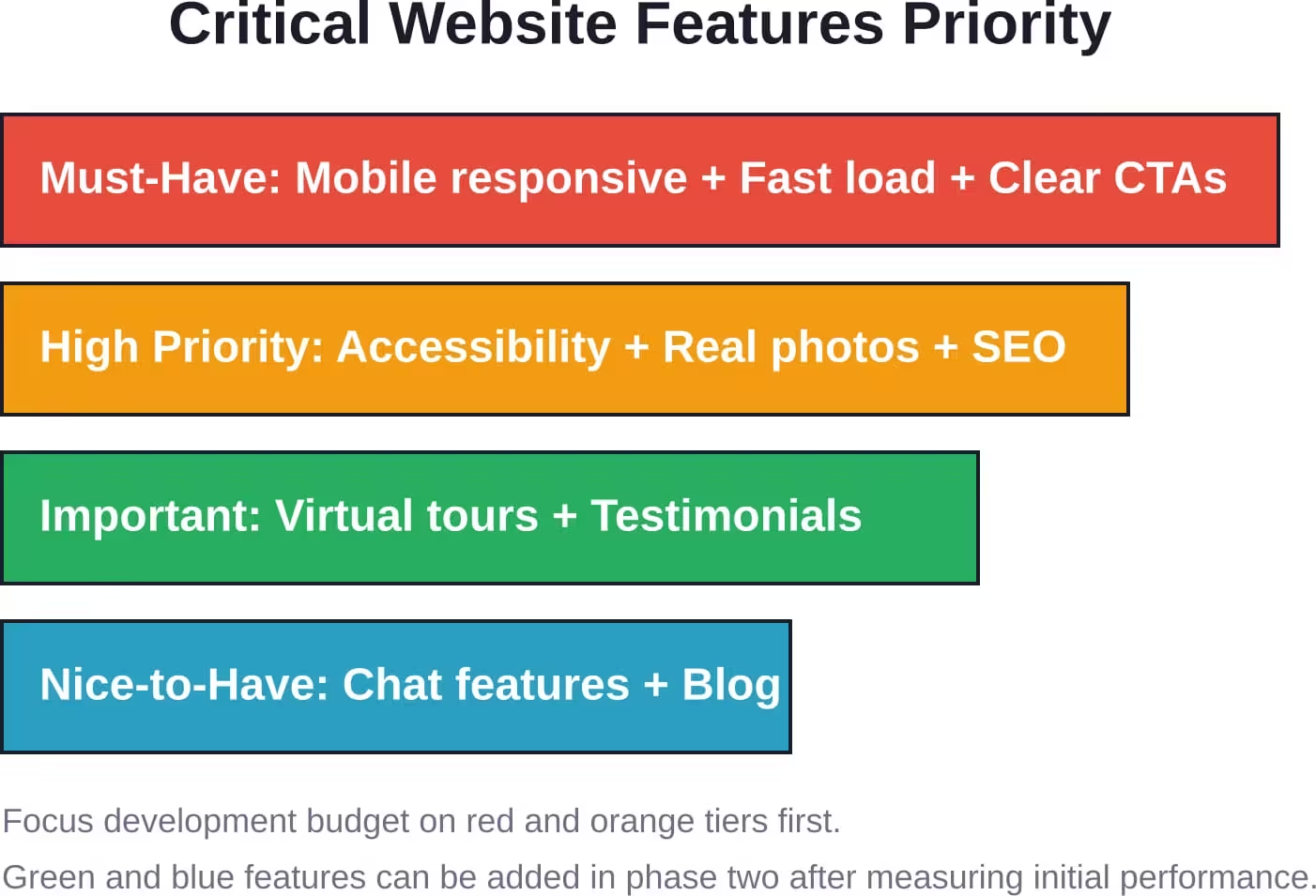
Ready to create a website that actually drives occupancy? Begin with clear goals, prioritize essential features over nice-to-haves, and partner with developers who understand the unique challenges of senior living marketing.