


Quick Summary: Website development for AI search requires fundamental changes in how sites are built and structured. Modern search engines powered by AI models like ChatGPT and Google’s AI Overviews interpret content differently than traditional crawlers, demanding semantic HTML, structured data markup, and conversational content architecture. Developers must optimize for both human visitors and AI comprehension to maintain visibility in 2026 and beyond.
Search isn’t what it used to be. Generative AI tools have fundamentally changed how people find information online, and websites built for traditional search engines are struggling to stay visible.
ChatGPT, Google AI Overviews, Perplexity, and Microsoft Copilot don’t just crawl websites—they read, interpret, and synthesize content. The impact is real: organic search traffic is projected to drop by more than 50% by 2028, according to recent industry analyses.
That’s not a distant problem. It’s happening right now.
Websites need to evolve. Development practices that worked perfectly fine in 2022 leave sites invisible to AI-powered search systems in 2026. The good news? The changes aren’t magic. They’re practical, implementable, and rooted in solid web development fundamentals.
How AI Search Actually Works
Traditional search engines like Google built an index by crawling links and matching keywords. Rank high for the right terms, and traffic followed.
AI-powered search operates differently. These systems use natural language processing to understand context, intent, and meaning. When someone asks ChatGPT or Google’s AI Mode a question, the system doesn’t just match keywords—it comprehends the query semantically.
According to Google’s official documentation, AI features in Search surface relevant links to help people find information quickly. But here’s the thing: the AI decides which sites get cited based on how well it can understand and extract information from the content.
Research on natural language processing for search systems shows that deep learning models analyze massive amounts of text data. LinkedIn’s search engineering team documented how NLP systems process queries and match them against content semantically rather than lexically.
What does this mean for developers? Sites must be machine-readable at a semantic level, not just technically crawlable.
Semantic HTML: The Foundation Layer
Clean, semantic HTML matters more than ever. AI models parse HTML structure to understand content hierarchy and meaning.
Proper semantic markup means using HTML5 elements for their intended purpose: <article> for independent content pieces, <section> for thematic groupings, <nav> for navigation, <aside> for tangential content.
Generic <div> soup confuses AI parsers. When everything is a div, the AI has no semantic clues about what’s important, what’s navigation, what’s the main content.
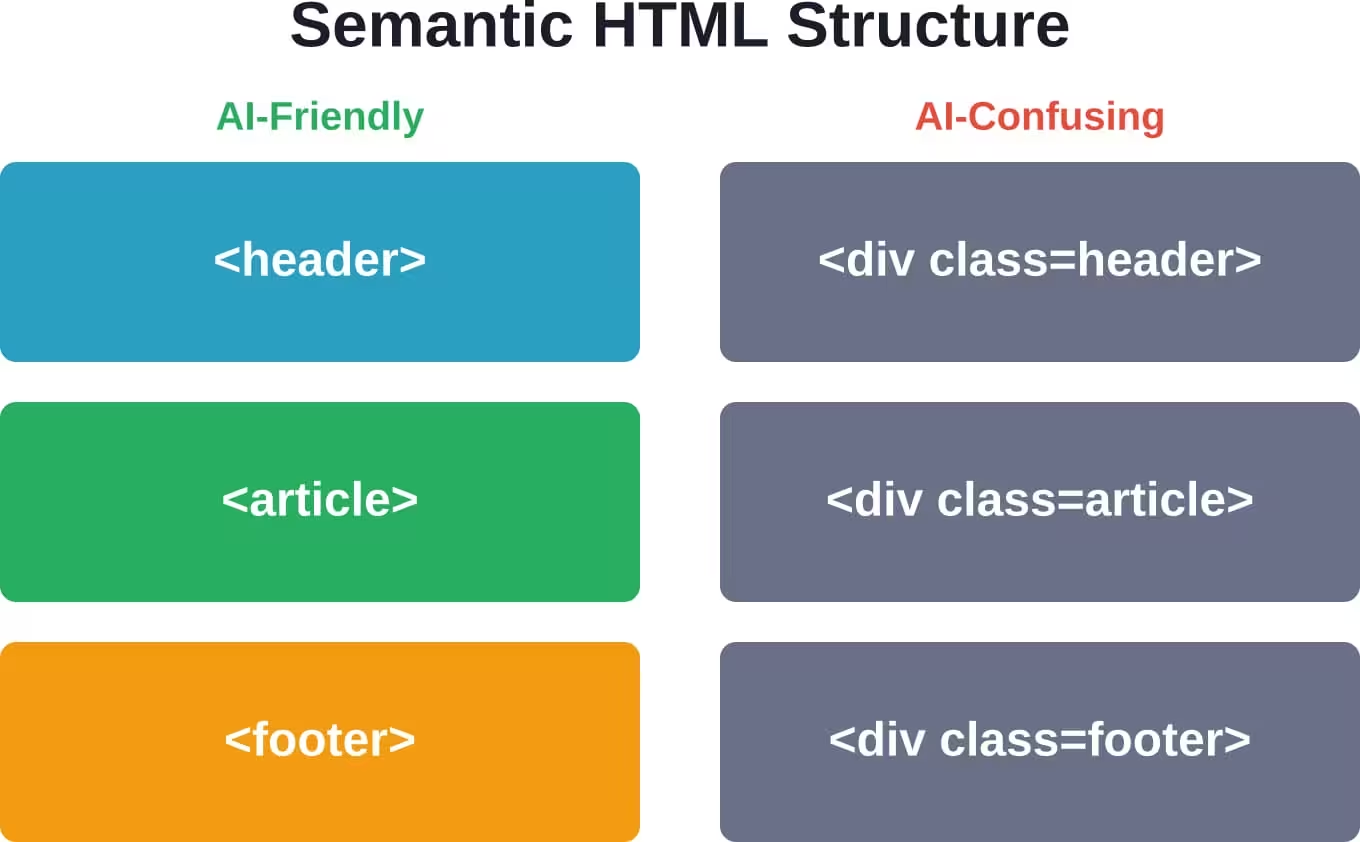
The heading hierarchy matters enormously. One <h1> per page that clearly states the topic. <h2> tags for major sections. <h3> tags for subsections. Never skip levels.
AI models use heading structure to build a content outline. Proper hierarchy helps the AI understand which points are main topics versus supporting details.
Structured Data: Speaking AI’s Language
Structured data markup translates content into a format AI systems can consume directly. Schema.org vocabulary provides standardized ways to annotate everything from articles to products to events.
JSON-LD is the preferred format. It sits in a <script> tag and describes content in machine-readable terms:
{
“@context”: “https://schema.org”,
“@type”: “Article”,
“headline”: “Website Development for AI Search”,
“author”: {
“@type”: “Organization”,
“name”: “Your Company”
},
“datePublished”: “2026-05-05”
}
Google’s official guidance confirms that structured data helps AI features understand content. According to their documentation on AI features and websites, proper markup increases the likelihood of being cited in AI Overviews.
Key schema types for most websites include Article, FAQPage, HowTo, Product, Organization, and WebPage. Pick the schemas that match the actual content type—don’t markup a blog post as a Product just because products have more fields.
Content Architecture for AI Interpretation
AI systems prefer clear, conversational content that directly answers questions. Long-winded introductions and keyword-stuffed paragraphs don’t work anymore.
Structure content around questions people actually ask. Research from detecting AI-generated text shows that natural language patterns improve machine comprehension. The same principle applies in reverse—writing naturally helps AI understand and cite content.
| Traditional SEO Approach | AI Search Approach |
|---|---|
| Keyword density optimization | Topic cluster architecture |
| Exact-match keywords | Semantic intent matching |
| Rank for specific queries | Be cited in AI responses |
| Backlink quantity | Authority and trust signals |
| Page-level optimization | Site-wide topical authority |
Break content into logical sections with clear headings. Each section should address one concept completely before moving to the next. AI models extract information section by section, and muddled organization leads to misinterpretation.
Use descriptive anchor text for internal links. “Click here” tells an AI nothing. “Learn about semantic HTML fundamentals” provides context about what the linked page contains.
Performance and Technical Requirements
Page speed affects AI crawl efficiency. Faster sites get crawled more thoroughly, giving AI systems more complete information to work with.
Core Web Vitals remain important: Largest Contentful Paint under 2.5 seconds, First Input Delay under 100 milliseconds, Cumulative Layout Shift under 0.1. These metrics matter because they indicate technical quality—a signal AI systems use when determining which sources to trust.
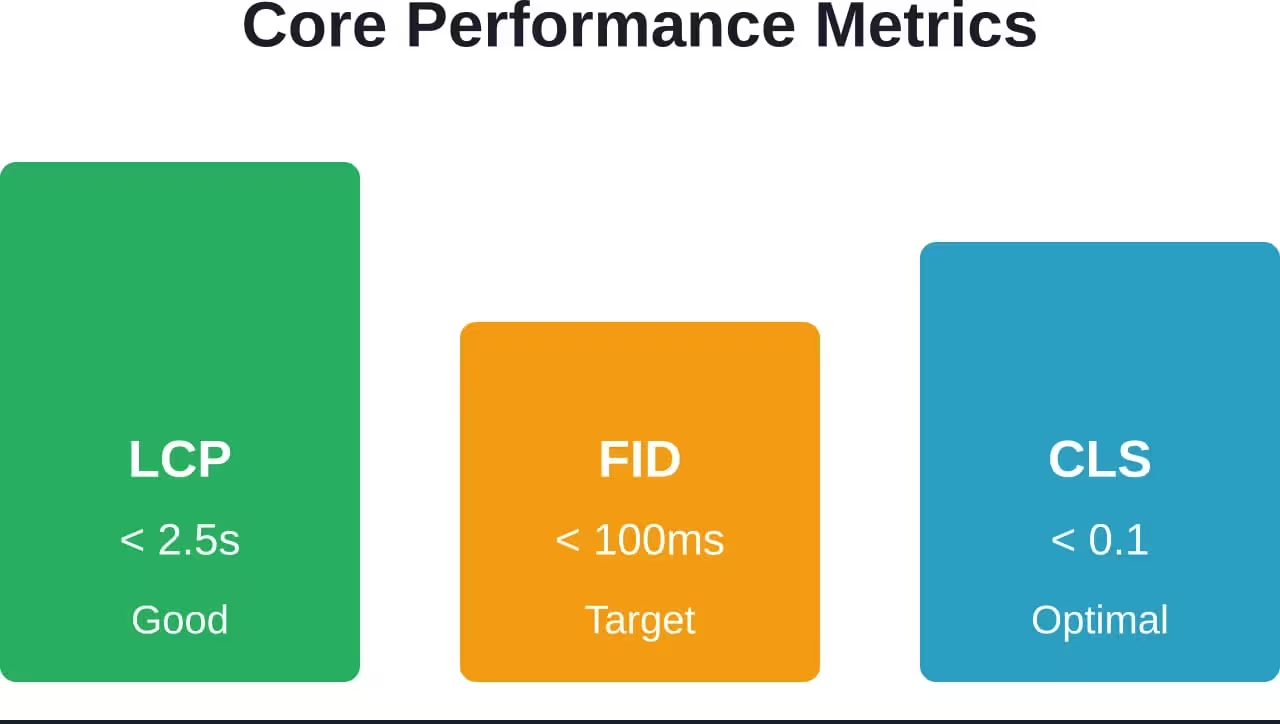
Mobile optimization isn’t optional. According to recent data, 63% of websites receive AI traffic from chatbots, with 98% coming from three main chatbots. Responsive design, touch-friendly interfaces, and mobile performance all influence AI visibility.
Clean URLs help AI systems understand site structure. Use descriptive slugs like /website-development-ai-search rather than /post?id=12345. Logical URL hierarchies signal content relationships.
Trust and Authority Signals
AI systems evaluate source credibility before citing content. Sites with strong authority signals appear more frequently in AI-generated responses.
What builds authority? Comprehensive author information with credentials. Clear organizational details. Cited sources and references. Regular content updates. HTTPS encryption. Privacy policies and legal pages.
The research on search engine safeguards and their applicability for AI highlights that transparency measures help AI systems assess reliability. Making it easy to verify who created content and why they’re qualified increases citation likelihood.
External validation matters. Links from authoritative domains in the same field. Citations in academic or industry publications. Mentions in trusted media sources. These signals tell AI systems that other authoritative sources trust this content.
Accessibility as an AI Factor
Accessible websites are inherently more machine-readable. Alt text for images provides context AI systems can use. ARIA labels clarify interactive elements. Keyboard navigation ensures logical tab order that AI parsers can follow.
According to Google’s guidance on creating helpful content, accessibility features improve how automated systems understand pages. Good accessibility practices and good AI optimization overlap significantly.
- Descriptive alt text for all images
- Proper form labels and ARIA attributes
- Logical heading hierarchy
- Sufficient color contrast
- Keyboard-navigable interfaces
- Clear focus indicators
Screen reader compatibility particularly aligns with AI needs. If content makes sense when read linearly by a screen reader, it generally makes sense to an AI parser.
Measuring AI Search Performance
Traditional analytics don’t capture AI search visibility. Google Search Console shows some AI Overview appearances, but tracking ChatGPT citations or Perplexity mentions requires different approaches.
Brand monitoring tools can track mentions across AI platforms. Setting up alerts for brand names or key content topics helps identify when AI systems cite the site. Direct traffic spikes often indicate AI referrals, since many AI tools don’t pass referrer data.
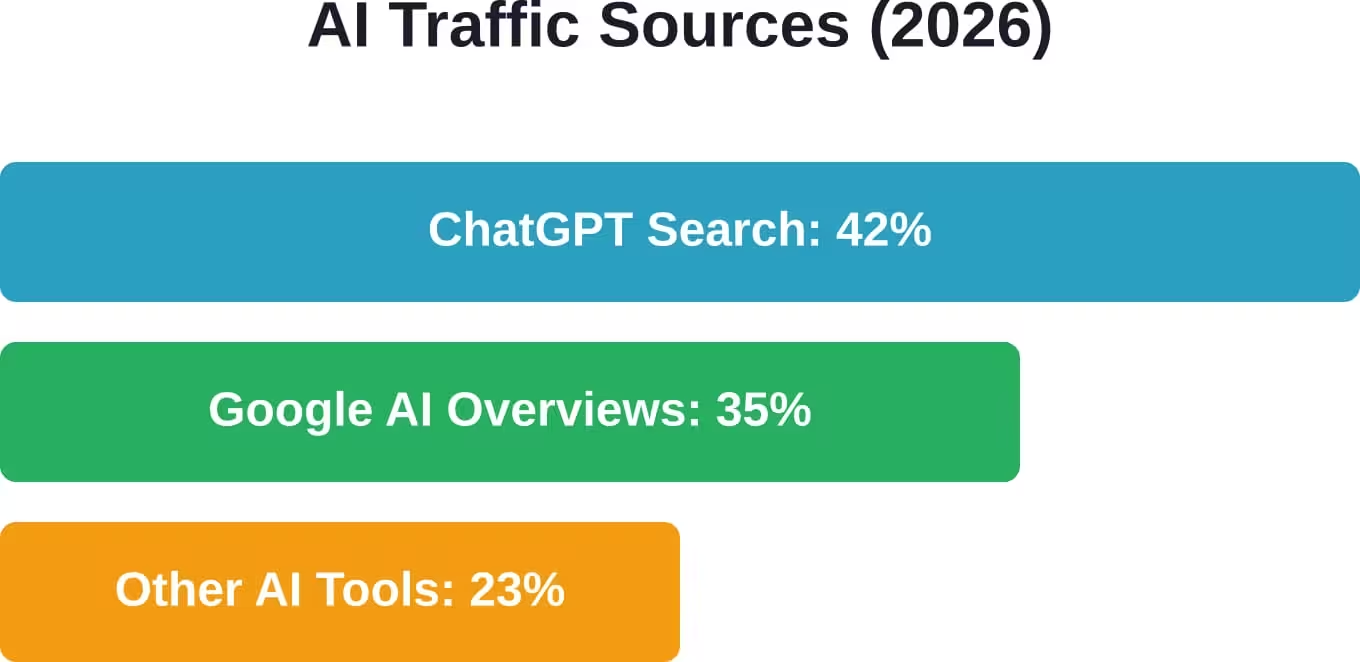
Manual testing provides direct feedback. Query AI platforms with questions the site should answer. Check if the content gets cited. Review how the AI summarizes or interprets the information.
A/B testing structured data implementations shows what works. Test different schema types, compare citation rates, iterate based on results.
Implementation Roadmap
Where should development teams start? Prioritize changes based on impact and effort:
- Phase 1 (Immediate): Audit semantic HTML and fix heading hierarchy issues. Implement basic schema markup for primary content types. Review and improve content structure for clarity.
- Phase 2 (Short-term): Optimize Core Web Vitals. Expand structured data coverage across the site. Build out topical authority with comprehensive content clusters.
- Phase 3 (Ongoing): Monitor AI citation performance. Continuously test and refine content approaches. Stay current with AI platform changes and requirements.
The shift to AI search isn’t a one-time project. It’s an ongoing evolution of how websites communicate with both human visitors and machine interpreters.
Build a Website Structured for Modern Search
Modern search platforms rely more heavily on clear structure, accessible content, and organized page hierarchy. Websites with confusing navigation or scattered content often become harder to scale and maintain as search behavior evolves. Lengreo combines website development with digital marketing strategy, helping businesses launch websites that support visibility, lead generation, and long-term growth instead of functioning as static online brochures. Their team handles everything from research and prototyping to implementation, QA, and post-launch support.
Support Your Website Long-Term Organic Growth
With Lengreo, businesses can get:
- Front-end and back-end website development
- Technical setup and QA before launch
- Flexible website structure for future expansion
- Ongoing support and maintenance
If your business is planning a new website or a full redesign for modern search behavior, contact Lengreo for a consultation.
Common Pitfalls to Avoid
- Over-optimization for AI can backfire: Keyword stuffing doesn’t work any better with AI than it did with traditional search—probably worse, since AI models detect unnatural language patterns more effectively.
- Neglecting human visitors is a mistake: Sites still need to convert visitors, not just get cited by AI. Balance machine-readability with human usability.
- Ignoring mobile phones creates blind spots: Desktop-only testing misses how AI systems crawl and interpret mobile versions, which are often the primary index.
- Inconsistent structured data confuses AI parsers: If markup contradicts visible content or different pages use conflicting schema, AI systems trust the site less.
The Two-Audience Reality
Modern websites serve two distinct audiences: humans who visit and consume content, and AI systems that read, interpret, and cite it.
Great web development in 2026 means building for both. Clean semantic code. Fast performance. Clear content structure. Comprehensive schema markup. Authoritative signals.
The fundamentals haven’t changed—they’ve intensified. AI search rewards sites that follow web standards, prioritize accessibility, and create genuinely helpful content. Shortcuts and hacks work even less than they used to.
But for development teams willing to adapt, the opportunity is real. Sites optimized for AI search gain visibility in the platforms where audiences increasingly start their research. Citations in AI responses drive qualified traffic from users already primed by the AI’s endorsement.
The question isn’t whether to optimize for AI search. That ship sailed. The question is how quickly development practices can evolve to meet this new reality.
Conclusion
Website development for AI search demands fundamental changes in how sites are architected, coded, and maintained. Semantic HTML, structured data, performance optimization, and content clarity aren’t nice-to-haves anymore—they’re requirements for visibility.
The transition challenges development teams, but the principles align with existing best practices. Clean code, accessibility, user experience, and technical excellence have always mattered. AI search simply makes those fundamentals more visible and more consequential.
Start with the basics: audit existing sites for semantic markup, implement schema where it’s missing, optimize Core Web Vitals, and restructure content for clarity. Then build from there, testing and iterating based on actual AI citation performance.
The websites that thrive in AI search won’t be the ones gaming systems or chasing shortcuts. They’ll be the ones built right from the foundation up—accessible, fast, well-structured, and genuinely helpful. That’s the development standard for 2026 and beyond.