


Quick Summary: Website development for agencies requires specialized tools, workflows, and strategies to efficiently deliver client projects at scale. Agencies typically leverage platforms like WordPress, Webflow, or white-label builders that offer client management features, reusable templates, and streamlined deployment. Success hinges on choosing the right tech stack, establishing repeatable processes, and balancing customization with efficiency to maintain profitability while delivering quality results.
Running a web development agency means juggling dozens of client projects, tight deadlines, and the constant pressure to deliver quality while staying profitable. The platform choices made today directly impact how efficiently projects ship tomorrow.
Unlike freelancers building one-off sites, agencies need systems that scale. That means reusable components, client management features, and workflows that don’t reinvent the wheel every time a new project kicks off.
The landscape has shifted dramatically. What worked three years ago—custom coding everything from scratch—burns through hours that agencies can’t bill for anymore. Clients expect faster turnarounds, and the tools have evolved to meet that demand.
Why Platform Choice Matters More Than Ever
The website builder or development platform an agency chooses becomes the foundation of every client project. Pick wrong, and teams spend hours fighting limitations instead of building.
According to competitor analysis, WordPress accounts for approximately 43.5% of all sites found on the world wide web. That’s not an accident. The platform has been around longer than most alternatives and powers everything from small business sites to enterprise solutions.
But dominance doesn’t mean it’s the right fit for every agency. Some teams need drag-and-drop simplicity. Others require granular code control. The decision comes down to client types, project complexity, and internal skill sets.
Here’s the thing though—switching platforms mid-growth is painful. Agencies that lock into a system need to consider five-year scalability, not just next quarter’s projects.
Get a Website That Actually Brings You Leads, Not Just Traffic
Most agency websites look fine but don’t really support lead generation or long-term client acquisition. That usually shows up in unclear structure, weak messaging, or pages that don’t guide visitors toward action. Lengreo builds websites as part of a broader marketing effort, combining development with their experience in lead generation, SEO, and digital strategy. Their approach covers discovery, prototyping, development, and post-launch support, with a focus on creating websites that support your online presence and business growth.
Build a Website That Fits How Your Agency Works
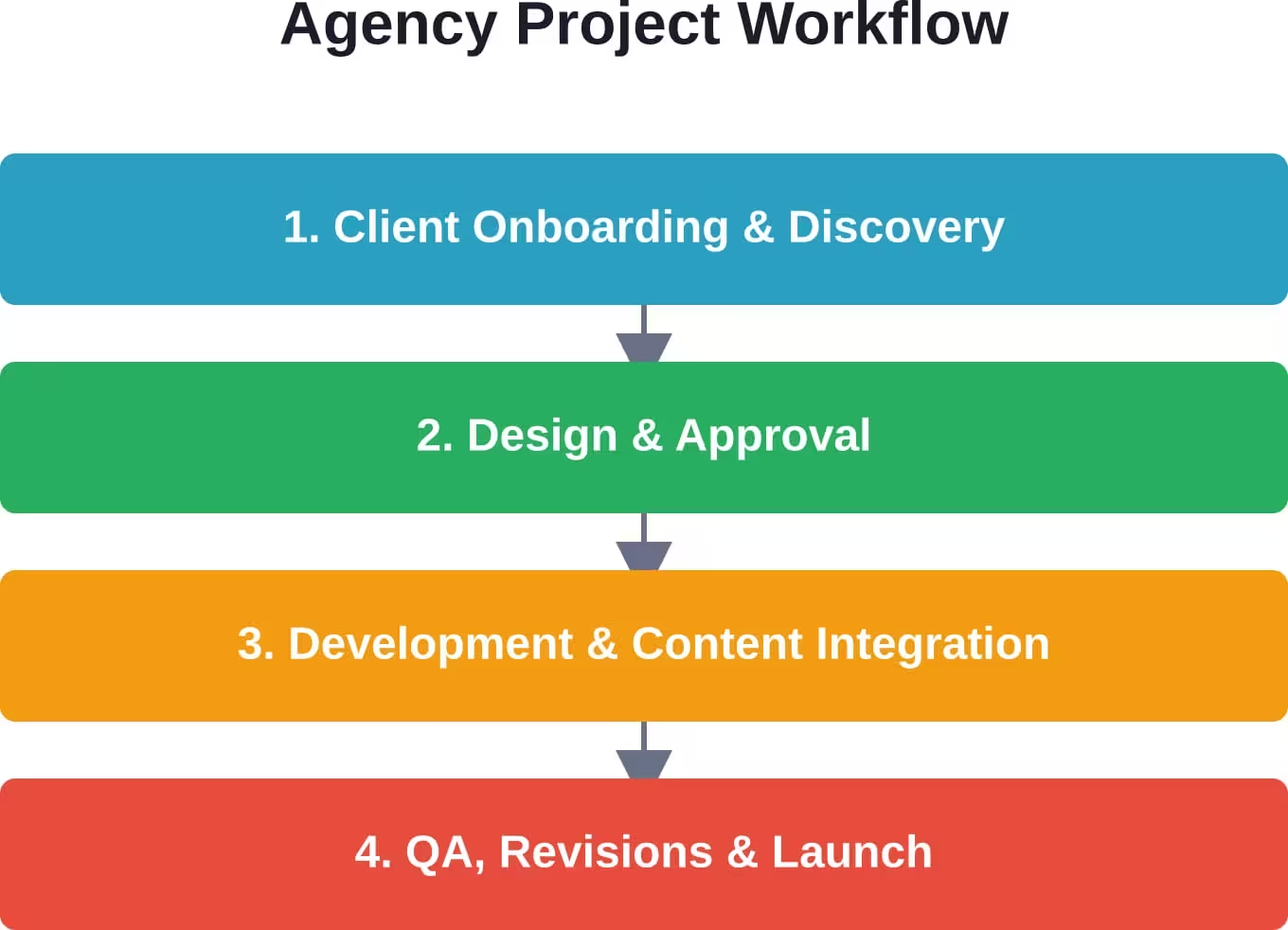
Lengreo structures website development around clear steps and practical execution:
- Discovery, business analysis, and research before any design work
- Prototyping with iterative design reviews
- Front-end and back-end development with staged approvals
- Quality assurance, domain setup or migration, and launch support
If your website doesn’t clearly present your services or support your growth, talk to Lengreo and get a setup that fits your business.
The Five Platform Categories Agencies Actually Use
Based on community discussions and industry usage patterns, agencies typically work within five platform categories. Each has distinct strengths and trade-offs.
WordPress: The Industry Standard
WordPress powers approximately 43.5% of the web for good reason. The ecosystem offers tens of thousands of themes and plugins, meaning nearly any feature request can be handled without custom development.
WebDevStudios and similar agencies have built entire business models around WordPress development. The platform supports everything from simple brochure sites to complex e-commerce systems with membership tiers.
The learning curve is moderate. Developers can start with page builders like Elementor or Divi for speed, then drop into PHP and custom theme development when projects demand it.
Maintenance is the trade-off. WordPress sites require regular updates—core software, themes, and plugins all need attention. Agencies typically bundle maintenance into monthly retainers, turning this potential weakness into recurring revenue.
Webflow: The Designer’s Platform
Webflow attracts design-focused agencies that want pixel-perfect control without writing CSS from scratch. The visual development interface generates clean, production-ready code automatically.
The platform shines for agencies with strong design teams but limited backend development resources. Designers work in a visual canvas that feels like Figma or Sketch, while the system handles responsive breakpoints and browser compatibility.
Client handoff is streamlined through Webflow’s built-in CMS and hosting. Non-technical clients can edit content through an intuitive interface without touching code or breaking layouts.
The constraint? Complex custom functionality still requires workarounds or third-party integrations. E-commerce capabilities exist but don’t match Shopify’s depth for larger stores.
Wix and Squarespace: The Accessibility Route
These platforms lower the barrier for agencies working with budget-conscious clients or businesses that need simple sites fast. Both offer polished templates and hosting baked in.
Wix provides more flexibility through apps and customization options. Squarespace leans toward simplicity with beautifully designed templates that look professional out of the box.
Real talk: these platforms work best for agencies handling high volumes of small business clients. The per-site costs stay predictable, and setup time drops dramatically compared to custom builds.
Advanced developers find these platforms limiting. Custom code injection exists but feels like working around the system rather than with it.
Duda: The White-Label Specialist
Duda built its platform specifically for agencies and web professionals managing multiple client sites. Features like team collaboration, client permissions, and white-label branding come standard.
The platform offers responsive site builders with reusable widgets and templates that speed up development. Agencies can create a branded site builder experience, hiding Duda’s name entirely from clients.
Multi-site management through a single dashboard means switching between client projects takes seconds instead of logging into separate hosting accounts.
Pricing structures based on site volume make Duda cost-effective once an agency manages 10+ active sites. Below that threshold, other platforms might offer better economics.
Custom Development Stacks
Some agencies skip pre-built platforms entirely, building with frameworks like React, Next.js, or Vue paired with headless CMS solutions like Contentful or Sanity.
This approach offers unlimited flexibility and performance optimization opportunities. Teams control every aspect of the stack, from frontend frameworks to deployment pipelines.
The cost is development time. Even with component libraries and starter templates, custom builds take longer than platform-based projects. Agencies pursuing this route typically work with clients who have specific technical requirements or substantial budgets.
Building a Scalable Agency Development Workflow
Platform selection is step one. Workflow design determines whether an agency ships projects on time or constantly scrambles to meet deadlines.
Successful agencies don’t treat every project as a unique snowflake. They identify patterns, build reusable components, and document processes that junior developers can follow.
Template Libraries Save Hundreds of Hours
Agencies that maintain libraries of pre-built sections—hero blocks, feature grids, testimonial carousels, contact forms—can significantly reduce development time on typical projects.
The approach works across platforms. WordPress agencies build custom block libraries with ACF or Gutenberg. Webflow teams create component libraries in their workspace. Even custom dev shops maintain React component libraries.
The key is treating templates as starting points, not finished products. Clients still get customized designs, but developers start at 60% complete instead of zero.
Client Onboarding Sets Project Trajectory
Projects go sideways when scope isn’t locked down early. Agencies that skip structured onboarding deal with endless revision rounds and feature creep.
Effective onboarding includes detailed questionnaires about business goals, target audiences, required features, and content readiness. Getting this information upfront prevents mid-project surprises.
Some agencies use tools like Basecamp or ClickUp to manage client communication and approvals. Others build custom client portals. The specific tool matters less than having a consistent process every team member follows.
Design-Development Handoff Protocols
The transition from design mockups to functional code is where many projects slow down. Designers create beautiful Figma files that developers can’t easily translate, or developers interpret designs differently than intended.
Agencies solve this by establishing handoff standards. Design files include specs for spacing, typography scales, color variables, and interactive states. Developers know exactly where to find this information.
Design systems help tremendously. When designers work within a documented component system that developers have already built, the handoff becomes plug-and-play rather than interpretation.
Quality Assurance Before Launch
Launching sites with broken links, mobile layout issues, or slow load times damages agency reputation. A standardized QA checklist catches these problems before clients see them.
Testing should cover functionality (forms submit, links work, videos play), responsiveness (test on actual devices, not just browser resizing), performance (page speed scores, image optimization), and SEO basics (meta tags, heading structure, XML sitemaps).
Some agencies automate parts of QA using tools that scan for broken links, test forms, and check mobile responsiveness. The human review remains critical for design quality and user experience.
Managing Multiple Client Projects Simultaneously
Agencies rarely work on one project at a time. Developers juggle three to eight active builds while designers work ahead on upcoming projects.
Without systems, this turns chaotic fast. Projects miss deadlines, client communication falls through cracks, and team members duplicate work.
Project Management Tools That Actually Work
Community discussions reveal agencies use a surprisingly narrow set of project management platforms. Basecamp, ClickUp, Monday.com, and Asana appear repeatedly.
The specific tool matters less than how consistently the team uses it. Half-adopted project management is worse than none—information scatters across Slack, email, and the PM tool, and nobody knows where truth lives.
Effective agencies establish rules: all client communication happens in the PM tool, all files get uploaded there, all feedback gets documented in tickets rather than Slack messages that disappear.
Time Tracking Reveals Profitability Problems
Agencies that don’t track time per project can’t accurately assess profitability. A project quoted at 40 hours that actually takes 65 hours loses money, but without tracking, the agency never knows why margins feel tight.
Time tracking also reveals which types of projects run most efficiently. Maybe WordPress sites consistently come in under budget while custom Webflow builds run over. That data informs future pricing and project selection.
Tools like Harvest, Toggl, or built-in tracking in project management platforms make this easier. The key is making tracking a daily habit, not something developers remember to do at month-end.
Client Communication Cadence
Radio silence frustrates clients more than almost anything else. Even when development progresses smoothly, clients who don’t hear updates assume the project stalled.
Weekly update emails or check-in calls keep clients informed and engaged. These don’t need to be hour-long meetings—a five-minute call or brief written summary covering what shipped this week and what’s planned for next week works fine.
This regular cadence also surfaces problems early. If a client hasn’t delivered promised content, the weekly check-in catches it before it delays launch.
Pricing Models That Support Sustainable Growth
How agencies price services directly impacts growth potential. Underpricing leads to overwork and burnout. Overpricing without delivering proportional value loses clients to competitors.
Project-Based vs. Retainer Models
Most agencies start with project-based pricing. Client wants a website, agency quotes a fixed price, project gets delivered. This model is straightforward but creates revenue volatility.
Retainer models provide predictable monthly income. Clients pay a recurring fee for ongoing maintenance, updates, hosting, and a bank of development hours. This smooths cash flow and deepens client relationships.
Many agencies blend both: project fees for initial builds, retainers for ongoing support. This combines the higher margins of project work with the stability of recurring revenue.
Value-Based Pricing vs. Hourly Rates
Charging hourly caps agency revenue at team capacity times billable rate. There’s a ceiling to how much one developer can work.
Value-based pricing ties project cost to business impact for the client. A website that generates $500,000 in annual revenue justifies a higher price than one for a local service business, even if development time is similar.
The challenge is quantifying value, especially for new businesses without existing revenue data. Agencies using value-based pricing invest time in discovery to understand client business models and project ROI potential.
Tiered Service Packages
Offering starter, professional, and premium packages simplifies sales conversations. Clients select a tier based on needs and budget rather than negotiating custom quotes.
Packages work well when agencies serve similar client types with predictable needs. A package structure for local service businesses might include basic (5 pages, contact form, mobile responsive), professional (10 pages, blog, SEO setup), and premium (unlimited pages, e-commerce, custom features).
The key is making package differences clear and meaningful. Clients need to understand what they gain moving from one tier to the next.
| Pricing Model | Pros | Cons | Best For |
|---|---|---|---|
| Project-Based Fixed Fee | Clear client expectations, predictable project scope | Revenue volatility, scope creep risk | New agencies, one-time builds |
| Hourly Rates | Simple to calculate, flexible scope | Revenue ceiling, penalizes efficiency | Unpredictable projects, consulting |
| Monthly Retainers | Predictable income, client retention | Requires ongoing value delivery | Maintenance, long-term partnerships |
| Value-Based | Higher margins, aligns with client ROI | Harder to quantify, requires discovery | Established agencies, high-impact projects |
| Tiered Packages | Simplified sales, scalable offerings | Less customization, may not fit all clients | Similar client types, repeatable processes |
Technical Considerations for Agency Projects
Beyond platform choice and workflow, several technical factors separate amateur builds from professional agency work.
Hosting and Performance
Cheap shared hosting might save $10 monthly but costs far more in slow load times, downtime, and client frustration. Agency sites need reliable, fast hosting.
Many agencies white-label hosting services, marking up costs as part of monthly retainers. This provides control over the hosting environment and additional recurring revenue.
Performance matters for SEO and user experience. Sites that load slowly rank lower in search results and convert visitors at lower rates. Agencies optimize images, implement caching, use CDNs, and minimize render-blocking resources.
Security and Maintenance
WordPress sites need regular updates to core software, themes, and plugins. Outdated sites become security vulnerabilities, putting client data and reputation at risk.
Agencies handle this through maintenance retainers that include weekly or monthly update cycles, security monitoring, backups, and uptime checks. This prevents the scenario where a client’s site gets hacked six months after launch because nobody applied security patches.
SSL certificates are non-negotiable. Every site needs HTTPS, both for security and because Google considers it a ranking factor.
SEO Foundations
Agencies that deliver beautiful websites with terrible SEO fundamentals set clients up for failure. Basic SEO—proper heading structure, meta tags, XML sitemaps, mobile responsiveness, fast load times—should be standard in every build.
Advanced SEO services like content strategy, link building, and ongoing optimization typically fall under separate retainers or marketing services, but the technical foundation belongs in the initial build.
Analytics and Conversion Tracking
Launching a site without analytics is like driving blindfolded. Agencies install Google Analytics, set up goal tracking for key conversions (contact form submissions, purchases, phone clicks), and configure basic reporting.
This data proves website value to clients and informs future optimization work. When clients can see that the new website generates 50 qualified leads monthly, renewing retainers becomes easy.
Scaling Agency Operations
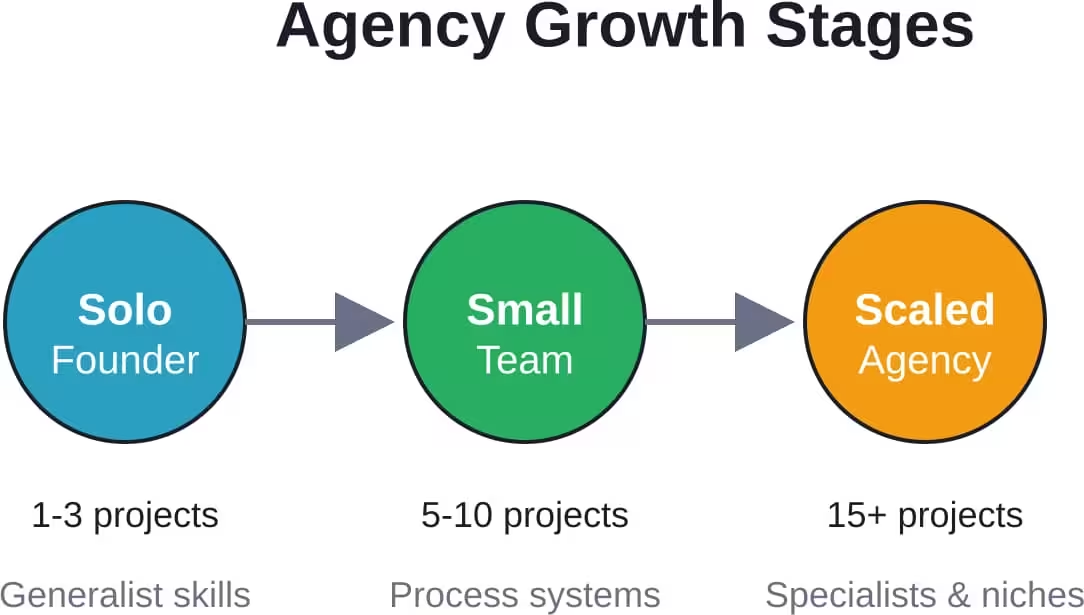
Growth creates new challenges. Systems that worked for five concurrent projects break down at 15. One-person agencies hit capacity limits that require hiring.
When to Hire Specialists vs. Generalists
Early agency hires are often generalists who can handle design, development, and client communication. This flexibility matters when project needs vary daily.
As agencies scale, specialists become valuable. A dedicated designer, frontend developer, backend developer, and project manager allow deeper expertise and faster execution within disciplines.
The trade-off is utilization. Specialists need consistent work in their area. An agency without enough design work to keep a full-time designer busy shouldn’t hire one yet.
Contractors and White-Label Partners
Many agencies supplement internal teams with contractors or white-label development partners. This provides flexibility to handle overflow work without full-time hiring commitments.
White-label relationships work particularly well for specialized features. An agency primarily focused on design might partner with a development shop for complex custom functionality, maintaining the client relationship while outsourcing technical execution.
The risk is quality control. Agencies remain responsible for deliverables even when work is outsourced. Vetting partners thoroughly and starting with small projects before committing to larger ones reduces this risk.
Standardizing Service Offerings
Agencies trying to be everything to everyone struggle to develop expertise or efficiency. Specialists who focus on particular industries or project types build deeper knowledge and reusable processes.
An agency focusing exclusively on e-commerce sites for fashion brands develops templates, knows platform quirks, understands industry-specific features, and builds a portfolio that attracts similar clients.
This specialization also improves marketing. Messaging for “web design agency” competes with thousands of generalists. Messaging for “Shopify development for sustainable fashion brands” speaks directly to a defined audience.
Client Acquisition Strategies for Web Agencies
Building great websites means nothing without clients to build them for. Agencies need consistent deal flow to maintain revenue and team utilization.
Portfolio and Case Studies
Nothing sells agency services better than proven results. Detailed case studies showing before/after comparisons, traffic increases, conversion improvements, or revenue growth demonstrate capability far better than feature lists.
Effective case studies follow a simple structure: client challenge, agency solution, measurable results. Include screenshots, metrics, and client testimonials when possible.
For new agencies without client work to showcase, pro bono projects for nonprofits or heavily discounted work for businesses willing to provide testimonials can seed the portfolio.
Referral Systems
Satisfied clients tell others. Agencies that formalize referral programs—offering discounts, free months of maintenance, or cash bonuses for successful referrals—accelerate word-of-mouth growth.
The key is making referrals easy. Give clients a simple one-page overview they can forward to colleagues, or ask for LinkedIn introductions to specific people they know who might need services.
Content Marketing and SEO
Agencies ranking well for searches like “Shopify developer in Austin” or “WordPress agency for healthcare” capture high-intent prospects actively looking for services.
This requires producing content that demonstrates expertise—guides, tutorials, industry insights—and optimizing for local and industry-specific search terms. The investment pays dividends long-term as content accumulates and rankings improve.
Partnerships with Complementary Services
Marketing agencies, branding studios, and business consultants all work with clients who need websites. Forming referral partnerships with these complementary services creates consistent lead sources.
The relationship works both ways. Web agencies can refer clients who need branding or marketing services, creating mutual value.
Emerging Trends Shaping Agency Development
The web development landscape continues evolving. Agencies that spot trends early gain competitive advantages.
AI-Assisted Development
AI tools are changing how developers work. Code generation, automated testing, and AI-powered design suggestions speed up certain tasks significantly.
Smart agencies incorporate these tools to boost efficiency without sacrificing quality. AI handles boilerplate code, routine testing, and initial design drafts, freeing developers for higher-level problem solving.
The technology won’t replace skilled developers anytime soon. Complex projects still require human judgment, creativity, and client communication that AI can’t replicate.
Headless CMS and JAMstack
Decoupling content management from frontend presentation offers performance and flexibility advantages. Agencies working with content-heavy sites or those needing to publish across multiple channels (web, mobile apps, digital signage) increasingly adopt headless architectures.
The trade-off is complexity. Traditional platforms like WordPress offer all-in-one simplicity. Headless setups require orchestrating multiple services—content API, frontend framework, hosting, build processes.
This approach works best for clients with technical teams who can manage the added complexity or agencies confident in their ability to support it long-term.
Accessibility and Inclusive Design
Legal requirements around web accessibility continue expanding. Agencies that build accessibility into standard workflows—proper semantic HTML, ARIA labels, keyboard navigation, color contrast ratios—avoid expensive retrofits later.
Beyond compliance, accessible sites reach broader audiences. A significant portion of the global population experiences some form of disability. Sites that work well for everyone convert better and face fewer legal risks.
Sustainability and Performance
Website carbon footprints are gaining attention. Cleaner code, optimized images, efficient hosting, and reduced unnecessary features lower energy consumption.
Performance optimization and sustainability align perfectly. Fast, lean sites use less energy and provide better user experiences. Agencies can market this as both an environmental and business benefit.
Common Pitfalls and How to Avoid Them
Even experienced agencies make mistakes. Recognizing common traps helps avoid them.
Underestimating Project Complexity
Scope that seems straightforward during sales often reveals hidden complexity during development. What looked like a simple contact form needs conditional logic, CRM integration, and email automation.
Detailed discovery prevents this. Ask questions that reveal requirements the client didn’t think to mention. Build buffer time into estimates for unknowns that inevitably surface.
Poor Contract Terms
Contracts that don’t clearly define scope, revision limits, payment terms, and IP ownership create disputes. Invest in solid contract templates reviewed by a lawyer.
Key elements include: detailed scope of work, number of revision rounds included, payment schedule (typically deposit, milestone payments, and final payment on launch), kill fee if client cancels mid-project, and clarity on who owns final deliverables.
Taking Every Project That Walks in the Door
When cash flow is tight, saying no to work feels impossible. But projects with problem clients, unrealistic budgets, or misaligned expectations damage agencies more than the revenue helps.
Learning to qualify leads and decline poor-fit projects protects team morale, reputation, and profitability. One nightmare client can consume time and energy that could’ve gone to three good ones.
Neglecting the Agency’s Own Website
Agencies pour expertise into client sites while their own website sits outdated and broken. This sends terrible signals to prospects.
The agency website doesn’t need constant updates, but it should showcase current capabilities, recent work, and clear value propositions. Treat it as the portfolio piece that lands the next ten clients.
Moving Forward with Agency Website Development
Building a successful web development agency requires more than technical skills. The combination of smart platform choices, efficient workflows, clear pricing, and strong client relationships determines long-term viability.
Agencies that document processes, build reusable components, and focus on specific niches typically scale more successfully than those treating every project as custom from scratch. The initial investment in systems pays dividends as project volume grows.
Technology will continue evolving. Platforms that dominate today may lose relevance in five years. But the fundamentals—delivering value to clients, managing projects effectively, pricing sustainably, and building strong teams—remain constant.
The agencies thriving in 2026 are those that balanced efficiency with quality, leveraged technology without losing the human element, and built reputations for delivering results rather than just websites.
Start with one platform, master it completely, build repeatable processes around it, and expand from that foundation. The agencies that struggle are those trying to be everything immediately instead of building expertise methodically.
Now’s the time to assess current operations honestly. Which processes need documentation? Where does time disappear on projects? What client types produce the best margins? The answers to these questions shape the path forward.
Ready to level up your agency’s development workflow? Start by auditing one completed project—track actual hours spent, identify bottlenecks, and document what could be templated for future builds. That single exercise reveals more about operational efficiency than months of planning.