


Quick Summary: Website development for accountants requires specialized platforms that combine professional design with security features, client portals, and compliance tools. The best solutions offer drag-and-drop builders, accounting-specific templates, appointment scheduling, and secure document sharing—all while maintaining data protection standards essential for financial services.
The virtual front door to an accounting practice matters more than ever. When potential clients search for financial expertise, the website creates that critical first impression—establishing credibility before a single conversation happens.
But accounting websites need more than aesthetic appeal. They require specific functionality, security protocols, and compliance measures that general website builders simply don’t address.
Here’s the thing though—selecting the right development approach can make the difference between a site that generates qualified leads and one that sends prospects to competitors.
Why Accountant Websites Need Specialized Development
Generic website templates don’t cut it for accounting firms. The industry demands specific features that align with how financial professionals work and how clients expect to interact with them.
Security sits at the top of that list. Accounting firms handle sensitive financial data, tax documents, and confidential business information. According to ISO standards, information security management systems must protect data integrity and maintain client confidentiality.
Beyond security, accounting websites need tools that streamline client workflows. Appointment booking, secure document upload portals, and client communication systems turn the website from a digital brochure into a functional business tool.
Core Features That Matter
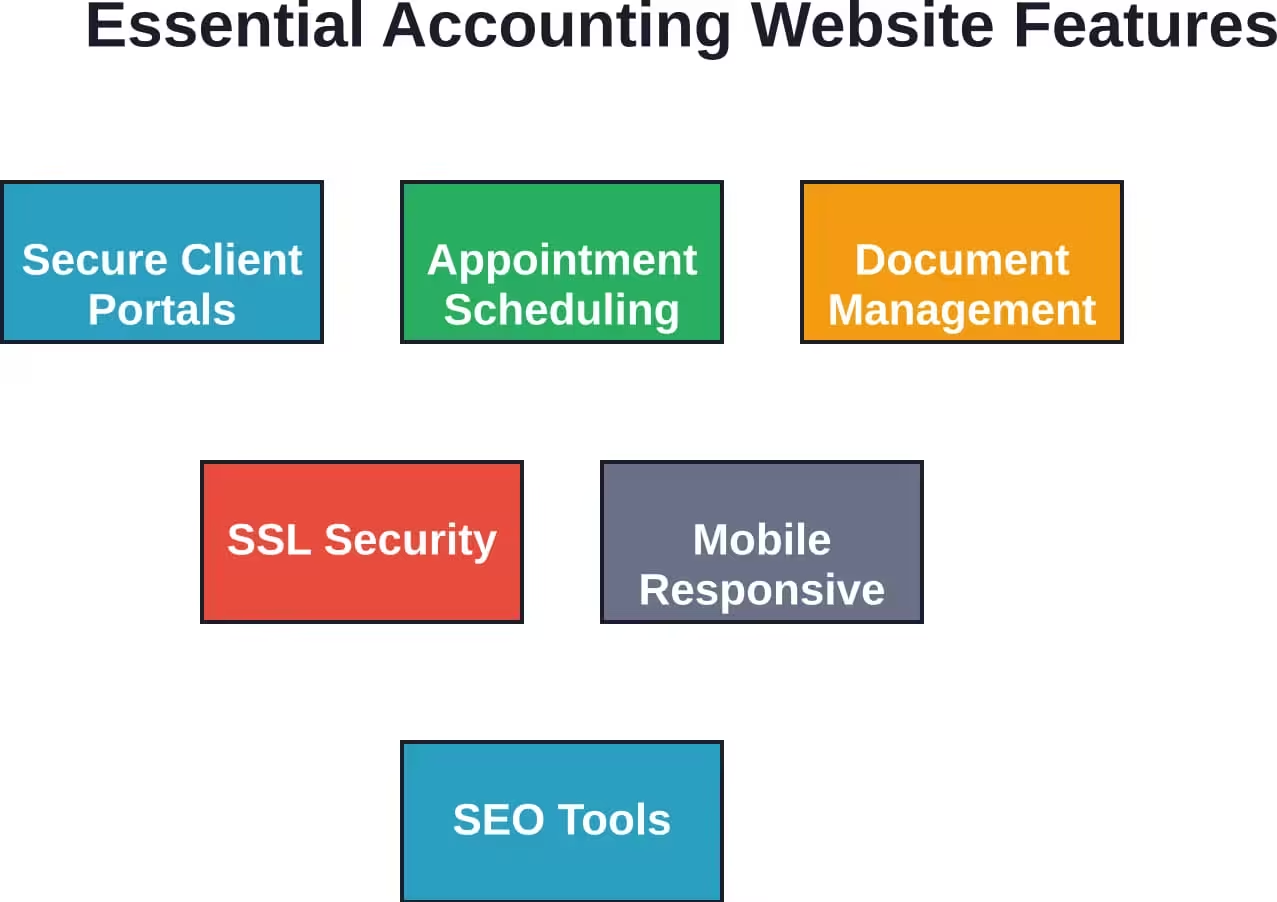
Professional accounting websites typically incorporate several key elements. Templates designed specifically for accountants provide the foundation, removing the complexity around creating a professional web presence.
These platforms offer drag-and-drop builders that don’t require coding knowledge. Free website templates give firms a starting point, while customization options ensure the final product reflects the firm’s brand and service offerings.
Client portals have become non-negotiable. Secure areas where clients can upload tax documents, review financial statements, and communicate with their accountant save time and reduce email clutter.
Development Approaches: Build vs. Platform
Accounting firms face a fundamental choice: custom development or specialized website builders. Each approach offers distinct advantages.
Custom development provides ultimate flexibility. Developers can create exactly the features and workflows the firm needs. But this comes with higher costs, longer timelines, and ongoing maintenance requirements.
Website builders designed for accountants offer a middle path. These platforms include accounting-specific templates and features out of the box, allowing firms to launch professional sites quickly without technical expertise.
What to Look For in Website Builders
Not all website builders address accounting firm needs equally. The right platform combines ease of use with professional capabilities.
Look for builders that offer customization without requiring code. Drag-and-drop interfaces let firms arrange content, add pages, and modify layouts intuitively.
Security features deserve careful evaluation. SSL certificates, encrypted data transmission, and secure hosting infrastructure protect both the firm and its clients. The ISO/IEC 27000 family of standards provides frameworks for information security management that website platforms should align with.
| Feature | Why It Matters | Implementation |
|---|---|---|
| SSL Certificate | Encrypts data transmission | Usually included in hosting |
| Client Portal | Secure document exchange | Platform feature or plugin |
| Appointment Booking | Streamlines scheduling | Integrated booking system |
| Mobile Responsive | Works on all devices | Modern templates include this |
| SEO Optimization | Improves search visibility | Built-in SEO tools |
Choose Custom Website Creation to Avoid Template Limits
Website builders can cover basic needs, but they come with limitations in structure and customization. When requirements become more specific, a more flexible approach to development is often needed. Lengreo focuses on delivering websites through a structured development process. Each project is planned based on specific requirements, with clearly defined stages, timelines, and scope from the start.
Get a Website Delivered With Clear Scope and Control
Lengreo approaches development in a way that keeps projects predictable and aligned with requirements:
- Project-based pricing based on the exact requirements of each website
- Defined development stages from research to launch
- Development using JavaScript and WordPress
- Full commitment to timelines and budget expectations
- Optional hourly support for ongoing maintenance and updates
If standard website builders are no longer enough for your requirements, talk to Lengreo and start building a solution that fits your needs.
Security and Compliance Considerations
Website security isn’t optional for accounting firms—it’s a professional responsibility. Clients trust firms with sensitive financial information, and that trust extends to digital interactions.
Data protection standards apply to website operations. When organizations outsource functions to third parties, they need to identify, assess, and manage associated risks. This applies to website hosting providers and any third-party tools integrated into the site.
Modern security breaches demonstrate how credential theft can grant illegitimate privileged access to sensitive assets. Identity management strengthens security and streamlines access control for accounting websites that serve multiple clients.
SOC Compliance for Service Organizations
Accounting firms often qualify as service organizations when handling client data. SOC engagements help organizations manage third-party risks and demonstrate security controls to clients.
More organizations outsource certain functions to provide services more efficiently and cost-effectively. Along with these benefits come risks that need identification, assessment, and management.
Website platforms serving accounting firms should demonstrate their own security certifications. This creates a chain of trust from the accounting firm to its clients.
Content Strategy for Accounting Websites
The best design means nothing without compelling content. Accounting websites need to communicate expertise, build trust, and guide prospects toward engagement.
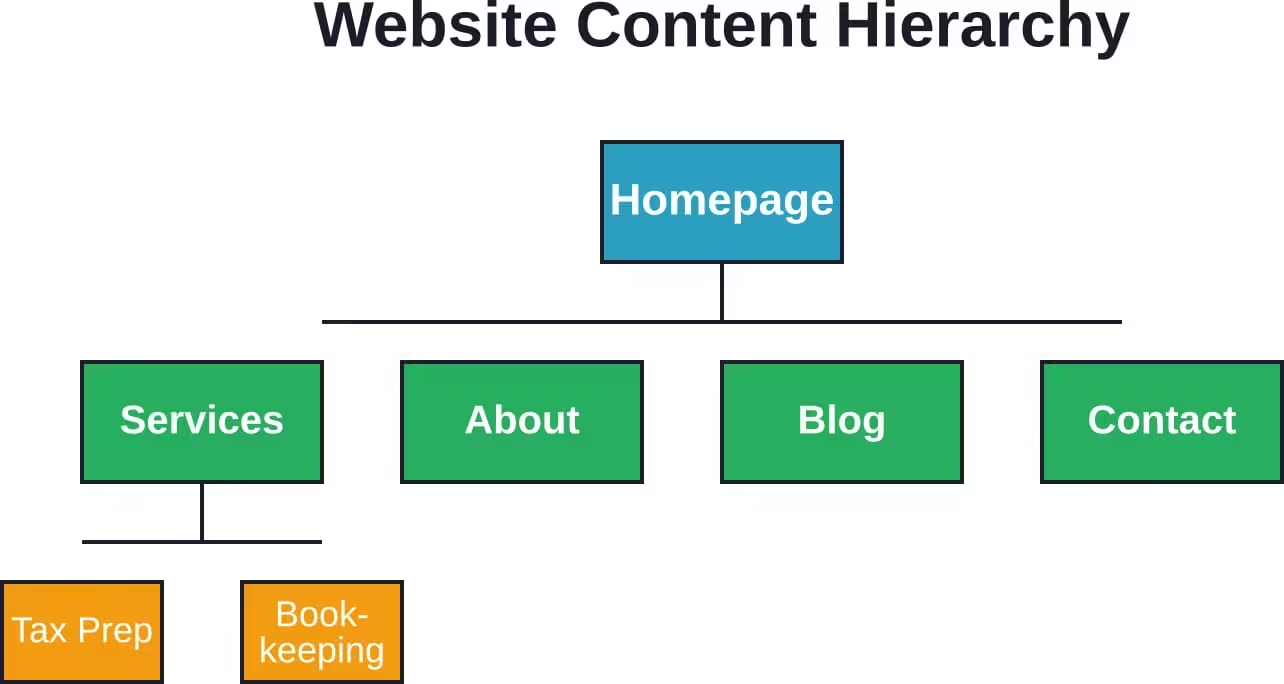
Service pages should clearly explain what the firm offers—tax preparation, bookkeeping, forensic accounting, valuation services. Each service deserves its own detailed page that addresses client questions and concerns.
Content marketing for accountants extends beyond service descriptions. Blog posts addressing common financial questions, tax tips, and industry updates position the firm as a knowledge resource.
Real talk: consistency matters more than volume. Publishing one high-quality article monthly outperforms sporadic, rushed content that doesn’t serve readers.
Lead Generation and Client Acquisition
Powerful lead generation websites turn visitors into clients. This requires strategic placement of conversion elements throughout the site.
Contact forms should appear on every service page, not just the contact page. Reducing friction between interest and action increases conversion rates.
Appointment scheduling embedded directly in the website eliminates phone tag. Prospects can view available times and book consultations when the decision is fresh in their minds.
Social proof builds credibility. Client testimonials, case studies, and success stories demonstrate the firm’s track record and expertise.
Marketing Integration
The website serves as the hub for all marketing activities. Social media marketing for accountants drives traffic back to the site, where visitors can learn more and take action.
Outsourced marketing services often include website development as part of customized marketing packages. This integrated approach ensures consistency across all channels.
Online advertising through Google Ads and Facebook directs targeted traffic to specific service pages. The landing page experience determines whether that ad spend converts to actual clients.
Technical Considerations for Accounting Sites
Behind the design and content, technical infrastructure determines site performance and reliability.
Page speed affects both user experience and search rankings. Accounting websites should load quickly even with secure features and client portals running in the background.
Mobile responsiveness isn’t optional. A significant portion of visitors access websites from phones and tablets. Sites that don’t adapt to smaller screens lose potential clients.
SEO optimization helps accounting firms rank higher in local searches. When someone searches for “CPA near me” or “tax accountant in [city],” proper optimization increases the chances of appearing in results.
Software Development Cost Considerations
For firms considering custom development, understanding cost structures matters. According to U.S. GAAP (ASC 985-20), software development costs are expensed as incurred until technological feasibility is established, after which they are capitalized.
The IRS directive on R&D costs applies to large business taxpayers with assets equal to or greater than $10,000,000 who prepare Certified Audited Financial Statements in accordance with U.S. GAAP. While most accounting firms fall below this threshold, understanding these principles helps when evaluating development proposals.
Platform-based solutions typically offer subscription pricing that includes hosting, security updates, and feature enhancements—simpler budgeting than custom development.
Ongoing Maintenance and Updates
Website development doesn’t end at launch. Ongoing maintenance keeps sites secure, functional, and relevant.
Security updates need regular application. As vulnerabilities emerge, hosting platforms and content management systems release patches. Neglecting these updates exposes sites to breaches.
Content freshness signals to search engines that the site remains active and relevant. Regular blog posts, updated service descriptions, and current tax information improve search visibility.
Backup systems protect against data loss. Automatic daily backups ensure that even if something goes wrong, the site can be restored quickly.
Moving Forward with Website Development
The right website serves as more than digital marketing—it becomes a functional business tool that attracts clients, streamlines workflows, and establishes credibility.
Start by identifying the firm’s specific needs. Solo practitioners have different requirements than multi-partner firms. Tax specialists need different features than forensic accountants.
Evaluate platforms based on security, ease of use, and accounting-specific features rather than just price. The cheapest option rarely delivers the best value for professional services.
Remember that websites evolve. Launch with core functionality, then enhance based on client feedback and firm growth. The best business decision involves choosing a flexible platform that grows with the practice.
Ready to build a website that actually works for accounting practice? Focus on security, functionality, and client experience—the three pillars that turn websites into revenue-generating assets.