


User-generated content has shifted from optional tactic to core component of digital marketing. Customers now create photos, videos, reviews, and posts that often perform better than branded materials. This article outlines proven approaches to encourage, collect, manage, and distribute UGC while maintaining brand alignment and legal compliance.
Defining User-Generated Content in Modern Marketing
User-generated content covers any material created by customers or audience members outside paid partnerships. This includes social media posts with branded hashtags, product reviews, unboxing videos, tutorial clips, and community forum threads. The value lies in perceived authenticity compared to studio-produced assets.
Brands use UGC across websites, paid ads, email campaigns, and organic social channels. When executed with structure, these contributions strengthen social proof and reduce reliance on traditional content production.
Partnering with Lengreo for UGC Optimization
At Lengreo, we focus on B2B digital marketing strategies that help tech and service companies generate qualified leads and build sustainable growth. Our social media and content marketing services create visibility and trust through targeted campaigns on platforms like LinkedIn and Meta, complemented by our SEO expertise to drive organic traffic. We integrate these with lead generation and paid ads to support broader funnels, such as optimizing website content for conversions or running outreach campaigns that nurture high-value prospects. If you’re looking to strengthen your overall digital strategy as part of a larger B2B effort, our team can audit your current setup and map out implementation that fits your operations – reach out at lengreo.com to see how we align it with your goals.
1. Setting Clear Objectives for UGC Campaigns
Every UGC initiative requires defined goals before launch. Common objectives include increasing brand visibility through hashtag reach, gathering visual assets for product pages, or driving specific conversion actions via contest entries.
Goals must align with broader marketing targets. A campaign focused on awareness prioritizes reach and impressions, while one supporting sales tracks attribution from UGC placements. Documenting these targets guides platform selection, incentive structure, and performance measurement.
Aligning UGC Goals with Business Outcomes
Visibility-focused campaigns emphasize shareable formats and broad hashtag usage. Conversion-driven efforts incorporate shoppable elements or direct calls to action in customer posts. Balancing multiple objectives within one campaign often reduces overall effectiveness.
2. Selecting the Right Platforms for Content Collection
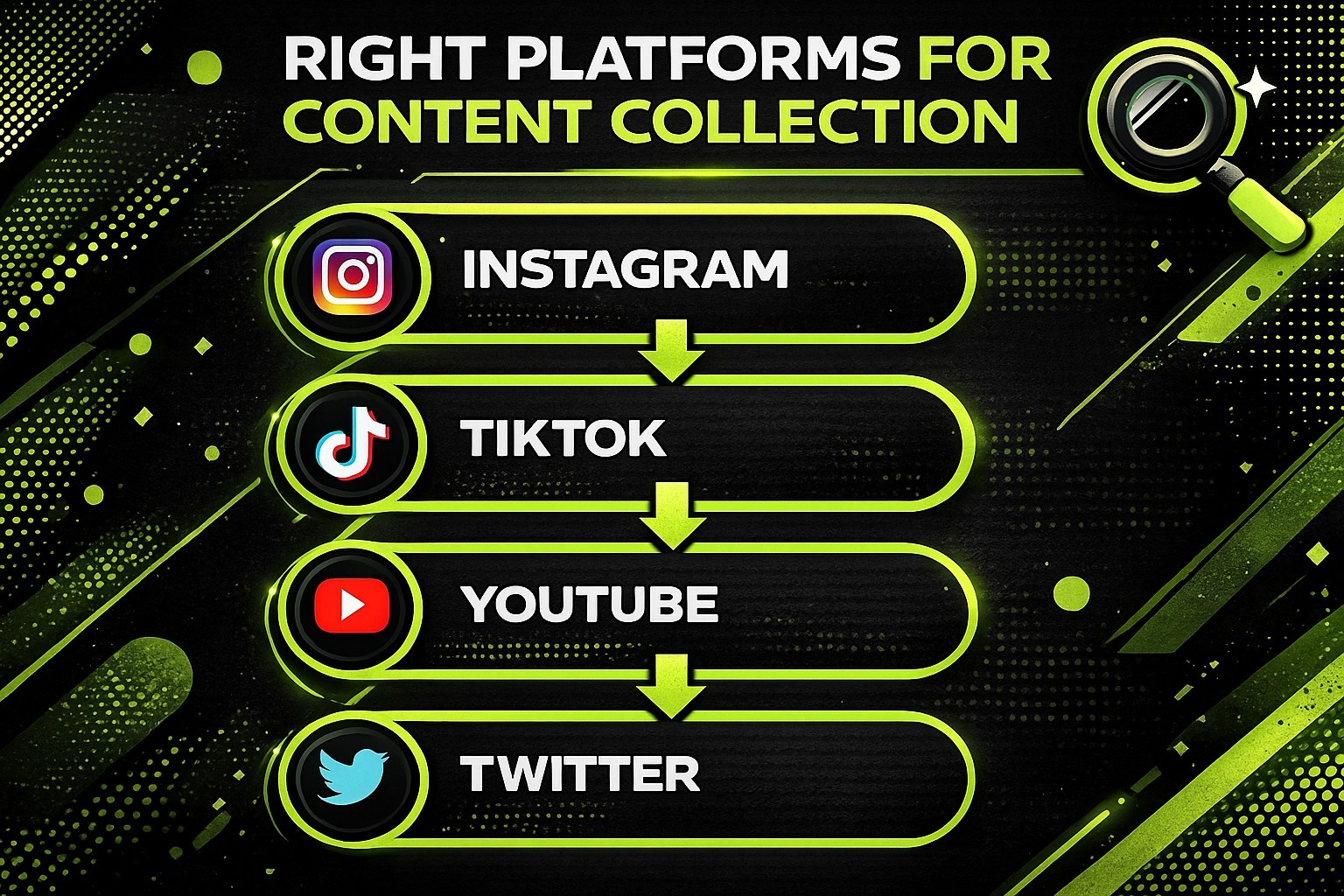
Different social platforms support distinct UGC formats and behaviors.
- Instagram: dominant for photo and short video submissions through Stories, Reels, and feed posts; supports shoppable tags and collaboration features
- TikTok: excels at viral challenges and sound-driven trends; hashtag campaigns and duet functionality encourage rapid participation
- YouTube: supports longer tutorial and review content that retains value over time; community tabs prompt submissions
- Twitter/Reddit: work well for text-based discussions and quick reactions, though visual UGC volume is lower
Platform-Specific Collection Tactics
Instagram benefits from clear tagging instructions and highlight curation. TikTok requires early adoption of trending audio and challenge mechanics. YouTube collection focuses on prompting specific video types through community posts and video descriptions.
3. Activation Tactics That Drive Submission Volume
Brands that consistently generate high volumes of usable UGC rely on a small set of repeatable tactics. These eleven strategies cover the majority of successful programs across industries.
Launch a Dedicated Branded Hashtag
A single, memorable branded hashtag provides the simplest way to aggregate customer content. Including the hashtag in packaging, email signatures, and every relevant post makes discovery automatic. Regular monitoring and featuring of tagged posts reinforces participation.
Run Contests and Giveaways Requiring Content Submission
Contests that require a photo or video as entry guarantee usable material. Clear rules, attractive prizes, and a dedicated submission page or hashtag increase volume while maintaining quality control.
Feature Customer Reviews and Testimonials Prominently
Reviews with photos or short videos convert better than text alone. Creating dedicated testimonial sections on product pages and regularly requesting visual reviews post-purchase builds a steady supply.
Turn UGC into Paid Advertising Creative
Customer-created videos and photos perform strongly in paid social campaigns because they feel native to the feed. Retargeting ads showing the exact product a visitor viewed, now in real customer photos, create familiarity and lift conversion rates.
Collaborate with Micro-Influencers for Authentic Content
Micro-influencers with engaged niche audiences produce high-quality UGC that feels genuine. Formats include:
- unboxing videos
- product demos & «day in the life»
- before/after clips
- honest reaction & honest review videos
- styled photos and flat-lays
Create TikTok Challenges or Trend-Based Prompts
Launching a challenge with branded audio or a specific format encourages rapid participation. Early seeding through micro-creators helps momentum before organic spread takes over.
Offer Clear Incentives for Participation
Incentives range from feature placement on official channels to discounts, free products, or cash prizes. Consistency across campaigns prevents confusion and builds expectation.
Repost Customer Content with Proper Credit and Permission
Regular reposting on brand channels shows appreciation and encourages further submissions. Always obtaining permission and tagging creators maintains trust and compliance.
Make Posts Shoppable Directly from Customer Photos
Tagging products in customer photos turns organic content into direct sales drivers. Platforms that support product tagging simplify the process and increase conversion rates.
Share Social Media Mentions and Conversations
Screenshotting positive mentions, funny comments, or relevant discussions provides lightweight UGC that humanizes the brand. This works especially well for text-heavy platforms.
Position the Product as Part of a Lifestyle
Products that become cultural symbols or lifestyle markers generate ongoing UGC without constant prompting. Seasonal campaigns and limited editions amplify this effect.
4. Distribution Channels for Maximum Impact
Collected UGC serves multiple marketing touchpoints. Strategic placement across owned, paid, and earned channels maximizes exposure and reinforces authenticity at every stage of the customer journey.
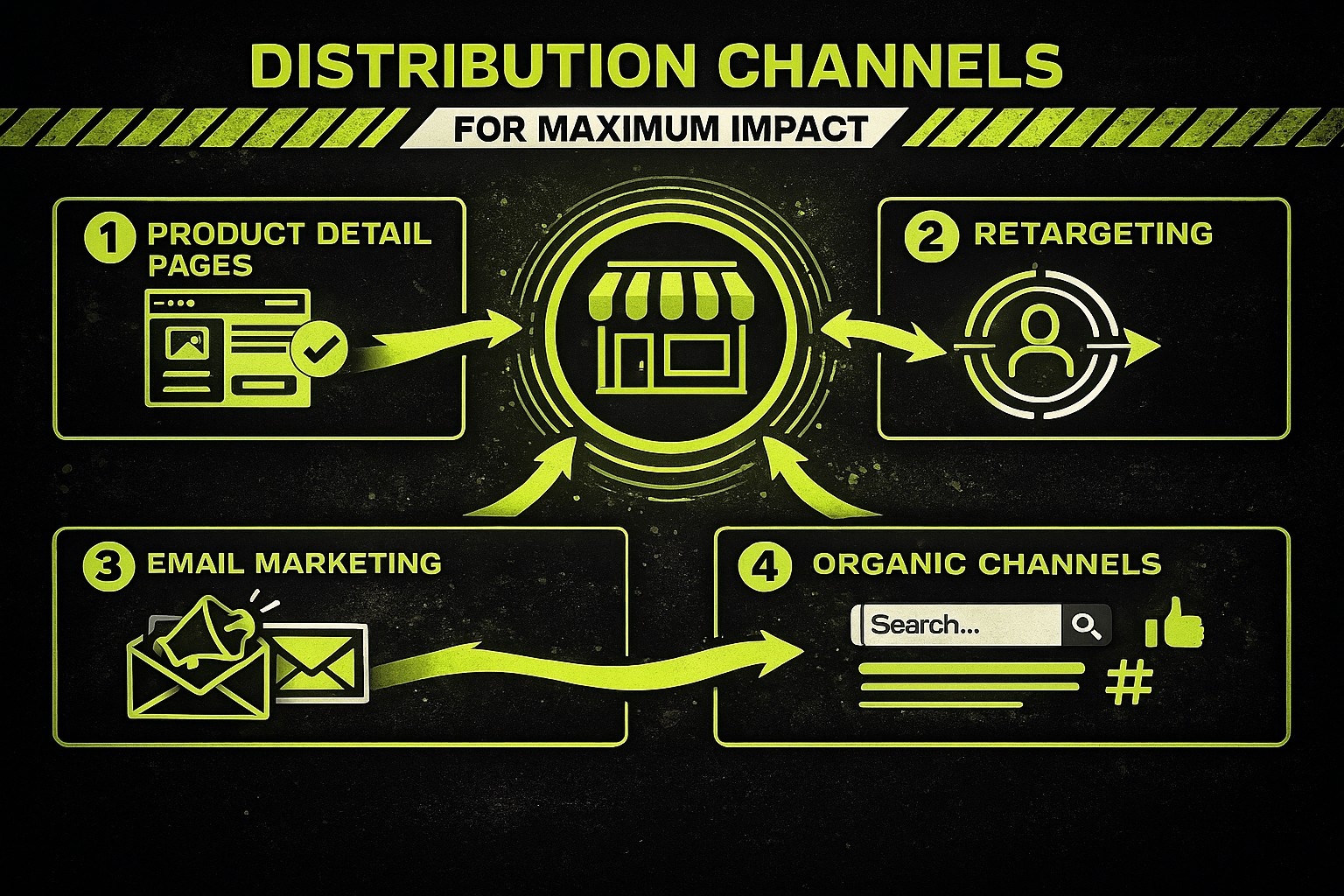
Product Detail Pages and E-Commerce Integration
Nothing closes a local sale faster than seeing the product on someone who could literally be your neighbor. A perfect studio shot is fine, but the moment a visitor spots the same jacket, haircut, or coffee machine in a real photo taken three streets away, hesitation disappears. Returns drop, questions in the chat dry up, and the “add to cart” button suddenly gets a lot more action.
That’s why every solid local marketing setup now treats user-generated photos as core content, not decoration. The smartest brands pull real customer images and short videos straight from reviews, tagged Instagram posts, and Google Business uploads, then place them exactly where they do the heavy lifting – right next to the official images, above the fold on mobile, and inside the main carousel.
Here are the placements that consistently deliver the biggest lift:
- Gallery of real customer photos placed directly under the main product images (loads instantly on mobile)
- 8-15-second muted review videos that autoplay inside the image carousel
- “How people around here style it” section showing different body types and local aesthetics
- Simple filter “Only photos from verified buyers” plus sorting by size, color, or use case
- Small widget that says “200+ locals tagged this product” with a quick preview of the best shots
- Side-by-side slider: studio photo on the left, real customer photo on the right
- Personalized row “Customers your height/size loved this” (pulled from past orders)
Paid Advertising and Retargeting
Ads built from authentic customer content consistently outperform traditional creative. Short video compilations of real users, unboxing clips, or before-and-after sequences feel less promotional and lower audience resistance. Retargeting campaigns that show the exact product a visitor viewed, now in real customer photos, create strong familiarity signals and lift conversion rates.
Email Marketing and Automated Flows
Customer stories inserted into welcome series, abandoned-cart reminders, and post-purchase sequences maintain a human tone. A simple “How customers are using your [product]” section with three to five curated images adds relevance without extra copywriting. Segmentation by purchased item allows hyper-relevant UGC that speaks directly to the recipient’s context.
Organic Social Media Channels
Regular reposting of community content keeps brand accounts active and signals that the brand listens. A balanced cadence (typically two to four UGC posts per week mixed with branded content) prevents feed fatigue while sustaining reach. Stories highlights dedicated to customer submissions create evergreen proof that lives beyond 24 hours.
In-Store and Out-of-Home Applications
Digital screens in physical locations display live or curated social feeds. QR codes on shelf talkers link directly to community galleries. Large-format prints of customer photos in windows or entrance areas turn foot traffic into social content and vice versa.
Cross-Channel Content Adaptation
The same piece of UGC rarely works unchanged across all destinations. Video assets need reformatting: vertical for Reels and Stories, horizontal for YouTube embeds, square for email previews, and muted auto-play versions for ads. Captions require platform-specific length and tone adjustments. Maintaining consistent visual quality while meeting each channel’s technical requirements prevents the content from looking amateur when it leaves the original post.
Consistent branding overlays (subtle watermarks, corner bugs, or end cards) reinforce ownership without overpowering the authentic feel. Pre-defined templates for each placement type speed up distribution and ensure every repurposed asset meets brand standards regardless of the destination channel.
Conclusion
A structured user-generated content strategy transforms customers into active brand participants. When goals align with audience behaviors, and processes handle collection, rights, and distribution efficiently, UGC becomes a sustainable source of authentic marketing material. The combination of lower production costs, improved trust signals, and enhanced search performance makes systematic UGC implementation a required capability for modern digital marketing.