

Executive Summary: Travel agencies in 2026 must master technical SEO, local search optimization, and mobile-first indexing to compete with OTAs and AI-powered booking assistants. Core Web Vitals, locally relevant content strategies following Google’s February 2026 Discover update, and strategic backlink building from ASTA and CLIA directories form the foundation of successful travel SEO campaigns.
The travel industry landscape has shifted dramatically. With 83% of travelers beginning their journey through online research and Google processing over 8.5 billion travel-related searches monthly, SEO isn’t optional anymore—it’s survival.
But here’s the thing: traditional SEO tactics don’t cut it in 2026. Google’s February 2026 Discover core update prioritized locally relevant content from websites based in specific regions. AI-powered travel assistants now influence roughly one in three travelers’ booking decisions. And Core Web Vitals have become non-negotiable ranking factors.
This guide breaks down the reliable tactics travel agencies need to dominate search results and consistently fill booking calendars.
Why Travel Agency SEO Demands a Different Approach in 2026
Travel keywords present unique challenges that generic SEO strategies can’t solve. According to analysis of top-ranking travel sites, travel keywords average 70+ difficulty scores—significantly higher than most industries.
Seasonal fluctuations create another layer of complexity. Search volumes can vary 300% between peak and off-seasons, requiring dynamic content strategies that adapt throughout the year.
The competitive landscape has intensified too. OTAs control approximately 92% of the online travel agency market in duopoly form, with massive budgets dedicated to maintaining their search dominance. According to Phocuswright research, Booking Holdings invested $500 million in DiDi in 2018 and $200 million in Grab in 2018. Expedia invested $350 million in Traveloka in 2017.
Yet independent travel agencies that master specialized SEO tactics can carve out profitable niches. The key? Understanding that organic search drives 40% of travel website revenue when executed correctly.
The Technical Foundation: Core Web Vitals and Performance
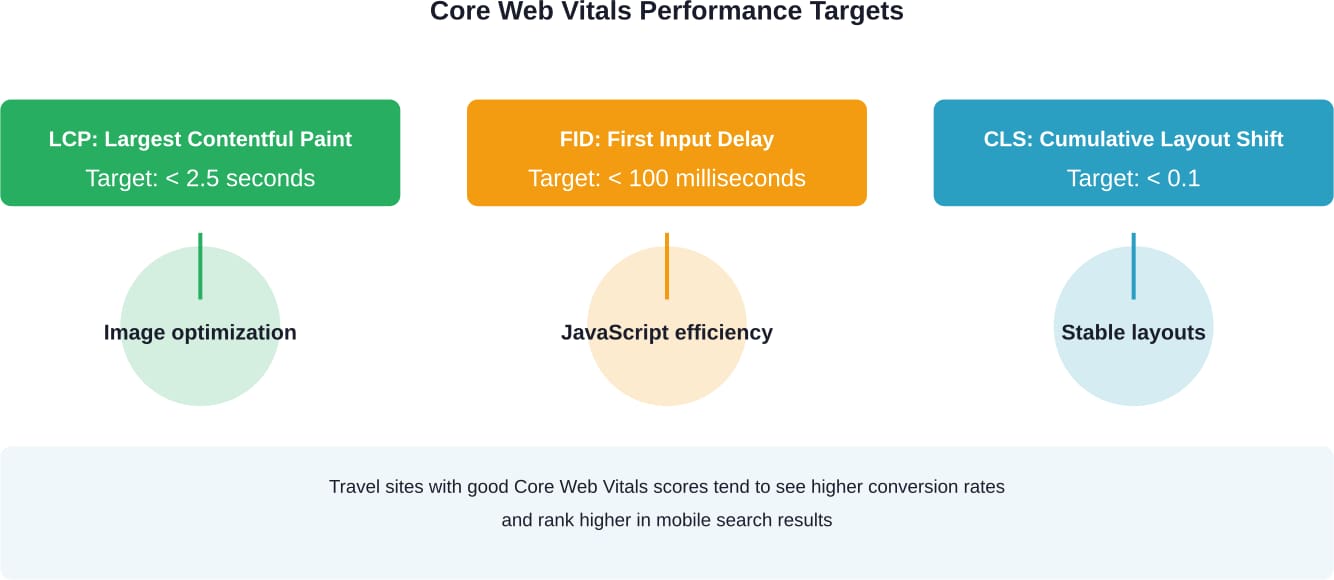
Google’s Core Web Vitals measure real-world user experience across loading performance, interactivity, and visual stability. According to Google Search Central Documentation, these metrics align directly with core ranking systems and are essential for search success.
A significant portion of searches now happen on mobile devices, making mobile-first indexing critical. Websites that fail Core Web Vitals assessments face ranking penalties regardless of content quality.
Implementing Technical SEO for Travel Sites
Start with image optimization. Travel websites typically contain dozens of high-resolution destination photos that slow page loads dramatically. Compress images to WebP format and implement lazy loading for images below the fold.
According to Google’s documentation updates from February 2026, Googlebot only processes the first 2MB of an HTML file for indexing, although it can fetch up to 15MB.
Structured data markup becomes even more important for travel content. Schema.org offers specific markup types for tours, attractions, hotels, and itineraries that help Google understand and display content in rich results.
Turn Travel Search Into Consistent Bookings
If you want search to drive real inquiries, not just traffic spikes, Lengreo helps build SEO systems that support steady bookings. That means tightening technical performance, structuring content around high-intent itineraries, strengthening local visibility, and earning relevant links that improve authority in competitive travel niches.
👉 If you are done competing blindly with OTAs and want a clear, execution-focused plan, speak with Lengreo. Get a practical roadmap built around your destinations, margins, and seasonality, and turn organic search into a reliable booking channel.
Keyword Research Strategy That Actually Converts
Generic travel keywords won’t build a profitable agency. The challenge lies in identifying high-value terms where independent agencies can realistically compete.
Long-tail keywords offer the best opportunity. Instead of targeting “Paris tours” (impossibly competitive), focus on “small group food tours Paris Marais district” or “private Loire Valley wine tours from Paris.”
| Competition Level | Conversion Rate | Example |
|---|---|---|---|
| Generic destination | Very High (70+) | Low (1-2%) | “Italy vacation” |
| Activity-specific | High (50-65) | Medium (3-5%) | “cooking class Rome” |
| Hyper-specific niche | Medium (30-45) | High (8-12%) | “truffle hunting tour Tuscany small group” |
| Geo + intent modifier | Low-Medium (25-40) | Very High (12-18%) |
|
Seasonal keyword planning becomes essential given the 300% variance in search volumes. Build content clusters that target shoulder-season queries when competition drops but booking intent remains strong.
Research destination-specific events, festivals, and weather patterns. Create content addressing “when to visit Santorini to avoid crowds” or “Japan cherry blossom forecast 2027” months before peak search periods.
Local SEO: The Overlooked Advantage for Travel Agencies
Google’s February 2026 Discover core update explicitly prioritized locally relevant content. This creates massive opportunities for agencies targeting specific geographic markets.
Google Business Profile optimization forms the foundation. Agencies operating physical locations must claim and fully optimize their profiles with accurate NAP (Name, Address, Phone) information, business hours, service areas, and high-quality photos.
But here’s what most agencies miss: local SEO extends beyond physical storefronts. Even online-only agencies can leverage location targeting by creating city-specific landing pages for departure cities or regional specializations.
Dominating Google Maps for Travel Queries
Maps visibility drives significant foot traffic and phone inquiries. Local pack rankings depend on relevance, distance, and prominence—factors agencies can actively improve.
Encourage satisfied clients to leave Google reviews mentioning specific destinations and trip types. A review stating “Amazing help planning our two-week Portugal itinerary with kids” carries more SEO weight than generic praise.
Respond to every review promptly, incorporating relevant keywords naturally. Consistent engagement signals active business management to Google’s algorithms.
Build location-specific citations in travel directories like ASTA (American Society of Travel Advisors) and CLIA (Cruise Lines International Association). These authoritative backlinks significantly boost local rankings.
Content Strategy: Beyond Destination Guides
Every travel agency publishes destination guides. That’s precisely why generic guides won’t differentiate agencies or drive rankings.
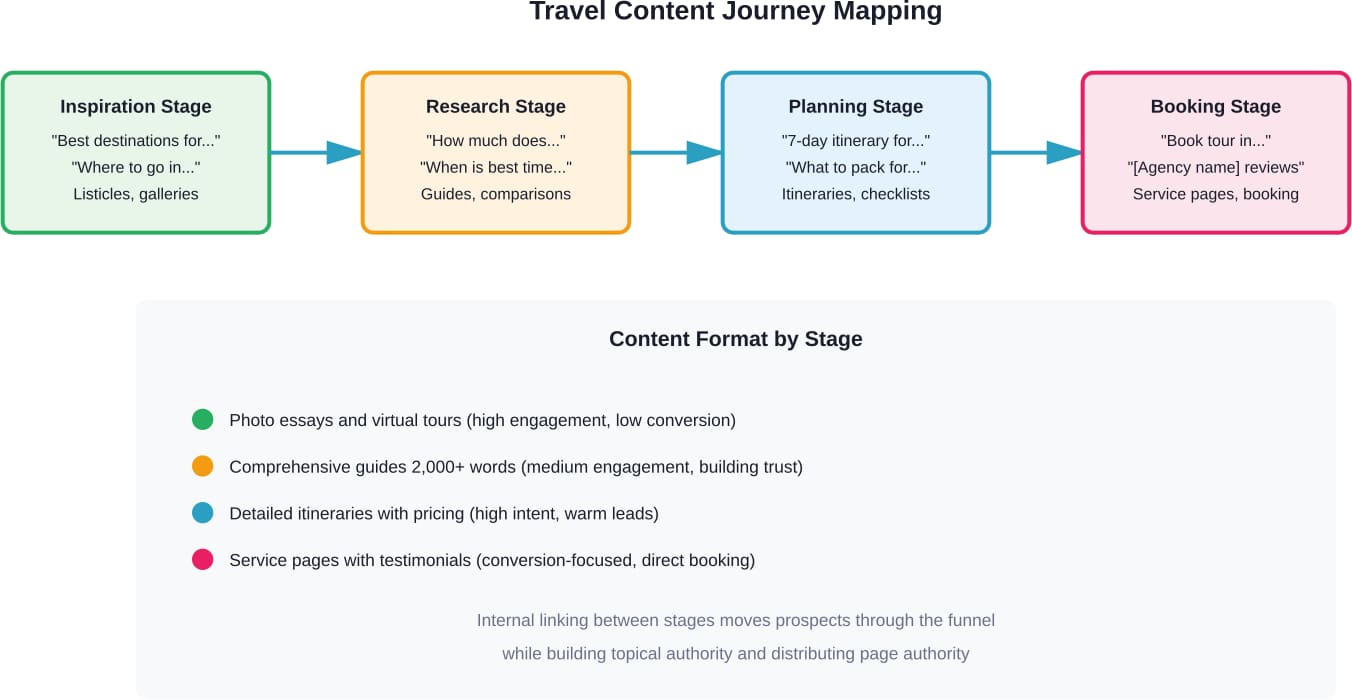
The content strategy that works in 2026 focuses on answering specific traveler questions at each decision-making stage. Travelers research for months before booking—content must address evolving needs throughout that journey.
Content Types That Drive Bookings
Detailed itineraries perform exceptionally well because they demonstrate expertise while capturing high-intent searches. Create sample itineraries for popular destinations with day-by-day breakdowns, realistic budgets, and insider tips.
Comparison content addresses research-stage queries. “Iceland Ring Road vs. Golden Circle: Which Route Fits Your Trip?” targets travelers narrowing options—one step from booking decisions.
Problem-solution articles capture long-tail searches. “Traveling to Japan With Dietary Restrictions: Complete Guide” addresses specific concerns that generic guides ignore.
Update existing content regularly rather than constantly creating new posts. Google’s core updates reward fresh, maintained content over abandoned archives.
Building Authority Through Strategic Backlinks
Backlinks remain a critical ranking factor, but travel agencies face unique link-building challenges. Generic outreach rarely works in the competitive travel space.
The most effective approach follows a phased strategy starting with authoritative directories before expanding to editorial links.
Phase One: High-Authority Travel Directories
ASTA and CLIA memberships provide authoritative backlinks that immediately boost domain authority. Yes, membership fees apply (typically $300+), but the SEO value justifies the investment.
These aren’t just directories—they’re trust signals. Google recognizes these organizations as authoritative sources, passing significant link equity to member sites.
Specialty travel consortiums offer additional opportunities. Virtuoso, Signature Travel Network, and Travel Leaders Network provide member directories with strong domain authority.
Phase Two: Content-Based Link Acquisition
Guest posting works when targeting the right publications. Regional tourism boards, destination-specific blogs, and travel planning resources accept quality contributions from agencies demonstrating genuine expertise.
The key? Pitch specific, deeply researched content rather than generic destination overviews. “Lesser-Known Hot Springs in Iceland’s Westfjords” stands out from the thousandth “Top Things to Do in Iceland” pitch.
Build relationships with travel bloggers and influencers in specific niches. A backlink from a respected family travel blogger carries more weight than ten generic directory listings.
| Domain Authority Impact | Acquisition Difficulty | Time Investment |
|---|---|---|---|
| ASTA/CLIA membership | High | Low (pay to join) | 1-2 hours setup |
| Tourism board partnerships | Very High | Medium | 2-4 weeks outreach |
| Guest posts (quality sites) | High | Medium-High | 4-8 hours per post |
| Niche directory listings | Low-Medium | Low | 30 min per listing |
| Press mentions/PR | Very High | High | Ongoing campaigns |
Mobile-First Optimization: Non-Negotiable in 2026
Google’s mobile-first indexing means the mobile version of a site determines rankings—even for desktop searches. With over 60% of travel searches happening on mobile devices, this isn’t a secondary consideration.
Mobile optimization extends beyond responsive design. Page elements must be touch-friendly, with buttons and links sized appropriately for finger navigation. Text must remain readable without zooming.
Implement click-to-call functionality prominently. Mobile searchers exhibit higher booking intent—make it effortless for them to contact agencies directly from search results.
Test mobile page speed separately from desktop. Tools like Google PageSpeed Insights provide mobile-specific recommendations that often differ from desktop optimizations.
Competing With AI-Powered Booking Assistants
Roughly one in three travelers is open to using AI-powered travel assistants for discovering and booking accommodations. This represents a fundamental shift in how search visibility translates to bookings.
The question becomes: how do travel agencies ensure visibility when AI systems make recommendations instead of searchers clicking through traditional search results?
Generative Engine Optimization (GEO) is emerging as the next evolution beyond traditional SEO. Large language models must recognize agencies as authoritative sources to include them in AI-generated recommendations.
Strategies for AI Visibility
Structured data becomes even more critical. AI systems parse structured markup more effectively than unstructured content when compiling recommendations.
Build comprehensive, authoritative content that AI systems cite. When ChatGPT or Google’s AI recommends “specialists in sustainable Amazon tours,” agencies with deep, unique content on that topic gain mentions.
Maintain consistent NAP across all platforms. AI systems cross-reference multiple sources—inconsistencies reduce confidence in recommendations.
Measuring SEO Success: Metrics That Matter
Vanity metrics like total traffic mean little if bookings don’t increase. Focus on metrics directly tied to revenue generation.
Track organic conversions specifically—how many bookings originate from organic search? This number justifies continued SEO investment better than any ranking report.
Monitor assisted conversions. Travelers rarely book during their first website visit. Attribution modeling reveals how organic search contributes to multi-touch conversion paths.
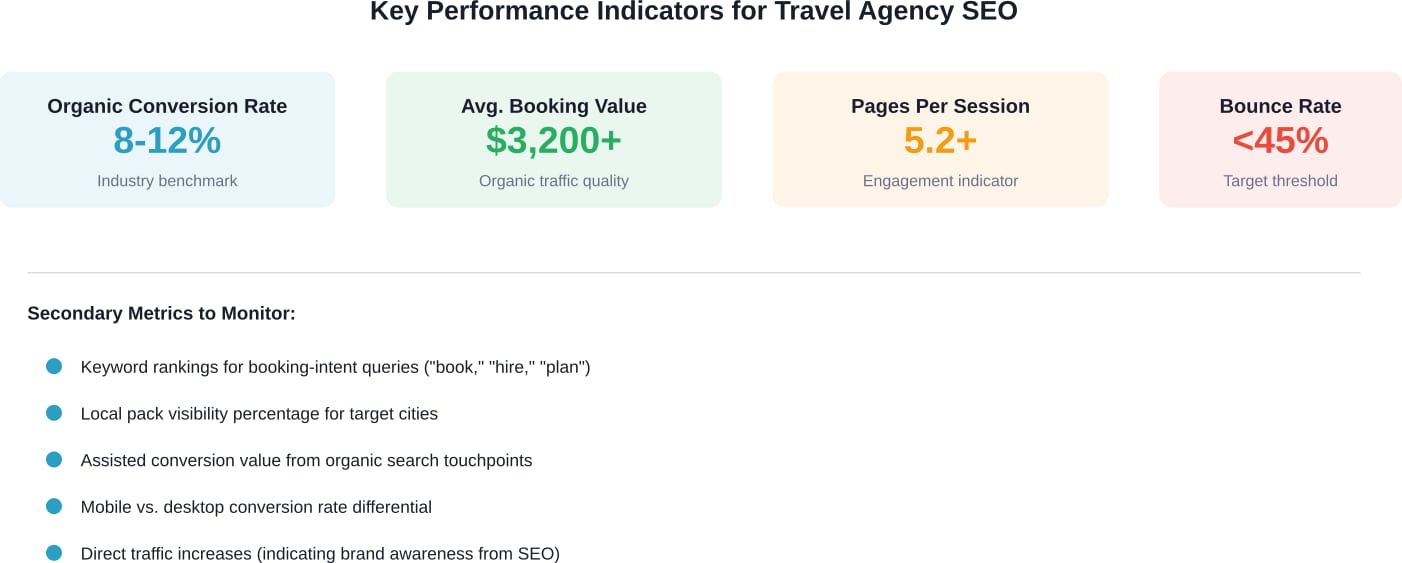
Keyword rankings matter, but context is everything. Ranking #1 for “European river cruises” means nothing if the agency specializes in adventure tours. Track rankings for keywords aligned with actual service offerings.
Monitor local pack visibility separately. Appearing in the Google Maps three-pack for “travel agency near me” in target cities drives high-intent leads.
Advanced Tactics: Featured Snippets and Schema
Featured snippets (position zero) capture clicks before traditional #1 rankings. Travel queries frequently trigger featured snippets for “how to,” “best,” and “what to pack” searches.
Structure content specifically to target snippets. Use clear headers that match common questions. Provide concise answers in 40-60 words immediately following the question header.
Implement comprehensive schema markup beyond basic Organization schema. Use Review, FAQPage, HowTo, and specialized travel schemas for tours and attractions.
Schema doesn’t directly impact rankings, but it increases click-through rates from search results—and click-through rate is a ranking signal. It’s a virtuous cycle.
Taking Action: Your SEO Implementation Roadmap
Travel agency SEO in 2026 demands technical excellence, strategic content, and persistent optimization. But the agencies that master these tactics will dominate local search, outrank OTAs in niche markets, and maintain full booking calendars.
Start with the technical foundation. Audit Core Web Vitals and address performance issues immediately. Poor technical SEO undermines every other optimization effort.
Build content strategically rather than haphazardly. Map content to traveler decision stages and focus on questions that demonstrate booking intent.
Invest in authoritative backlinks before chasing volume. Ten links from recognized travel organizations outweigh 100 generic directory listings.
The travel industry continues recovering and evolving post-pandemic, with international tourism up approximately 5% in the first half of 2025 according to UN Tourism data (almost 690 million tourists, about 33 million more than the same period of 2024). This growth creates opportunities for agencies that capture search visibility before competitors do.
The question isn’t whether SEO matters for travel agencies in 2026—it’s whether agencies will implement these tactics before competitors do. The booking calendar advantage goes to agencies that act now rather than waiting for the perfect moment.
Ready to transform search visibility into consistent bookings? The tactics outlined here provide the roadmap. Implementation separates agencies that thrive from those that struggle.