


Quick Summary: Teletherapy website development for therapists requires HIPAA-compliant infrastructure, secure video integration, and client-focused design. Essential elements include encrypted communication channels, mobile optimization, and seamless intake workflows that build trust while protecting patient privacy. Modern teletherapy sites balance regulatory compliance with user experience to support practice growth in 2026’s digital-first mental health landscape.
Mental health care delivery has shifted dramatically. Therapists who operated exclusively from physical offices just a few years ago now find themselves managing virtual practices that span time zones and state lines.
And the website isn’t just a digital business card anymore. It’s the intake coordinator, the trust-builder, the compliance guardian, and often the first clinical impression a potential client receives.
Here’s the thing though—building a teletherapy website means navigating a maze of federal privacy regulations, security protocols, and technical requirements that didn’t exist for traditional therapy practices. According to the American Psychological Association’s digital health access reports, over 88% of therapists offering telehealth services or online booking. That means the bar for what constitutes an effective teletherapy presence has risen considerably.
Understanding HIPAA Compliance Requirements
Before choosing platforms or design templates, therapists need to grasp what HIPAA compliance actually means for website infrastructure.
The Health Insurance Portability and Accountability Act establishes standards to protect patients’ protected health information (PHI). According to telehealth.hhs.gov, all telehealth services provided by covered health care providers must comply with HIPAA Rules. This isn’t optional, and it extends beyond just the therapy sessions themselves.
Contact forms that collect names and reasons for seeking therapy? That’s PHI. Appointment scheduling systems that show client names and times? PHI. Intake questionnaires asking about symptoms or history? Definitely PHI.
Technology Vendor Requirements
HIPAA compliance cascades down to business associates—the technical term for any vendor with routine access to electronic protected health information (ePHI). The Security Rule applies to business associates such as technology vendors, as noted in recent HHS guidance from March 2026.
This means therapists can’t simply grab any website builder off the shelf. The platform provider must sign a Business Associate Agreement (BAA) that legally binds them to HIPAA standards. Without a BAA, the therapist remains liable for any breach, even if the vulnerability existed in the vendor’s code.
Real talk: most general-purpose website builders don’t offer BAAs on their standard plans. SimplePractice, Brighter Vision, and specialized mental health platforms do—but they come with different trade-offs in flexibility and cost.
Build a Clear Teletherapy Website With Lengreo
Lengreo builds and improves websites, then connects them with SEO, paid ads, tracking, and lead generation. For therapists offering teletherapy, this means a website that explains online sessions, specialties, pricing, availability, and booking steps in a simple, calm way.
The focus is to make the process easier for people who are already considering support but need clear information first. Lengreo can help organize key pages, improve traffic setup, and make inquiry or booking paths easier to follow.
Need a Website That Makes Online Sessions Clear?
Lengreo can help with:
- building or redesigning your website
- improving SEO and paid traffic setup
- setting up tracking and website structure
- refining service, specialty, and booking pages
👉 Contact Lengreo to discuss your website and setup.
Essential Security Infrastructure
Compliance paperwork matters, but actual security measures determine whether patient data stays protected.
Encryption Everywhere
SSL/TLS certificates encrypt data traveling between the client’s browser and the server. This prevents interception of form submissions, login credentials, and session cookies. Any teletherapy website must use HTTPS—browsers now flag HTTP sites as “Not Secure,” which destroys trust before a potential client even reads the homepage.
But encryption at rest matters too. Patient intake forms, contact information, and session notes stored in databases need encryption. Many budget hosting providers skip this step, leaving data vulnerable if someone gains server access.
Authentication and Access Management
Multi-factor authentication (MFA) should be non-negotiable for any admin login to the website backend. Password-only protection fails regularly—credential stuffing attacks compromise millions of accounts annually.
For patient portals or scheduling systems, role-based access controls ensure that clients only see their own information. Proper session management logs users out after inactivity rather than leaving authenticated sessions open indefinitely.
Video Integration Considerations
Video conferencing sits at the heart of teletherapy delivery. The platform choice carries significant implications for both compliance and clinical quality.
Since the expiration of COVID-19 Public Health Emergency flexibilities in May 2023, and the subsequent end of the transition period in late 2023, the Office for Civil Rights (OCR) requires full enforcement of HIPAA Rules for all remote communications.
That said, not all video platforms meet these standards. Consumer-grade tools like FaceTime or standard Skype lack the necessary safeguards. HIPAA-compliant alternatives include Zoom for Healthcare (with a BAA), Doxy.me, VSee, and integrated solutions within practice management platforms.
Audio-Only Telehealth Options
Traditional telephones using circuit-switched voice communication through the Public Switched Telephone Network (PSTN) remain compliant options. Telecommunications technologies have shifted from traditional switched-access lines toward internet-based voice solutions.
This shift means therapists increasingly rely on internet-based voice technologies. VoIP systems must be configured properly—default settings on platforms like WhatsApp or standard Google Voice don’t typically meet HIPAA requirements without additional configuration and BAAs.
Platform Selection Framework
Therapists face a decision tree when selecting website development platforms: specialized mental health builders versus general website tools versus fully custom development.
| Platform Type | Best For | Compliance Handling | Flexibility |
|---|---|---|---|
| Mental Health Specialists | Solo and small practices | Built-in HIPAA features | Limited customization |
| General Builders (Premium) | Established practices wanting brand control | Requires configuration and BAA | Moderate to high |
| Custom Development | Large practices with unique workflows | Full responsibility for implementation | Complete control |
| Practice Management Suites | Practices needing integrated billing/scheduling | Comprehensive compliance included | Limited to platform ecosystem |
Specialized Mental Health Platforms
Brighter Vision offers specialized mental health platform services. Current pricing should be verified directly with the provider. These platforms handle HIPAA compliance infrastructure automatically, include therapy-specific templates, and often integrate with Electronic Health Record (EHR) systems.
The trade-off? Limited design flexibility. Sites can look formulaic, and customization beyond template options often isn’t possible. For therapists who prioritize speed and compliance over unique branding, this works well.
General Website Builders with Healthcare Features
Squarespace and similar platforms can support teletherapy sites, but therapists must manually configure security settings, obtain BAAs, and ensure all third-party integrations (contact forms, scheduling plugins) also comply. This requires more technical knowledge but offers greater design freedom.
Critical Website Features for Teletherapy
Beyond compliance infrastructure, certain functional elements determine whether a teletherapy website actually converts visitors into clients and supports efficient practice operations.
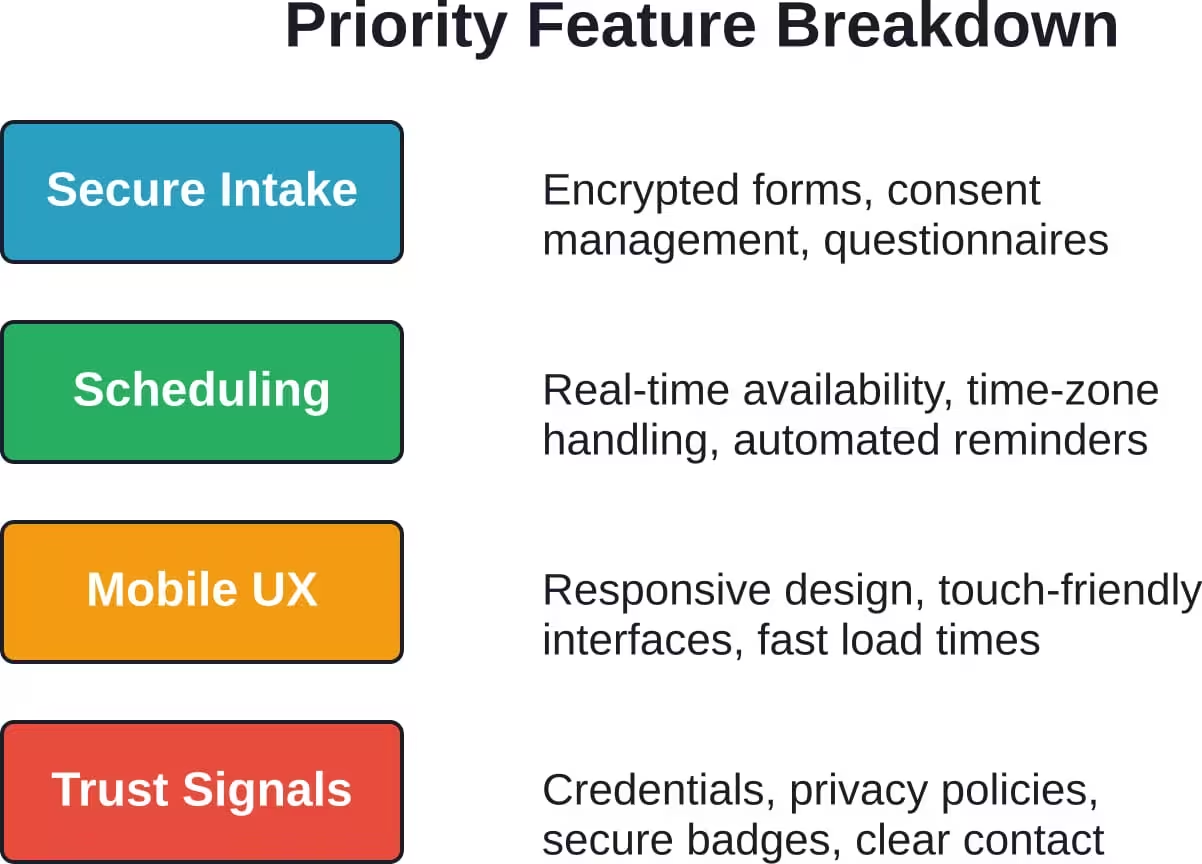
Intelligent Intake Workflows
Friction during intake directly correlates with abandonment rates. Potential clients already feel vulnerable reaching out for mental health support—asking them to download PDFs, print forms, and scan documents back creates unnecessary barriers.
Modern teletherapy websites incorporate progressive disclosure: initial contact forms collect minimal information (name, preferred contact method, general concern), then gradually gather detailed history through secure patient portals after the relationship begins.
Consent management deserves special attention. Informed consent for teletherapy must address technology risks, emergency procedures when the client is remote, and limitations of virtual care. Websites should present these documents clearly, require acknowledgment, and store signed agreements securely.
Mobile-First Design Principles
Many clients will discover and interact with teletherapy sites primarily through smartphones. Sites that aren’t optimized for mobile create immediate frustration.
Mobile optimization goes beyond responsive layout. Touch targets need adequate spacing, forms should use appropriate input types (tel for phone numbers, email for addresses), and navigation must work with thumb-based interaction patterns. Video elements should gracefully handle varying connection speeds and screen orientations.
SEO and Discoverability for Mental Health Services
Building a secure, functional teletherapy website accomplishes nothing if potential clients can’t find it. Mental health SEO carries unique considerations beyond typical local business optimization.
Content Strategy That Builds Authority
Search engines reward expertise, and mental health content demands particular care. Therapists should publish educational content addressing common concerns within their specialties—but must avoid overpromising outcomes or making clinical claims outside their scope of practice.
Local SEO matters enormously. Even with virtual care delivery, most therapists are licensed in specific states and can only treat clients in those jurisdictions. Location pages, Google Business Profile optimization, and geographic keywords help match therapists with clients they can legally serve.
Technical SEO Foundations
Page speed impacts both search rankings and conversion rates. Large image files, unoptimized video embeds, and excessive JavaScript can slow load times dramatically. Tools like Google PageSpeed Insights identify specific bottlenecks.
Structured data markup helps search engines understand practice information—office hours, accepted insurance, specialties, and credentials. Schema.org vocabulary for medical businesses and healthcare providers enables rich search results that increase click-through rates.
Ongoing Maintenance and Security Updates
Launching a teletherapy website isn’t a one-time project. Cybersecurity and privacy risks evolve constantly, requiring continuous attention.
According to NIST guidance (NIST Special Publication 800-66, Revision 2) published in 2022 for health care cybersecurity, organizations must establish processes for regular security assessments, patch management, and incident response planning. This applies to therapy websites just as much as hospital networks.
Update Protocols
Content management systems, plugins, and third-party integrations all release security patches regularly. Delaying updates creates vulnerabilities—many data breaches exploit known flaws in outdated software versions.
Automated backup systems provide insurance against both security incidents and technical failures. Backups should be encrypted, stored separately from production systems, and tested periodically to ensure restoration actually works when needed.
Compliance Monitoring
HIPAA regulations update, state telehealth laws change, and platform vendors modify their terms. Practices should review compliance status quarterly rather than assuming initial configuration remains sufficient indefinitely.
Documentation matters for demonstrating good-faith compliance efforts if questions arise. Risk assessments, security policies, and staff training records all contribute to a defensible compliance posture.
Cost Considerations and Budget Planning
Teletherapy website development costs vary enormously based on approach and requirements.
| Expense Category | Budget Range | Frequency |
|---|---|---|
| Platform/Hosting | $0-200/month | Ongoing |
| Domain Registration | $10-50/year | Annual |
| SSL Certificate | $0-200/year | Annual (often included) |
| Design/Development | $500-10,000+ | One-time, periodic redesigns |
| Video Platform | $0-100/month | Ongoing |
| Security Tools | $20-100/month | Ongoing |
The temptation to minimize costs can backfire. Free website builders rarely offer BAAs or adequate security infrastructure. Skipping professional design might save money initially but costs more in lost clients who bounce from confusing or unprofessional sites.
Budgets are real constraints, but treating website development as a practice investment rather than an expense changes the calculation. A site that converts 5% more inquiries into booked sessions pays for itself rapidly.
Measuring Effectiveness
Data-driven optimization requires tracking meaningful metrics beyond vanity numbers like total visitors.
Conversion rate—the percentage of visitors who complete intake or schedule consultations—matters more than traffic volume. A site attracting 1,000 monthly visitors with 1% conversion performs worse than one getting 300 visitors at 5% conversion.
Analytics platforms must be configured to respect patient privacy.
User Experience Signals
Bounce rate (visitors leaving after viewing only one page), time on site, and pages per session indicate whether content engages visitors or drives them away. High bounce rates on service description pages might signal unclear messaging or mismatched visitor intent.
Heatmapping tools show where users click, how far they scroll, and where attention focuses. This reveals whether calls-to-action are noticed, if important information is buried too far down pages, or whether navigation confuses visitors.
Moving Forward with Confidence
Teletherapy website development demands more technical knowledge and regulatory awareness than therapists might expect when first expanding into virtual care. The intersection of healthcare privacy law, cybersecurity, user experience design, and clinical practice creates complexity.
But it’s absolutely manageable. Therapists don’t need to become developers or security experts—they need to ask informed questions when evaluating platforms, understand which compliance responsibilities can be outsourced versus which require direct oversight, and recognize that website infrastructure directly impacts both patient safety and practice viability.
The mental health field continues moving toward hybrid models where in-person and virtual care coexist. Websites that support both modalities, communicate clearly about what services are available through which channels, and make initial contact as frictionless as possible position practices for sustainable growth.
Start by assessing current gaps. Does the existing site collect PHI without proper encryption? Are video sessions happening through non-compliant platforms? Is mobile experience frustrating potential clients? Prioritize fixes based on both risk and impact.
For therapists building new sites, invest time in platform selection. The right choice depends on technical comfort, budget, design priorities, and whether integrated practice management features matter.
Ready to build a teletherapy presence that protects patients and grows your practice? Focus on getting the security foundation right first, then layer in user experience refinements and marketing optimization. A compliant, functional site beats a beautiful but vulnerable one every time.