Quick Summary: Building a teletherapy website for psychologists requires HIPAA-compliant infrastructure, secure video integration, user-friendly booking systems, and SEO-optimized content. The platform must protect patient data while providing seamless virtual care experiences, with features like encrypted communication, mobile responsiveness, and clear legal disclosures that meet federal and state privacy requirements.
The mental health landscape shifted dramatically during recent years. Research shows that 40.9% of survey respondents reported at least one adverse mental health condition related to pandemic challenges. Among those surveyed, anxiety disorder or depressive disorder symptoms were commonly reported.
That surge created massive demand for remote mental health services. But here’s the thing—psychologists can’t just throw up any website and start seeing clients virtually.
Teletherapy platforms must navigate complex federal privacy laws, maintain data security standards, and deliver clinical-grade communication tools. The technical requirements are strict, and the stakes are high.
This guide covers everything psychologists need to build effective teletherapy websites that comply with regulations while serving clients effectively.
Understanding HIPAA Requirements for Teletherapy Platforms
The Health Insurance Portability and Accountability Act establishes mandatory standards for protecting patient health information. All telehealth services provided by covered health care providers must comply with HIPAA Rules.
These regulations apply to three critical areas: Privacy Rule, Security Rule, and Breach Notification requirements. Each governs different aspects of how protected health information gets handled during virtual care.
Technology Vendor Compliance
Psychologists must use technology vendors that comply with HIPAA standards. The Security Rule applies to business associates—such as technology vendors with routine access to electronic protected health information.
Any video conferencing platform, messaging system, or data storage solution that handles patient data needs a Business Associate Agreement. Without that contract, the entire teletherapy operation violates federal law.
As of 2026, all audio-only telehealth sessions, regardless of the underlying technology (PSTN or VoIP), must adhere to the fully reinstated HIPAA Security Rule requirements following the final expiration of the post-pandemic transition period
Data Encryption and Transmission Security
Protected health information transmitted over the internet must be encrypted. That includes video streams, chat messages, appointment scheduling data, and any clinical notes stored in cloud systems.
Federal guidance from March 2026 indicates that covered health care providers can use remote communication technologies for audio-only telehealth when conducted consistent with Privacy, Security, and Breach Notification Rules.
The Security Rule doesn’t mandate specific encryption algorithms, but it requires reasonable safeguards. Current 2026 standards mandate Quantum-Resistant Encryption (QRE) for sensitive health data, following the NIST Post-Quantum Cryptography (PQC) standards finalized in late 2024.
Build a Better Teletherapy Website With Lengreo
Lengreo builds and improves websites, then connects them with SEO, paid ads, tracking, and lead generation. For psychologists offering teletherapy, this means a website that explains services, session formats, specialties, pricing, and booking steps in a calm, clear way.
The focus is to help visitors feel oriented before they reach out. Lengreo can help organize the structure, key pages, and traffic setup so people can understand the process and book an online consultation more easily.
Need a Website That Makes Online Booking Clear?
Lengreo can help with:
- building or redesigning your website
- improving SEO and paid traffic setup
- setting up tracking and website structure
- refining service, specialty, and booking pages
👉 Contact Lengreo to discuss your website and setup.
Essential Features for Psychology Teletherapy Websites
Compliance keeps psychologists out of legal trouble. But clinical effectiveness requires specific features that support the therapeutic relationship remotely.
Secure Video Conferencing Integration
The video platform represents the core clinical tool. It needs end-to-end encryption, reliable connection quality, and intuitive controls that don’t distract from therapy sessions.
Session recordings raise complex consent and storage issues. Many psychologists disable recording entirely to avoid the documentation burden and additional security requirements.
Waiting room features let psychologists control when clients enter sessions—mimicking the physical therapy office experience and preventing early arrivals from accessing previous sessions.
Online Booking and Scheduling Systems
Clients expect to book appointments without phone calls. Integrated scheduling systems should display real-time availability, send automated reminders, and handle time zone conversions for clients in different locations.
Cancellation policies need clear communication. The booking interface should display cancellation deadlines and any associated fees before clients confirm appointments.
Calendar synchronization prevents double-booking. The system should connect to the psychologist’s primary calendar while maintaining HIPAA compliance—avoiding client names or clinical details in calendar entries.
Secure Client Portal and Messaging
Between-session communication requires secure messaging that meets HIPAA standards. Standard email doesn’t qualify unless encrypted end-to-end.
Client portals provide a HIPAA-compliant space for document sharing, appointment management, and asynchronous communication. Clients can upload intake forms, access session summaries, and send non-urgent messages.
Message retention policies should align with state record-keeping requirements. Some jurisdictions mandate specific retention periods for clinical communications.
Digital Intake Forms and Assessments
Paper intake forms create friction in virtual practices. Digital forms integrate directly into electronic health records and pre-populate client information across systems.
Conditional logic makes forms smarter—displaying follow-up questions based on previous answers and skipping irrelevant sections. This reduces completion time and improves data quality.
E-signatures provide legal validity for consent forms, financial agreements, and HIPAA acknowledgments. The system should timestamp signatures and store signed documents securely.
| Feature Category | Core Requirements | Compliance Considerations |
|---|---|---|
| Video Platform | HD quality, screen sharing, session controls | End-to-end encryption, BAA required |
| Scheduling | Real-time availability, automated reminders, time zones | Secure calendar sync, no PHI in external calendars |
| Messaging | Asynchronous communication, file sharing, notifications | Encrypted transmission, access logging, retention policy |
| Intake Forms | Digital completion, conditional logic, e-signatures | Secure storage, audit trail, state-specific disclosures |
Website Design Considerations for Virtual Mental Health Care
The website itself serves as the first therapeutic touchpoint. Design choices affect client comfort, trust, and willingness to engage in treatment.
Mobile Responsiveness and Accessibility
Many clients access teletherapy exclusively through smartphones. The entire platform—from browsing services to attending sessions—must function smoothly on mobile devices.
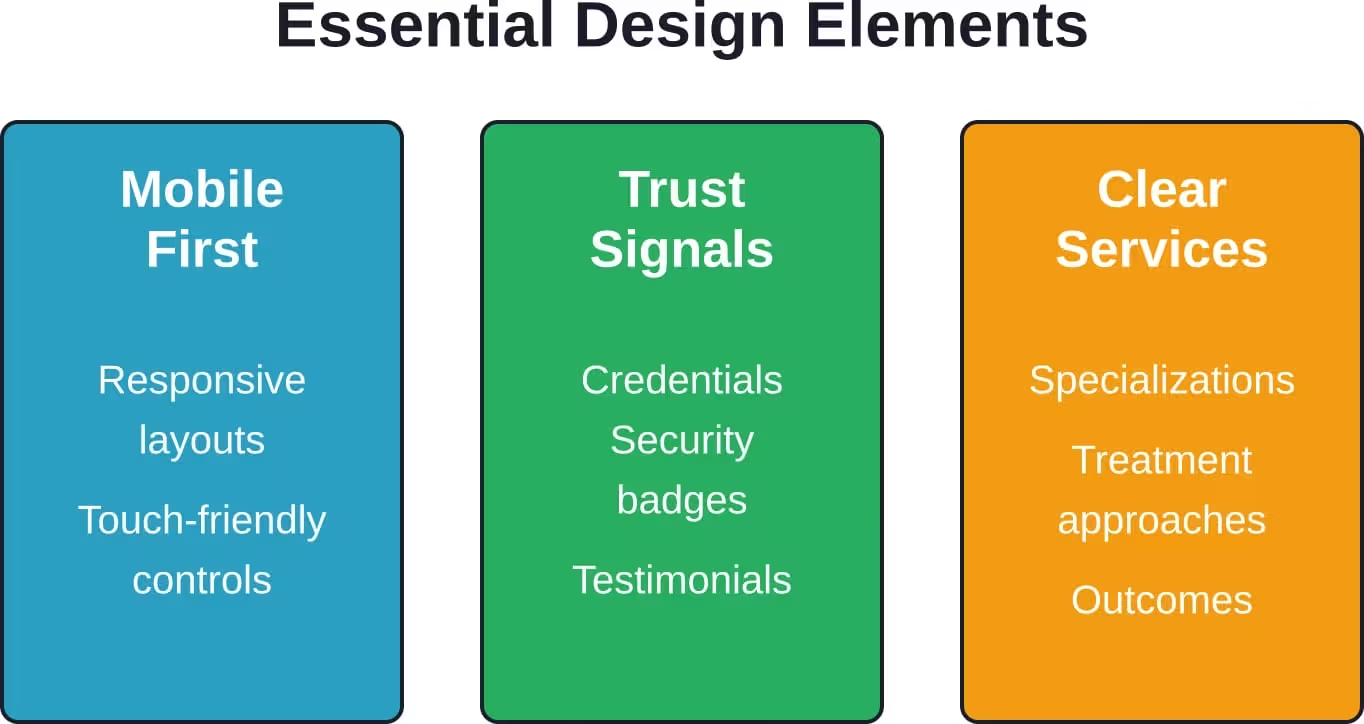
Responsive design adapts layouts to screen size automatically. Navigation menus collapse into mobile-friendly formats, forms display single-column layouts, and buttons remain large enough for touch interaction.
Accessibility standards ensure people with disabilities can use the platform. WCAG 2.1 Level AA compliance represents the current standard, requiring features like keyboard navigation, screen reader compatibility, and sufficient color contrast.
Professional Visual Identity and Trust Signals
Teletherapy websites must establish credibility quickly. Professional photography, consistent branding, and clear credentials help build trust before the first session.
License verification displays should include license numbers, issuing states, and verification links where applicable. This transparency reassures clients they’re working with qualified professionals.
Security badges and compliance certifications signal data protection. Displaying HIPAA compliance statements, SSL certificates, and third-party security audits reduces anxiety about privacy.
Clear Service Descriptions and Specializations
Generic therapy descriptions don’t resonate with people searching for specific help. Detailed service pages targeting particular conditions, populations, or treatment approaches improve both SEO and client matching.
Each specialization page should explain the condition, describe the treatment approach, outline what to expect in sessions, and address common concerns. This educational content builds authority while helping clients self-select appropriate services.
Outcome expectations need careful framing. Ethical guidelines prohibit guaranteeing results, but psychologists can describe typical treatment timelines, research-supported effectiveness rates, and realistic improvement markers.
SEO Strategies for Psychology Teletherapy Practices
Even the most sophisticated teletherapy platform fails without clients. Search engine optimization brings potential clients to the website organically.
Local and Virtual Service Area Optimization
Psychologists typically hold licenses in specific states. The website needs clear geographic targeting for those jurisdictions while explaining licensure limitations.
Location pages for each licensed state should detail services available to residents, explain relevant state regulations, and include state-specific content. This geographic focus helps search engines match the practice to location-based queries.
Virtual service language needs careful crafting. Phrases like “online therapy in [state]” or “teletherapy for [state] residents” clarify service areas without implying physical locations that don’t exist.
Content Marketing for Mental Health Topics
Educational content establishes expertise while capturing search traffic for condition-related queries. Blog posts, guides, and resources targeting specific mental health topics attract people researching their symptoms.
Content should answer common questions, explain treatment options, and provide actionable information—not just promote services. This builds trust and demonstrates clinical knowledge.
Topic clusters organize content around core themes. A main pillar page covers “Anxiety Treatment” broadly, with supporting articles diving into specific anxiety disorders, treatment techniques, and coping strategies.
Schema Markup for Medical Professionals
Structured data helps search engines understand the professional context. Medical professional schema markup identifies psychologists with their credentials, specializations, and accepted insurance.
Local business schema remains relevant for teletherapy practices, even without physical offices. The markup includes service areas, contact information, and business hours for virtual availability.
FAQ schema can increase visibility in search results through rich snippets. Common questions about teletherapy, insurance, and services display directly in search results with properly implemented markup.
Platform Selection and Development Approaches
Psychologists face a fundamental choice: all-in-one platforms built for therapists versus custom development on general website builders.
Specialized Teletherapy Platforms
Purpose-built platforms for mental health professionals bundle website hosting, scheduling, video conferencing, billing, and electronic health records into integrated systems.
These solutions handle HIPAA compliance out of the box. The vendor maintains Business Associate Agreements, manages security updates, and ensures all components meet regulatory requirements.
The trade-off comes in customization limits. Specialized platforms offer template-based designs with limited layout flexibility compared to fully custom websites.
Custom Development with HIPAA-Compliant Infrastructure
Custom websites provide complete design control and unique branding. Developers can create sophisticated user experiences tailored to specific practice needs.
But custom development requires careful vendor selection. The hosting provider, any third-party integrations, and the development team itself need HIPAA expertise and willingness to sign Business Associate Agreements.
Ongoing maintenance becomes the practice’s responsibility. Security patches, software updates, and compliance monitoring require technical expertise or contracted support.
Hybrid Approaches
Some psychologists use general website builders for public-facing content while integrating specialized teletherapy platforms for clinical functions.
This approach separates marketing from clinical operations. The main website built on WordPress or similar platforms handles SEO, content marketing, and initial client education. Embedded booking widgets and portal links connect to HIPAA-compliant systems for actual client interactions.
Integration complexity varies. Some platforms provide seamless embedding options, while others require clients to navigate between distinct systems.
| Approach | Pros | Cons |
|---|---|---|
| All-in-One Platform | HIPAA-compliant by default, integrated tools, minimal tech burden | Limited customization, template designs, vendor lock-in |
| Custom Development | Complete design control, unique branding, flexible features | Higher cost, ongoing maintenance, requires HIPAA expertise |
| Hybrid Solution | Marketing flexibility with clinical compliance, leverages both strengths | Multiple systems to manage, potential integration challenges |
Cost Analysis and Return on Investment
Teletherapy website development involves upfront costs and ongoing expenses. Understanding the full financial picture helps psychologists budget appropriately.
Development and Setup Costs
Specialized platforms typically charge monthly subscriptions rather than upfront development fees. These range from basic plans with limited features to comprehensive packages including marketing tools and practice management.
Custom development costs vary dramatically based on complexity. Basic professional websites start around a few thousand dollars, while sophisticated platforms with custom features can reach tens of thousands.
Domain registration, SSL certificates, and initial content creation add to setup costs. Professional photography and copywriting improve results but increase the initial investment.
Ongoing Operational Expenses
Monthly platform subscriptions, hosting fees, and software licenses create recurring costs. HIPAA-compliant hosting typically costs more than standard web hosting due to additional security requirements.
Technical support and maintenance represent hidden costs for custom solutions. Security updates, bug fixes, and feature enhancements require ongoing development work.
Marketing expenses—SEO services, content creation, paid advertising—drive client acquisition but exist separate from the platform itself.
Effectiveness and Client Acquisition
Research examining digital mental health services found that teletherapy produced clinically significant improvements. Research on digital mental health services involving adults showed improvements in well-being scores, with medium effect sizes for depression symptom improvement.
The odds ratio for clinical improvement with teletherapy versus assessments only reached 2.01, demonstrating meaningful treatment effects delivered through digital platforms.
Cost analysis indicates varying estimates for digital mental health service delivery, with costs dependent on service type and delivery model.
State Licensure and Legal Compliance Considerations
Teletherapy doesn’t eliminate state licensing requirements. Psychologists must hold valid licenses in the states where their clients physically reside during sessions.
Multi-State Licensure Requirements
Each state maintains independent licensing boards with distinct requirements. Psychologists seeking to serve clients across multiple states need separate licenses for each jurisdiction.
Some states participate in PSYPACT, the Psychology Interjurisdictional Compact, which facilitates practice across member states. But participation remains incomplete, and many high-population states don’t participate.
Website disclaimers should clearly state licensed jurisdictions. Footer disclosures, intake forms, and booking systems need to screen for client location and prevent appointments with unlicensed individuals.
Informed Consent for Teletherapy
Virtual care requires specific informed consent beyond standard therapy agreements. Clients need information about technology risks, emergency procedures, and the limitations of remote care.
Consent forms should address technical failures, confidentiality risks specific to virtual platforms, and protocols for crisis situations when face-to-face intervention isn’t possible.
Documentation of consent becomes part of the clinical record. Electronic signatures with timestamps provide evidence that clients received and acknowledged teletherapy-specific information.
Moving Forward with Teletherapy Website Development
Building an effective teletherapy website requires balancing clinical needs, regulatory compliance, and user experience. The technical requirements are demanding, but the infrastructure enables psychologists to serve clients who can’t access traditional office-based care.
Start with compliance fundamentals—HIPAA requirements aren’t negotiable. Select vendors carefully, secure Business Associate Agreements, and verify that every system component meets Security Rule standards.
Then focus on clinical effectiveness. The platform should support therapeutic relationships, not create barriers. Intuitive interfaces, reliable technology, and thoughtful design reduce friction and let psychologists focus on clinical work.
Research demonstrates that teletherapy delivers meaningful clinical outcomes. Studies show medium effect sizes for depression improvement and odds ratios above 2.0 for clinical improvement compared to assessment-only approaches.
The investment in proper website infrastructure pays off through expanded service capacity, reduced geographic limitations, and the ability to serve clients during circumstances that prevent office visits. As mental health needs continue growing—with significant portions of adults reporting depression or anxiety symptoms in recent surveys—accessible virtual care becomes increasingly essential.
Ready to build a compliant, effective teletherapy website? Start by documenting state licensure, researching platform options that align with practice needs, and consulting with HIPAA-knowledgeable developers or specialized mental health technology vendors who understand the unique requirements psychologists face.