


Key Takeaways: Lead generation through SEO combines technical optimization, strategic content creation, and authority building to attract qualified prospects organically. The most effective 2026 strategies include topic cluster architecture, generative engine optimization, intent-driven keyword targeting, and conversion-focused technical SEO that adapts to AI-driven search behaviors.
Search has fundamentally changed. According to research from Colorado State University published in March 2025, approximately 28.5% of Google queries lead to a click on the first organic result, while zero-click searches have risen to nearly 58%.
But here’s the thing—this shift doesn’t mean SEO is dead for lead generation. It means the playbook has evolved. Teams that generate consistent leads from organic search in 2026 aren’t just optimizing for rankings. They’re building visibility across traditional search engines, AI platforms like ChatGPT, and community-driven channels.
The average internet user spends roughly 6 hours and 38 minutes online daily, according to Harvard Business School research from October 2025. For businesses aiming to capture leads, meeting prospects where they actively search for solutions remains one of the most cost-effective acquisition channels.
This guide breaks down ten proven strategies that drive qualified leads through SEO—strategies backed by current data, tested across industries, and adapted for the AI-driven search landscape of 2026.
1. Build Topic Clusters to Establish Topical Authority
Topic clusters have moved from nice-to-have to essential for lead generation. According to Moz’s comprehensive guide published in May 2025, content organized into clusters rather than isolated posts performs significantly better for both rankings and authority building.
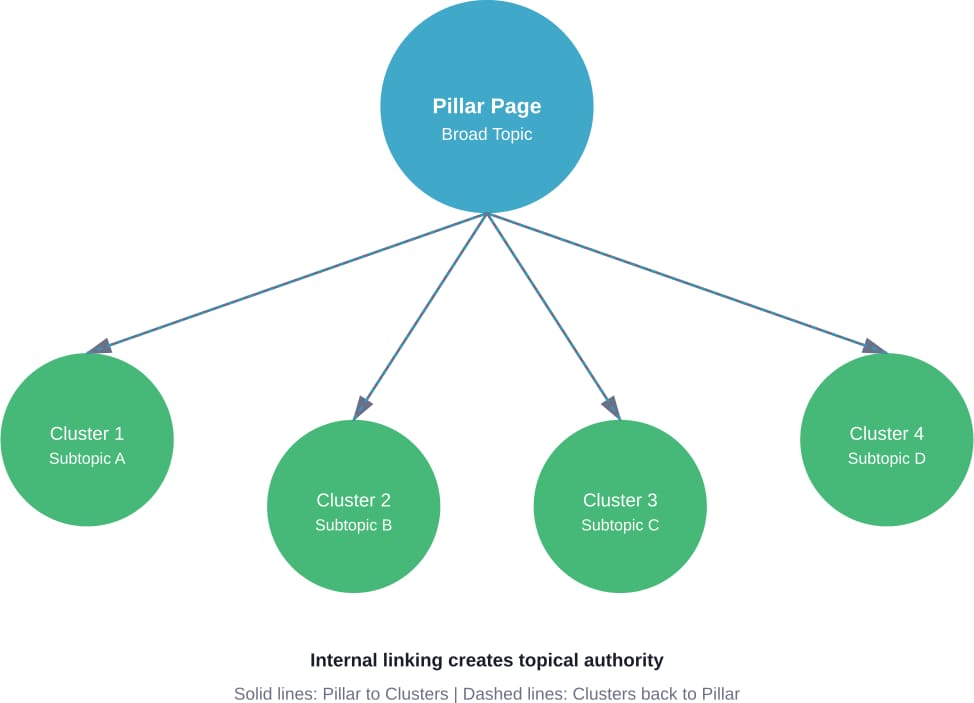
Here’s how it works: Create a pillar page covering a broad topic comprehensively (2,500-4,000 words). Then develop 8-12 cluster pages diving deep into specific subtopics. Each cluster page links back to the pillar, and the pillar links to all clusters. This internal linking structure signals topical authority to search engines.
For lead generation specifically, the pillar page should target high-intent commercial keywords while cluster pages capture informational searches earlier in the buyer journey. Someone searching “how to reduce customer acquisition costs” (informational) might not convert immediately, but when they later search “customer acquisition cost calculator” (commercial), your established authority increases conversion likelihood.
Most businesses create content in silos, with individual blog posts and landing pages lacking strategic connection. Topic clusters force intentional architecture that guides prospects from awareness to consideration to decision—the exact path lead generation requires.
Implementation Steps
Start with keyword research identifying one broad topic with 500+ monthly searches and commercial intent. Map out 8-12 related subtopics with informational intent. Create the pillar page first, establishing comprehensive coverage. Then develop cluster pages one by one, linking appropriately.
Each cluster page should include a conversion element—not aggressive, but present. A content upgrade, newsletter signup, or tool access works better than hard sales pitches for informational content.
2. Optimize for Generative Engine Optimization (GEO)
LLM-based search platforms like ChatGPT, Perplexity, and Google’s AI Mode are generating answers instead of just listing links. According to Moz’s GEO guide, one client found that 34% of all AI search traffic was coming from ChatGPT.
Generative Engine Optimization means structuring content so AI models cite and reference it when generating answers. This matters for lead generation because high-intent queries in AI search often include direct citations with links—and those clicks tend to be highly qualified.
The key differences: Traditional SEO optimizes for keywords; GEO optimizes for context and citability. LLMs favor content with clear answers, authoritative sources, structured data, and quotable statistics.
According to Moz’s GEO guide, successful optimization requires formatting content for semantic similarity rather than exact keyword matches. For example, “most reliable Bluetooth headphones under $100” packs contextual signals (reliability, product category, price threshold) that LLMs understand beyond the literal words.
GEO Tactics for Lead Generation
Structure content with clear H2 questions that match natural language queries. Include data points, statistics, and quotable insights that AI models can cite. Add schema markup for key information (FAQPage, HowTo, Product).
Track AI search traffic separately in analytics. Segment by platform—ChatGPT versus Perplexity versus Google AI Mode—to identify which performs best. Adapt content formatting based on which platform drives the most qualified leads.
One practical approach: Include a “Quick Answer” section at the start of detailed articles. This 2-3 sentence summary gives AI models an easily extractable response while the full article provides depth for traditional search and human readers.
3. Target Commercial and Transactional Intent Keywords
Not all organic traffic generates leads. According to Backlinko’s SEO case study work, results for transactional queries like “office space Brooklyn” show product pages with high commercial intent, while informational queries like “coworking space Brooklyn” mix educational content with commercial results.
For lead generation, commercial and transactional intent keywords matter most. These are searches where prospects actively evaluate solutions, compare options, or prepare to make decisions.
Commercial intent signals include: “best [product] for [use case]”, “[product] vs [competitor]”, “[product] pricing”, “[product] reviews”, “top [service] companies”. Transactional signals: “buy [product]”, “[service] quote”, “schedule [service]”, “[product] demo”.
The strategic approach: Build informational content for brand awareness and authority, but prioritize commercial intent keywords for pages with lead capture mechanisms. Landing pages, comparison guides, and solution pages should target keywords indicating buying readiness.
| Example Keywords | Lead Generation Value | Content Format |
|---|---|---|---|
| Informational | “what is marketing automation” | Low (awareness stage) | Blog posts, guides |
| Commercial | “best marketing automation tools” | High (consideration stage) | Comparison pages, reviews |
| Transactional | “marketing automation demo” | Very High (decision stage) | Landing pages, signup pages |
Navigational | “HubSpot login” | Low (existing users) | Brand pages |
Identifying High-Value Keywords
Use keyword research tools to filter by commercial intent indicators. Look for keywords with strong cost-per-click values in paid search—high CPCs signal commercial value. Analyze SERP features; pages with “People Also Ask” boxes and comparison features indicate commercial intent.
Prioritize keywords where SERP results include competitors’ landing pages rather than purely informational content. If competitors invest in ranking for specific terms, those terms likely generate leads.
4. Implement Strategic Content Upgrades
Content upgrades convert blog readers into leads by offering additional value relevant to specific articles. Unlike generic newsletter signups (which average 2-3% conversion), targeted content upgrades can convert 10-15% of readers.
The concept: For an article about “email marketing best practices”, offer a downloadable email template checklist. For a post on “SEO audits”, provide an audit spreadsheet. The upgrade directly extends the article’s value.
According to HubSpot research, 87% of companies leverage email marketing as a lead generation channel. Content upgrades represent one of the most effective ways to build email lists with engaged, qualified prospects.
What makes content upgrades work for lead generation? Relevance and immediate value. Someone reading about SEO strategies who can immediately download an SEO checklist receives instant gratification—far more compelling than “subscribe for future content.”
Creating Effective Upgrades
Match upgrade format to article topic: checklists for process content, templates for how-to guides, calculators for data-driven articles, toolkits for comprehensive topics. Keep the exchange proportional—don’t require extensive form fields for simple PDFs.
Position upgrade offers contextually within content, not just at the end. If paragraph 7 discusses keyword research, insert a keyword research template offer right there. Context increases conversion rates significantly.
Test different formats. Some audiences prefer video training, others want spreadsheets, some need ready-to-use templates. Track conversion rates by upgrade type to identify what resonates with the target audience.
5. Optimize Technical SEO for Conversion Paths
Technical SEO isn’t just about crawlability and indexing—it directly impacts lead generation through site speed, mobile experience, and conversion path clarity.
According to Backlinko’s SEO metrics guide, site performance impacts user experience, and user experience drives conversions. A three-second load delay can reduce conversions by 40% or more.
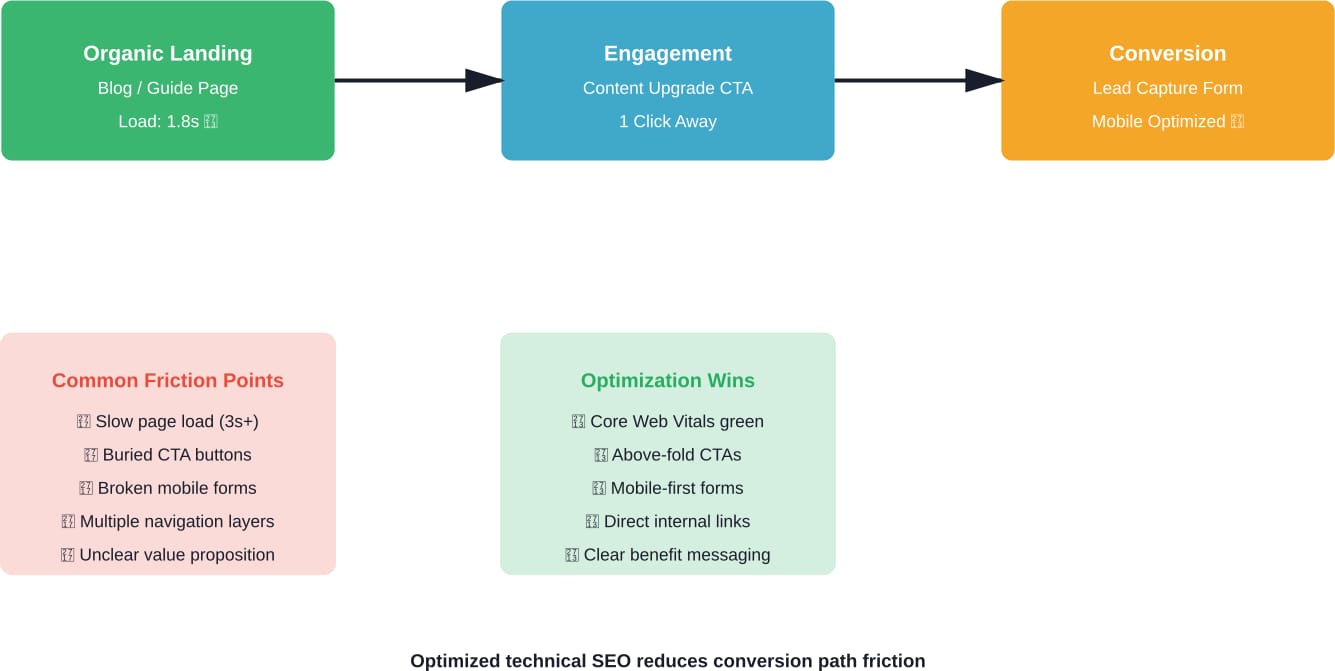
For lead generation specifically, technical optimization means ensuring conversion points load quickly, forms function across devices, and the path from organic landing to lead capture contains minimal friction.
Key technical factors affecting lead generation: Core Web Vitals (particularly Largest Contentful Paint for landing pages), mobile form usability, page speed on key conversion pages, and structured internal linking that guides visitors toward conversion points.
Priority Technical Optimizations
Audit conversion paths starting from top organic landing pages. Use tools like Screaming Frog or HubSpot to identify technical issues on these critical pages first. Fix loading issues, broken forms, and mobile display problems on high-traffic pages before optimizing low-traffic content.
Implement lazy loading for images below the fold but ensure above-the-fold content (especially conversion elements) loads immediately. Test forms across devices; many lead generation opportunities disappear when mobile forms malfunction.
Optimize internal linking to reduce clicks from organic entry to conversion. If someone lands on a blog post, they should reach a relevant lead magnet or demo page in one click maximum. Excessive navigation increases abandonment.
6. Create Comparison and Alternative Content
Comparison searches represent peak buying intent. Someone searching “HubSpot vs Salesforce” or “best alternative to Mailchimp” is actively evaluating solutions—exactly when lead capture becomes most effective.
According to competitive research, comparison and alternative content consistently ranks among the highest-converting organic traffic sources. These pages capture prospects at the moment they’re weighing options.
The strategy involves creating honest, detailed comparisons—not biased sales pitches. Prospects trust content that acknowledges both strengths and weaknesses. A comparison page that only praises your solution and dismisses competitors signals bias, reducing trust and conversion rates.
Structure matters significantly. Best comparison pages include: side-by-side feature tables, pricing comparisons (when publicly available), use case recommendations (“X works better for small teams, Y for enterprises”), and clear conversion CTAs positioned as “See if [your product] fits your needs.”
Building Comparison Content That Converts
Research comparison keywords in your space: “[your product] vs [competitor]”, “[your product] alternative”, “products like [competitor]”. Prioritize comparisons where competitors have strong brand recognition but you offer distinct advantages.
Include authentic user perspectives. Reference review platforms, testimonials, or case studies. When prospects see real evidence rather than marketing claims, trust increases.
Position conversion offers helpful next steps rather than aggressive sales. “Compare features yourself with a free trial” works better than “Buy now.” The goal is capturing leads ready for sales conversations, not forcing immediate purchases.
7. Leverage Local SEO for Geographic Lead Generation
For businesses serving specific geographic areas, local SEO represents a highly qualified lead generation channel. According to community discussions, organic local rankings combined with map pack visibility can sustain consistent lead flow.
Local search queries often indicate immediate intent: “[service] near me”, “[service] in [city]”, “best [service provider] [location]”. These searches come from prospects actively seeking solutions within specific areas.
Local SEO optimization differs from traditional SEO. It requires: claimed and optimized Google Business Profile, consistent NAP (Name, Address, Phone) across directories, location-specific content, local backlinks, and customer reviews.
The lead generation advantage: Local search competition is typically lower than national organic competition. Ranking in the local map pack for “marketing agency Chicago” might require significantly less effort than ranking nationally for “marketing agency.”
Local SEO Implementation
Start with Google Business Profile optimization. Complete every field, add high-quality photos, select accurate categories, and respond to all reviews. According to small business research from the SBA, consistent local presence builds trust that translates to lead inquiries.
Create location-specific landing pages for each service area. These shouldn’t be thin duplicate content—include genuine local information, case studies from that area, local testimonials, and area-specific value propositions.
Build local citations and backlinks. Get listed in local business directories, partner with complementary local businesses, sponsor community events, and contribute to local publications. Geographic relevance signals matter significantly for local rankings.
8. Develop Interactive Tools and Calculators
Interactive tools attract links, generate social shares, and convert visitors into leads at impressive rates. A well-designed calculator or assessment tool can serve triple duty: ranking for valuable keywords, providing genuine user value, and capturing lead information.
Examples that work for lead generation: ROI calculators, cost comparison tools, assessment quizzes, configurators, audit tools, or sizing calculators. These tools answer specific questions prospects have while naturally leading to sales conversations.
Someone using a “marketing budget calculator” or “website speed test” has clear intent related to those topics. By providing immediate value through the tool, trust builds. Offering detailed results via email or requiring registration for advanced features naturally captures leads.
According to Backlinko’s research on high-performing content, interactive tools tend to attract significantly more backlinks than static content, improving overall domain authority and making all lead generation content more competitive.
Building Effective Interactive Content
Identify frequent questions prospects ask during sales conversations. If “How much should we budget for X?” comes up regularly, build a budget calculator. If “How does our current approach compare?” appears often, create a benchmark assessment.
Balance value delivery with lead capture. Provide enough immediate value that users appreciate the tool, but position the most valuable insights behind a simple email gate. “Enter your email to receive your detailed report” works when the tool has already demonstrated clear value.
Optimize tool pages for SEO. Include keyword-rich titles (“Free Marketing ROI Calculator”), descriptive content explaining how the tool works and why it matters, and schema markup identifying the tool’s purpose.
9. Build Strategic Backlinks from Industry Sources
Backlinks remain a crucial ranking factor, but for lead generation, not all backlinks carry equal value. A link from a highly trafficked industry publication delivers referral visitors who might convert, plus SEO benefits. A link from an irrelevant directory does neither.
According to Backlinko’s analysis of SEO metrics, focus should center on referring domains rather than total backlink count. Ten links from ten different authoritative industry sites provide more value than 100 links from a single low-quality source.
Strategic link building for lead generation prioritizes: industry publications, complementary service providers, professional associations, educational institutions, and high-authority review platforms. These sources pass both SEO value and qualified traffic.
The SBA’s guidance on competitive analysis emphasizes understanding where target customers discover solutions. If prospects read specific industry blogs or publications, links from those sources can directly generate leads beyond SEO benefits.
Acquiring Quality Backlinks
Create genuinely link-worthy content. According to research, comprehensive guides, original data, interactive tools, and unique frameworks attract natural links. Content created specifically for link building (“top 100 tools” lists with no real value) rarely converts visitors into leads even if it attracts links.
Pursue strategic partnerships. Offer to contribute expert content to industry publications, collaborate on research with complementary businesses, or provide tools that other sites want to reference. These relationships build both links and brand recognition.
Monitor competitor backlinks. Identify where competitors earn links, then pursue similar opportunities with improved content. If a competitor’s guide attracted 20 backlinks from industry sites, create a more comprehensive resource and proactively share it with those same publications.
10. Implement Conversion Rate Optimization Alongside SEO
Driving organic traffic means nothing if that traffic doesn’t convert.According to HubSpot’s 2025 benchmarks, the average organic CAC for automotive is $158 and for aerospace and defense is $385.
CRO for organic traffic requires understanding how SEO visitors differ from other channels. Organic visitors often arrive at specific content rather than homepages, have particular questions or problems in mind, and may be earlier in the buying journey than paid search traffic.
Effective lead generation from SEO means optimizing conversion points specifically for organic visitor behavior. Generic conversion tactics applied uniformly across all channels underperform compared to channel-specific optimization.
SEO-Specific CRO Tactics
Match landing page content to search intent. If someone searches “how to improve email open rates” and lands on a blog post, the conversion offer should relate directly to email marketing—not a generic “schedule a consultation.” Context-specific CTAs convert significantly better.
Test different conversion mechanisms for different content types. Educational blog posts might convert best with content upgrades, comparison pages with free trials, and product pages with demo requests. Don’t apply one-size-fits-all approaches.
Analyze organic landing pages with high traffic but low conversion. These represent immediate opportunities—the SEO work has succeeded in attracting visitors, but the conversion path needs optimization. Small changes to CTA placement, messaging, or offer can dramatically improve lead volume.
Track conversion rates by landing page, not just overall. According to HubSpot’s reporting guidance, granular tracking reveals which content converts and which attracts traffic without generating leads. This insight directs both content creation and optimization efforts.
| Primary SEO Goal | Best Conversion Mechanism | Expected Conversion Rate |
|---|---|---|---|
| Educational Blog Post | Awareness, Authority | Content Upgrade, Newsletter | 3-8% |
| Comparison Page | Commercial Intent | Free Trial, Demo Request | 8-15% |
| Solution Landing Page | Transactional Intent | Demo, Contact Form | 12-20% |
| Tool/Calculator | Engagement, Links | Email for Results | 15-30% |
| Case Study | Trust Building | Related Resource, Consultation | 5-10% |
Turn Your SEO Traffic Into Real Sales Conversations
SEO can bring the right people to your site, but it does not always move them into booked calls. If you want your 2026 strategy to generate actual sales conversations, not just traffic, Lengreo can support that gap. They focus on B2B lead generation and appointment setting, combining targeted outreach on LinkedIn, email, and direct contact with a clear qualification process. The goal is simple—get you in front of decision makers who are ready to talk.
If your pipeline feels inconsistent or too dependent on inbound, it might be time to add a structured outbound layer. Use SEO to attract interest, and let Lengreo help convert that interest into scheduled meetings.
👉 Book a call with Lengreo and see how many qualified conversations you can generate this quarter.
Measuring SEO Lead Generation Performance
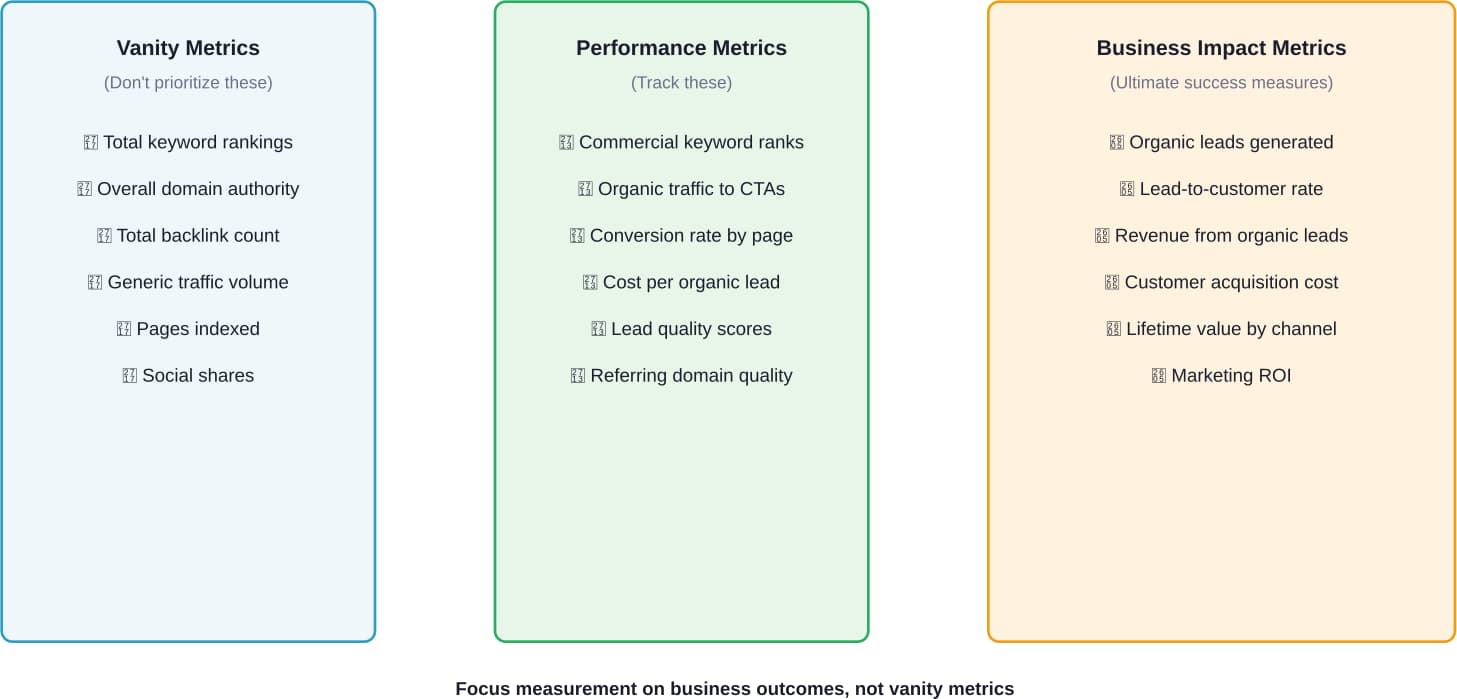
Tracking the right metrics separates effective SEO lead generation from busywork. According to Backlinko’s guide on measuring SEO results, the difference between SEO performance (rankings, traffic) and SEO results (conversions, revenue) matters significantly.
Traffic increases mean nothing if lead quality drops or conversion rates fall. The meaningful metrics for lead generation through SEO include: organic traffic to key conversion pages, conversion rate by landing page, lead quality scores, cost per lead from organic channels, and revenue attributed to organic leads.
Based on Northwestern Kellogg School research from December 1, 2025, companies should budget for testing and learning and optimization. The rise of zero-click searches means traditional traffic metrics tell an incomplete story. Brands must track visibility in AI overviews, featured snippets, and other zero-click formats even when direct traffic doesn’t materialize.
Essential Tracking Components
Implement proper attribution. Use UTM parameters, track organic sessions through to conversions, and ensure CRM integration captures organic traffic sources. Without attribution, determining which SEO efforts generate leads becomes guesswork.
Monitor keyword rankings for commercial intent terms specifically. Overall ranking improvements matter less than rankings for keywords that drive leads. According to Backlinko, tracking rankings helps diagnose sudden traffic changes and identify which pages drive performance improvements.
Measure lead quality, not just quantity. Ten highly qualified leads worth more than 100 poor-fit prospects. Track organic lead-to-customer conversion rates, deal sizes, and sales cycle lengths compared to other channels.
Adapting to the AI-Driven Search Landscape
Search behavior has fundamentally shifted. According to MIT Sloan Review research, invisibility on AI platforms risks dire consequences for brands, even those leading in market share. This isn’t speculation—it’s already happening.
Google’s AI overviews now appear for countless queries. ChatGPT has integrated search. Perplexity provides cited answers instead of link lists. For lead generation, this creates both challenges and opportunities.
The challenge: Zero-click searches reduce direct website traffic. According to the Colorado State University analysis from March 2025, attracting new visitors from search alone has become increasingly difficult.
But here’s the opportunity: AI search citations carry enormous trust. When ChatGPT or Perplexity cites your content as a source, that mention carries more authority than a traditional link at position 7. According to HubSpot’s SEO reporting guide, a client received a $10K lead from ChatGPT due to strong SEO on their site.
According to Northwestern Kellogg School research from December 1, 2025, companies should budget for testing and learning and optimization. The landscape remains unsettled—experimenting with different approaches to AI visibility matters more than perfecting any single tactic.
Future-Proofing SEO Lead Generation
Focus on building genuine brand recognition beyond search rankings. According to MIT Sloan research, strengthening brand presence ensures prospects can find you even when search becomes more fragmented across platforms.
Create content optimized for multiple discovery channels. Don’t build exclusively for Google—consider how content appears in ChatGPT, Perplexity, social platforms, and community sites like Reddit. Multi-channel visibility reduces dependence on any single platform.
Prioritize content quality and authority over keyword manipulation. According to Moz’s relevance engineering framework from June 2025, topical depth and contextual relevance matter more than specific keyword optimization. LLMs understand context; thin content optimized around exact phrases won’t cut through.
Invest in owned channels. Email lists, communities, podcasts, and other properties you control provide insurance against search algorithm changes. SEO generates initial leads, but owned channels create direct relationships reducing future dependence on external discovery.
Integrating SEO with Broader Lead Generation
SEO works best as part of an integrated lead generation strategy rather than an isolated channel. According to HubSpot research, of marketers, 69.6% use Facebook in their marketing strategy, followed by Instagram (60.31%) and YouTube (58.77%) alongside SEO efforts.
The synergy matters. Content created for SEO can be repurposed for social media, email campaigns, and paid advertising. Leads generated through SEO enter nurture sequences combining email, retargeting, and sales outreach.
Social signals may not directly impact rankings, but content that resonates on social platforms tends to attract organic links and brand searches—both powerful SEO signals. The channels reinforce each other.
According to the SBA’s workshop guidance from March 2026, even the best products need consistent traffic and interested buyers. No single channel provides complete coverage—successful lead generation requires adapting strategies across multiple touchpoints.
Creating Channel Synergy
Develop content with multi-channel distribution in mind. A comprehensive guide can become: the pillar page for SEO, a lead magnet for email capture, social post series, paid advertising landing page, and webinar content. Maximize value from each content investment.
Use paid channels to accelerate SEO results. Paid social and search advertising can drive initial traffic to new content, generating engagement signals and potential links that boost organic rankings over time.
Retarget organic visitors who don’t convert immediately. Someone who reads three blog posts but doesn’t fill out a form has clear interest—retargeting ads can bring them back with more compelling offers or social proof.
Common SEO Lead Generation Mistakes to Avoid
Understanding what doesn’t work helps avoid wasted effort. According to Chili Piper’s analysis of B2B lead generation strategies, several common mistakes consistently undermine results:
- Prioritizing traffic over conversion quality: Ranking for high-volume keywords that attract wrong-fit visitors generates impressive analytics reports but few qualified leads. Better to rank for lower-volume commercial intent keywords that attract ready buyers.
- Neglecting lead response speed: According to industry research, connecting with leads within 60 seconds dramatically increases conversion rates. If SEO generates form fills but sales doesn’t follow up quickly, the lead generation investment gets wasted.
- Creating content without clear conversion paths: Publishing blog posts that don’t connect to lead capture mechanisms means traffic without results. Every piece of content needs logical next steps toward conversion.
- Ignoring mobile experience: With mobile search dominating, forms that don’t work on phones or pages that load slowly on mobile devices actively repel potential leads. Desktop-optimized conversion paths aren’t sufficient.
Additional Pitfalls
Focusing excessively on algorithm updates rather than fundamentals. Core SEO principles—quality content, technical soundness, authoritative links, good user experience—remain stable across Google updates. Reacting to every algorithm change creates whiplash without improving lead generation.
Treating all organic traffic equally. Traffic from branded searches (people already aware of your business) differs fundamentally from non-branded organic traffic. Separate analysis and optimization ensures appropriate strategies for each.
Expecting immediate results. SEO typically requires 3-6 months before significant results materialize. According to Backlinko’s case study work, even dramatic improvements often take weeks to fully manifest. Impatience leads to strategy-hopping before approaches have time to work.
Conclusion: Building Sustainable Lead Generation Through SEO
Lead generation through SEO isn’t about gaming algorithms or chasing quick wins. It’s about building genuine value—content that answers real questions, technical infrastructure that serves users effectively, and authority that earns trust.
The ten strategies covered here work because they align with how people actually search for solutions. Topic clusters mirror how knowledge connects. GEO optimization adapts to emerging search behaviors. Intent-focused keywords meet prospects where they are in the buying journey. Each strategy serves both search engines and human users.
According to Northwestern Kellogg School research from December 1, 2025, companies should budget for testing and learning and optimization. The same principle applies to SEO lead generation broadly. Search evolves constantly, but the fundamentals—valuable content, technical excellence, genuine authority—remain remarkably stable.
Start with strategy number one or two from this guide. Implement thoroughly. Measure results. Then add the next strategy. Attempting all ten simultaneously creates overwhelm without focus; sequential implementation with measurement builds momentum.
The businesses generating consistent leads through SEO in 2026 aren’t necessarily the ones with the biggest budgets or the most sophisticated tools. They’re the ones creating genuinely helpful content, optimizing conversion paths intelligently, and adapting to changing search behaviors without abandoning core principles.
SEO lead generation compounds over time. The content published this month attracts links next month, ranks higher the month after, and generates leads for years. Unlike paid advertising that stops the moment the budget runs out, organic visibility builds cumulative value.
According to Harvard Business School research from October 2025, businesses need to reach customers where they are—on their screens. For most industries, organic search remains one of the most effective ways to reach prospects actively looking for solutions. The opportunity hasn’t disappeared; it’s evolved.
Ready to start generating qualified leads through SEO? Pick one strategy from this guide, implement it thoroughly over the next 30 days, and measure the results. Lead generation through SEO rewards consistent effort and strategic thinking—start building that momentum today.