

Running a successful restaurant today takes more than a great menu and friendly service. Guests have endless options, shorter attention spans, and higher expectations than ever before. Marketing isn’t something you do “on the side” anymore. It’s part of how your business survives and grows.
Real marketing isn’t about gimmicks or chasing trends. It’s about understanding your guests, choosing the right ways to reach them, and staying consistent enough to build trust. When it’s done well, marketing fills seats, creates loyal regulars, improves word of mouth, and makes each promotion more effective than the last.
This guide focuses on practical restaurant marketing strategies that drive real growth and long-term loyalty. No fluff. No theory for theory’s sake. Just ideas you can use to attract more diners and keep them coming back.
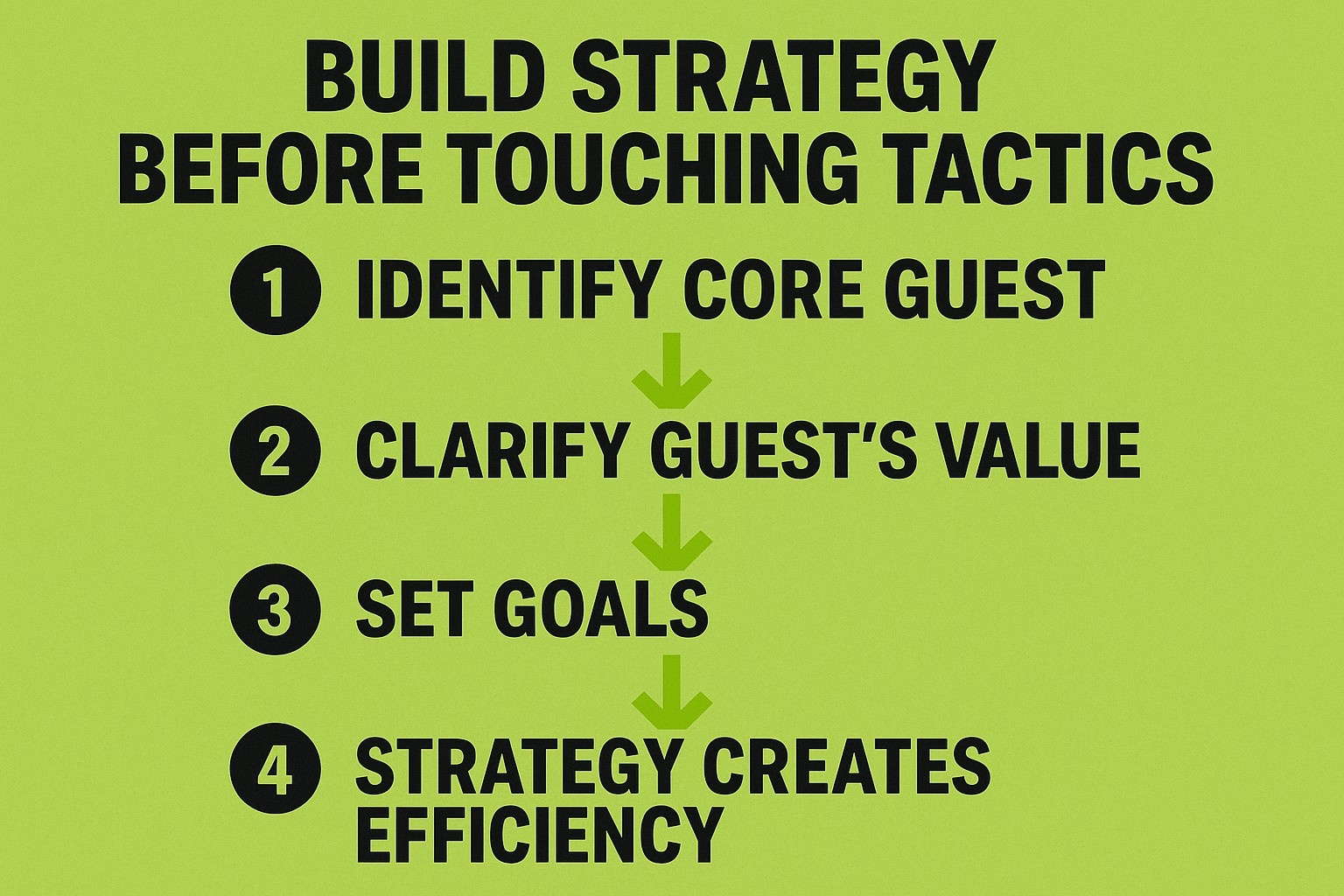
Build Strategy Before Touching Tactics
Before jumping into platforms, promotions, and content calendars, it is worth slowing down for a moment. Real restaurant marketing success does not start with posting schedules or ad budgets. It starts with clarity. Many restaurants struggle not because they are inactive, but because their efforts are scattered across too many directions at once. Without a clear strategy, marketing becomes a collection of disconnected actions instead of a focused growth engine.
Before launching posts, ads, or email campaigns, invest time in shaping a solid foundation. The deeper your understanding of your business and audience, the simpler and more effective every future decision becomes.
Identify your core guest
The most important question you can answer is who you are truly serving. Your core guest should not be a vague idea of “people who like food.” It needs to be a real, defined group with specific behaviors, habits, and needs.
Start by building a detailed picture of your primary diner:
- Age range and lifestyle.
- Dining motivations like quick meals, celebrations, convenience, or social outings.
- Price sensitivity and spending comfort.
- Preferred platforms and communication style.
When your audience is clearly defined, your marketing instantly becomes sharper. A family-focused pizzeria communicates warmth, value, and convenience. A downtown tasting bar leans into exclusivity, craftsmanship, and atmosphere. Trying to speak to both at once waters down your message and wastes your budget, leaving neither audience deeply engaged.
A focused audience does not limit growth. It strengthens it by building stronger loyalty with the people most likely to return and recommend you.
Clarify what guests value most
Once you know who your guests are, the next step is understanding why they choose you over nearby alternatives. Most diners do not select restaurants randomly. They are drawn to specific value points that match their priorities.
Ask yourself honestly what drives guests through your doors:
- Price and portion value.
- Unique or signature menu offerings.
- Atmosphere and overall experience.
- Convenience, speed, and easy access.
- Connection to the local community.
Your answers should shape every marketing message you write. Instead of leaning on generic lines like “great food” or “friendly service,” spotlight the qualities that truly separate you from the crowd. The more specific your language becomes, the more credible and appealing it feels to potential guests.
Set goals that guide action
With a defined audience and clear value drivers, goals provide the structure that turns ideas into results. Without goals, marketing drifts toward experimentation with no real measurement of success.
Productive restaurant goals are always specific and trackable:
- Increase weekday dine-in traffic.
- Grow takeout sales during lunch hours.
- Improve repeat visits within 90 days.
- Generate consistent 5-star reviews locally.
Each goal points directly toward actionable tactics. For example, boosting weekday traffic leads to targeted midweek promotions or loyalty rewards. Raising review volume prompts staff reminders and post-visit follow-ups. Goals transform marketing into a focused business tool rather than a series of hopeful guesses.
Strategy creates efficiency
When strategy comes first, every marketing decision becomes simpler. You know who you are talking to, what matters to them, and what results you are aiming for. That clarity prevents wasted spending, scattered messaging, and burnout.
Without this foundation, restaurants often chase trends or mimic competitors without understanding whether those tactics actually fit their business. With a strong strategic base, marketing becomes purposeful, consistent, and measurable. And from that place, every tactic you launch carries a much greater chance of driving real growth.
Your Website as the Central Conversion Hub
In today’s digital-first world, a restaurant’s website is often the first true impression a guest will have. Many owners still treat their sites as static brochures, but a website is much more than a digital menu – it is your central hub for converting interest into bookings, orders, and loyalty. A slow, confusing, or outdated site can turn potential diners away before they even step through your doors.
A high-performing restaurant website does three things exceptionally well: it presents your offerings clearly, makes ordering or booking effortless, and ensures all critical details are easily accessible. These fundamentals are non-negotiable because even small friction points – like a missing phone number or a confusing menu layout – can cost you bookings and revenue.
Your website must execute three jobs perfectly
Before getting into design and content specifics, every website should prioritize these core functions:
- Display the menu clearly and quickly.
- Simplify reservations or online orders.
- Provide immediate access to location, hours, and contact information.
Anything that slows or complicates these actions directly reduces your chances of converting browsers into paying guests.
Essential restaurant website elements
To make your site truly effective, consider these key components:
- Mobile-first design with fast loading speeds.
- Simple navigation with minimal clicks to reach menus or booking pages.
- Highly visible booking and ordering buttons on every page.
- Accurate address, hours, and phone details updated in real time.
- Built-in online reservations or seamless integration with third-party booking systems.
- Clear SEO structure to appear in local searches and map results.
A well-structured website ensures guests never have to hunt for basic information. Every extra click or confusing page risks losing their attention – and ultimately, the reservation.
Keep content active and updated
A fresh website signals that your restaurant is active, well-managed, and worth visiting. Frequent micro-updates create confidence for potential diners. Key content updates might include:
- Seasonal menu changes or specials.
- Holiday hours and special event information.
- Limited-time dishes or chef’s specials.
- Current promotions or loyalty perks.
In addition to these updates, featuring authentic guest reviews directly on your website reinforces credibility. Seeing real diners praise your food and service strengthens trust and encourages action.
Your website should never be an afterthought. It is the digital front door of your restaurant and a crucial conversion tool. By focusing on clarity, ease of use, and up-to-date content, you ensure that every visitor has a smooth path from discovery to booking. When your website performs well, it does more than inform – it persuades, engages, and converts casual browsers into loyal patrons.
Local SEO as a Silent Traffic Engine
Even in a world dominated by social media and paid advertising, local search remains one of the most powerful ways diners discover restaurants. When someone searches “best Italian near me” or “lunch spots downtown,” your restaurant either appears or it doesn’t. These searches often happen right when a decision is being made, making local SEO a critical yet often overlooked driver of new business.
Unlike paid campaigns, local SEO quietly builds over time. It works behind the scenes to position your restaurant in front of the right audience exactly when they are ready to visit, order, or book a table. Investing in local search optimization means your restaurant becomes more visible without continuously spending on ads.
Core SEO actions
To ensure your restaurant appears where it counts, focus on these foundational actions:
- Maintain and optimize your Google Business Profile for accuracy and engagement.
- Ensure your business information is consistent across all online directories.
- Encourage a steady flow of authentic customer reviews.
- Incorporate relevant local keywords throughout your website pages.
- Add structured location data, such as maps and schema, to help search engines understand your business.
Each of these steps strengthens your digital footprint and makes it easier for potential diners to find you organically.
Content that boosts discoverability
Search engines favor content that is relevant, informative, and location-specific. Restaurants that create the right type of content see sustained growth in organic traffic. Consider developing pages and resources like:
- Location-specific landing pages for each branch or area served.
- Neighborhood dining guides or curated local recommendations.
- Event, catering, or special service pages tailored to local audiences.
Over time, local SEO compounds quietly. Unlike paid advertising, it continues to attract visitors day after day without additional cost. This consistency ensures a reliable stream of traffic from people who are actively looking for a place to eat in your area.
Local SEO is often underestimated, yet it can be one of the most efficient ways to grow your restaurant. By maintaining accurate business information, encouraging reviews, and creating location-focused content, you build a sustainable online presence. Over time, this “silent engine” drives consistent, qualified traffic, ensuring your restaurant is top-of-mind for diners in your community.

Social Media That Builds Loyalty, Not Noise
In today’s restaurant world, social media is more than just a place to post pretty food photos. Guests are scrolling for inspiration, checking out the vibe of your space, and deciding whether your restaurant fits their mood or occasion. Social platforms work best when they feel personal and alive – not overly scripted or purely promotional. The goal is to make potential diners feel connected to your restaurant before they even step through the door.
A thoughtful social strategy strengthens loyalty, encourages repeat visits, and turns casual diners into brand advocates. Random posts may grab attention briefly, but a consistent and authentic presence builds long-term engagement and trust.
Build rhythm rather than random posts
Consistency creates expectation and familiarity. Instead of posting sporadically, develop a regular content rhythm:
- Daily stories highlighting menu availability or daily specials.
- Weekly behind-the-scenes kitchen or prep spotlights.
- Reposts of guest photos, reviews, or testimonials.
- Promotions for events, seasonal menus, or limited-time offers.
- Team moments that show the personalities behind your brand.
Small, consistent updates outperform occasional “perfect” posts because they keep your restaurant top-of-mind while feeling approachable and authentic.
Content that resonates most
Certain types of content naturally connect with audiences and encourage engagement:
- Quick, candid kitchen videos.
- Staff introductions or fun team moments.
- Photos or short clips of steaming dishes, plated meals, or drinks.
- Shots of lively, active dining rooms.
- Smiles and reactions of real customers enjoying their experience.
Authentic visual moments – things that feel real rather than overly staged – resonate better and encourage sharing. They communicate your restaurant’s personality and atmosphere in a way polished studio shots often cannot.
Engagement is the loyalty builder
Posting content is just the first step. Real impact comes from interacting with your audience:
- Reply promptly to comments and questions.
- Share and acknowledge guest-tagged content.
- Thank diners for sharing their experiences.
- Encourage conversations and respond naturally.
Engagement creates memory. Memory builds loyalty. Every thoughtful reply or recognition reinforces your restaurant as approachable, welcoming, and genuinely attentive to its guests.
Social media is not about noise or flashy campaigns – it’s about connection. By posting consistently, highlighting real moments, and actively engaging with your audience, your restaurant becomes more than a place to eat; it becomes a brand people know, trust, and want to return to. Done right, social media drives loyalty, repeat visits, and authentic word-of-mouth that lasts long after a post is published.
Build an Email and SMS Community
In a world dominated by ever-changing social media algorithms, one of the most reliable ways to reach diners is through channels you fully control – email and SMS. Unlike social platforms, these channels deliver your message directly to the people who already want to hear from you. Done right, they don’t just remind guests you exist – they drive orders, reservations, and repeat visits.
Building an email and text community allows you to nurture relationships over time. Instead of chasing fleeting likes or shares, you’re connecting with diners in a space where engagement is personal and measurable. The key is to add value with every message rather than overwhelming subscribers with constant promotions.
Loyalty messaging that adds value
The most effective campaigns give recipients reasons to stay connected and excited. Consider these types of messages:
- Exclusive early access to new menu items or seasonal dishes.
- Birthday perks or special celebratory offers.
- Invitations to private events or tastings.
- Insider previews of upcoming menu changes or chef specials.
- Surprise reward announcements that feel personal and unexpected.
The common thread is that each message provides tangible benefit or unique access. Overloading subscribers with repetitive promotions risks unsubscribes and weakens the trust you’ve worked to build.
Best practices for engagement
To keep your email and SMS efforts effective, focus on strategy and timing:
- Share monthly tasting menu previews or seasonal highlights.
- Offer limited invitations to special events for loyal patrons.
- Send subtle offers during slower dining periods to boost traffic.
- Craft messages that feel personal and tailored rather than generic blasts.
When executed thoughtfully, these campaigns make diners feel valued, informed, and connected to your restaurant. They are reminders that your establishment isn’t just another option – it’s a place that anticipates their needs and rewards their loyalty.
Email and SMS are not just marketing tools – they are relationship-building instruments. By delivering timely, relevant, and personal messages, your restaurant can cultivate a dedicated audience that consistently chooses you over competitors. When your communications focus on value and connection, every message becomes an opportunity to drive loyalty, engagement, and revenue.
Targeted Advertising That Actually Converts
Paid advertising can be a powerful driver of revenue for restaurants – but only when it’s strategic and goal-focused. Too many restaurants spend on ads with broad targeting or generic messaging, hoping for traffic that rarely converts. The most effective campaigns zero in on diners who are ready to act, whether that’s making a reservation, ordering takeout, or visiting for a special event.
Targeted advertising is not about reach for the sake of reach. It’s about connecting with the right people at the right moment with the right offer. When done thoughtfully, every ad dollar works harder and produces measurable results.
Best restaurant ad platforms
Choosing the right platform is critical because not all advertising channels perform equally for restaurants. Consider these high-impact options:
- Google Search Ads to capture diners actively searching for nearby restaurants.
- Social media ads promoting limited-time offers, events, or seasonal menus.
- Retargeting campaigns for website visitors who explored menus or booking pages but did not convert.
Each platform serves a specific purpose – from capturing intent-driven searches to nurturing interest from potential repeat customers.
Key targeting strategies
The difference between wasted ad spend and profitable campaigns lies in precision targeting. Use these tactics to ensure ads reach the most likely diners:
- Geo-target within your restaurant’s practical travel radius.
- Promote only high-margin menu items or offers that drive profitable orders.
- Focus campaigns on slower periods to balance traffic and maximize efficiency.
- Retarget visitors who interacted with your website or booking system but did not complete a reservation.
Broad awareness campaigns often burn through budgets without delivering measurable results. Precision targeting ensures each impression has a higher chance of converting into a visit, order, or reservation.
Targeted advertising is most effective when every campaign is intentional, specific, and aligned with revenue goals. By choosing the right platforms, focusing on profitable offers, and leveraging smart retargeting, restaurants can maximize ROI while attracting diners who are ready to act. Done well, paid advertising becomes a predictable engine for growth rather than a guessing game.

Community Marketing Builds Emotional Loyalty
A restaurant is more than a place to eat – it can be a vital part of the local community. When diners feel a connection beyond the menu, loyalty deepens, word-of-mouth spreads, and your brand earns a reputation that goes far beyond the digital sphere. Community marketing turns customers into advocates by showing that your restaurant cares about the people and neighborhoods it serves.
Engaging with your community does not have to be complicated or costly. Even small, thoughtful initiatives can generate goodwill, create memorable experiences, and strengthen emotional connections that keep guests coming back.
Community-building initiatives
Here are some effective ways restaurants can embed themselves into the local fabric:
- Sponsor school events, youth sports teams, or local clubs.
- Host fundraiser dinners for charities or community causes.
- Participate in street markets, fairs, or neighborhood festivals.
- Offer your space for meetings, workshops, or local group gatherings.
These efforts do more than build visibility – they create authentic relationships. People are more likely to support a business that supports their community, and these gestures often generate organic referrals that no ad campaign can match.
Community marketing is a long-term investment in emotional loyalty. By actively participating in local events, supporting causes, and providing meaningful spaces for connection, your restaurant becomes an integral part of the neighborhood. These relationships not only strengthen your brand but also cultivate loyal diners who see your restaurant as a trusted, valued part of their daily lives.
SaaS Tools That Streamline Restaurant Marketing
Running a restaurant today involves more than cooking great food – it’s managing communications, promotions, reservations, and guest relationships efficiently. The right software tools can take the complexity out of marketing, helping your team focus on creating memorable dining experiences while your campaigns run smoothly and effectively.
Technology should simplify, not complicate. When chosen wisely, software platforms can automate repetitive tasks, provide actionable insights, and help track the direct impact of marketing efforts on revenue. This allows restaurant owners and managers to make data-driven decisions without getting bogged down in manual processes.
Useful platforms include
To streamline operations and marketing, consider integrating tools that handle these key functions:
- Reservation management systems to optimize table turnover and guest experience.
- CRM and loyalty software for tracking customer behavior and rewarding repeat visits.
- Email and SMS automation tools to deliver timely, personalized communications.
- Review monitoring dashboards to respond quickly and maintain online reputation.
- Social media scheduling tools that ensure consistent posting without extra workload.
Each tool should work seamlessly with others, providing a cohesive ecosystem that supports growth and efficiency. Overlapping or disjointed systems can create more problems than they solve, so focus on integration and ease of use.
SaaS tools are not just conveniences – they are essential components of a modern restaurant marketing strategy. By automating routine tasks, tracking results, and simplifying communications, these platforms allow restaurants to execute marketing campaigns more effectively and measure their impact. The right technology makes marketing smarter, not harder, helping your restaurant grow sustainably and maintain strong connections with guests.
How We Help Restaurants Grow Through Expert Marketing
At Lengreo, we understand that restaurant marketing isn’t just about flashy ads or trendy posts. It’s about connecting with your guests where it matters, turning first-time diners into loyal regulars, and building a strategy that actually drives measurable growth. We work alongside restaurant teams to identify what makes each business unique and craft marketing campaigns that highlight those strengths effectively.
We bring a hands-on, results-focused approach to every project. From improving local search visibility to optimizing social media presence and email communications, we make sure every marketing channel contributes to real outcomes. We focus on the tactics that move the needle – boosting reservations, increasing takeout and delivery orders, and strengthening community engagement.
Our team emphasizes clarity and strategy before execution. That means understanding your core audience, mapping out specific goals, and choosing the right mix of digital and offline marketing actions. Every campaign is data-driven and customized to fit your restaurant’s personality, target audience, and business objectives.
Finally, we integrate seamlessly with your team, providing support without adding complexity. Our approach combines strategy, execution, and continuous optimization so that marketing efforts feel natural, aligned, and designed to deliver real growth – helping your restaurant stand out in a competitive market.
Conclusion
Restaurant marketing is about more than promotions or filling empty tables. It’s about building relationships, crafting memorable experiences, and showing potential guests why your restaurant matters. When you start with a clear understanding of your audience, lean into digital tools strategically, and stay consistent across channels, marketing becomes a growth engine instead of a guessing game. Each post, ad, or email is an opportunity to reinforce your brand, create loyalty, and keep diners coming back. The key is focus, authenticity, and using the right mix of tactics to fit your restaurant’s unique personality and goals. Marketing doesn’t work as a one-size-fits-all solution, but when done thoughtfully, it’s one of the most powerful tools for long-term success.