


Pricing is one of the few marketing decisions that instantly affects everything else – sales volume, brand perception, ad performance, customer loyalty, even how confident your sales team feels on calls. Yet for many growing brands, pricing ends up being guessed rather than built. Someone checks competitor websites, picks a middle number, and hopes it sticks. Sometimes it does. Often it becomes a quiet limiter on growth.
The truth is, pricing is not a one-time setup or a simple math exercise. It is a living strategy tied to your value, audience, positioning, and business goals. Strong pricing does not push people away or race to the bottom. It guides the right buyers toward you and gives them clarity instead of doubt.
This guide breaks down pricing strategies that actually work in real markets, with practical thinking you can use whether you sell software, services, ecommerce products, or anything in between.
Why Pricing Is a Marketing Strategy, Not Just a Finance Decision
Pricing sits at the crossroads of marketing and revenue. It is not just about margins or surviving costs. Price communicates meaning. Customers read your pricing as a signal of:
- Quality and credibility
- How you compare with alternatives
- Who your product is designed for
- Whether you are premium, practical, or mass market
A high price can reinforce trust when your branding and proof points back it up. A low price can feel risky or cheap when trust is missing. Pricing tells a story even before someone reads your website copy or talks to your sales team.
Marketing teams often focus only on awareness and leads, but mismatched pricing sabotages both. You can drive great traffic and interest only to lose buyers at checkout if the price feels confusing or misaligned with expectations. Strong pricing strategy keeps all marketing efforts working in the same direction.
Start With Value, Not Costs
Most companies begin with cost-based pricing because it feels safe. You add up production, delivery, overhead, and margin, then settle on a number that keeps the lights on. It works for internal budgeting. It does almost nothing to build a competitive advantage in the market.
From the customer’s side, costs are invisible. What they care about is simple: does this solve a real problem well enough to be worth the price?
People buy outcomes, not spreadsheets. They pay for relief from pressure, fewer wasted hours, smoother workflows, better results, or stronger brand perception. The emotional side matters just as much as the practical one. Feeling confident, competent, or supported has real value that never shows up on your cost sheet.
What Is This Product Actually Worth to the Buyer?
This question forces you to see your offer through the customer’s eyes. Worth is not abstract. It lives in everyday gains such as:
- Time saved on repetitive or manual tasks
- Revenue earned or protected
- Errors reduced or eliminated
- Stress taken off busy teams
- Faster execution or decision-making
- Clearer reporting or visibility
- Stronger credibility with their own clients or leadership
For example, a tool that saves a manager ten hours a month effectively gives them back part of a workweek. That can mean fewer late nights, more team oversight, or faster turnaround on projects. Compared with a casual convenience feature that merely improves comfort, that time recovery carries a much higher perceived value. And yet, on your side, both features might cost nearly the same to develop.
When pricing reflects real buyer impact, higher prices become easier to justify. Customers are not comparing your cost structure anymore. They are comparing benefits that clearly outweigh the price they pay.
Shifting From Features to Outcomes
Too many businesses fall into the trap of leading with features when setting prices. They list what the product does – dashboards, automated reports, or lead tracking systems – without connecting those features to real change in the customer’s world. The shift to outcome-based thinking asks a different question: how does this product actually improve someone’s work or life? Customers care about the impact more than the tools themselves. They notice when a solution saves hours each week, helps them make smarter decisions, or reduces lost opportunities, far more than they care about the number of views on a dashboard or the color of a report.
Pricing should reflect this shift from technical specifications to tangible benefits. When you present outcomes first, your value becomes clear, and buyers can see why investing in your product makes sense. This approach also helps avoid commoditization because you are not selling a list of features that competitors could replicate, but a combination of results and experiences that only your product delivers.
To make this transition practical, real-world input is essential. Interviewing customers about their workflows, challenges, and the benefits they actually experience creates a foundation for pricing decisions. Mapping features to outcomes, not just product checklists, ensures that your pricing tells a story of impact. This method transforms how customers perceive value and, ultimately, how willing they are to invest in your brand.
Talk to Customers About Impact, Not Tools
When you ask customers what they like about your product, the answers often focus on features or tools. That feedback has some value, but it only scratches the surface. To set pricing that truly reflects value, you need to dig deeper and understand the real changes your product creates in their work or business. Instead of asking what they like, ask questions that reveal how life is different after adopting your solution.
Focus on understanding the problems they faced before using your product and how those challenges affected their day-to-day tasks or overall results. Explore what is now easier or faster, and where they’ve seen measurable improvements since becoming a customer. Probe into the gaps that would be felt if your product were no longer available. These conversations highlight the outcomes that matter most, giving you a clear view of the value your product delivers.
This approach often uncovers benefits that your marketing copy barely mentions but that resonate deeply with your audience. Pricing aligned with these insights communicates that you understand and solve the problems that matter most, creating a stronger connection between what you charge and the results your customers experience.
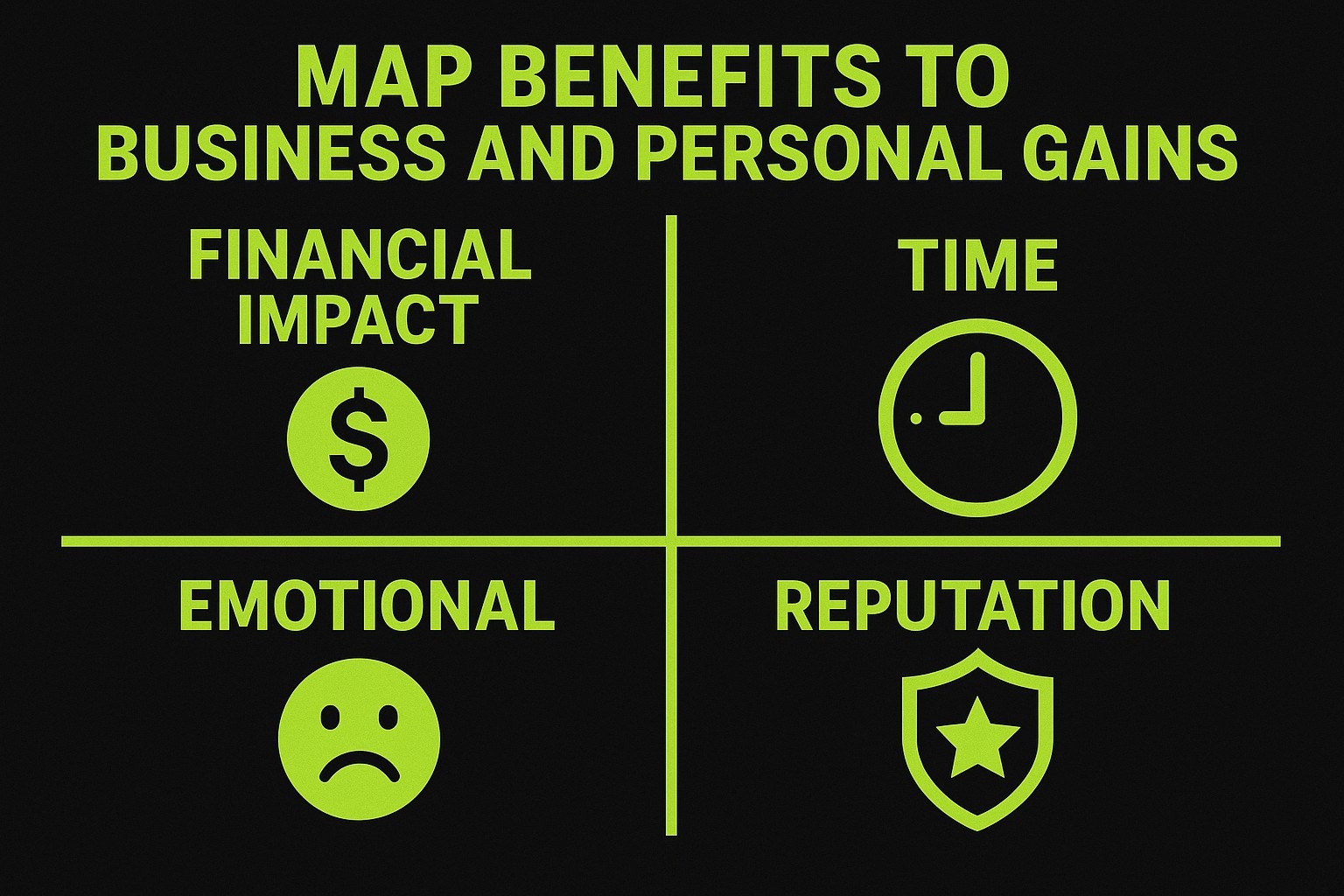
Map Benefits to Business and Personal Gains
Once you understand customer outcomes, organize your offer around meaningful gains instead of technical features. Look at your product or service and map it across these categories:
- Financial impact: increased sales, cost reductions, avoided losses
- Time impact: hours saved, faster execution, less manual work
- Emotional impact: reduced stress, peace of mind, clearer priorities
- Reputation impact: stronger authority, better client trust, credibility
- Operational impact: fewer errors, better workflows, scalability
Then assess which of these categories matter most to different customer segments. Your entry-level users may value convenience and time savings. Your advanced users may care more about revenue growth and strategic performance. Each group experiences a different version of your product’s value. This mapping becomes the foundation for tier design and pricing alignment.
Identify Your Highest-Impact Segments
Not all customers get equal value from your offer. Some groups benefit dramatically more than others. These are your pricing anchors. High-impact customers tend to share patterns:
- They have more complex problems to solve.
- They use your product more often or more deeply.
- They connect your offer directly to revenue or core operations.
- They feel measurable pain without it.
Lower-impact customers usually:
- Use fewer features.
- Apply your product more casually.
- Tie it to convenience rather than mission-critical work.
Ignoring this difference leads to underpricing your top users while overpricing lighter users at the same time. Value-based strategy recognizes both realities. Instead of slashing prices to keep entry users happy, you can:
- Keep accessible starter tiers for light buyers.
- Premium tiers for high-impact users who gain the most value.
- Add-ons for advanced functionality used by power customers.
This approach protects growth without watering down perceived worth.
Avoid Cutting Prices Before Reshaping Packages
When sales slow or objections start popping up, it’s tempting to drop prices immediately. But discounts often hide the real problem: the way packages are structured doesn’t match the value customers perceive. Before reaching for the discount button, it’s important to take a step back and look at how features and benefits are organized. Are high-value capabilities buried in entry-level tiers where they go unnoticed? Are lower-value features inflating the cost of basic plans? Are your most advanced customers actually paying less than the business impact they receive?
Often, small adjustments to packaging can relieve pricing pressure far more effectively than slashing numbers. Shifting advanced tools or automation into higher tiers, combining reporting with strategic features rather than selling them separately, or reserving premium capabilities for top-level plans ensures that each tier communicates its true worth.
When packages align naturally with customer needs and outcomes, objections about price tend to fade. Buyers stop arguing over costs and start making decisions based on which tier truly fits their goals, which makes pricing feel fair, logical, and easier to justify.
Segment Before You Price
Many pricing problems happen because brands treat “the customer” as one person. In reality, most businesses serve several types of buyers with very different needs and budgets.
A startup and a multinational company may buy the same SaaS tool for completely different reasons. A local shop and a large ecommerce seller may purchase the same logistics solution but see different levels of payoff. Instead of forcing one price that fits no one well, segmentation allows smarter packaging. Practical segmentation variables include:
- Business size or usage volume
- Buyer goals and maturity level
- Industry differences
- Budget sensitivity
- Frequency of need
Each segment can justify different prices when framed around different outcomes. This is the root of tiered pricing models, where entry packages serve cautious or early buyers, while premium tiers capture heavy users or high value clients.
Tiered Pricing Done Right
Tiered pricing only works when each plan makes real sense to a real buyer. The moment tiers start to look like random collections of features with different price tags, customers hesitate. Confusion is the fastest way to kill conversions.
People want to recognize themselves in a pricing plan. They are not searching for the cheapest option or the most expensive one. They are trying to answer a simple question: which plan feels built for me? Good tiered pricing creates that moment of recognition. Bad tiered pricing forces buyers to do mental gymnastics to justify their choice.
Where Tiered Pricing Goes Wrong
Many tiered pricing mistakes happen when the goal shifts from helping customers make the right choice to trying to manipulate their decision. One common misstep is cramming features into tiers without any logical connection to how users actually grow or benefit. Another is designing the middle tier to appear weak or unattractive just to push buyers toward the premium plan. Overcomplicating options with endless checkboxes or minor differences can also overwhelm customers rather than guide them.
When tiers feel forced or arbitrary, buyers stop evaluating the value of each plan and start questioning the credibility of the entire offer. Instead of making decisions easier, a confusing pricing page creates frustration and erodes trust. Effective tiered pricing should simplify choices and highlight natural progression, helping customers understand the benefits at each level without making them feel like they need a spreadsheet to decide.
Build Tiers Around Real Use Cases
The simplest way to build effective tiers is to anchor them in actual customer stages, not internal wish lists. Most products and services naturally serve three broad use levels:
- Exploration and light use
- Consistent everyday use
- High-performance or growth-driven use
These stages translate into practical tier structures:
- Basic tier for trying things out or handling occasional needs.
- Core tier for daily workflows and steady business value.
- Premium tier for advanced needs, higher volume, or measurable performance gains.
Each tier should answer a different job the customer is trying to get done. Not a slightly bigger version of the same job, but a meaningfully different one. For example:
- A Basic tier removes friction for first-time users.
- A Core tier optimizes efficiency for regular operations.
- A Premium tier unlocks growth or scale.
When tiers reflect real-world progression, customers naturally move upward as their needs evolve.
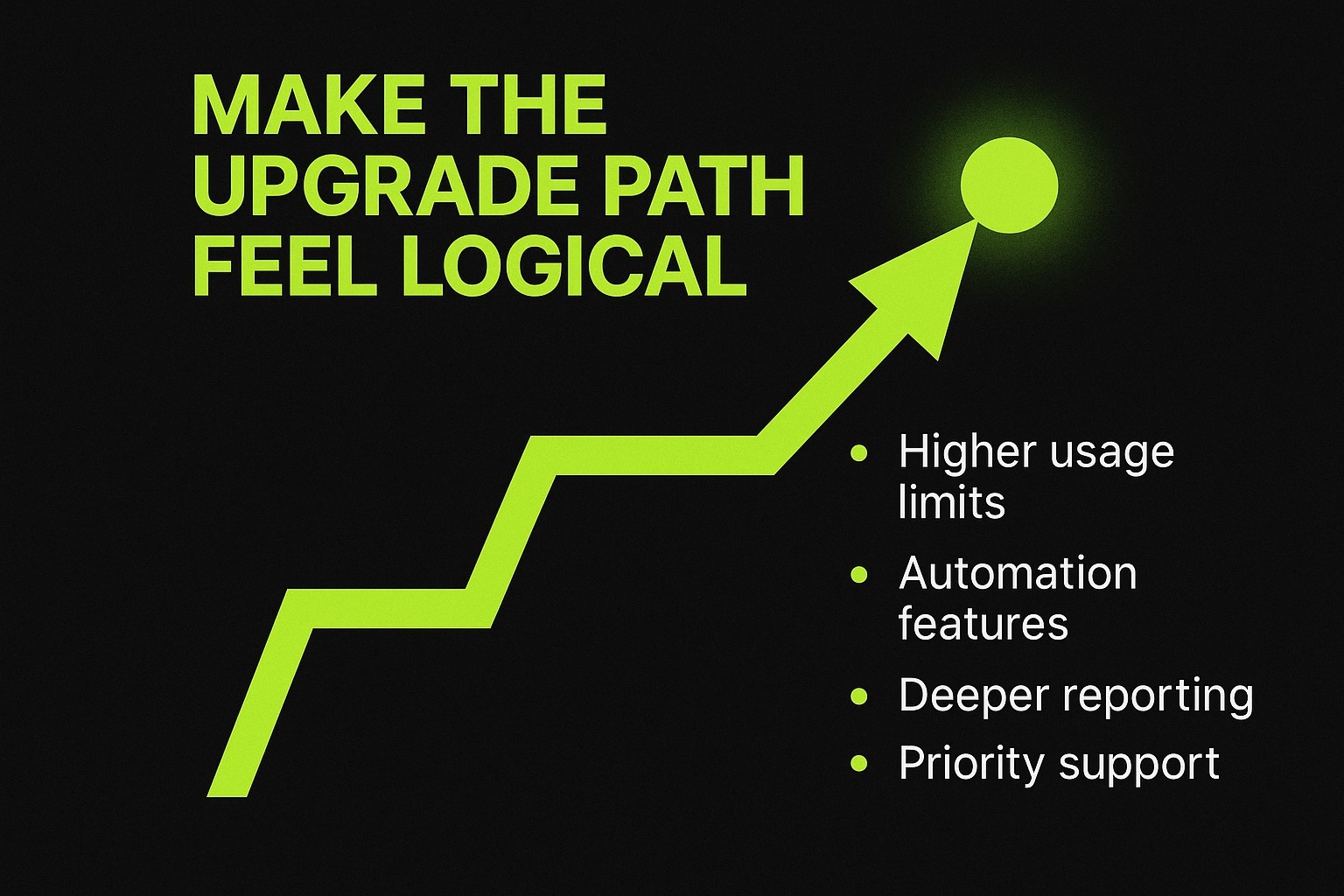
Make the Upgrade Path Feel Logical
Every step up should solve a problem that lower tiers cannot fully handle. Customers happily pay more when they clearly see the reason. A healthy upgrade path often includes:
- Higher usage limits that match business growth.
- Advanced automation features that replace manual work.
- Deeper reporting or analytics for strategic decision-making.
- Priority support or faster service response.
- Custom integrations or advanced tools built for scaling.
What upgrades should never feel like:
- Random feature add-ons with unclear benefit.
- Cosmetic changes that do not affect real-world results.
- Artificial restrictions designed only to pressure upgrades.
If customers feel they are being boxed in instead of supported, pricing begins to feel predatory rather than helpful.
Customers Hate Paying More for Unclear Reasons
People don’t shy away from higher prices when the value is obvious. What frustrates them is confusion. No one minds paying extra for a product or service that clearly saves time, reduces costs, or eases stress. What they resist are add-ons or upgrades that feel disconnected from tangible benefits. When buyers voice objections, they often say things like they don’t understand what comes with the higher-priced plan, that the options all look too similar, or that they’re unsure which tier actually fits their needs.
These objections usually have little to do with the actual cost. They reveal problems in how the offerings are presented. When each tier is organized logically, with clear differences tied to real outcomes, customers feel confident choosing the plan that suits them. Pricing becomes a reflection of value, not a source of confusion, and the buying process flows naturally.
Questions That Shape Strong Tiers
Instead of asking what to put into each package, ask questions that start from customer behavior. Key questions include:
- What changes when a customer becomes more advanced in their work or usage?
- Where do light users start hitting limits that slow them down?
- What bottlenecks appear for heavy users or scaling teams?
- Which features directly affect revenue growth, operational speed, or quality results?
Your tiers should answer these questions clearly and directly. Features that solve beginner friction belong in entry plans. Features that remove operational drag belong in mid-level plans. Features that drive performance or scale belong in premium plans.
Keep the Pricing Page Simple and Human
Even with well-designed tiers, how you present them makes a huge difference. A pricing page should highlight only the features that matter most, explaining each in plain language that emphasizes real outcomes rather than technical jargon. Comparisons should be clear and focused on meaningful differences, helping customers see which option aligns best with their needs. If there is a true best-fit plan, it can be highlighted, but the purpose isn’t to push buyers toward the most expensive option – it’s to make their decision feel easy and confident. When customers understand what they’re getting and why it matters, they’re more likely to stick around, upgrade naturally, and develop deeper trust in your brand.
Psychological Pricing Without Gimmicks
Psychology shapes buying decisions whether we plan for it or not. Every number on your pricing page sends a signal. Every layout choice frames perception. The difference between ethical psychological pricing and manipulative tactics comes down to one thing: intention.
Smart psychological pricing helps customers feel comfortable choosing. Gimmicks push customers to act before they fully trust the decision.
For growing brands, trust is far more valuable than quick conversion spikes. You do not want customers buying because they felt rushed or tricked. You want them buying because the price made sense, felt fair, and matched the value they expected to receive. Customers respond best to pricing that offers:
- Clear anchors that provide perspective
- Straightforward comparisons that remove guesswork
- Visible reductions in perceived risk
When psychology is used well, it reduces anxiety rather than creates pressure.
The Problem With Pricing Tricks
Techniques like odd number endings or fake scarcity timers can raise short-term conversions. They also train customers to become skeptical faster. When people notice manipulation patterns, trust erodes. They may still buy once, but loyalty drops, referrals weaken, and repeat purchases become harder to earn. Common gimmicks that hurt brand credibility include:
- Constant countdown timers that reset on refresh.
- Inflated crossed-out prices that no one ever paid.
- Confusing discount structures that hide real costs until checkout.
- Number games that feel too clever rather than transparent.
These techniques speak the language of urgency instead of confidence. In professional or high-consideration markets, that tone often backfires.
Anchoring With Clarity
Anchoring works by shaping expectations before a buyer starts comparing options. When the highest-tier plan is presented first, the other tiers immediately feel more accessible. This isn’t about pushy sales tactics; it’s about providing a clear reference point. The premium tier should be shown as a complete solution, without exaggeration or hype that makes it seem unattainable, while the lower tiers need to feel genuinely useful rather than stripped-down versions.
The purpose of anchoring is not to scare customers into choosing the most expensive option. It’s to help them understand the full range of value your product offers. Once buyers can see the entire spectrum, the mid-level or core options often present themselves as natural, comfortable choices that match their needs.
Decoy Placement That Feels Honest
A decoy tier isn’t about tricking buyers; it’s about making their choice clearer. When positioned thoughtfully, a middle plan highlights where the best practical value lies, but it must earn that position through real usefulness. The plan should fully address the most common customer needs, feel noticeably more capable than the entry-level option, and be priced close enough to the premium tier that buyers can weigh the difference carefully.
If the middle tier seems weak or deliberately limited, customers will pick up on it. Pricing starts to feel staged rather than natural, and once buyers sense that a plan exists only to push them toward something else, trust erodes. Honest decoy placement guides decisions without forcing them, helping customers feel confident that the choice they make is genuinely the best fit for their needs.
Bundling for Real Decision Relief
Bundling works because it reduces decision fatigue. Instead of forcing buyers to assess and select dozens of separate features or services, well-designed bundles group together what customers logically need at each stage of use. Effective bundles:
- Combine tools or services that are commonly used together.
- Remove the need to decide piece by piece.
- Simplify the buying process without reducing flexibility.
For example, bundling onboarding, reporting, and support into one service tier often feels more human than pricing each individually. The buyer just wants the full solution to work smoothly, not a menu of micro-choices. Bundles increase perceived value when the grouping reflects real-world usage patterns, not internal packaging convenience.
Risk Reversal That Feels Supportive
Purchases always carry emotional risk, especially when brands are not yet household names. Even when price is fair, buyers hesitate over committing the wrong choice. Risk reversal techniques soften that anxiety without cheapening the offer. Healthy risk reducers include:
- Free trials that allow hands-on confidence.
- Cancel-anytime policies that remove commitment fear.
- Limited money-back guarantees tied to reasonable usage terms.
- Transparent refund processes that feel human rather than combative.
These tools do not make pricing seem lower. They make decisions feel safer. Safety encourages trial. Trial builds real experience. Real experience drives long-term loyalty far more reliably than pressure tactics ever do.
Use Psychology to Build Confidence, Not Urgency
The best psychological pricing never feels like psychology at all. It feels natural, fair, and thoughtfully arranged. When pricing is framed correctly:
- Buyers feel guided, not pushed.
- Comparisons become easy instead of overwhelming.
- Risk fades enough for confidence to take its place.
Urgency can close quick sales. Confidence creates lasting customers. For growing brands, the goal is not to chase momentary conversion spikes but to build a pricing system that supports trust, upgrades, referrals, and long-term retention. Use psychology as a tool for clarity, comfort, and honest persuasion. Leave the gimmicks to businesses that are not planning to be around very long.
Competitive Pricing Without Copying
Looking at competitor prices is smart. Building your entire pricing strategy around them is not. You never see the full story behind those numbers. You do not know their margins, cost structures, internal growth targets, or how much financial pressure they might be under to bring cash in fast. A competitor’s price might be carefully designed or it might be a desperate short-term move. Copying it blindly means inheriting their risks without gaining their context.
When pricing is built only on competitor comparison, brands end up stuck in reaction mode. Instead of leading with a clear value message, you are constantly adjusting to someone else’s decisions. That almost always leads to price compression and weaker positioning. Pricing should come from who you are in the market, not from whoever last updated their website.
Shift from Imitation to Comparative Positioning
Competitive research becomes powerful when you stop looking at numbers and start examining positioning. Before touching pricing, ask how you truly compare in the market:
- Are you aiming to outperform competitors through deeper expertise, stronger strategy, or more tailored solutions?
- Are you offering a faster, simpler, or easier experience for buyers who want results without complexity?
- Are you highly specialized within a narrow niche while competitors offer broad, general solutions?
These questions define the lane you own. Once positioning is clear, pricing does not need to match competitors. It needs to reflect your distinct role.
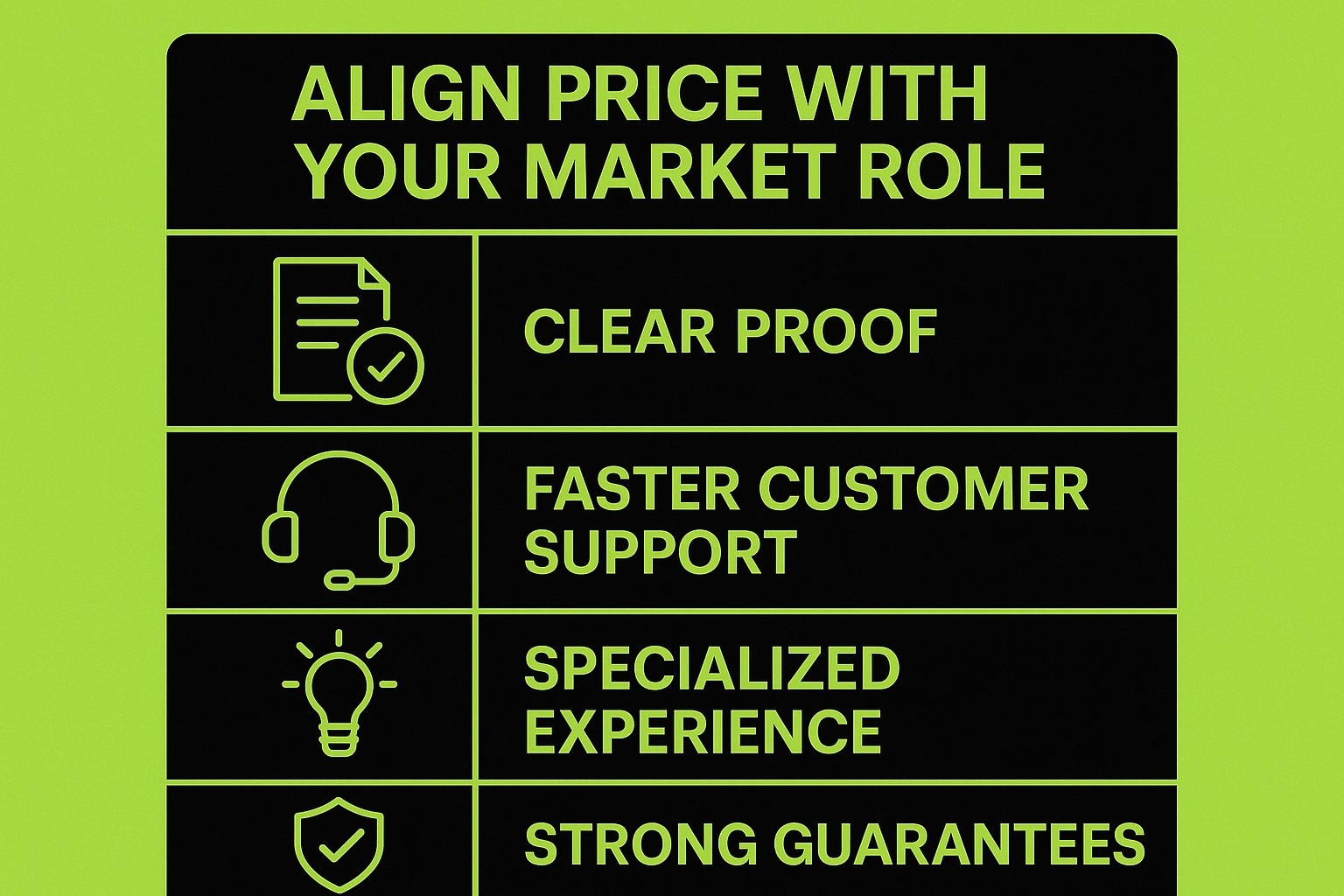
Align Price With Your Market Role
Different positions justify different price strategies. If your brand is positioned as premium or specialist, pricing should reinforce that reality. Higher prices feel justified when buyers directly see advantages they cannot get elsewhere, such as:
- Clear proof of superior results or performance metrics.
- Faster or more personal customer support.
- Specialized experience within a focused niche.
- Strong guarantees or outcome-based commitments.
Premium pricing works when everything behind the price supports it, from brand messaging to onboarding experience.
If your brand is focused on accessibility or speed to market, competitive underpricing can be a strategic choice early on. Lower entry pricing removes friction and accelerates adoption, especially when awareness is still building. Strategic underpricing can work when:
- Your long-term plan includes value-based upsells.
- You are entering a crowded category where trial matters most.
- Switching costs are low and you want to earn loyalty quickly.
The trap is staying underpriced too long. Without a roadmap toward higher-tier offerings or gradual increases, low pricing caps growth and drains sustainability.
Compete on Value, Not Discounts
The quickest way to erode brand authority is to compete solely on price. Discounts are easy to replicate, but the unique ways you deliver value are not. Instead of following competitors downward, focus on strengthening the reasons customers choose your brand beyond cost. Tell a clear story about what makes your offering different, provide onboarding experiences that accelerate success, and maintain transparent communication and reporting that build confidence. Establishing thought leadership and demonstrating real expertise also reinforces why your solution is worth the investment.
When customers understand the tangible benefits they gain by choosing you, price stops being the main factor in their decision. They move away from hunting for bargains and start seeking real value, which not only supports stronger pricing but also builds loyalty and long-term growth.
Use Competitive Research the Right Way
Competitor prices should serve as reference points, not targets to copy. Effective competitive analysis looks at where other brands fall short or overpromise, which segments they serve effectively, and where customer needs remain unmet. It also involves examining their messaging to identify weaknesses in positioning. These insights allow you to shape your own pricing strategy in a way that highlights your unique strengths and differentiators, rather than forcing imitation or reacting blindly to the market.
Penetration Pricing for Market Entry
Breaking into a crowded or skeptical market is one of the hardest phases of growth. Buyers already have options. Switching feels risky. Trust is low when a brand is new or unfamiliar. In this environment, penetration pricing can be a powerful entry tool if it is used as a strategy, not a shortcut.
Penetration pricing means launching with lower-than-average prices to remove friction from first purchases. The goal is not to stay cheap forever. The goal is to earn attention, adoption, and proof fast enough to support higher pricing later. When done well, this approach creates momentum. When done poorly, it traps a brand in a low-price box that becomes nearly impossible to escape.
Why Lower Pricing Can Work Early
At the beginning, your biggest challenge is not conversion. It is credibility. Early-stage buyers hesitate because they lack proof. They worry about switching costs, product reliability, and whether you will still be around in a year. Lower pricing lowers the emotional barrier to entry and invites trial. Penetration pricing supports early growth by:
- Encouraging first-time purchases from cautious buyers.
- Reducing hesitation when choosing between established brands and newcomers.
- Building reviews, testimonials, and documented wins quickly.
This strategy is especially useful in markets where:
- Products or services feel similar on the surface.
- Buyers rely heavily on social proof.
- Switching costs are low.
The key message to customers is simple: trying you feels safe and low risk.
The Danger of Staying Cheap
Many brands enter a market with low prices and end up stuck in that lane. What starts as an entry strategy can unintentionally become a permanent identity when low pricing is treated as a marketing crutch rather than a temporary growth phase. The risks of staying cheap are significant. Customers may become loyal to price rather than to your brand, making it difficult to raise rates without triggering churn. Revenue growth remains limited while operating costs continue to climb, and the audience attracted by low prices is often not truly loyal – they’re simply waiting for the next cheapest option. Without a clear plan for transitioning from penetration pricing, this approach can gradually erode profitability and make it hard to reposition your brand as premium or specialized in the future.
Penetration Pricing Needs a Growth Roadmap
Successful penetration pricing always includes a visible long-term strategy. Low prices are just the opening chapter, not the whole story. A healthy roadmap includes:
- Clearly defined price increases tied to adoption or feature milestones.
- Upgrade tiers that reflect growing levels of value.
- A deep understanding of customer lifetime value to maintain sustainability.
Lower initial pricing should never apply to your entire product ecosystem. Entry offers bring users in, while mid and higher tiers capture expanding value as customers grow.
Structure Prices to Enable Natural Upgrades
Penetration pricing becomes sustainable only when buyers naturally scale upward. This means entry-level pricing must:
- Deliver immediate value without unlocking every premium benefit.
- Introduce users to your ecosystem rather than offering a full solution at a bargain price.
- Create visible reasons to move into higher tiers once needs expand.
Upgrades should never feel punitive. They should feel like the obvious next step as businesses or usage grows. Common upgrade triggers include:
- Higher usage limits being reached.
- The need for advanced automation or reporting.
- Team expansion that requires collaboration tools.
- Desire for faster support or deeper customization.
When customers hit natural limits, price increases feel logical rather than surprising.
Communicate Value Expansion Openly
One of the biggest missteps during penetration pricing is keeping future pricing plans hidden. Being transparent builds trust and reduces pushback when prices eventually rise. It’s important to make it clear that initial lower pricing exists to encourage early adoption and that rates will increase as the product, features, and overall experience improve. Letting customers know that long-term subscribers will benefit from loyalty programs or gradual transitions also helps ease the adjustment. When growth and evolution are explained openly from the start, customers are far more likely to accept changes because they understand the value is expanding alongside the price.
Choose Customers You Want to Keep
Penetration pricing is not about attracting everyone. It is about attracting the right early adopters. Focus on buyers who:
- Feel real pain from the problem you solve.
- Can benefit significantly as your product expands.
- Have long-term usage potential.
Avoid chasing audiences that:
- Buy only on price with no loyalty upside.
- Constantly switch providers for tiny discounts.
- Create high support demand without meaningful lifetime value.
The success of penetration pricing depends less on volume than on customer quality.
Penetration Pricing as a Launch Strategy, Not a Label
When used intentionally, penetration pricing becomes a stepping stone toward strong positioning rather than a permanent business identity.
It allows brands to earn early trust, prove real-world value, and build momentum without trying to compete head-to-head against deeply established players from day one. But it only works when paired with:
- A clear pricing evolution plan.
- Structured upgrade tiers.
- Confident communication around value growth.
Low entry pricing should open doors, not lock you into a corner. Done right, it gets your foot in the market while preparing the ground for sustainable, confident pricing in the future.
Penetration Pricing in Action – Our Approach at Lengreo
At Lengreo, we have seen firsthand how penetration pricing can open doors when starting conversations in competitive B2B markets. We often work with companies entering crowded spaces where decision-makers are cautious and trust has to be earned quickly. For early outreach campaigns or pilot growth programs, we structure entry offers that remove hesitation without undercutting the true value of the work. The goal is simple – make the first yes easier, then build the relationship on performance, not discounts.
We use penetration pricing as a confidence builder, not a race to the bottom. Early-stage packages focus on clearly defined deliverables that create fast proof points like qualified meetings booked, keyword ranking improvements, or measurable cost-per-lead reductions. These results give clients something concrete to believe in. Once momentum is established and outcomes are visible, pricing naturally evolves to match the expanding scope, deeper strategy involvement, and higher long-term returns.
Building Upgrade Paths That Feel Natural
Our pricing structure is always designed with growth built in. Entry programs introduce our methodology without overwhelming budgets or decision processes. From there, clients move into higher tiers as their needs expand and trust deepens. Growth-focused upgrade paths usually involve:
- Broader channel coverage across SEO, paid ads, outreach, and content.
- Increased personalization and account-based targeting.
Deeper analytics, CRO work, and revenue attribution tracking. - Expanded team support with hands-on strategic leadership.
Upgrades never feel forced because the added value is tied directly to business growth stages. As leads become opportunities and opportunities turn into revenue, scaling investment becomes the logical next step instead of a tough sell.
Transparency That Protects Long-Term Trust
From the start, we communicate how pricing evolves alongside results. Clients know that early engagement is designed to validate fit and performance quickly, not to lock them into permanent low-cost arrangements. This honesty protects relationships and prevents the shock that often accompanies sudden price shifts.
Penetration pricing works when customers understand the journey. At LenGreo, that journey is built around measurable growth, expanding services, and shared scaling goals. The initial offer creates comfort. Long-term collaboration is driven by confidence earned through consistent results.
Conclusion
Pricing is one of those levers that can make a real difference for a growing brand – but only if you approach it thoughtfully. It’s never just about the numbers on a spreadsheet. It’s about how your customers see your value, how they experience your brand, and how you earn their trust over time.
Sure, cost-based pricing keeps you safe, but if you want to grow, thinking in terms of value, tiers, and even psychology can open doors you didn’t realize were there. Launching with lower prices can help you get in the door, but without a plan, it can backfire. And yes, looking at competitors helps – but it shouldn’t tell you exactly what to charge.
At the end of the day, clarity is everything. Clear value. Clear outcomes. Clear communication. When you nail that, pricing doesn’t just bring in revenue – it shows your position in the market and builds relationships with customers who actually see the results you deliver. And those are the ones who stick around, invest more, and trust your brand for the long haul.