


Quick Summary: Outreach marketing for apartments involves taking promotion beyond digital channels to build face-to-face connections with local businesses, prospects, and community members. Effective strategies include partnering with nearby employers, hosting pop-up events at high-traffic locations, delivering branded materials to complementary businesses, and creating referral programs that turn current residents into brand ambassadors.
Digital advertising isn’t enough anymore. Property managers exhaust every online avenue—Google ads, social media campaigns, listing sites—and still watch vacancy rates creep higher. The solution? Getting out from behind the desk.
Outreach marketing is the act of marketing or promoting a community through direct, personal connections. According to Sprout Marketing, it involves creating rapport, building and strengthening business and customer relationships, and seeking out new clients. In a nutshell, it’s telling businesses and people in the surrounding area who the community is and what it’s all about.
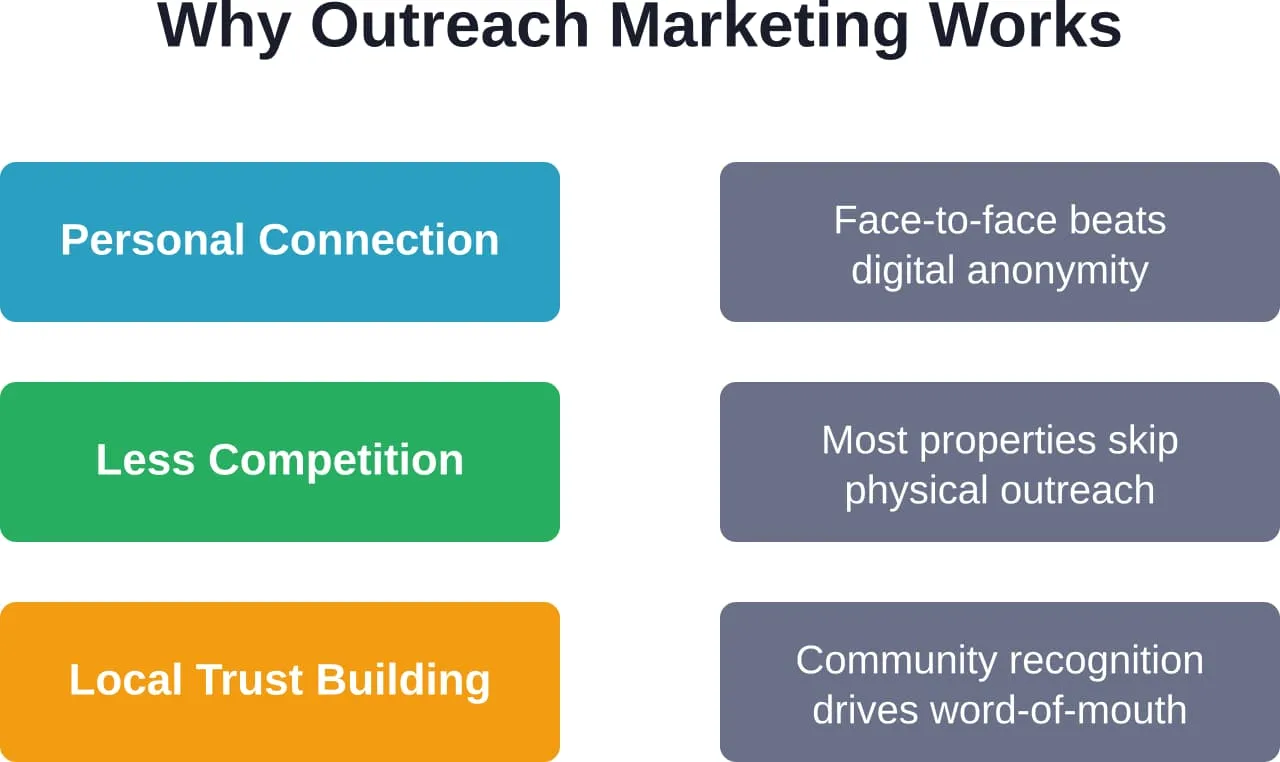
Here’s the thing though—building rapport is more powerful when someone can put a face to the brand name. When property managers visit local businesses, they transform from a faceless brand into a personal connection. Marketing is a numbers game. Increased marketing equals more prospects, and more prospects allow more opportunities to close. More opportunities to close leads to higher occupancy.
Why Boots on the Ground Marketing Still Matters
Community discussions on platforms like Reddit reveal property managers actively seeking “boots on the ground” outreach strategies after exhausting online channels, bandit signs, banners, and flags. The sentiment reflects a common frustration: digital saturation.
But wait. Physical outreach cuts through the noise precisely because so few competitors do it anymore. Local businesses remember the property manager who stopped by with coffee and flyers. Prospects remember the branded giveaway at the farmer’s market. The stickiness of digital impressions can’t match.
Local Business Partnerships That Actually Work
Real talk: the best outreach marketing ideas for apartments leverage existing foot traffic. Local businesses already attract the demographic properties need—young professionals, relocating families, service workers.
Start with businesses that share the target audience. Coffee shops host morning commuters. Gyms attract health-conscious millennials. Pet supply stores serve renters who own pets. The strategy? Offer cross-promotion.
Property managers can provide exclusive resident discounts at partner businesses in exchange for displaying flyers, business cards, or branded materials. Gyms might include move-in specials in new member packets. Coffee shops could distribute branded koozies or reusable cups with property contact info.
Corporate Relocation Partnerships
Major employers represent concentrated prospect pools. HR departments at nearby hospitals, tech companies, universities, and corporate offices constantly onboard relocating employees who need housing fast.
Reach out to HR directors with a simple pitch: streamlined housing solutions for new hires. Offer to include property information in relocation packets, host on-site lunch-and-learn sessions about the neighborhood, or provide preferred corporate rates.
Event-Based Outreach Strategies
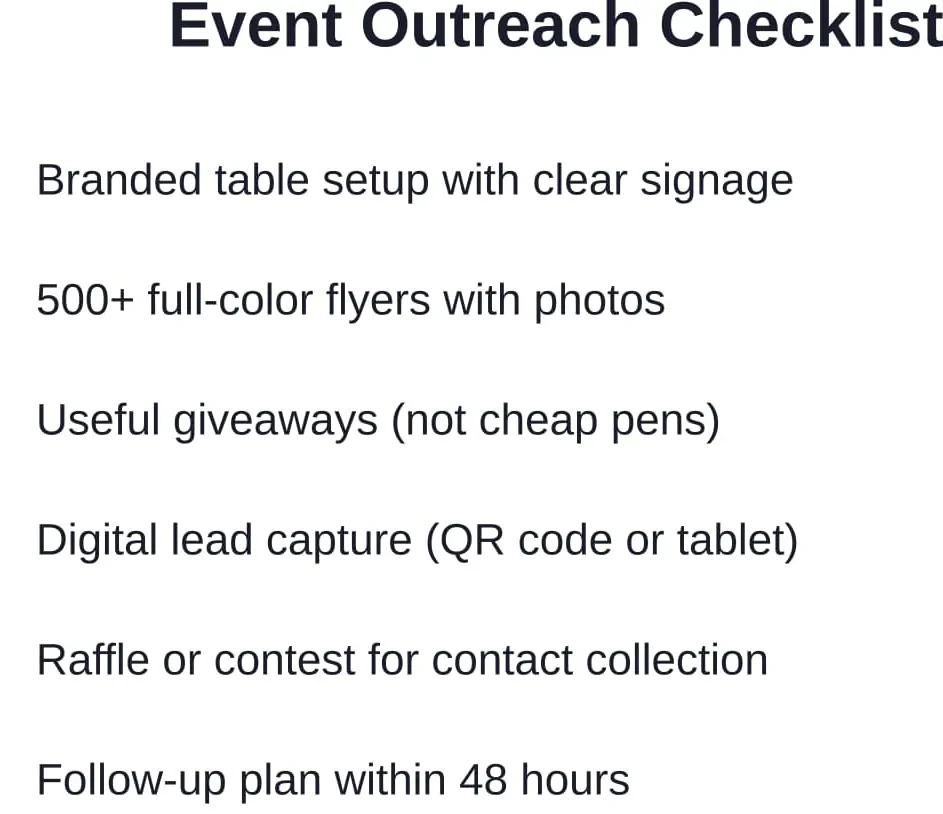
Pop-up presence at high-traffic community events puts properties in front of hundreds of prospects in hours. Farmer’s markets, street fairs, festivals, and charity runs attract exactly the community-engaged demographic that makes stable, long-term residents.
The setup doesn’t need to be elaborate. A folding table, branded tablecloth, flyers, and giveaways suffice. The giveaway matters though—branded water bottles, tote bags, or phone accessories with property contact information create lasting impressions.
Host property-specific events too. Resident appreciation days, pet photo contests, or seasonal celebrations give current residents reasons to bring friends—who become prospects. Community discussions reveal referral programs with current tenants consistently generate quality leads. Offering rent discounts for successful referrals turns residents into an active sales force.
Guerrilla Marketing Tactics for Tight Budgets
Not every effective outreach idea requires a big budget. Sidewalk chalk art outside metro stations advertising move-in specials catches commuter attention. Flyers on windshields in apartment complex parking lots reach residents actively living in competitors’ properties.
Door hangers on single-family homes in transitional neighborhoods target homeowners considering downsizing or residents in month-to-month leases. The message matters—focus on pain points like maintenance-free living, included amenities, or flexible lease terms.
Some property managers report success with “random acts of kindness” campaigns. Leaving branded items like umbrella sleeves on cars during rain, or cold drinks with property cards at bus stops during summer heat creates positive associations.
Reach Apartment-Related Prospects With Lengreo
Outreach marketing for apartments works better when it is targeted, consistent, and connected to real follow-up. Lengreo helps B2B companies reach relevant prospects through lead generation, SEO, PPC, content marketing, LinkedIn and email outreach, and appointment setting. Instead of relying only on broad promotion, Lengreo can help organize outreach around selected prospects and follow-up.
For apartment outreach, Lengreo can support:
- B2B prospect research and lead generation
- LinkedIn outreach to selected business contacts
- Email outreach for targeted prospect lists
- SEO and content marketing for search visibility
- PPC campaigns for relevant traffic
- Appointment setting with qualified prospects
Get in touch with Lengreo to reach more relevant prospects in the apartment sector.
Tracking Outreach Effectiveness
Without measurement, outreach becomes guesswork. Assign unique phone numbers, landing pages, or promo codes to each outreach channel. When prospects call or apply, ask “How did you hear about us?” and log the response.
Property management professionals emphasize setting specific, measurable targets. Rather than vague goals like “attract more tenants,” effective objectives become actionable targets like “increase apartment inquiries from millennials by 15% in the next quarter through local business partnerships.”
| Outreach Tactic | Cost Level | Time Investment | Best For |
|---|---|---|---|
| Local business partnerships | Low | Medium | Ongoing visibility |
| Event booths | Medium | High | High-volume lead generation |
| Corporate partnerships | Low | Medium | Quality relocating prospects |
| Guerrilla tactics | Very Low | Low | Tight budgets |
| Resident referrals | Medium | Low | Pre-qualified leads |
Creating a Sustainable Outreach Schedule
Consistency beats intensity. Property managers wondering where to go besides “wandering around and handing out flyers” need a structured approach. Block out two mornings weekly specifically for outreach activities.
Monday mornings: visit five new local businesses within a two-mile radius. Introduce the property, leave marketing materials, and propose partnership ideas. Thursday afternoons: attend community events, chamber of commerce meetings, or neighborhood association gatherings.
Rotate target areas monthly to avoid saturation. Document every interaction in a CRM or simple spreadsheet—business name, contact person, materials left, follow-up needed. The data reveals which partnerships generate leads and which need nurturing.
Conclusion
Effective outreach marketing for apartments bridges the gap between digital campaigns and real-world community presence. Local business partnerships, event activations, corporate relationships, and creative guerrilla tactics all drive occupancy when executed consistently.
The properties that fill vacancies fastest don’t rely solely on listing sites and paid ads. They build recognition in the community, create personal connections with prospects, and turn current residents into advocates. Start with one outreach tactic this week. Test it. Measure results. Then scale what works.