Your reputation isn’t just what you say about yourself – it’s what shows up when someone searches your name or business. A few reviews, a social post, or an outdated profile can easily shape first impressions before you get a chance to explain who you really are. That’s where reputation management comes in. It’s not about perfection – it’s about staying present, responding with clarity, and making sure what’s online reflects what you stand for. In this guide, we’ll walk through strategies that help you do exactly that, step by step.
Reputation Isn’t What It Used to Be
There was a time when reputation was mostly word-of-mouth. A few conversations here, a couple referrals there. Now? It’s online reviews, Google search results, social media comments, YouTube interviews, Reddit threads, and maybe a tweet from five years ago that won’t go away. The landscape is wider, faster, and way more public.
What makes it tricky is that you don’t always get a say in the first impression someone forms. But you do get a say in the second one. That’s what reputation management is about – making sure the story people find is accurate, trustworthy, and, most importantly, not left to chance.
How We Help Brands Protect and Grow Their Online Reputation at Lengreo
At Lengreo, we’ve seen firsthand how much a company’s reputation can impact its growth. For us, reputation management isn’t a separate service or an afterthought – it’s woven into everything we do. Whether we’re building out SEO campaigns, launching targeted lead generation efforts, or optimizing a brand’s presence on LinkedIn, our focus is always on how a company is being perceived and how that perception supports their long-term goals.
When we work with clients, we don’t just chase visibility, we help them earn credibility. That means optimizing search engine results with meaningful content, using paid and organic strategies to highlight real success stories, and staying ahead of negative signals before they become problems. We integrate with our clients’ teams, take responsibility for strategy execution, and build systems that help them stay consistent, clear, and trusted across every digital touchpoint.
Top Online Reputation Management Strategies
Managing your reputation online isn’t about chasing every mention or obsessing over likes. It’s about having a clear, steady strategy that helps people trust you, even when you’re not in the room. Below are practical, battle-tested strategies you can actually use – no fluff or recycled advice.
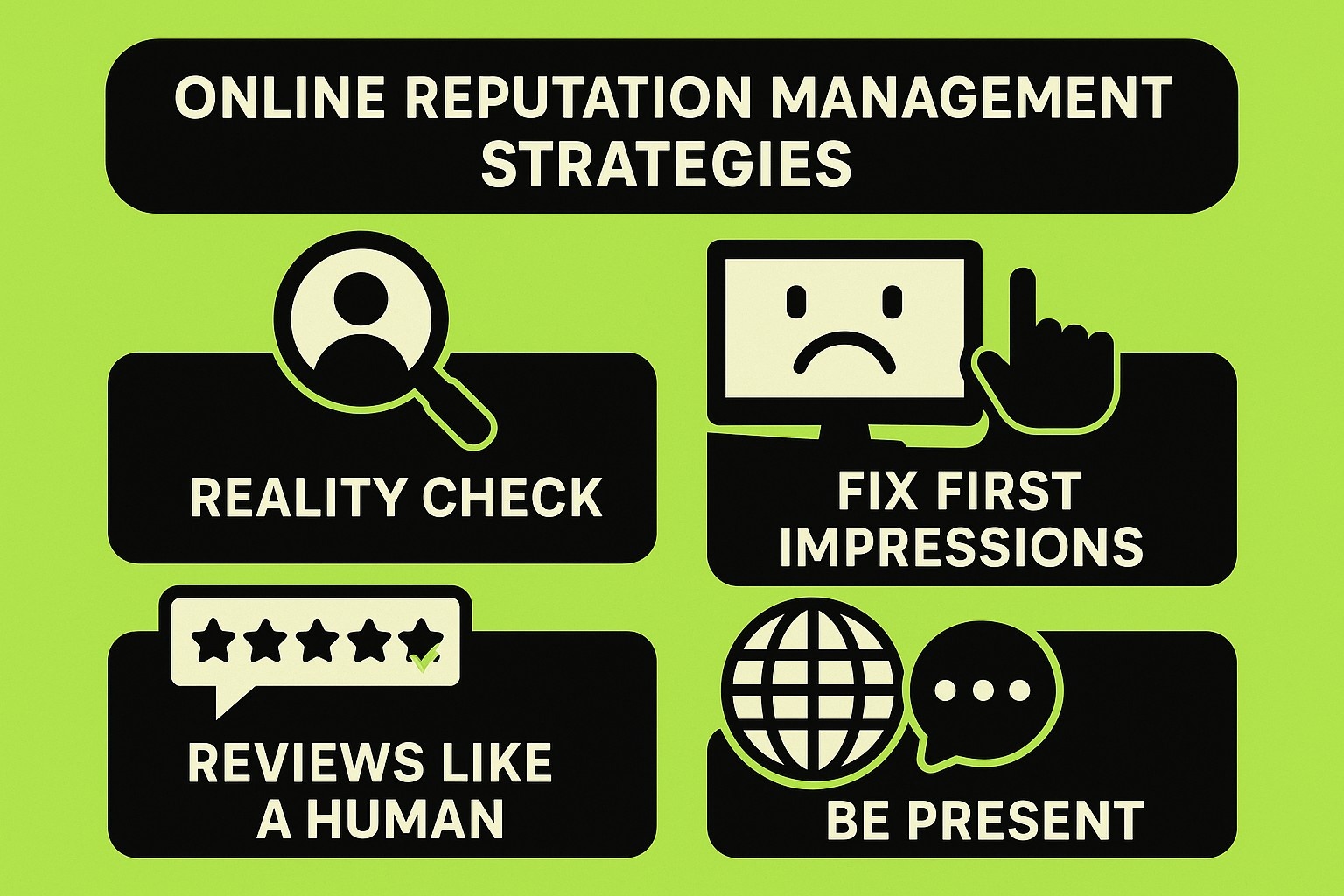
Strategy 1: Start With a Reality Check
Before you plan anything, figure out where your reputation currently stands. Google your business or name and see what shows up. Browse reviews, check social media mentions, and look at the tone people use when they talk about you. Are you invisible? Misrepresented? Glowing, but with outdated info?
Use free tools like Google Alerts to monitor mentions, and don’t skip Reddit, forums, or niche directories where real conversations happen. This isn’t about ego – it’s about clarity. You can’t improve what you haven’t audited.
Strategy 2: Fix Your First Impressions
When people look you up, their first stop is usually Google. What they find – your website, social media, or listings – shapes their opinion fast. If those pages look outdated, inconsistent, or poorly maintained, it creates doubt before you’ve even had a chance to engage.
Do a sweep of your digital presence:
- Update your Google Business Profile.
- Check social platforms for outdated bios or visuals.
- Make sure your website reflects what you do today.
Consistency across platforms matters. A sharp LinkedIn followed by a sloppy Instagram sends mixed messages. Your tone, branding, and info should feel aligned, not like they were written by three different people over three different years.
Strategy 3: Respond to Reviews Like a Human
Don’t ignore reviews. Don’t argue with them either. Whether it’s five stars or a rough complaint, every review is a public chance to show people what kind of business you run.
- Thank customers with specific replies.
- Ask neutral reviewers how you can do better.
- Acknowledge negative feedback calmly, offer solutions, and take it offline if needed.
Your tone matters more than the content. You’re not just replying to the reviewer – you’re showing everyone else how you handle feedback.
Strategy 4: Be Present Where the Conversations Happen
You don’t need to be active on every platform, but you do need to show up where your audience actually spends time. Whether that’s a professional network, a visual-first app, or a niche online community, choose one or two spaces that make sense for your brand and commit to showing up consistently.
Being present doesn’t mean dropping the occasional promo and disappearing. It means responding when people comment, answering questions, and sharing updates that feel useful – not just self-serving. People are more likely to trust you if they see that you’re paying attention, not just talking to them.
Also, keep in mind that not every mention of your brand will come with a tag. Make it a habit to search your name regularly, including variations and common misspellings. This helps you stay aware of conversations that could impact how people perceive you.
The more you interact like a real person – curious, responsive, and engaged – the less your brand feels like a billboard and the more it feels like a part of the community. That shift makes a real difference in how people talk about you.
Strategy 5: Use Paid Campaigns to Shape Perception
If your organic presence isn’t cutting it or you’re trying to shift public perception after a hit, paid campaigns give you more control. These aren’t sales ads – they’re reputation builders.
Promote:
- Real customer testimonials.
- Your company’s community work.
- Thought leadership content.
- Trust-building metrics (case studies, success stats).
Put the spotlight on the good work you’re already doing. Paid media helps you amplify what’s true about your brand – not cover up what’s not.
Strategy 6: Make Content That Answers Real Questions
A blog post, video, or podcast doesn’t just inform – it defines how people see you. High-quality content gives you a chance to steer the narrative and push helpful, positive material up in search results.
Focus on answering questions your audience is actually asking, sharing lessons learned or behind-the-scenes stories, and publishing expert takes on trends in your space.
Good content is your long game. It earns trust, builds SEO equity, and helps bury outdated or negative noise over time.
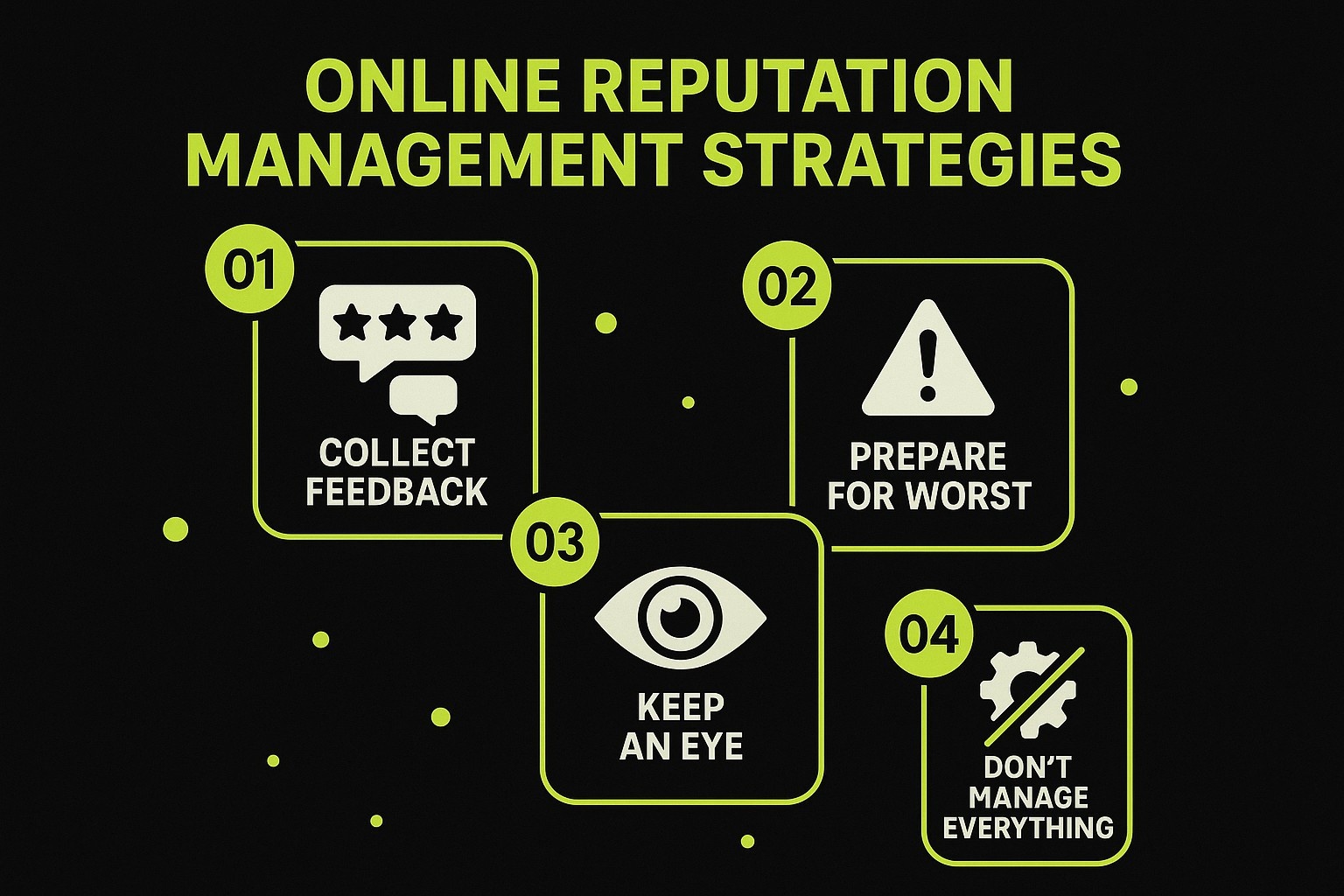
Strategy 7: Collect Feedback Before You Need It
Don’t wait until something goes wrong to ask people what they think. Build simple feedback loops into your customer journey – after a purchase, after a support call, or through follow-up emails.
How to gather useful feedback:
- Quick post-service surveys.
- Email nudges asking for reviews.
- Social media polls.
- In-app or on-site rating prompts.
More feedback means more context. And more context means fewer surprises.
Strategy 8: Prepare for the Worst Before It Happens
Every business faces rough moments, and the middle of a crisis is the worst time to start figuring out how to handle one. It helps to have a simple crisis plan ready long before you ever need it. Decide who will take charge of public responses so there’s no confusion when things move fast.
Prepare a few message templates that fit your brand voice, and outline the internal steps for pausing any scheduled marketing or social posts if the situation calls for it. It’s also worth setting guidelines for how your team should address media questions, online comments, or misinformation that may spread.
You can’t predict every scenario, but having a plan in place keeps you grounded instead of scrambling when trouble shows up.
Strategy 9: Keep an Eye on What’s Changing
Reputation management isn’t a set-it-and-forget-it task. Keep checking in on how you’re doing. Review progress, watch for new trends, and adjust your approach when needed.
Things worth tracking:
- Your position in Google search results.
- The tone of new reviews or social mentions.
- Website and social engagement metrics.
- Customer satisfaction scores (if you use surveys).
If you’re seeing movement in the wrong direction, pivot early. If something’s working, double down.
Strategy 10: Don’t Try to Manage Everything Manually
Keeping up with every comment, review, and mention across different platforms can quickly become overwhelming, especially as your online presence grows. Trying to do it all manually not only eats up time but also increases the chances of missing something important.
Instead of jumping from tab to tab or reacting only when something catches your eye, it’s worth setting up systems that help you track the conversations happening around your brand. That could mean using monitoring alerts, inboxes that collect messages from multiple platforms, or scheduling features that help you stay consistent with updates. Review management can also be simplified by having a centralized place to see and respond to feedback.
The point isn’t to hand everything over to automation – it’s to make sure you’re staying responsive and aware without getting buried in notifications. A few smart processes in place can help you manage your reputation more calmly, more consistently, and with a lot less stress.
Final Note: Reputation Is Earned, Then Managed
You can’t buy a good reputation. You earn it by being consistent, responsive, and transparent. Online reputation management isn’t about hiding flaws or chasing perfection. It’s about showing people who you are, fixing what needs fixing, and building enough trust that even when something goes wrong, they give you the benefit of the doubt.
Use these strategies as your starting point. Tweak them for your industry, your audience, and your own voice. Just don’t leave your reputation to chance. If you don’t manage it, someone else will.