


Mobile phones are now the main way people experience the internet. They shop, watch videos, check reviews, compare prices, search for answers, and make decisions in the middle of everyday moments. For businesses, this means one thing: if your marketing doesn’t meet people on their phones, you’re missing the most active part of their digital lives. But mobile marketing isn’t about cramming your desktop experience onto a smaller screen. It’s about understanding how people behave on mobile and creating interactions that feel effortless and relevant. Below is a practical, up to date guide to modern mobile marketing strategies, written for companies that want clarity, not jargon.
Why Mobile Marketing Matters More Than Ever
It’s easy to underestimate how deeply mobile has reshaped daily behavior. Phones aren’t just miniature computers. They’re calendars, wallets, shopping assistants, navigation devices, entertainment hubs, and personal advisors. People use them in fragmented moments on the go, which creates an entirely different type of opportunity for marketers.
Three major shifts explain why mobile deserves its own strategy:
- Mobile is the primary gateway to the internet: For many people, the mobile device is the internet. They search, shop, compare products, browse reviews, and make purchases without ever switching to a desktop.
- Customer expectations are higher on mobile: People move fast on phones. If your content doesn’t load, doesn’t fit, or doesn’t feel smooth, they simply leave. Mobile experience is now directly tied to trust.
- Mobile ecosystems allow richer personalization: Location data, browsing behavior, app activity, and device habits give marketers more opportunities to create relevant, timely interactions without being intrusive.
Put simply: mobile marketing isn’t about squeezing your desktop experience onto a smaller screen. It’s about understanding how people actually behave when their entire world is running through that device.
What Mobile Marketing Looks Like Inside Lengreo
At Lengreo, we treat mobile as the core of how modern customers evaluate brands and make decisions, not as an optional add on. Our work always starts with understanding how a specific audience behaves on mobile and what actually matters to them at the moment. From there, we refine every touchpoint, whether that’s tightening mobile SEO, improving the performance of landing pages, or shaping outreach campaigns that meet decision makers on the platforms they naturally use throughout the day.
Instead of pushing pre-set templates, we integrate into our clients’ teams and build strategies that translate real mobile behavior into measurable outcomes. That approach has helped us consistently increase client acquisition, reduce cost per lead, and generate thousands of qualified opportunities across industries. When mobile experiences feel fast, direct, and effortless, growth follows naturally, and that’s exactly what we aim to deliver.
With that foundation in place, we can finally walk through the mobile marketing strategies that make the biggest impact.

1. Build a Mobile Friendly Website That Feels Effortless
Your website is often the very first mobile experience a customer has with your brand. If it loads slowly, forces them to pinch and zoom, or hides important information behind awkward menus, you lose them before anything else can work. A modern mobile website isn’t just a smaller version of your desktop site. It’s designed specifically for how people scroll, scan, and tap on a phone.
A good mobile site loads quickly, uses clean text, and presents information in a way that feels natural on a smaller screen. Buttons should be large enough to tap without misclicking. Pages should be short enough to navigate without frustration. And most importantly, the entire experience should feel smooth. When this foundation is strong, every other part of your mobile strategy performs better.
2. Optimize for Mobile Search When People Need Answers Fast
People often search on their phones when they need information quickly. They might be standing in a store comparing products or looking for the closest business that solves a problem. These moments are short but powerful because the intent is high.
Good mobile search strategy includes:
- Content that answers specific questions
- Simple titles and meta descriptions
- Pages that load instantly
- Local keywords for physical businesses
- Mobile specific search ads with call extensions
Smartphones turn everyday situations into opportunities. Your job is to show up at the right moment with clarity and speed.
3. Build a Mobile App Only If It Adds Real Value
Many companies think having a mobile app automatically makes them more modern. In reality, people are very selective about which apps they install. If your app doesn’t solve a real problem or offer meaningful convenience, users won’t keep it on their phones.
A mobile app makes sense when your audience interacts with you frequently or benefits from personalized features. For example, if you offer digital tickets, loyalty programs, appointment management, content libraries, or on the go tools, an app can make the experience faster and more enjoyable. But if your app simply repeats what your website already does, most users won’t see a reason to download it. Before you invest in development, ask whether the app genuinely improves the customer journey.
4. Use App Store Optimization to Increase Visibility
If you do build an app, getting discovered inside the app stores becomes a battle of its own. App Store Optimization, or ASO, helps your app appear for the right search terms and stand out when someone views your page.
Instead of stuffing keywords or writing long descriptions, effective ASO focuses on clarity. The title and subtitle should communicate exactly what the app does. The screenshots should show real functionality, not vague claims. The preview video should demonstrate benefits within the first few seconds. Small details, like the wording of your first sentence or the order of your screenshots, can influence install rates. ASO isn’t a one time task either. It improves as you update your app, adjust your messaging, and observe how your audience reacts.
5. Treat SMS as a High Attention Channel, Not a Megaphone
SMS marketing remains one of the most effective ways to reach people. Text messages are read almost instantly, which is rare among digital channels. But that level of attention also means the bar is higher. Users don’t want random promotional messages that feel intrusive or irrelevant.
SMS works best when it supports moments that genuinely matter to the user, such as:
- Time sensitive updates that require immediate attention.
- Delivery or service confirmations that reassure the customer.
- Appointment reminders that prevent missed schedules.
- Limited time offers tied to real value rather than constant promotions.
These are the types of messages people welcome because they make their day easier, not more cluttered. What you should avoid is turning SMS into a nonstop sales channel. The fastest way to lose trust is to overload someone’s phone with messages that don’t apply to them. A thoughtful SMS strategy feels
6. Use Push Notifications With Purpose, Not Pressure
Push notifications are powerful because they reach users even when they’re not inside your app. But because the phone is such a personal space, this channel can backfire if it feels intrusive. The goal with push notifications is not quantity but relevance.
A well timed notification can bring someone back to complete a purchase, remind them about an event they care about, or highlight a feature they haven’t used yet. The key is to send notifications only when the user genuinely benefits from the information. If you send too many or push irrelevant updates, users will disable notifications entirely. The best brands use push notifications sparingly, thoughtfully, and with the user’s experience in mind.
7. Use In App Messaging to Guide and Support Users
Unlike push notifications, in app messages appear while someone is already using your app. This makes them feel more natural and less disruptive. These messages are great for highlighting new features, offering personalized recommendations, guiding onboarding, or explaining next steps in a process.
Effective in-app messaging doesn’t interrupt the user. Instead, it provides helpful cues at the right moment. For example, a fitness app might show a message suggesting a workout plan after the user logs an activity. A shopping app might highlight a loyalty reward when the user views their cart. These messages improve engagement because they meet the user inside the context of their current action.
8. Use Mobile Wallet Passes as a Simple Alternative to Full Apps
Not every business needs a full mobile app to deliver convenience. Mobile wallet passes offer a lightweight way to stay connected with users without requiring them to download a dedicated, branded app. These passes can store coupons, event tickets, loyalty cards, or appointment details right inside the phone’s wallet.
They update automatically, they’re easy to access, and they make sense for brands that want to bridge online and offline experiences. For example, a retailer can offer digital discount passes that update with new offers. A salon can provide digital appointment cards with reminders. Because mobile wallets are native to the device, they don’t require extra effort from the user. Sometimes, a simple wallet pass creates more engagement than an entire app.
9. Take Advantage of Location Based Marketing at the Right Moment
Location based marketing allows you to reach people when they are physically near a store or in an area that fits their interest. When used well, it feels timely and helpful. When used poorly, it feels invasive.
The most successful location based campaigns focus on relevance. A restaurant can promote a lunch offer when someone walks within a few blocks. A fitness center can highlight a free trial to people near competing gyms. The secret is to avoid treating location data like a gimmick. Instead, use it to add context to the user’s real world experience.
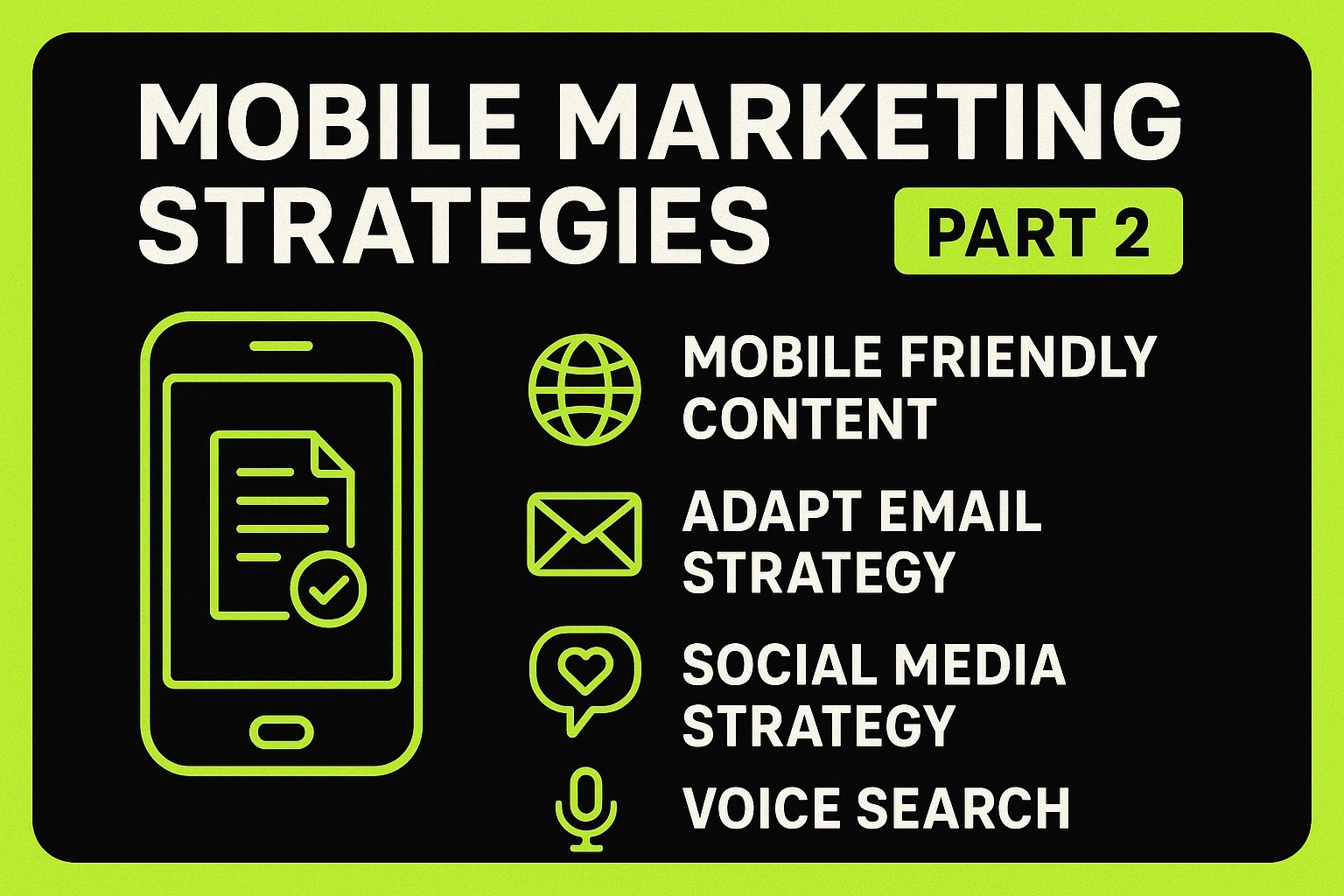
10. Create Mobile Friendly Content That Matches How People Read
Reading on mobile is very different from reading on a laptop. People scroll quickly, skim for key points, and often multitask while consuming content. If your content feels heavy or awkward to navigate on a small screen, most users won’t stick around.
Mobile friendly content usually includes elements such as:
- Short paragraphs that are easy to digest at a glance.
- Simple sentences that communicate the point without extra effort.
- Visuals that load quickly and display properly on any screen size.
- Videos that can be viewed silently and still make sense with captions.
The goal is to make information effortless to absorb even when the user is distracted, busy, or in a hurry. When your content respects the natural rhythm of mobile browsing, engagement tends to rise on its own.
11. Adapt Your Email Strategy for Mobile First Reading
Email marketing still plays a major role in customer communication, but mobile has changed how people read emails. Long text blocks, slow loading images, and small buttons don’t work well on a phone.
A mobile friendly email uses a short subject line, a clean layout, and clear calls to action. Most readers won’t scroll far, so the most important information should be placed near the top. Emails that feel simple and easy to act on tend to perform better on mobile. This doesn’t mean they need to be boring. They just need to respect the limited space and attention of the user.
12. Build a Social Media Strategy Designed for Mobile Consumption
Almost all social media activity happens on mobile devices. This has changed the formats that perform best. Vertical videos, short captions, and fast paced visuals dominate because they fit the way people browse.
When building social content, it helps to think about how a post looks on the phone first. Large text overlays, quick transitions, and clear storytelling work well. Landing pages behind ads should also be mobile optimized. Anything that requires too many steps or too much effort will lose the user immediately.
13. Prepare for the Rise of Voice Search
Voice search continues to grow as people use digital assistants to get quick answers. Voice queries tend to be more conversational and question based. They often include phrases like “near me” or “how do I.”
To make your content voice friendly, answer questions directly in your copy. Write in a natural tone that resembles how people speak. Include long tail keywords that reflect real questions. Voice search is especially important for local businesses because many voice queries involve location or immediate needs.
14. Invest in Mobile Video, the Medium People Choose Most Often
Video content dominates mobile engagement. People watch short clips while waiting in line, during breaks, or while relaxing at home. Video marketing works well because it can show value quickly and emotionally.
Successful mobile videos use clear hooks, vertical formats, and concise storytelling. They rely less on sound and more on visuals, since many users watch silently. You don’t need expensive production to make an impact. Authenticity and clarity matter more than perfection.

15. Explore In Game Advertising When It Matches Your Audience
Mobile gaming attracts a wide range of users, not just young audiences. Many adults play short games daily, and in game advertising has become an effective place to capture attention if it aligns with your brand.
The key is to choose games and ad formats that make sense for your audience. Ads should appear at natural breaks in the gameplay, not during intense moments. When the placement feels respectful and the message is relevant, brands can reach users who are highly engaged with their screens.
16. Use Chatbots and Conversational Tools for Instant Support
Mobile users expect immediate answers. Chatbots and conversational messaging allow brands to deliver quick support without requiring live staff for every question. This improves response time and reduces friction for users who need help right away.
Chatbots can handle order updates, simple troubleshooting, booking requests, and product recommendations. When combined with human support for more complicated issues, they create a smooth and efficient experience that fits the pace of mobile communication.
17. Measure the Right Mobile Metrics Instead of Tracking Everything
Mobile marketing produces an enormous amount of data, and it’s easy for teams to get buried under numbers that don’t actually move the needle. The key is to focus on metrics that directly reflect user behavior and business outcomes rather than trying to monitor everything at once.
Some of the most meaningful mobile metrics include:
- Engagement indicators like daily or monthly active users.
- Retention and churn rates that show whether users stick around.
- Conversion metrics tied to purchases, sign ups, or in app actions.
- Revenue focused metrics such as ARPU or LTV.
When you track the right indicators, patterns become easier to spot. You can see where users drop off, which messages or features resonate, and which parts of your funnel need attention. This allows you to optimize intelligently without drowning in unnecessary data.
Conclusion
Mobile marketing isn’t a separate tactic anymore. It’s the backbone of how people interact with brands. Every scroll, tap, swipe, and search reveals how users move through their day, what they need, and how they make decisions.
Winning on mobile requires clarity, respect, and a commitment to understanding the user’s real context. The strategies in this guide help brands show up naturally, communicate effectively, and create meaningful interactions in the moments that matter most.