


Growth has always been the goal for small businesses, but in 2025, the path to getting there looks different than it did even two or three years ago. Customers are more selective, digital channels are crowded, and attention is harder to earn. What still works is not aggressive selling or chasing every new trend. Growth now comes from clarity, consistency, and marketing that feels genuinely useful instead of noisy.
The most successful small businesses are not doing everything at once. They are choosing a handful of proven strategies and executing them well. They focus on attracting the right people, not the most people. They track what works, drop what doesn’t, and continuously improve instead of jumping from tactic to tactic.
This article walks through practical marketing strategies that drive real growth in 2025. These methods are grounded in what small businesses can realistically implement with limited budgets, small teams, and big ambitions.
Building a Clear Marketing Foundation
Before any growth strategy has a chance to work, you need clarity. Without it, marketing becomes reactive instead of intentional. One week you post on social media because everyone else is. The next week you test ads because a competitor is doing it. Then you send emails simply because you feel like you should. None of it connects. The result is a pile of activity with no clear direction and very little momentum.
A strong marketing foundation acts like a filter for every decision you make. It tells you where to focus, what to ignore, and how to speak to the people most likely to become customers. Without that base, even good tactics struggle to produce steady results.
At the heart of this foundation are three deceptively simple questions.
Who Are You Really Helping?
Too often, businesses describe their audience in vague terms, like “small business owners” or “anyone who needs our service.” It feels safe, but it’s a shortcut that creates marketing messages which resonate with no one. Real growth comes from narrowing your focus and understanding exactly who will benefit from what you offer.
Start by diving into the realities of your audience’s world. Consider the industry they operate in, the stage their business is at, and the pressures they face every day. Think about what keeps them stuck before they reach out and the challenges they hope to overcome. The more detail you gather, the more your messaging can speak directly to their experiences and desires. Instead of broad, generic statements, you can craft communications that feel personal, relatable, and genuinely helpful.
Understanding your audience also shapes where you spend your marketing energy. If your core clients spend their professional time on LinkedIn, it’s not productive to pour effort into TikTok content that won’t reach them. If they rely on in-depth research to make decisions, investing in SEO-optimized articles and detailed guides will outperform flashy social posts that only skim the surface.
Clarity about your audience removes guesswork from marketing decisions and makes every interaction more intentional. It allows small teams to work smarter, not harder, and ensures that every message, ad, and piece of content moves the right people closer to choosing your business. When you know exactly who you’re helping, your growth strategy becomes sharper, more efficient, and far more likely to succeed.
What Problem Are You Known For Solving?
Many businesses list a long set of services and expect customers to piece together the value. Unfortunately, that rarely works. People buy solutions to problems, not service menus.
A growth-driven brand is known for one or two core outcomes that it delivers exceptionally well.
To define your problem focus, ask:
- What issue shows up repeatedly in our sales calls?
- What result do happy clients talk about after working with us?
- What pain do we understand better than most competitors?
Once you define this, your marketing becomes much easier. Every piece of content reinforces your reputation around that problem. Your website messaging feels tighter. Your emails educate around the challenges you solve rather than generic business advice.
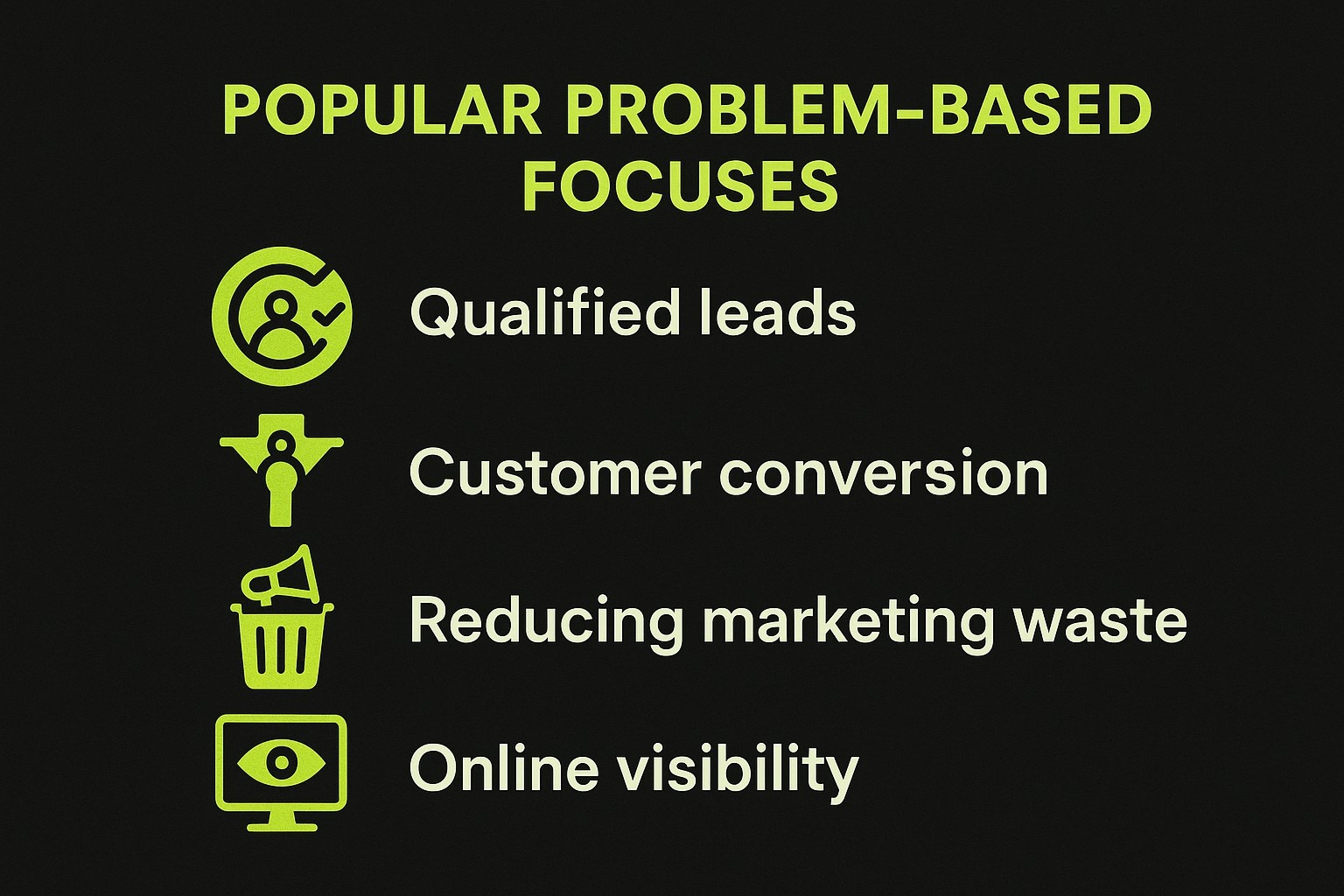
Popular problem based focuses include:
- Generating qualified leads
- Increasing customer conversion
- Reducing marketing waste
- Improving online visibility
- Streamlining booking or sales systems
When your audience associates your brand with a clear outcome, decision making becomes simpler for them. You are no longer just one more option. You are the business tied to the result they want.
Why Should Customers Choose You?
This is where your true differentiation comes into play. In crowded markets, it’s easy for every competitor to start sounding the same. Everyone talks about experience, customization, and results, but those generic claims blur together until customers stop paying attention. Your task is to show why your business deserves to be chosen without relying on empty buzzwords or overused phrases.
Differentiation usually emerges from the real ways you operate. It could be your focus on a specific niche, the way your team communicates and collaborates, the speed with which you deliver results, the transparency you provide in reporting, or the actual success stories and measurable outcomes you’ve created for clients. Some companies stand out because they truly specialize in a particular industry and understand its nuances better than anyone else. Others shine by offering hands-on guidance or providing reporting and insights that clients rarely get from competitors.
The secret is honesty. You don’t need to invent flashy claims or exaggerated promises. The strengths that already exist in your work are enough to set you apart when you describe them clearly and authentically. When your “why” is well communicated, your marketing stops being just background noise and starts feeling like an open invitation to engage, explore, and ultimately choose your business.
Turning Clarity into Action
Once you’ve defined who you’re helping, the problem you solve, and why customers should choose you, everything that follows becomes clearer and more purposeful. Your website messaging becomes sharper, immediately communicating your value to anyone who lands on your pages. Content ideas flow more naturally because you understand the questions and concerns your audience truly has. Social media posts become more consistent, reflecting the core message of your brand rather than random promotions. Even the leads that come in are higher quality, already aware of what you offer and how it fits their needs.
Clarity doesn’t just improve marketing – it helps your team work smarter. When you know exactly which opportunities to pursue, you stop chasing every possible lead and start focusing on the ones that actually matter. That focus prevents small teams from burning out and ensures that growth isn’t just fast but also sustainable over the long term. Every marketing action, from content creation to outreach, feels intentional rather than scattered, which makes success easier to measure and repeat.
Common Signs Your Foundation Is Unclear
Sometimes marketing feels frantic and busy, yet the results just aren’t there. This often points to a lack of clarity at the foundation level. You might notice your website trying to speak to too many types of customers at once, leaving visitors unsure who you actually serve. Sales conversations can feel repetitive or confusing because your messaging hasn’t been distilled into a clear, persuasive story. Content topics might seem scattered, chosen on a whim rather than guided by a strategy, and paid ads often attract leads who aren’t the right fit. On top of that, messaging can shift from platform to platform, leaving your brand voice inconsistent.
These aren’t simply tactical hiccups – they’re signs that your marketing foundation isn’t solid. Without addressing this, even the most well-executed campaigns will struggle to generate meaningful growth.
Content That Builds Trust Before the Sale
In 2025, content is no longer just a way to get clicks. It is the tool that turns curiosity into confidence. Today’s buyers are cautious. They want to know not only what you offer but whether they can trust you to deliver. Without trust, every lead, call, or inquiry becomes harder to convert. Content marketing solves that problem when it’s done right.
The businesses that grow fastest are the ones whose content creates credibility long before a salesperson ever speaks to a potential customer. It shows understanding, demonstrates expertise, and provides tangible value without asking for anything in return.
Why Content Matters More Than Ever
Good content does three critical things for small businesses:
- Attracts the right traffic: When you answer real questions your audience is searching for, your site and posts appear in front of people already looking for solutions.
- Educates prospects: Visitors come in unsure about their options. High-quality content guides them through decisions, explains trade-offs, and builds confidence.
- Positions your brand as trustworthy: Content that is accurate, helpful, and practical signals that your business knows its stuff and can be relied upon.
Many businesses treat content as a numbers game. They pump out posts daily, hoping volume equals results. In reality, thoughtful, consistent content creates far stronger long-term growth than endless, unfocused publishing.
Focus on Depth, Not Frequency
It’s tempting to try to post constantly, especially when competitors seem to be everywhere online. The problem is that chasing sheer volume often backfires. Readers quickly spot content that feels rushed or generic, and search engines favor material that actually provides value over surface-level coverage. The real impact comes from publishing fewer, carefully researched articles that dive into topics your audience genuinely cares about. Updating existing content to keep it relevant ensures it continues to perform, and promoting posts thoughtfully through email, social media, and partnerships helps the work reach the right people. Even a small collection of deeply informative pieces can outperform dozens of shallow posts, because they answer real questions, provide actionable insights, and earn trust that sticks.
Choosing Topics That Actually Connect
The most effective content is the kind that addresses problems your audience is genuinely trying to solve. Begin by looking closely at the questions customers ask most often and noticing where prospects tend to get stuck or confused during their buying journey. Think about the decisions that keep them up at night and the challenges that feel urgent to them. Successful content often explains processes step by step, offers guidance to make smarter buying decisions, highlights common mistakes to avoid, or pulls back the curtain to show your expertise and how your work really happens. Adding storytelling and real-life examples can take these topics to the next level. Rather than writing a generic “how-to” post, consider sharing a story about a client who faced a specific challenge and overcame it with your solution. This makes your content relatable, memorable, and genuinely useful.
How to Keep Readers Engaged
Content that builds trust does more than inform; it keeps readers interested and coming back. Some practical ways to increase engagement include:
- Breaking up text with headings, bullets, and visuals
- Using conversational, approachable language rather than formal jargon
- Linking to other helpful resources or posts for deeper learning
- Encouraging comments, questions, or feedback to spark interaction
Engaged readers are more likely to trust your brand, share your content, and eventually convert into paying customers.
The Long-Term Value of Thoughtful Content
When done consistently and strategically, content becomes one of your strongest growth assets. Unlike ads that stop delivering the moment your budget ends, evergreen, helpful content keeps bringing leads over time. Each article or video can compound its value by attracting organic search traffic, educating new prospects, and reinforcing your expertise in the market.
In short, the right content does more than fill a blog. It builds relationships, nurtures trust, and positions your small business as the solution people want before they even consider a competitor.
Search Visibility That Delivers Ongoing Leads
In 2025, search engine optimization (SEO) is no longer about trying to outsmart algorithms. Those days are over. Today, SEO is about being genuinely useful, credible, and relevant to the people searching for your services. Search engines reward businesses that solve real problems, provide a seamless experience, and show expertise in their niche.
For small businesses, this is great news. You don’t need massive budgets or a huge content team to compete. What matters most is understanding your audience, choosing the right focus, and executing consistently.
Why SEO Still Matters for Small Businesses
Many small businesses underestimate the long-term value of search visibility. Unlike paid ads that stop generating leads when the budget ends, organic search traffic compounds over time. Each optimized page, blog post, or service listing builds a foundation for continuous discovery.
SEO also has other advantages:
- Builds credibility – ranking high signals trustworthiness to potential customers
- Reduces dependence on paid advertising for new leads
- Supports other marketing channels by providing a reliable traffic source
- Helps you understand your audience through keyword insights
When SEO is approached strategically, it becomes a lead-generating engine that runs quietly in the background while you focus on serving clients.
Targeting the Right Keywords
Not all keywords are created equal, and many small businesses waste time chasing highly competitive terms they have little chance of ranking for. In most cases, focusing on niche keywords and location-specific search phrases brings more valuable leads and higher-quality traffic. Start by thinking about the terms your ideal customer would type into Google and the questions they ask before deciding to make a purchase. Consider whether there are particular locations or specialized areas where your services are especially relevant.
A strong keyword strategy is guided by intent rather than sheer search volume. People looking with a clear purpose are far more likely to convert than those entering broad, vague searches. This means prioritizing long-tail keywords that reflect specific buying intent and including local references when your audience is geographically defined. Each keyword should align with the right page, matching the audience’s needs and the content’s purpose, and tracking search trends can help you spot new opportunities as they arise. The goal is not just to drive traffic but to attract the visitors who are ready to engage with your business.
Technical and On-Page Essentials
Even the best content can fail if the technical foundations are weak. Search engines now weigh user experience heavily, so speed, usability, and structure matter.
Key on-page and technical priorities for small businesses include:
- Optimizing service pages to clearly match what users are searching for
- Writing meta titles and descriptions that communicate value and relevance
- Improving page speed, mobile responsiveness, and site navigation
- Structuring content with headings, lists, and clear call-to-action buttons
A technically sound website ensures that visitors find answers quickly and stay engaged, which in turn improves rankings and leads.
Building Authority Through Backlinks
Even in 2025, search engines still reward websites that demonstrate authority, and backlinks remain one of the clearest signals of trustworthiness. Essentially, when another reputable site links to your business, it acts as an endorsement, telling both users and search engines that your content is credible and valuable.
Small businesses don’t need massive outreach teams to start earning these links. Building relationships with local businesses or relevant industry associations can naturally lead to opportunities for mutual promotion. Contributing guest posts to niche blogs or respected industry publications allows you to share expertise while gaining exposure and credibility. Publishing detailed case studies, original research, or useful resources increases the likelihood that others will reference and link to your work. Media coverage for notable projects or business milestones also creates natural backlinks while showcasing your accomplishments to a wider audience. Each of these links functions as a vote of confidence, gradually improving your search visibility and reinforcing your authority in your niche.
Local SEO: Winning Where It Counts
For businesses with physical locations, local SEO is essential. Even in a digital-first world, people still search for solutions nearby. Optimizing for local search ensures your business appears when it matters most.
Practical local SEO tactics include:
- Maintaining accurate and consistent contact details across all directories
- Optimizing your Google Business Profile with photos, posts, and service details
- Encouraging reviews from happy customers to build trust and social proof
- Using local keywords in website content, blog posts, and meta tags
A strong local presence can be the difference between being found by a new customer and being invisible to your community.
The Compounding Effect of SEO
The true power of SEO lies in its ability to compound over time. Every page you optimize and every piece of content you create adds lasting value to your online presence. Unlike paid ads, which stop generating leads as soon as the budget runs out, a well-ranked page can continue attracting traffic and prospects for months or even years.
This compounding effect becomes stronger when you commit to ongoing improvements. Regularly updating content ensures it stays relevant and continues to answer the questions your audience is asking. Monitoring performance helps you understand which pages are driving actual conversions, allowing you to fine-tune your strategy rather than guess. Adjusting your approach based on audience behavior and evolving search trends keeps your SEO efforts aligned with real-world demand.
For small businesses willing to invest with patience and consistency, SEO is not just a marketing tactic – it’s a long-term growth engine. Each optimized page builds on the last, gradually creating a network of content that drives leads, builds authority, and fuels sustainable growth without relying solely on paid channels.
Email Marketing That Feels Personal Again
Even in a crowded digital world, email marketing remains one of the most cost-effective ways to reach your audience. But in 2025, success isn’t about blasting generic promotions or chasing open rates. It’s about building connections that feel personal, relevant, and timely.
The inbox has become a place of choice, not obligation. People unsubscribe or ignore emails that don’t speak to their needs. To stand out, your messages must feel like a helpful conversation rather than a broadcast.
Why Personalization Makes All the Difference
Today’s customers expect more than generic messages – they want to feel understood. Whether someone is just exploring options, comparing products, or ready to make a purchase, they notice when a brand speaks directly to their situation. Personalization isn’t just about dropping a first name into an email; it’s about delivering content that truly resonates with each person at the right moment.
Meaningful personalization starts with understanding your audience and grouping them by relevant behaviors, interests, or past interactions. Once you know what each group cares about, you can craft messaging that addresses their specific challenges, goals, or questions. Timing plays a crucial role too – sending an email right after someone downloads a guide or makes a purchase increases the chances of engagement and builds trust. You can also use dynamic content to tailor offers, tips, or advice based on individual actions, creating an experience that feels uniquely helpful rather than intrusive.
When executed thoughtfully, personalization turns emails from mere interruptions into genuine touchpoints that guide prospects closer to a decision. It makes your brand feel attentive, responsive, and relevant, which ultimately drives stronger relationships and higher conversions.
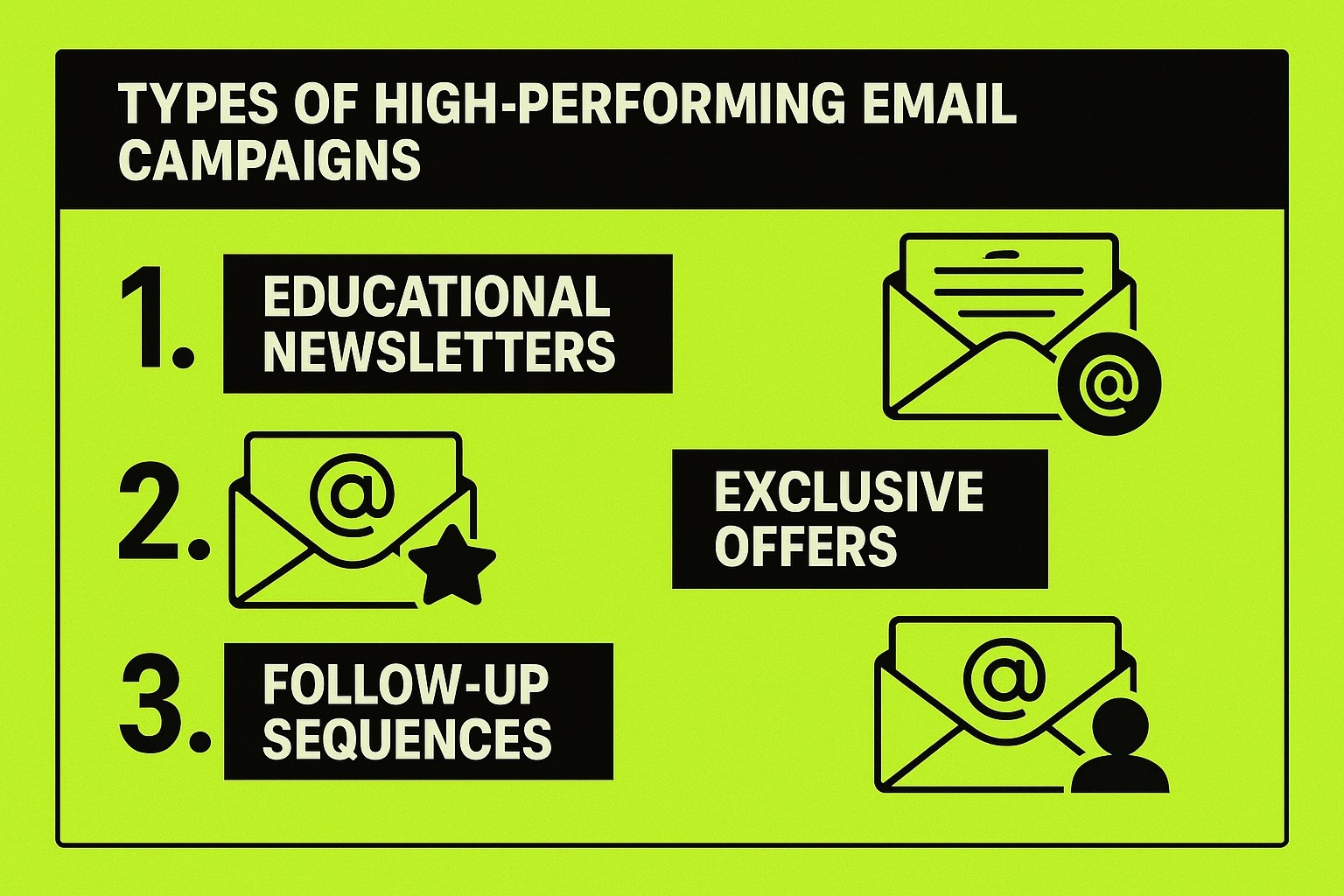
Types of High-Performing Email Campaigns
Not every email needs to sell something. In fact, some of the most effective campaigns focus on building trust and providing value. High-performing emails often include:
- Educational newsletters packed with actionable tips and insights relevant to your audience
- Exclusive offers or early access to products or services that make subscribers feel special
- Follow-up sequences after downloads, sign-ups, or purchases to keep momentum going
- Re-engagement emails targeting inactive contacts with tailored content to reignite interest
Each type of email serves a clear purpose in nurturing the relationship and moving prospects along the buying journey.
Consistency Over Frequency
A common misconception among small businesses is that sending more emails automatically leads to better results. In practice, flooding inboxes often backfires – subscribers become overwhelmed, messages get ignored, and engagement drops. The real key to effective email marketing lies in consistency and delivering genuine value.
Sending even a single, well-crafted email each week can build more trust than daily promotions because it respects your audience’s time and attention. Maintaining a predictable schedule allows readers to anticipate your messages and develop a sense of familiarity with your brand. At the same time, balancing informational content with occasional offers keeps your emails engaging without feeling overly promotional. When consistency is paired with relevance, each message becomes an opportunity to strengthen relationships and guide prospects toward meaningful action.
Direct Access and Control
One of the greatest advantages of email marketing is that it gives you a direct line to your audience. Unlike social media or paid ads, where visibility depends on algorithms and budgets that can change overnight, your email list is entirely under your control. You determine who receives which messages and when they arrive, allowing for precision and relevance that other channels simply can’t match.
With a clear view of engagement metrics, you can see exactly how subscribers interact with your content and adjust campaigns based on real behavior rather than guesswork. Over time, this turns your list into a dependable source of leads, repeat customers, and even brand advocates who genuinely care about your business.
The most effective email marketing treats subscribers as people, not numbers. When messages reflect understanding and provide genuine value, even simple updates or insights can drive meaningful growth and strengthen the relationship between your brand and its audience.
Social Media That Builds Real Relationships
In 2025, social media is no longer about chasing the next viral trend or flooding every platform with content. Growth comes from consistency, relevance, and genuine connection. People trust brands they see often, that respond thoughtfully, and that provide value rather than just promotion.
For small businesses, social media is less about numbers and more about nurturing real relationships. When done well, it can become a reliable channel for brand awareness, lead generation, and long-term customer loyalty.
Focus on the Platforms That Matter
A common pitfall for small businesses is trying to maintain a presence on every social media channel. Spreading your efforts too thin often leads to inconsistent content and shallow engagement. The smarter approach is to concentrate on the platforms where your audience naturally spends their time.
For B2B companies, LinkedIn frequently delivers the best results because it connects professionals and decision-makers in an environment built for networking and lead generation. Consumer-focused businesses, on the other hand, often see stronger engagement on Instagram, TikTok, and YouTube, where visual storytelling, entertainment, and shareable content drive attention.
By narrowing your focus to one or two channels, your team can produce higher-quality content and interact more authentically with followers. Rather than chasing every trend, the key is showing up consistently where your audience already pays attention, building recognition and trust over time.
Content That Creates Connection
Content that resonates in 2025 is less about self-promotion and more about demonstrating value and personality. Audiences want to learn, be inspired, and feel like they know your brand on a human level.
Effective content strategies include:
- Sharing industry insights that help followers make better decisions or understand trends
- Mixing educational content with behind-the-scenes moments to humanize your brand and show how you work
- Highlighting customer stories or testimonials that illustrate your impact
- Collaborating with creators or like-minded small brands to expand reach and credibility
- Posting consistently so your brand remains familiar without overwhelming your audience
The aim is to create a feed that informs, entertains, and builds trust over time.
Engagement Over Followers
It’s easy to get caught up in follower counts, but engagement is what truly drives business outcomes. A smaller, active audience is far more valuable than a large, passive one.
Key ways to boost meaningful engagement:
- Respond promptly to comments, messages, and mentions
- Ask questions or invite opinions to spark conversations
- Host live sessions, Q&As, or interactive polls to encourage participation
- Celebrate milestones, user-generated content, or customer wins to show authenticity
Every interaction is an opportunity to strengthen trust and build relationships that eventually convert into leads or sales.
Measuring Social Media Success
Many small businesses make the mistake of equating social media success with likes, shares, or follower counts, but those numbers alone don’t move the business forward. True success comes from understanding how your social presence contributes to your broader goals. Look at the ways your audience interacts with your content, such as meaningful comments, messages, or saves, because these signals indicate genuine interest rather than passive scrolling.
It’s also important to monitor the traffic your social posts drive to your website and to track leads or conversions that originate from social interactions. Observing which types of posts spark engagement helps you adjust your content strategy in real time, focusing on what resonates most with your audience. When you prioritize connection and deliver value consistently, social media transforms from a broadcasting platform into a tool for building a loyal community, turning casual followers into engaged customers who trust and support your brand.
Paid Advertising That Prioritizes Efficiency
Paid advertising remains a powerful growth lever for small businesses, but in 2025, success isn’t about throwing money at campaigns and hoping for the best. Effective ads now require precision, strategy, and a focus on measurable outcomes. Without these, even well-funded campaigns can become expensive experiments with little return.
For small businesses, paid advertising works best when it complements other marketing efforts rather than replacing them. It should amplify your strengths, target the right audience, and deliver leads that are ready to convert.
Why Smart Paid Advertising Matters
For small businesses, the real challenge with paid advertising isn’t just spending money – it’s spending it wisely. Broad targeting, generic visuals, and vague messaging rarely lead to lasting results anymore. Today’s platforms, whether it’s Google, Meta, LinkedIn, or TikTok, reward campaigns that focus on a clearly defined audience and speak directly to their needs. Ads need to deliver offers or content that genuinely matter to the people seeing them, guiding visitors to landing pages designed to convert rather than just inform.
Paid advertising is no longer about chasing clicks or impressions for the sake of volume. Every dollar spent should be intentional and measurable, with each campaign clearly tied to business goals. When approached strategically, paid ads don’t just drive traffic – they amplify the channels and messages that are already working, filling gaps in lead generation and accelerating growth without wasting resources.
Strategies That Deliver Real Results
Paid advertising in 2025 focuses on efficiency and relevance. High-performing campaigns typically prioritize the following tactics:
- Retargeting past website visitors to re-engage people who already showed interest
- Promoting proven content like high-performing blog posts, case studies, or videos instead of generic sales pitches
- Driving traffic to lead magnets or webinars to capture qualified prospects before attempting a direct sale
- Testing small budgets first to validate messaging and audience fit before scaling spend
This approach minimizes wasted spend and ensures that every dollar contributes to meaningful engagement and leads.
Avoiding Common Pitfalls
Even the best campaigns can fail without proper tracking and optimization. Common mistakes include:
- Running ads without conversion tracking in place
- Ignoring data from previous campaigns when targeting new audiences
- Sending traffic to unoptimized landing pages that confuse or frustrate visitors
- Treating paid ads as a standalone growth tactic instead of a part of a broader strategy
Without visibility into which campaigns drive leads or sales, businesses end up guessing, wasting both money and time.
Paid Advertising as a Growth Multiplier
The real power of paid advertising comes from its ability to amplify what’s already working. Ads deliver the best results when they support your existing organic strategies, such as content marketing, SEO, and email campaigns. They can extend the reach of a blog post that’s already attracting visitors, bring back users who interacted with your social content but haven’t converted yet, or highlight time-sensitive offers to people who previously engaged with your lead magnets.
Rather than replacing your foundational marketing efforts, paid advertising acts as a multiplier. It accelerates growth by making effective content and campaigns work harder, reaching the right audience at the right time while reinforcing your brand’s presence. When integrated thoughtfully, it turns every well-crafted asset into an opportunity for more visibility, more engagement, and more qualified leads.
Measuring and Scaling Success
Efficiency in paid advertising comes from understanding exactly what’s working. It’s essential to track metrics like the cost per lead or acquisition, the conversion rates on landing pages, the engagement generated by ad creatives, and the return on ad spend for each campaign. By analyzing these results, you can see which strategies are delivering real value and which need adjustment.
Once campaigns consistently show measurable performance, small businesses can scale with confidence. Every additional dollar invested can be directed toward tactics that produce predictable growth, turning ad spend from a gamble into a reliable engine for expanding reach, attracting qualified leads, and driving sustainable revenue.
Mobile Experience as a Growth Driver
In 2025, mobile isn’t just an option – it’s the primary way most people interact with businesses online. From browsing products to reading content, scheduling appointments, or completing purchases, users expect seamless experiences on their phones. A slow, confusing, or poorly designed mobile site doesn’t just frustrate visitors – it quietly erodes your marketing performance and lowers conversion rates.
Small businesses that optimize mobile experiences don’t just meet expectations – they earn trust, boost engagement, and create repeat customers.
Why Mobile Matters More Than Ever
Mobile behavior has evolved rapidly in recent years. Customers now research, compare, and even make purchases entirely from their phones. When a site isn’t optimized for mobile, opportunities are lost at every step of the journey. Slow-loading pages can cause visitors to leave before they even see your products, while confusing navigation frustrates users and drives up bounce rates. Complicated forms or checkout flows make conversions harder, and missed touchpoints like click-to-call or easy booking links reduce engagement. Prioritizing mobile-first design is about more than just looks – it directly influences conversions, customer satisfaction, and ultimately your revenue.
Key Mobile Growth Strategies
Improving mobile performance requires attention to both usability and speed. Practical strategies include:
- Designing simple navigation that guides users effortlessly to what they need
- Reducing page load times through image optimization, caching, and clean code
- Optimizing checkout or booking flows so forms are short, intuitive, and mobile-friendly
- Making phone, email, or contact actions obvious with buttons that are easy to tap
Small tweaks in these areas often produce outsized gains in conversions and user satisfaction.
SMS Marketing: Direct, Personal, and Permission-Based
While email continues to be a reliable channel, SMS marketing is making a strong comeback when used thoughtfully. The power of SMS lies in sending messages that are relevant, timely, and wanted. Short updates or reminders keep customers engaged without overwhelming them, while exclusive offers or time-sensitive promotions can prompt immediate action. Because SMS is permission-based, it builds trust and ensures your audience genuinely wants to hear from you. Done right, SMS works hand-in-hand with mobile optimization, delivering communication that feels personal and direct rather than intrusive.
Measuring Mobile Success
Optimizing for mobile is never a one-time task; it requires ongoing attention and adjustment. Tracking real user behavior allows you to understand what’s working and where improvements are needed. Keep an eye on page load speeds and bounce rates on mobile devices, and measure how effectively forms, checkouts, and bookings convert. Pay attention to how users interact with click-to-call or tap-to-contact actions to identify which prompts actually drive engagement. When running SMS campaigns, start with small segments to test effectiveness before rolling out to your full audience. Treating mobile experience as a key growth driver ensures that every digital marketing effort, from SEO and social media to paid advertising, performs at its full potential.
Offline Marketing That Still Converts
Even in a digital-first world, offline marketing retains a unique power. It engages people in ways online channels can’t, creating tangible experiences that stick in memory. For small businesses, combining traditional tactics with digital follow-up can drive leads, build trust, and accelerate conversions faster than either approach alone.
Offline marketing works best when it’s intentional, measurable, and integrated with broader strategies like email, social media, and SEO.
Why Offline Still Matters
People still respond to real-world interactions. A well-timed direct mail piece, an in-person demo, or a local sponsorship can make your business feel approachable, credible, and memorable. Offline touchpoints often:
- Generate higher trust because they create physical or personal connections
- Reach audiences that may not be as active online or are overwhelmed by digital noise
- Support digital campaigns by reinforcing messaging across multiple channels
Offline marketing is not about replacing digital strategies; it’s about amplifying them and creating multi-sensory experiences that stick.
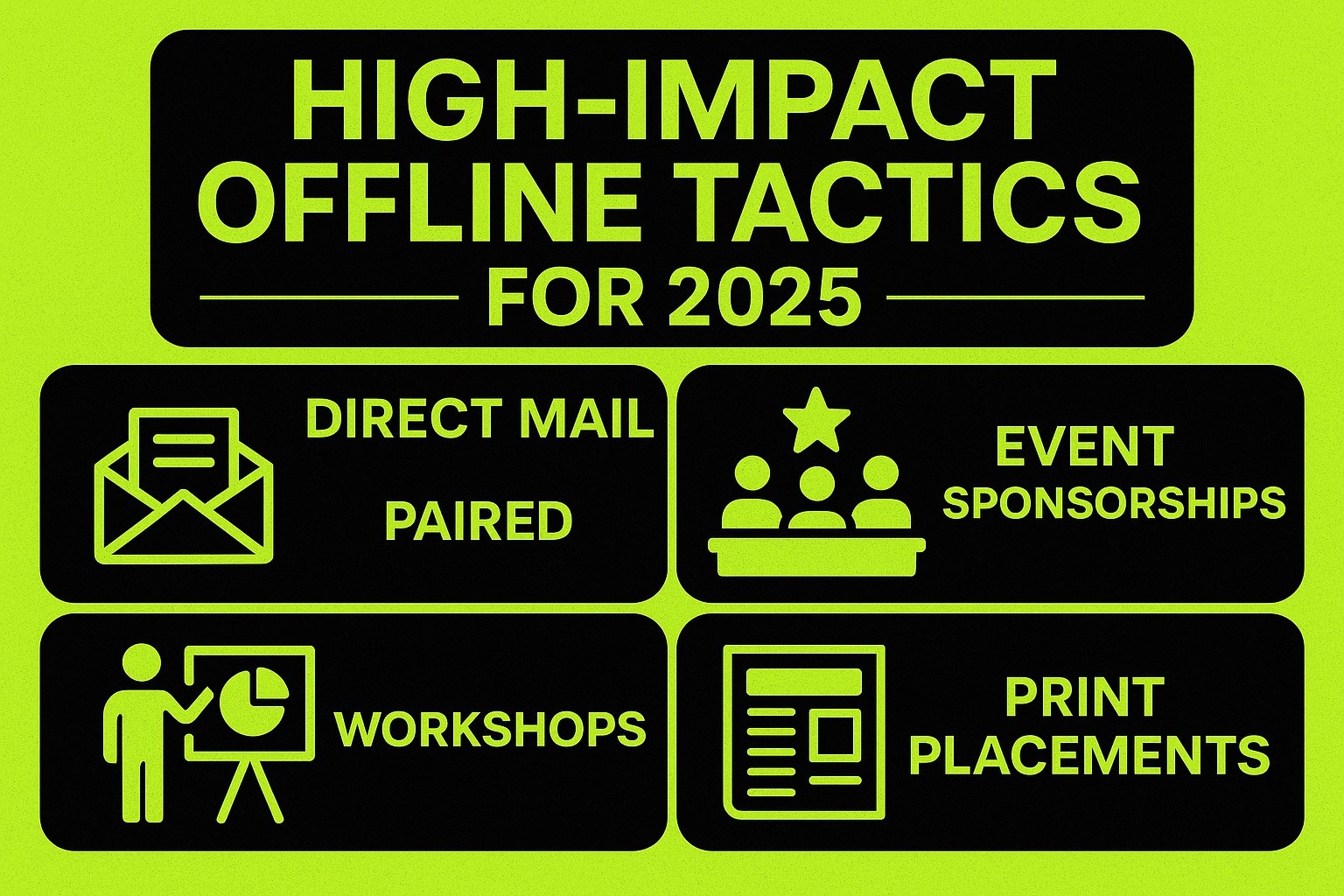
High-Impact Offline Tactics for 2025
Small businesses can achieve measurable growth with a few targeted offline strategies:
- Direct mail paired with personalized offers: sending tailored discounts or resources to a curated list of prospects
- Local event sponsorships: getting your brand in front of community events, trade shows, or industry meetups
- Workshops and in-person demos: offering hands-on experiences that showcase your products or services
- Strategic print placements: placing ads in local magazines, newspapers, or industry publications that reach the right audience
The most effective offline campaigns are thoughtfully integrated with your online presence. For example, using QR codes or unique promo codes links physical materials directly to your website or landing pages.
Measuring Offline Performance
Offline marketing in 2025 is no longer about guesswork – it’s about accountability. Small businesses can measure ROI and refine their strategies much like they do with digital campaigns. QR codes can direct prospects to dedicated landing pages, while unique promo codes allow tracking of conversions from direct mail or print advertising. Following up with attendees via email or SMS helps gauge engagement after events, and gathering customer feedback through surveys provides insight into the real impact of in-person interactions. By integrating these tracking methods, offline marketing becomes a data-driven tool that contributes strategically to growth rather than a series of uncertain efforts.
Why Personal Experiences Accelerate Growth
Offline interactions create emotional connections in ways that digital channels often cannot. Hosting a workshop, demonstration, or sponsorship event allows your brand to feel tangible and human, giving people the chance to experience it firsthand. These personal encounters naturally encourage word-of-mouth referrals and foster trust more quickly than social media posts or emails alone. When combined with online marketing efforts, these in-person experiences enhance credibility, deepen engagement, and ultimately attract higher-quality leads who are more likely to convert.
Experiential Marketing That Creates Loyalty
In 2025, marketing isn’t just about transactions – it’s about experiences. Experiential marketing focuses on creating moments that stick in your customers’ minds long after the first interaction. When done well, these experiences build emotional connections that drive repeat business, referrals, and long-term loyalty.
For small businesses, investing in experiences may feel less immediately measurable than digital campaigns, but the payoff is deeper customer relationships and a brand that people remember and trust.
Why Experiences Matter More Than Ever
Customers today are inundated with ads, emails, and social posts. Experiential marketing cuts through the noise by providing something real and memorable:
- Emotional connection drives action: people buy from brands they feel connected to
- Memorable moments create word-of-mouth: customers share experiences faster than they share content
- Trust builds over time: seeing a brand in person or in action humanizes it and reduces hesitation
Investing in experiences isn’t a replacement for other marketing channels – it amplifies them by creating advocates who naturally promote your brand.
Experiential Marketing Tactics That Work
Small businesses don’t need huge budgets to make an impact. Thoughtful, well-executed experiences create meaningful engagement. Examples include:
- Product launch events: let customers see, touch, or test new offerings before anyone else
- Customer appreciation sessions: invite loyal clients to special gatherings that show gratitude
- Educational masterclasses or workshops: provide value while showcasing your expertise
- Community networking meetups: bring together local customers, partners, or enthusiasts to build a shared connection
Each experience should feel authentic, well-planned, and aligned with your brand’s values.
Measuring the Impact of Experiences
Experiential marketing might feel intangible, but its results can be measured and refined. Gathering feedback through post-event surveys helps you understand attendee satisfaction and key takeaways. Observing social mentions, shares, and photos from events provides a sense of engagement and reach. Unique offers or promo codes tied to each event make it possible to track conversions directly, while monitoring repeat visits or referrals over time shows how these experiences influence long-term loyalty. Even smaller gatherings can deliver meaningful, measurable insights when tracked thoughtfully, revealing the real value of personal connections in driving growth.
Turning Moments into Long-Term Loyalty
The real purpose of experiential marketing goes beyond immediate sales – it’s about building lasting relationships. When customers feel recognized, valued, and genuinely connected to your brand, they become more likely to share your business with friends and colleagues. They engage more meaningfully with your online content and campaigns, and they come back again and again for future purchases or services. By crafting experiences that truly matter, small businesses turn marketing from a simple transactional effort into a powerful tool for fostering loyalty and sustaining long-term growth.
Data Tracking That Informs Every Decision
In 2025, growth isn’t about gut feelings or guesswork – it’s about understanding what actually drives results. Small businesses now have access to powerful, affordable analytics tools that turn raw numbers into actionable insights. The brands that grow fastest are the ones that let data guide every move, from content creation to ad spend and customer engagement.
Data tracking isn’t just for analysts or big teams – it’s a tool that gives small businesses confidence and clarity in their marketing decisions.
Why Tracking Metrics Matters
Many small business owners treat marketing as posting content, running ads, or sending emails and hope something clicks. Without tracking, it’s impossible to separate what actually drives results from what wastes time and money. By paying attention to the right metrics, you can see which channels generate meaningful engagement and which ones only inflate vanity numbers. You can identify where potential customers drop off during their buying journey and uncover opportunities to improve revenue and efficiency. Tracking transforms marketing from guesswork into a process of intentional experimentation, letting businesses make informed decisions instead of relying on hunches.
Key Metrics Every Small Business Should Track
To make data meaningful, focus on metrics that directly connect to growth:
- Cost per lead (CPL): how much it costs to acquire each new prospect
- Conversion rates by channel: which campaigns and platforms deliver actual sales or sign-ups
- Average customer value: the revenue generated per customer over time
- Email engagement: open rates, click-throughs, and responses to campaigns
- Website engagement: time on page, bounce rates, and navigation patterns
Monitoring these metrics regularly uncovers patterns, strengths, and gaps that guide smarter decisions.
Turning Data Into Action
Collecting data is just the first step; the true value emerges when you analyze it and apply the insights. By understanding which campaigns and content perform best, you can replicate strategies that drive results and refine those that underperform before they drain resources. Data also allows you to segment your audience based on behavior, making your marketing more personalized and relevant. Small adjustments in messaging, offers, or timing can then be tested and measured, creating a continuous cycle of improvement. This approach ensures your marketing evolves steadily instead of stagnating.
Building Confidence Through Numbers
In 2025, relying on instinct alone isn’t enough to drive small business growth. Tracking the right metrics gives teams clarity and removes the guesswork from decision-making. When you can see exactly which efforts generate leads, revenue, and engagement, marketing stops feeling like a series of educated guesses and becomes a predictable engine for growth.
Campaigns can then be optimized for return on investment rather than vanity metrics, and small teams can focus on the initiatives that truly move the needle without burning out. Analytics reveal patterns that guide smarter choices, showing what works, what doesn’t, and where adjustments are needed. This approach allows marketing to scale sustainably, giving everyone – from leadership to the frontline team – a clear understanding of performance and impact.
Data transforms marketing from a reactive scramble into a proactive strategy. Every update, every adjustment, every experiment is informed by evidence rather than assumption. For small businesses aiming to grow with confidence, consistency, and clarity, embracing data isn’t optional – it’s the foundation for long-term success.
Partnering With Experts to Drive Small Business Growth
At Lengreo, we know that smart marketing is more than just running ads or posting on social media. We approach every small business with the goal of understanding your unique strengths, audience, and growth opportunities. By combining digital marketing, SEO, content, paid campaigns, and lead generation, we help businesses create strategies that actually drive results rather than just generate noise.
We’ve seen firsthand how a focused, data-driven approach can transform a company’s performance. From increasing client acquisition for software providers to generating dozens of high-value opportunities for architecture and event tech firms, the key is aligning marketing efforts with measurable outcomes. That’s why every tactic we recommend ties back to tangible growth for your business.
Tailored Marketing Strategies That Work
Every small business faces different challenges. Some need to increase online visibility, others need to nurture leads more effectively, and some need to optimize their sales pipeline from start to finish. We tailor our strategies to meet these goals:
- Auditing and optimizing digital marketing channels for maximum efficiency
- Crafting content that educates, informs, and builds trust with prospects
- Implementing targeted paid campaigns that convert rather than just attract clicks
- Leveraging SEO and AI-driven solutions to attract high-quality leads over the long term
By focusing on what actually moves the needle, we help small businesses avoid wasted effort and achieve sustainable growth.
Building Partnerships, Not Just Campaigns
We don’t operate as a detached agency; we integrate with your team, become an extension of your business, and take ownership of delivering results. That means transparent communication, regular progress reviews, and proactive recommendations to optimize every strategy. When small businesses partner with us, they get more than marketing services – they get a growth-focused ally who understands the nuances of their industry and audience.
With LenGreo, small businesses gain clarity, efficiency, and momentum. Every tactic – from SEO to email, social media, and paid advertising – is designed to work together, ensuring that marketing investments pay off and long-term growth becomes predictable, measurable, and achievable.
Conclusion
Growing a small business in 2025 isn’t about trying to jump on every marketing trend or being everywhere at once. Honestly, that’s a fast track to burnout. The real growth comes from focus, clarity, and sticking with what actually works. When you know who you’re talking to, what problems you solve, and why people should pick you over someone else, everything else falls into place a lot more easily. Your content starts building trust, your SEO brings in leads steadily, your emails feel personal instead of spammy, and your social media actually connects with real people. Each of these pieces isn’t magic on its own, but together they make your marketing work smarter – not harder.
The businesses that do well aren’t always the loudest or flashiest. They’re the ones who pay attention, measure results, and tweak things when needed. Growth is slow and steady; it comes from connecting with people, learning from what works, and being patient enough to turn first-time customers into loyal fans who tell their friends.
Working with the right team or agency can make that journey a lot smoother. They can help you take a plan and turn it into results without burning out your team. When your marketing lines up with your goals, every dollar, every hour, and every effort starts adding up. And over time, that’s how you build sustainable growth that actually sticks.