


Quick Summary: Effective marketing for storage facilities combines digital strategies like Google Business Profile optimization and local SEO with community engagement and referral programs. High-performing facilities achieve 85-90% occupancy and profit margins exceeding 50% through targeted marketing that prioritizes online visibility, customer acquisition channels, and partnerships with local businesses. Success requires tracking ROI across all channels while maintaining consistent brand presence both online and in the community.
The self storage market remains one of the most stable real estate investments available. But here’s the thing—stability doesn’t mean easy occupancy. With facilities popping up everywhere, standing out requires marketing that actually works.
Most storage operators overlook marketing entirely or treat it as an afterthought. They build the facility, flip on the lights, and wonder why units sit empty. The reality? Marketing separates thriving facilities from struggling ones.
This guide walks through proven marketing ideas that fill units and keep occupancy rates high. These strategies work for new facilities looking to establish themselves and mature properties aiming to optimize performance.
Understanding Customer Acquisition Channels
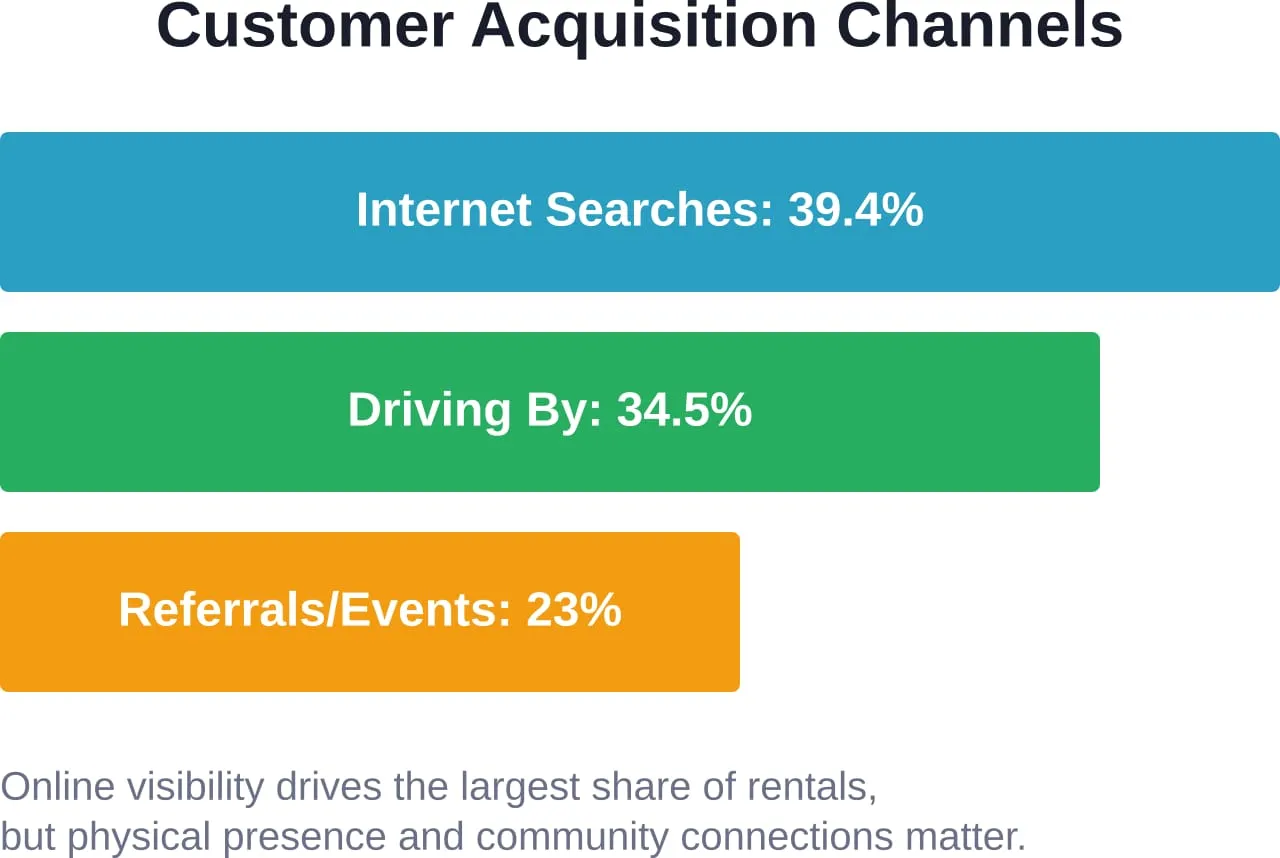
Before throwing money at random advertising, understanding where customers come from matters tremendously. Data shows three primary channels drive storage facility rentals.
Internet searches account for roughly 39.4% of customer acquisition. People actively searching online represent high-intent prospects ready to rent. Driving by makes up about 34.5% of discoveries—physical visibility still matters in this business. Referrals, repeat customers, and events combine for approximately 23% of rentals.
Operating expenses should typically account for 25-35% of gross revenue, with target occupancy rates of 85-90% to maximize revenue. High-performing facilities achieve profit margins exceeding 50%, particularly those in prime locations with optimized operations.
Here’s where it gets interesting: facilities targeting profitability within the first 2-3 years need marketing strategies that address all three channels, not just one.
Building a Website That Converts
A storage facility website serves one purpose: converting visitors into renters. Surprisingly, 94% of first impressions regarding a brand are influenced by web design. Poor design kills conversions before visitors read a word.
The website needs clear navigation, prominent unit size and pricing information, online reservation capability, and mobile responsiveness. Most storage searches happen on mobile devices—sites that don’t work smoothly on phones lose rentals.
Essential Website Elements
Unit size pages with dimensions, features, and typical uses help customers self-qualify. Someone unsure whether they need a 5×10 or 10×10 unit should find clear guidance.
Transparent pricing builds trust. Hidden pricing forces potential customers to call, creating friction that sends them to competitors. List rates clearly, update them regularly.
Online reservation removes barriers. Allow instant booking without requiring phone calls. Each additional step in the rental process loses a percentage of prospects.
Trust signals like security certifications, insurance information, and customer testimonials reduce anxiety. Storage requires trust—people store valuables and possessions. Demonstrating security and reliability through the website matters.
Organizing Storage Facility Marketing With Lengreo
Storage facilities need marketing that clearly presents unit types, pricing, locations, and contact options. Lengreo aligns website development, SEO, paid ads, content, lead generation, appointment setting, and tracking into one practical setup, helping potential customers find the right solution.
Need More Storage Inquiries?
Lengreo can help with:
- refining unit, pricing, and contact pages
- setting up local SEO and paid campaigns
- tracking calls, forms, and lead sources
- supporting content and lead generation workflows
👉 Contact Lengreo to discuss your marketing setup.
Dominating Local Search Results
Google Business Profile optimization isn’t optional anymore. Research indicates that 97% of users rely on search engines to find local businesses. Without proper optimization, Google might not show the facility even to someone standing across the street.
Local Pack featured results generate twice the clicks compared to top organic results. That prominence translates directly to phone calls and rentals.
Optimizing the Google Business Profile
Start with complete, accurate information. Business name, address, phone number, hours, and services need consistency across every online platform. Inconsistencies confuse Google and hurt rankings.
Add high-quality photos of the facility, units, security features, and access areas. Facilities with photos receive significantly more engagement than those without. Update photos seasonally to show fresh content.
Encourage and respond to reviews consistently. Over 90% of shoppers check reviews before making decisions. Responding to every review—positive and negative—demonstrates active management and care. Thank customers for positive feedback, address concerns in negative reviews professionally.
Post regular updates through Google Business Profile. Share promotions, facility news, or helpful storage tips. Regular posting signals to Google that the business is active and engaged.
Local SEO Beyond Google
Build citations across online directories. Yelp, Yellow Pages, and local business directories should all list the facility with consistent NAM (Name, Address, Phone) information.
Create location-specific content on the website. Pages targeting neighborhood names, nearby landmarks, and local search terms help capture geographic searches. Someone searching “storage near downtown” or “units by the university” should find relevant pages.
Earn backlinks from local organizations, chambers of commerce, and community websites. These local links carry significant weight for geographic search rankings.
Paid Advertising Strategies That Work
Organic strategies take time to build momentum. Paid advertising generates immediate visibility and traffic.
Google Ads for Storage Facilities
Target high-intent keywords: “storage units near me,” “climate controlled storage,” “RV storage [city name].” These searches indicate immediate need.
Use location extensions to display address, phone number, and distance. Mobile searchers often need storage immediately—make contacting the facility effortless.
Create separate campaigns for different unit types. Climate-controlled units, vehicle storage, and standard units attract different customers at different price points. Tailored ad copy and landing pages improve conversion rates.
Track cost per lead and return on ad spend carefully. Even a 1% improvement in conversion rate impacts ROAS significantly. Adding just one additional month of stay length also substantially affects profitability calculations.
Facebook and Social Media Advertising
Target life events: moving, marriage, divorce, home renovation. Facebook’s targeting allows reaching people experiencing situations that create storage needs.
Geographic targeting focuses ad spend on people within a reasonable distance. Someone 50 miles away won’t rent a unit—tight geographic boundaries prevent wasted clicks.
Use retargeting to recapture website visitors who didn’t convert. Most people don’t rent on the first visit. Staying visible as they compare options increases conversion probability.
| Marketing Channel | Average Performance | Best For |
|---|---|---|
| Google Business Profile | Highest ROI for local searches | Immediate visibility, local dominance |
| Google Ads | 50% increase in purchase likelihood | Fast results, high-intent traffic |
| Facebook Ads | Precise demographic targeting | Life event targeting, brand awareness |
| Local SEO | Long-term sustainable traffic | Ongoing organic visibility |
Community Partnerships and Local Marketing
Digital strategies capture online search traffic. Community partnerships create referral networks that generate consistent leads with minimal ongoing cost.
Building Referral Networks
Partner with moving companies, real estate agents, and apartment complexes. These professionals regularly encounter people needing storage. A structured referral program incentivizes them to recommend the facility.
Offer referral fees or reciprocal partnerships. Moving companies might receive $50 per successful rental, while the facility promotes their services to renters. Both businesses benefit.
Provide business cards, brochures, and promotional materials partners can distribute. Make referring easy by handling the marketing materials.
Community Engagement
Sponsor local events, sports teams, or charity drives. Community visibility builds brand recognition. When residents need storage, they’ll remember the facility that supports their community.
Host community events at the facility. Customer appreciation days, shredding events, or donation drives bring people to the property. Visitors see the facility firsthand, reducing hesitation about security and quality.
Support local causes authentically. Residents recognize genuine community investment versus superficial sponsorship. Choose causes aligned with business values and maintain consistent support.
Signage and Physical Visibility
With 34.5% of customers discovering facilities by driving past, physical visibility remains critical. Digital marketing matters, but don’t neglect the physical presence.
Clear, prominent signage visible from main roads captures drive-by traffic. Include the facility name, “Storage” or “Self Storage,” and a phone number. Drivers making split-second decisions need instantly recognizable signage.
Directional signs guide potential customers from nearby intersections. Someone interested but unsure of the exact location shouldn’t get lost trying to find the entrance.
Maintain attractive, well-lit exterior appearance. Curb appeal signals quality and security. Overgrown landscaping or poor lighting suggests neglect, discouraging rentals.
Email Marketing and Customer Retention
Acquiring new customers costs significantly more than retaining existing ones. Email marketing maintains relationships and generates repeat business.
Collect email addresses during rental and maintain a contact list. Send monthly newsletters with storage tips, facility updates, and special offers.
Create automated email sequences for different customer stages. New renters receive welcome emails and facility information. Long-term renters get loyalty rewards and upgrade offers. Former customers receive win-back campaigns when units become available.
Segment the list by unit type, rental duration, and customer characteristics. Targeted messages perform better than generic broadcasts.
Tracking Marketing ROI
Marketing without measurement wastes money. Tracking return on investment identifies effective channels and eliminates underperforming ones.
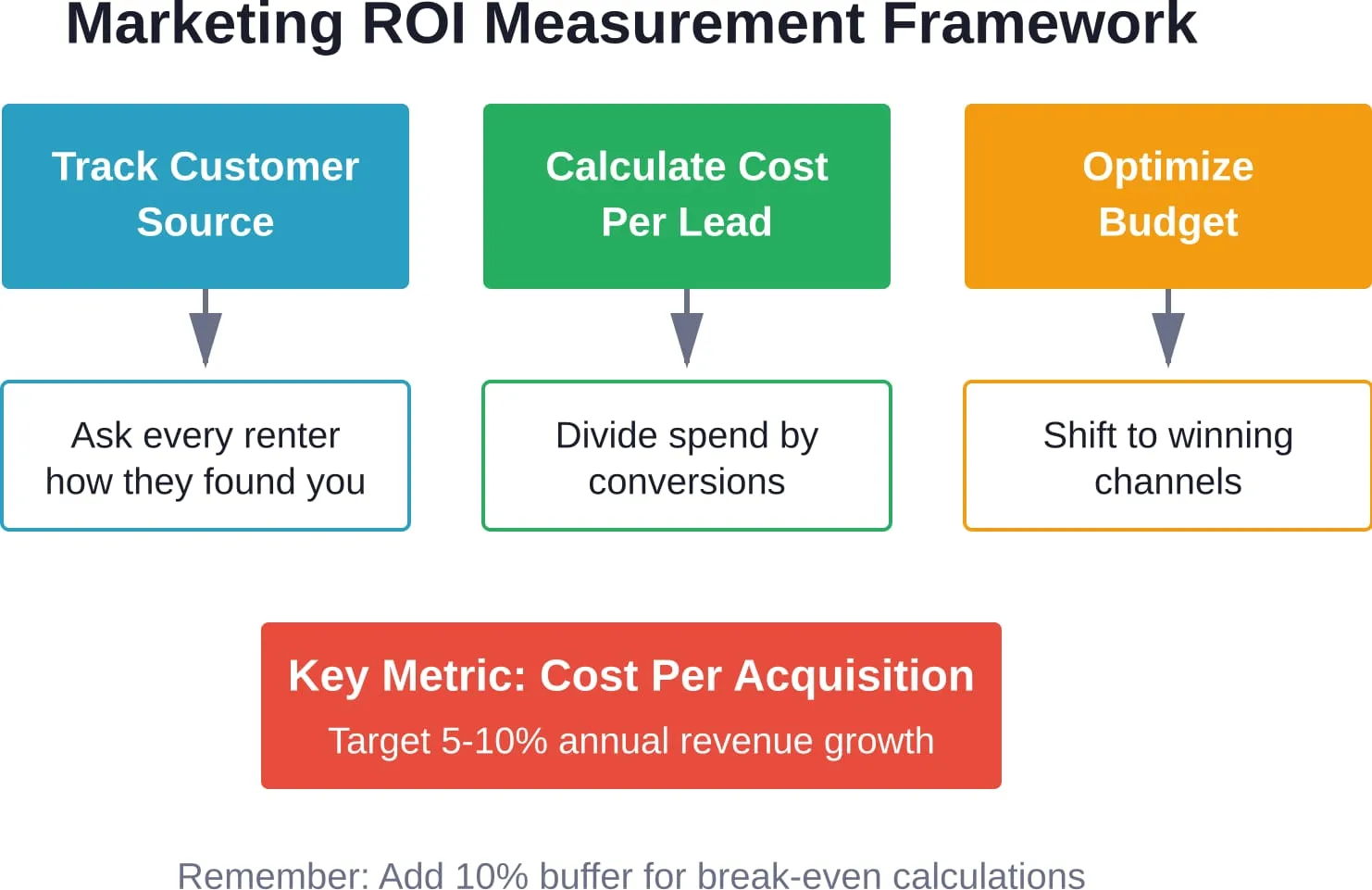
Ask every new customer how they found the facility. Track responses in a spreadsheet or CRM. This simple question provides invaluable data about marketing effectiveness.
Use unique phone numbers for different marketing channels. Call tracking reveals which advertisements generate calls. Google Ads might drive significant volume while Facebook produces few conversions.
Implement website analytics to understand visitor behavior. Track which pages convert best, where visitors spend time, and where they drop off in the reservation process.
Calculate cost per acquisition for each channel. Divide total marketing spend by customers acquired. Channels with lower acquisition costs deserve more budget allocation.
Conclusion
Marketing determines whether storage facilities thrive or struggle. The most successful operators don’t rely on a single channel—they build comprehensive strategies addressing online search, physical visibility, and community connections.
Start with Google Business Profile optimization since it delivers the highest immediate impact. Build a conversion-focused website that works flawlessly on mobile devices. Layer in paid advertising for immediate traffic while developing long-term SEO and community partnerships.
Track everything. Measure which channels drive rentals and calculate cost per acquisition. Shift budget to winning strategies and eliminate underperformers. Even small improvements compound into significant revenue gains over time.
Ready to fill those empty units? Choose two strategies from this guide and implement them this week. Optimization beats perfection—taking action separates full facilities from empty ones.