


Quick Summary: Sports teams can drive fan engagement and revenue through digital-first strategies including short-form video content, personalized fan experiences, year-round engagement tactics, and strategic brand partnerships. Modern marketing approaches blend social media innovation, data-driven personalization, gamification, and community-building to convert casual viewers into loyal supporters.
The sports business landscape has transformed dramatically. Teams that relied solely on game-day attendance and traditional advertising now face an entirely different playing field—one where digital engagement determines success as much as on-field performance.
Professional leagues and teams are adopting innovative approaches that keep fans connected throughout the entire year. The data tells a compelling story: according to research on fan engagement, 65% of fans want some form of content or information at least monthly during the off-season. This presents both a challenge and an opportunity.
What works today won’t necessarily work tomorrow. The marketing strategies that drive results in 2026 blend technology, authenticity, and community in ways that previous generations of sports marketers never imagined.
The Shift to Digital-First Sports Marketing
Sports marketing has moved far beyond stadium billboards and television commercials. Digital channels now serve as the primary battleground for fan attention.
Short-form content has become a primary way that many fans engage with sports. Platforms from Instagram Reels to YouTube Shorts dominate how audiences consume sports content. Here’s the thing though—this isn’t just about posting highlights anymore.
Overtime, which owns and operates leagues in basketball, football and boxing, has around 75% of its employees dedicated to the digital space, prioritizing short-form content. That’s a striking commitment that reflects where fan attention actually lives.
The numbers support this approach.
Building Year-Round Engagement
The off-season represents a critical window that many teams underutilize. When games aren’t happening, fan interest doesn’t vanish—it just needs different content.
In-depth content consumption was associated with 20 percent higher spend than general news consumption. More than 60 percent of fans say a great year-round experience would make them more likely to attend games or buy merchandise.
Smart teams create content calendars that extend well beyond game schedules. Behind-the-scenes training footage, player interviews, community involvement stories, and interactive challenges keep the conversation going when the season ends.
Boost Sports Team Marketing With Lengreo
Sports teams need marketing that clearly presents games, schedules, tickets, merchandise, and membership options. Lengreo helps connect website development, SEO, paid ads, content, lead generation, appointment setting, and tracking into a single, cohesive setup, making it easier to engage fans and generate inquiries.
A structured system ensures that campaigns, ticketing pages, and content work together efficiently.
Need a Clearer Way to Reach Fans?
Lengreo can help with:
- improving game, schedule, and ticket pages
- setting up local SEO and paid campaigns
- tracking ticket sales, forms, and inquiries
- supporting content and lead generation workflows
👉 Contact Lengreo to discuss your marketing setup.
Social Media Strategies That Actually Work
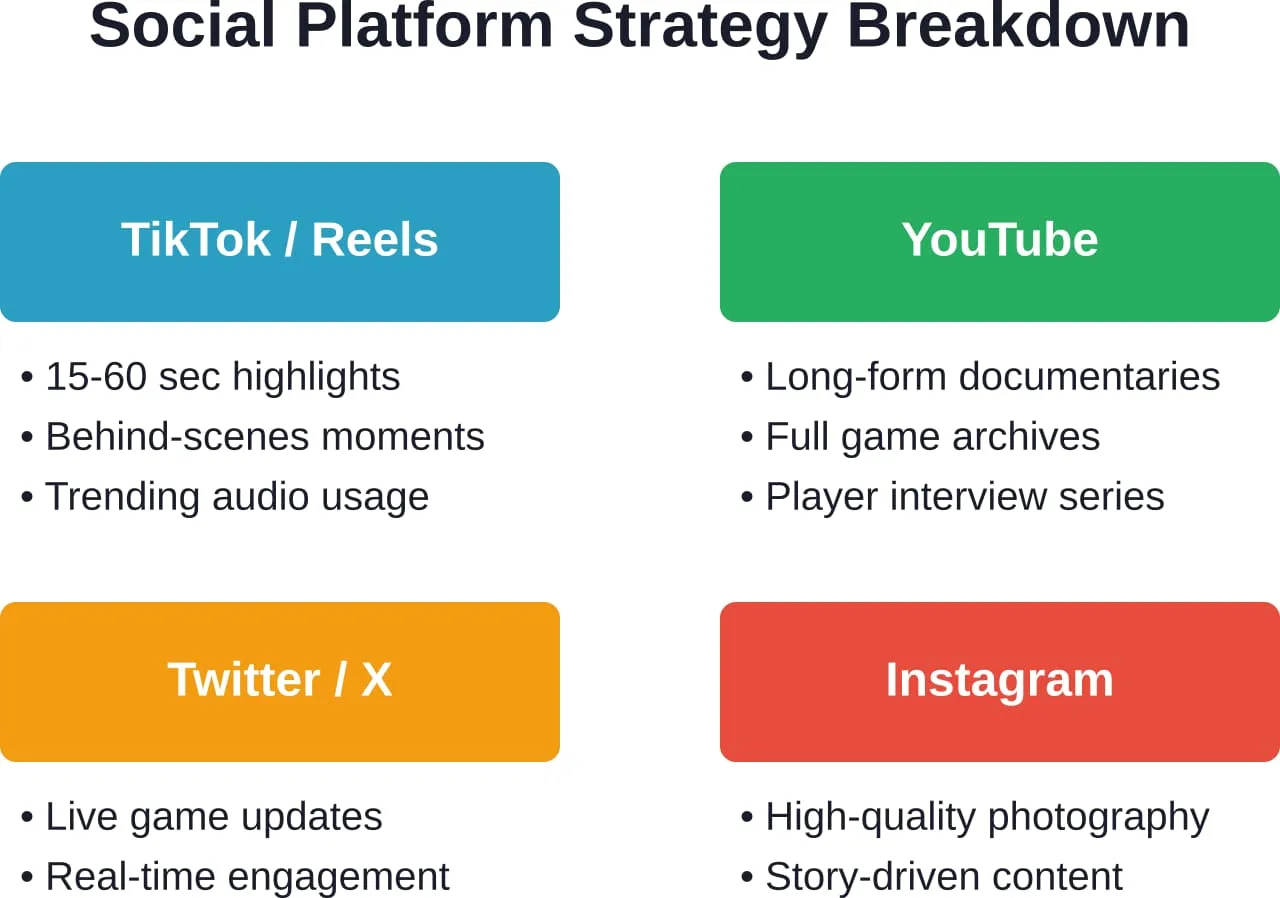
Every sports team maintains social media accounts. But presence alone accomplishes nothing. Strategic social media marketing requires understanding platform-specific behaviors and audience expectations.
Sports teams can learn from this approach by creating content that fits each platform’s culture rather than broadcasting the same message everywhere.
Content That Connects With Gen Z Fans
Brands are testing a variety of methods to reach Gen Z, from live events and digital content, while also trying to reach the younger consumers where they are. This demographic represents the future of sports fandom, but they consume content differently than previous generations.
Gen Z sports fans value authenticity over polish. They gravitate toward raw, unfiltered moments rather than perfectly produced commercials. A shaky behind-the-scenes video of players joking around often performs better than a high-budget promotional spot.
Interactive content drives higher engagement with younger audiences. Polls, questions, challenges, and user-generated content campaigns invite participation rather than passive viewing. When fans feel like contributors rather than spectators, loyalty deepens.
Partnership and Sponsorship Innovation
Sports marketing as patronage has evolved into true partnership. Modern sports partnerships emphasize co-creation and mutual value rather than simple logo placement.
The women’s sports sponsorship landscape demonstrates this shift clearly. Recent data shows significant growth in women’s sports partnerships, with many sponsorships initiated in 2024 and 2025, reflecting explosive recent growth. Additionally, 92% of brands in widening aperture categories joined since 2023.
These partnerships bring creativity beyond traditional beer and automotive sponsors. At NWSL games, sponsor Goody brought a braid bar to stadiums, connecting directly to softball culture. Unrivaled provided a Sephora glam room for players. These activations create memorable experiences that align sponsor values with fan interests.
| Partnership Type | Traditional Approach | Modern Approach |
|---|---|---|
| Stadium Signage | Static logo placement | Digital boards with dynamic content |
| Jersey Sponsorship | Logo on uniform | Co-branded merchandise lines |
| Event Activation | Booth at game | Immersive fan experiences |
| Content Creation | 30-second commercials | Collaborative storytelling campaigns |
Building Meaningful Brand Collaborations
What makes today’s most effective brand-sport collaborations work? Three elements consistently appear: authentic alignment, creative activation, and mutual audience value.
Authentic alignment means sponsors genuinely connect to the sport, team, or athlete. Forced partnerships feel transactional. When a fitness brand partners with a basketball team to promote healthy lifestyles through youth clinics, the connection makes sense. When a completely unrelated brand simply slaps their logo somewhere, fans see through it.
Data-Driven Personalization and Fan Segmentation
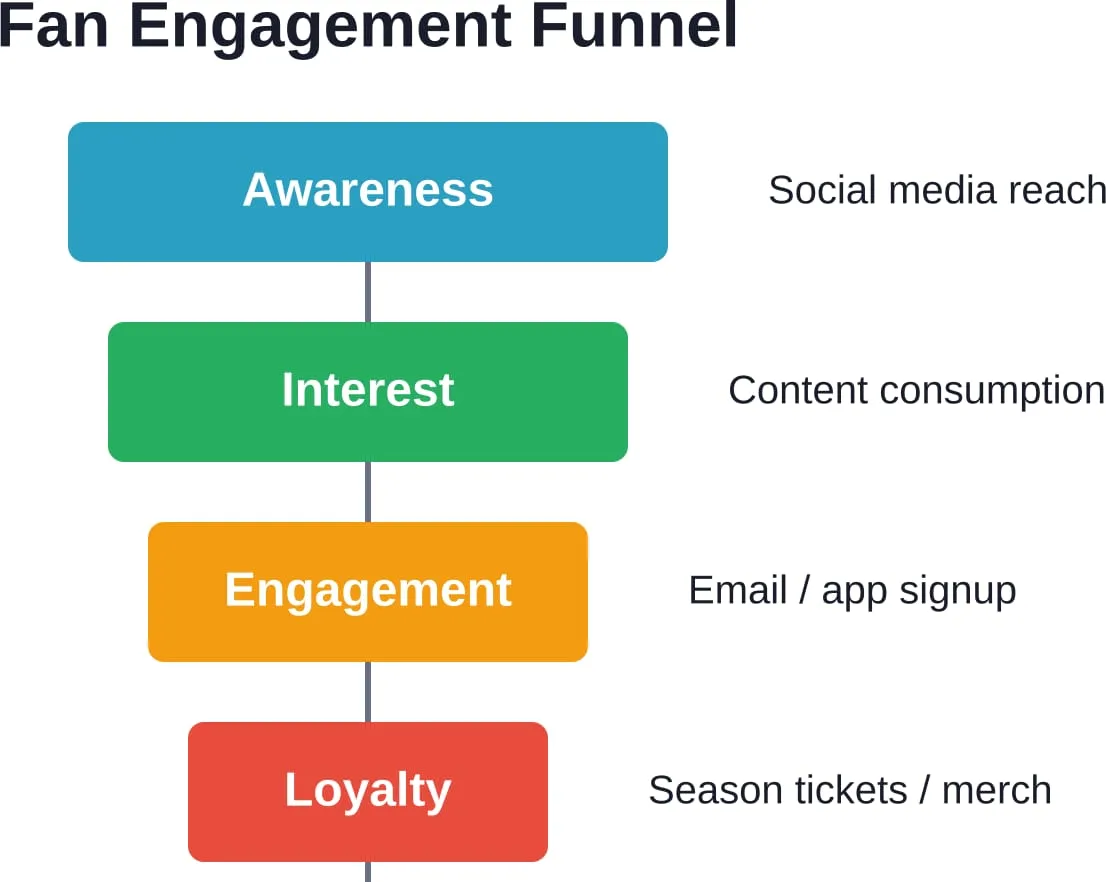
Not all fans are created equal. A season ticket holder has different needs than someone who watches occasional highlights on social media. Effective marketing recognizes these differences.
Fan segmentation allows teams to deliver personalized experiences at scale. Email campaigns can target different groups with relevant content: families receive information about kid-friendly game promotions, while hardcore fans get early access to exclusive merchandise.
Advanced analytics now make this level of personalization accessible. Teams track fan behavior across digital touchpoints—website visits, email engagement, social media interactions, purchase history—to build comprehensive profiles.
Gamification and Loyalty Programs
Gamification transforms passive fandom into active participation. Points systems, badges, leaderboards, and rewards create engagement loops that keep fans coming back.
Leading brands and sports organizations are leveraging gamification, personalization, and data-driven strategies to build profitable fan loyalty. A well-designed loyalty program doesn’t just reward purchases—it rewards all forms of engagement.
Teams can design loyalty programs where fans earn points through various engagement activities. These points unlock exclusive experiences: meet-and-greets with players, early merchandise access, or premium seating upgrades.
The key is making rewards genuinely desirable and attainable. Programs fail when rewards feel impossible to reach or when they offer generic discounts rather than unique experiences fans actually want.
Community-Building and Local Engagement
Sports teams occupy a unique position in their communities. Unlike most businesses, teams represent civic pride and local identity. Smart marketing leverages this connection.
Youth sports programs offer another powerful connection point. When professional teams invest in youth leagues, coaching clinics, or school partnerships, they’re building the next generation of fans while demonstrating community commitment.
A survey showed that 74% of Korean office workers do not exercise. In response, Reebok’s Pump Battle campaign created sports contests in subway stations aimed at promoting a healthier, more active lifestyle. The campaign connected brand values to community health in an authentic way.
Leveraging Local Influencers and Athletes
Local influencers often deliver better ROI than national celebrities. A micro-influencer with 10,000 engaged local followers might drive more ticket sales than a celebrity with millions of disinterested followers nationwide.
Current and former players can become powerful ambassadors. Their authentic connection to the team resonates in ways that paid spokespeople never can. Player-led content—whether Instagram takeovers, podcast appearances, or community event participation—feels genuine because it is.
Global Market Expansion Strategies
Professional sports increasingly think globally. The NFL’s Global Markets Program now operates in 22 international markets, with 25 clubs holding international marketing rights.
As of March 30, 2026, the program expanded to include Italy, with the Cleveland Browns and New Orleans Saints now having marketing rights in that country. The Las Vegas Raiders expanded their rights to include Canada, the United Arab Emirates and the United Kingdom.
This program awards NFL clubs international marketing rights to build brand awareness and fandom beyond the U.S., through fan engagement, events and commercial opportunities. It’s a structured approach to global growth that other leagues are watching closely.
Global expansion requires cultural sensitivity and localized content. Simply translating English content doesn’t work. Teams need to understand local sports culture, media consumption habits, and what resonates in each market.
Technology Integration and Innovation
The NFL Technology Innovation Hub marks a significant step forward in integrating cutting-edge technology into the game, business operations and fan experience. This think tank designs and tests emerging ideas through an entrepreneurial process.
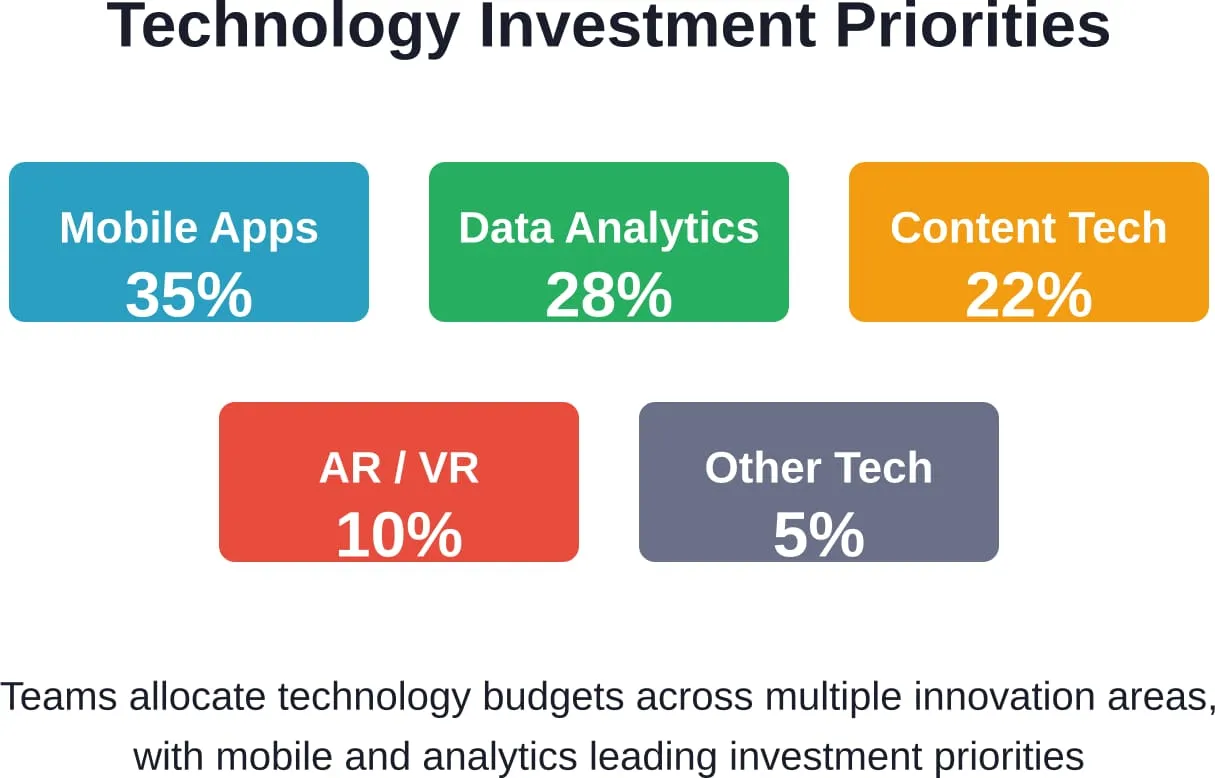
Technology innovations span multiple areas: enhanced stadium experiences through AR, advanced analytics for fan insights, mobile app improvements, and virtual reality training tools.
ScorePlay raised a $13 million funding round. The platform helps sports organizations manage and distribute visual content at scale—a growing need as content volume explodes.
Mobile-First Fan Experiences
Five years ago, during a certain global competition, 57% of watchers consumed content via a smartphone or tablet. That percentage has only grown. Considering that 74% of consumers now use mobile devices as their primary screen, mobile-first design isn’t optional.
Mobile apps serve as the central hub for fan relationships. Ticketing, concessions ordering, real-time stats, exclusive content, loyalty programs, and social features all consolidate in one place. The best apps make the stadium experience seamless while extending engagement beyond game day.
Push notifications, when used thoughtfully, keep teams top-of-mind. Breaking news, score updates, exclusive offers, and personalized messages maintain connection without overwhelming fans.
Measuring Marketing Effectiveness
What gets measured gets improved. Sports teams need clear metrics to evaluate which marketing initiatives actually drive results.
Vanity metrics like follower counts or post likes tell an incomplete story. More meaningful measurements include engagement rate, conversion rate, customer acquisition cost, lifetime fan value, and return on marketing investment.
Attribution modeling helps teams understand which touchpoints contribute to desired outcomes. Did a fan buy tickets because of a social media ad, an email campaign, or a friend’s recommendation? Multi-touch attribution provides those answers.
| Metric Category | Key Measurements | Why It Matters |
|---|---|---|
| Awareness | Reach, impressions, brand mentions | Tracks how many people know about the team |
| Engagement | Comments, shares, time spent, click rate | Measures how audiences interact with content |
| Conversion | Ticket sales, merchandise purchases, signups | Shows actual business impact |
| Retention | Season ticket renewals, repeat purchases | Indicates long-term fan loyalty |
Budget Considerations for Different Team Levels
Marketing budgets vary dramatically between professional franchises and local youth leagues. Strategies must scale appropriately.
According to Bureau of Labor Statistics data from 2025, the median annual pay for athletes and sports competitors was $62,360, while coaches and scouts earned $45,920. These employment figures provide context for the broader sports industry economics.
Professional teams can invest millions in comprehensive marketing campaigns. Minor league and semi-professional teams work with five-figure budgets. Youth sports programs often operate on shoestring budgets supplemented by volunteer efforts.
The good news? Digital marketing democratizes access. A compelling TikTok video costs nothing but creativity. Email marketing platforms offer affordable plans. Social media provides free distribution channels. Smart strategy matters more than big budgets.
High-Impact Low-Cost Marketing Tactics
Several tactics deliver disproportionate results relative to their cost. User-generated content campaigns encourage fans to create content featuring the team, generating authentic material at zero production cost.
Partnerships with complementary local businesses create cross-promotion opportunities. A team might partner with a local restaurant for a pre-game special, with both entities promoting the arrangement to their respective audiences.
Email marketing remains one of the highest-ROI channels available. Building and nurturing an email list provides a direct communication channel that teams control, unlike social media algorithms.
Community events—player appearances, autograph signings, youth clinics—generate goodwill and media coverage far beyond their modest costs.
Implementing Your Sports Marketing Strategy
Knowledge without execution accomplishes nothing. Building an effective sports marketing strategy requires planning, consistency, and willingness to adapt.
- Start by clearly defining objectives. What does success look like? More ticket sales? Higher social media engagement? Increased merchandise revenue? Specific goals enable focused strategies and measurable results.
- Understand the audience deeply. Who are the current fans? Who are potential fans? What content do they consume? Where do they spend time online? What motivates them to attend games or buy merchandise? Survey existing fans and analyze data to build detailed audience profiles.
- Create a content calendar that maintains consistent communication without overwhelming fans. Balance promotional content with entertainment and value-adding content. The best ratio is roughly 80% valuable content and 20% promotional—though this varies by platform and audience.
- Test and iterate continuously. Run small experiments with different content types, posting times, ad creative, and promotional offers. Measure results. Double down on what works. Eliminate what doesn’t. The teams that succeed are those that treat marketing as an ongoing learning process rather than a set-it-and-forget-it activity.
Real talk: sports marketing success doesn’t happen overnight. Building genuine fan relationships requires patience and persistence. But teams that commit to authentic engagement, creative thinking, and data-driven decision-making will see compounding returns over time.
The sports landscape continues evolving rapidly. What works today might need adjustment tomorrow. Stay curious. Watch what other teams are doing—in your sport and beyond. Pay attention to broader marketing trends. Listen to what fans actually want rather than assuming what they need.
The teams winning the marketing game in 2026 are those treating fans as partners in a shared experience rather than transactions to be optimized. They’re building communities, not just selling tickets. They’re creating stories, not just broadcasting highlights. They’re thinking long-term relationships, not short-term campaigns.
Whether working with a professional franchise budget or a community team shoestring, these principles apply. Start where you are. Use what you have. Focus on genuine connection. The rest follows from there.