


Quick Summary: Restoration companies can grow sustainably through strategic marketing that combines digital presence optimization, relationship-building with referral partners, and targeted local outreach. Smart restoration marketing focuses on high-profit services, leverages free tools like Google Business Profile, and builds trust through reviews and consistent community engagement rather than expensive advertising.
Restoration businesses face a unique challenge. Property owners don’t think about water damage restoration or fire cleanup until disaster strikes. When that moment comes, they’re searching frantically—and whoever shows up first in their Google search usually wins the job.
But here’s the thing: most restoration companies pour money into paid ads or third-party aggregator programs without building a sustainable marketing foundation. Those tactics drain budgets fast. Smart restoration marketing focuses on strategies that generate leads consistently without breaking the bank.
The restoration industry is essential, as recognized by the SBA, which notes that disaster cleanup and restoration businesses respond to tornadoes, hurricanes, floods, and fires that destroy homes and businesses every year. Competition is fierce, and property owners, insurance adjusters, and referral partners all turn to digital channels first.
This guide covers high-impact marketing ideas specifically for restoration companies—strategies you can implement with minimal budget but maximum effect.
Understand Your Most Profitable Services Before Marketing
Not all restoration jobs generate the same profit. Before spending a dollar on marketing, identify which services deliver the best margins.
Water damage restoration typically offers 50-80% gross margins, with larger margins on smaller jobs. Fire damage repair runs around 20-25% gross margin. Reconstruction work might only bring 10% gross margin. Content restoration provides strong margins through direct labor billing.
Sound familiar? Many restoration companies chase every lead without realizing that some job types barely cover overhead.
Focus your marketing on the services that actually grow your business. If water damage mitigation is your bread and butter, make that the centerpiece of your messaging. If you’re building a contents division, target property managers and adjusters who handle those claims.
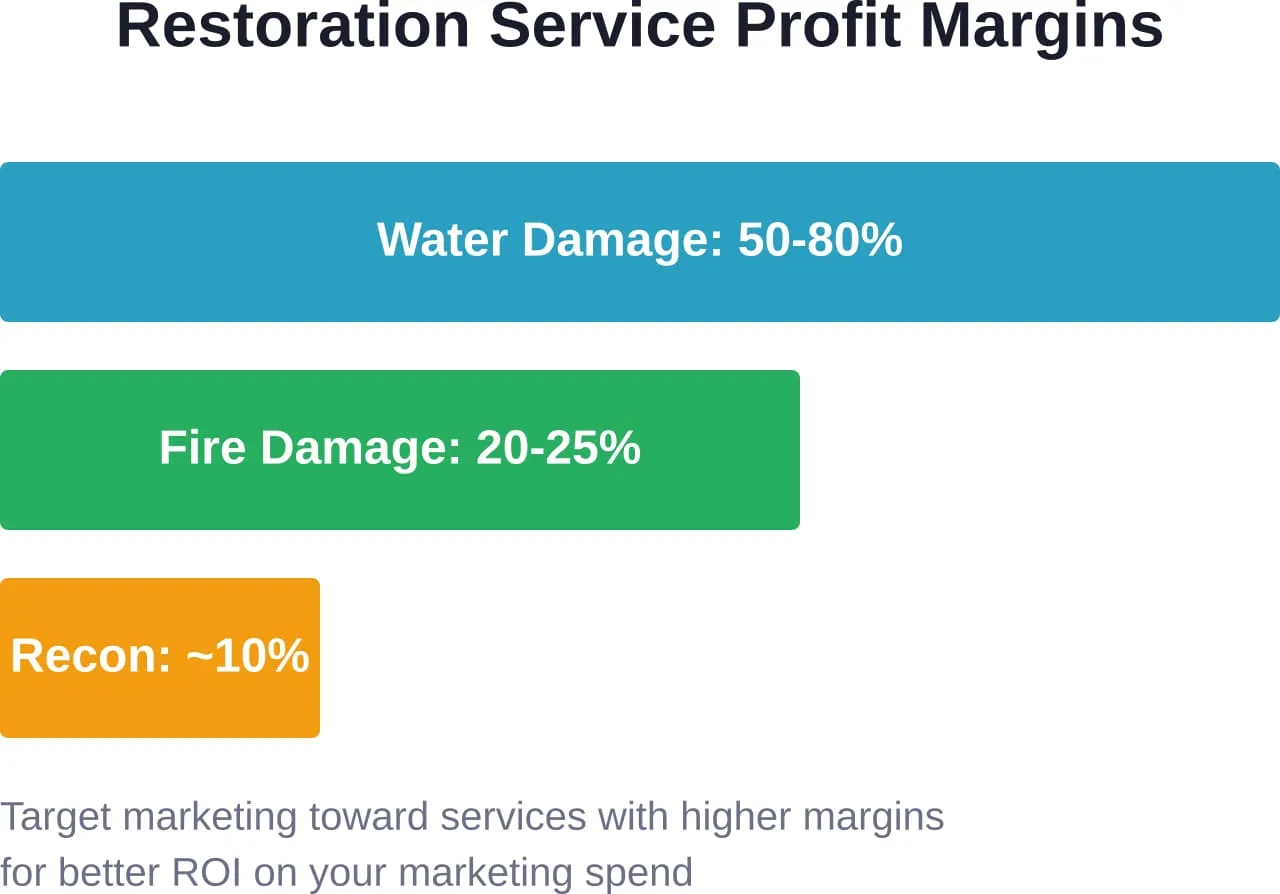
Track which marketing channels bring in which job types. If your Google ads attract low-margin reconstruction work, adjust your targeting. If insurance agent referrals deliver profitable emergency mitigation, invest more time there.
Build Your Google Business Profile Foundation
When disaster strikes, property owners grab their phones and search “water damage restoration near me” or “fire cleanup company.” Your Google Business Profile is often the first—and sometimes only—impression you make.
Yet many restoration companies treat their profile like an afterthought. That’s a mistake.
Claim and fully optimize your profile. Fill in every field: business hours, service area, phone number, website, services offered, and business description. Upload high-quality photos of your team, trucks, equipment, and completed jobs. Google prioritizes complete profiles in local search results.
Post weekly updates. Share before-and-after photos, quick tips for preventing water damage, or announcements about 24/7 emergency availability. These posts signal to Google that your business is active, which boosts local rankings.
But wait. The most critical element is reviews.
Encourage every satisfied customer to leave a Google review. Send a follow-up email or text after job completion with a direct link to your review page. Strong Google review ratings and volume improve local search visibility for restoration businesses.
Respond to every review—positive and negative. Thank customers for their feedback and address concerns professionally. This shows potential customers that you care about service quality.
Create a Website That Converts Emergency Calls
Your website has one job: turn panicked property owners into phone calls.
Most restoration company websites fail at this. They’re cluttered with stock photos, vague service descriptions, and buried contact information. When someone’s basement is flooding at 2 AM, they won’t navigate a confusing menu.
Keep it simple. Your homepage should immediately communicate three things: what services you offer, where you serve, and how to contact you right now. Put your phone number in large, clickable text at the top of every page.
Create dedicated pages for each core service: water damage restoration, fire damage cleanup, mold remediation, storm damage repair. Each page should include:
- Clear description of the problem and your solution
- Your response time and service area
- Customer testimonials specific to that service
- Multiple contact options (phone, form, chat)
- Photos of your work and IICRC certifications
Optimize for local search. Include your city and service area throughout your content naturally. If you serve multiple counties, create location-specific pages that speak to each community.
Make sure your site loads fast on mobile devices. Property owners searching during emergencies are almost always on phones. A slow, desktop-only site loses leads immediately.
Leverage Referral Networks That Insurance Agents Trust
Real talk: the most profitable restoration companies don’t rely on Google ads. They build relationships with insurance agents, property managers, and plumbers who send them steady work.
According to industry reports, restoration businesses with strong agent relationships see high return rates from networking events. That’s not coincidence—it’s relationship marketing:
- Start with insurance agents in your area: They handle claims constantly and need reliable restoration contractors they can recommend to policyholders. Introduce yourself, explain your services and response times, and offer to be their go-to emergency contact.
- Host quarterly lunches or coffee meetings: Keep it casual—no hard sales pitch. Share industry updates, discuss local weather patterns, or bring in a speaker to talk about fraud prevention. The goal is staying top-of-mind.
- Partner with complementary businesses: Plumbers discover water damage during service calls. Roofers find storm damage. HVAC technicians spot mold. Build reciprocal referral relationships where you send them business too.
- Join local business groups and chambers of commerce: Attend networking events consistently—not to collect business cards, but to build genuine relationships. People refer work to restoration companies they know and trust.
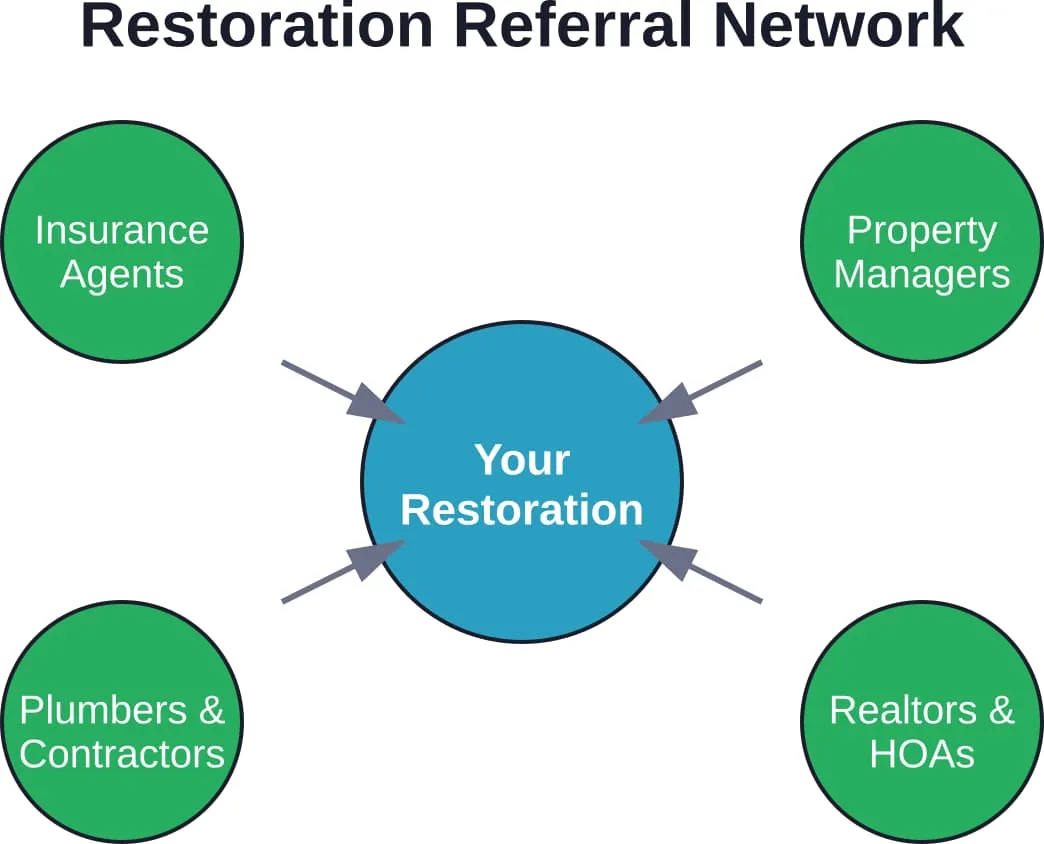
Create a simple referral tracking system. When a new lead calls, ask how they heard about you. Track which agents, property managers, or partners send the most work. Send thank-you notes and small gifts to top referrers quarterly.
Dominate Local Search with Content Marketing
Most restoration companies ignore content marketing. That’s your opportunity.
Create blog posts and resources that answer questions property owners are actually searching for. These don’t need to be long—400 to 600 words works fine. The goal is ranking for local, long-tail searches that competitors miss.
Target topics like:
- “How to handle basement flooding in [Your City]”
- “What to do immediately after fire damage”
- “Average cost of water damage restoration in [Your County]”
- “How to prevent mold after a flood”
- “Storm damage insurance claims: a homeowner’s guide”
Each post should include your location naturally, link to your service pages, and end with a clear call to action. Publish one new post every two weeks—consistency matters more than volume.
Repurpose content across channels. Turn a blog post into a Facebook video, an Instagram carousel, or an email newsletter. One piece of content can feed multiple marketing channels.
Community discussions suggest that local content helps restoration companies appear for “near me” searches when disasters strike. When a storm hits your area, a blog post about storm damage restoration in your specific town can jump to page one within hours.
Use Email Marketing to Stay Top of Mind
Email marketing is one of the most underutilized tools in restoration marketing. Here’s why it works: property owners who used you once might need you again—or know someone who does.
Build an email list from every customer, quote request, and event attendee. Send a monthly newsletter with:
- Seasonal tips (preventing frozen pipes in winter, storm prep in spring)
- Recent success stories and before-after photos
- Special offers for past customers (priority scheduling, multi-service discounts)
- Company updates and team introductions
Keep emails short and valuable. Most people scan—not read—so use clear headlines, bullet points, and a single clear call to action.
Segment your list. Send different messages to residential versus commercial clients. Past customers get reactivation offers. Referral partners get industry news and partnership appreciation.
Set up automated follow-up sequences. When someone requests a quote but doesn’t book, send three follow-up emails over two weeks: a helpful resource, a customer testimonial, and a final “can we help?” message. Many leads book on the third or fourth touchpoint.
Master Social Media Without Wasting Time
Social media for restoration companies isn’t about going viral. It’s about local visibility and trust-building.
Pick one or two platforms where your customers spend time. For residential restoration, Facebook dominates. For commercial work, LinkedIn works better. Don’t spread yourself thin trying to maintain five profiles.
Post consistently but realistically. Three posts per week is plenty. Share:
- Job progress photos and before-after transformations
- Team spotlights and behind-the-scenes content
- Quick tips and preventative advice
- Customer testimonials and reviews
- Emergency availability reminders during storm season
Instagram can be effective for showcasing restoration work visually. Post photos of completed jobs with brief descriptions. Use local hashtags like #YourCityRestoration or #YourCountyWaterDamage to reach nearby property owners.
Engage with your community. Comment on local business posts. Share content from partners. Join local Facebook groups (without spamming) and offer helpful advice when people ask about water damage or storm cleanup.
Run occasional hyper-local ads during peak seasons. A $100 Facebook ad budget targeted to a 15-mile radius promoting 24/7 emergency service can generate calls during storm season. Keep the creative simple: your truck, your phone number, your response time.
Get More Restoration Leads With Lengreo
Marketing ideas for restoration companies should help turn urgent service demand into real inquiries and follow-up opportunities. Lengreo can help restoration businesses make their marketing more structured, targeted, and connected to lead generation.
Lengreo can support restoration marketing through:
- SEO and content marketing
- PPC campaigns for relevant traffic
- B2B lead generation
- Prospect research and outreach
- LinkedIn and email outreach
- Appointment setting with qualified leads
👉Reach out to Lengreo to get more qualified leads for your restoration company.
Track What Actually Works
The biggest mistake restoration companies make? Not tracking where leads come from.
Set up simple lead tracking. When someone calls, your team should ask: “How did you hear about us?” Record the answer in your CRM or a spreadsheet. Track everything—Google, referral name, Facebook, yard sign, whatever they say.
Review your numbers monthly. Which channels generate the most leads? Which sources bring the highest-profit jobs? Which cost the most per lead?
Look at the pattern. If Google generates 40% of your leads, invest time improving your search presence. If agent referrals bring the most profitable work, allocate more time to relationship building.
Set clear goals tied to business objectives. Don’t just track “website traffic.” Track leads, booked jobs, and revenue by marketing channel. If a strategy isn’t generating profitable work within 90 days, adjust or cut it.
| Marketing Channel | Time Investment | Cost | Best For |
|---|---|---|---|
| Google Business Profile | 2 hours/month | Free | Emergency local leads |
| Referral networking | 6 hours/month | Low (events, meals) | Consistent quality work |
| Website SEO & content | 4 hours/month | Low | Long-term organic traffic |
| Email marketing | 2 hours/month | Free to low | Repeat and referral business |
| Social media organic | 3 hours/week | Free | Brand awareness, trust |
| Paid search ads | 1 hour/week | High | Immediate lead volume |
Treat your time as a resource. Many restoration experts recommend focusing on activities with the highest return. If you’re spending ten hours a week on social media but getting zero leads, reallocate that time to networking or Google optimization.
Certification and Trust Signals Matter
Property owners facing disaster want to hire someone qualified. Insurance adjusters require it. IICRC certifications serve as internationally recognized, ANSI-accredited guidelines that define best practices for inspection, cleaning, and restoration work.
Display your certifications prominently. Put IICRC logos on your website homepage, trucks, business cards, and proposals. List specific certifications like Water Damage Restoration Technician (WRT) or Applied Structural Drying (ASD).
Become an IICRC Certified Firm. This designation signals to adjusters and property owners that your company meets industry standards. It opens doors to insurance referral networks and commercial contracts that require certified vendors.
Highlight insurance relationships. If you’re on preferred vendor lists, mention it. If you work directly with major carriers, say so. These trust signals convert leads faster than any marketing copy.
Showcase any awards or recognition. “Voted Best Restoration Company in [Your County]” or “Top-rated on Google” badges build instant credibility.
Focus on High-Impact Activities
Look, restoration companies don’t need complex marketing strategies. They need to do a few things exceptionally well.
Start here:
- Optimize your Google Business Profile and collect reviews religiously
- Build one meaningful relationship with a referral partner per month
- Make your website mobile-friendly and conversion-focused
- Send one valuable email to your list monthly
- Post three times weekly on one social platform
- Track every lead source and review numbers monthly
Master these basics before chasing trendy tactics. A restoration company that excels at Google local search and has strong agent relationships will outperform competitors spending thousands on paid ads with weak fundamentals.
Consistency beats intensity. Better to post three quality social updates weekly for a year than to post twice daily for two months and burn out.
Taking Action on Your Restoration Marketing
The restoration companies that grow aren’t necessarily the ones with the biggest budgets. They’re the ones that implement consistently and focus on what actually generates profitable work.
Start with the fundamentals: optimize your Google Business Profile, build a simple but effective website, and start one meaningful referral relationship this month. These three activities cost almost nothing but generate results for years.
Then layer in content, email, and social media as capacity allows. Marketing isn’t about doing everything—it’s about doing the right things well.
The next property owner facing disaster is searching right now. Will they find you?