


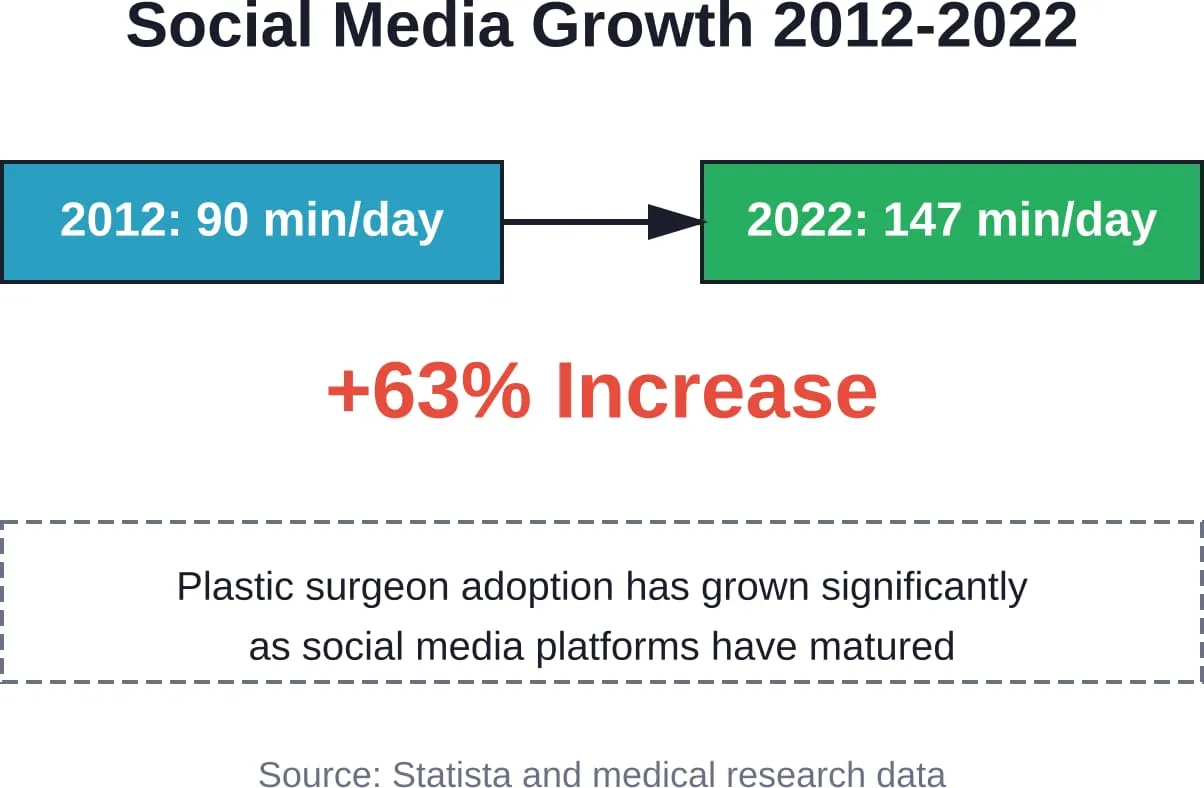
Quick Summary: Plastic surgeons can attract more patients through strategic digital marketing that combines compliant social media engagement, authoritative content marketing, local SEO optimization, and patient-focused website design. According to medical research, average daily social media usage increased from 90 minutes in 2012 to 147 minutes in 2022, making digital channels essential for practice growth while maintaining professional standards required by organizations like ASPS and FTC regulations.
The competitive landscape for plastic surgery practices has shifted dramatically. Traditional referral networks still matter, but the majority of prospective patients now begin their journey with a Google search or Instagram scroll before ever picking up the phone.
Marketing a plastic surgery practice isn’t just about visibility anymore. It’s about building trust in a field where patients make deeply personal decisions about their bodies and appearance. The stakes are high, and the regulations are strict.
Here’s the thing though—effective marketing for plastic surgeons requires balancing patient education, regulatory compliance, and strategic promotion across multiple channels. The surgeons who master this balance consistently fill their consultation calendars with qualified leads.
Understanding the Regulatory Landscape Before Marketing
Before implementing any marketing strategy, plastic surgeons must understand the compliance framework that governs medical advertising. The Federal Trade Commission requires that all advertising must be truthful, non-deceptive, and backed by evidence.
The American Society of Plastic Surgeons maintains specific advertising policies. Advertisements must offer reputable products and services while maintaining professional standards. ASPS reserves the right to accept or reject advertisements and requires that they not be deceptive or misleading.
Social media presents unique challenges. According to ASPS guidance, physicians using platforms like Facebook and Instagram must maintain professional standards appropriate for medical practitioners while engaging in marketing activities. Patient privacy, accurate representation of results, and honest claims about procedures all fall under scrutiny.
The FTC’s endorsement guides add another layer. When patients share testimonials or influencers promote services, disclosures become mandatory. Material connections between endorsers and practices must be clearly stated, even for products or services worth only a few dollars.
Social Media Strategy That Builds Trust and Engagement
Social media has become the primary discovery channel for cosmetic procedures. As platforms have matured, adoption among plastic surgeons has grown substantially from early adoption phases.
The average internet user now spends 147 minutes per day on social media platforms, according to Statista data cited in peer-reviewed medical research. That’s nearly two and a half hours of daily attention plastic surgeons can potentially capture through strategic content.
Platform Selection and Audience Targeting
Not all social platforms deliver equal value for plastic surgery practices. Instagram and Facebook remain dominant for visual before-and-after content, while TikTok has emerged for educational short-form video. LinkedIn serves better for professional networking and referral relationship building.
Platform choice should align with patient demographics. Younger patients seeking non-invasive procedures often discover practices through TikTok or Instagram Reels. Patients considering major surgical procedures typically research more extensively across multiple platforms before deciding.
Content That Educates Without Overpromising
Successful social media content for plastic surgeons walks a fine line between showcasing expertise and maintaining realistic expectations. Educational content about procedure details, recovery timelines, and candidacy requirements builds authority while filtering for qualified leads.
Patient stories—with proper consent and HIPAA compliance—humanize the practice. But wait. These testimonials must include appropriate disclaimers about individual results varying. The FTC closely monitors health and safety claims in medical advertising.
Behind-the-scenes content showing practice culture, staff introductions, and facility tours creates familiarity before the first consultation. Prospective patients want to know who they’ll entrust with their appearance and safety.
Paid Social Advertising for Qualified Lead Generation
Organic reach on social platforms has declined as algorithms prioritize paid content. Plastic surgery practices willing to invest in targeted advertising gain significant advantages in patient acquisition.
Facebook and Instagram ads allow precise demographic and interest targeting. Campaigns can focus on specific procedures, geographic areas, age ranges, and even life events that correlate with procedure interest. The key is matching ad creative to the awareness stage—educational content for cold audiences, promotional offers for warm prospects.
Retargeting campaigns capture website visitors who didn’t convert initially. These campaigns typically deliver higher conversion rates because they target people already familiar with the practice.
Website Optimization as the Marketing Foundation
Every marketing channel ultimately drives traffic to the practice website. A poorly designed or slow-loading site sabotages even the best social media and advertising campaigns.
The practice website serves multiple functions simultaneously: educational resource, credibility builder, lead capture mechanism, and conversion tool. Each function requires deliberate design and content decisions.
Technical Performance and Mobile Optimization
Page load speed directly impacts conversion rates. Research consistently shows that delays of even a few seconds increase bounce rates substantially. For medical practices where patients carefully evaluate options, technical performance signals overall quality and attention to detail.
Mobile optimization isn’t optional. The majority of initial searches for plastic surgery services happen on smartphones. Websites that don’t render properly on mobile devices lose patients before any substantive evaluation occurs.
Content Architecture for Patient Journey Mapping
Website structure should mirror the patient decision journey. Top-level navigation typically includes procedure categories, about the surgeon, before-and-after galleries, patient resources, and contact options.
Each procedure page needs comprehensive information: what the procedure involves, ideal candidates, expected results, recovery timeline, risks and limitations, and pricing transparency where appropriate. Thin content pages don’t build confidence or rank well in search engines.
Trust signals throughout the site reinforce credibility. Board certifications, professional memberships, years of experience, patient testimonials with photos, and safety protocols all contribute to perceived expertise and reliability.
Conversion Rate Optimization Elements
Clear calls-to-action guide visitors toward scheduling consultations. Strategic placement of contact forms, click-to-call buttons, and chat options reduces friction in the conversion process.
Forms should request only essential information initially. Asking for excessive details upfront increases abandonment. Name, contact method, and procedure interest suffice for first contact—detailed medical history comes during the actual consultation.
Virtual consultation options have become table stakes. Patients appreciate the convenience of initial video meetings, especially when considering multiple practices or traveling for procedures.
Content Marketing for Authority Building and SEO
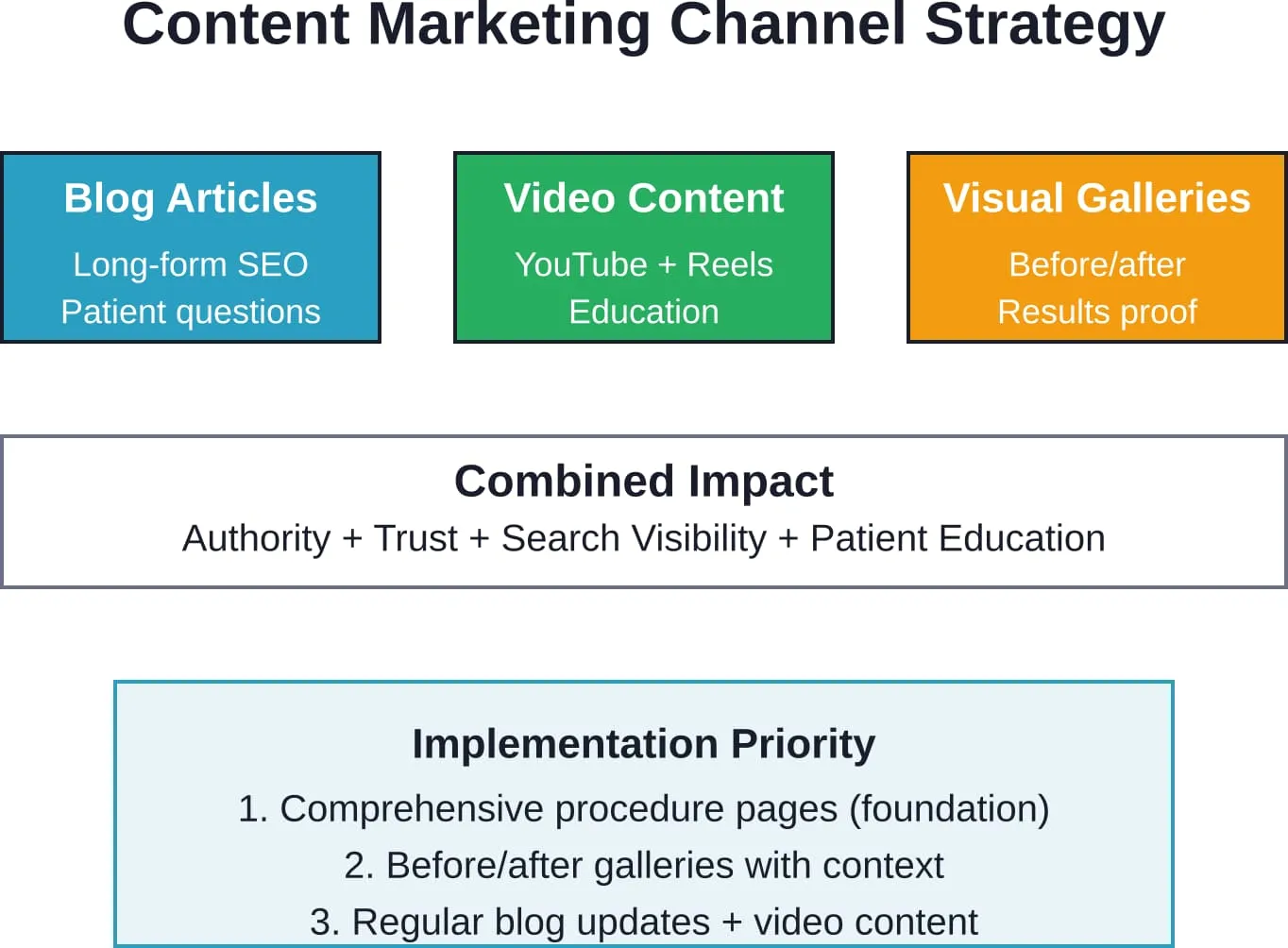
Content marketing serves dual purposes for plastic surgery practices: educating prospective patients while improving search engine visibility for relevant queries. The practices that consistently publish high-quality content compound visibility advantages over time.
Blog Strategy Based on Patient Questions
The most effective blog topics address questions patients actually ask during consultations. Recovery concerns, cost considerations, procedure comparisons, and candidacy requirements all represent high-intent search queries.
Real talk: many practices publish generic procedure descriptions that duplicate information across countless competitor sites. Differentiation comes from addressing nuanced questions and concerns competitors overlook.
Long-form comprehensive guides typically outperform short superficial posts. Articles exceeding 2,000 words tend to rank better and provide more value to readers genuinely researching procedures.
Video Content for Procedure Education
Video content allows plastic surgeons to demonstrate expertise while building personal connection. Procedure explanations, patient testimonials, facility tours, and Q&A sessions all translate effectively to video format.
YouTube serves as the second-largest search engine and a discovery platform in its own right. Videos optimized with relevant keywords, detailed descriptions, and appropriate tags capture both YouTube and Google search traffic.
Short-form video on TikTok and Instagram Reels reaches different audiences with different consumption patterns. Quick tips, myth-busting, and procedure highlights work well in 30-60 second formats.
Before-and-After Galleries With Context
Visual results remain the most persuasive content for cosmetic procedures. However, galleries must include appropriate context, disclaimers, and realistic expectations to remain compliant and ethical.
Each image set should specify the procedure performed, time elapsed since surgery, and any additional treatments. Generic before-and-after photos without context can mislead patients about what single procedures actually achieve.
Diversity in patient examples matters. Showing results across different ages, skin types, and body types helps more prospective patients envision their potential outcomes.
Local SEO for Geographic Patient Acquisition
Most plastic surgery patients prefer practices within reasonable driving distance. Local search optimization ensures the practice appears when potential patients search for procedures in their area.
Google Business Profile Optimization
The Google Business Profile functions as a mini-website in search results and Google Maps. Complete optimization includes accurate business information, comprehensive service listings, regular posts, and active review management.
Photos significantly impact local search performance. Practices should upload high-quality images of the facility exterior and interior, staff, and consultation areas. Before-and-after photos can be included where appropriate and compliant.
Regular updates through Google Posts keep the profile active. Announcements about new procedures, special offers, educational content, and practice news all contribute to engagement signals Google uses for ranking.
Local Citation Building and Consistency
Citations—mentions of the practice name, address, and phone number on other websites—reinforce local relevance. Directories like Healthgrades, RealSelf, Vitals, and local business directories all contribute citation value.
Consistency across all citations matters more than volume alone. Variations in business name format, address abbreviations, or phone number formatting can confuse search algorithms and dilute ranking signals.
Review Generation and Management
Online reviews influence both search rankings and patient decision-making. Practices with more positive reviews typically rank higher in local search results and convert more website visitors to consultations.
Proactive review generation involves systematically requesting feedback from satisfied patients through email follow-up sequences, text message requests, or in-office prompts after successful outcomes.
Responding to reviews—both positive and negative—demonstrates engagement and professionalism. Negative reviews handled gracefully with empathy and problem-solving can actually enhance reputation more than if they’d never been addressed.
Email Marketing for Patient Retention and Referrals
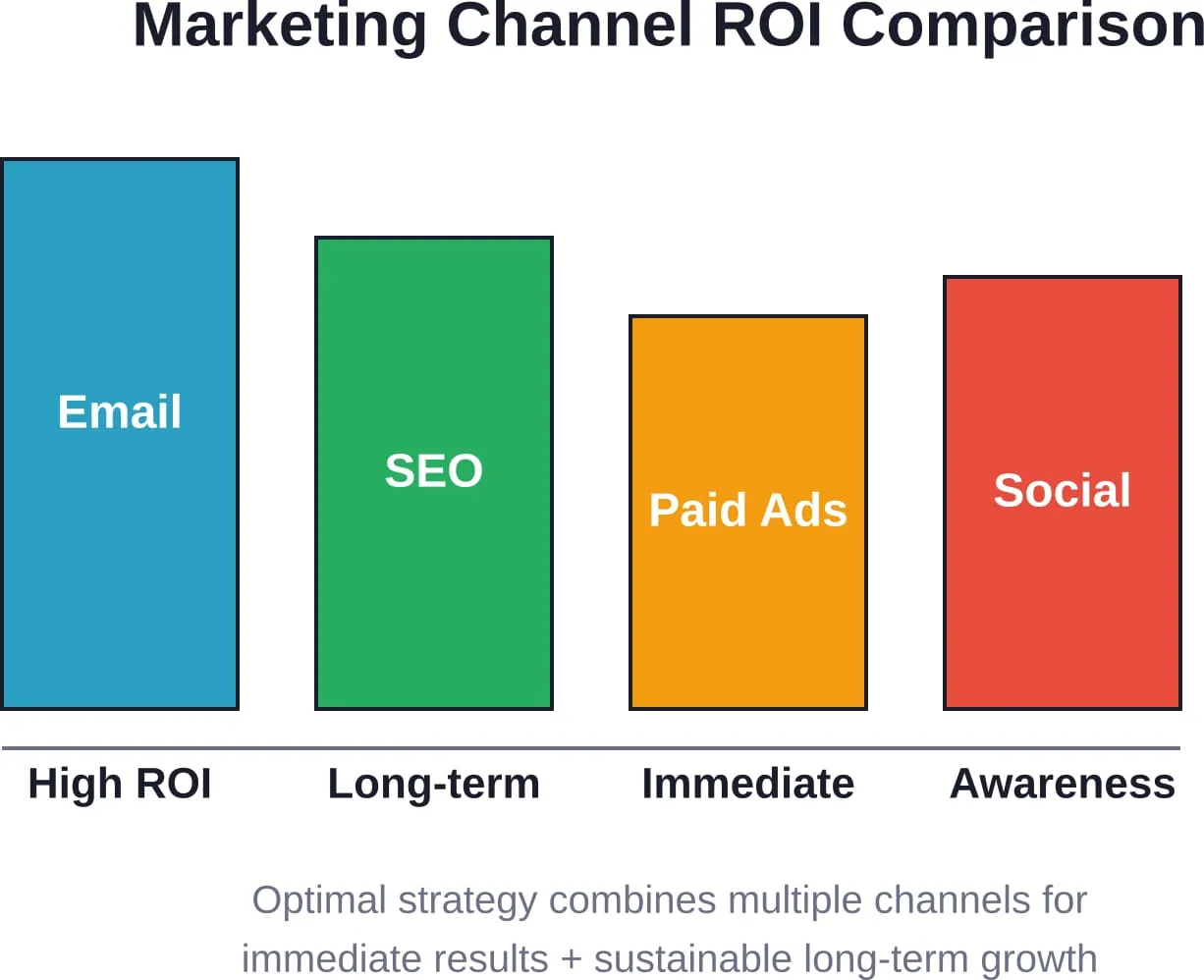
Email marketing often gets overlooked in plastic surgery marketing strategies, yet it delivers among the highest ROI of any channel. The key lies in building permission-based lists and delivering value rather than constant promotion.
Building Your Email Database
Email list growth happens through multiple touchpoints: website opt-in forms offering educational resources, consultation form submissions, post-procedure follow-up enrollment, and event registrations.
Lead magnets like procedure guides, recovery checklists, or consultation preparation resources incentivize email subscriptions. These resources position the practice as helpful and educational rather than purely transactional.
Segmentation for Relevant Messaging
Not all subscribers have identical interests. Segmenting by procedure interest, patient status (prospective vs. past patient), or engagement level allows targeted messaging that resonates better than generic broadcasts.
Past patients receive different content than prospects. Retention-focused emails might promote complementary procedures, maintenance treatments, or referral incentive programs. Prospect emails focus more on education and overcoming decision barriers.
Campaign Types That Drive Results
Educational newsletters position the surgeon as a trusted authority. Procedure spotlights, technique innovations, safety updates, and myth-busting content all provide value beyond promotion.
Promotional campaigns around seasonal opportunities work well in plastic surgery. Pre-summer body contouring, holiday rejuvenation packages, or resolution-driven transformation campaigns align marketing with natural decision timing.
Automated sequences nurture leads over time. A prospect who downloads a breast augmentation guide might receive a multi-email sequence covering candidacy, procedure options, recovery expectations, and financing—spread over several weeks rather than overwhelming them immediately.
Paid Advertising for Accelerated Lead Generation
Organic marketing builds sustainable long-term results, but paid advertising accelerates patient acquisition while organic efforts mature. Strategic paid campaigns generate qualified leads within days rather than months.
Google Ads for High-Intent Searches
Search ads capture patients actively looking for specific procedures. Someone searching “rhinoplasty surgeon near me” or “best tummy tuck doctor in [city]” demonstrates high intent and readiness to schedule consultations.
Ad copy must balance compelling hooks with accurate representations. Health and safety advertising receives extra scrutiny from Google and regulators. Claims must be substantiated, and results disclaimers should be included where appropriate.
Landing pages specifically designed for ad traffic convert better than sending all clicks to the homepage. Dedicated landing pages match ad messaging, eliminate navigation distractions, and focus entirely on conversion.
Display and Remarketing Campaigns
Display advertising builds awareness among audiences who haven’t actively searched for procedures yet. Demographic and interest targeting allows reaching people likely to be interested based on their online behavior.
Remarketing campaigns target people who’ve already visited the practice website but didn’t convert. These campaigns typically achieve lower cost-per-acquisition because they focus on warm audiences already familiar with the practice.
Social Media Advertising Integration
Facebook and Instagram ads complement search advertising by reaching patients earlier in their consideration journey. Visual formats showcase results while educational content builds trust before patients actively search for surgeons.
Lead generation ads with built-in forms reduce friction by allowing consultation requests without leaving the social platform. Lower friction typically means higher conversion rates, though lead quality may vary more than search ad leads.
| Advertising Channel | Best For | Patient Intent Level | Primary Advantage |
|---|---|---|---|
| Google Search Ads | Immediate lead generation | High – active searchers | Captures bottom-funnel demand |
| Facebook/Instagram Ads | Awareness and consideration | Medium – browsing audiences | Visual storytelling and targeting |
| Display Remarketing | Converting past visitors | Medium-high – prior awareness | Lower CPA for warm audiences |
| YouTube Ads | Procedure education | Low-medium – research phase | Video format for complex topics |
Get More Plastic Surgery Leads With Lengreo
Marketing ideas for plastic surgeons should help potential patients or business contacts find the right service and take the next step with confidence. Lengreo can help plastic surgery practices make their marketing more focused, trackable, and connected to follow-up.
Lengreo can support this through:
- SEO and content marketing
- PPC campaigns
- Lead generation support
- LinkedIn and email outreach
- Prospect research
- Appointment setting with qualified prospects
Contact Lengreo to build a more organized lead generation process for your plastic surgery practice.
Branding and Differentiation Strategy
Technical skill alone doesn’t differentiate plastic surgeons in crowded markets. Dozens of qualified surgeons often serve the same geographic area, all offering similar procedures with comparable credentials.
Strong branding creates emotional connection and memorability beyond clinical qualifications. The practices patients remember and refer to are those with distinct personalities and clear positioning.
Identifying Your Unique Value Proposition
What makes this practice different from competitors? The answer might involve specialized techniques, particular procedure focus, exceptional patient experience, innovative technology, or the surgeon’s personal approach and philosophy.
Generic positioning as “experienced, caring, and results-focused” describes virtually every practice. Specific differentiation might be “the only surgeon in [region] fellowship-trained in microsurgical breast reconstruction” or “specializing exclusively in ethnic rhinoplasty.”
Visual Identity Beyond the Logo
Consistent visual branding across all touchpoints creates professional polish and recognition. Color schemes, typography, photography style, and design elements should remain consistent from the website through social media to physical office environments.
Photography particularly impacts perception in plastic surgery marketing. Professional images of the surgeon, staff, facility, and patients (with consent) create vastly different impressions than stock photos or low-quality smartphone snapshots.
Practice Culture as Marketing Asset
Behind-the-scenes content showcasing practice culture humanizes the experience. Staff introductions, team celebrations, community involvement, and daily operations content make the practice feel accessible and friendly rather than sterile and intimidating.
Patients choose surgeons they trust and like. Demonstrating personality, values, and the people behind the practice facilitates those emotional connections that influence final decisions.
Patient Experience as Marketing Multiplier
The best marketing amplifies excellent patient experiences. No amount of advertising compensates for poor outcomes, difficult interactions, or disappointing service.
Research published in medical journals identifies both technical quality and functional quality as critical to patient satisfaction. Technical quality describes clinical excellence—procedures done correctly. Functional quality represents the patient’s experience and perception of service delivery.
Both dimensions matter. A technically perfect procedure delivered with poor communication and care experiences won’t generate enthusiastic referrals or positive reviews.
Consultation Experience Optimization
The consultation represents the critical conversion moment. Patients evaluate not just the surgeon’s qualifications but also rapport, communication style, listening skills, and whether their concerns are genuinely addressed.
Consultation preparation materials sent in advance help patients arrive informed and ready for productive discussions. Pre-consultation questionnaires about goals, concerns, and medical history allow more focused appointment time.
Post-consultation follow-up distinguishes proactive practices from passive ones. A personalized email or call addressing any additional questions keeps the practice top-of-mind while patients make decisions.
Post-Procedure Care and Communication
Recovery support significantly impacts patient satisfaction and referral likelihood. Regular check-ins, accessible staff for questions or concerns, and proactive problem-solving create positive experiences even when minor complications arise.
Educational resources about what to expect during recovery reduce anxiety and unnecessary calls. Video instructions, written guides, and emergency contact protocols all contribute to feeling supported rather than abandoned post-procedure.
Referral Program Development
Satisfied patients represent the most credible marketing channel. Structured referral programs encourage and reward patient advocacy without pressuring or creating ethical conflicts.
Simple referral incentives like discounts on future treatments, complimentary add-on services, or product credits motivate existing patients to share their experiences with friends considering procedures.
Analytics and Performance Measurement
Marketing without measurement wastes resources. Tracking key performance indicators allows identifying what’s working, what’s not, and where to allocate budget for maximum return.
Essential Metrics for Plastic Surgery Marketing
Website traffic sources reveal which channels drive visitors. Google Analytics shows whether patients find the practice through search, social media, paid ads, or referrals—informing budget allocation decisions.
Conversion rates matter more than raw traffic. A thousand website visitors who don’t schedule consultations generate zero revenue. Tracking consultation request form submissions, phone calls, and chat conversations quantifies conversion performance.
Cost per lead and cost per patient metrics connect marketing spend to actual results. Knowing that Google Ads generates leads at $300 each while social media leads cost $150 might suggest shifting budget—but only if conversion rates to paying patients are comparable.
Call Tracking and Attribution
Phone calls remain a primary conversion path for plastic surgery practices. Call tracking systems using unique numbers for different marketing sources attribute phone conversions to specific campaigns.
Call recording and analysis reveal conversion barriers. Listening to consultation requests identifies whether front desk staff effectively handle inquiries, communicate value, and successfully schedule appointments.
Patient Lifetime Value Analysis
Not all patients deliver equal value. Some undergo single procedures while others return for multiple treatments over years and refer numerous friends.
Understanding lifetime value informs how much to invest in patient acquisition. If the average patient generates $8,000 in revenue over their relationship with the practice, spending $500-800 to acquire that patient remains profitable.
| Metric Category | Key Indicators | Why It Matters |
|---|---|---|
| Traffic Sources | Organic search, paid ads, social, referral visits | Shows which channels drive awareness |
| Conversion Rates | Form submissions, calls, chat inquiries per visitor | Measures website effectiveness at generating leads |
| Lead Quality | Consultation show rate, consultation-to-procedure rate | Distinguishes qualified from unqualified leads |
| Cost Efficiency | Cost per lead, cost per consultation, cost per patient | Determines marketing ROI and budget allocation |
| Patient Value | Average procedure value, lifetime value, referral rate | Justifies acquisition cost investments |
Compliance and Ethical Marketing Considerations
Medical advertising operates under stricter regulation than most industries. Understanding and adhering to these standards protects both patients and practices from harm.
FTC Guidelines for Health Claims
The Federal Trade Commission pays closest attention to advertising claims about health and safety. All claims must be truthful, non-deceptive, and supported by evidence. Offering money-back guarantees doesn’t substitute for substantiation—advertisers still need proof for their claims.
Testimonials and endorsements require disclosure of material connections. If a patient received free or discounted procedures in exchange for testimonials, that relationship must be clearly stated. Influencer partnerships require similar transparency.
Before-and-After Photo Standards
Patient photo galleries must be presented ethically. Photos should use consistent lighting, angles, and time frames for fair comparison. Digital alteration beyond normal color correction misrepresents actual results.
Disclaimers that results vary and aren’t guaranteed should accompany visual results. Atypical or unusually positive outcomes should be identified as such rather than implied as standard expectations.
HIPAA Compliance in Marketing
Patient privacy regulations restrict how medical practices use patient information in marketing. Photographs, testimonials, and case studies all require explicit written consent specifically for marketing purposes.
Social media posting about patients, even without identifying information, can violate HIPAA if details allow identification. Staff training on privacy standards prevents well-intentioned but non-compliant marketing.
Building Your Marketing Strategy: Next Steps
Effective marketing for plastic surgery practices isn’t about implementing every possible tactic simultaneously. That approach spreads resources too thin and prevents any channel from reaching its potential.
Start with foundational elements: a high-performing website optimized for conversions, Google Business Profile fully completed and optimized, and basic review generation from satisfied patients. These elements cost relatively little but create the infrastructure all other marketing builds upon.
Layer in content marketing through consistent blogging and social media presence. Both require ongoing effort but compound value over time as content accumulates and search visibility grows.
Add paid advertising strategically based on practice goals and budget. Practices seeking rapid growth invest more heavily in paid channels. Established practices with strong referral networks might allocate less to paid advertising and more to patient retention and experience optimization.
The practices that win in competitive markets are those that commit to consistent execution over time rather than sporadic bursts of marketing activity. Patient acquisition is a marathon, not a sprint.
Track results rigorously. Double down on channels and tactics that deliver qualified patients at an acceptable cost. Eliminate or reduce spending on activities that don’t move key metrics.
Consider whether internal team capacity and expertise match marketing needs or whether partnering with specialized agencies makes sense. Medical marketing agencies understand compliance requirements and have tested playbooks, but come at higher cost than in-house execution.
The competitive advantage goes to practices that market strategically, consistently, and ethically—building trust with prospective patients while maintaining the professional standards the medical field demands.
Ready to transform practice patient acquisition? Start by auditing current marketing presence—website performance, search visibility, social media engagement, and review profiles. Identify the biggest gaps between where the practice is and where it needs to be. Then build a 90-day action plan focusing on the 2-3 channels most likely to drive results for the specific practice and market.