


Quick Summary: Pharmaceutical marketing in 2026 requires a strategic blend of digital innovation, regulatory compliance, and personalized engagement. Effective strategies include omnichannel approaches targeting healthcare professionals, AI-driven personalization, content marketing focused on clinical evidence, and patient-centric campaigns that balance transparency with strict FDA and EMA guidelines while leveraging data analytics to optimize campaign performance.
Pharmaceutical marketing operates in a space where clinical precision meets regulatory scrutiny. Unlike consumer goods, every claim must be backed by approved labeling, every advertisement scrutinized for fair balance, and every touchpoint designed to serve both healthcare professionals and patients.
The global pharmaceutical industry reached $1.77 trillion in 2025, yet many companies still lean on outdated promotional methods. The challenge isn’t just scale—it’s navigating a dual audience with conflicting needs while adhering to evolving regulations.
This guide breaks down actionable marketing ideas for pharmaceutical products that work in 2026. From omnichannel HCP engagement to AI-powered personalization, compliant social campaigns to point-of-care advertising, these strategies reflect what’s actually moving the needle.
Understanding the Pharmaceutical Marketing Landscape
Pharmaceutical marketing has always been separated by uniquely important factors: precision, heavy regulation, and deep roots in science, with pharma marketers operating across two distinct yet interconnected worlds—healthcare professionals seeking evidence-based information and patients whose expectations are shaped by digital platforms.
In September 2025, FDA announced sweeping reforms to rein in misleading direct-to-consumer pharmaceutical advertisements, sending notice to thousands of pharmaceutical companies and issuing over 100 enforcement letters for deceptive advertising, highlighting concerns regarding lack of fair balance between drug benefits and risks.
But regulations aren’t the only pressure point. The pharmaceutical landscape is evolving faster than ever, and by 2026, marketing teams face both unprecedented challenges and opportunities. HCPs have become more selective about engagement—industry data shows that 50% of HCPs limit access to just three or fewer companies.
Build Pharma Product Marketing With Lengreo
Lengreo helps companies connect SEO, paid ads, website development, lead generation, appointment setting, demand generation, and content marketing into one working setup. For pharmaceutical products, this can help organize product pages, educational content, search visibility, campaign traffic, and inquiry paths more clearly.
Need a Clearer Product Marketing Setup?
Lengreo can help with:
- improving website and product pages
- setting up SEO and paid traffic campaigns
- tracking inquiries and campaign performance
- supporting content and demand generation
👉 Contact Lengreo to discuss your marketing setup.
Strategic Framework: The Four Pillars
Successful pharmaceutical marketing in 2026 rests on four core pillars that balance innovation with compliance.
Compliance-First Mindset
Every marketing initiative must start with regulatory adherence. The FDA in the U.S. and the EMA in the EU oversee how pharmaceutical products can be described and promoted, with claims scientifically substantiated, risk information clearly presented alongside benefits, and promotional materials undergoing multiple layers of medical, legal, and regulatory review.
Drug companies spend up to 25% of their budget on marketing and promotion. With that investment comes scrutiny. According to FDA data, many top-selling drug advertisements fail to adhere to FDA fair balance guidelines, and many pharmaceutical social media posts highlight drug benefits while fewer adequately mention potential harms.
Evidence-Based Communication
Marketing must support every claim with approved labeling and data, avoiding misleading content and maintaining fair balance under 21 CFR 202.1. Analytical, data-driven communications are highly appreciated by HCPs, underscoring the importance of incorporating robust data analytics into marketing strategies.
Omnichannel Integration
Omnichannel marketing is no longer optional but the default approach for 2026, as patients and providers expect seamless communication across email, mobile apps, social platforms, and in-person interactions. Data shows that biopharma companies can enhance promotional effectiveness through synchronization of sales and marketing efforts.
Personalization at Scale
AI can segment audiences more effectively than traditional demographics, and by 2026, algorithms anticipate patient needs and predict provider prescribing patterns with high accuracy. Yet many HCPs report receiving generic, impersonal communications, with a minority feeling personally engaged.
Marketing Ideas for Healthcare Professional Engagement
HCPs remain the gatekeepers of pharmaceutical adoption. Modern engagement strategies must respect their time constraints while delivering genuine clinical value.
1. Workflow-Integrated Content
Physicians operate in high-interruption environments. Initial seconds determine whether engagement continues, making HCP workflow marketing a strategy that designs content around real clinical workflows.
Physicians and other HCPs increasingly favor short-form, easily digestible content that fits into their clinical workflow, with long whitepapers and PDF slide decks remaining valuable only when supplemented by bite-size summaries, videos, or interactive tools.
Practical approaches include mechanism-of-action animations under 90 seconds, treatment comparison charts accessible via QR codes, and modular educational modules that physicians can pause and resume without losing context.
2. AI-Powered Personalization
Many pharma respondents plan to increase social media investment for HCP engagement, with significant interest in AI-driven advanced analytics for personalized clinician interactions.
AI tools can identify which physicians are likely to prescribe specific therapies based on patient demographics, prescribing history, and clinical interests. AI tools might flag when a patient is likely to discontinue a GLP-1 receptor agonist like Ozempic, allowing marketers to deploy adherence-focused content proactively.
3. Key Opinion Leader (KOL) Programs
Key opinion leaders play an essential role in shaping perceptions and opinions about pharmaceutical products, with leveraging KOL influence enhancing pharmaceutical companies’ credibility and reach within the medical community.
Effective KOL programs in 2026 go beyond speaker bureaus. They include co-created educational content, peer-to-peer webinar series, and advisory boards that genuinely shape product development and market access strategies.
4. Continuing Medical Education (CME) Sponsorships
CME builds credibility through unbiased education. Industry data reveals that pharmacists want continuing education content on medications, creating a powerful opportunity for brand education that supports both providers and patients.
The most effective CME initiatives focus on disease state education rather than product promotion, establishing pharmaceutical companies as trusted scientific partners.
Patient-Centric Marketing Strategies
Direct patient engagement has become increasingly sophisticated, with pharmaceutical companies building relationships that extend beyond awareness into ongoing support.
5. Point-of-Care Advertising
In-store wellness board advertising delivers strong ad recall and lift in purchase intent, consistently outperforming traditional broadcast benchmarks. In-store pharmacy advertising reaches patients at the point of care, when they’re already in a health mindset.
This channel works because it captures patient attention during healthcare decision moments. Pharmacies serve over 300 million patients annually in the U.S., making them high-value touchpoints for pharmaceutical brands.
6. Digital Patient Support Programs
When a pharmacy sends a late refill reminder, a portion of non-adherent patients return to therapy. Modern patient support extends beyond simple reminders to include HCP locator tools, patient assistance programs, and digital health platforms.
Patients are increasingly comfortable receiving prescription-related communications from pharmacists, and pharmacies remain one of the most trusted points of care in the U.S. This trust creates compliant, patient-supported foundations for outreach.
7. Content Marketing That Educates
Content marketing in pharma has become more scientific, credible, and patient-focused, with companies investing in clinical explainer videos, mechanism-of-action animations, digital symposiums, white papers, e-books, expert interviews, and interactive case studies.
Instead of promoting products directly, the emphasis is on building trust through education. High-quality content positions pharmaceutical companies as expert partners rather than simply product vendors.
8. Social Media With Regulatory Guardrails
Social media for pharmaceutical marketing requires careful navigation. Regulators expect clear risk disclosures and balanced messaging, yet many campaigns still fall short, leading to warning letters and fines.
Successful social campaigns focus on disease awareness rather than product promotion, use patient stories that comply with testimonial regulations, and ensure every claim is substantiated with approved labeling. In 2026, the FDA requires influencer partnerships to disclose all financial relationships clearly, and all influencer content must undergo validated medical review.
| Channel | Primary Audience | Key Metric | Compliance Requirement |
|---|---|---|---|
| CME Sponsorship | HCPs | Prescribing behavior change | Unbiased, non-promotional |
| Pharmacy Advertising | Patients | Purchase intent lift | Fair balance, risk disclosure |
| Social Media | Patients | Engagement rate | Full disclosure, MLR review |
| E-detailing | HCPs | Time spent, follow-up requests | Approved claims only |
| Patient Support Apps | Patients | Adherence rate | HIPAA compliance, data privacy |
Emerging Technologies Reshaping Pharma Marketing
Technology adoption in pharmaceutical marketing accelerated dramatically, creating new opportunities for engagement and measurement.
9. Virtual and Augmented Reality Experiences
Biogen launched the first multi-user virtual reality experience in the pharmaceutical industry, designed to help HCPs better understand complex neurological diseases. Up to four participants can explore interactive VR missions that visualize how diseases affect the nervous system. The VR installation significantly increased engagement and became a clear example of how immersive technology can turn scientific complexity into an accessible, memorable experience for HCPs.
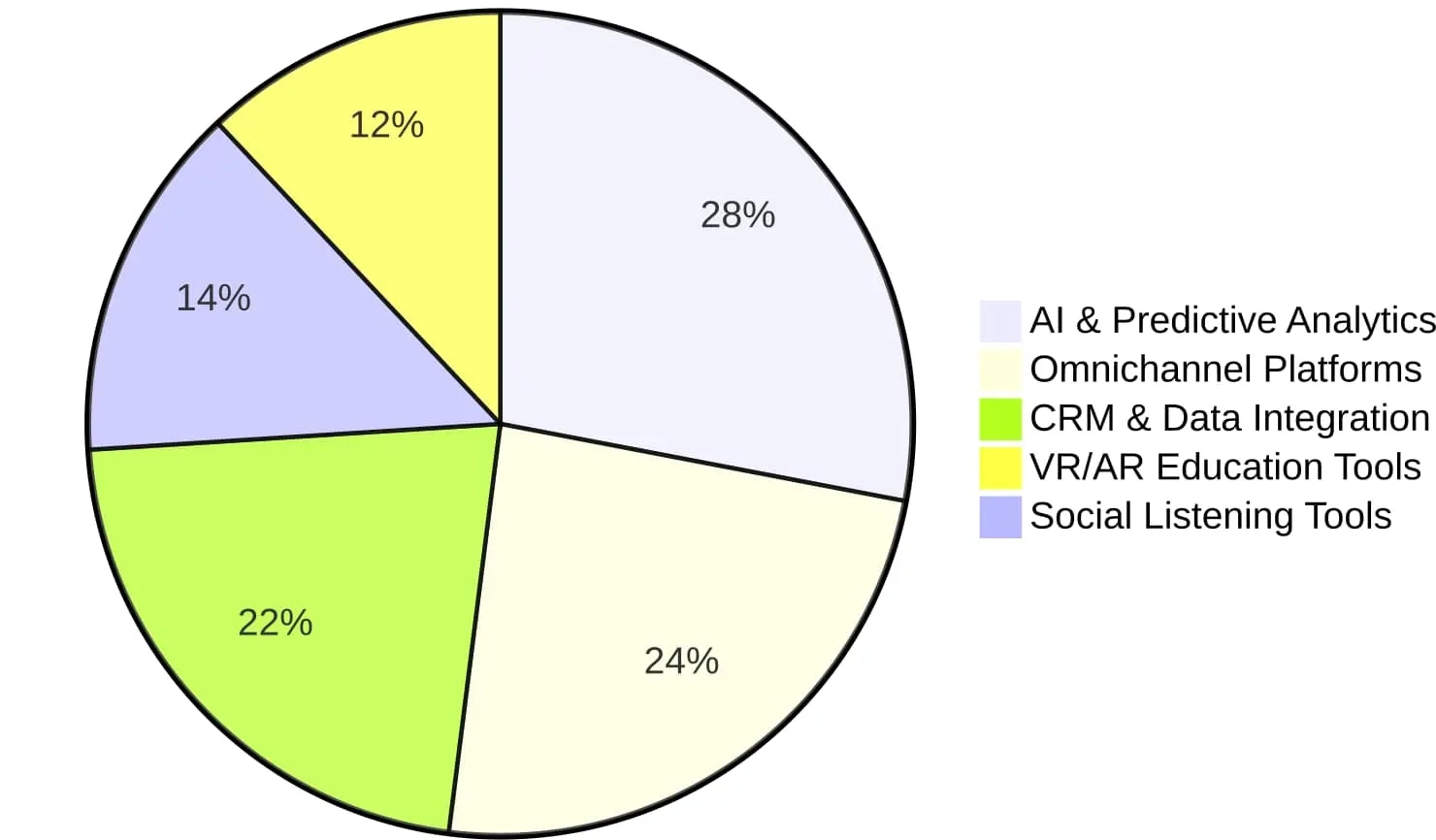
10. Predictive Analytics for Campaign Optimization
Artificial intelligence powers the next generation of pharma marketing strategies, with predictive analytics, natural language processing, and real-time campaign optimization shifting how brands engage their audiences.
Pharmaceutical companies using unified data platforms can cut attribution reporting time significantly and reallocate budgets to highest-ROI channels within the first quarter. Measurement infrastructure is where most HCP marketing strategies fail, with campaign data living in fragmented systems—ad platforms, CRM, speaker bureau databases, conference registration lists, and prescription data feeds—making it impossible to answer basic questions without unified views.
11. Omnichannel Orchestration Platforms
The primary strategic focus for 2026 shifts from omnichannel strategy to omnichannel orchestration, with successful companies able to visualize the comprehensive work graph, encompassing products, SKUs, markets, tasks, and responsible parties across all systems.
These platforms unify fragmented touchpoints into coherent patient and provider journeys, ensuring consistent messaging across rep visits, emails, webinars, and digital ads.
Real-World Evidence in Marketing Strategy
Guidehouse suggests pharma brands that can use real-world insights to inform strategy and demonstrate sustainable value will be better positioned to win in the market.
Most pharma companies have incomplete data, and pharma data strategy should encompass social determinants of health, registries, patient-reported outcomes, and hospital resource use data in addition to claims, EMR, and lab data, with marketers in 2026 who can connect data sets, establish data-mining capabilities, and deliver real-world evidence of value to payers, providers, and patients winning.
Real-world evidence serves multiple marketing functions. It differentiates products in competitive therapeutic areas, supports value-based contracting discussions with payers, and provides compelling proof points for HCP engagement. The anti-obesity medication market illustrates this opportunity—sales surged in recent years, with the global market at $6 billion in early 2023 and projections suggesting it could reach $100 billion by 2030.
Global and Regional Market Considerations
As markets become more diverse, pharma companies balance global branding with local customization, with global teams creating core scientific messages while regional teams adapt content to cultural preferences, regulatory rules, and local disease burdens.
Countries like India, Brazil, China, and Southeast Asia are increasingly important growth markets, requiring tailored communication approaches and region-specific patient insights.
Regulatory landscapes vary significantly. While DTC marketing is strictly regulated and only fully legal in the United States and New Zealand, it faces regulatory challenges in other countries, where direct drug promotion to consumers is largely restricted.
Measuring Success: Beyond Vanity Metrics
Traditional metrics like impressions and clicks tell an incomplete story. Pharmaceutical marketing requires measurement frameworks that connect activities to clinical and commercial outcomes.
Essential KPIs for 2026
Data analytics enhances pharmaceutical marketing by identifying trends and improving campaign performance, enabling informed decision-making that optimizes strategies and drives ROI, with centralized platforms streamlining data and automating cross-channel marketing.
Key metrics include script lift (prescription volume changes), HCP engagement depth (time spent with content, return visits), patient adherence rates for support programs, and cost per acquired prescriber. Clicks and impressions are useful digital metrics but cannot be used in isolation, with focus needed on quality of outreach through real-time data targeting and syndicated audience measurement, such as script lift campaigns determining if educational needs were met or prescription behaviors influenced.
| Metric Category | Example KPI | Why It Matters |
|---|---|---|
| HCP Engagement | Average session duration | Indicates content relevance and educational value |
| Prescribing Behavior | New-to-brand prescriptions | Direct measure of market share growth |
| Patient Support | 90-day adherence rate | Predicts long-term therapy persistence |
| Compliance | MLR approval cycle time | Speed to market without regulatory risk |
| Brand Awareness | Aided recall among target HCPs | Measures share of mind in competitive categories |
Common Pitfalls to Avoid
Common mistakes in pharmaceutical marketing strategy usually start with speed over discipline, with teams chasing attention and forgetting evidence, context, and review timelines.
- Overpromising efficacy: Even seemingly small choices, like a headline or patient testimonial, can trigger compliance issues if they imply unapproved uses or outcomes.
- Neglecting MLR timelines: FDA’s OPDP received over 70,000 Form FDA 2253 submissions and over 150,000 promotional pieces in 2024, keeping review queues busy, making it essential for teams to plan MLR reviews, version control, and proof files early, as one missing risk statement can trigger a compliance letter and stall a launch.
- Ignoring channel preferences: Many HCPs now primarily use digital channels for personal learning and development, with flexibility ranking as the main reason for adoption. Marketing that forces HCPs into unfamiliar platforms wastes budget.
- Generic messaging: With many HCPs receiving impersonal communications, differentiation requires understanding specific physician specialties, patient populations, and practice settings.
Building a Pharmaceutical Marketing Plan
Strategic planning for pharmaceutical marketing requires aligning evidence, positioning, channels, and compliance frameworks.
Five-Step Planning Framework
Define target segments and unmet needs, craft a proof-based value message for each audience, and choose channels, KPIs, and MLR timelines upfront.
Step 1: Market Analysis
Identify unmet clinical needs, competitive landscape, prescribing patterns, and payer dynamics. Map patient journeys from diagnosis through treatment persistence.
Step 2: Audience Segmentation
Distinguish between high-prescribing specialists, primary care gatekeepers, and community providers. Separate patient segments by disease severity, treatment experience, and insurance coverage.
Step 3: Message Development
Build core claims rooted in approved labeling and clinical trial data. Adapt messaging for HCPs (mechanism of action, efficacy data, safety profile) versus patients (symptom relief, lifestyle impact, access support).
Step 4: Channel Strategy
Allocate budget to channels where your audience is already active rather than forcing them into new platforms, with digital channels offering better tracking but in-person events still driving the highest trust and engagement for many specialties.
Step 5: Compliance Integration
Integrating compliance early in the creative process is essential, with teams collaborating from the beginning instead of treating it as a final step.
Case Studies: What’s Working in 2026
Transparent Communication During Crisis
During the rollout of their single-dose COVID-19 vaccine, Johnson & Johnson adopted a communication strategy built on transparency and ethical engagement, issuing a public statement detailing its decision to pause the vaccine rollout in Europe while investigations into rare blood-clot cases were underway.
Disease Awareness in Underserved Markets
Organon conducted research asking 4,000 Arabic women if they knew the signs of a woman’s heart attack—97.4% didn’t. The company then launched an educational campaign focused on symptom recognition, working with MullenLowe and McCann Health to build compelling, evidence-based narratives for women across Kuwait, Bahrain, Lebanon, Egypt, Saudi Arabia, and UAE.
Pharmacy-Led Adherence Programs
The Outcomes network of 65,000+ pharmacies connects pharmaceutical brands directly with patients and providers at the pharmacy counter, with pharmacies no longer just dispensers but providers, educators, and clinical experts, with nearly 300 studies confirming pharmacist-led medication management improves outcomes.
Looking Ahead: The Future of Pharmaceutical Marketing
Pharmaceutical marketing in 2026 is smarter, faster, more data-driven, and deeply patient-centered, with companies moving away from traditional promotional tactics and adopting strategies built on personalization, digital innovation, real-world evidence, ethical communication, and integrated data ecosystems, with pharma brands that succeed combining scientific excellence with meaningful engagement.
In 2026, precision, personalization, and proactive transformation are highly valued, with companies that succeed integrating AI as foundational infrastructure rather than merely a tool and transforming direct-to-consumer into a service platform facilitating comprehensive care coordination.
The competitive advantage goes to organizations that embed compliance into workflows rather than treating it as a barrier, that leverage real-world evidence to demonstrate value beyond clinical efficacy, and that build genuine partnerships with healthcare providers and patients rather than simply broadcasting messages.
Pharmaceutical marketing has entered an era where technological capability must be balanced with ethical responsibility, where personalization at scale must respect individual privacy, and where commercial success depends on improving patient outcomes. The strategies outlined here provide a roadmap for navigating that complex terrain.
Ready to transform your pharmaceutical marketing strategy? Start by auditing your current approach against these frameworks. Identify gaps in omnichannel integration, compliance processes, and measurement capabilities. Then prioritize initiatives that align with both your therapeutic area dynamics and organizational readiness for change.