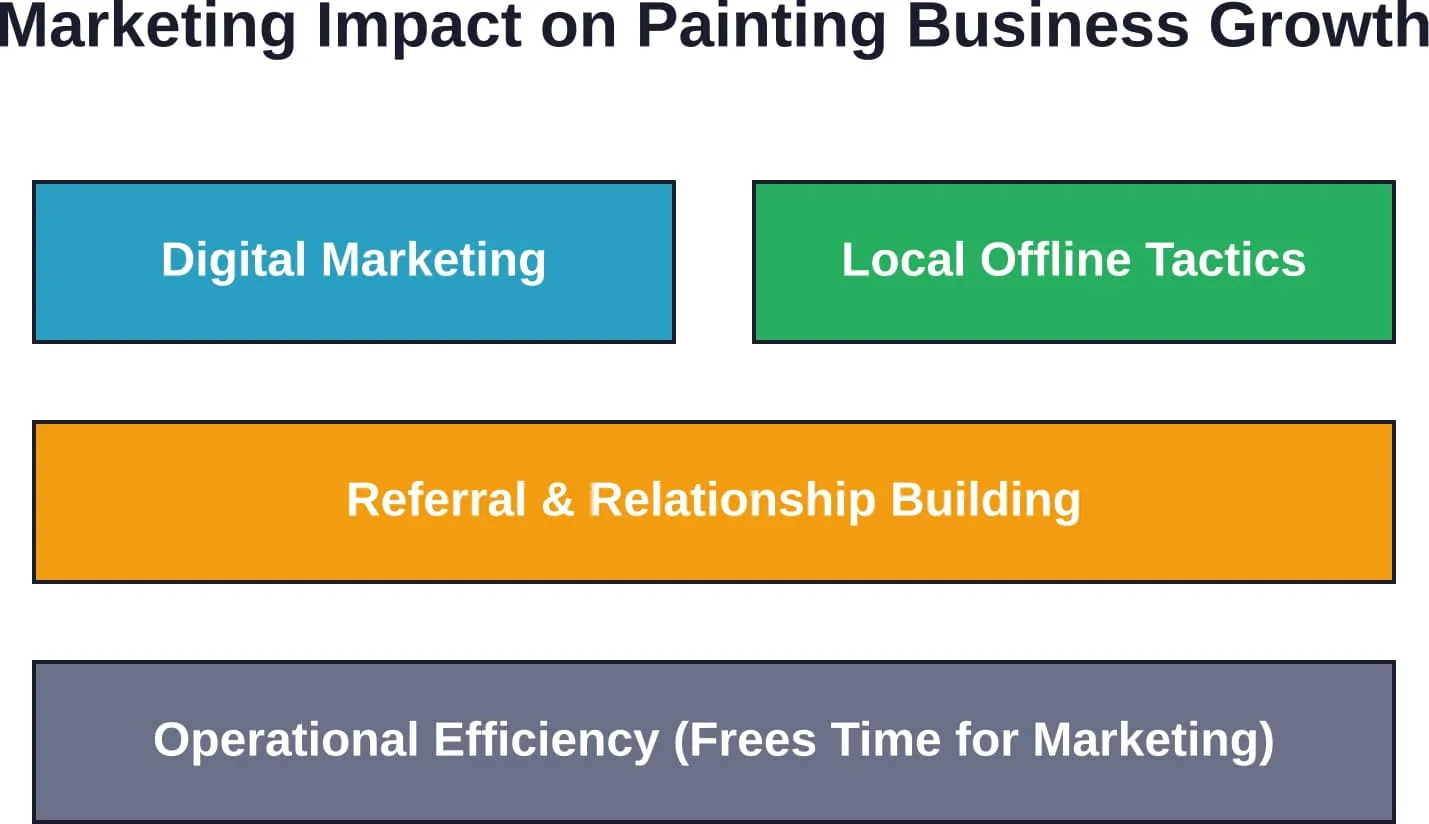
Quick Summary: Effective marketing ideas for painting businesses include claiming a Google Business Profile, leveraging social media for before-after photos, building referral networks with realtors and contractors, using local flyers and lawn signs, and optimizing operational efficiency to free up marketing time. With 34% of painters self-employed and materials representing 10-30% of job costs, strategic marketing and efficiency improvements directly impact profitability.
Here’s the reality: painting contractors often think they’re in the painting business. But without a steady flow of qualified leads, there’s no business at all. Marketing is the engine that drives everything else.
The painting industry employed 342,200 construction and maintenance painters as of 2024, according to the Bureau of Labor Statistics. With 34% of these professionals self-employed and the 2024 median annual wage of $48,660 for construction and maintenance painters, competition for high-value residential and commercial projects is fierce.
So how do successful painting businesses stand out? They treat marketing as seriously as they treat their craft. This guide breaks down 24 actionable marketing ideas—from digital strategies to old-school tactics that still work—to help painting contractors generate leads, build brand recognition, and scale revenue.
Why Marketing Matters More Than Ever for Painting Contractors
Employment growth for painters is projected at 4% from 2024 to 2034, which translates to about 13,000 total employment change over the decade. That might sound modest, but it also means more competition for the same pool of clients.
Materials typically represent 10 to 30% of a normal job cost, according to the Painting Contractors Association. When crews order and use materials efficiently, profitability increases. But efficiency alone won’t grow the business. Marketing fills the pipeline with projects that make efficiency matter.
The average person spends about 33 minutes on Facebook each day. Local community groups on social platforms have become goldmines for service-based businesses. Painting contractors who ignore digital channels leave money on the table.
Set Up Painting Business Marketing With Lengreo
Painting businesses need a steady way to turn local searches, referrals, and quote requests into real conversations. Lengreo helps connect the website, SEO, paid ads, tracking, content, and lead generation so the whole setup is easier to manage.
Need More Inquiries?
Lengreo can help with:
- improving service, project, and quote pages
- setting up local SEO and paid campaigns
- tracking calls, forms, and lead sources
- supporting content and lead generation work
👉 Contact Lengreo to discuss your marketing setup.
Digital Marketing Strategies That Generate Painting Leads
Digital marketing involves advertising painting services to prospects and customers using online channels such as social media, email, SMS, and search engines. For painting businesses, customers usually rely on online research before making hiring decisions.
1. Claim and Optimize Google Business Profile
A Google Business Profile is non-negotiable. It’s the first thing potential clients see when searching for painters in their area. Make sure the profile includes accurate hours, service areas, high-quality photos of completed projects, and regular posts showcasing recent work.
Encourage satisfied customers to leave reviews. Positive reviews build trust and improve local search rankings. Respond to every review—good or bad—to show engagement and professionalism.
2. Build a Simple, Mobile-Friendly Website
The website doesn’t need to be fancy, but it must be functional. Include clear calls to action, a portfolio of before-after photos, service descriptions, and contact information on every page.
Mobile optimization is critical. Most local searches happen on phones. If the site loads slowly or looks broken on mobile, potential clients will bounce to a competitor.
3. Leverage Social Media Platforms
Social media marketing is essential for painting contractors. Platforms like Facebook and Instagram allow businesses to showcase visual transformations—perfect for painting work.
Search for community Facebook groups where homeowners discuss local services. Join these groups (follow the rules—no spamming) and participate authentically. When someone asks for painter recommendations, that’s the opportunity to introduce services with a link to past work.
Post before-after photos consistently. These visuals are compelling and shareable. Add brief captions explaining the project scope, colors used, or challenges overcome. Use local hashtags to increase discoverability.
4. Run Targeted Facebook and Instagram Ads
Organic reach is limited. Paid ads on Facebook and Instagram allow precise geographic and demographic targeting. Set a modest budget—$10 to $20 per day—and target homeowners within a specific radius of the service area.
Create ad visuals showcasing standout projects. Include a clear offer: free estimates, seasonal discounts, or a portfolio download. Track which ads generate inquiries and adjust based on performance.
5. Start Email Marketing for Past Clients
Email marketing keeps the business top-of-mind. Collect email addresses from every client and send periodic newsletters featuring recent projects, maintenance tips, or seasonal promotions.
A simple quarterly email reminding past clients about deck staining season or holiday availability can generate repeat business without additional advertising spend.
6. Invest in Local SEO
Local SEO ensures the website appears when people search for painters in the area. This involves optimizing website content with location-specific keywords, building citations on local directories, and earning backlinks from community websites. Targeting the right client segments—residential versus commercial—should inform SEO keyword strategy.
Traditional Marketing Tactics That Still Work
Digital isn’t everything. Local service businesses benefit enormously from offline marketing tactics that build visibility in the neighborhoods they serve.
7. Distribute Flyers in Target Neighborhoods
Print professional flyers and distribute them in neighborhoods where active projects are underway or where homes fit the ideal client profile. Include high-quality images, a brief services list, and a special offer like 10% off for new customers.
When finishing a job, provide the customer with a flyer that includes a “friends and family” discount of 10% off—and leave a few with them to share. Word-of-mouth powered by a tangible offer works.
8. Use Lawn Signs at Active Job Sites
Lawn sign advertising is simple but effective. Place branded signs at job sites with contact information and a tagline like “Another Quality Project by [Business Name].” Neighbors notice, especially if the transformation is visible.
Make sure signs are professional-looking, weatherproof, and easy to read from the street. Cheap signs hurt credibility.
9. Vehicle Wraps Turn Trucks Into Billboards
Company vehicles should be rolling advertisements. A well-designed vehicle wrap with business name, phone number, website, and a photo of quality work turns every drive into marketing exposure.
Even simple magnetic signs or vinyl decals work if a full wrap isn’t in the budget. The key is visibility and professionalism.
10. Direct Mail Postcards to Homeowners
Direct mail isn’t dead. Target specific ZIP codes or neighborhoods with postcards featuring a compelling before-after image, a seasonal offer, and clear contact details. Track response rates by using unique promo codes or dedicated phone numbers.
11. Sponsor Local Events and Sports Teams
Community sponsorships build brand recognition and goodwill. Sponsor a Little League team, a local 5K, or a community festival. The business name on uniforms or event signage keeps the brand visible to local families—the exact demographic needing home services.
Building Referral Networks and Relationships
Referral marketing is arguably the most powerful strategy for service businesses. Research published in the Journal of Marketing Research shows that referred customers make between 31% and 57% more referrals than those acquired through other channels.
12. Partner with Real Estate Agents
Realtors constantly need painters—for staging homes, post-inspection repairs, or helping buyers refresh properties. Build relationships with local agents by offering fast turnaround times and competitive pricing for their referrals.
Provide agents with branded business cards or flyers they can hand to clients. Consider offering a referral fee or reciprocal arrangement.
13. Network with General Contractors and Builders
General contractors subcontract painting work on residential and commercial projects. Getting on a GC’s preferred vendor list means consistent work. Deliver quality results on time, and the referrals will keep coming.
Attend local construction association meetings or Chamber of Commerce events to meet contractors face-to-face.
14. Build Relationships with Interior Designers
Interior designers specify paint colors and finishes for client projects. Establish relationships with designers in the area—they can become repeat referral sources for high-end residential work.
15. Create a Customer Referral Program
Incentivize satisfied customers to refer friends and family. Offer a discount on future services or a gift card for every successful referral. Make the program simple and promote it in follow-up emails and on invoices.
16. Ask for Reviews and Testimonials
Social proof drives decisions. After completing a project, ask the client for a review on Google, Yelp, or Facebook. Make it easy by sending a direct link.
Feature written testimonials with before-after photos on the website and in marketing materials. Video testimonials are even more powerful.
Operational Efficiency: The Hidden Marketing Multiplier
Efficiency isn’t a marketing tactic, but it enables better marketing. When crews waste time on disorganized processes or inefficient material ordering, there’s less bandwidth for business development.
17. Streamline Material Ordering
Materials are usually 10 to 30% of a normal job cost. When teams order and use materials efficiently, the company is more profitable. Standardize ordering processes, negotiate supplier relationships, and track waste.
Better margins mean more budget for marketing and reinvestment in growth initiatives.
18. Use Scheduling Software
Manual scheduling leads to gaps, overlaps, and missed opportunities. Invest in scheduling software that optimizes crew deployment, reduces downtime, and improves customer communication.
Efficient operations free up time to focus on lead generation and client relationships.
19. Invest in Crew Training
The Painting Contractors Association (PCA) offers educational resources and training courses ranging from introductory to advanced levels in interior and exterior painting.
Well-trained crews work faster, produce higher-quality results, and generate fewer callbacks—all of which enhance reputation and referrals.
Content Marketing and Thought Leadership
Positioning the business as an expert builds trust and attracts higher-value clients.
20. Start a Blog or Video Series
Create content that answers common client questions: “How to choose exterior paint colors,” “Interior vs. exterior paint differences,” “How long does a paint job last?” This content ranks in search engines and demonstrates expertise.
Video walkthroughs of completed projects, tips for homeowners, or behind-the-scenes looks at the process humanize the brand and increase engagement.
21. Share Case Studies
Document standout projects as case studies. Explain the challenge, the solution, and the results. Include photos, client quotes, and details about the scope of work.
Case studies are persuasive sales tools that show—not just tell—what the business can do.
22. Offer Free Guides or Checklists
Create downloadable resources like “The Homeowner’s Guide to Choosing Paint” or “Pre-Painting Checklist.” Offer these in exchange for email addresses to build a marketing list.
Paid Advertising Strategies
23. Google Ads for Local Search
Google Ads can generate immediate leads by placing the business at the top of search results for high-intent keywords like “house painters near me” or “commercial painting contractor [city].”
Target keywords carefully, set geographic boundaries, and use negative keywords to filter out unqualified clicks. Track conversions to measure ROI.
24. Retargeting Campaigns
Not everyone hires a painter on their first visit to the website. Retargeting ads follow website visitors around the internet, keeping the business top-of-mind until they’re ready to make a decision.
| Marketing Tactic | Cost | Time to Results | Best For |
|---|---|---|---|
| Google Business Profile | Free | 1-2 weeks | Local visibility |
| Social Media Posting | Free | 1-3 months | Brand awareness |
| Facebook Ads | $300-600/month | Immediate | Lead generation |
| Flyers & Lawn Signs | $100-300 | 1-4 weeks | Neighborhood visibility |
| Referral Program | Variable | 2-6 months | Word-of-mouth growth |
| Google Ads | $500-1500/month | Immediate | High-intent leads |
Measuring Marketing Performance
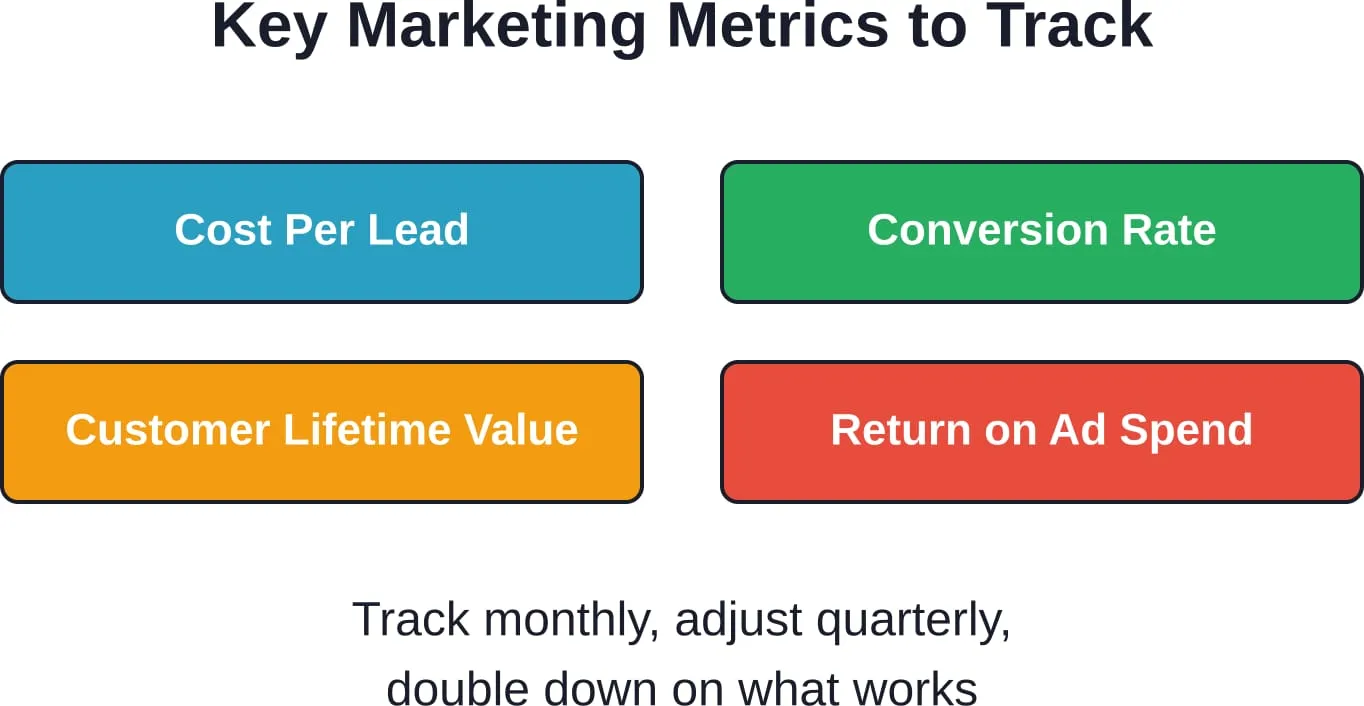
Marketing without measurement is guesswork. Track key metrics to understand what’s working and where to adjust.
Monitor cost per lead, conversion rate (leads to jobs), customer acquisition cost, and lifetime customer value. Use call tracking numbers for offline campaigns and UTM parameters for digital campaigns to attribute leads accurately.
Review performance monthly. Double down on high-performing channels and cut or optimize underperforming ones.
Common Marketing Mistakes Painting Contractors Make
Avoid these pitfalls that sabotage marketing efforts.
- Inconsistency: Posting on social media for two weeks, then disappearing for three months kills momentum. Marketing requires consistency.
- No clear offer: Ads and flyers that just say “We paint houses” don’t compel action. Include a specific offer—free estimate, discount, or limited-time promotion.
- Ignoring mobile: Most local searches happen on phones. If the website or landing page isn’t mobile-optimized, leads are lost.
- Not following up: Leads go cold fast. Respond to inquiries within an hour. Use automated follow-up systems if necessary.
- Competing on price alone: The cheapest bid doesn’t always win. Emphasize quality, reliability, professionalism, and past results.
Conclusion: Marketing Is the Lifeblood of Growth
The painting industry offers solid opportunities—with 342,200 construction and maintenance painter jobs in 2024, 4% projected employment growth through 2034, and a median wage of $48,660 annually. But standing out in a competitive market requires intentional, consistent marketing.
The most successful painting contractors combine digital strategies—Google Business Profile optimization, social media engagement, local SEO, and targeted ads—with traditional tactics like flyers, lawn signs, vehicle wraps, and referral networks. They prioritize operational efficiency to free up time and resources for marketing. And they track performance relentlessly, doubling down on what works.
Start with the fundamentals: claim the Google profile, collect reviews, post project photos on social media, and build relationships with referral partners. Then layer in paid advertising and content marketing as budget allows.
Marketing isn’t optional—it’s the engine that keeps the pipeline full and the business growing. Pick three to five strategies from this list, execute them consistently for 90 days, measure the results, and adjust. The contractors who treat marketing as seriously as they treat painting are the ones who scale.
Ready to grow? Start today.