Quick Summary: Orthodontic offices can attract more patients through a strategic mix of digital marketing, patient referral programs, local SEO, and practice experience optimization. The most effective approaches combine social media engagement, a mobile-optimized website with online booking, Google Business Profile management, and systematic referral incentives. Educational content, virtual consultations, and consistent reputation management help convert interest into treatment starts while building long-term patient loyalty.
Patients today expect more than just straight teeth; they want convenience, clear information, and a personal connection. Understanding these shifts is key to developing effective orthodontic marketing strategies that truly connect. Families compare providers online, read reviews, and judge clarity, convenience, and trust in a matter of seconds.
The orthodontic landscape has become intensely competitive. Today’s orthodontic practices face intensified competition not just from traditional competitors, but from direct-to-consumer aligner companies, dental service organisations, and corporate chains that have revolutionised patient acquisition strategies. But wait. That same competition means opportunities exist for practices willing to embrace modern marketing.
Why Traditional Referral Methods No Longer Suffice
Referrals from dentists are no longer sufficient to drive patient growth. Modern orthodontic practices must embrace direct-to-patient marketing strategies to thrive. General dentists are increasingly offering orthodontic treatments in-house, and patients have become more active in researching and choosing their own orthodontists.
The research backs this up. 83% of satisfied patients are willing to refer friends and family to their orthodontist, yet only 29% actually do so—simply because they’re never asked. That’s a massive untapped opportunity sitting right in front of most practices.
Here’s the thing though—patient behavior has fundamentally changed. Today’s patients start the patient journey online. They research treatments, compare orthodontic practices, read reviews, and often make decisions before they ever talk to anyone in the practice.
Build a Mobile-First Website That Converts
With approximately 60% of searches occurring on mobile devices (73% in specific sectors like food and beverage), responsive design isn’t optional—it’s essential for patient acquisition success. By 2026, orthodontic patient leads will expect fast, modern, mobile-friendly websites that allow them to easily schedule consultations, explore financing options, and trust your expertise even before making a call.
In 2026, having an interactive and user-friendly website is a must. Features like virtual consultations, chat support, and online appointment scheduling can enhance the patient experience and set you apart from competitors.
Real talk: the website isn’t just a digital brochure anymore. Your website is no longer just a brochure. If your written copy is “marketing fluff” that doesn’t tell prospective patients what they want to know, you will lose them to a competitor.
Essential Website Features for 2026
- Online appointment scheduling with instant confirmation
- Virtual smile assessments and consultations
- Clear pricing information and financing options
- AI chatbots for 24/7 patient inquiries
- Treatment visualizers showing potential results
- Mobile-optimized design with fast loading times
Video content can increase website engagement, though specific engagement metrics vary by content length and platform. Consider adding short educational videos explaining common procedures, showcasing team personalities, and addressing patient concerns directly.
Organize Orthodontic Marketing With Lengreo
Lengreo helps service businesses connect their website, SEO, paid ads, content, tracking, and lead generation. For orthodontic offices, this can mean clearer treatment pages, better local visibility, easier consultation paths, and campaigns that are easier to measure.
Rather than testing random ideas one by one, Lengreo can help build the setup around the basics: how people find the practice, what they see on the website, how they book, and which channels bring real inquiries.
Need More Consultation Requests?
Lengreo can help with:
- refining treatment, location, and contact pages
- setting up SEO and paid traffic campaigns
- tracking calls, forms, and inquiry sources
- supporting content and lead generation work
👉 Contact Lengreo to discuss your marketing setup.
Dominate Local Search and Google Maps
Local SEO forms the foundation of effective orthodontic marketing, as most patients search for orthodontic services within a specific geographic radius of their home or workplace. Local SEO and Google Business Profile matter because they help you get found by people already looking for care in your area. These are among the highest-intent marketing opportunities because the patient is already searching with a local need in mind.
The competition for local visibility is fierce, but the payoff is substantial. When your practice appears in the right local moments, you create more chances for searchers to click, call, request directions, visit your website, and schedule a consultation.
Google Business Profile Optimization
Set a monthly calendar reminder to add new photos to your Google Business Profile. Fresh visual content improves visibility and click-through rates. And that’s just the start.
| Optimization Element | Action Required | Update Frequency |
|---|---|---|
| Business Information | Complete all fields with detailed info | Quarterly review |
| Photos & Videos | Office, team, patient results | Weekly additions |
| Posts & Updates | Special offers, news, treatment spotlights | 2-3 times per week |
| Review Management | Request, monitor, respond to all reviews | Daily monitoring |
| Q&A Section | Seed common questions, monitor new ones | Weekly check |
Local SEO ensures your clinic appears in Google’s “map pack” when locals search for orthodontic care, giving you an edge by making it easy for potential clients to find your office. When you respond to each review, Google will reward you with higher visibility.
Leverage Social Media Where It Actually Matters
Research shows that 76% — orthodontists use social media and 89% — patients/parents use social media. But there’s a disconnect. 76% — patients/parents use social media in the evening while 56% — orthodontists post information in the afternoon. Timing matters.
Engaging younger audiences requires understanding platform-specific content formats and trending topics. TikTok and Instagram Reels offer significant organic reach opportunities for orthodontic practices willing to create authentic, educational content that entertains while informing.
Platform-Specific Strategies
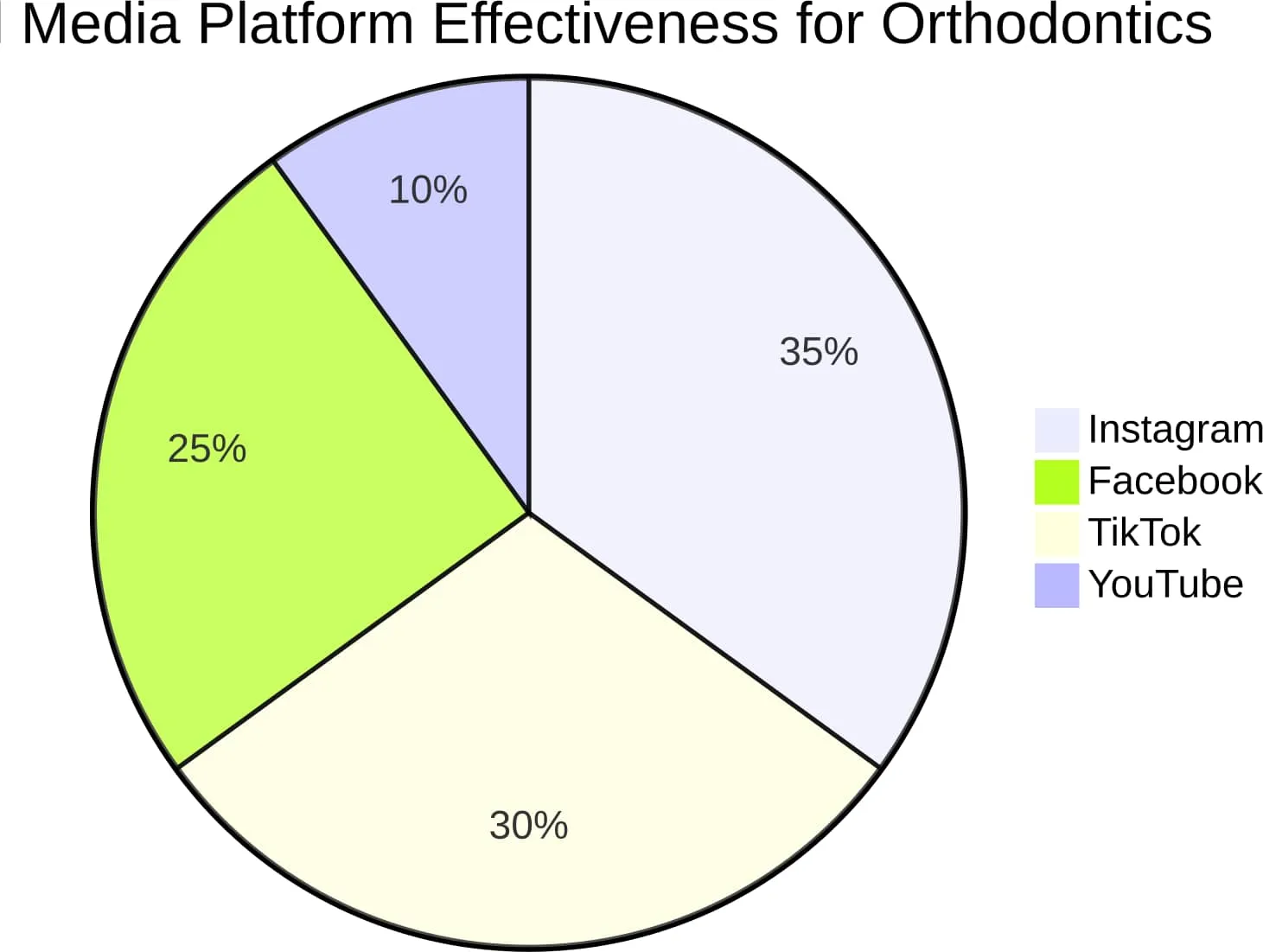
Instagram tends to be highly effective due to its visual nature, allowing orthodontists to showcase before-and-after results and engage with a younger demographic, but Facebook can also be a good platform to reach parents and guardians that are decision makers. TikTok is growing dramatically, and should also be considered important, especially as it relates to advertising.
TikTok offers significant engagement opportunities compared to Instagram Reels. Gen Z has shown increased interest in TikTok for healthcare information, though specific percentage data for 2026 is limited.
Schedule 30 minutes every Friday to take photos and videos for next week’s social media. Get the whole team involved by rotating “social media captain” responsibilities. Consistency beats perfection every time.
Content That Performs Best
- Before-and-after transformations (with patient permission)
- Team personality showcases and behind-the-scenes moments
- Treatment myth-busting and educational content
- Patient milestone celebrations and testimonials
- Quick tips in short-form video format
- Interactive polls and Q&A sessions
User-generated content campaigns encourage patients to share their treatment experiences, creating authentic testimonials that resonate more strongly than practice-created content.
Create a Systematic Patient Referral Program
Referral programs are one of the most effective marketing strategies for dental practices. Built on trust: Patients are more likely to listen to friends and family over ads. 88% of people trust recommendations from people they know more versus any other channel and 64.3% of 1500+ health consumers said word-of-mouth is even more reliable than testimonials.
Research indicates that parent referrals are among the most powerful sources of new patients in orthodontics. The “Mommy Network” remains one of the most influential word-of-mouth channels for orthodontists seeking to grow their patient base.
Building an Effective Referral System
The biggest mistake? The biggest referral mistake: not asking. Build asking into your workflow: “We love treating families. Do you have any family members or friends looking for a dentist?”
Teach staff to recognize “referral triggers” — moments when patients express satisfaction or mention family members. Practice scenarios might include responding to a patient saying, “My treatment turned out great!” with “We’re so glad you’re happy!”
| Referral Program Element | Best Practice | Compliance Note |
|---|---|---|
| Incentive Type | Non-cash rewards, service credits, gift cards | Check state dental board regulations |
| Timing | After new patient completes first visit | Ensure referral leads to actual treatment |
| Communication | Personal ask during positive moments | Natural conversation, not transactional |
| Tracking | Digital system integrated with practice software | Monitor ROI and referral quality |
| Recognition | Thank-you notes, public acknowledgment | Patient consent for public recognition |
A referral system offers many benefits to dental offices. It helps attract new patients without high advertising costs. Dentists often find that referred patients are more loyal. They tend to stay longer and seek more treatments.
Invest in Educational Content Marketing
Content marketing is one of the most reliable long-term patient acquisition tools for orthodontists. When you answer real questions, explain treatment clearly, and share helpful resources, families begin to trust you before they ever book a visit.
Blog posts help you appear in search results for the questions parents ask every day. When you publish clear, direct explanations of topics like treatment length, aligner care, or early evaluations, Google recognizes your site as a helpful source. Write posts that address one question at a time, and keep the language simple.
Educational Content: Blogs, videos, and FAQs that explain orthodontic conditions and treatments. Educational content helps patients understand treatment options and builds trust.
Content Topics That Drive Traffic
- Treatment duration and what to expect during each phase
- Clear aligners vs. traditional braces comparison
- Early orthodontic evaluation benefits for children
- Adult orthodontic treatment options and considerations
- Treatment costs and insurance coverage explanations
- Post-treatment retention and long-term care
- Common orthodontic emergencies and solutions
A steady stream of blogs—two per month is enough—helps build authority and brings new visitors to your website over time.
Optimize the Patient Experience Beyond Clinical Care
Let’s be honest: nobody wants to feel like they’re at the orthodontist. At Sturgill Orthodontics, we’ve transformed our offices into spaces where people actually want to be. Simple things like birthday cards, milestone celebrations, and graduation gifts create word-of-mouth marketing. Creating comfortable, non-clinical spaces dramatically improves patient experience and team satisfaction.
Patients want to know treatment timelines, costs, and available technology upfront. Providing this information early reduces anxiety and builds trust.
Experience Enhancement Ideas
- Coffee bar or refreshment station in waiting area
- Instagram-worthy office design elements
- Comfortable consultation rooms that feel less clinical
- Entertainment options during appointments
- Personalized treatment milestone celebrations
- Post-treatment follow-up check-ins
- Patient appreciation events and contests
Ask your next 10 patients what would make their visits more enjoyable. You’ll be surprised how simple most requests are.
Strategic Paid Advertising That Delivers ROI
Paid search ads represent a significant traffic source for dental offices. But not all paid advertising delivers equal results.
Focus on lifetime patient value rather than just consultation bookings when planning advertising campaigns. Paid advertising in orthodontics requires sophisticated targeting and messaging strategies to achieve profitable return on investment.
Successful campaigns focus on high-intent keywords and demographics most likely to convert into treatment patients rather than broad awareness campaigns.
High-Converting Ad Strategies
Google Ads campaigns for orthodontic practices should prioritise local search terms with commercial intent. High-performing keywords include “orthodontist near me,” “braces cost [city],” “Invisalign provider [area],” and treatment-specific searches like “adult braces” or “children’s orthodontics.”
Dynamic retargeting with personalized ad content can improve campaign performance metrics.
| Ad Platform | Best Use Case | Typical Daily Budget | Expected Outcome |
|---|---|---|---|
| Google Search Ads | High-intent local searches | $30-50 | Immediate consultation requests |
| Facebook/Instagram Ads | Demographic targeting, awareness | $20-40 | Brand visibility, website traffic |
| Local Service Ads | Pay-per-lead model | Variable | Pre-qualified consultation requests |
| Retargeting Campaigns | Re-engage website visitors | $15-25 | Conversion of previous visitors |
Track cost per lead and cost per new patient start to ensure paid advertising generates positive ROI. Remember to consider lifetime patient value, not just immediate production.
Embrace AI and Automation Without Losing the Human Touch
AI and automation can streamline outreach and improve patient engagement. AI-Driven Marketing: Automating campaigns to improve efficiency. Artificial Intelligence (AI) and Machine Learning AI is increasingly embedded in diagnostics and treatment planning, enabling clinicians to better predict treatment journeys allowing greater precision, consistency and outcomes.
AI Chatbots: Instant answers to common questions, available 24/7. Text Messaging: Appointment reminders and quick updates. Virtual Smile Assessments: Photo uploads for quick initial evaluations.
Automation Opportunities
- Appointment reminder texts and emails
- Review request workflows after positive experiences
- Lead nurturing email sequences for inquiries
- Social media post scheduling and publishing
- Patient birthday and milestone recognition
- Treatment progress photo documentation
To succeed in 2026, orthodontic practices must implement SEOx (Search Everything Optimization), a comprehensive digital optimization strategy. SEOx combines Search Engine Optimization (SEO), Answer Engine Optimization (AEO), and Generative Engine Optimization (GEO) to improve content visibility for search engines like Google and AI systems. This approach is not only about achieving high search rankings but also about being featured in AI-generated results and cited in AI responses, which can significantly increase your practice’s visibility and credibility.
Track Data and Adjust Your Strategy Quarterly
The best orthodontic marketing strategy is not the channel that generates the most leads. It is the channel mix that produces the strongest combination of qualified exams, starts, and revenue at a sustainable cost.
With analytics, orthodontists can track key referral sources (patients, dentists, search, social, community, staff) to see what’s working and where opportunities are being missed. For instance: If community referrals are weak, consider sponsoring local events or engaging in charity partnerships.
Essential Marketing Metrics to Monitor
- Cost per lead by marketing channel
- Cost per consultation booking
- Consultation show-up rate
- Consultation to treatment start conversion rate
- Lifetime patient value
- Website traffic sources and behavior
- Social media engagement rates
- Review acquisition rate and ratings
- Referral source breakdown
Review these monthly, then reallocate your budget quarterly based on cost per start (not lead volume). After implementing any new orthodontist marketing strategies, monitor their performance with in-depth analytics. This enables you to improve your approach over time and offload strategies that aren’t working.
Budget Allocation for Maximum Impact
The ideal marketing budget varies, but the most successful practices would allocate around 3-5% of their monthly revenue to digital marketing. Dental offices are increasing digital marketing investment, reflecting the growing importance of online engagement.
It’s also helpful to think about budgets based on the revenue your treatments represent. As long as you see return on your marketing spend, you should be willing to spend more to grow.
| Marketing Channel | Recommended Budget % | Primary Benefit | Timeline to Results |
|---|---|---|---|
| Local SEO & Website | 25-30% | Long-term organic visibility | 3-6 months |
| Paid Advertising | 30-35% | Immediate lead generation | 1-2 weeks |
| Social Media | 15-20% | Brand awareness, engagement | 2-4 months |
| Referral Programs | 10-15% | High-quality patient acquisition | 1-3 months |
| Content Marketing | 10-15% | Authority building, SEO support | 4-8 months |
Common Marketing Mistakes to Avoid
Most practices treat marketing like a checklist. Launch a website, run ads, post on social, ask for reviews. Looks like an effort. But it’s not a system. What we see across practices that grow early is simple. Everything is connected. Patients find you, build trust, then book.
Pitfalls That Kill Marketing ROI
- Focusing on traffic without conversion optimization
- Inconsistent posting schedules on social media
- Never asking satisfied patients for referrals
- Slow response times to online inquiries
- Ignoring or poorly responding to reviews
- No clear call-to-action on website pages
- Tracking leads instead of treatment starts
- Abandoning strategies before they mature
Speed matters too. Patients are reaching out to multiple offices. The one who responds first usually wins. Offer online scheduling, present clear pricing information, and respond quickly to online inquiries to turn as many web leads into booked appointments as possible.
Conclusion: Building a Marketing System That Compounds Growth
Orthodontic practices that succeed in 2026 will focus on patient-first marketing. Clear communication, digital convenience, and personalized experiences—supported by AI and automation—will help practices build strong, lasting relationships and grow sustainably.
If your 2026 goals include attracting more patients, improving retention, and outpacing competitors, data-driven orthodontic marketing is the way forward. The practices gaining market share aren’t necessarily the ones spending the most on marketing. They’re the ones building connected systems where every element supports the others.
Start with the fundamentals: a mobile-optimized website with clear calls-to-action, an active Google Business Profile, and a systematic approach to requesting referrals. Layer in social media engagement on platforms where your patients actually spend time. Add educational content that answers real questions. Then support everything with data tracking that shows what’s working and what isn’t.
The most effective approach is always customized to your specific practice, community, and goals. Test strategies in focused 90-day sprints. Consistency matters more than frequency. It’s better to post thoughtfully twice a week than to post daily content that doesn’t engage your audience. Focus on quality over quantity, and pay attention to which types of posts get the most engagement.
The orthodontic market will only become more competitive. Practices that build marketing systems now—systems that connect digital visibility, patient experience, and systematic follow-up—will be the ones thriving five years from today. Start small, measure everything, and scale what works.