

Quick Summary: Motorcycle businesses can drive growth through a mix of digital marketing (SEO, PPC, social media), community-focused initiatives like local ride events and dealership open houses, and niche targeting of younger riders and emerging bike segments. Combining online visibility with authentic offline experiences builds loyalty and word-of-mouth. Leveraging customer reviews, partnerships with influencers, and seasonal campaigns keeps the brand top-of-mind year-round.
Running a motorcycle dealership or shop in 2026 demands more than just great inventory and solid repair work. The marketplace has shifted—riders now research online before ever visiting a showroom, and the demographic mix has changed dramatically over the past two decades.
So how does a motorcycle business capture attention, build trust, and convert browsers into buyers? It starts with understanding who’s riding today—and meeting them where they are. Here are the marketing ideas that actually move the needle.
Why Fresh Thinking Matters in Motorcycle Marketing
Too many dealerships still rely on the same old playbook: print ads in enthusiast magazines, billboard placements on highway corridors, and the occasional radio spot. Those channels aren’t dead. But they’re no longer sufficient on their own.
The modern rider’s journey starts with a Google search or a TikTok video, not a magazine subscription. If the dealership website isn’t optimized for mobile, loads slowly, or lacks clear calls to action, that potential customer is already lost. And if the business isn’t engaging riders on social platforms or hosting local events, competitors who are will scoop up the market share.
Here’s the thing though—digital marketing isn’t about abandoning traditional tactics. It’s about layering them into a coherent strategy that touches riders at multiple points.
Build a High-Performance Website
A dealership’s website is the most critical marketing asset. Period. In 2026, riders expect fast load times, intuitive navigation, and mobile-responsive design. The site should feature up-to-date inventory with high-quality photos, transparent pricing, and detailed specs for every bike.
But don’t stop at a static catalog. Add these elements:
- Live chat or chatbot: Instant answers keep visitors engaged.
- Customer testimonials and reviews: Social proof builds trust immediately.
- Financing calculator: Let shoppers see monthly payments before they call.
- Service appointment booking: Make it easy to schedule maintenance online.
The Federal Trade Commission’s Used Car Rule requires dealers to provide clear warranty information and buyer’s guides for used vehicles. Motorcycle dealers selling used bikes should ensure compliance and display this information prominently on the website to avoid legal issues and build buyer confidence.
Organize Your Marketing System With Lengreo
Motorcycle businesses need marketing that clearly presents products, services, accessories, and contact options. Lengreo helps align website pages, SEO, paid ads, content, lead generation, appointment setting, and tracking into one cohesive setup, making it easier for enthusiasts and customers to reach out.
Need More Sales or Service Inquiries?
Lengreo can help with:
- improving product, service, and contact pages
- setting up SEO and paid traffic campaigns
- tracking calls, forms, and lead sources
- supporting content and lead generation workflows
👉 Contact Lengreo to discuss your marketing setup.
Master Local SEO for Motorcycle Dealers
When someone searches “motorcycle dealer near me” or “used bikes in [city],” the business needs to appear in the top three local pack results. That’s where most clicks go.
Local SEO starts with a fully optimized Google Business Profile: accurate hours, up-to-date photos, regular posts, and active review management. Encourage satisfied customers to leave reviews—and respond to every one, positive or negative.
On-site SEO matters too. Use location-specific keywords naturally in page titles, headers, and meta descriptions. Create dedicated pages for services (e.g., “Harley-Davidson Service in Austin”) and model categories (“Adventure Bikes in Denver”). Update content regularly with blog posts about local rides, maintenance tips, and new arrivals.
Run Targeted Pay-Per-Click Campaigns
PPC advertising on Google Ads and Bing delivers immediate visibility. When budgets are tight, focus on high-intent keywords like “buy Honda CRF450L [city]” or “motorcycle financing [zip code].” These searches signal readiness to purchase, not casual browsing.
Structure campaigns by product category: new bikes, used inventory, service and parts, gear and accessories. Use ad extensions to showcase financing offers, store hours, and click-to-call buttons.
Retargeting ads are gold for motorcycle dealers. When a visitor browses a specific bike model but doesn’t submit a lead, retargeting keeps that bike (and dealership) in front of them as they browse elsewhere online. Conversion rates on retargeting campaigns generally run higher than cold traffic campaigns.
| PPC Strategy | Best Use Case | Expected CTR Range |
|---|---|---|
| High-intent keywords | New and used bike sales | 3–6% |
| Local service searches | Maintenance and repairs | 4–7% |
| Retargeting campaigns | Previous site visitors | 0.5–1% |
| Display ads (awareness) | Brand building, new models | 0.1–0.3% |
Leverage Social Media the Right Way
Social media is more than selfies and memes—it’s where motorcycle culture thrives. Riders share photos of their builds, trip reports, and garage projects. Dealerships that engage authentically can build highly engaged communities.
Focus on Visual Platforms
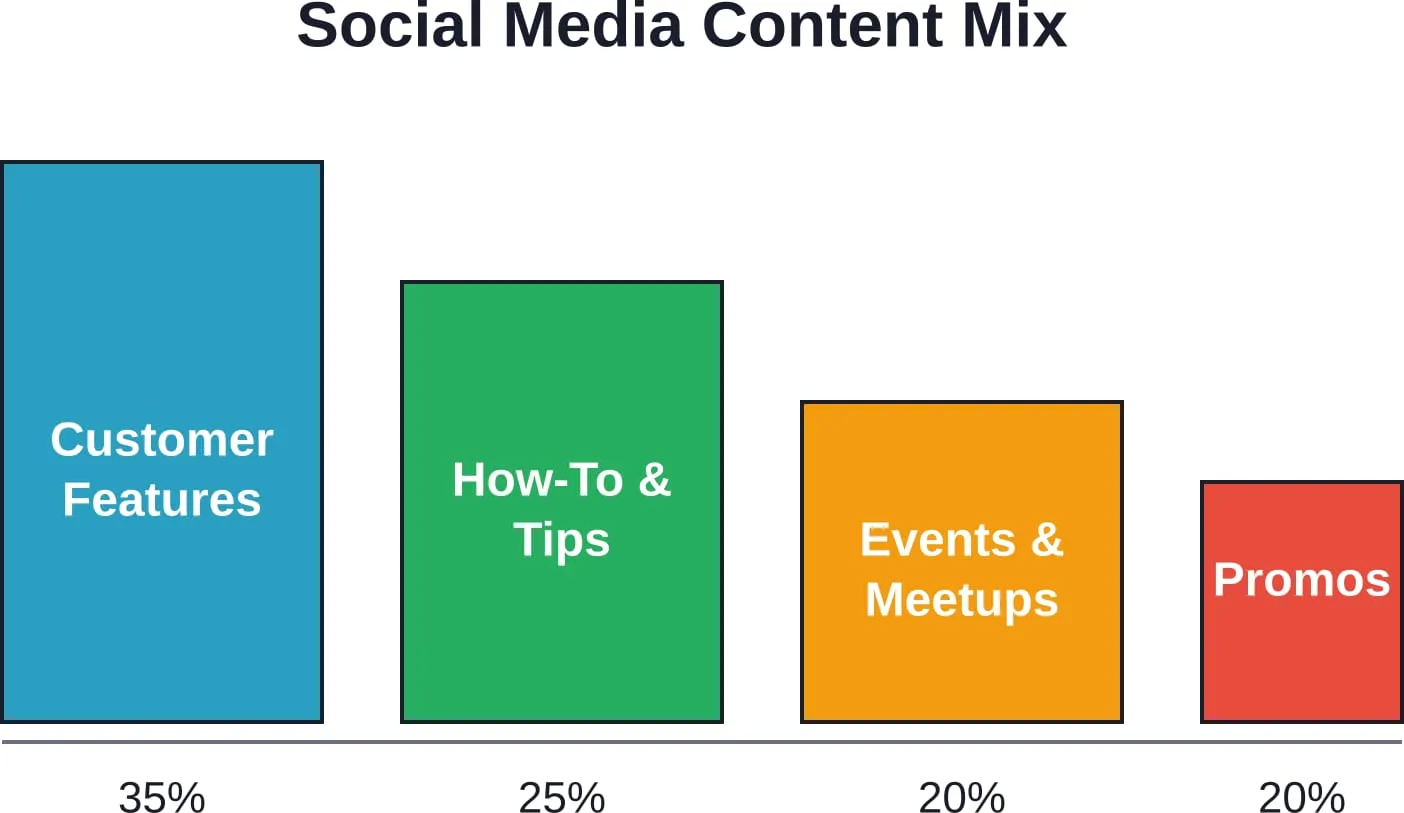
Instagram, Facebook, YouTube, and TikTok are key for motorcycle marketing. Post regularly, but prioritize quality over quantity. Content ideas include:
- Customer bike features and testimonials
- Behind-the-scenes shop tours
- Maintenance how-tos and quick tips
- New model reveals and walkarounds
- Local ride meetups and event announcements
Engage Your Audience
Interaction drives community growth. Respond to comments, share user-generated content, and run polls or contests. Sponsoring local riding meetups or partnering with motorcycle clubs can generate organic word-of-mouth, especially when offering group discounts or exclusive perks.
Host Local Rides and Community Events
Motorcycling is social. Riders want to connect with others who share their passion. Dealerships that organize or sponsor local events build loyalty and generate word-of-mouth referrals that no ad budget can buy.
Event ideas include:
- Saturday morning group rides: Start at the dealership, ride a scenic loop, and finish with coffee and conversation.
- Bike nights: Open the parking lot, invite food trucks, and let riders show off their builds.
- Demo days: Partner with manufacturers to let prospects test-ride new models.
- Charity rides: Organize fundraisers for local causes—riders love giving back.
- Maintenance clinics: Teach basic skills like oil changes, chain adjustments, or tire pressure checks.
Promote these events across all digital channels: social media, email newsletters, and the dealership website. Capture photos and video at every event and share them afterward—this content fuels future marketing and proves the dealership is the hub of the local riding community.
Target the Emerging Sub-500cc Market
Motorcycleshippers.com notes that smaller displacement bikes have taken off in Europe and the UK, and the trend is picking up in North America too. New riders and budget-conscious buyers are drawn to these machines for their affordability, fuel efficiency, and lower insurance costs.
Dealerships that highlight sub-500cc models in their marketing can tap into this growing segment. Create dedicated landing pages, run targeted ads, and host beginner-focused events like “New Rider Open Houses.” Offer package deals that bundle the bike with gear, basic training vouchers, and first-year service—removing friction for first-time buyers.
Encourage and Showcase Customer Reviews
Online reviews drive purchasing decisions. Research indicates that many consumers trust online reviews highly, similar to personal recommendations. For motorcycle dealers, reviews on Google, Facebook, Yelp, and niche forums matter immensely.
Make asking for reviews a standard part of the sales and service process. Send a follow-up email a week after delivery or service completion with direct links to review platforms. Respond to every review—thank positive reviewers and address concerns raised in negative ones professionally and promptly.
Showcase top reviews on the website and in social media posts. Video testimonials are even more powerful. Ask satisfied customers if they’d be willing to record a short clip talking about their experience—then feature that content prominently.
Partner with Influencers and Local Riders
Influencer marketing isn’t just for fashion brands. Motorcycle influencers—riders with engaged followings on YouTube, Instagram, or TikTok—can introduce the dealership to thousands of potential customers.
Focus on Micro-Influencers
Look for micro-influencers with 5,000 to 50,000 followers and local or regional audiences. They often have higher engagement rates than mega-influencers and charge reasonable fees or accept product trades. Invite them to test-ride new models, tour the shop, or attend dealership events, then share their genuine experiences with their audience.
Prioritize Authenticity
Authenticity is key. Partnerships should feel organic rather than like scripted ads. Let influencers tell their own stories naturally, without forcing a sales pitch, to build trust with their followers and your brand.
Run Seasonal and Summer Campaigns
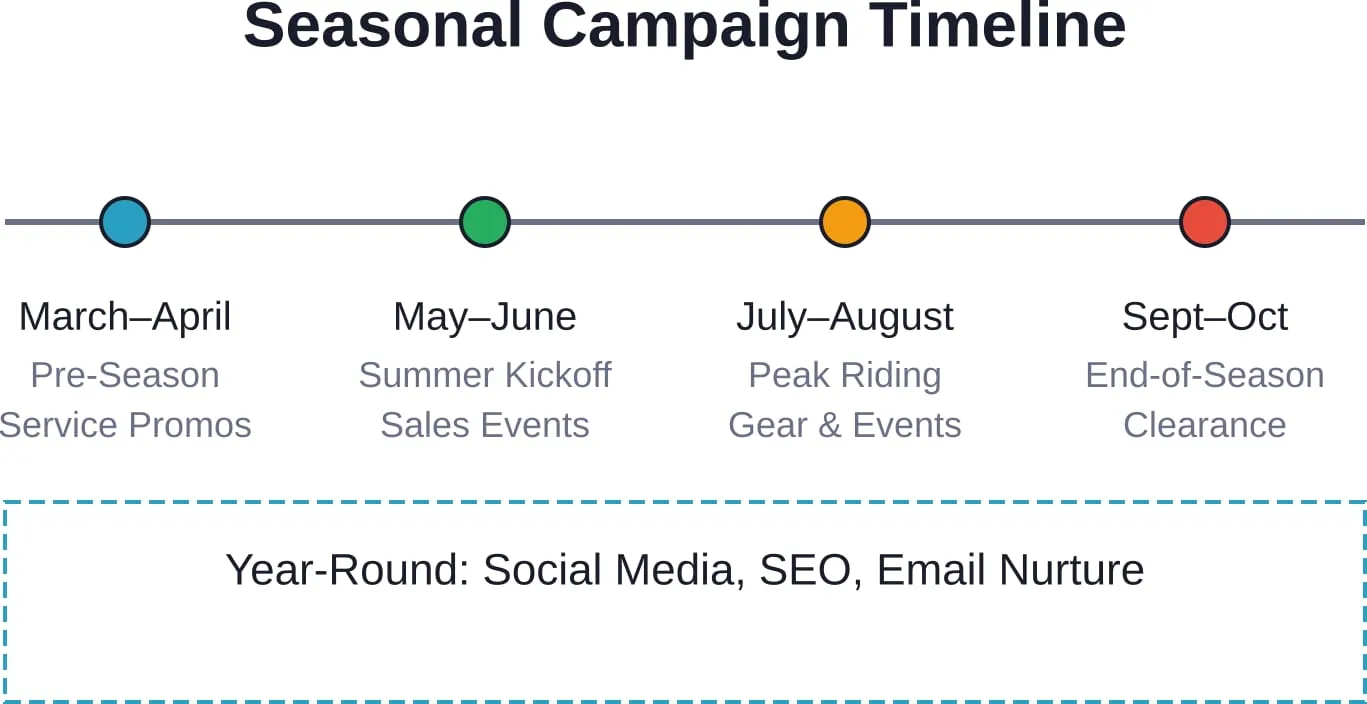
Summer is peak riding season in most markets, and dealerships should capitalize on it with targeted campaigns. Ideas include:
- Summer kickoff sale: Discounts on select models and accessories in May or June.
- Road trip giveaways: Contest prizes like gift cards, gear packages, or weekend getaway trips.
- Service specials: Pre-summer tune-ups, tire deals, or oil change packages.
- Social media challenges: “Show us your best summer ride photo” contests that encourage user-generated content.
Align campaigns with holidays and local events. Memorial Day, Independence Day, and Labor Day weekends are natural hooks for promotions. If there’s a big rally or bike show nearby, create special offers tied to that event.
Email Marketing That Keeps Riders Engaged
Email isn’t flashy, but it works.
- Build an email list by capturing addresses at every touchpoint: website forms, event sign-ups, service appointments, and point-of-sale.
- Send regular newsletters with a mix of content: new arrivals, service specials, riding tips, local event announcements, and customer spotlights. Segment the list by interest—new bike buyers get different messages than service-only customers or used bike shoppers.
- Automated email sequences are powerful. When someone fills out a lead form on a specific bike model, trigger a follow-up series with more photos, financing options, similar models, and an invitation to schedule a test ride. Persistence pays off—many buyers need multiple touchpoints before committing.
Invest in Visual Content
Motorcycles are inherently visual, making high-quality photos and videos essential for effective marketing. Professional photography for inventory shots ensures bikes look their best, while authentic action content—riders on the road, bikes in scenic locations, and the energy of dealership events—adds personality and excitement.
Use Video to Educate and Engage
Video walkarounds of new models, maintenance tutorials, and customer testimonials perform especially well. YouTube, the second-largest search engine, is heavily used by riders for research. A dealership with a robust YouTube channel not only builds authority but also captures search traffic competitors may miss.
Capture Lifestyle and Experience
Beyond product-focused content, highlight the lifestyle associated with motorcycle ownership. Showcase group rides, charity events, and customer experiences to connect emotionally with your audience and reinforce brand community.
Repurpose Across Channels
Visual content can be reused across multiple platforms—Instagram posts, TikTok clips, Facebook stories, and website galleries—maximizing reach and reinforcing messaging consistently.
Don’t Ignore Traditional Channels
Digital marketing dominates, but traditional channels still have a role—especially for reaching older riders who remain a significant part of the market. Print ads in regional motorcycle magazines, sponsorships of local charity rides, and radio spots during drive-time hours can complement digital efforts.
The key is integration. Use consistent messaging and branding across all channels, and drive offline audiences to online destinations where they can take action immediately.
Measure What Matters
Marketing without measurement is guesswork. Track key metrics across all channels:
| Metric | What It Tells You | Healthy Benchmark |
|---|---|---|
| Website traffic | How many people are finding you online | Steady month-over-month growth |
| Lead conversion rate | Percentage of visitors who submit a form or call | 2–5% |
| Cost per lead (PPC) | What you’re paying to acquire each lead | Varies by market; track trend |
| Email open rate | How engaging your subject lines are | 18–25% |
| Social engagement rate | Likes, shares, comments per post | 1–3% of followers |
| Customer acquisition cost | Total marketing spend divided by new customers | Should be < customer lifetime value |
Use Google Analytics, CRM software, and social media insights dashboards to monitor performance. Review the data monthly and adjust tactics based on what’s working—and what’s not.
Compliance and Right to Repair
Marketing can’t ignore legal realities. The Federal Trade Commission has taken enforcement action against motorcycle manufacturers for restricting customers’ right to repair. In 2022, the FTC ordered Harley-Davidson to fix warranties and allow independent repairers to compete fairly.
Dealerships that offer transparent, customer-friendly service policies and openly support riders’ right to choose where they get repairs can use this as a marketing differentiator. Highlighting service flexibility and fair treatment builds trust and sets the business apart from competitors perceived as restrictive or heavy-handed.
Final Thoughts
Marketing a motorcycle business in 2026 requires balancing digital savvy with authentic community engagement. Riders want seamless online experiences—fast websites, transparent pricing, easy appointment booking—but they also crave connection: group rides, events, and face-to-face relationships with people who share their passion.
Dealerships that integrate strong local SEO, targeted PPC, active social media, customer reviews, and regular community events will thrive. Those that cling to outdated tactics or ignore the digital shift will struggle.
Start by auditing current efforts. Where are the gaps? Is the website mobile-friendly and fast? Is the Google Business Profile fully optimized? Are customer reviews being actively managed? Are there regular events that bring riders together?
Pick two or three high-impact tactics from this guide and execute them well. Build momentum, measure results, and expand from there. Marketing isn’t a one-time project—it’s an ongoing process of testing, learning, and refining.
The road ahead is open. Time to ride.