

Quick Summary: Medical spa marketing in 2026 requires a multi-channel approach combining compliant digital strategies, local SEO, social media engagement, and patient education. Successful campaigns focus on safety transparency, personalized patient journeys, and data-driven tactics while adhering to FDA and FTC advertising regulations for aesthetic devices and treatments.
The medical spa industry keeps expanding, but standing out demands more than excellent treatments. Smart marketing bridges the gap between services and clients who need them.
Yet many practices struggle. Generic ads don’t convert. Social posts disappear into feeds. Budgets drain without measurable returns.
Here’s the thing though—effective med spa marketing isn’t about shouting louder than competitors. It’s about strategic positioning, compliance-first messaging, and building trust before the first consultation.
Understanding Your Marketing Foundation
Before launching campaigns, grasp the regulatory landscape. The FDA regulates aesthetic devices based on their intended use and impact on body structure or function. This affects how practices can advertise treatments.
The FTC scrutinizes health-related marketing claims intensely. Between 2020 and 2021, the agency sent warning letters to numerous businesses making unsupported therapeutic claims. Medical spas must ensure every claim about treatment benefits is truthful, non-misleading, and scientifically supported.
In a Saudi Arabia study of 500 participants, 55% (n=275) recognized Botox, but awareness of chemical peels was lower at 42% (n=210). More concerning: 46% were unaware of potential risks associated with laser treatments.
This knowledge gap represents both challenge and opportunity. Educational marketing positions your practice as a trusted authority while addressing the 33% of potential clients who cite safety concerns as barriers to treatment adoption.
Set Up Medical Spa Marketing With Lengreo
Medical spa marketing needs clear service pages, local visibility, and booking paths that feel easy for potential clients to follow. Lengreo helps organize the main digital channels so the website, campaigns, and inquiries are easier to manage together.
Need More Treatment and Booking Inquiries?
Lengreo can help with:
- improving treatment, pricing, and location pages
- setting up SEO and paid traffic campaigns
- tracking appointment requests and lead sources
- supporting content and lead generation work
👉 Contact Lengreo to discuss your marketing setup.
Local SEO: The Foundation of Med Spa Visibility
Local search drives medical spa bookings. Most clients search for treatments within their geographic area.
Start with Google Business Profile optimization. Complete every field: services, hours, photos, attributes. Post weekly updates about treatments, results, and special offerings.
But don’t stop there. Consistency across directories matters. Ensure your NAP (name, address, phone) matches exactly across Yelp, Healthgrades, RealSelf, and industry-specific platforms.
Location-specific content strengthens local rankings. Create pages targeting neighborhoods you serve: “Facial Rejuvenation in [Neighborhood]” or “Best Laser Treatments Near [Landmark].”
Reviews amplify visibility and trust. In a Saudi Arabia study of 500 participants, 56% (n=280) felt aesthetic treatments were safe when performed by qualified professionals. Authentic patient testimonials reinforce this perception.
Google Business Profile Optimization Checklist
| Element | Action | Impact |
|---|---|---|
| Photos | Upload 10+ high-quality images monthly | Practices with photos tend to receive more engagement |
| Posts | Weekly updates about services, events | Signals active business to algorithm |
| Reviews | Request after every appointment | Builds trust, improves rankings |
| Q&A | Seed 10-15 common questions | Controls narrative, ranks for searches |
| Services | List all treatments individually | Ranks for specific treatment searches |
Social Media Strategies That Convert
Social platforms dominate med spa marketing, but success requires platform-specific approaches.
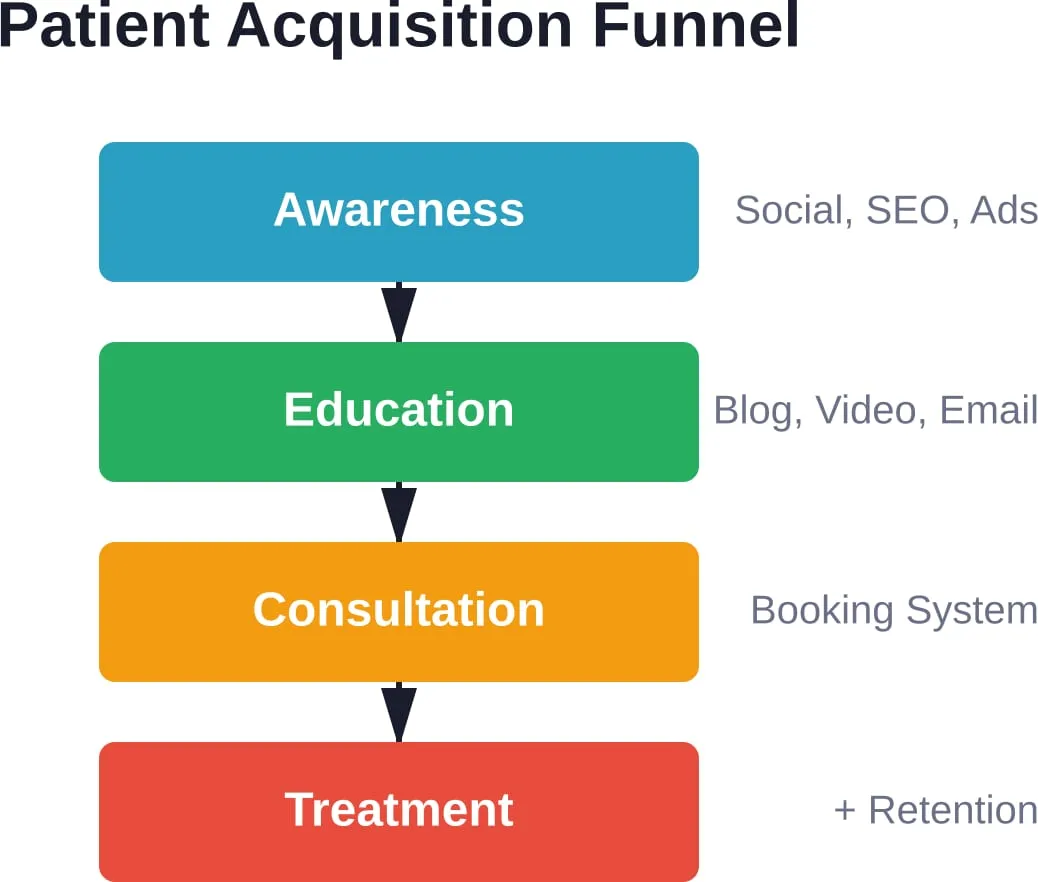
- Instagram remains the visual showcase. Post treatment process videos, before-and-after results (with proper consent), and educational carousels explaining procedures. Stories create urgency with limited-time promotions.
- TikTok drives discovery among younger demographics. Short educational videos—”What to expect after microneedling” or “Botox myths debunked”—build authority. The platform rewards consistency over production quality.
- Facebook targets older demographics and excels for community building. Create a group for existing clients where they can ask questions, share experiences, and access exclusive offers.
- Video content generally performs well across platforms, with treatment-in-action footage and testimonials generating strong engagement and conversion rates.

Content Marketing and Patient Education
Educational content addresses the knowledge gap while building authority. Growing interest in aesthetic procedures reflects expanding awareness of treatment options and technological advances in the field.
Blog topics that drive organic traffic include treatment comparisons, recovery timelines, cost breakdowns, and safety information. For example: “Botox vs. Dysport: Which Neurotoxin Delivers Better Results?” or “What to Expect During Your First Chemical Peel.”
Video content amplifies reach. Create procedure explainers, provider Q&A sessions, and patient journey documentaries. These assets work across your website, YouTube, and social channels.
Email nurture sequences convert consultation requests. After someone downloads a guide or books a consultation, automated emails provide relevant educational content, address common objections, and showcase results.
High-Converting Content Topics
- Treatment comparison guides (“Microneedling vs. Laser Resurfacing”)
- Cost transparency articles with realistic price ranges
- Recovery and downtime expectations for each procedure
- Safety information and practitioner qualifications
- Seasonal treatment planning (best times for specific procedures)
- Combination treatment protocols and their benefits
Paid Advertising: Meta and Google Strategies
Organic reach has limits. Paid advertising accelerates client acquisition when executed properly.
Meta platforms (Facebook and Instagram) excel for visual med spa advertising. Video ads showcasing treatments generate higher engagement than static images. Target demographics based on age, location, interests (beauty, wellness, skincare), and behaviors.
Google Ads capture high-intent searches. Someone searching “Botox near me” or “laser hair removal [city]” is ready to book. Bid on treatment-specific keywords, location modifiers, and competitor names (where legally permissible).
However, advertising aesthetic treatments requires compliance vigilance. Google frequently rejects med spa ads for policy violations. Avoid therapeutic claims, exaggerated results, or before-and-after images in ad creative (save those for landing pages).
Landing pages must align with ad messaging. If the ad promotes Botox, the landing page should focus exclusively on that treatment—not a general services page. Include clear CTAs, social proof, and booking mechanisms.
| Platform | Best For | Ad Format | Average Cost |
|---|---|---|---|
| Meta (FB/IG) | Brand awareness, visual showcase | Video, carousel, stories | Varies by market and competition |
| Google Search | High-intent conversions | Text ads, call extensions | Varies by market |
| Google Display | Retargeting, brand awareness | Banner, responsive display | Lower than search |
| YouTube | Educational content, demos | Pre-roll, discovery | Mid-range CPM |
Creative Marketing Tactics for Client Attraction
Traditional marketing works, but creative approaches generate buzz and differentiate your practice.
Themed open houses invite potential clients to experience the spa environment without commitment. Host “Botox and Bubbles” evenings or “Laser 101” educational sessions with mini-consultations and special event-only pricing.
Subscription or membership models create predictable revenue while encouraging treatment consistency. Monthly plans might include one core treatment plus discounts on additional services and retail products.
Strategic charity partnerships build community goodwill while expanding reach. Donate a percentage of specific treatment proceeds to local causes, or offer complimentary scar treatment to domestic violence survivors.
Referral programs leverage existing clients. According to the Meevo source, around 57% of consumers say that guerrilla marketing is an effective tool for businesses—creative, low-cost campaigns that generate outsized attention.
Retention and Loyalty Strategies
Acquiring new clients costs more than retaining existing ones. Post-treatment follow-up builds loyalty and encourages repeat visits.
Automated 24-hour check-in texts show you care while addressing concerns early. A simple “How are you feeling after yesterday’s treatment?” message strengthens relationships.
Treatment maintenance reminders keep clients on schedule. If Botox lasts 3-4 months, automated reminders at the 3-month mark capture bookings before clients forget or shop competitors.
Loyalty programs reward consistency. Points systems, VIP tiers, or punch cards encourage clients to return and increase lifetime value.
Measuring Marketing Performance
Marketing without measurement wastes budget. Track metrics that matter: client acquisition cost, lifetime value, conversion rates, and channel ROI.
- Google Analytics reveals which content drives consultations. Tag URLs in ads and emails to attribute conversions accurately. Most practices discover certain treatments or content types significantly outperform others.
- Call tracking shows which marketing channels generate phone inquiries. This data informs budget allocation—double down on what works, cut what doesn’t.
- Patient management software should capture lead source for every client. Over time, patterns emerge showing which marketing investments deliver actual booked treatments versus vanity metrics.
Compliance and Risk Management
Marketing missteps carry real consequences. The FDA has issued warning letters to medical spas for violations including illegal marketing of unapproved products. In November 2025, the FDA issued warning letters to 18 owners of websites illegally marketing unapproved and misbranded botulinum toxin products.
Before-and-after photos require patient consent and must accurately represent typical results, not exceptional cases. Avoid claims that treatments “cure” conditions or provide permanent results unless substantiated.
Partner with legal counsel familiar with aesthetic industry regulations. An ounce of prevention beats defending against regulatory action.
Building a Sustainable Marketing System
Medical spa marketing succeeds when built on strategic foundations rather than tactical gimmicks. Compliance protects your practice. Local visibility captures nearby prospects. Educational content builds trust. Social engagement creates community. Paid advertising accelerates growth.
Start with foundational elements—Google Business Profile, website optimization, review generation. Layer in content marketing and social media presence. Scale with paid advertising once organic channels prove conversion potential.
The practices that thrive don’t chase every trend. They build systematic, measurable marketing that consistently attracts qualified clients ready for treatment.
Ready to grow your medical spa? Audit current marketing efforts, identify gaps, and implement one new strategy this month. Consistent execution beats perfect planning every time.