


Quick Summary: Logistics companies can attract clients and grow market share through proven marketing strategies including SEO-optimized content, strategic social media engagement, thought leadership, client testimonials, targeted advertising, and industry partnerships. With 3PL providers reporting $196 billion in gross sales in 2024, effective marketing differentiates companies in this competitive landscape.
The logistics industry moves fast. Competition is fierce, margins are tight, and clients have more options than ever before. Standing out requires more than just reliable service—it demands a strategic marketing approach that builds visibility, trust, and authority.
Here’s the thing though—traditional marketing doesn’t always translate well to logistics. The buying cycle is long, decisions involve multiple stakeholders, and clients prioritize reliability over flashy campaigns. That’s exactly why logistics companies need specialized marketing ideas tailored to their unique challenges.
This guide breaks down fifteen actionable marketing strategies that logistics companies are using right now to attract clients, differentiate their services, and drive sustainable growth.
Understanding the Logistics Marketing Landscape
The logistics sector has evolved dramatically. According to recent industry analysis, 3PL providers collectively generated $196 billion in gross sales during 2024, representing a $2 billion year-over-year increase. This growth brings opportunity but also intensifies competition.
What makes logistics marketing different? The audience consists of procurement managers, supply chain directors, and operations leaders who make decisions based on data, track records, and risk mitigation rather than emotion. Marketing messages must address pain points like cost efficiency, reliability, and supply chain resilience.
The stakes are high. Consider that an unexpected parts shipment delay can cost an auto assembly plant $20,000 per minute, according to the Council of Supply Chain Management Professionals. Companies choosing logistics partners aren’t just buying a service—they’re selecting a business continuity safeguard.
Build an SEO-Optimized Content Hub
Search engines drive discovery for logistics services. When procurement teams search for “temperature-controlled freight forwarder” or “cross-border logistics provider,” appearing on page one makes the difference between inquiry and invisibility.
Creating a robust content library addresses this need. Blog posts, case studies, and resource guides that target specific industry keywords gradually build organic visibility. But quality matters more than quantity.
Focus content on answering the exact questions prospects ask: “How do I reduce freight costs without sacrificing reliability?” or “What documentation is required for international shipments?” Each piece should demonstrate expertise while incorporating relevant keywords naturally.
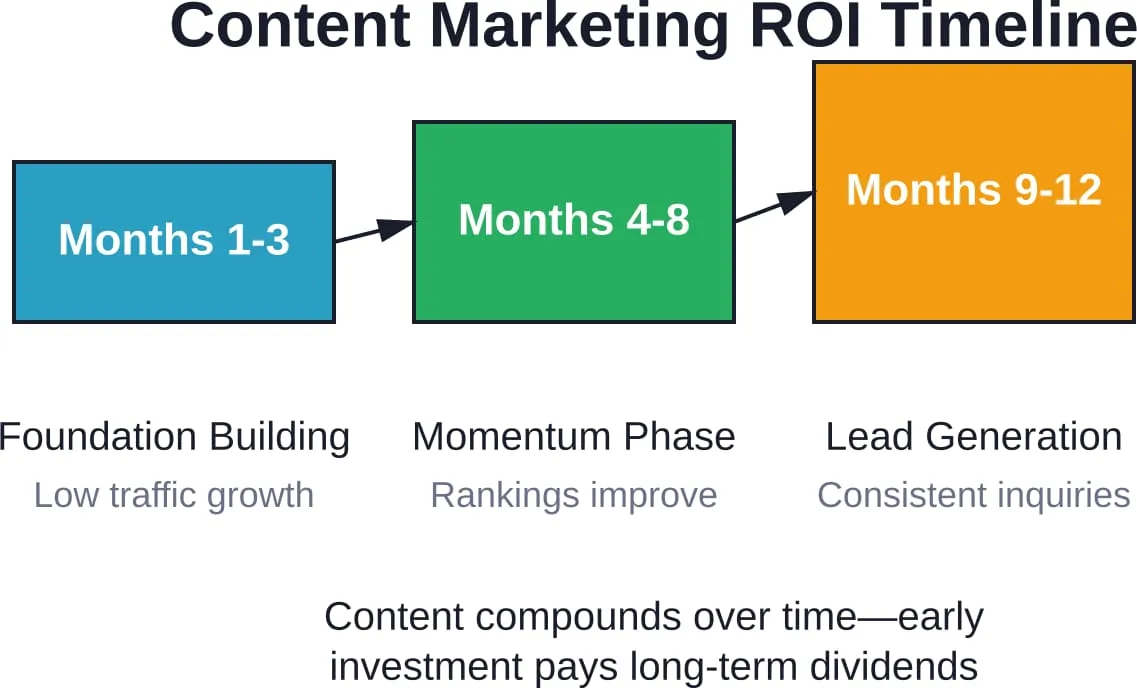
The real value emerges after six to twelve months when published content begins ranking for competitive terms. Unlike paid advertising, organic content continues attracting traffic without ongoing spend.
Leverage LinkedIn for B2B Networking
LinkedIn dominates B2B logistics marketing. Decision-makers actively use the platform to research vendors, follow industry trends, and engage with thought leaders.
Successful logistics companies treat LinkedIn as more than a job board. They publish regular updates about service expansions, share insights on supply chain challenges, and engage meaningfully with prospects’ content. The goal isn’t immediate conversion—it’s staying top-of-mind during the lengthy consideration phase.
Employee advocacy amplifies reach. When sales teams and operations managers share company content from their personal profiles, visibility expands exponentially beyond the corporate page’s follower count.
One practical approach: identify fifty ideal prospects, follow their activity, and leave thoughtful comments on their posts twice weekly. This consistent visibility establishes familiarity before formal outreach begins.
Showcase Client Success Stories
Nothing builds credibility like documented results. Case studies that detail specific client challenges, implemented solutions, and measurable outcomes provide the social proof procurement teams need.
Structure matters. Strong case studies follow this framework: background (client’s situation), challenge (specific problem), solution (what the logistics company implemented), and results (quantified improvements). Numbers carry weight—”reduced transit times by 23%” outperforms “significantly improved delivery speed.”
Video testimonials add another dimension. A three-minute interview with a satisfied client carries more persuasive power than pages of written copy. Clients speaking candidly about partnership value, problem-solving capability, and reliability create authentic trust signals.
Research examining logistics startups found that service performance contributes significantly to customer experience, according to analysis published in PLOS One. Case studies that highlight service excellence tap directly into this priority.
Invest in Targeted Digital Advertising
Organic strategies build long-term foundations, but paid advertising accelerates visibility. The key is precision targeting—reaching decision-makers at companies matching ideal customer profiles.
LinkedIn advertising enables targeting by job title, company size, industry, and even specific companies. A campaign targeting “Supply Chain Directors at manufacturing companies with 500+ employees” ensures ad spend reaches qualified prospects rather than generic audiences.
Google Ads work differently but equally effectively. Bidding on high-intent keywords like “automotive parts logistics provider” or “pharmaceutical cold chain shipping” captures prospects actively searching for solutions.
Budget considerations vary widely. Testing campaigns with modest spend—perhaps $2,000 monthly—provides performance data before scaling. Track cost-per-lead and lead-to-customer conversion rates rather than vanity metrics like impressions.
Develop Industry-Specific Expertise Content
Generalist messaging rarely resonates. Logistics companies gain traction by demonstrating deep expertise in specific verticals—pharmaceuticals, automotive, retail, manufacturing, or technology.
Creating industry-specific content sections on company websites signals specialization. A dedicated “Healthcare Logistics” hub with compliance guides, temperature-control capabilities, and healthcare case studies attracts medical device manufacturers and pharmaceutical distributors.
This approach aligns with how buyers search. A procurement manager at an electronics company searches for “electronics supply chain solutions,” not generic “logistics services.” Content matching these specific queries captures qualified traffic competitors miss.
| Industry Vertical | Content Focus Areas | Key Decision Factors |
|---|---|---|
| Pharmaceuticals | Temperature control, compliance, chain of custody | FDA validation, cold chain integrity |
| Automotive | Just-in-time delivery, parts tracking, reverse logistics | Reliability, speed, quality systems |
| Retail/E-commerce | Peak season capacity, returns management, last-mile | Scalability, technology integration |
| Manufacturing | Raw material sourcing, production scheduling, inventory | Cost efficiency, supply continuity |
Build Strategic Industry Partnerships
Collaboration opens doors that individual efforts can’t. Partnerships with complementary service providers create referral networks that benefit all parties.
Consider a freight forwarder partnering with customs brokers, warehouse operators, and packaging specialists. When any partner encounters a client need outside their scope, they refer within the network. These warm referrals convert at significantly higher rates than cold outreach.
Industry associations provide another partnership avenue. Active participation in organizations like the Council of Supply Chain Management Professionals (CSCMP) builds visibility among peers and potential clients. Speaking at association events or contributing to publications establishes thought leadership.
The 2025 Inbound Logistics 3PL Perspectives report reveals that 57% of 3PLs now offer both asset-based and non-asset services, reflecting how partnerships enable expanded service portfolios without massive capital investment.
Create Valuable Educational Resources
Free resources that solve specific problems generate qualified leads while demonstrating expertise. Guides, calculators, templates, and toolkits offer immediate value in exchange for contact information.
Examples that perform well include freight cost calculators, international shipping documentation checklists, supply chain risk assessment templates, and RFP response guides. Each tool addresses a concrete pain point logistics buyers face.
Promotion matters as much as creation. Gated resources require marketing through LinkedIn posts, email campaigns, and landing page optimization to drive downloads. The resource itself opens the door; follow-up nurturing converts interest into conversations.
Implement Email Nurture Campaigns
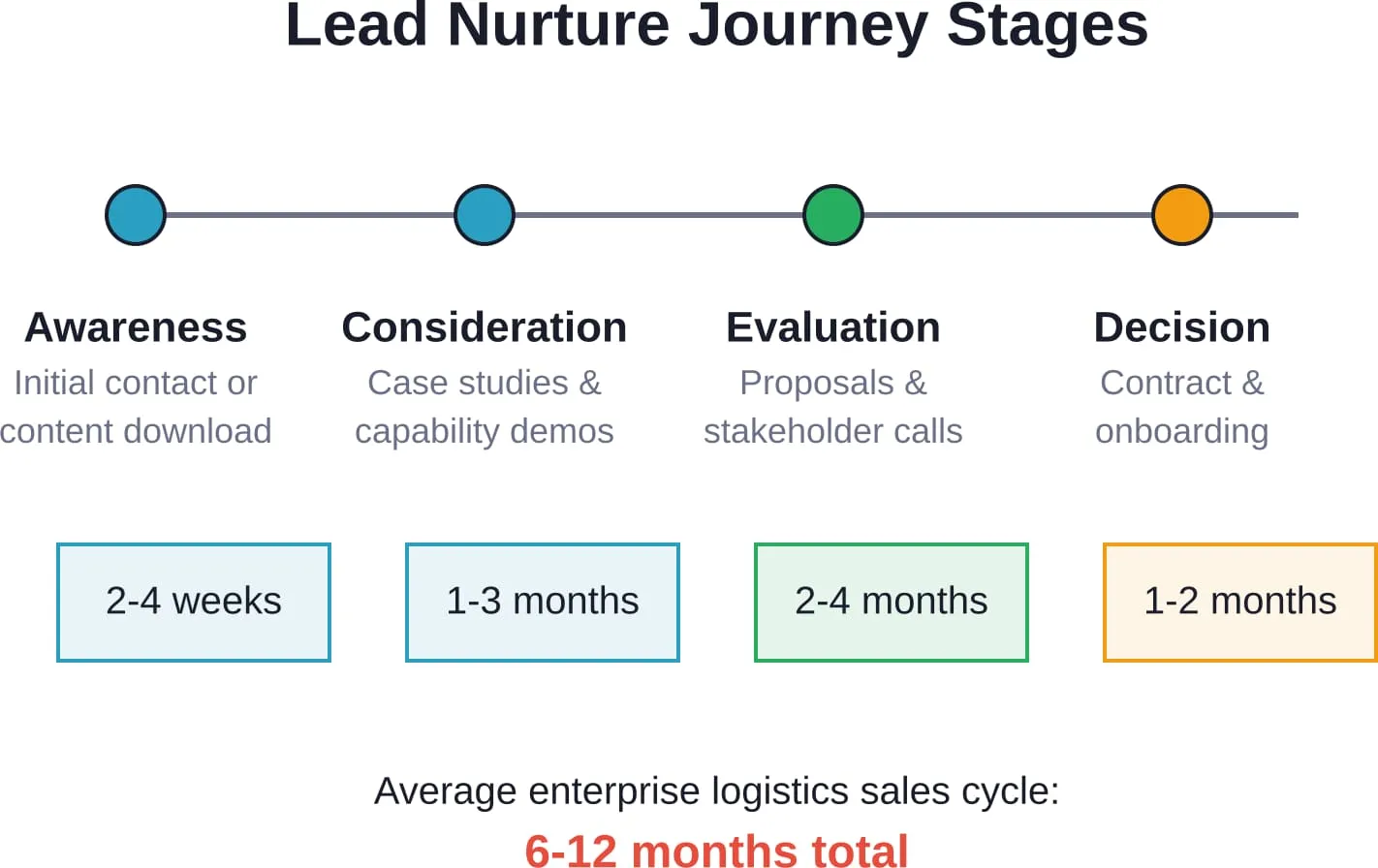
Most logistics deals don’t close immediately. The sales cycle spans months, sometimes exceeding a year for enterprise contracts. Email nurturing keeps prospects engaged throughout this journey.
Segmentation improves relevance. Different email tracks for manufacturers versus retailers, or for temperature-controlled specialists versus general freight, ensure recipients receive content matching their interests.
Effective nurture sequences balance education and promotion. A six-email campaign might include: industry trend analysis, case study, service overview, ROI calculator, customer testimonial video, and finally a meeting request. Each email provides standalone value while advancing the relationship.
Automation platforms enable sophisticated campaigns that trigger based on prospect behavior—website visits, content downloads, email opens—creating personalized experiences at scale.
Optimize for Local Search
For logistics companies with physical locations or regional service areas, local SEO drives proximity-based inquiries. Manufacturers searching for “freight forwarder near Chicago” or “Dallas warehousing services” represent high-intent prospects.
Google Business Profile optimization forms the foundation. Complete profiles with accurate contact information, service descriptions, photos, and regular posts improve local search visibility. Client reviews on the profile build trust and influence rankings.
Location-specific landing pages capture regional searches. A page targeting “Atlanta logistics services” with localized content, area-served maps, and regional case studies outperforms generic service pages for geographic queries.
Host Webinars on Industry Challenges
Educational webinars position logistics companies as thought leaders while generating qualified leads. Topics addressing current pain points attract target audiences dealing with those exact issues.
Examples include “Navigating New Customs Regulations for Cross-Border Shipping,” “Strategies for Peak Season Capacity Planning,” or “Technology Integration for Supply Chain Visibility.” Each session provides actionable insights attendees can implement immediately.
The lead generation component works because registration requires contact information. Post-webinar follow-up with recordings and supplementary resources keeps conversations going with attendees who demonstrated interest but aren’t yet ready to buy.
Leverage Trade Show Marketing
Industry trade shows and conferences concentrate target audiences in single locations. Strategic participation goes beyond booth presence to include speaking opportunities, networking events, and targeted outreach.
Pre-show marketing maximizes ROI. Email campaigns announcing booth location and scheduling meetings fill calendars before doors open. Social media posts about attendance create multiple touchpoints with prospects planning to attend.
Post-show follow-up determines actual return. Prompt outreach to booth visitors and meeting attendees while conversations remain fresh converts interest into next steps. Many companies squander trade show investments through delayed or absent follow-up.
Build a Referral Program
Existing clients represent the highest-quality lead source. Structured referral programs incentivize satisfied customers to recommend services within their networks.
Program design matters. Offering account credits, service upgrades, or charitable donations in the client’s name provides tangible motivation. The reward should feel meaningful without seeming transactional.
Communication keeps the program top-of-mind. Quarterly reminders to existing clients about the referral program, combined with success stories of companies they’ve referred, encourage ongoing participation.
Publish Original Industry Research
Original research establishes unmatched authority. Surveys, trend analyses, or benchmark studies that reveal new insights attract media coverage, speaking invitations, and inbound inquiries.
The investment is substantial—research requires design, distribution, analysis, and professional presentation. But the payoff extends for years as the research gets cited, shared, and referenced as an authoritative source.
Topics might include regional freight rate trends, technology adoption patterns, sustainability initiatives, or workforce challenges. Whatever the focus, original data differentiates the publishing company as an industry leader rather than follower.
Create Video Content
Video consumption continues growing across B2B audiences. Short-form videos explaining services, facility tours, client testimonials, and educational content meet prospects where they increasingly spend time.
Production quality doesn’t require Hollywood budgets. Smartphone videos with good lighting and clear audio suffice for most logistics marketing applications. Authenticity often outperforms polish.
Distribution across YouTube, LinkedIn, and company websites maximizes reach. Video also improves website engagement metrics—pages with video keep visitors on-site longer, signaling quality to search engines and potentially improving rankings.
Implement Account-Based Marketing
For logistics companies targeting enterprise accounts, account-based marketing concentrates resources on high-value prospects. Rather than broad campaigns, ABM creates customized outreach for specific target companies.
The approach begins with identifying ideal accounts—companies that perfectly match service capabilities, represent significant revenue potential, and show indicators of logistics partner dissatisfaction or contract renewal timing.
Customized content for each account addresses their specific challenges. A targeted company experiencing rapid international expansion receives content about global logistics coordination and customs expertise. This personalization dramatically increases relevance and response rates.
Bring More Logistics Leads Into Your Pipeline With Lengreo
Marketing ideas for logistics companies should help attract the right business clients, not just increase general website traffic. Lengreo can help logistics businesses create a clearer process for reaching prospects, building visibility, and moving interested contacts toward a conversation.
For logistics companies, Lengreo can support:
- B2B lead generation and prospect research
- SEO for stronger search visibility
- Content marketing support
- PPC campaign management
- LinkedIn and email outreach
- Appointment setting with qualified prospects
👉Contact Lengreo to build a clearer lead generation process for your logistics company.
Measuring Marketing Performance
Tracking the right metrics separates productive marketing from activity for activity’s sake. Vanity metrics like social media followers or website sessions matter less than conversion indicators and pipeline contribution.
Key performance indicators for logistics marketing include: marketing-qualified leads generated, cost per lead, lead-to-opportunity conversion rate, opportunity-to-customer conversion rate, customer acquisition cost, and marketing-attributed revenue.
Attribution modeling helps understand which touchpoints influence conversions. Did the case study download, webinar attendance, or sales call ultimately drive the deal? Multi-touch attribution provides clearer pictures than last-click models.
Regular reporting keeps teams aligned on what’s working. Monthly reviews of channel performance, content engagement, and pipeline metrics enable rapid optimization rather than waiting quarters to adjust underperforming tactics.
Taking Action on Logistics Marketing
The logistics industry rewards companies that market strategically. As 3PL providers continue expanding services—with 57% now offering both asset-based and non-asset capabilities—differentiation through marketing becomes increasingly critical.
Start with three to five tactics aligned with current resources and capabilities. Master those before expanding to additional channels. The companies winning market share don’t necessarily execute the most tactics; they execute chosen tactics exceptionally well.
Track performance rigorously from day one. Marketing investments should generate measurable returns, whether tracked through leads, opportunities, or revenue attribution. What gets measured improves.
The logistics buying journey is long, but marketing plants seeds throughout. Some prospects convert quickly; others require twelve months of touchpoints before requesting proposals. Consistency matters more than perfection. Companies that maintain marketing momentum through market cycles build sustainable competitive advantages over those that market sporadically.
Ready to elevate your logistics company’s marketing? Begin by auditing current efforts against the strategies outlined here, identify the three highest-potential opportunities, and commit to consistent execution over the next quarter. Results follow action.