


Quick Summary: Effective marketing for law firms in 2026 blends traditional relationship-building with digital strategies like local SEO, content marketing, and client referral systems. The most successful firms focus on building authority through educational content, optimizing for local search visibility, and leveraging technology to create client-centric experiences that drive measurable ROI.
The legal marketplace has never been more competitive. Potential clients have hundreds of options when searching for legal representation, and standing out requires more than a professional website and business cards.
What separates thriving practices from struggling ones? Smart marketing that actually generates revenue rather than just looking busy.
This guide covers marketing ideas that work across firm sizes and practice areas, from zero-budget relationship strategies to high-ROI digital campaigns. These aren’t theoretical concepts—they’re proven approaches backed by data from authoritative legal industry sources.
Why Traditional Marketing Still Matters
Digital dominates the conversation around legal marketing, but traditional relationship-building remains foundational. According to Harvard Law School research, networking in its broadest sense accounts for 11% of awareness recalls when clients consider which firm to hire.
That percentage might seem modest until you realize it represents thousands of potential client touchpoints happening outside the digital realm entirely.
Referrals Remain the Gold Standard
Client referrals are among the highest-impact lead sources for law firms. That single channel often outperforms many firms’ entire digital marketing budgets combined.
Why do referrals work so effectively? Trust transfers directly from the referring party to the law firm. When someone’s trusted contact recommends an attorney, the new prospect arrives pre-sold on the relationship.
Building a referral engine requires intentional systems, not hope. Satisfied clients need gentle prompts and easy mechanisms to spread the word. Many firms see results by simply asking at the conclusion of successful representations.
Community Presence Creates Local Authority
Sponsoring local events might seem old-fashioned, but 44% of law firms sponsor or attend events, making this the most popular traditional marketing channel. The approach works particularly well for practices focused on local markets rather than national reach.
Visibility at industry conferences, bar association meetings, and community gatherings builds the personal connections that networking statistics reflect. These face-to-face interactions create memorability that digital impressions struggle to match.
Print marketing is used by 24% of law firms according to industry data. The key isn’t whether these channels are “modern” but whether they reach your specific target audience effectively.
Digital Marketing Foundations Every Firm Needs
Digital channels now drive the majority of new client inquiries, but not all digital marketing delivers equal results. Some tactics generate measurable ROI while others drain budgets without meaningful returns.
Local SEO: The Highest-ROI Investment
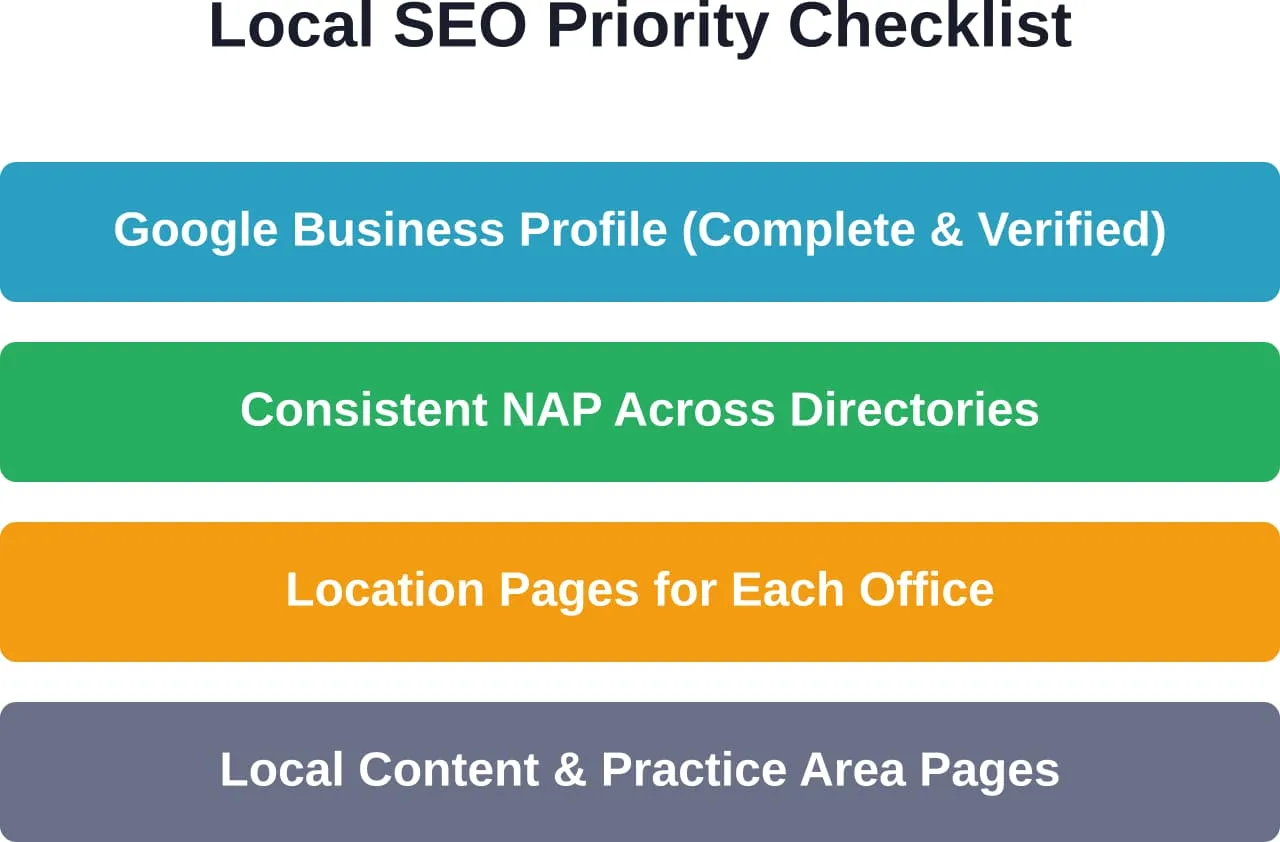
When someone searches “divorce attorney near me” or “business lawyer in [city],” appearing in those results determines whether your phone rings. Local search optimization focuses on geographic visibility rather than competing nationally.
The foundation starts with Google Business Profile optimization. This free tool controls how your firm appears in map results and local search panels. Firms that claim and optimize their profiles capture clients actively searching for services in their area.
Real talk: SEO is a long game. Results typically take three to six months before meaningful traffic increases appear. But once established, organic search provides consistent lead flow without ongoing advertising costs.
Content Marketing Builds Authority
Educational content positions attorneys as thought leaders rather than just service providers. Articles, guides, and resources that answer potential clients’ questions demonstrate expertise before the first consultation.
The content doesn’t need to be complex. Simple explainers about common legal issues in your practice area provide value while naturally incorporating search terms prospects use.
Distribution matters as much as creation. Publishing on your website helps SEO, but promoting through social channels, email newsletters, and professional networks extends reach significantly.
Paid Search: Fast Results with Clear ROI
Google Local Services Ads deliver quick visibility while organic SEO builds momentum. One example campaign generated a 400% ROI—spending $2,000 to bring in $10,000 in revenue.
Successful legal marketing campaigns typically achieve revenue-to-cost ratios of 5:1 or higher. Paid search campaigns with proper tracking let firms see exactly which ads generate consultations and which waste budget.
The challenge with paid advertising is market saturation. Competition drives up costs in lucrative practice areas like personal injury. TV advertising costs vary significantly based on market size.
Building a Client-Centric Marketing Approach
Research indicates that client-centric relationships can increase client engagement and retention. That insight reveals something crucial: marketing isn’t just about attracting new clients but creating experiences that drive retention and expansion.
Technology as a Differentiator
In a 2024 survey, 98% of HighQ users reported increased efficiency when exchanging and locating documents. Technology that makes clients’ lives easier becomes a marketing advantage.
Many firms now showcase their technology capabilities in pitches and proposals. The message? “Working with us will be easier and more transparent than working with competitors.”
Client portals, secure document sharing, online payment systems, and automated status updates all contribute to satisfaction. And satisfied clients refer others.
Reviews and Social Proof
Online reviews influence buying decisions across industries, and legal services are no exception. Potential clients research attorney reviews before making contact, and negative reviews (or no reviews at all) push prospects toward competitors.
Actively managing your online reputation means soliciting reviews from satisfied clients, responding professionally to all feedback, and addressing concerns before they become public complaints.
The strategy isn’t manipulation—it’s systematically capturing the positive experiences that already exist but weren’t being documented.
Marketing Ideas by Practice Area
Not all marketing strategies work equally across practice areas. What attracts personal injury clients differs dramatically from what corporate counsel look for.
Consumer-Facing Practices
Personal injury, family law, criminal defense, and estate planning serve individual consumers who typically need one-time services during stressful life events.
These prospects search online actively when problems arise. They compare multiple attorneys quickly and make decisions based on perceived expertise, accessibility, and likability.
Effective strategies include:
- Heavy investment in local SEO and Google Local Services Ads
- Educational content answering common questions (“What happens after a car accident?”)
- Video content showing attorney personality and communication style
- Client testimonials and case results (where ethically permitted)
- Clear pricing information or consultation offers
Business and Commercial Practices
Corporate law, commercial litigation, intellectual property, and business transactions serve company clients who need ongoing relationships rather than one-time help.
These clients take longer to convert, involve multiple decision-makers, and prioritize track record over personality. They often come through professional referrals rather than online searches.
Strategies that work:
- Thought leadership content in industry publications
- Speaking engagements at industry conferences
- Networking with complementary professional service providers (accountants, consultants)
- LinkedIn presence and strategic connection-building
- Case studies demonstrating expertise in specific industries
Niche Specializations
Immigration, bankruptcy, workers’ compensation, and other specialized practices serve defined populations with specific needs.
Marketing effectiveness comes from a deep understanding of the target audience’s information sources and decision-making process. Advertising in general-interest channels wastes budget—targeted placement in community-specific media works better.
Budget-Friendly Marketing Tactics
Small firms and solo practitioners often compete against larger practices with substantial marketing budgets. But several high-impact strategies require time investment rather than cash.
Maximize Free Platforms
Google Business Profile, LinkedIn, legal directories, and social media platforms all offer free basic listings. Optimizing these completely costs nothing but delivers visibility.
Many attorneys skip this step, assuming free tools can’t matter much. That assumption hands opportunities to competitors who take the time to claim and complete every available profile.
Leverage Existing Client Relationships
Past clients represent marketing assets already in your database. A simple “how are things going?” email can prompt referrals or repeat business without any advertising spend.
Creating a structured client communication program—quarterly newsletters, annual check-ins, holiday cards—keeps relationships warm. When those contacts need legal help or know someone who does, you’re top-of-mind.
Content Repurposing Multiplies Effort
One well-researched article becomes multiple marketing assets: social media posts, email newsletter content, presentation material, and video script topics.
Recording short video explanations of articles extends reach to audiences who prefer video over text. Pulling quotes for social graphics creates shareable content. The initial research effort generates weeks of marketing material.
| Marketing Tactic | Investment Level | Time to Results | Best For |
|---|---|---|---|
| Google Business Profile | Free | Immediate-1 month | All local firms |
| Client referral program | Free-Low | Immediate-3 months | Firms with satisfied clients |
| Content marketing/blogging | Low-Medium | 3-6 months | All practice areas |
| Local SEO | Medium | 3-6 months | Consumer-facing practices |
| Google Local Services Ads | Medium-High | Immediate-1 week | High-volume practices |
| Social media presence | Free-Low | 3-12 months | Consumer practices, thought leadership |
Get More Law Firm Leads With Lengreo
Marketing ideas for law firms should help the firm reach people or companies looking for specific legal support. Lengreo can help create a more focused process for attracting, qualifying, and following up with relevant prospects.
Lengreo can support law firm marketing through:
- SEO and content marketing
- Lead generation for B2B growth
- LinkedIn outreach to selected contacts
- Email outreach to prospect lists
👉Contact Lengreo to build a more focused lead generation process for your law firm.
Measuring What Actually Matters
Vanity metrics like website traffic and social media followers feel good but don’t pay the bills. Marketing measurement should focus on revenue impact rather than activity counts.
Track Revenue, Not Just Leads
Firms demonstrating revenue impact secure budget increases while those reporting traffic growth face cuts. The difference? Connecting marketing activity to actual revenue.
Tracking requires systems that follow prospects from first contact through signed engagement. Which marketing channel generated the lead? What was the consultation outcome? Did they become a client? What was the matter value?
This attribution lets firms calculate true ROI and make intelligent budget allocation decisions.
Key Performance Indicators for Law Firms
Beyond revenue, several metrics indicate marketing health:
- Cost per lead by channel
- Lead-to-consultation conversion rate
- Consultation-to-client conversion rate
- Average matter value by lead source
- Client lifetime value
- Referral rate from existing clients
These metrics reveal which marketing investments generate profitable business versus which create busy work.
Common Marketing Mistakes to Avoid
Even well-intentioned marketing efforts fail when firms make these predictable mistakes.
Generic Messaging That Says Nothing
“Experienced attorneys providing quality legal services” could describe literally any law firm. Generic language fails to differentiate or give prospects a reason to choose you.
Effective messaging addresses specific client problems, demonstrates understanding of their situation, and explains why your approach delivers better outcomes.
Neglecting Mobile Experience
Most legal searches now happen on mobile devices, yet many law firm websites deliver frustrating mobile experiences. Tiny text, difficult navigation, and forms that don’t work properly on phones send prospects to competitors.
Inconsistent Effort
Marketing requires sustained commitment rather than sporadic bursts of activity. Posting to social media daily for two weeks then going silent for three months builds nothing.
Better to maintain a modest but consistent presence than alternate between intense activity and complete absence.
Ignoring Existing Clients
Firms obsessed with new client acquisition often neglect their best marketing asset—satisfied current and former clients who can provide referrals and additional business.
The cost of retaining a client or earning a referral is far lower than acquiring a brand-new prospect through advertising.
The Role of Branding in Law Firm Marketing
Harvard Law School research on legal branding found that brand plays a hugely important role in developing and maintaining successful law firms, yet remains an underutilized asset in the industry.
Brand extends beyond logos and color schemes—it encompasses reputation, specialization positioning, and the experience clients expect when working with the firm.
Strong brand positioning can significantly increase firm visibility and top-of-mind awareness. That kind of recognition translates directly into new business when companies need legal services.
Building Brand Through Consistency
Strong brands deliver consistent experiences across every touchpoint. The way phones are answered, how emails are formatted, the tone of website content, and the professionalism of client interactions all contribute to brand perception.
Inconsistency creates confusion. When different parts of the firm project different messages or quality levels, potential clients struggle to understand what they’re actually buying.
Personal Brand Versus Firm Brand
In legal services, both individual attorney brands and firm brands influence buying decisions. Clients hire both the firm and the specific lawyer they’ll work with.
Solo practitioners and small firms often build stronger personal brands while larger firms emphasize institutional brands. Neither approach is inherently superior—the right strategy depends on practice area and target market.
Adapting Marketing Strategy Over Time
What works today won’t necessarily work in three years. Marketing effectiveness shifts as technology, client behavior, and competition evolve.
Associate Retention Impacts Client Service
According to the Thomson Reuters Law Firm Business Leaders Report, approximately 27% of Am Law 200 associates indicated willingness to leave for higher compensation, and 60% cited work-life balance concerns. This turnover disrupts client relationships and service quality.
Firms that solve retention problems deliver more consistent client experiences, which strengthens marketing through better satisfaction and referrals.
AI and Technology Transformation
Legal research, document drafting, and client service delivery are all being reshaped by technology. Firms that adopt useful tools improve efficiency and client satisfaction—both of which become marketing advantages.
The conversation around legal services is shifting from “what” lawyers do to “how” they deliver services. Technology plays an increasingly central role in that differentiation.
Creating a Marketing Plan That Works
Random marketing activities waste time and money. A structured plan focuses effort on tactics that actually generate results for your specific situation.
Start with Clear Goals
“Get more clients” isn’t specific enough to guide decisions. Better goals: “Generate 10 qualified personal injury consultations per month” or “Add 3 corporate clients with $50K+ annual billings.”
Specific goals let you calculate required activity levels and budget allocations. They also make it obvious when something isn’t working.
Allocate Budget to Proven Channels First
If referrals consistently generate your best clients, invest in strengthening referral systems before experimenting with unproven channels. Build from strength rather than chasing trends.
Once core channels are fully optimized, then test new approaches with small budget allocations.
Build Systems, Not Just Campaigns
One-off marketing efforts create temporary activity spikes but don’t build sustainable growth. Systems that run consistently—monthly content publication, quarterly client outreach, systematic review requests—compound over time.
| Firm Size | Recommended Marketing Budget | Primary Focus Areas |
|---|---|---|
| Solo/1-2 attorneys | 5-10% of revenue | Local SEO, referral systems, content marketing |
| Small (3-10 attorneys) | 7-12% of revenue | Local SEO, paid search, content, networking |
| Mid-size (11-50 attorneys) | 8-15% of revenue | Digital presence, brand building, multiple channels |
| Large (50+ attorneys) | 10-20% of revenue | Brand positioning, thought leadership, integrated campaigns |
Moving Forward with Your Marketing
The firms that win in 2026’s competitive legal market aren’t necessarily those with the biggest budgets—they’re the ones executing smart strategies consistently.
Start with the fundamentals: optimize your Google Business Profile, systematize client communication, and claim your presence across relevant directories. These free or low-cost actions create a foundation for everything else.
Then layer in strategies that fit your practice area, budget, and strengths. Consumer practices need strong local SEO and paid search. Business practices need thought leadership and professional networking. Niche practices need targeted presence where their specific clients look for information.
Most importantly, measure what matters. Track which marketing activities generate revenue, not just activity. Double down on what works and cut what doesn’t.
Marketing isn’t a one-time project—it’s an ongoing process of testing, measuring, and refining. The firms that treat marketing as a core business function rather than an optional expense build sustainable competitive advantages that compound year after year.
Ready to transform your firm’s marketing? Start with one high-impact strategy from this guide, implement it consistently for 90 days, and measure the results. That disciplined approach beats scattered efforts across a dozen channels every time.