


Quick Summary: Effective HVAC marketing combines digital strategies like local SEO and Google Ads with traditional tactics such as referral programs and direct mail. Companies using targeted campaigns have reduced cost per lead from $93 to under $19 while generating over $221,548 in 90-day lead value. The key is implementing multi-channel approaches that prioritize mobile optimization, customer reviews, and consistent tracking.
The HVAC industry presents unique marketing challenges. Customers need services urgently, competition runs fierce in local markets, and seasonal demand shifts constantly. Yet companies that master the right marketing mix see dramatic results.
Case studies show what’s possible. One HVAC business went from 7 leads monthly at $93 each to 125 leads monthly at under $19 each. Another generated $221,548 in lead value within 90 days using targeted Facebook and Google campaigns, achieving an 830% return on investment.
So what separates successful HVAC marketing from wasted budget? It’s not about doing everything—it’s about doing the right things consistently.
Mobile-First Website Optimization
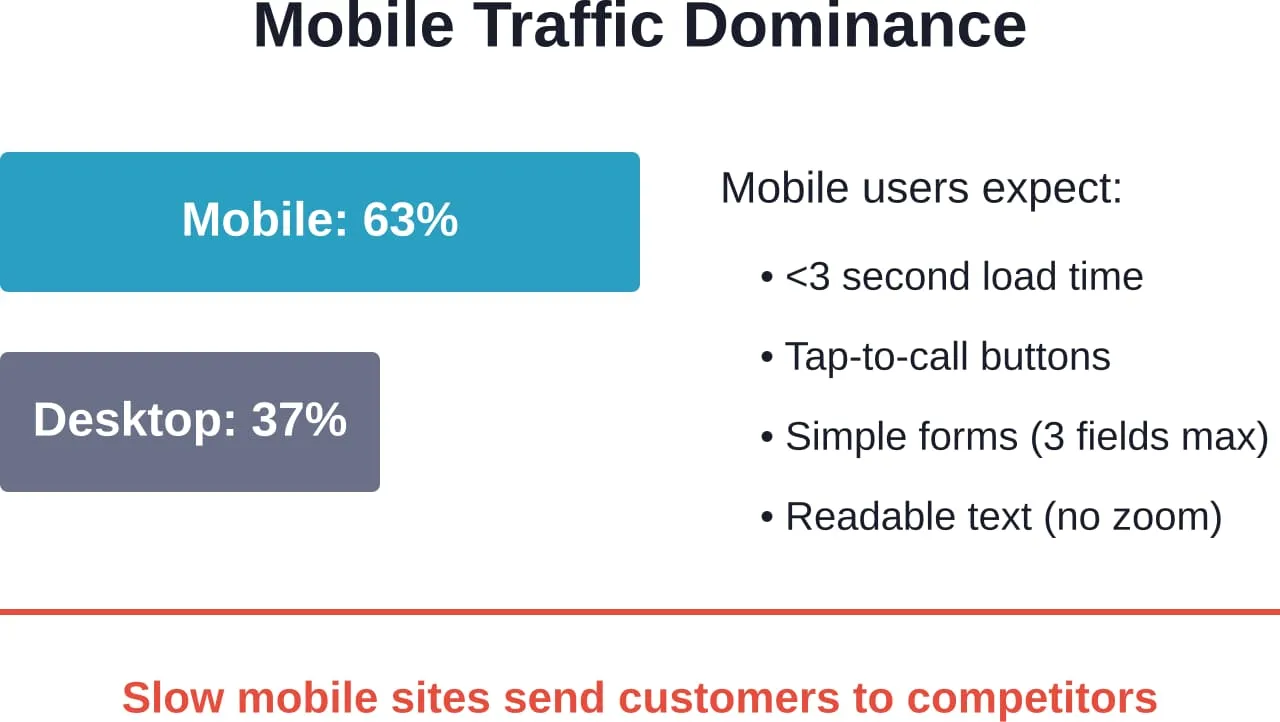
Here’s the reality: 63% of organic search visits in the United States come from smartphones. When someone’s air conditioning fails on a summer afternoon, they’re pulling out their phone, not booting up a desktop.
Consumers searching for “HVAC near me” want fast answers. A slow or clunky mobile site sends them straight to competitors.
Mobile optimization means more than responsive design. Pages must load in under three seconds. Click-to-call buttons need prominent placement. Forms should be short—name, phone, service needed. That’s it.
Test the site on actual devices. Does the phone number tap to dial? Can users read text without zooming? Do images scale properly? These details determine whether a site converts visitors or frustrates them.
Local SEO That Actually Works
Local SEO isn’t optional for HVAC companies—it’s the foundation. 90% of consumers use the internet to find local businesses, and most never scroll past the first page of results.
Start with Google Business Profile. Claim and verify the listing, then fill out every section. Business hours, service areas, phone number, website, photos of trucks and technicians. Real photos outperform stock images every time.
Reviews matter more than most realize. Google prioritizes businesses with recent, positive reviews. Ask satisfied customers to leave feedback right after service. Make it easy with follow-up texts containing direct review links.
Responding to reviews—both positive and negative—signals active management. Thank customers for good reviews. Address complaints professionally in bad ones. Future customers read these interactions.
On-page SEO requires service-specific pages. Don’t just have one “Services” page. Create separate pages for AC repair, furnace installation, heat pump replacement, duct cleaning. Each page targets different search queries.
Include location keywords naturally. “AC repair in [city name]” or “[city] furnace installation” help search engines connect the business to local searches.
Setting the Right Marketing Budget
Experts suggest HVAC contractors dedicate 10% to 20% of sales toward marketing. A company generating $500,000 annually should allocate $50,000 to $100,000 for marketing efforts.
New businesses or those in growth phases might push toward the higher end. Established companies with strong referral networks can operate toward the lower range.
Budget allocation matters as much as total spend. According to the U.S. Small Business Administration, small businesses can start with a modest $100 budget for test marketing campaigns. Testing before committing larger amounts prevents wasteful spending.
| Annual Revenue | Marketing Budget (10%) | Marketing Budget (20%) | Monthly Spend |
|---|---|---|---|
| $250,000 | $25,000 | $50,000 | $2,083 – $4,167 |
| $500,000 | $50,000 | $100,000 | $4,167 – $8,333 |
| $1,000,000 | $100,000 | $200,000 | $8,333 – $16,667 |
| $2,000,000 | $200,000 | $400,000 | $16,667 – $33,333 |
Track every dollar. Know which channels generate leads and at what cost. This data drives smarter allocation over time.
Google Local Services Ads
Google Local Services Ads appear above regular search ads and organic results. The “Google Guaranteed” badge builds instant trust with customers who’ve never heard of the company.
These ads operate on pay-per-lead, not pay-per-click. Companies only pay when a customer contacts them through the ad. Pricing varies by market, but the qualified lead quality often justifies the cost.
Getting approved requires background checks, license verification, and insurance documentation. The vetting process takes time but delivers credibility that standard ads can’t match.
Leads come via phone calls or messages directly through the ad. The platform tracks these interactions, making ROI measurement straightforward.
Strategic Email Marketing
Email marketing delivers consistent ROI when executed properly. Start by collecting customer emails at every service call. A simple field in the invoice system builds a database over time.
Segment the list by service type and timing. Customers who had AC installed three years ago might need maintenance. Those who had furnaces serviced last winter will need AC checks before summer.
Seasonal campaigns work well. Spring emails promote AC tune-ups before heat arrives. Fall messages push furnace inspections before cold weather hits. These aren’t pushy sales—they’re helpful reminders that provide value.
Quarterly newsletters keep the company top-of-mind. Include energy-saving tips, maintenance advice, and special offers. Interactive calculators and energy-saving guides generate 2-3x higher conversion rates than traditional marketing methods.
Automation handles the heavy lifting. Set up drip campaigns that send maintenance reminders based on service dates. This runs in the background while generating steady business.
The Power of Referral Programs
Referrals remain one of the most cost-effective lead sources. Satisfied customers trust their experience more than any ad campaign.
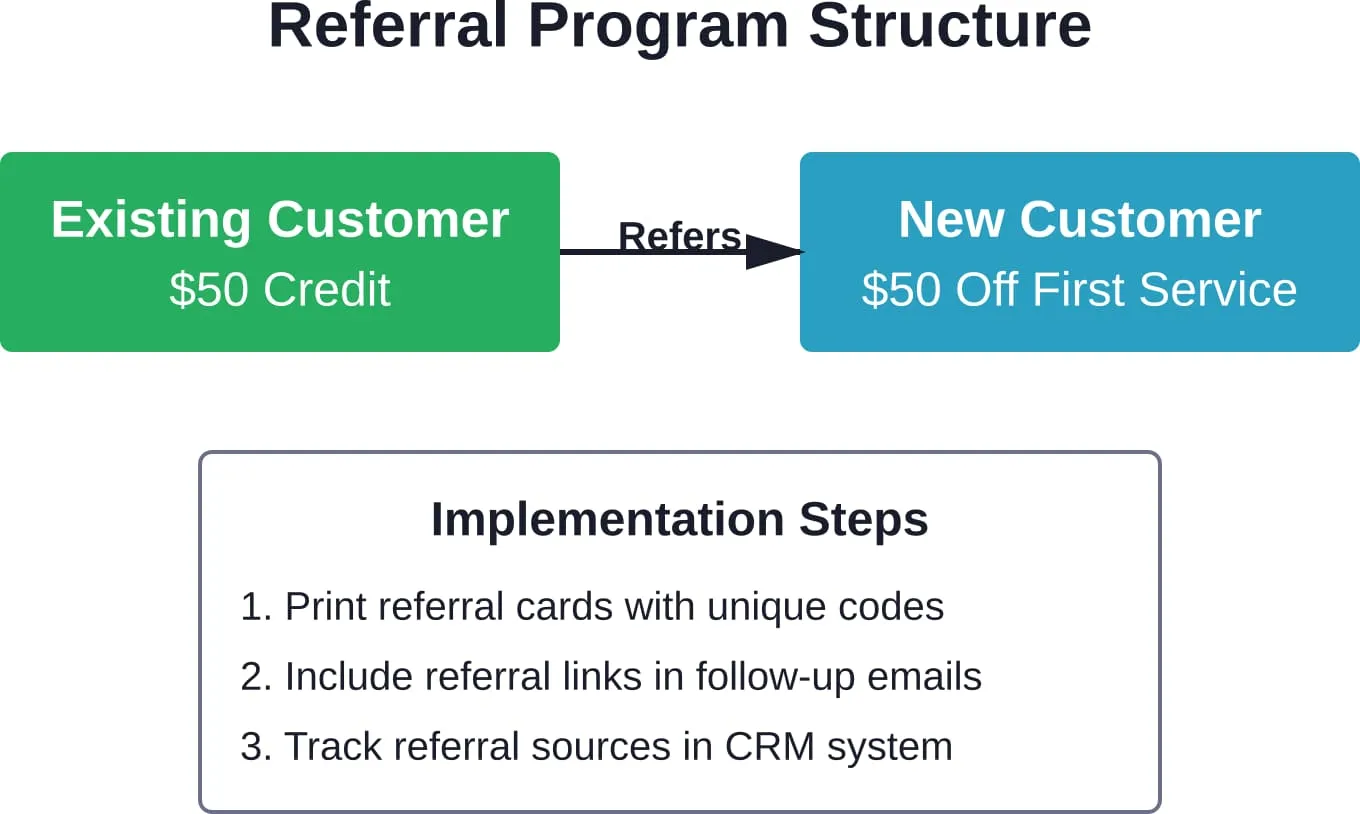
But passive referral waiting doesn’t work. Active programs that incentivize referrals generate much better results. According to industry data, offering $50 off their next maintenance visit motivates customers to recommend services.
Referral programs can create two-tier incentives: $50 for the referring customer and $50 off for the new customer’s first service. Both parties benefit, reducing friction.
Make referrals easy. Provide customers with referral cards they can hand to neighbors. Include a unique code or link in follow-up emails. Track referral sources to identify top advocates.
Thank the referrers personally. A phone call or handwritten note acknowledges their support and encourages future referrals.
Direct Mail Still Delivers
Digital dominates marketing conversations, but direct mail produces tangible results for HVAC companies. Physical mail stands out when inboxes overflow with emails.
Target specific neighborhoods. New construction areas need installation services. Older neighborhoods with aging systems require replacement options. Geo-targeting increases relevance and response rates.
Seasonal postcards work well. Spring mailers offer AC tune-up specials. Fall cards promote furnace inspections. Including limited-time offers creates urgency.
Direct mail campaigns cost more per piece than email, but response rates often justify the expense. Combining mail with digital follow-up amplifies results. A postcard followed by an email reminder reinforces the message.
Social Media Strategy
HVAC companies don’t need viral content—they need consistent visibility. Social media keeps the business in front of local audiences between service calls.
Facebook targeting allows companies to reach users within specific zip codes. The U.S. Small Business Administration recommends starting Facebook promotions with a modest $100 test budget to gauge response before scaling.
Content should educate, not just sell. Share maintenance tips, explain system efficiency, answer common questions. Before-and-after installation photos showcase quality work. Technician spotlights humanize the company.
Video content performs exceptionally well. Short clips showing common problems and solutions establish expertise. Customer testimonial videos build trust more effectively than written reviews.
Engagement matters more than follower count. Respond to comments and messages quickly. Answer questions publicly so others benefit from the information.
Bring More HVAC Prospects to Sales With Lengreo
Marketing ideas for HVAC companies work better when they are tied to clear lead generation, not just general promotion. Lengreo helps B2B companies use SEO, PPC, content marketing, LinkedIn and email outreach, and appointment setting to reach relevant prospects and turn interest into real conversations. This can be useful when an HVAC business needs more visibility in search, a steadier flow of qualified contacts, or a more organized way to follow up with potential commercial clients, partners, or service buyers.
For HVAC companies, Lengreo can support:
- SEO and content marketing for service visibility
- PPC campaigns for relevant traffic
- B2B lead generation for HVAC-related offers
- LinkedIn and email outreach to selected prospects
- Appointment setting for qualified sales conversations
Contact Lengreo to build a clearer lead generation process for your HVAC company.
Tracking and Measuring Results
Marketing without measurement wastes money. Every channel and campaign needs tracking to determine what works.
Call tracking software assigns unique phone numbers to different marketing sources. This reveals which ads, mailers, or web pages generate calls. Demand transparency from marketing providers about lead sources and quality.
Google Analytics shows website behavior. Which pages do visitors view before contacting the company? Where do they drop off? This data guides site improvements.
Cost per lead varies by channel. Case studies from HVAC lead generation sources show dramatic improvement: initial leads cost $93 each, but optimization reduced this to under $19, representing a significant cost reduction while volume increased from 7 to 125 monthly leads.
Track conversion rates too. Leads mean nothing if they don’t become paying customers. Calculate customer acquisition cost by channel to identify the most profitable sources.
| Metric | What It Measures | Target Range |
|---|---|---|
| Cost Per Lead | Marketing spend ÷ leads generated | $15 – $50 |
| Lead-to-Customer Rate | Customers ÷ total leads | 20% – 40% |
| Customer Acquisition Cost | Total marketing spend ÷ new customers | $50 – $200 |
| Return on Ad Spend | Revenue ÷ ad spend | 3:1 – 10:1 |
Customer Service as Marketing
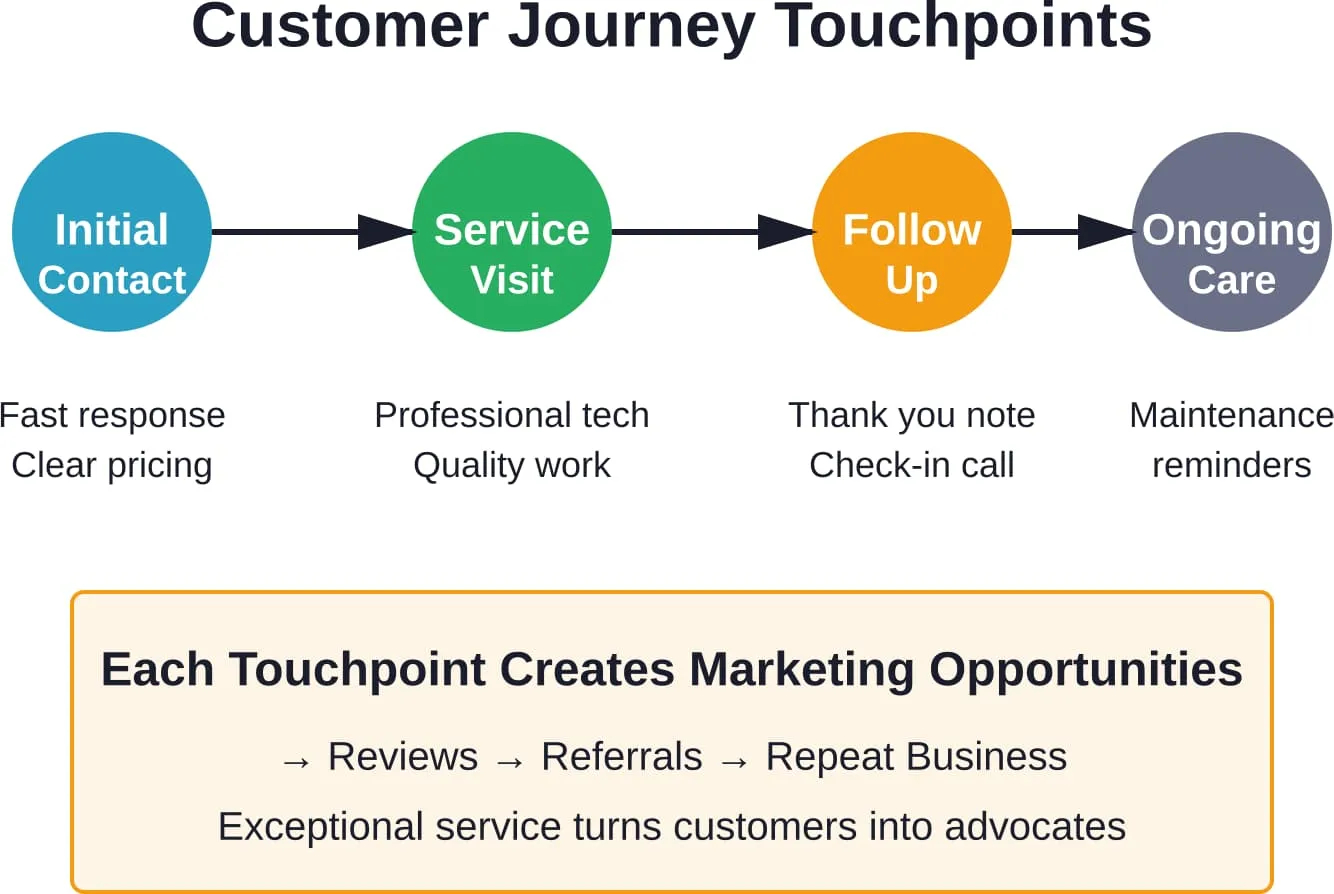
The best marketing strategy costs nothing: exceptional service. Satisfied customers leave reviews, provide referrals, and become repeat clients.
Technicians represent the brand in customers’ homes. Professional appearance, clear communication, and quality work create lasting impressions. One great experience generates multiple future leads through word-of-mouth.
Follow-up matters. A thank-you message after service shows appreciation. A check-in call a week later demonstrates care. These touches differentiate companies in a commodity market.
Handle complaints swiftly and professionally. Problems will occur—how they’re resolved determines whether the customer stays or leaves negative reviews. Most upset customers become loyal advocates when companies make things right.
Final Thoughts
Effective HVAC marketing isn’t about implementing every possible tactic. It’s about selecting the right mix for the business, executing consistently, and measuring results ruthlessly.
Start with fundamentals: mobile-optimized website, complete Google Business Profile, active review collection. Build from there with targeted ads, referral programs, and email campaigns. Track everything to identify what works and what wastes money.
The data proves what’s possible. Lead costs dropped from $93 to $19. Marketing ROI reaching significant heights. These aren’t theoretical numbers—they’re real results from HVAC companies that are committed to strategic marketing.
Pick three strategies from this guide. Implement them thoroughly over the next 90 days. Measure results. Then optimize or add new tactics based on what the data reveals.