

Quick Summary: Hotel marketing in 2026 requires a multi-channel approach combining digital strategies like SEO, social media, and email campaigns with personalized guest experiences. Successful hotels leverage mobile optimization, sustainability messaging, and data-driven insights to increase direct bookings while standing out in a competitive market. The key is building authentic brand stories that resonate with travelers seeking unique, experience-driven stays.
Hotel marketing has become increasingly complex. With rising operating costs and flattening growth, properties need smarter strategies to attract guests and drive revenue. But here’s the thing—the opportunities are still there.
According to the American Hotel & Lodging Association, guest spending on lodging and related expenses reached $747.17 billion in 2024. That’s a 4% year-over-year increase, and it signals something important: travelers are still spending. They’re just pickier about where.
The challenge? Standing out in a saturated market where every hotel claims to offer the best experience. The solution isn’t doing more of the same—it’s doing different, and doing it strategically.
Understanding the Hotel Marketing Landscape in 2026
The hospitality industry has shifted dramatically. Travelers now expect personalized experiences, seamless mobile booking, and authentic brand stories. They research extensively before booking, with 75% of travelers starting their hotel search on a search engine, according to hotel marketing research.
Mobile devices dominate the booking journey. According to Les Roches, 50% of accommodation searches and bookings are made on mobile devices. If a hotel’s website doesn’t deliver a flawless mobile experience, potential guests will bounce to a competitor.
Sustainability has moved from nice-to-have to must-have. In a Booking.com study, 83% of global travelers confirmed that sustainable travel was important to them, and 75% expressed a desire to travel more sustainably over the next 12 months.
Real talk: hotels that ignore these trends won’t just fall behind—they’ll become invisible.
Building Your Foundation: Core Marketing Essentials
Create a Comprehensive Marketing Plan
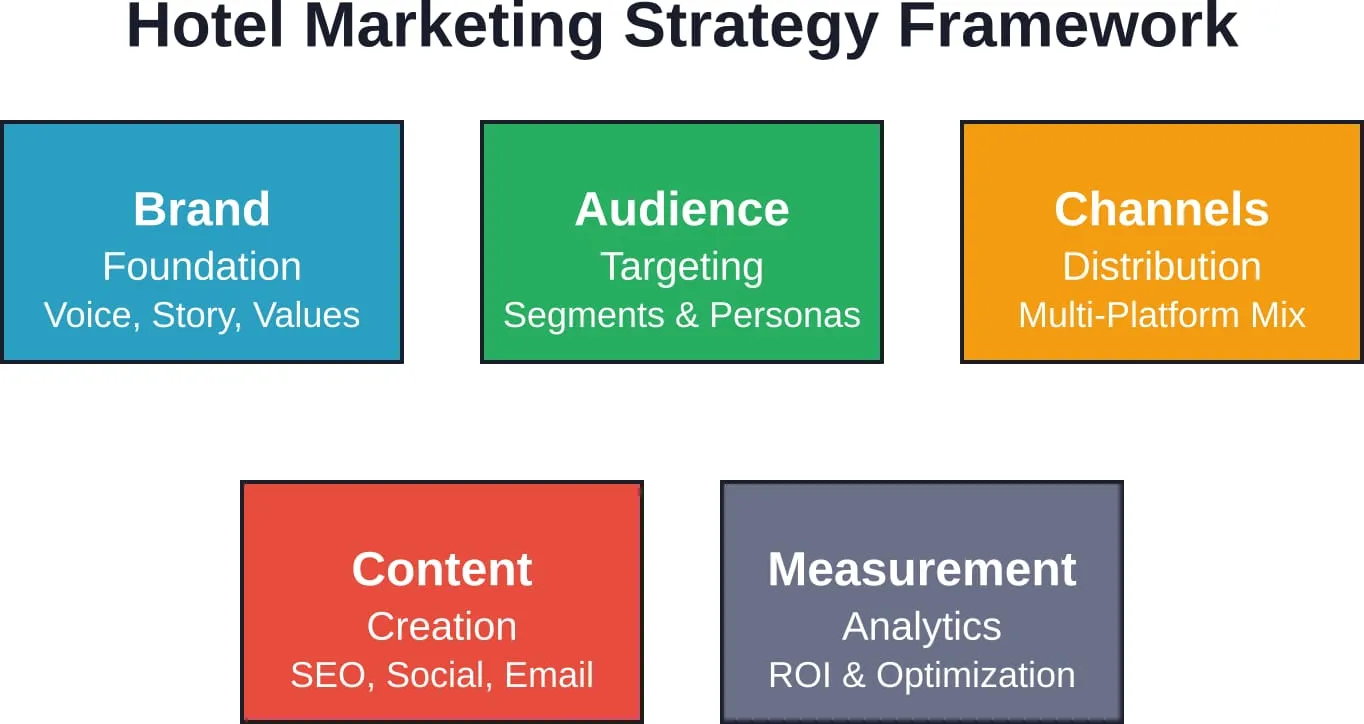
Marketing without a plan is throwing money into the wind. A structured marketing plan identifies target audiences, allocates budget strategically, and measures what actually works.
Start with clear objectives. Are you trying to increase direct bookings by 20%? Fill rooms during off-peak seasons? Attract more group business? Each goal requires different tactics.
The American Hotel & Lodging Association’s Independent Marketing Guide emphasizes the significance of storytelling to differentiate properties. The “4 P’s” of marketing—Product, Price, Placement, and Promotion—form the framework, with a focus on creating and maintaining a strong brand presence online.
Promote Hotel Marketing With Lengreo
Hotels need marketing that clearly presents rooms, amenities, packages, and booking options. Lengreo helps align website pages, SEO, paid ads, content, lead generation, and tracking into one connected system. This makes it easier for guests to find information and for teams to track bookings and inquiries.
Need More Booking Inquiries?
Lengreo can help with:
- refining room, package, and booking pages
- setting up local SEO and paid campaigns
- tracking calls, forms, and booking requests
- supporting content and lead generation workflows
👉 Contact Lengreo to discuss your marketing setup.
Identify and Understand Your Target Markets
Not every traveler is your customer. Business travelers want efficiency and connectivity. Families need space and kid-friendly amenities. Luxury seekers expect exceptional service and exclusive experiences.
Segment your audience based on demographics, travel purpose, booking behavior, and preferences. Then tailor messaging to each segment. A one-size-fits-all approach dilutes impact and wastes resources.
Group business represents a significant portion of hotel room nights. While some market analyses suggest high percentages, this varies considerably by property type and location. If group travel is your target, your marketing should emphasize meeting spaces, catering options, and group rates—not romantic getaway packages.
Establish a Distinctive Brand Voice
Your brand voice is how your hotel communicates its personality. Are you sophisticated and refined? Fun and adventurous? Warm and welcoming?
Consistency matters. The tone used in social media posts should match website copy, email campaigns, and guest communications. Inconsistent messaging confuses potential guests and weakens brand recognition.
Independent hotels have a significant advantage here. Without corporate brand guidelines, they can craft authentic voices that reflect local culture and unique positioning.
Digital Marketing Strategies That Drive Bookings
Build a High-Converting Hotel Website
The hotel website is the single most important marketing asset. It’s where potential guests form first impressions, compare offerings, and ideally, book directly.
Websites must be visually appealing, easy to navigate, and optimized for conversions. Clear calls-to-action, prominent booking engines, and fast load times are non-negotiables.
Mobile optimization isn’t optional. In 2020, Hotel Benchmarking reported that 53% of global traffic on hotel websites was generated on mobile devices. Industry experts anticipate that the trend will continue to grow. Hotels that don’t prioritize mobile-first design lose bookings to competitors.
Professional photography showcasing rooms, amenities, and unique features builds desire. Virtual tours and video content enhance engagement and help travelers visualize their stay.
Master Search Engine Optimization
A beautiful website means nothing if travelers can’t find it. SEO ensures hotels appear when potential guests search for accommodations.
Start with keyword research. What terms do travelers use when searching for hotels in your area? “Boutique hotel downtown Denver,” “family-friendly resort Miami Beach,” or “business hotel near convention center” all represent different search intents.
Optimize title tags, meta descriptions, header tags, and content with relevant keywords. But don’t stuff—search engines penalize over-optimization, and awkward copy repels readers.
Local SEO is critical. Most hotel searches have location-based intent. Claiming and optimizing a Google Business profile, maintaining consistent NAP (name, address, phone) information across directories, and earning local backlinks improve local search visibility.
Technical SEO matters too. Fast page speed, mobile responsiveness, secure HTTPS connections, and clean site architecture all influence rankings.
Invest in Search Engine Marketing and Metasearch
Organic SEO takes time. Paid search delivers immediate visibility.
Google Ads and other search engine marketing platforms let hotels bid on keywords and appear at the top of search results. This works particularly well for competitive terms or when launching new properties.
Metasearch engines like Google Hotel Ads, Tripadvisor, and Trivago aggregate hotel listings and rates. Travelers use these platforms to compare options, making them valuable channels for reaching shoppers in the consideration phase.
The key is managing bids strategically. Monitor cost per acquisition, return on ad spend, and booking conversion rates to ensure campaigns remain profitable.
Leverage Content Marketing
Content marketing builds authority, improves SEO, and engages potential guests throughout the booking journey.
Blog posts about local attractions, travel tips, seasonal events, and area guides attract visitors searching for destination information. These articles position the hotel as a helpful resource while naturally incorporating relevant keywords.
Destination guides are particularly effective. A comprehensive guide to the best restaurants, museums, and activities near the hotel attracts travelers planning trips and subtly suggests your property as the ideal home base.
Video content performs exceptionally well. Property tours, staff interviews, guest testimonials, and local highlights engage viewers and build emotional connections that static images can’t match.
Social Media Marketing for Hotels
Choose the Right Platforms
Not every social platform deserves equal attention. Focus resources where target audiences spend time.
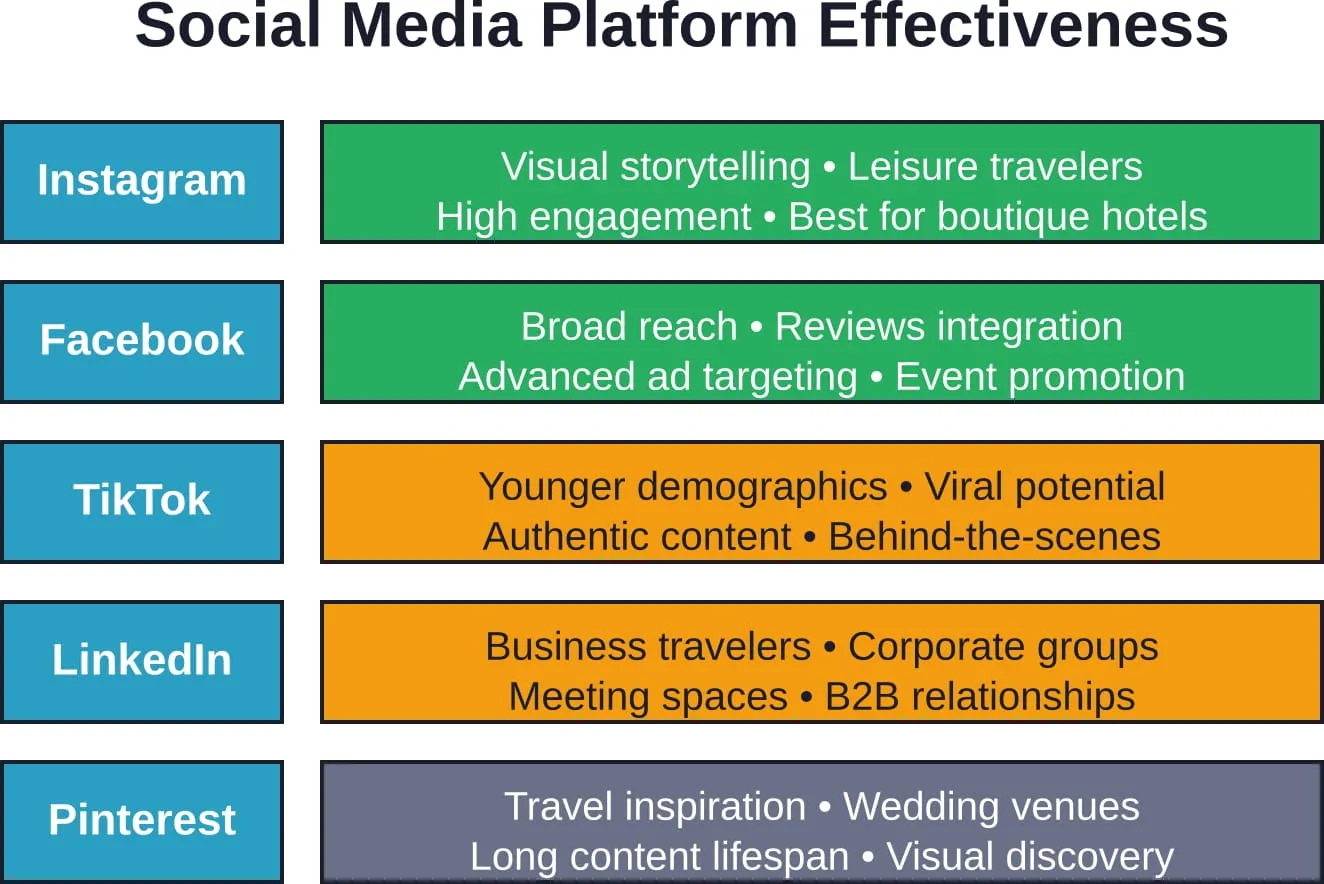
Instagram excels for visual storytelling. Beautiful property photos, guest experiences, and local scenery resonate with leisure travelers and younger demographics.
Facebook reaches broad audiences and supports diverse content types—photos, videos, events, and reviews. Facebook’s advertising platform offers sophisticated targeting options for reaching specific traveler segments.
LinkedIn works for hotels targeting business travelers and corporate groups. Share content about meeting facilities, corporate packages, and business travel tips.
TikTok has emerged as a powerful platform for reaching younger travelers. Short, authentic videos showcasing property personality, behind-the-scenes content, and local experiences can generate viral reach.
Create Engaging Social Content
Social media isn’t a broadcast channel—it’s a conversation. Hotels that only post promotional content get ignored.
Share a mix of content types: property highlights, guest stories, team spotlights, local partnerships, user-generated content, and destination inspiration. The 80/20 rule applies—80% valuable, entertaining, or inspiring content; 20% promotional.
User-generated content is gold. When guests share photos and tag your property, repost with permission. This provides authentic social proof while making guests feel valued.
Respond promptly to comments and messages. Social platforms prioritize active, engaging profiles in their algorithms. More importantly, responsive communication builds relationships and trust.
Partner with Influencers
Influencer marketing extends reach to engaged, targeted audiences. But success requires choosing the right partners.
Micro-influencers (typically 10,000-100,000 followers) often deliver better results than mega-influencers. They have higher engagement rates, more targeted audiences, and charge lower fees.
Look for alignment. An influencer’s audience, content style, and values should match your brand. A luxury hotel partnering with a budget travel influencer creates confusion and disappoints both audiences.
Structure partnerships clearly. Define deliverables, timeline, usage rights, and compensation upfront. Require authentic content that feels natural rather than forced promotional posts.
Email Marketing That Converts
Build and Segment Your Email List
Email marketing delivers the highest ROI of any digital channel when done correctly. It provides direct access to engaged audiences at minimal cost.
Build lists organically through website signups, booking confirmations, loyalty programs, and in-person interactions. Never purchase lists—they generate spam complaints and damage sender reputation.
Segmentation dramatically improves performance. Past guests, potential guests, business travelers, leisure travelers, and local residents all need different messaging. A family that stayed last summer shouldn’t receive the same emails as a business traveler booking conference rooms.
Create Valuable Email Content
Nobody wants another promotional email. Successful hotel email marketing provides value beyond “book now” messages.
Welcome series for new subscribers introduces the hotel, highlights unique features, and offers an incentive for first bookings. Pre-arrival emails enhance excitement and provide helpful information. Post-stay follow-ups thank guests and request reviews.
Seasonal campaigns promote relevant packages. Winter emails might feature holiday getaway packages, while summer campaigns highlight pool access and family activities.
Local events and happenings emails position the hotel as a destination expert. Concert at the nearby venue? Festival downtown? Email subscribers with details and suggest booking their stay.
Optimize for Performance
Email success requires constant testing and optimization.
Subject lines determine open rates. Test different approaches—questions, personalization, urgency, curiosity—and track what resonates with your audience.
Mobile optimization is mandatory. Mobile devices account for a substantial portion of email opens. Designs must render perfectly on small screens with large, tappable buttons.
Timing matters. Test send times and days to identify when subscribers are most likely to open and click. For leisure travelers, evenings and weekends often perform better than weekday mornings.
Guest Reviews and Reputation Management
Encourage More Reviews
Reviews influence booking decisions more than almost any other factor. Travelers trust peer recommendations over marketing messages.
Make leaving reviews easy. Send post-stay emails with direct links to review platforms. Train front desk staff to mention reviews during checkout. Some hotels offer small incentives—loyalty points, entry into drawings—to encourage participation.
Timing matters. Request reviews 2-3 days after checkout when the experience is fresh but guests have returned to normal routines.
Don’t be selective. Request reviews from all guests, not just those who had perfect stays. A mix of reviews appears more authentic than exclusively five-star ratings.
Respond to All Reviews
Review responses demonstrate that management cares about guest feedback. They’re also opportunities to provide context, correct misunderstandings, and show potential guests how the hotel handles issues.
Respond to positive reviews with gratitude and specificity. Reference details from their review to show authentic appreciation rather than copying generic thank-you templates.
Negative reviews require careful handling. Apologize sincerely, acknowledge specific concerns, explain any mitigating circumstances professionally, and offer to discuss offline. Never argue, make excuses, or attack reviewers.
Response rates and quality influence search rankings. Platforms like Google and Tripadvisor factor engagement into visibility algorithms.
Sustainability and Experience-Driven Marketing
Promote Sustainable Practices
Sustainability has moved from niche concern to mainstream expectation. With 83% of global travelers confirming that sustainable travel was important to them, hotels must authentically integrate and communicate environmental initiatives.
But greenwashing backfires. Travelers are increasingly savvy about superficial sustainability claims. Focus on substantive initiatives: energy efficiency upgrades, water conservation programs, local sourcing, waste reduction, and community partnerships.
Communicate efforts transparently. Website sustainability pages, in-room information, and social media content should detail specific actions and measurable results. “We’ve reduced water consumption by 30% through low-flow fixtures and linen reuse programs” carries more weight than vague “eco-friendly hotel” claims.
Certifications like LEED, Green Key, or EarthCheck provide third-party validation that enhances credibility.
Create Experience-Driven Packages
Modern travelers seek experiences, not just accommodations. Hotels that curate memorable experiences command premium rates and build loyalty.
Partner with local businesses to create unique packages. Collaborate with restaurants, tour operators, spas, wineries, and cultural attractions. A “foodie weekend” package might include chef-led market tours, cooking classes, and progressive dinners at top local restaurants.
Seasonal experiences capitalize on timing. Foliage tours in autumn, spring flower festivals, summer concert series, or winter holiday markets all present packaging opportunities.
According to the American Hotel & Lodging Association’s 2025 State of the Industry Report, there’s growing interest in unique, experience-driven, and sustainable travel. Hotels that deliver win market share.
Technology and Innovation in Hotel Marketing
Implement Artificial Intelligence
Generative AI is becoming crucial for enhancing guest experiences and operational efficiency, according to AHLA’s 2025 report.
AI-powered chatbots handle common inquiries 24/7, freeing staff for complex guest needs. Modern systems understand natural language and provide helpful responses about amenities, policies, and local recommendations.
Personalization engines analyze guest data to deliver tailored recommendations and offers. Past booking behavior, preferences, and browsing patterns inform targeted messaging that increases conversion rates.
Dynamic pricing tools optimize rates based on demand, competition, and market conditions. Revenue management systems use machine learning to identify optimal pricing strategies across channels and dates.
The key is implementation that enhances rather than replaces human connection. Technology should handle routine tasks, allowing staff to focus on creating memorable guest interactions.
Leverage Augmented Reality
Augmented reality lets potential guests virtually explore properties before booking. AR property tours showcase rooms, facilities, and amenities in immersive detail that static photos can’t match.
Virtual room previews help guests choose accommodations confidently. Seeing exact layouts, views, and features reduces booking uncertainty and decreases dissatisfaction upon arrival.
Some hotels use AR for wayfinding, allowing guests to point phones at hallways and see directional overlays guiding them to rooms, restaurants, or meeting spaces.
Optimize with Data Analytics
Data-driven insights separate guessing from knowing. Hotels generate enormous data across booking systems, website analytics, social media, and guest interactions.
Website analytics reveal which content drives conversions, where visitors drop off in booking funnels, and which marketing channels deliver the highest quality traffic.
Booking data shows patterns in guest behavior, seasonal demand fluctuations, and pricing sensitivity. This information informs marketing strategies, package creation, and promotional timing.
Campaign performance tracking ensures marketing spend generates positive returns. Monitor cost per acquisition, booking conversion rates, and revenue per booking across channels to allocate budget effectively.
| Marketing Channel | Primary Benefit | Best For | Implementation Difficulty |
|---|---|---|---|
| SEO | Long-term organic traffic | All hotel types | Moderate |
| Paid Search | Immediate visibility | Competitive markets | Low |
| Social Media | Brand awareness and engagement | Leisure properties | Low to Moderate |
| Email Marketing | Highest ROI | Repeat bookings | Low |
| Influencer Partnerships | Targeted reach | Boutique and luxury hotels | Moderate |
| Content Marketing | Authority and SEO | Destination properties | Moderate to High |
Marketing Strategies for Independent Hotels
Tell Your Unique Story
Independent hotels can’t compete on brand recognition or marketing budgets. But they have something chains can’t replicate: authentic, distinctive stories.
Historic properties can emphasize heritage and architectural character. Boutique hotels highlight design aesthetics and curated experiences. Family-run establishments showcase personal hospitality and local connections.
The key is authenticity. Travelers choose independent properties specifically for their uniqueness. Marketing that leans into genuine differentiators resonates far more effectively than attempting to mimic chain hotel messaging.
Build Local Partnerships
Independent hotels thrive through community integration. Strategic partnerships amplify marketing reach while enhancing guest experiences.
Cross-promote with complementary businesses. Restaurants, attractions, shops, and service providers all benefit from mutual referrals. Create package deals, offer reciprocal discounts, or simply display each other’s marketing materials.
Participate in local events. Sponsor festivals, host community gatherings, or provide accommodations for event participants. This builds brand awareness while demonstrating community commitment.
Chamber of commerce and tourism board memberships provide marketing exposure and networking opportunities with other local businesses.
Focus on Direct Booking Incentives
Online travel agencies offer distribution but take significant commissions. Direct bookings preserve margins and enable relationship building.
Offer exclusive benefits for booking directly: best rate guarantees, free upgrades, flexible cancellation, loyalty points, or welcome amenities. Communicate these advantages clearly on the website and in marketing materials.
Loyalty programs encourage repeat bookings. Even simple point systems—earn points per stay, redeem for free nights or upgrades—create incentive to return and book direct.
Make direct booking easy. The website booking engine must be fast, intuitive, and mobile-optimized. Friction in the booking process sends guests to OTA alternatives.
Seasonal and Event-Based Marketing
Capitalize on Major Events
Sports and entertainment events present significant growth opportunities, according to AHLA’s 2025 State of the Industry Report. The upcoming FIFA World Cup and Olympic Games exemplify high-impact occasions.
Local events work too. Concerts, conferences, festivals, and sporting events drive demand. Hotels near venues should market aggressively around event dates.
Create event-specific packages with tickets, transportation, or themed amenities. Partner with event organizers for official accommodation listings or sponsor opportunities.
Start marketing early. Major events sell accommodations months in advance. Travelers planning attendance begin searching for hotels immediately after purchasing tickets.
Develop Seasonal Campaigns
Seasonal demand fluctuations affect most properties. Strategic marketing smooths peaks and valleys.
Off-season promotions drive bookings during slow periods. Extended stay discounts, package deals, or flash sales fill rooms that would otherwise remain empty.
Shoulder season marketing targets flexible travelers. Retirees, remote workers, and leisure travelers without school-age children can travel outside peak periods and often seek value.
Peak season marketing maximizes revenue rather than occupancy. Emphasize exclusive experiences, premium packages, and reasons to book your property over competitors rather than competing solely on price.
Group Business and Corporate Marketing
Market Meeting and Event Spaces
Group business comprises 50% of hotel room nights, making it a critical revenue stream. Hotels with meeting space need targeted strategies for reaching event planners.
Create dedicated website sections showcasing meeting facilities with detailed specifications, capacity charts, floor plans, AV capabilities, and catering options. Professional photography of set rooms—theater style, classroom, banquet—helps planners visualize events.
List properties on specialized platforms like Cvent, meeting planner directories, and corporate travel booking tools.
Network at industry events. Trade shows, association meetings, and local business events provide opportunities to meet planners and build relationships.
Develop Corporate Partnerships
Corporate partnerships provide consistent room night volume and predictable revenue.
Negotiate preferred rates with nearby businesses. Companies with regular visitor travel need reliable accommodation partners. Competitive rates plus quality service create win-win relationships.
Target relocation services, airlines, and organizations that regularly need accommodations for extended stays or crew lodging.
Provide dedicated corporate booking portals or contacts. Business travelers value efficiency. Streamlined booking and billing processes differentiate from competitors.
Measuring Marketing Performance
Track Key Metrics
Marketing without measurement wastes resources. Hotels need clear metrics to evaluate what works.
Website traffic and conversion rates reveal how effectively marketing drives visitors and turns them into bookers. Track sources—organic search, paid ads, social media, email—to understand which channels perform best.
Cost per acquisition shows how much marketing spend generates each booking. Calculate by dividing total marketing costs by number of bookings acquired through marketing channels.
Revenue per available room (RevPAR) measures overall revenue performance. Effective marketing should increase RevPAR through higher occupancy, better rates, or both.
Guest lifetime value tracks total revenue generated per guest across multiple stays. Marketing that builds loyalty and encourages repeat visits delivers compounding returns.
Conduct Competitive Analysis
Understanding competitor strategies provides insights and identifies opportunities.
Monitor competitor rates, packages, and promotions. Rate shopping tools track pricing across properties. Understanding competitive positioning informs strategic decisions.
Analyze competitor reviews. What do guests praise? What complaints appear repeatedly? This information reveals competitive advantages to emphasize and weaknesses to avoid.
Track competitor social media and content marketing. What type of content generates engagement? Which campaigns drive conversations? Successful competitor tactics provide inspiration for your own strategies.
Test and Optimize Continuously
Marketing effectiveness requires ongoing refinement. What works today may not work tomorrow as markets, platforms, and guest preferences evolve.
A/B test marketing elements systematically. Try different email subject lines, ad copy, landing page designs, or calls-to-action. Data reveals what resonates with specific audiences.
Review campaign performance regularly. Monthly analysis identifies trends, highlights successful initiatives, and flags underperforming tactics that need adjustment or elimination.
Stay current with industry trends. Hospitality marketing evolves rapidly as new platforms, technologies, and guest expectations emerge. Continuous learning keeps strategies relevant.
Budget Management and Resource Allocation
Prioritize High-ROI Channels
Marketing budgets aren’t unlimited. Strategic allocation focuses resources where they generate the greatest returns.
According to AHLA’s Independent Marketing Guide, most surveyed hotels manage a majority of marketing efforts in-house while outsourcing specific services like SEO. This approach controls costs while accessing specialized expertise where needed.
Over half of independent hotels invest significantly in marketing, with platforms like Facebook showing high ROI in social media engagement. Focus budget on channels proven to work for your property rather than spreading resources thin across every possible platform.
SEO and content marketing require upfront investment but deliver compounding returns over time. Email marketing costs little and generates high returns. Paid advertising provides immediate results but requires ongoing spend.
Build In-House Capabilities
Outsourcing everything drains budgets. Developing internal marketing skills and systems improves efficiency and reduces costs.
Social media management works well in-house. Staff members understand the property intimately and can create authentic content consistently. Basic training and scheduling tools make execution manageable.
Content creation leverages existing expertise. Staff can write blog posts, capture photos, and produce videos with modest equipment and basic training. While professional production has its place, consistent amateur content often outperforms occasional professional content.
Marketing automation platforms handle email campaigns, social media scheduling, and reporting without requiring full-time personnel. Initial setup takes effort, but ongoing execution becomes efficient.
Outsource Strategic Needs
Some marketing functions benefit from external expertise.
SEO requires specialized knowledge of technical requirements, algorithm updates, and competitive tactics. Many hotels hire consultants or agencies for SEO strategy and execution.
Website development and maintenance often exceeds internal capabilities. Professional developers create better user experiences and integrate necessary booking systems effectively.
Professional photography and videography deliver quality that smartphones can’t match. One professional shoot annually provides assets for a year of marketing use.
Future Trends in Hotel Marketing
Personalization at Scale
Leveraging data and embedding technologies such as artificial intelligence can boost personalization of experiences, leading to increased loyalty, strengthened relationships, and new growth opportunities, according to AHLA’s 2025 State of the Industry Report.
Future marketing delivers individualized messages, offers, and experiences based on guest data and preferences. Dynamic website content adapts based on visitor behavior. Email campaigns automatically segment and personalize based on booking history and browsing patterns.
The challenge is balancing personalization with privacy. Guests appreciate relevant recommendations but feel uncomfortable with excessive data collection. Transparency about data use and providing control over privacy settings builds trust.
Voice Search Optimization
Voice assistants change how travelers search. “Hey Google, find hotels near downtown Seattle with pools” represents a different query structure than typed searches.
Voice optimization requires conversational content and focus on question-based keywords. FAQ sections, natural language in content, and local SEO become increasingly important.
Hotels should also consider voice booking capabilities. Integration with voice assistants for checking availability and making reservations removes friction from the booking process.
Sustainable Tourism Marketing
Environmental consciousness will only grow. Hotels that authentically integrate and communicate sustainability efforts will attract increasingly values-driven travelers.
But marketing must match reality. Travelers increasingly research sustainability claims and call out greenwashing. Transparent communication about both achievements and ongoing efforts builds credibility.
Partnerships with environmental organizations, certifications from recognized bodies, and detailed reporting on sustainability metrics provide third-party validation that enhances marketing messages.
Common Hotel Marketing Mistakes to Avoid
Neglecting Mobile Optimization
With 50% of accommodation searches and bookings made on mobile devices, properties with poor mobile experiences lose half their potential bookings to competitors.
Mobile optimization isn’t just responsive design. It requires fast loading, simplified navigation, easy booking processes, and mobile-specific features like click-to-call buttons.
Ignoring Guest Reviews
Not responding to reviews signals that management doesn’t care about feedback. This discourages potential guests and decreases search visibility.
Responding only to positive reviews or ignoring negative feedback creates worse impressions than not responding at all. Consistent engagement across all reviews demonstrates professionalism and commitment to guest satisfaction.
Inconsistent Brand Messaging
When website copy emphasizes luxury but social media posts feel casual and budget-focused, confusion weakens the brand. Consistent voice, visual identity, and positioning across channels reinforces brand recognition and trust.
Competing Solely on Price
Price-based competition creates race-to-the-bottom dynamics that erode margins. Hotels that differentiate on experience, service, location, or unique features command premium rates and build loyal followings.
Budget constraints exist, but marketing should emphasize value—what guests receive for their investment—rather than lowest price.
Setting and Forgetting Campaigns
Marketing requires ongoing attention. Campaigns launched without monitoring waste budget on underperforming tactics. Regular analysis and optimization improve results and eliminate waste.
| Marketing Mistake | Impact | Solution |
|---|---|---|
| Poor mobile experience | Lost bookings from 50% of searchers | Mobile-first website design and testing |
| No review responses | Lower search rankings and guest trust | Respond to all reviews within 48 hours |
| Inconsistent branding | Confused positioning and weak recognition | Brand guidelines and channel audits |
| Price-only competition | Eroded margins and commoditization | Value differentiation and unique selling points |
| Static campaigns | Wasted budget on ineffective tactics | Weekly performance reviews and A/B testing |
| No sustainability messaging | Missing 83% of travelers who value it | Authentic environmental initiatives and communication |
Taking Action: Implementing Your Hotel Marketing Strategy
Marketing success doesn’t happen overnight. It requires strategic planning, consistent execution, ongoing measurement, and continuous refinement.
Start with the fundamentals. Ensure the website delivers excellent user experience and converts visitors effectively. Optimize for search engines. Build email lists. Claim and optimize business listings. These foundational elements support every other marketing initiative.
Choose 3-4 marketing channels that align with target audiences and execute them well rather than attempting everything simultaneously. Mastering a few channels delivers better results than spreading resources too thin.
Measure everything. Track which channels drive traffic, which convert visitors to bookers, and which generate profitable revenue. Use data to double down on what works and eliminate what doesn’t.
Stay authentic. Travelers seek genuine experiences and can spot inauthentic marketing immediately. Lean into what makes your property unique rather than trying to be everything to everyone.
The hospitality industry faces challenges—rising costs, employment shortages, and intense competition. But opportunities remain substantial for hotels that market strategically, deliver memorable experiences, and adapt to evolving traveler preferences.
Now’s the time to audit current marketing efforts, identify gaps and opportunities, and implement strategies that drive measurable results. The hotels that succeed in 2026 and beyond won’t be those with the biggest budgets—they’ll be those that understand their guests, communicate authentically, and deliver experiences worth sharing.