


Quick Summary: Home builders can attract more qualified leads and close more sales by implementing a balanced marketing strategy that includes digital tactics like SEO and social media, traditional methods like realtor partnerships and community events, and nurturing campaigns that guide prospects through the buyer’s journey. The most effective approach in 2026 combines attraction strategies (website optimization, paid ads), engagement tactics (video tours, model home events), and consistent follow-up systems that keep leads warm until they’re ready to build.
The home building industry faces a paradox. Construction spending hit $929.7 billion in March 2026, yet many builders struggle to fill their pipelines with qualified buyers. Housing starts remain strong at 1,465,000 units annually, but the competition for each prospect has intensified.
Marketing budgets keep climbing while lead quality deteriorates. The traditional playbook—yard signs, billboard ads, and realtor lunches—still matters, but it’s no longer enough.
The buyer changed. Today’s homebuyer researches online for weeks before visiting a model home. They compare floor plans on their phones, watch virtual tours on social media, and read reviews before ever speaking to a sales agent. Marketing strategies that ignore this shift waste money and miss opportunities.
This guide covers practical marketing ideas for home builders that work in 2026. These aren’t theoretical concepts—they’re tested tactics organized by where they fit in the buyer’s journey, from first awareness to contract signing.
Why Traditional Marketing Alone Fails Home Builders Now
Here’s the uncomfortable truth: most home buyers start their search online, but many builders still allocate the majority of their marketing budget to offline channels that can’t be measured.
A builder spending $30,000 on a billboard near their community has no way to know how many serious prospects saw it, much less how many actually visited because of it. Meanwhile, that same budget invested in targeted digital advertising could generate trackable leads with known interests, budgets, and timelines.
Traditional marketing hasn’t become worthless. Realtors still drive significant business. Community signage still converts drive-by traffic. Open house events still create urgency.
But these tactics work best when integrated with digital strategies that capture attention earlier in the buyer’s journey and keep prospects engaged longer. Construction industry employment is projected to grow by 4% from 2023 to 2033, with the fastest growth in the solar energy, wind energy, and data center construction sectors, yet many builders haven’t evolved their marketing approach since 2015.
The Four-Stage Marketing Framework for Home Builders
Effective marketing for builders operates across four distinct stages. Most builders excel at one or two stages but neglect the others, creating gaps where prospects leak out of the pipeline.
Each stage demands different tactics, messaging, and metrics. A strategy that works brilliantly for attraction might fail completely at nurturing. Understanding these distinctions prevents wasted effort and budget.
Stage One: Attraction Strategies
Attraction marketing makes your business visible to people actively shopping for a new home. These prospects don’t know your company yet—they’re searching generically for “new homes in [city]” or “custom home builders near me.”
Search engine optimization forms the foundation. When someone searches “new construction homes in Austin,” does your website appear on the first page? If not, those prospects will never discover your communities.
SEO for builders focuses on location-based keywords, community names, and buyer intent phrases. A properly optimized website includes pages for each community, detailed floor plan descriptions, and content that answers common buyer questions about the building process, financing, and timelines.
Paid search advertising complements organic SEO by capturing high-intent traffic immediately. Google Ads campaigns targeting phrases like “move-in ready homes [city]” or “new home builders [neighborhood]” can generate qualified leads quickly, though at a cost per click that varies by market competitiveness.
Display advertising and geofencing put your brand in front of prospects before they even start searching. Geofencing technology serves ads to people who visit competitor communities, real estate offices, or apartment complexes in your target area. It’s remarkably effective at reaching people in the early consideration phase.
Social media advertising on Facebook and Instagram allows precise demographic targeting. A builder focused on first-time buyers can target ads to 28-35 year olds with household incomes between $75K-$120K who recently changed their relationship status or searched for moving-related content.
Stage Two: Engagement Tactics
Once prospects know your company exists, engagement tactics build interest and establish trust. This stage answers the question: “Why should I consider building with you instead of your competitors?”
Video content dominates engagement marketing for builders. Virtual home tours, construction progress updates, and customer testimonial videos all perform exceptionally well because they give prospects a tangible sense of what working with your company feels like.
Model home events create urgency and excitement. A well-promoted weekend event with refreshments, design consultations, and limited-time incentives can convert months of accumulated online interest into actual appointments and contracts.
Content marketing through blog posts, guides, and resources positions builders as helpful experts rather than pushy salespeople. A comprehensive guide to “Understanding Construction Loans” or “Choosing the Right Lot for Your Custom Home” attracts organic traffic and builds credibility.
Third-party home listing portals like Zillow, Realtor.com, and NewHomeSource extend reach beyond owned channels. Many serious buyers use these platforms early in their search, filtering by price, location, and features before ever visiting builder websites directly.
Community partnerships with local businesses, schools, and organizations create authentic connections. Sponsoring a youth sports team or participating in a neighborhood festival builds brand recognition and goodwill that eventually translates to referrals.
Stage Three: Nurturing Systems
Most prospects aren’t ready to buy immediately. The average home buyer searches for 8 to 12 weeks before purchasing a home. Nurturing systems keep your company top-of-mind during that extended consideration period.
Email marketing campaigns deliver value consistently without being pushy. A monthly newsletter featuring new floor plans, design tips, and market insights keeps prospects engaged. Automated drip campaigns can be triggered based on specific actions, like downloading a floor plan or visiting a certain number of times.
Some industry practitioners report that limited-time offers and urgency-based tactics influence purchasing decisions significantly. Limited-time offers, exclusive previews for email subscribers, and countdown timers on special incentives all leverage this psychological principle.
Customer relationship management systems track every interaction with each prospect. When a lead downloads the “Ranch Style Homes” guide, visits the pricing page three times, and opens emails about financing, the sales team knows exactly where their interests lie and can tailor follow-up accordingly.
Retargeting ads follow prospects across the internet after they visit your website. Someone who viewed a specific floor plan but didn’t submit a contact form will see ads for that plan—and similar options—as they browse news sites, social media, and other content.
Text message marketing reaches prospects where they’re most responsive. A simple text alerting previous visitors that a new quick-move-in home just became available in their preferred community can generate immediate traffic.
Stage Four: Closing Strategies
Conversion tactics focus on removing friction and creating urgency for prospects ready to move forward. At this stage, the marketing message shifts from education to activation.
Special promotions and incentives motivate fence-sitters. A $5,000 design credit for contracts signed before month-end, free upgrades on quick-move-in homes, or covered closing costs all provide concrete reasons to commit now rather than later.
Realtor co-marketing remains powerful at the closing stage. A builder offering 3% commission plus a bonus for bringing qualified buyers before a deadline gives agents clear motivation to prioritize their inventory over competitors.
Financing partnerships simplify the buyer’s path. Relationships with preferred lenders who understand your product, offer competitive rates, and can pre-approve buyers quickly remove a major obstacle to closing.
Sales team training and tools matter more than most builders acknowledge. The best marketing in the world can’t compensate for a sales agent who doesn’t follow up promptly, fails to answer questions confidently, or lets prospects leave without a clear next step.
Digital Marketing Ideas That Generate Qualified Leads
Digital channels offer advantages traditional marketing can’t match: precise targeting, real-time optimization, and measurable ROI. Yet many builders either ignore digital entirely or execute it poorly.
Website Optimization: Your Digital Model Home
The website serves as the digital equivalent of a model home. It needs to impress immediately, provide clear information, and make taking the next step effortless.
Fast loading speed is important for user experience. Mobile users are more likely to abandon slow-loading sites. For a builder, that’s half of potential prospects bouncing before they see a single floor plan.
Mobile responsiveness matters because many home searches happen on smartphones, representing a significant portion of buyer research.. A website that looks perfect on desktop but requires pinching and zooming on mobile creates friction that sends prospects to competitors with better mobile experiences.
Clear navigation and strong calls-to-action guide visitors toward conversion. Every page should answer “what should I do next?” with obvious buttons for scheduling tours, downloading floor plans, or checking available inventory.
Interactive features like 3D floor plan viewers, virtual tours, and lot availability maps engage visitors longer and provide more value than static images. The longer someone spends exploring your digital content, the more invested they become in your communities.
Lead capture mechanisms need to balance information gathering with user experience. Asking for a phone number and email to download a floor plan is reasonable. Requiring a full questionnaire will reduce conversions dramatically.
Search Engine Dominance Through SEO
Organic search traffic costs nothing per click and tends to convert better than paid traffic because searchers trust organic results more than ads. But achieving top rankings requires consistent effort.
Local SEO optimization starts with Google Business Profile listings for each community and the main office. Complete profiles with accurate hours, photos, and regular posts improve visibility in local search results and Google Maps.
Content targeting buyer questions captures traffic from people seeking information rather than ready to buy. Articles answering “How long does it take to build a custom home?” or “What’s included in a base price?” attract early-stage prospects who may become buyers months later.
Technical SEO factors like site speed, mobile-friendliness, and secure HTTPS connections affect rankings significantly. Google explicitly uses these as ranking factors, meaning a technically weak site will struggle to rank regardless of content quality.
Backlink building from local news coverage, industry directories, and partnership websites signals authority to search engines. A mention in a local newspaper’s “Best New Communities” article provides both direct traffic and SEO benefits.
Social Media That Actually Drives Business
Social media works differently for builders than for consumer brands. Buyers don’t need daily content from their builder, but they do pay attention during active shopping periods.
Platform selection matters. Facebook and Instagram reach homebuyers effectively because of their demographic targeting capabilities and visual format. LinkedIn serves builders focused on executive relocations or higher-end custom homes. TikTok’s value remains questionable for most residential builders, though some builders targeting first-time buyers have found success with behind-the-scenes construction content.
Content variety prevents feed fatigue. Mix before-and-after transformations, construction progress updates, customer testimonials, design tips, local area highlights, and team spotlights. Consistent posting matters more than viral hits.
Video content significantly outperforms static images. A 60-second walkthrough of a model home gets more engagement and shares than photos of the same space. Facebook and Instagram algorithms also favor video in organic reach.
Community engagement through responses to comments and messages builds relationships. When someone asks about pricing in a comment, a helpful response not only serves that person but demonstrates responsiveness to everyone else watching the exchange.
Paid social advertising allows testing multiple messages and audiences quickly. Start with broad targeting, identify which demographics and interests convert best, then concentrate budget on the winning combinations.
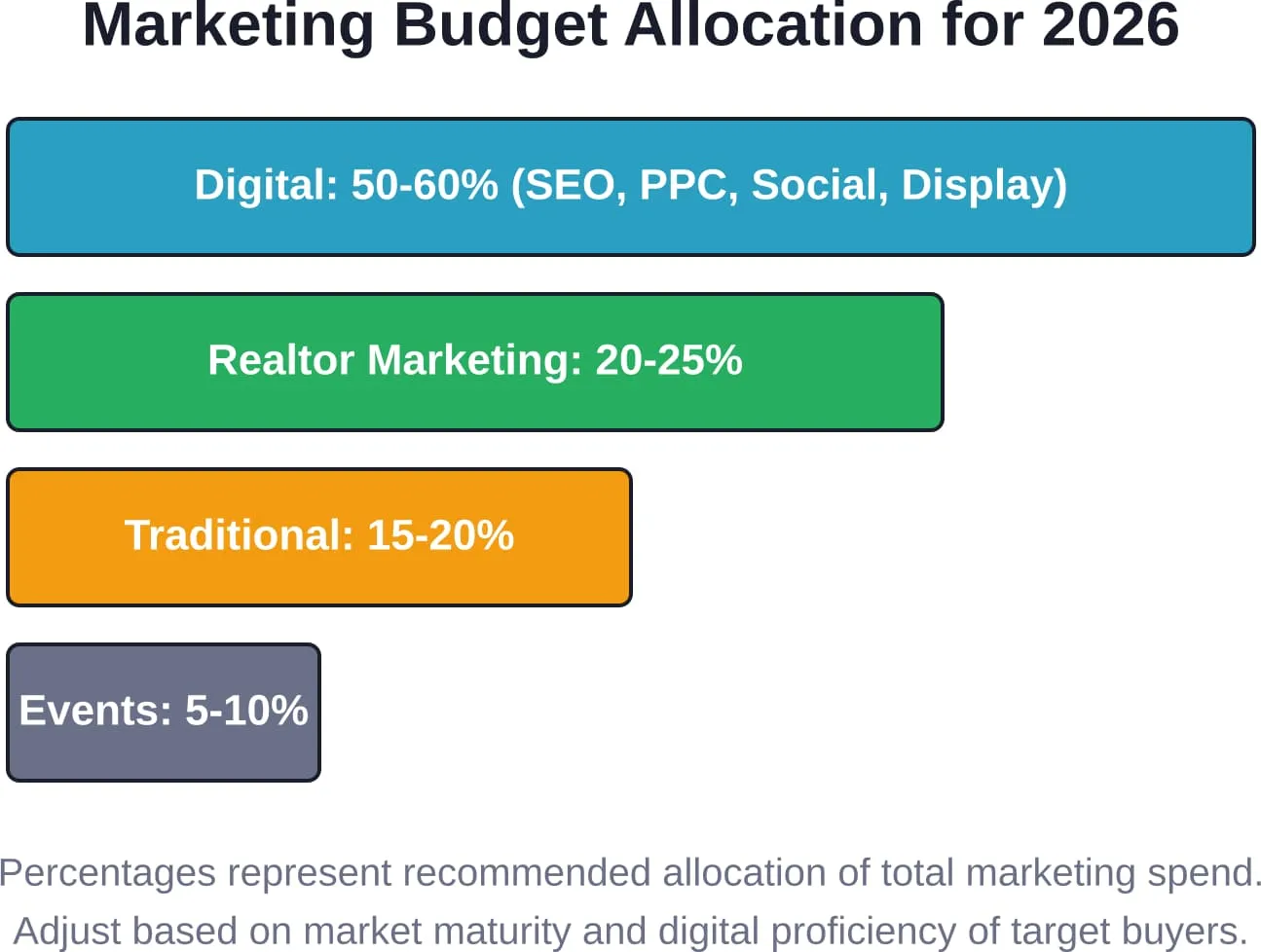
Traditional Marketing Ideas That Still Deliver Results
Digital marketing dominates modern strategy, but dismissing traditional tactics entirely is a mistake. Certain offline channels still deliver exceptional returns when executed well.
Realtor Relationships: The Highest ROI Channel
Real estate agents control significant buyer flow, especially in markets where most transactions involve buyer representation. Builders who treat realtors as partners rather than competitors typically outperform those who try to bypass them.
Regular agent events like lunch-and-learns, exclusive preview events, and quarterly updates keep builders top-of-mind. When an agent has a client looking for new construction, they’ll recommend the builders they know, trust, and have visited recently.
Competitive commission structures matter. If a builder offers 2% while competitors offer 3%, agents will naturally direct clients elsewhere unless the product significantly outshines alternatives.
Agent-focused marketing materials make selling easier. Provide realtors with comparison sheets highlighting advantages over resale homes, financing options, and community amenities. The easier a builder makes an agent’s job, the more business that agent will bring.
Co-marketing programs where builders contribute to agent advertising budgets create partnership dynamics. When an agent’s Facebook ad features your community (with your financial support), both parties benefit from the exposure.
Community Events That Create Buzz
Events transform passive interest into active engagement. They give prospects a reason to visit now rather than “someday,” and they create social proof through visible attendance.
Grand opening celebrations for new communities generate excitement and media coverage. A well-promoted event with food trucks, live music, and special pricing for attendees can sell multiple homes in a single weekend.
Seasonal events tied to holidays provide natural themes. A “Fall Festival” with pumpkin decorating and hayrides at a community brings families who might browse model homes while they’re on site. A “Summer Kickoff” pool party showcases amenities and lifestyle.
Realtor appreciation events recognize the agents who drive business. A catered breakfast or happy hour exclusively for real estate professionals strengthens relationships and encourages referrals.
Educational workshops on topics like “First-Time Homebuyer Seminar” or “Understanding Construction Quality” attract prospects earlier in their journey. These events position the builder as a helpful resource rather than just a salesperson.
Signage and Print Materials
Physical marketing materials still matter in an industry where the product itself is physical. Strategic signage captures drive-by traffic; quality print materials communicate professionalism.
Monument signs at community entrances create landmarks and brand recognition. Drivers who pass a community entrance daily for months see that sign repeatedly, building familiarity that leads to eventual visits.
Directional signage from major roads to communities eliminates friction. If prospects can’t find the model home, they won’t visit. Clear, professional directional signs remove that barrier.
High-quality brochures and floor plan packages serve both as leave-behinds and as tools for realtors. Digital versions are convenient, but many prospects still appreciate physical materials they can mark up and compare at home.
Vehicle wraps turn company trucks into mobile billboards. Construction supervisors and vendors driving branded vehicles around job sites and through neighborhoods provide thousands of impressions at minimal ongoing cost.
Content Marketing Ideas for Home Builders
Content marketing attracts prospects organically, builds authority, and supports SEO efforts. The key is creating genuinely useful information rather than thinly veiled sales pitches.
Blog Topics That Attract and Convert
Strategic blog content targets questions buyers ask at different stages of their journey. Early-stage content builds traffic; late-stage content drives conversions:
- Process education content answers common questions: “How Does Construction Financing Work?” “What Happens During a Pre-Construction Meeting?” “Timeline: From Contract to Move-In.” These articles capture information-gathering traffic.
- Design and inspiration content showcases possibilities: “5 Kitchen Layout Options for Open Floor Plans,” “Master Suite Upgrades Worth the Investment,” or “Exterior Color Combinations That Increase Curb Appeal.” This content works on Pinterest and Instagram in addition to the blog.
- Comparison content helps buyers make decisions: “New Construction vs. Resale Homes: The Real Cost Comparison” or “Production Builder vs. Custom Builder: Which is Right for You?” These articles serve late-stage prospects close to a decision.
Video Content That Engages
Video outperforms text for showcasing physical products like homes. It conveys space, finishes, and lifestyle in ways photos and words cannot.
Property walkthrough videos let prospects tour homes remotely. These should be professionally shot with smooth stabilization and good lighting, highlighting key features with brief text overlays or narration.
Construction progress updates satisfy curiosity about the building process and reassure buyers that work is proceeding on schedule. A monthly update showing framing, mechanicals, and finish work demystifies construction.
Customer testimonial videos build trust through social proof. A three-minute video of a happy homeowner discussing their experience carries more weight than any sales pitch.
Design consultation videos demonstrate expertise. A designer walking through a model home and explaining choices regarding flooring, countertops, and fixtures educates viewers while showcasing options.
“Day in the life” content showing construction teams, sales staff, and leadership humanizes the company. People prefer doing business with companies they feel connected to.
Lead Nurturing Strategies for Long Sales Cycles
Home purchases involve long consideration periods. Effective nurturing keeps prospects engaged during months of research and decision-making.
Email Marketing That Doesn’t Annoy
Email remains one of the highest-ROI marketing channels when executed properly. The key is providing value rather than just promoting.
Segmented email lists allow personalized messaging. Someone interested in first-time buyer programs receives different content than someone looking at luxury custom homes. Geographic segmentation matters too—prospects interested in a north-side community don’t need emails about south-side developments.
Automated drip campaigns nurture leads without manual effort. A prospect who downloads a floor plan automatically enters a sequence that delivers related floor plans, financing information, and eventually an invitation to schedule a tour.
Monthly newsletters keep the company visible without overwhelming inboxes. Include a mix of new inventory, design tips, local market updates, and company news. Keep it genuinely interesting rather than purely promotional.
Behavioral triggers based on website activity enable timely follow-up. When a prospect views the same floor plan three times or visits the pricing page repeatedly, an automated email asking if they have questions creates a natural conversation opening.
Retargeting Campaigns That Convert
Most website visitors leave without converting. Retargeting brings them back by keeping the company visible as they browse elsewhere online.
Pixel-based retargeting follows visitors after they leave the site. Someone who viewed a specific community will see ads featuring that community on Facebook, Instagram, news sites, and other platforms for 30-60 days.
Dynamic retargeting shows ads for the specific floor plans or communities a prospect viewed. This personalization increases relevance and click-through rates significantly compared to generic ads.
Frequency capping prevents ad fatigue. Seeing the same ad 3-4 times per week maintains awareness; seeing it 20 times per day creates annoyance. Most platforms allow frequency limits to optimize this balance.
Sequential messaging tells a story across multiple ad exposures. The first ad builds awareness, the second highlights a key differentiator, the third presents a limited-time offer. This strategic sequencing moves prospects toward action more effectively than repeating the same message.
Turn Home Builder Marketing Into Sales Conversations
Marketing ideas for home builders should make it easier for potential clients or partners to find the company and take the next step. Lengreo can help turn scattered marketing activity into a more consistent path from visibility to contact.
Lengreo can support home builder marketing through:
- Search engine optimization
- Content marketing support
- PPC campaign setup and management
- B2B lead generation
- LinkedIn and email prospect outreach
- Appointment setting with qualified leads
👉Contact Lengreo to turn home builder marketing into a clearer lead generation process.
Measuring Marketing Effectiveness
Marketing without measurement is gambling. Tracking the right metrics enables optimization and proves ROI to company leadership.
| Metric | What It Measures | Target Range | Why It Matters |
|---|---|---|---|
| Cost Per Lead | Marketing spend divided by leads generated | $150-$400 | Indicates efficiency of lead generation tactics |
| Lead-to-Appointment Rate | Percentage of leads who schedule a visit | 15-25% | Reveals lead quality and follow-up effectiveness |
| Appointment-to-Sale Rate | Percentage of visits that result in contracts | 8-15% | Measures sales team performance and product fit |
| Cost Per Acquisition | Total marketing cost divided by homes sold | $3,000-$8,000 | Ultimate measure of marketing ROI |
| Website Conversion Rate | Percentage of visitors who become leads | 2-5% | Indicates website effectiveness and user experience |
Attribution: Knowing What Actually Works
Attribution identifies which marketing tactics deserve credit for sales. In a complex buyer journey involving multiple touchpoints, attribution prevents over-investing in visible but ineffective channels while under-investing in quiet performers:
- First-touch attribution credits the initial source that brought a prospect in: This model favors attraction channels like SEO and paid search.
- Last-touch attribution credits the final touchpoint before conversion: This model favors closing tactics like promotional emails and remarketing.
- Multi-touch attribution distributes credit across all interactions: This more complex model provides the most accurate view of how different tactics work together, though it requires sophisticated tracking systems.
For most small to mid-size builders, simply asking “How did you first hear about us?” during the initial interaction provides sufficient attribution data to guide budget decisions.
Key Performance Indicators to Track Monthly
Consistent tracking of core metrics reveals trends and problems early. Monthly reviews should examine these indicators at minimum:
Website traffic and sources show whether digital marketing efforts are successfully driving visitors. Traffic declining or stagnating signals problems with SEO, ad performance, or content production.
Lead volume by source identifies the most productive channels. If referrals generate 40% of leads while consuming only 10% of budget, that’s an opportunity to shift allocation.
Lead quality metrics like appointment rate and no-show rate reveal whether marketing attracts serious prospects or unqualified browsers. High lead volume with low appointment rates suggests targeting problems.
Sales cycle length from first contact to contract indicates pipeline health. A lengthening sales cycle may signal market conditions, competitive pressure, or sales process issues.
Marketing ROI calculated as (Revenue from Marketing – Marketing Cost) / Marketing Cost provides the ultimate success measure. Consistent tracking reveals whether returns are improving or declining over time.
Common Marketing Mistakes Home Builders Make
Certain mistakes appear repeatedly across the industry. Avoiding these traps improves results without requiring additional budget.
Mistake One: No Clear Differentiation
When every builder’s marketing says “quality craftsmanship, great locations, and personalized service,” none of it matters. Prospects can’t distinguish between competitors.
Effective differentiation focuses on specific, provable advantages. “Only builders in the county offering a net-zero-ready construction standard” creates distinction. “Three generations of family building in this community” creates distinction. “Quality homes” does not.
Mistake Two: Neglecting Follow-Up
Industry analyses suggest that 60% of prospects who inquire never receive adequate follow-up. These aren’t disqualified leads—they’re simply forgotten.
A systematic follow-up process captures this lost business. At minimum: immediate automated response, human contact within 24 hours, scheduled touches at day 3, day 7, and day 14, then monthly thereafter until the prospect buys or explicitly opts out.
Mistake Three: Focusing Only on Bottom-Funnel Tactics
Builders who invest exclusively in late-stage tactics like promotions and open houses wonder why lead volume stays flat. These tactics only work when enough prospects already know about the company.
Balanced marketing invests across all funnel stages. Attraction builds the pipeline, engagement creates interest, nurturing sustains it, and closing tactics convert it. Neglecting any stage creates bottlenecks.
Mistake Four: Inconsistent Branding and Messaging
When the website emphasizes luxury but the community sign looks weathered and cheap, prospects receive conflicting signals. When one ad touts affordability while another highlights premium features, positioning becomes muddy.
Brand consistency across all touchpoints—from digital ads to model home presentation to sales team communication—creates clarity and builds trust. Inconsistency creates doubt.
Mistake Five: Not Testing and Optimizing
Many builders set up marketing campaigns and let them run indefinitely without analyzing performance or testing alternatives. This complacency wastes budget on underperforming tactics.
Continuous testing improves results systematically. Test different ad headlines, landing page designs, email subject lines, and promotional offers. Measure results, keep what works, discard what doesn’t, and test new variations. This optimization compounds over time.
Marketing Ideas for Different Builder Types
Not all builders are the same. Marketing strategies should reflect business model, price point, and target buyer.
Production Builders (Multiple Communities, Volume-Focused)
Production builders need scalable marketing systems that work across multiple locations. Centralized digital marketing with localized content works well—one core website with location-specific pages, one social media strategy adapted by community.
Emphasize consistency, speed, and value. These buyers often prioritize timeline and price over customization. Marketing messages should highlight move-in ready inventory, streamlined processes, and community amenities.
Custom Builders (One-Off, Client-Driven Projects)
Custom builders serve a smaller, more affluent market. Marketing focuses on expertise, portfolio, and relationship rather than price and speed.
High-quality photography showcasing past projects becomes critical. A strong portfolio demonstrates capabilities better than any description. Content marketing explaining complex aspects of custom construction positions the builder as an expert guide through an intimidating process.
Referral programs generate significant business for custom builders. Satisfied clients often know others in similar situations. A formal referral program with meaningful incentives capitalizes on this natural tendency.
Remodelers and Addition Specialists
Remodeling marketing differs from new construction because prospects already own homes in specific neighborhoods. Geographic targeting becomes extremely precise—focus marketing on the established neighborhoods where the company wants projects.
Before-and-after content performs exceptionally well. Dramatic transformations showcase capabilities and inspire prospects to envision possibilities for their own homes.
Neighborhood saturation strategies build efficiency. Getting multiple projects on one street creates visible proof of work, enables shared testimonials, and reduces mobilization costs. Offer referral bonuses to neighbors of current projects.
Future Trends Shaping Home Builder Marketing
Marketing continues evolving. Builders who anticipate trends gain competitive advantages.
AI-Powered Personalization
Artificial intelligence now enables personalization at scale. Website visitors see content tailored to their location, browsing history, and demographic profile automatically. Email systems send messages optimized for each recipient’s engagement patterns.
Chatbots handle initial inquiries instantly, answering common questions and qualifying leads before human follow-up. This immediate response captures prospects who might otherwise move on to a competitor.
Virtual and Augmented Reality
VR and AR technologies allow prospects to experience homes that haven’t been built yet. A buyer can virtually walk through their future home, see different finish options, and visualize furniture placement—all before breaking ground.
These technologies reduce buyer anxiety about pre-construction purchases and decrease post-construction change orders because buyers understood exactly what they were getting.
Sustainability Marketing
Environmental concerns influence buying decisions increasingly, especially among younger buyers. Builders incorporating energy-efficient features, sustainable materials, and net-zero capabilities should market these differentiators prominently.
Specific claims outperform vague ones. “Average utility bill of $85/month” is more compelling than “energy efficient construction.” Third-party certifications like ENERGY STAR or LEED provide credibility.
Influencer Partnerships
Local influencers and micro-influencers (10K-100K followers) offer authentic ways to reach target audiences. A lifestyle blogger touring a model home and sharing their genuine impressions reaches potential buyers through trusted voices rather than obvious advertising.
Compensation structures vary from free access/content in exchange for coverage to paid partnerships. Authenticity matters more than follower count—an influencer who genuinely loves the product will create more effective content than one simply fulfilling a contract.
Implementing Your Marketing Strategy
Strategy without execution accomplishes nothing. Implementation requires planning, resource allocation, and accountability.
Start With Your Foundation
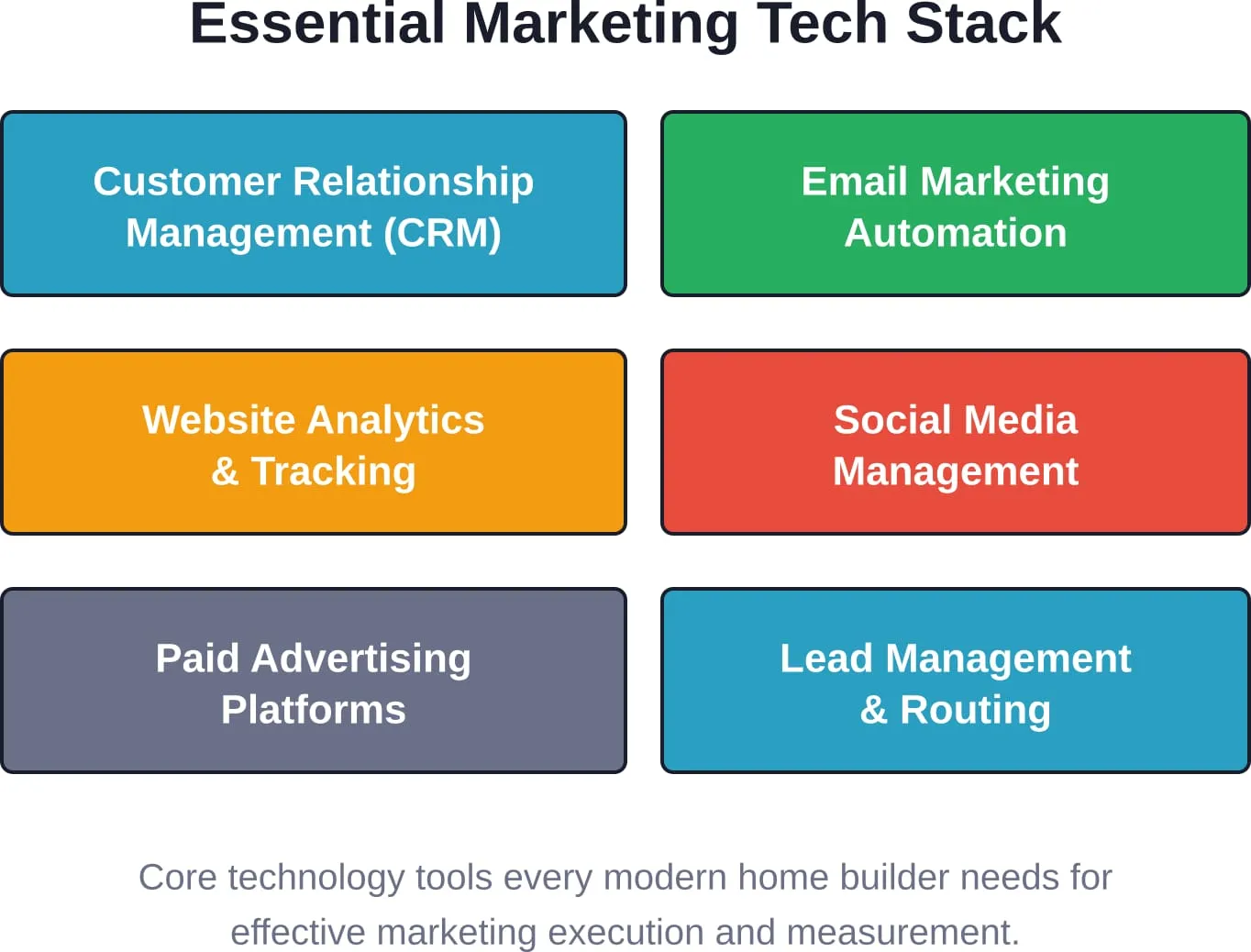
Before launching new tactics, ensure foundational elements are solid. A builder with a slow, outdated website and no CRM system shouldn’t invest in expensive advertising—the infrastructure can’t support the leads generated.
Fix the website first. Make it fast, mobile-friendly, and conversion-optimized. Implement tracking so you know where traffic comes from and what visitors do.
Establish a CRM system to capture and manage leads. This doesn’t require expensive enterprise software—numerous affordable options serve small to mid-size builders effectively.
Create standardized follow-up processes. Every lead should receive defined touchpoints at specific intervals. Automation handles much of this, but human interaction remains essential.
Prioritize Based on Resources and Market
Not every builder should implement every tactic. Resource constraints and market conditions determine priorities.
A builder with limited budget should focus on high-ROI tactics: website optimization, local SEO, realtor relationships, and email nurturing. These provide solid returns without massive spending.
A builder with budget but limited time might outsource digital marketing while focusing internal resources on realtor relationships and sales process optimization.
A builder entering a new market needs awareness-building tactics like display advertising, community events, and PR. A builder in an established market should emphasize conversion tactics like promotions and realtor incentives.
Establish Metrics and Review Cadences
Monthly marketing reviews keep strategy on track. Examine lead volume by source, cost per lead, conversion rates, and pipeline health. Adjust tactics based on what the data reveals.
Quarterly deep dives assess broader trends and enable strategic shifts. Is overall market share growing or shrinking? Are certain communities over- or under-performing expectations? Does messaging need adjustment?
Annual planning sets direction and budget. Review the previous year’s performance, identify opportunities and threats, and allocate resources accordingly.
Taking Action: Your Next Steps
Marketing for home builders isn’t complicated, but it does require consistent execution across multiple channels. The builders winning in 2026 aren’t necessarily spending more—they’re spending smarter.
Start by auditing current efforts honestly. Which tactics are actually generating qualified leads? Which are consuming budget without delivering results? Where do leads leak out of the pipeline?
Then prioritize improvements. If the website converts poorly, fix that before increasing traffic. If follow-up is inconsistent, systematize it before generating more leads. If differentiation is weak, clarify positioning before spending on advertising.
Marketing success compounds over time. SEO efforts gain momentum monthly. Email lists grow steadily. Realtor relationships strengthen gradually. The builders investing consistently and optimizing continuously will dominate their markets while competitors chase the latest tactic without strategic foundation.
The residential construction market shows strong fundamentals with housing starts up 4.6% year-over-year. The buyers are out there. The question is whether your marketing strategy positions your company to capture them—or whether they’ll find a competitor first.
With construction industry employment projected to grow through 2033, with particular strength in renewable energy, data center, and EV infrastructure construction and residential construction spending exceeding $929 billion, the opportunity is substantial. The builders who master marketing will capture disproportionate shares of that growth.