

Quick Summary: Halloween marketing in 2026 offers significant opportunities for brands, with consumer spending expected to reach record highs. Successful campaigns leverage seasonal themes, create shareable content across social media, and start early to capture the growing number of consumers who begin shopping before October. Strategic promotions, themed products, and interactive experiences drive engagement during this increasingly lucrative holiday season.
Halloween has transformed from a simple trick-or-treat tradition into one of retail’s most profitable events.
The opportunity extends beyond candy and costumes. Smart brands recognize Halloween as the gateway to Q4, a critical moment to capture consumer attention before the holiday shopping frenzy intensifies. But what separates campaigns that generate buzz from those that fall flat?
The answer lies in strategic timing, creative execution, and understanding what drives consumer behavior during this spooky season.
Understanding the Halloween Consumer Landscape
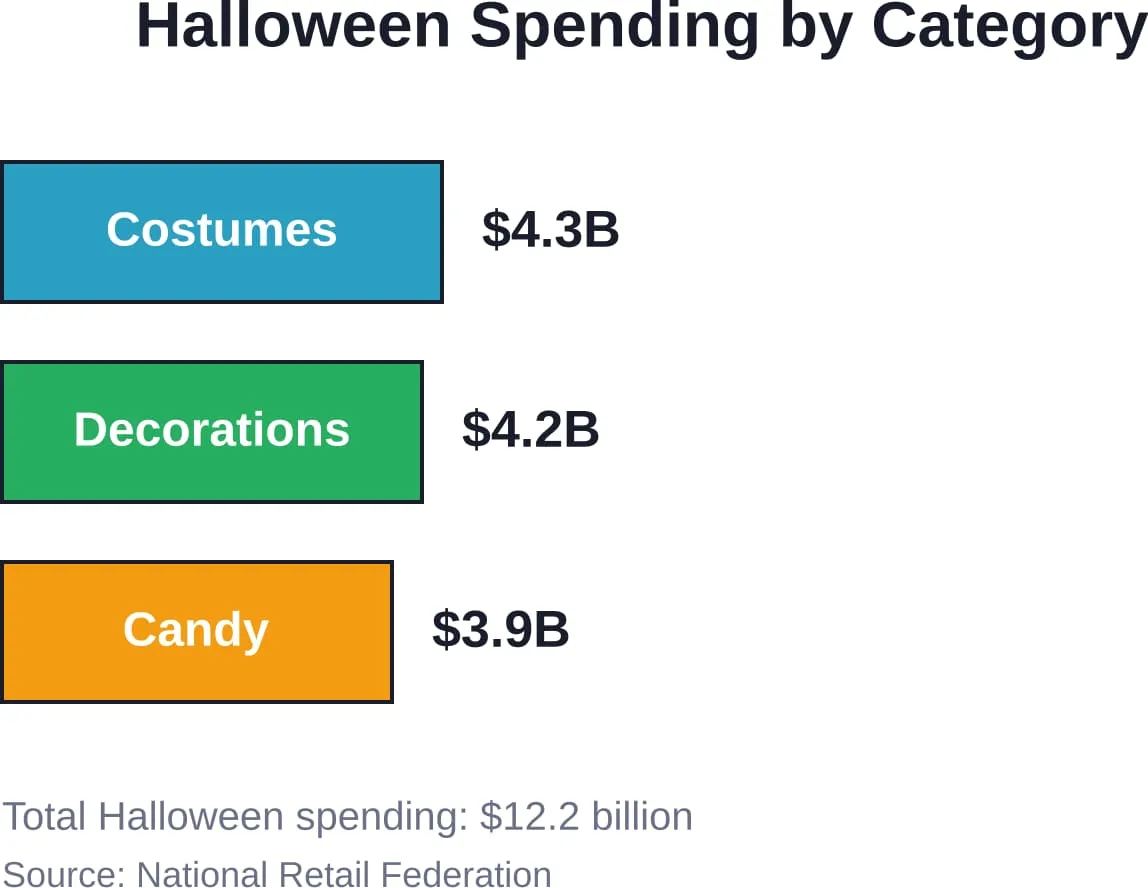
The Halloween market has matured considerably. Consumer spending breaks down into three major categories: costumes, decorations, and candy ($3.9 billion), with decorations increasing to $3.8 billion from 2019 levels.
Here’s what makes this particularly interesting for marketers. Top holiday activities tell us exactly what consumers prioritize. According to National Retail Federation data, 66% of consumers plan to hand out candy, 51% dress up in costume, and 51% decorate their home or yard.
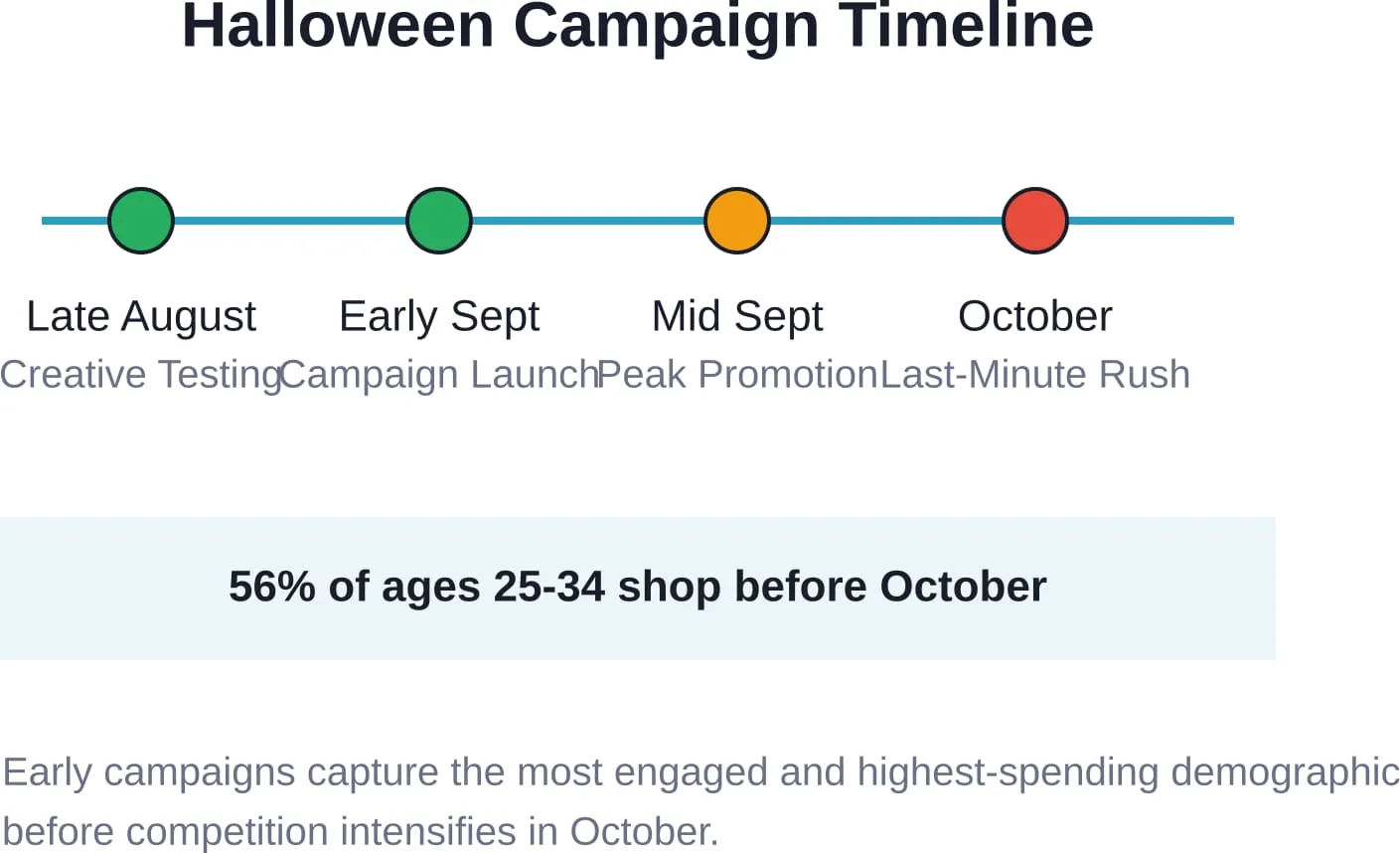
But the demographics reveal something crucial. Ages 25-34 show the highest engagement, with 56% of this demographic beginning to shop before October, and this age group is more likely than any other to get an early start on the holiday.
Start Early or Miss the Window
The data reveals a clear shift in consumer behavior—Halloween shopping no longer happens in late October. Brands that wait until mid-October have already missed the most engaged shoppers.
A significant portion of shoppers plan to decorate before October even begins, with the trend accelerating year-over-year. For the crucial 25-34 demographic, the trend is even more pronounced. These aren’t procrastinators browsing last-minute deals. They’re enthusiastic early adopters ready to spend.
Launch campaigns in early September. Test creative in late August. Have inventory ready by the first week of September.
The brands winning Halloween market share aren’t the ones with last-minute flash sales. They’re the ones who recognized that Halloween has evolved into a full-season event.
Set Up Halloween Campaigns With Lengreo
Halloween campaigns usually need fast-moving pages, clear offers, paid traffic, and simple tracking. Lengreo helps businesses organize the campaign structure, from website pages and ads to content, lead generation, and performance tracking.
Need a Clearer Setup for Seasonal Campaigns?
Lengreo can help with:
- building landing pages for Halloween offers
- setting up PPC, Meta, or LinkedIn campaigns
- tracking leads, clicks, and campaign results
- supporting content for seasonal promotion
👉 Contact Lengreo to discuss your marketing setup.
Creative Campaign Strategies That Convert
Generic “spooky sale” promotions don’t cut through the noise anymore. Consumers respond to campaigns that offer genuine entertainment value or interactive experiences.
Leverage Themed Content Marketing
Create content that serves dual purposes—entertainment and product showcase. Horror-inspired storytelling, when executed with the right balance of camp and creativity, generates organic shares.
The key? Don’t take it too seriously. Light-hearted, playful interpretations of horror tropes perform better than genuinely scary content. Most consumers want fun, not nightmares.
Build Interactive Experiences
Campaigns that invite participation outperform passive advertising. User-generated content contests, AR filters, personalized horror experiences—these tactics transform viewers into active participants.
Consider campaigns where customers can personalize their experience. Interactive elements drive engagement metrics that passive content simply can’t match.
Create Limited-Time Urgency
Flash sales and time-sensitive offers align perfectly with Halloween’s fixed deadline. Consumers already operate under time pressure—the holiday arrives whether they’re ready or not.
But here’s the thing: don’t just discount. Create exclusive Halloween-themed products or bundles available only during the season. Scarcity drives action when it’s authentic.
Social Media Tactics for Halloween Marketing
Halloween dominates social feeds throughout October. Platform-specific strategies determine which brands capture attention versus which get scrolled past.
| Platform | Best Content Type | Optimal Timing |
|---|---|---|
| TikTok | Short-form horror skits, costume transformations, spooky tutorials | Late September through October |
| Aesthetic Halloween flatlays, Stories with AR filters, Reels | Early September onward | |
| Event promotions, community contests, nostalgia content | Mid-September launch | |
| DIY tutorials, decoration inspiration, costume ideas | August through October |
Platform choice matters less than understanding how audiences use each channel during Halloween. Pinterest users search for inspiration weeks in advance. TikTok users engage with trending Halloween content throughout the season. Instagram balances both aesthetic inspiration and real-time event coverage.
Create platform-native content rather than cross-posting the same assets everywhere. A Halloween tutorial that works on Pinterest won’t perform the same way on TikTok without adaptation.
Product and Promotion Strategies
Beyond creative campaigns, tactical promotion strategies drive immediate conversions during the Halloween season.
Bundle Themed Products
Create Halloween-specific product bundles that simplify decision-making. Party hosts shopping for decorations appreciate curated collections over browsing individual items.
Bundles also increase average order value while providing perceived value to customers. Win-win.
Costume Accessories and Add-Ons
With 51% of consumers planning to dress up in costume, accessory sales represent a massive opportunity. Even non-costume retailers can participate through themed accessories, makeup, or complementary products.
The margins on accessories often exceed core costume sales. Smart merchandising places high-margin add-ons adjacent to primary costume displays.
Early Bird Incentives
Reward early shoppers with exclusive discounts or first access to limited products. This strategy capitalizes on the growing segment of consumers who shop before October while creating urgency for fence-sitters.
Structure incentives to encourage September purchases without cannibalizing October sales. Tiered discounts work well—best deals in early September, moderate savings mid-September, standard pricing by October.
Email Marketing for Halloween
Email remains one of the highest-converting channels for seasonal promotions. Halloween email campaigns benefit from clear urgency and strong visual theming.
Segment lists based on past purchase behavior. Customers who bought Halloween products previously represent the lowest-hanging fruit. They’ve already demonstrated seasonal purchase intent.
Launch a three-part email sequence: early announcement (early September), product showcase (mid-September), and final reminder (late October). Each email serves a distinct purpose in the customer journey.
Subject lines matter enormously during high-volume periods. Test spooky wordplay against straightforward benefit statements. Not every audience responds to cute Halloween puns—some prefer direct “30% Off Halloween Decorations” clarity.
Local Business Halloween Strategies
National brands don’t monopolize Halloween opportunities. Local businesses can execute highly effective campaigns with modest budgets.
Host in-store events that build community connection. According to the National Retail Federation, 32% of consumers plan to throw or attend a party, while 46% plan to carve a pumpkin. Events that facilitate these activities drive foot traffic and create memorable brand experiences.
Partner with complementary local businesses for cross-promotions. A bakery and costume shop can create mutually beneficial campaigns that expand reach without duplicating effort.
Decorate storefronts elaborately. Physical Halloween displays signal participation in the seasonal spirit and create photo opportunities that generate organic social media content.
Measuring Halloween Campaign Success
Track metrics that actually matter. Vanity metrics like impressions don’t predict profitability.
| Metric | Why It Matters | Target Benchmark |
|---|---|---|
| Conversion Rate | Direct revenue impact measurement | 2-4% for seasonal campaigns |
| Average Order Value | Bundling and upsell effectiveness | 15-25% lift versus baseline |
| Email Open Rate | Subject line and timing effectiveness | 18-25% for seasonal sends |
| Social Engagement | Content resonance and shareability | 3-5% engagement rate |
| Customer Acquisition Cost | Campaign profitability assessment | Below customer lifetime value |
Compare year-over-year performance rather than arbitrary targets. Halloween 2025 results provide the most relevant baseline for 2026 goals.
Attribution gets messy during multi-channel campaigns. Use UTM parameters consistently and track customer journey touchpoints to understand which channels drive awareness versus conversion.
Common Halloween Marketing Mistakes to Avoid
Even experienced marketers stumble during Halloween campaigns. These errors tank otherwise solid strategies.
- Starting too late represents the most common failure. Campaigns launched in mid-October miss the early-shopping demographic that drives the highest per-person spending. That 56% of 25-34 year-olds shopping before October? They’ve already made purchase decisions before late campaigns even launch.
- Generic theming without brand connection falls flat. Halloween elements should enhance brand identity, not obscure it. Forced Halloween puns that don’t align with brand voice feel inauthentic.
- Neglecting mobile optimization kills conversions. Halloween shopping happens increasingly on mobile devices. Slow-loading pages or clunky mobile checkout processes sabotage traffic generation efforts.
- And look, inventory miscalculations create nightmare scenarios. Selling out of popular items in early October leaves money on the table. Conversely, massive overstock creates margin-crushing January clearance situations.
Looking Ahead: Halloween 2026 Trends
Several emerging trends will shape Halloween marketing as we move through 2026.
Sustainability concerns are influencing purchase decisions. Reusable decorations and eco-friendly costume options appeal to environmentally conscious consumers. Brands that address sustainability authentically—not through greenwashing—gain competitive advantage.
Personalization technology enables more sophisticated targeting. Dynamic content that adapts to individual preferences drives higher engagement than one-size-fits-all messaging.
The line between Halloween and general fall aesthetic continues blurring. Extended seasonal campaigns that transition from general autumn themes to specific Halloween focus capture longer shopping windows.
Economic factors matter. With 79% of shoppers anticipating higher prices specifically because of tariffs, value messaging and strategic pricing become increasingly important. Communicate value clearly without racing to the bottom on price.
Ready to Make Halloween 2026 Your Best Season Yet?
Halloween marketing success comes down to strategic timing, creative execution, and understanding what actually drives consumer behavior during the season.
Start early. The brands that capture market share launch campaigns in September, not October. Test creative in late August. Have inventory ready by early September.
Create campaigns that offer genuine entertainment value or interactive experiences. Generic “spooky sale” promotions don’t cut through the noise anymore.
And remember—brands that make celebration easier, more fun, or more memorable win customer attention and loyalty.
The opportunity is massive. The timeline is tight. Start planning your Halloween 2026 campaign now.