


Quick Summary: Marketing for engineering firms requires a strategic blend of technical expertise demonstration and client trust-building. Successful approaches include SEO-optimized content marketing, case studies showcasing measurable results, thought leadership through technical publications, and targeted digital advertising combined with relationship-driven networking. Engineering firms that balance digital strategies with personal relationship-building typically see the strongest client acquisition results.
Marketing an engineering firm presents unique challenges. The decision-making process is longer, the audience is highly technical, and buyers conduct extensive research before making contact. Many business buyers research extensively online before engaging with sales representatives.
The professional, scientific, and technical services sector—which includes engineering firms—is projected to grow 10.5% from 2023 to 2033. That’s opportunity. But it’s also competition.
So what marketing strategies actually work for engineering firms? Let’s break down the approaches that generate leads, build credibility, and convert prospects into clients.
Build Your Marketing System With Lengreo
Engineering firms need marketing that explains services, projects, and consultation processes clearly. Lengreo organizes website development, SEO, paid ads, content, lead generation, appointment setting, and tracking into one connected system so potential clients can find services and request consultations more easily.
A clear setup helps the firm measure which channels bring qualified leads and ensures the website supports sales conversations effectively.
Need More Project Inquiries?
Lengreo can help with:
- improving service, project, and consultation pages
- setting up SEO and paid traffic campaigns
- tracking calls, forms, and lead sources
- supporting content and lead generation workflows
👉 Contact Lengreo to discuss your marketing setup.
Content Marketing: Show Your Technical Expertise
Content marketing isn’t just blogging. It’s demonstrating your firm’s technical knowledge in ways that solve problems for potential clients.
High-quality content serves multiple purposes. It improves search engine rankings, establishes thought leadership, and provides value before anyone contacts your sales team. According to a Semrush survey, 44% of respondents reported that improving content quality and value has led to measurable success.
Create Technical Resources That Solve Problems
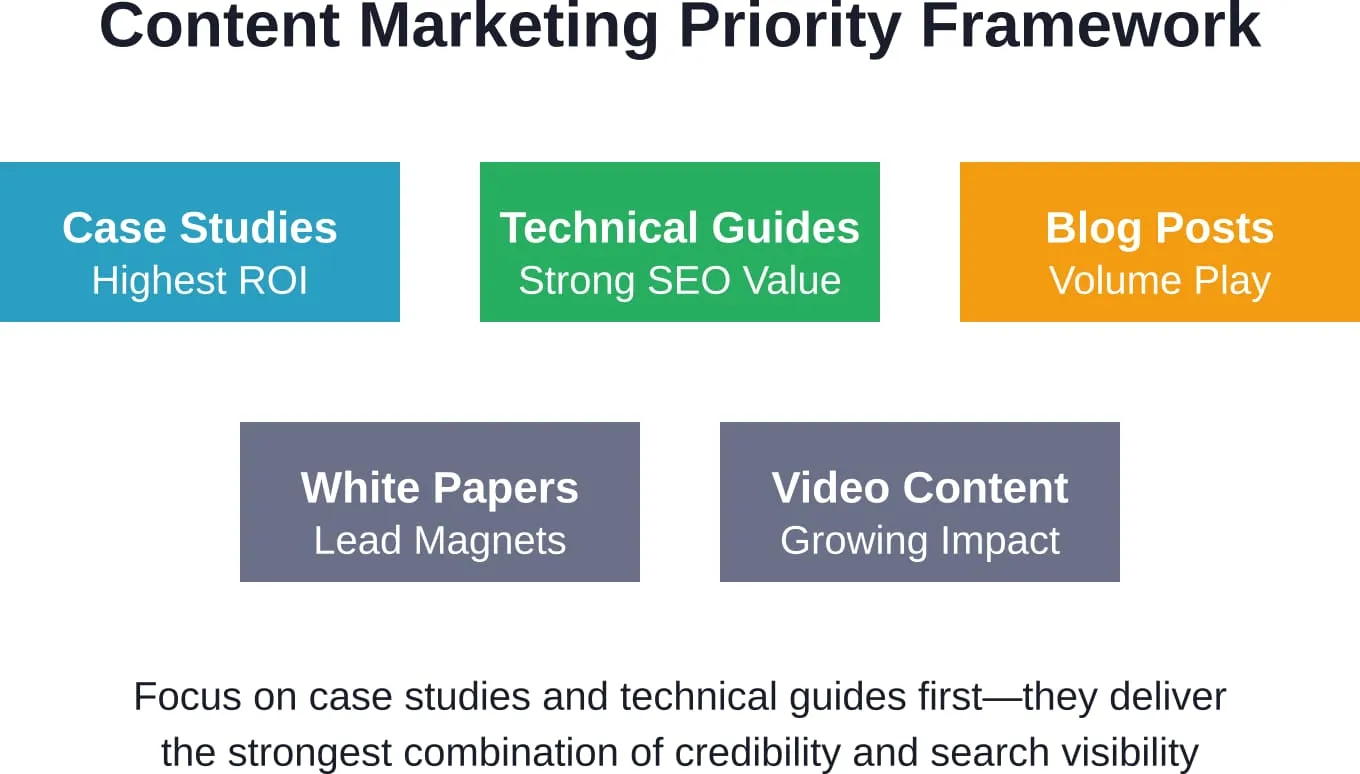
Engineering buyers want technical depth. White papers exploring design challenges, technical guides addressing common industry problems, and detailed case studies showing your methodology all demonstrate competence better than generic marketing copy.
When creating content, specificity matters. Instead of “We provide structural engineering services,” write about “How to Design Cost-Effective Steel Frame Systems for Industrial Buildings in Seismic Zones.” The second approach targets a specific problem and suggests expertise.
Consider these content formats:
- Technical white papers addressing industry challenges
- Design calculators or tools that visitors can use
- Standards compliance guides
- Video walkthroughs of complex engineering problems
- Webinars featuring your senior engineers
Case Studies That Quantify Results
Case studies work because they provide proof. But engineering case studies need to go beyond basic descriptions. Quantify your impact with measurable results.
Instead of “We designed a more efficient HVAC system,” write “Our redesign reduced energy consumption by 32% while lowering installation costs by $47,000.” Numbers make the difference tangible.
Structure each case study around the challenge, your approach, and the measurable outcome. Include technical details that demonstrate your methodology without overwhelming non-technical stakeholders who might be part of the decision-making process.
Search Engine Optimization for Technical Buyers
SEO matters for engineering firms because technical buyers start their search online. They’re looking for specific solutions to specific problems.
Keyword strategy for engineering firms differs from consumer marketing. Target long-tail keywords that indicate buying intent: “structural engineering firm for industrial facilities Chicago” rather than just “engineering firm.”
Technical SEO Fundamentals
Page speed, mobile responsiveness, and site architecture all affect rankings. But for engineering firms, technical documentation presents an opportunity. Detailed project pages, service pages that explain methodologies, and resource centers all create keyword-rich, valuable content that search engines reward.
Here’s what works:
- Create service pages for each specific engineering discipline
- Optimize for location-based keywords if serving specific regions
- Build resource hubs around common technical challenges
- Ensure case studies are indexed and optimized
- Use schema markup to help search engines understand your services
Local SEO matters for regional firms. Ensure Google Business Profile listings are complete, encourage client reviews, and build citations in industry directories.
Relationship-Building Strategies That Scale
Engineering is a relationship business. Digital marketing expands reach, but personal connections close deals.
The most effective approach combines digital presence with intentional networking. Community discussions suggest that face-to-face networking and referrals remain critical for private sector work, particularly for established engineering firms.
Strategic Networking Beyond Trade Shows
Trade shows remain valuable, but they’re expensive and time-intensive. Supplement them with targeted relationship-building.
Join industry associations where potential clients participate. Speak at conferences. Serve on technical committees. These activities build visibility while demonstrating expertise.
Consider specialized approaches like the seller-doer model, where technical staff develop business development skills. Organizations like ACEC offer training programs specifically designed to help mid to senior level technical staff learn business development strategy, soft skills, sales techniques, and client relationship management.
| Networking Approach | Time Investment | Lead Quality | Best For |
|---|---|---|---|
| Trade Shows | High | Medium-High | Broad market exposure |
| Industry Associations | Medium | High | Targeted sectors |
| Speaking Engagements | Medium | Very High | Thought leadership |
| Direct Outreach | High | Medium | Specific target accounts |
| Referral Programs | Low | Very High | Established firms |
Email Marketing for Long Sales Cycles
Engineering purchasing decisions take months. Email newsletters keep your firm visible throughout the consideration process.
The key is providing value rather than promotion. Share technical insights, industry news analysis, regulatory updates, and case studies. Monthly frequency works well—enough to maintain presence without overwhelming recipients.
Segment your list. Prospects considering structural services don’t need content about environmental engineering. Targeted content performs better than generic newsletters.
Lead Nurturing Sequences
When someone downloads a white paper or requests information, they’re indicating interest but rarely ready to buy. Automated email sequences can nurture these leads.
A typical sequence might include:
- Immediate delivery of the requested resource
- Related case study three days later
- Technical article addressing a related challenge after one week
- Invitation to consult with an engineer after two weeks
The goal isn’t aggressive selling. It’s staying present and helpful until the prospect is ready to engage.
Pay-Per-Click Advertising for Qualified Leads
PPC advertising can generate leads quickly, but engineering services require careful targeting to avoid wasting budget on unqualified clicks.
Google Ads works when campaigns target specific, high-intent keywords. “Hire structural engineer for commercial building” indicates buying intent. “What is structural engineering” doesn’t.
LinkedIn Ads for B2B Targeting
LinkedIn allows targeting by job title, company size, industry, and seniority. For engineering firms targeting facility managers, construction firms, or manufacturing operations, this precision justifies the higher cost per click.
LinkedIn ads work best for promoting substantial content offers—white papers, guides, webinars—rather than direct service promotion. Build the relationship before pitching services.
Thought Leadership Through Publishing
Getting published in industry magazines, technical journals, or major industry websites positions your firm as an authority.
Start with trade publications in your target sectors. Most actively seek contributed content from practitioners. Write about trends you’re seeing, technical innovations your firm has implemented, or analysis of regulatory changes.
Academic or professional journals carry more weight but require more rigorous submissions. Papers presented at conferences often become journal articles. IEEE, ASME, and similar organizations publish research that can showcase your firm’s technical depth.
Building Your Engineers’ Personal Brands
Engineering buyers often research individual engineers, not just firms. Encourage senior technical staff to maintain LinkedIn profiles that showcase their expertise, publish on LinkedIn, and engage with industry discussions.
This isn’t about becoming influencers. It’s about being findable and credible when prospects research your team.
Website as Your Primary Sales Tool
For many prospects, your website is the first impression of your firm. It needs to communicate competence, showcase relevant experience, and make contact easy.
Engineering firm websites often fail by being too generic or too technical. The best balance demonstrates expertise while remaining accessible to non-technical decision-makers who might be part of the buying committee.
Essential Website Elements
Every engineering firm website needs:
- Clear service descriptions organized by discipline and industry
- Searchable case study library with filtering by sector, challenge type, or service
- Team profiles that establish credibility
- Resources section with downloadable guides and tools
- Simple contact and RFP submission process
- Mobile-responsive design
Project photography matters more than you’d think. High-quality images of completed projects provide tangible proof of capabilities. Before-and-after comparisons work particularly well for renovation or efficiency improvement projects.
Leveraging Government Contracting Opportunities
Federal, state, and local governments represent significant opportunities for engineering firms. The U.S. government alone is the largest customer in the world, required by law to award at least 23% of prime government contract dollars to eligible small businesses.
Government contracting requires specific certifications and understanding of the proposal process, but programs exist to help small businesses compete. The 8(a) Business Development program, for instance, allows certified firms to efficiently compete for and receive set-aside and sole-source contracts.
Positioning for Government Work
Success in government contracting requires different marketing than private sector work. Capabilities statements replace typical marketing materials. Past performance documentation becomes critical. Certifications matter.
Register in SAM.gov and relevant state systems. Research upcoming projects in your specialties. Build relationships with prime contractors who might need subcontractors. Government work often leads to more government work through past performance references.
Marketing Measurement and Goal-Setting
Marketing without measurement wastes resources. Establish SMART goals—Specific, Measurable, Achievable, Relevant, Time-bound—for each initiative.
Rather than “increase website traffic,” set goals like “increase organic search traffic by 30% within six months” or “generate 15 qualified leads per month from content downloads.”
| Marketing Activity | Primary Metric | Secondary Metric | Measurement Tool |
|---|---|---|---|
| Content Marketing | Organic traffic growth | Time on page | Google Analytics |
| Email Campaigns | Open rate | Click-through rate | Email platform |
| PPC Advertising | Cost per lead | Conversion rate | Ad platform + CRM |
| SEO | Keyword rankings | Organic conversions | SEO tools + Analytics |
| Networking | Qualified introductions | Proposal invitations | CRM tracking |
Attribution Challenges in Long Sales Cycles
Engineering sales cycles often span six to eighteen months. A prospect might discover your firm through organic search, download a white paper, attend a webinar, meet your team at a conference, and finally request a proposal months later.
Which marketing activity gets credit? All of them. Track the full customer journey rather than focusing on last-touch attribution. CRM systems can help map these complex paths.
Common Marketing Mistakes to Avoid
Certain approaches consistently underperform for engineering firms.
- Generic messaging fails. “We provide quality engineering services” means nothing. Specificity wins—”We design cost-effective wastewater treatment systems for municipal clients in the Southeast” targets a specific audience with a specific need.
- Neglecting existing clients is expensive. Acquiring new clients costs more than expanding relationships with current ones. Regular communication with past clients often generates repeat business and referrals more efficiently than cold prospecting.
- Inconsistency kills momentum. Publishing two blog posts then nothing for six months doesn’t build authority. Better to publish monthly consistently than sporadically at higher volume.
Conclusion
Marketing for engineering firms works best when it mirrors how technical buyers actually make decisions: through research, relationship-building, and risk assessment.
The most effective approach combines demonstrating technical expertise through content, building visibility through SEO and publishing, maintaining relationships through consistent communication, and selectively using paid advertising to supplement organic efforts.
Start with foundations—a strong website, case studies, and SEO—then layer in additional channels as resources allow. Measure results, adjust based on data, and recognize that engineering marketing is a long-term investment that compounds over time.
The firms that commit to consistent, strategic marketing efforts build sustainable competitive advantages. Technical excellence gets you in the conversation. Marketing ensures that conversation happens in the first place.