Quick Summary: Employment attorneys can grow their practices by combining local SEO optimization, targeted content marketing, strategic Google Ads, active referral networks, and strong social media engagement. The most effective strategies focus on meeting potential clients at the moment of need—typically within hours or days of a workplace incident—through high-intent keyword targeting and educational content that builds trust. With employment law clients searching rapidly after incidents and lawyers holding about 864,800 jobs in 2024 according to Bureau of Labor Statistics data, a multi-channel marketing approach that emphasizes local visibility and thought leadership delivers the best ROI.
Employment law is a fiercely competitive practice area. Potential clients search fast after workplace incidents, and if they don’t find the right attorney within hours or days, they’ll move on to someone else.
The good news? Employment attorneys have clear advantages when it comes to marketing. Cases often have defined timelines, clients search with high intent, and the distinction between employee-side and employer-side representation makes audience targeting straightforward.
But you still need the right mix of strategies. This guide walks through the marketing ideas that actually work for employment attorneys in 2026, grounded in what successful firms are doing right now.
Why Employment Law Marketing Requires a Different Approach
Employment law clients operate on compressed timelines. Someone who just got fired doesn’t spend weeks researching attorneys—they search immediately, often on mobile devices, looking for answers and representation.
This urgency changes everything about how marketing should work. Generic brand awareness campaigns won’t cut it. Neither will passive referral networks alone, though those remain important.
According to the Bureau of Labor Statistics, lawyers held about 864,800 jobs in 2024. In May 2023, 51% of lawyers worked in legal services (445,110 of 731,340 employed lawyers). The employment law segment within that represents significant competition, especially in metropolitan areas where wrongful termination, discrimination, and harassment cases concentrate.
The challenge? Meeting potential clients exactly when they need help, with the right message, on the right platform.
Build a Website That Converts Searchers Into Clients
Everything starts with a website optimized for conversion, not just traffic. Employment law prospects who land on a site need immediate clarity: what cases the firm handles, who it represents (employees vs. employers), and how to take the next step.
Essential Website Elements for Employment Attorneys
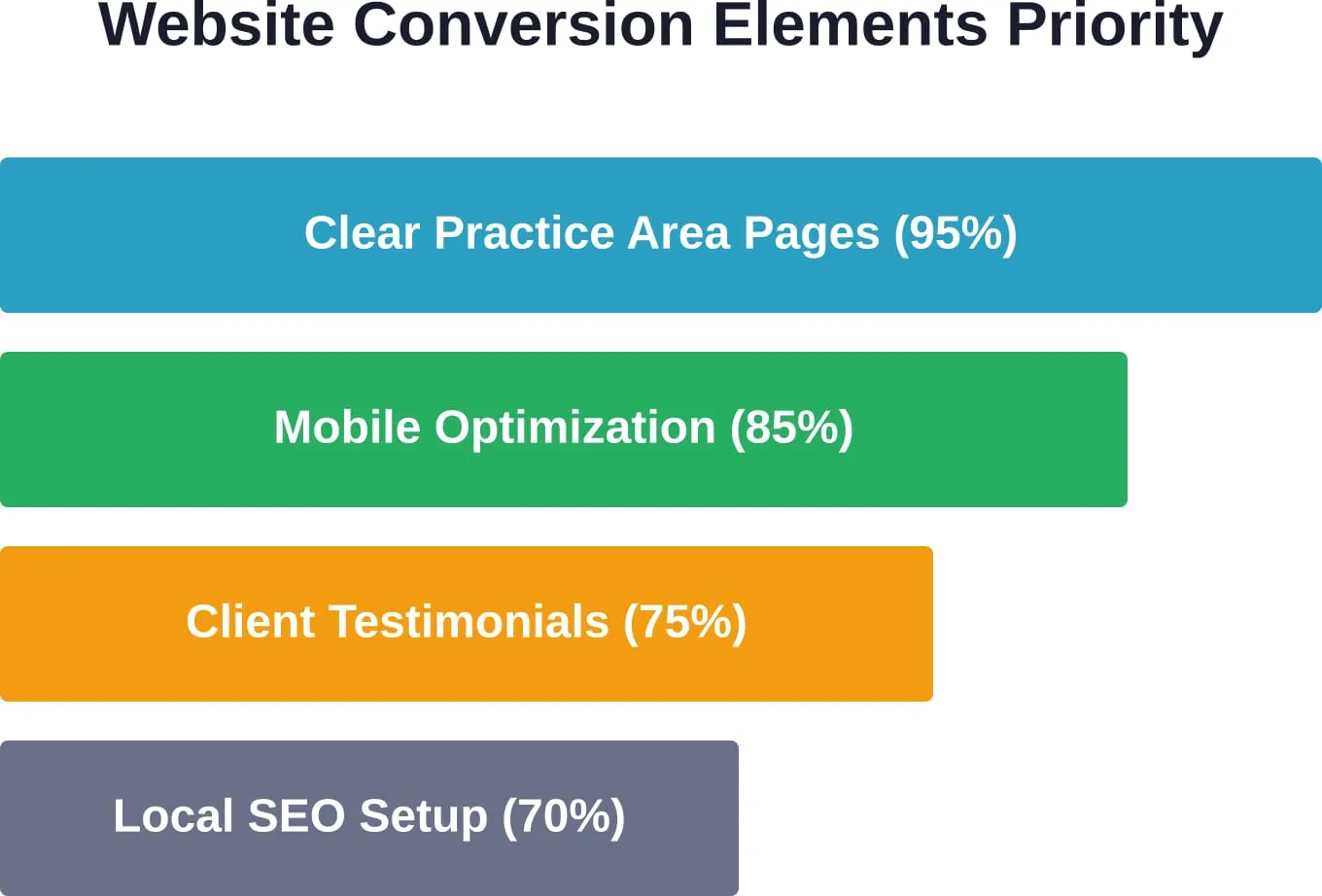
Clear practice area pages separate successful employment law sites from mediocre ones. Create dedicated pages for wrongful termination, workplace discrimination, sexual harassment, wage and hour disputes, retaliation claims, and FMLA violations.
Each page should explain the legal issue in plain language, outline what clients can expect, and include strong calls-to-action. Phone numbers and contact forms need to be prominent—above the fold on every page.
Client testimonials build trust quickly. Video testimonials work even better than text, particularly for employment cases where prospects want reassurance that the attorney understands their situation.
Mobile optimization isn’t optional. Most employment law searches happen on phones, often during work hours when potential clients can’t openly research attorneys on desktop computers.
Local SEO Fundamentals
Employment law remains fundamentally local. Cases get filed in specific jurisdictions, clients want nearby attorneys, and search engines prioritize local results for legal queries.
Claim and optimize the Google Business Profile. Keep the NAP (name, address, phone) consistent across all online directories. Encourage satisfied clients to leave Google reviews—these directly influence local search rankings and conversion rates.
Location-specific content matters. Blog posts about California wrongful termination laws or New York sexual harassment protections help capture geo-targeted searches while demonstrating local expertise.
Structure Your Marketing System With Lengreo
Employment attorneys need marketing that presents services, consultations, and client intake clearly. Lengreo organizes website development, SEO, paid ads, content, lead generation, appointment setting, and tracking into a cohesive system, helping bring in more qualified inquiries.
A clear marketing setup reduces friction for potential clients and provides better insight into which channels are performing.
Need a Better Setup for Legal Consultations?
Lengreo can help with:
- refining service, consultation, and contact pages
- setting up SEO and paid traffic campaigns
- tracking calls, forms, and lead sources
- supporting content and lead generation workflows
👉 Contact Lengreo to discuss your marketing setup.
Master Google Ads for High-Intent Employment Law Searches
Google Ads delivers immediate visibility for employment attorneys willing to pay for clicks. The platform works particularly well for employment law because search intent is crystal clear.
Someone searching “wrongful termination lawyer near me” or “sexual harassment attorney” has immediate legal needs. They’re not browsing—they’re ready to hire.
Structuring Effective Employment Law Ad Campaigns
Separate campaigns by practice area and client type. Employee-side and employer-side campaigns need different messaging, keywords, and landing pages.
High-intent keywords convert better even though they cost more per click. Terms like “wrongful termination lawyer,” “employment discrimination attorney,” and “wage theft lawyer” attract serious prospects.
Location targeting should match actual service areas. Broad geographic targeting wastes budget on clicks from areas where the firm can’t take cases.
Ad extensions matter more than many attorneys realize. Call extensions, location extensions, and sitelink extensions increase ad visibility and click-through rates without additional cost.
Landing Page Strategy for Paid Traffic
Don’t send paid traffic to the homepage. Create dedicated landing pages that match ad messaging exactly. If the ad promises “Free Wrongful Termination Case Review,” the landing page headline should reinforce that same offer.
Remove navigation on landing pages. The goal is conversion, not site exploration. Keep forms short—name, phone, email, and brief case description.
A/B test everything: headlines, form length, calls-to-action, testimonial placement. Small improvements in conversion rate dramatically impact cost per case acquisition.
Content Marketing That Positions Attorneys as Authorities
Employment attorneys have natural content advantages. Workplace law affects millions of people, changes frequently, and generates constant questions.
Content marketing serves two purposes: attracting organic search traffic and demonstrating expertise that converts prospects into clients.
Blog Topics That Drive Traffic and Cases
Answer actual client questions. “Can I be fired for filing a workers’ comp claim?” “What counts as workplace harassment?” “How long do I have to file a discrimination complaint?”
Write about recent legal developments. New legislation, court decisions, and regulatory changes all create timely content opportunities while showcasing the firm’s knowledge of current law.
Address common misconceptions. Many employment law prospects arrive with incorrect assumptions about at-will employment, what constitutes wrongful termination, or how much cases are worth.
Case results and verdicts (when ethically permissible to discuss) demonstrate capability better than any marketing copy.
Video Content for Employment Law
Video content works exceptionally well for employment attorneys. Prospects want to see and hear the attorney before scheduling consultations.
Short explainer videos (2-3 minutes) that break down legal concepts perform well on YouTube, social media, and embedded in blog posts. “5 Signs Your Termination Was Illegal” or “What to Do Immediately After Workplace Harassment” address high-volume questions.
Client testimonial videos build trust faster than text reviews. Keep them authentic—overly polished testimonials feel scripted.
Leverage Social Media for Employment Law Marketing
Social media serves different functions for employment attorneys than paid search or SEO. It’s less about immediate case generation and more about building awareness, demonstrating expertise, and staying top-of-mind.
LinkedIn works well for employer-side employment attorneys marketing to HR professionals and business owners. Share insights on compliance, new regulations, and risk management.
Facebook and Instagram suit employee-side firms. Potential clients spend significant time on these platforms, and targeted ads can reach people by job title, employer size, and life events (job changes).
Content Strategy for Social Platforms
Educational content outperforms promotional posts. Share quick legal tips, explain recent court decisions, debunk employment law myths.
Engagement matters more than follower count. Respond to comments and questions. Join relevant groups and participate authentically without overt self-promotion.
Paid social advertising allows precise targeting that search ads can’t match. Target by employer size, job function, industry, and demographics to reach potential clients or referral sources.
Build and Maintain Referral Networks
Referral networks remain one of the highest-ROI marketing channels for employment attorneys. Other attorneys, HR professionals, and community organizations refer cases regularly when they know and trust a firm.
Attorney-to-Attorney Referrals
Many attorneys encounter employment law issues in their own practice areas. Family law attorneys see divorce cases complicated by employment disputes. Personal injury attorneys handle workers who got hurt then fired. Business attorneys advise employers who need litigation counsel.
Build relationships before needing referrals. Take attorneys in complementary practice areas to lunch. Co-present at legal education seminars. Make yourself the easy answer when they have an employment law question.
Reciprocate referrals when appropriate. Referral relationships work best when value flows both directions.
Strategic Professional Relationships
HR professionals can be referral sources for employee-side attorneys, particularly after they’ve moved to new companies. Stay connected with former clients who work in human resources.
Mental health professionals, career coaches, and outplacement consultants regularly work with people experiencing workplace issues. They can’t provide legal advice but can suggest legal consultation when appropriate.
Union representatives and workers’ rights organizations serve as referral sources and co-counsel opportunities, depending on the firm’s focus.
Email Marketing and Nurture Campaigns
Not everyone who visits an employment law website is ready to hire immediately. Some are researching options. Others aren’t sure if they have a case. Email marketing keeps the firm top-of-mind until they’re ready to act.
Building an Email List
Offer valuable resources in exchange for email addresses. “Free Guide: 10 Signs Your Employer Violated Your Rights” or “Employment Law Checklist for Small Business Owners” work well as lead magnets.
Website exit-intent popups capture visitors about to leave. Keep the ask simple and the value proposition clear.
Consultation requests that don’t immediately convert to retained clients should enter email nurture sequences, assuming proper consent and ethical compliance.
Effective Email Content for Employment Attorneys
Monthly newsletters sharing recent blog posts, legal updates, and case results keep the firm visible. Don’t over-send—monthly or bi-weekly frequency prevents unsubscribes while maintaining presence.
Automated sequences for specific practice areas allow personalized follow-up. Someone who downloaded a wrongful termination guide receives different content than someone interested in wage and hour issues.
Always include clear next steps. Every email should make it easy to schedule a consultation or contact the firm.
Track Marketing Performance and Optimize Budget
Employment attorneys can’t afford to waste marketing budget on strategies that don’t generate cases. Tracking and optimization separate successful campaigns from expensive failures.
Key Metrics for Employment Law Marketing
Cost per consultation matters more than cost per click or cost per lead. Some marketing channels generate lots of inquiries but few quality cases. Others produce fewer leads but higher conversion rates.
Track source attribution rigorously. Use call tracking numbers for different marketing channels. Implement proper conversion tracking on websites. Ask new clients how they found the firm.
Return on ad spend (ROAS) for paid channels should be calculated based on actual case value, not just consultations booked. If average wrongful termination case value is $50,000 and the firm keeps $16,500 (33%), then Google Ads spending $3,000 to acquire that client represents strong ROI.
Budget Allocation Strategy
A good starting point is to set aside at least 2% of your revenue as your minimum marketing budget. New firms or those in competitive markets may need higher percentages initially.
Split budget between short-term and long-term channels. Google Ads and local service ads generate immediate results but require ongoing spending. SEO and content marketing take months to show returns but compound over time.
Test new channels with small budget allocations before committing significant resources. Run three-month trials with defined success metrics.
| Marketing Channel | Time to Results | Typical Cost Range | Best For |
|---|---|---|---|
| Google Ads | Immediate | $2,000-$8,000/month | Immediate case volume in competitive markets |
| Local SEO | 3-6 months | $1,000-$3,000/month | Long-term sustainable lead generation |
| Content Marketing | 6-12 months | $500-$2,000/month | Building authority and organic traffic |
| Social Media Ads | 1-3 months | $1,000-$4,000/month | Brand awareness and specific targeting |
| Referral Development | 6-12 months | $500-$1,500/month | High-quality cases with better closing rates |
Reputation Management for Employment Attorneys
Online reputation directly impacts case acquisition. Potential clients research attorneys extensively before making contact, and negative reviews or absence of reviews both hurt conversion.
Generating Positive Reviews
Ask satisfied clients for reviews at case conclusion. Make it easy by sending direct links to Google, Avvo, or other relevant platforms.
Timing matters. Request reviews when client satisfaction peaks—after a favorable settlement or verdict, not months later when the experience has faded.
Don’t incentivize reviews (it violates most platform policies and ethics rules), but do make the process frictionless. Provide step-by-step instructions and direct links.
Responding to Negative Reviews
Respond professionally to negative reviews without violating client confidentiality. A simple acknowledgment and invitation to discuss offline often suffices.
Never argue with reviewers publicly. It makes the attorney look defensive and amplifies the negative review’s visibility.
A pattern of positive reviews dilutes the impact of occasional negative ones. Firms with 50+ positive reviews can weather a few negative ones without significant damage.
Advanced Strategies for Established Employment Law Practices
Firms with solid foundational marketing can explore more sophisticated approaches that build on existing success.
Thought Leadership and Media Relations
Position attorneys as expert sources for media coverage. Reporters covering workplace issues, labor disputes, or employment law changes need attorney quotes and interviews.
Tools like HARO (Help a Reporter Out) connect attorneys with journalists seeking sources. Pitch timely commentary on employment law news to local and trade publications.
Published articles in business journals, HR magazines, and legal publications extend reach while building credibility. These placements often generate referrals from other professionals.
Speaking Engagements and Webinars
Present at professional conferences, business associations, and HR groups. Topics like “Avoiding Common Hiring Mistakes” or “Managing Difficult Terminations” position employer-side attorneys as valuable resources.
Webinars allow national reach without travel. Host quarterly webinars on timely employment law topics and promote them to email lists and social media audiences.
Record presentations and repurpose them as content. One speaking engagement generates video clips, blog posts, and social media content for months.
Common Marketing Mistakes Employment Attorneys Make
Even experienced attorneys fall into predictable marketing traps that waste budget and opportunity.
Targeting Too Broadly
Employment law encompasses employee-side and employer-side work, plus dozens of sub-specialties. Marketing messages that try to be everything to everyone resonate with no one.
Narrow focus improves results. An attorney who exclusively handles executive compensation disputes can outmarket generalists for that specific audience.
Neglecting Mobile Experience
Most employment law searches happen on mobile devices. Websites that load slowly, forms that frustrate mobile users, and click-to-call buttons that don’t work all bleed potential clients.
Test website performance on actual phones, not just desktop browsers with narrow windows. Page speed, form usability, and navigation all matter more on mobile.
Inconsistent Marketing Effort
Marketing works through sustained effort, not sporadic bursts. Firms that blog intensively for two months then disappear for four won’t see results.
Small consistent investments outperform irregular large ones. Monthly content publication, ongoing ad optimization, and regular networking compound over time.
Taking Action on Employment Law Marketing
Employment law marketing succeeds when it meets potential clients at the moment of need with the right message and clear next steps.
Start with foundational elements: a conversion-optimized website, strong local SEO, and Google Ads targeting high-intent keywords. These generate results while building long-term assets.
Add content marketing and email nurture campaigns that demonstrate expertise and maintain visibility with prospects not yet ready to hire.
Layer in referral network development and social media presence for sustainable growth that isn’t entirely dependent on paid advertising.
Track everything. Know which channels generate consultations, which consultations convert to retained cases, and what the actual ROI is for each marketing dollar spent.
The employment law market will only get more competitive. Firms that build comprehensive marketing systems now position themselves to capture more than their fair share of cases for years to come.
Ready to attract better employment law clients? Start with one channel, measure results rigorously, and expand what works while cutting what doesn’t. The data will show the way forward.