


Quick Summary: Divorce lawyers can grow their practice through a strategic mix of local SEO optimization, Google Local Services Ads, reputation management, and empathetic content marketing that addresses client concerns during emotionally difficult times. With 48% of family law clients making hiring decisions within three days of starting their search, and 39% reading seven or more reviews before choosing a firm, a strong online presence and trust-building strategy are essential for converting high-intent prospects into retained clients.
The divorce law market presents unique marketing challenges. Prospective clients are emotionally hesitant, often searching during late-night moments of crisis or uncertainty. They’re looking for attorneys who understand their pain, not just legal expertise.
And here’s the reality: most divorce clients don’t take weeks to decide. According to data from family law marketing research, According to Scorpion research, 48% of family law clients make a hiring decision within just three days of starting their search. That narrow window means your marketing can’t afford weak spots.
The good news? Divorce law marketing has evolved beyond expensive Yellow Pages ads and billboard campaigns. Digital channels now offer measurable, cost-effective ways to reach clients exactly when they need help.
This guide covers the marketing ideas that consistently deliver results for divorce attorneys—from foundational strategies like local SEO to advanced tactics like retargeting campaigns. Whether you’re a solo practitioner or part of a growing family law firm, these approaches will help you attract more qualified leads and convert them into retained clients.
Why Divorce Lawyer Marketing Requires a Different Approach
Divorce cases aren’t transactional. Clients aren’t comparison shopping for the cheapest option or fastest service. They’re making one of the most emotionally difficult decisions of their lives, often while dealing with fear, anger, or confusion.
This emotional context changes everything about how marketing should work.
Generic legal marketing that works for personal injury or estate planning falls flat in divorce. Prospective divorce clients need empathy, clarity, and trustworthiness from the first touchpoint. They’re not impressed by aggressive “we fight hard” messaging—they want reassurance that you understand their situation and can guide them through it.
The timeline matters too. Family law clients research quickly and decide fast. But they also read extensively before choosing. Research from Scorpion shows that 39% of legal consumers read seven or more reviews before choosing a law firm. That’s a lot of due diligence packed into a short window.
Here’s what that means for your marketing strategy: you need both visibility (so they find you quickly) and depth (so they trust you enough to call). Half-measures don’t work. A great website with no traffic won’t help. High traffic with a generic, impersonal site won’t convert.
Optimize Your Marketing Strategy With Lengreo
Divorce lawyer marketing works better when services are easy to understand and people can request a consultation without confusion.
Lengreo works on the full setup behind that process, including website structure, search visibility, paid campaigns, lead generation, content, and tracking.
Need More Consultation Inquiries?
Lengreo can help with:
- refining service, location, and consultation pages
- improving search visibility for family law queries
- setting up paid campaigns for qualified inquiries
- tracking calls, forms, and campaign performance
👉 Contact Lengreo to discuss your marketing setup.
Build a Foundation with Local SEO
Most divorce clients search locally. They type phrases like “divorce lawyer near me” or “best family law attorney in [city]” into Google, expecting results that match their location.
If your firm doesn’t appear in those local search results, you’re invisible to the highest-intent prospects in your market.
Local SEO is the foundation of divorce lawyer marketing because it captures demand that already exists. These aren’t cold leads you have to nurture for months. They’re actively looking for help right now.
Optimize Your Google Business Profile
Your Google Business Profile (formerly Google My Business) is the single most important local SEO asset you have. When someone searches for divorce lawyers in your area, Google displays a map pack showing three local businesses. Appearing in that pack dramatically increases your chances of getting a call.
Claim and verify your profile if you haven’t already. Then optimize every section:
- Use your exact practice name, address, and phone number (NAP) consistently across all platforms
- Select the correct primary category: “Divorce Lawyer” or “Family Law Attorney”
- Add secondary categories like “Legal Services” or “Divorce Service”
- Upload high-quality photos of your office, staff, and attorney headshots
- Write a detailed business description that includes your location and practice areas
- Keep your hours updated, especially if they change for holidays
- Enable messaging so prospects can contact you directly through Google
But here’s the thing most attorneys miss: Google Business Profiles aren’t set-it-and-forget-it. Google rewards active profiles with better rankings. Post regular updates, share blog content, and respond to every review—positive or negative.
Get More Google Reviews (The Right Way)
Reviews aren’t just social proof. They’re a direct ranking factor in local search. The more positive reviews you have, the higher Google ranks your profile in local results.
And as mentioned earlier, 39% of legal consumers read seven or more reviews before choosing a firm. If you only have three reviews and your competitor has thirty, you’re at a massive disadvantage—even if your legal skills are superior.
The solution? Build a systematic review generation process:
- Ask every satisfied client for a review after their case closes
- Send a follow-up email with a direct link to your Google review page
- Make it easy—don’t just say “leave us a review,” provide a clickable link
- Respond to every review with a personalized thank you or resolution
- Never offer incentives for reviews (it violates Google’s policies)
Family law firms partnering with Scorpion have seen results like a 194% increase in organic traffic, a 12x return on investment, and a 35% increase in leads.
Create Location-Specific Website Content
Your website should clearly signal to Google (and prospects) that you serve specific cities and counties. Generic “serving the state of [X]” language doesn’t cut it for local SEO.
Create dedicated service area pages for each major city you serve. Each page should include:
- City or county name in the H1 heading and title tag
- Specific information about divorce laws in that jurisdiction
- Local court addresses and filing procedures
- Neighborhood or landmark references that demonstrate local knowledge
- Unique content—never duplicate the same text across multiple location pages
This approach helps you rank for “divorce lawyer in [specific city]” searches, which are often higher-intent than generic state-level searches.
Invest in Google Local Services Ads
Google Local Services Ads (LSAs) appear at the very top of search results, above traditional pay-per-click ads and organic listings. They’re designed specifically for local service businesses, including lawyers.
Here’s why they work so well for divorce attorneys: LSAs show a Google Guaranteed badge, your star rating, and your phone number. Prospects can call you directly from the ad without ever visiting your website.
And you only pay when someone contacts you—not for clicks or impressions. That makes LSAs more cost-effective than traditional Google Ads for many divorce lawyers.
Google Local Services Ads can deliver strong ROI for law firms, though specific performance varies by market and practice area. That means for every dollar spent, the firm generated four dollars in revenue.
How to Set Up Local Services Ads
Getting started with LSAs requires Google verification. You’ll need to:
- Pass a background check for all attorneys in your firm
- Provide proof of licensure and insurance
- Verify your business information and service areas
- Set your weekly budget and service categories
Once approved, you’ll receive the Google Guaranteed badge. This badge is a powerful trust signal—it tells prospects that Google has vetted your credentials and stands behind your services.
Set your budget conservatively at first. Monitor which practice areas and geographic areas generate the most leads, then adjust your budget allocation accordingly. LSAs work best when you respond quickly—Google tracks your response time and prioritizes faster responders in rankings.
Use Pay-Per-Click Advertising Strategically
Traditional Google Ads (pay-per-click) still have a place in divorce lawyer marketing, but they require careful management to avoid wasting budget on unqualified clicks.
The key is targeting high-intent keywords while excluding searches that indicate someone who isn’t ready to hire.
Target High-Intent Keywords
Not all divorce-related searches have equal value. Someone searching “how to file for divorce in [state]” is probably doing early research. Someone searching “divorce lawyer [city] free consultation” is much closer to hiring.
Focus your PPC budget on keywords that indicate immediate need:
- “Divorce attorney near me”
- “[City] divorce lawyer”
- “Best family law attorney [location]”
- “Emergency custody lawyer”
- “Divorce lawyer free consultation”
Use negative keywords aggressively. Add terms like “free,” “do it yourself,” “forms,” “cost,” and “cheap” to your negative keyword list to filter out researchers who aren’t ready to pay for representation.
Create Ads That Address Emotional Concerns
Divorce PPC ads need different copy than other legal practice areas. Skip the aggressive “we fight for you” language. Instead, address the emotional concerns your prospects face:
- “Compassionate Divorce Representation in [City]”
- “Protect Your Rights During Divorce—Free Consultation”
- “Experienced Family Law Attorneys Who Listen”
Include your phone number in the ad headline when possible. Many divorce prospects prefer to call rather than fill out a form, especially during emotionally difficult moments.
And make sure your landing page matches the ad’s message. If your ad promises a free consultation, the landing page should make scheduling that consultation the primary call to action.
Build Trust Through Content Marketing
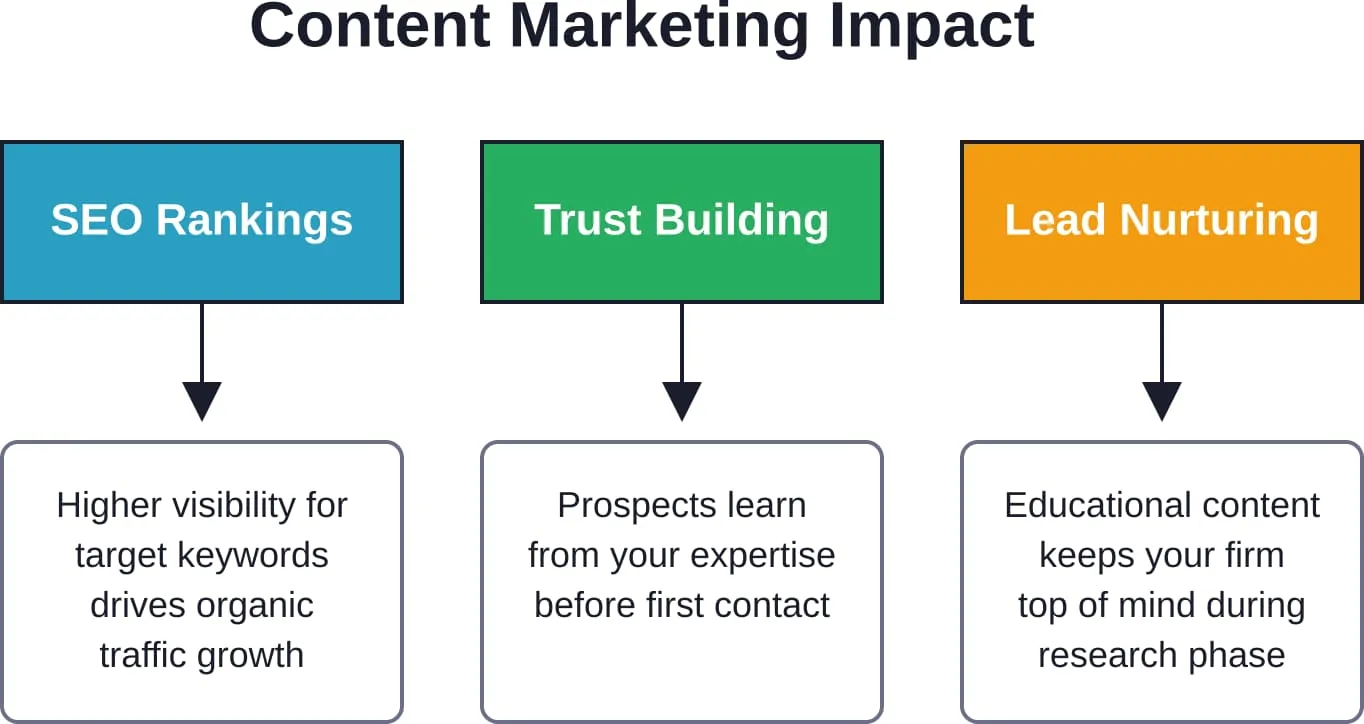
Content marketing serves two purposes for divorce lawyers: it improves your SEO rankings, and it builds trust with prospects who are researching their options.
Remember, many family law clients spend days or weeks reading articles, watching videos, and consuming content before they contact an attorney. If your content helps them during that research phase, you’ll be top of mind when they’re ready to hire.
Answer the Questions Your Prospects Actually Ask
The best content addresses real questions you hear during consultations. Think about the questions every new client asks in that first meeting:
- “How long does a divorce take in [state]?”
- “How much does a divorce cost?”
- “Do I need a lawyer for an uncontested divorce?”
- “How is child custody determined?”
- “What happens to our house in a divorce?”
Create comprehensive blog posts or videos answering each question. Don’t hold back information hoping to force people to call—give genuinely helpful answers. Prospects who feel you’ve already helped them for free are more likely to hire you when they need representation.
Create Practice Area Resource Pages
Beyond individual blog posts, build pillar pages for each major practice area:
- Contested divorce
- Uncontested divorce
- Child custody
- Child support
- Spousal support/alimony
- Property division
- Modifications and enforcement
Each resource page should be comprehensive—think 2,000+ words covering every aspect of that topic. Include internal links to related blog posts and clear calls to action for consultations.
These pillar pages serve as SEO hubs that can rank for competitive keywords while also providing prospects with the detailed information they need to make informed decisions.
Manage Your Online Reputation Actively
For divorce lawyers, reputation isn’t just about looking good online. It’s a direct lead generation channel. Prospects read reviews as carefully as they read your website copy.
And the data backs this up: 39% of legal consumers read seven or more reviews before choosing a law firm. If your reviews are sparse, outdated, or mixed, you’re losing cases to competitors with stronger reputations.
Monitor All Review Platforms
Don’t just focus on Google reviews. Prospects also check:
- Avvo
- Martindale-Hubbell
- Lawyers.com
- Yelp
Set up alerts so you know immediately when a new review appears. Respond quickly—ideally within 24 hours. Thank reviewers for positive feedback and address concerns in negative reviews professionally.
Never argue with a negative reviewer publicly. Acknowledge their experience, apologize if appropriate, and offer to discuss the matter privately. Future prospects will see that you handle criticism with professionalism, which builds trust even when the review itself is negative.
Showcase Testimonials on Your Website
Don’t make prospects hunt for your reviews on third-party sites. Feature your best testimonials prominently on your website:
- On your homepage
- On practice area pages
- On your “About” page
- In case study blog posts
Use real quotes from real clients (with permission). Include their first name and last initial if they’re comfortable with it. Generic “John D.” testimonials feel fake—specific details make testimonials credible.
Video testimonials are even more powerful. If a client is willing to record a brief video explaining how you helped them, that testimonial carries ten times the weight of a written quote.
Optimize Your Website for Conversions
Traffic means nothing if your website doesn’t convert visitors into leads. And the data shows most law firm websites fail at this. According to Clio’s Legal Trends Report, only 14% of clients found it easy to locate pricing information on law firm sites, and 30% said they could easily understand the process of hiring or working with a lawyer.
That’s a massive opportunity. If your website clearly answers the questions prospects actually have, you’ll convert at a much higher rate than competitors with vague, generic sites.
Make Your Value Proposition Crystal Clear
Prospects should understand what makes your firm different within five seconds of landing on your homepage. That means your headline needs to communicate your unique value immediately.
Skip generic headlines like “Experienced Divorce Attorneys” or “Compassionate Family Law Representation.” Those could describe any firm. Instead, highlight what actually sets you apart:
- “[City]’s Only Divorce Firm Specializing in High-Asset Cases”
- “Protecting Fathers’ Rights in Custody Disputes Since 2010”
- “Uncontested Divorce for $XXX—Fixed Fee, No Surprises”
Follow your headline with 2-3 sentences that expand on your value proposition. Then include a clear, prominent call to action—usually scheduling a consultation.
Simplify Your Contact Process
Every extra step between “I need help” and “I’ve contacted this lawyer” is an opportunity for the prospect to change their mind or get distracted.
Make contacting you as easy as possible:
- Put your phone number in the header of every page (make it clickable on mobile)
- Include a contact form on every page, not just a dedicated contact page
- Use a prominent “Schedule Consultation” button that stands out visually
- Offer online scheduling if possible—don’t force prospects to call during business hours
- Enable live chat for immediate questions
And here’s a critical detail most firms miss: tell prospects exactly what happens after they contact you. “Submit this form and we’ll call you within 2 business hours” is much more compelling than a generic “Contact Us” button.
Address Pricing Transparently
Prospects want to know what your services cost. Hiding pricing doesn’t increase consultation requests—it creates anxiety and distrust.
You don’t need to list exact fees for every possible case. But you can provide helpful context:
- Flat fees for uncontested divorces
- Hourly rate ranges
- Typical retainer amounts
- Payment plan availability
- Which services are included vs. billed separately
Even if you can’t quote an exact price without knowing case details, explaining your fee structure shows transparency. That builds trust and filters out prospects who can’t afford your services, saving you time on unqualified consultations.
Use Social Media to Build Familiarity
Social media won’t directly generate a flood of divorce cases. But it plays a supporting role by building familiarity and trust.
When a prospect sees your content on Facebook or LinkedIn multiple times before they contact you, they feel like they already know you. That familiarity makes them more likely to choose your firm over competitors they’ve never heard of.
Choose the Right Platforms
Divorce lawyers don’t need to be on every social platform. Focus on the ones where your target clients actually spend time:
- Facebook: Best for local reach and community engagement. Share blog posts, client success stories (anonymized), and legal updates.
- LinkedIn: Good for professional credibility and referral relationships with other attorneys and professionals.
- Instagram: Works if you can create visual content (infographics, quote graphics, team photos) but requires more effort than Facebook.
Skip platforms like Twitter/X and TikTok unless you genuinely enjoy creating content there. Forced, inconsistent social media presence is worse than no presence at all.
Post Educational Content, Not Ads
People don’t follow law firms on social media to see ads. They follow for helpful information.
Share content that educates and helps:
- Quick legal tips (e.g., “3 Things to Know Before Filing for Divorce in [State]”)
- Myth-busting posts (e.g., “No, You Don’t Automatically Get 50/50 Custody in [State]”)
- Updates on law changes that affect divorce or family law
- Answers to common questions you hear in consultations
Mix in occasional personal content—photos of your team, community involvement, or firm milestones. This humanizes your practice and makes you more relatable.
Leverage Email Marketing for Lead Nurturing
Not every prospect who finds your website is ready to hire immediately. Some are still researching options. Others are waiting for the right time to file.
Email marketing keeps you connected to these prospects during their decision-making process.
Build Your Email List
Offer a lead magnet—a free resource prospects can download in exchange for their email address:
- “Free Guide: 10 Things to Do Before Filing for Divorce in [State]”
- “Divorce Checklist: What Documents You’ll Need”
- “Child Custody FAQ: Answers to Your Top 15 Questions”
Promote your lead magnet on your website, in blog posts, and through social media. Once someone downloads it, they enter your email nurture sequence.
Send Value-First Email Campaigns
Your email sequence should educate and build trust, not push for the sale in every message.
A sample 6-email nurture sequence for divorce prospects might look like:
- Email 1: Deliver the promised resource and introduce your firm
- Email 2: Share your most helpful blog post on a related topic
- Email 3: Address a common misconception or fear about divorce
- Email 4: Explain what to expect during your consultation process
- Email 5: Share a (anonymized) client success story
- Email 6: Make a clear offer to schedule a consultation
Space these emails 3-5 days apart. After the sequence ends, add subscribers to a monthly newsletter with legal updates and helpful content.
Track Your Marketing ROI
Marketing spending without measurement is just guessing. You need to know which channels are delivering cases and which are wasting budget.
Marketing professionals recommend tracking ROI to ensure your spending generates measurable revenue, with stronger returns indicating more efficient channel allocation. That means for every dollar you spend on marketing, you should aim to generate at least five dollars in revenue.
Set Up Proper Tracking Systems
At minimum, you need:
- Call tracking: Use unique phone numbers for different marketing channels so you know whether a call came from Google Ads, LSAs, or organic search
- Form tracking: Tag contact form submissions with the source (which page, which campaign, etc.)
- Google Analytics: Monitor which pages drive the most conversions and which traffic sources convert best
- CRM integration: Track leads from first contact through consultation and retention
Don’t just count leads. Track which leads actually become paying clients. A channel that generates 50 low-quality leads worth $0 is worse than a channel that generates 10 high-quality leads worth $50,000 each.
Calculate Cost Per Acquisition
For each marketing channel, calculate:
- Total spend per month
- Number of leads generated
- Number of leads that became clients
- Average case value
This tells you your cost per acquisition (CPA). If you spent $2,000 on Google Ads and got 20 leads, your cost per lead is $100. If 5 of those leads became clients paying an average of $5,000, your CPA is $400 and your ROI is 1,150%.
Compare CPA across channels. Double down on the channels with the lowest CPA and highest case values. Cut or reduce spending on channels that consistently underperform.
Consider Retargeting Campaigns
Most people who visit your website won’t contact you on their first visit. They’re still researching, comparing options, or not quite ready to take action.
Retargeting (also called remarketing) keeps your firm visible to these visitors after they leave your site.
How Retargeting Works
When someone visits your website, a tracking pixel adds them to a retargeting audience. Then, as they browse other websites or social media platforms, they see your ads.
This repeated exposure has two effects:
- It keeps your firm top of mind during their research process
- It builds familiarity and trust through repeated exposure
Retargeting works especially well for divorce lawyers because the decision cycle is often days or weeks, not minutes. A prospect might visit your site today but not be ready to call until next week. Retargeting ensures they remember your firm when they’re ready.
Create Segmented Retargeting Campaigns
Not all website visitors should see the same retargeting ads. Segment your audiences based on what they viewed:
- People who visited your divorce services page get ads about divorce representation
- People who visited your custody page get ads about child custody services
- People who started but didn’t complete a contact form get ads with a special consultation offer
This personalization makes your ads more relevant and effective.
And set frequency caps. Seeing your ad 3-5 times over two weeks builds familiarity. Seeing it 30 times feels like harassment.
Build Referral Relationships
Not all divorce lawyer marketing happens online. Referral relationships with other professionals can be one of your most reliable lead sources.
Connect with Complementary Professionals
Build relationships with professionals who serve the same client base but don’t compete with you:
- Therapists and counselors
- Financial advisors
- Real estate agents
- Mediators
- Other attorneys (estate planning, personal injury, etc.)
Take them to lunch. Send them helpful articles. Refer clients to them when appropriate. Reciprocal relationships develop over time, not overnight.
Consider creating a formal referral program. Some divorce lawyers offer a referral fee to professionals who send them cases, though you’ll need to check your state bar rules on fee sharing.
Stay Visible in Your Legal Community
Other attorneys can be excellent referral sources—especially attorneys who practice in areas adjacent to family law or who occasionally get divorce inquiries but don’t handle those cases themselves.
Make yourself the obvious choice for those referrals:
- Join local bar association family law sections
- Attend CLE events and network actively
- Speak at bar events or write for bar publications
- Respond quickly and professionally when another attorney sends you a referral
And always send a thank you note (or better yet, a small gift) when someone refers a client to you. Acknowledging referrals encourages more referrals.
Host Educational Webinars or Workshops
Webinars and in-person workshops position you as an expert while giving prospects a low-pressure way to learn about their options and get to know you.
Choose Topics That Match Client Concerns
The best webinar topics address specific questions your target clients are asking:
- “What to Expect During the Divorce Process in [State]”
- “Protecting Your Business in a Divorce”
- “Co-Parenting After Divorce: Legal and Practical Tips”
- “Understanding Child Support Calculations in [State]”
Promote your webinar through email, social media, and your website. Consider running a small paid ad campaign to fill seats if you need more registrations.
During the webinar, focus on education, not sales. Answer questions thoroughly. At the end, make a soft call to action—invite attendees to schedule a consultation if they’d like personalized guidance.
Repurpose Webinar Content
Record your webinar and use it multiple ways:
- Upload it to YouTube for ongoing SEO value
- Embed it on your website as a resource
- Pull out key points for social media posts or blog articles
- Offer the recording as a lead magnet for future prospects
One webinar can generate content and leads for months.
Common Mistakes Divorce Lawyers Make in Marketing
Even experienced attorneys make marketing mistakes that waste budget and reduce results. Here are the most common pitfalls to avoid.
Being Too Generic
Generic messaging like “experienced divorce attorneys” or “we care about our clients” doesn’t differentiate your firm. Every divorce lawyer could say the same thing.
Specificity sells. Focus on what makes your firm genuinely different—your niche (high-asset divorces, military divorces, LGBTQ+ family law), your process, your pricing structure, or your experience with specific local courts.
Ignoring Mobile Optimization
A significant portion of divorce-related searches happen on mobile devices—often late at night when someone is emotional and searching for answers.
If your website isn’t mobile-friendly, you’re losing those visitors immediately. Test your site on multiple devices. Make sure forms are easy to fill out on a phone. Ensure your click-to-call button works properly.
Not Following Up Quickly
Speed matters. When someone contacts your firm, they’re probably contacting multiple firms. The first attorney to respond has a significant advantage.
Set up systems to ensure fast follow-up:
- Respond to contact form submissions within 2 hours during business hours
- Return phone calls the same day whenever possible
- Send an automated email confirmation when someone submits a form
- Use automated scheduling tools so prospects can book consultations immediately
Prospects interpret slow response times as a preview of how you’ll handle their case. Fast response builds confidence.
| Mistake | Why It Hurts | Fix |
|---|---|---|
| No Google Business Profile | You’re invisible in local search and map results | Claim, verify, and optimize your profile today |
| Too few reviews | 39% of clients read 7+ reviews; you can’t compete with 3 reviews | Build a systematic review request process |
| Generic website messaging | Fails to differentiate or build trust | Highlight specific expertise and address emotional concerns |
| Slow response times | Prospects choose faster-responding competitors | Implement 2-hour response time goal and automated confirmations |
| No tracking | Can’t measure ROI or optimize spending | Set up call tracking, form tracking, and analytics |
Start With the Foundation, Then Scale
Marketing for divorce lawyers doesn’t require doing everything at once. Start with the fundamentals that deliver the highest return.
First, optimize your Google Business Profile and start building reviews. This is free and impacts both your visibility and conversion rate. Then ensure your website clearly communicates your value and makes contacting you easy.
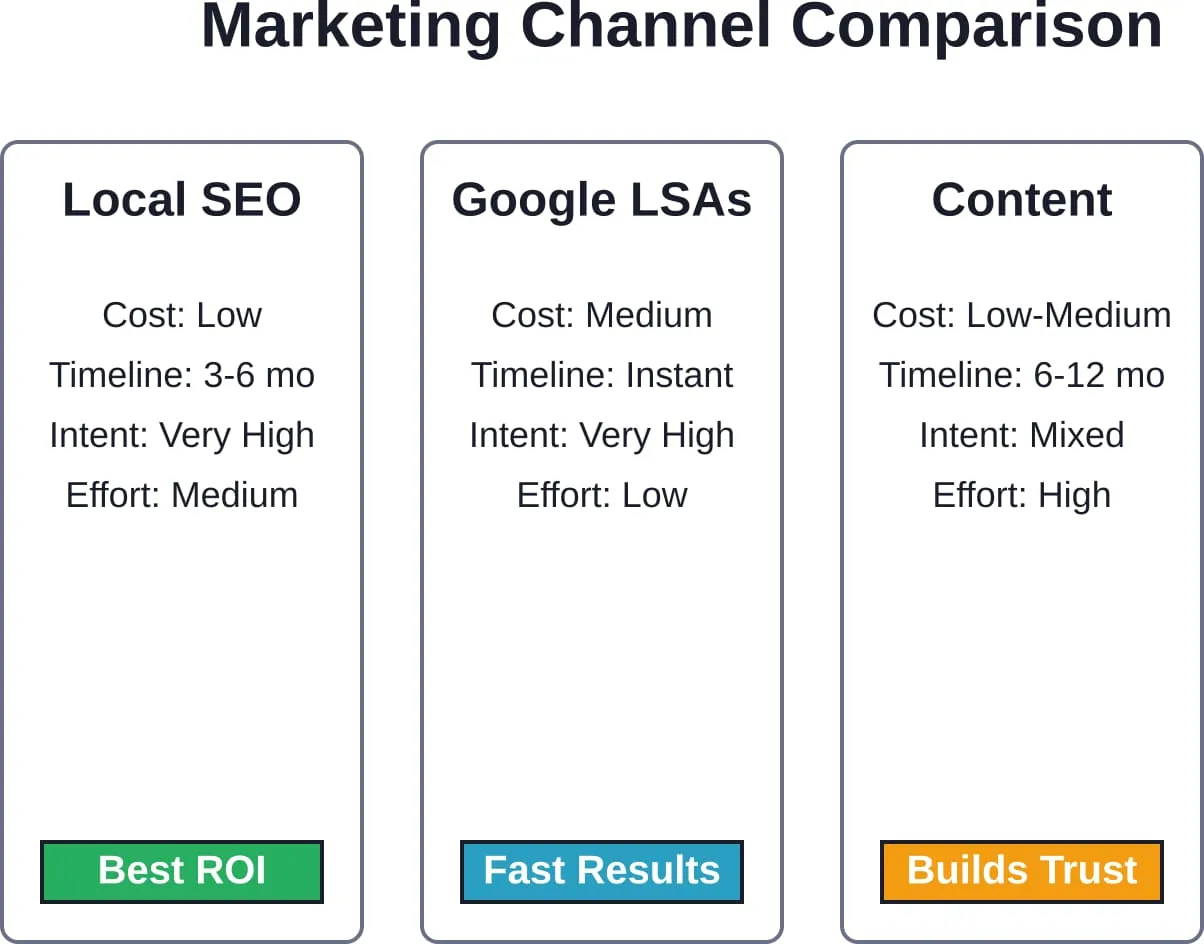
Once those foundations are solid, add paid channels like Google Local Services Ads for immediate lead flow. Layer in content marketing for long-term SEO growth. Then expand to retargeting, email nurturing, and referral relationship building.
Track everything. Double down on what works. Cut what doesn’t.
The divorce law market is competitive, but most attorneys still market poorly. Generic websites, no reviews, slow response times, and scattered strategies create opportunities for firms that execute consistently.
Focus on empathy in your messaging, speed in your response, and measurement in your strategy. Those three elements separate the firms that struggle from the ones that consistently attract high-value clients.
Ready to strengthen your divorce law practice? Start with the highest-ROI tactics first: optimize your Google presence, generate more reviews, and make sure your website converts the traffic you already have. Those fundamentals will support everything else you build.