


Quick Summary: Brokers across industries—real estate, business, mortgage, and financial services—need targeted marketing strategies to attract clients and close deals. Effective approaches combine digital tactics like social media, SEO, and email campaigns with traditional methods such as networking and community involvement. Compliance with regulations (particularly SEC and FINRA rules for financial brokers) is essential, and measuring ROI through lead generation metrics ensures sustained growth.
Marketing in the brokerage industry isn’t what it used to be. A solid referral network and a listing in the Yellow Pages once guaranteed steady income. But in 2026, the landscape demands a multi-channel approach that blends digital sophistication with personal touch.
Whether you’re a real estate broker competing for listings, a mortgage broker chasing refinance opportunities, a business broker selling online enterprises, or a financial advisor navigating SEC compliance, your marketing needs to work harder and smarter. This guide covers actionable ideas across channels, industries, and compliance frameworks.
Why Marketing Matters More Than Ever for Brokers
Here’s the thing: markets are more transparent than they’ve ever been. Clients comparison-shop before they ever contact you. They read reviews, scroll your Instagram, check your LinkedIn, and ask their friends.
Brokers who invest in consistent, strategic marketing see tangible results. Research indicates that even a small 5% improvement in customer retention can result in a significant increase in net present value, ranging from 25 to 95%. According to additional research, a 5% improvement in customer retention might result in profitability increases. Retention starts with acquisition—and acquisition depends on visibility.
For financial advisors and broker-dealers, compliance adds complexity. The SEC modernized its marketing rule (Rule 206(4)-1) in December 2020, finalizing amendments under the Investment Advisers Act to replace current advertising and cash solicitation rules. If you use testimonials, endorsements, or performance data, you need written agreements and oversight protocols. The de minimis compensation threshold for promoters is $1,000 or less, or the equivalent value in non-cash compensation, during the preceding twelve months—anything above that triggers documentation requirements.
Real talk: you can’t afford to ignore marketing, and you can’t wing compliance. Let’s break down what works.
Drive Broker Marketing With Lengreo
Brokers need marketing that clearly presents services, expertise, and contact paths. Lengreo connects website development, SEO, paid ads, content, lead generation, appointment setting, and tracking into a single practical system.
This makes it easier for potential clients to understand offerings and for teams to track which campaigns generate real inquiries.
Need More Client Inquiries?
Lengreo can help with:
- improving service, expertise, and contact pages
- setting up SEO and paid traffic campaigns
- tracking calls, forms, and lead sources
- supporting content and lead generation workflows
👉 Contact Lengreo to discuss your marketing setup.
Digital Marketing Strategies for Brokers
Social Media: Where Your Clients Already Are
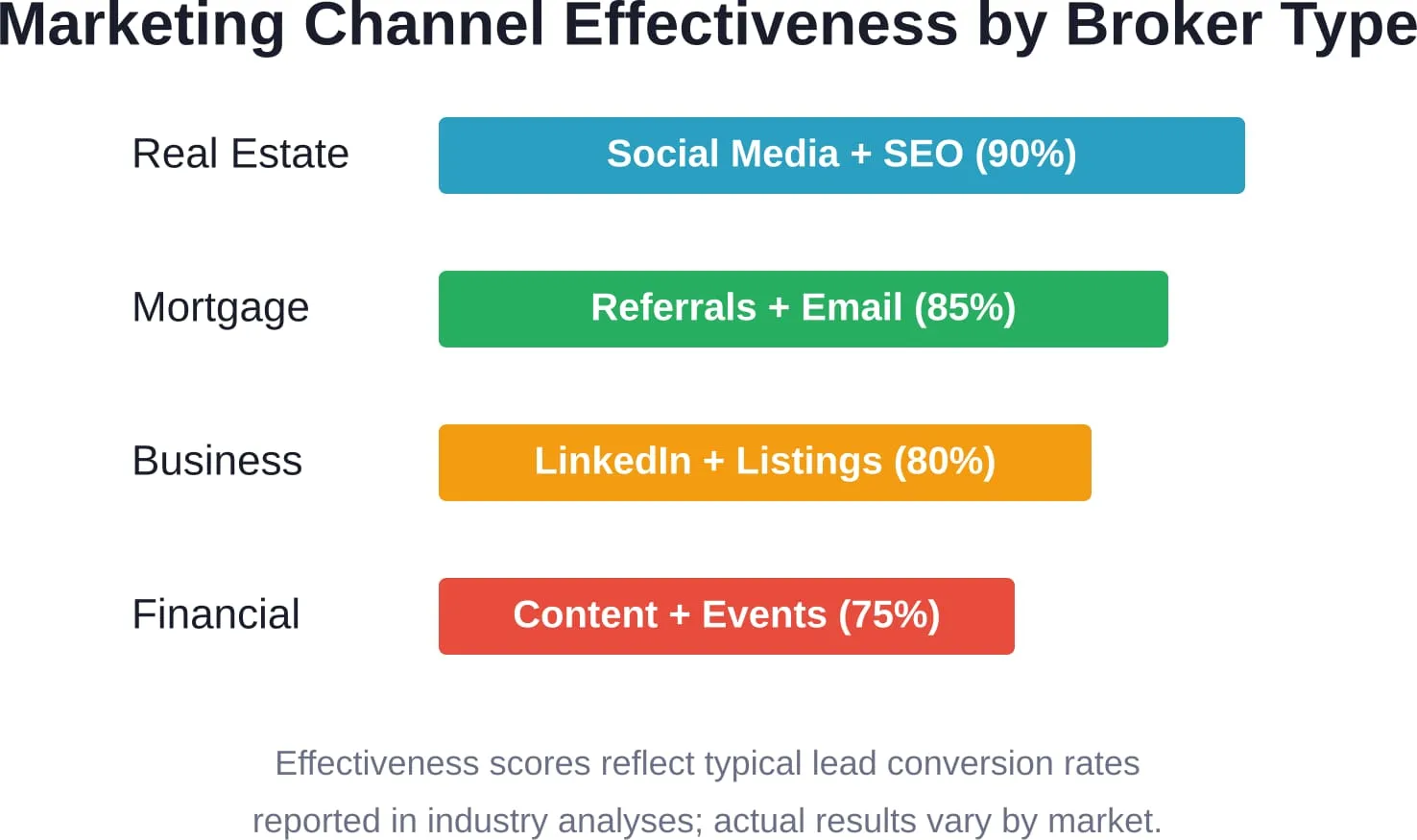
Social media isn’t optional anymore. According to available data, realtors are present on Facebook (87%), LinkedIn (48%), and on Instagram (62%). Your client base is there too—in a 2022 wealth survey, 75% of investors want to engage on a mobile device, yet 50% still expect face-to-face meetings. Social media bridges that gap.
Choose platforms based on your niche. Real estate brokers thrive on Instagram (property photos, virtual tours, before-and-after renovations) and Facebook (community groups, local events). Mortgage brokers find success on LinkedIn (B2B partnerships with real estate agents) and Facebook (homebuyer education content). Business brokers leverage LinkedIn for seller outreach and buyer networks.
Optimize your profiles completely. Use professional headshots, write compelling bios with keywords like “real estate broker [City]” or “mortgage specialist,” and include clear calls to action. Post consistently—3-5 times per week minimum. Mix content types: market updates, client success stories (with permission and compliance review), educational tips, and behind-the-scenes glimpses.
And don’t just broadcast. Engage. Reply to comments, join local groups, answer questions in forums. Community discussions reveal what potential clients care about, and your thoughtful responses position you as the expert they’ll call when they’re ready.
Search Engine Optimization: Own Your Local Market
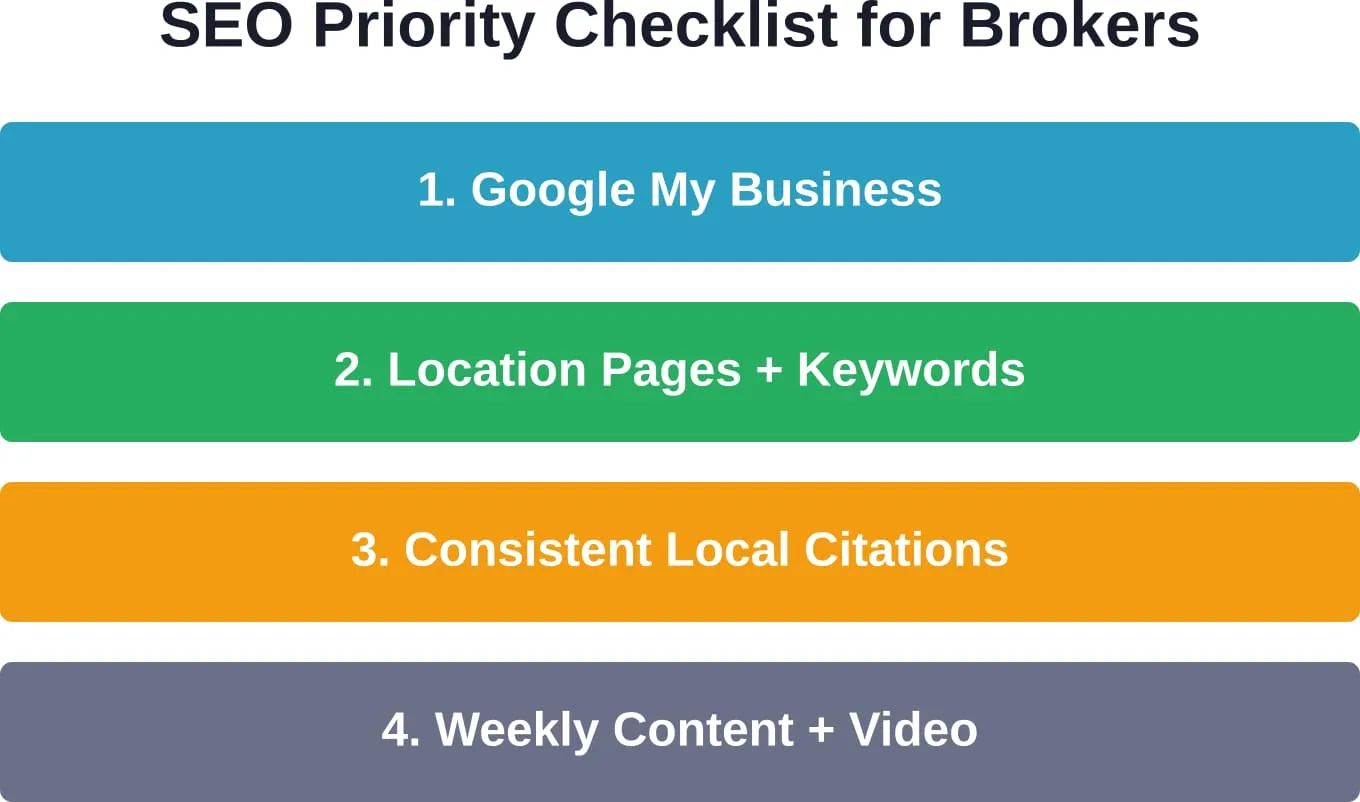
SEO is a long game, but it pays off. Most broker searches include location: “mortgage broker Chicago,” “business brokers near me,” “financial advisor San Diego.” Google My Business is non-negotiable—claim your listing, verify it, keep hours current, upload photos, and collect reviews religiously.
Your website needs location-specific pages. If you serve multiple cities, create unique pages for each: “Real Estate Services in [City],” “Mortgage Rates [Neighborhood],” “Sell Your Business in [County].” Write unique, compelling property descriptions with relevant keywords. Don’t stuff—write naturally, but be intentional.
Local citations matter. Get your business listed consistently (same name, address, phone across all directories) on Yelp, Zillow, realtor.com, Angie’s List, Chamber of Commerce sites, and industry-specific directories. Inconsistent information confuses Google and tanks rankings.
Content marketing fuels SEO. Blog weekly about market trends, buying guides, financing tips, industry changes. Video content ranks well—film neighborhood tours, market updates, explainer videos on loan types or valuation methods. Transcribe videos for searchable text.
Email Marketing: Nurture Leads on Autopilot
Email isn’t dead—it’s just evolved. Direct mail’s response rate is 750% more than email, but email scales better and costs almost nothing per send. The key is personalization and segmentation.
Build your list ethically. Offer lead magnets: free home valuation reports, first-time buyer guides, business valuation calculators, retirement planning checklists. Gate these behind simple forms that capture name, email, and interest area.
Segment ruthlessly. Buyers get different content than sellers. First-time homebuyers need financing education; investors want ROI analysis. Business sellers want valuation insights; buyers need deal flow alerts. Financial advisory clients have varying risk tolerances and life stages.
Automate drip campaigns. Welcome sequences introduce you and set expectations. Educational sequences build trust over 6-8 emails. Re-engagement campaigns win back cold leads. Promotional campaigns highlight listings, rate changes, or limited-time opportunities.
Track everything. Open rates, click-through rates, conversions. A/B test subject lines, send times, content formats. Industry data shows that personalized emails boost engagement significantly—use the recipient’s name, reference their specific interests, and tailor calls to action.
Paid Advertising: Accelerate Lead Generation
Organic takes time. Paid ads buy immediate visibility. Google Ads targets high-intent searches (“sell my house fast,” “best mortgage rates”). Facebook and Instagram ads excel at awareness and retargeting (showing ads to people who visited your site but didn’t convert).
- Start with clear goals. Lead generation? Brand awareness? Event promotion? Your goal dictates campaign structure, budget allocation, and success metrics.
- Google Ads work best for transactional keywords. Bid on local terms, use ad extensions (location, call buttons, sitelinks), and drive traffic to dedicated landing pages—not your homepage. A focused landing page with one clear offer converts far better than a generic site.
- Facebook ads allow granular targeting: age, location, income, interests, behaviors. Lookalike audiences find people similar to your best clients. Retargeting keeps you visible to warm leads who aren’t ready yet.
- Budget varies widely, but start small and scale what works. Monitor cost per lead and cost per acquisition obsessively. If a campaign isn’t profitable within 30-60 days, adjust targeting, creative, or offers—or kill it.
Traditional Marketing Tactics That Still Deliver
Networking: The Timeless Lead Source
Digital dominates, but face-to-face relationships close deals. Join local business groups: Chamber of Commerce, Rotary, BNI chapters, industry associations. Attend consistently—once isn’t enough. Build relationships over months, not meetings.
Host or sponsor events. Market update breakfasts for real estate agents. First-time homebuyer seminars at libraries. Small business owner roundtables. Offer HUD seminars teaching people how to buy HUD homes; HUD seminars may attract investor interest. Offer value first; pitches come later.
Partner strategically. Real estate brokers partner with mortgage brokers, home inspectors, contractors, interior designers. Mortgage brokers partner with real estate agents, CPAs, divorce attorneys. Business brokers partner with M&A attorneys, accountants, wealth advisors. Cross-referrals compound over time.
Direct Mail: Old School, Still Effective
Yes, really. Direct mail stands out because mailboxes are less crowded than inboxes. Postcards, newsletters, and “just sold” announcements work—especially in real estate and mortgage.
Personalization boosts response rates dramatically. Use variable data printing to insert names, addresses, and custom messages. Target specific neighborhoods or demographics. Farm consistently—monthly touches to the same 500-1,000 homes build name recognition.
Include clear calls to action: QR codes linking to landing pages, phone numbers, URLs. Track responses with unique codes or dedicated phone numbers to measure ROI.
Branded Promotional Items: Constant Visibility
Promotional products keep your name in front of clients daily. Promotional item pricing shows practical options: Chapstick as low as 33 cents, pens at 99 cents, tumblers at $2.39, laptop cases from $4.99, car magnets at $8. These items travel—tumblers sit on desks, magnets ride cars around town, pens get borrowed and never returned.
Choose items clients actually use. Real estate brokers: notepads, keychains, measuring tapes. Mortgage brokers: financial planning folders, calculators. Business brokers: USB drives, premium pens. Financial advisors: branded portfolios, desk calendars.
Logo design matters—invest the $995 or so for professional branding if you haven’t already. Cheap clip-art logos scream “amateur.”
Industry-Specific Marketing Ideas
For Real Estate Brokers
Real estate is hyper-visual. Invest in professional photography—listings with high-quality photos sell faster and for more money. Virtual tours and drone footage differentiate you. Matterport 3D tours became standard during COVID and remain popular.
Video marketing crushes it. Film neighborhood tours showcasing local businesses, parks, schools. Create “day in the life” content showing your process. Share client testimonials (with written permission and SEC compliance if you’re also an investment advisor).
Farm hyper-locally. Become the broker for a specific zip code or subdivision. Attend neighborhood association meetings, sponsor Little League teams, organize community clean-up days. Visibility breeds familiarity breeds business.
Partner with property management companies to provide turnkey solutions for investors interested in Section 8 properties. These niche strategies attract serious investors who close faster and refer others.
For Mortgage Brokers
Mortgage brokers live and die by referrals. Build a Realtor referral network—take agents to lunch, provide market updates, offer co-marketing opportunities. Be the responsive broker who answers phones at 7 p.m. and closes on time.
Content marketing educates and attracts. Write blog posts on loan types, down payment assistance programs, credit repair tips, refinancing strategies. Create mortgage calculators and embed them on your site.
Reach out to HR departments at mid-sized companies. Offer employer-sponsored homebuyer education seminars. Employees appreciate the benefit, and you build a pipeline of pre-qualified leads.
Run Facebook lead ads targeting life events: engagements (first-time buyers), new parents (need bigger homes), job changes (relocations). Facebook’s life event targeting is eerily accurate.
For Business Brokers
Business brokerage marketing is unlike most industries. You need qualified buyers and sellers, and confidentiality complicates things—you can’t plaster “Business For Sale” signs everywhere.
Build a buyer database. Run LinkedIn ads targeting entrepreneurs, investors, and corporate executives. Offer a free guide: “10 Questions to Ask Before Buying a Business.” Nurture leads with deal flow emails showcasing anonymous listings (“Profitable HVAC Company, $2M Revenue, Asking $1.5M”).
For sellers, content marketing establishes expertise. Write about valuation methods, exit planning, how to make a business sellable, tax implications of sales. Partner with M&A attorneys and CPAs for webinars.
Listing platforms matter. Flippa dominates online businesses. BizBuySell covers brick-and-mortar. LoopNet handles commercial real estate. Invest in premium listings with detailed financials and professional write-ups.
For Financial Advisors and Broker-Dealers
Financial advisors face the strictest marketing compliance. SEC Rule 206(4)-1 governs advertisements, testimonials, endorsements, and performance claims. FINRA Rule 2210 applies to broker-dealers. SIFMA has advocated for closer alignment between these rules—as of early 2026, firms still navigate overlapping requirements.
Testimonials require written agreements, disclosure of compensation (anything over $1,000 annually), and oversight to ensure compliance. Performance advertising must be fair, balanced, and not misleading—cherry-picking returns is prohibited.
Given these constraints, content marketing becomes crucial. Educational blogs, whitepapers, webinars, and podcasts position you as an expert without triggering advertising rules. Discuss market trends, tax strategies, estate planning, retirement income planning—topics clients care about.
Speaking engagements and workshops build credibility. Offer free seminars at libraries, senior centers, corporate offices. Topics: Social Security optimization, 401(k) rollovers, college savings, long-term care planning. Always pre-clear content with compliance.
Digital platforms help: LinkedIn for professional networking, Twitter for market commentary, YouTube for explainer videos. Maintain compliance-approved social media policies and archive all communications per retention rules.
SIFMA AMG’s members represent U.S. and global asset management firms that manage more than 50% of global assets under management. The IAA’s member firms manage more than $35 trillion in assets. These organizations continuously push for modernized, practical compliance frameworks that balance investor protection with innovation.
Compliance Considerations for Broker Marketing
Compliance isn’t exciting, but violations are expensive. Brokers in regulated industries must navigate federal and state rules.
SEC and FINRA Advertising Rules
The SEC’s Marketing Rule modernized investment adviser advertising in late 2020, effective November 2021. Key provisions:
- General prohibitions: No untrue statements, no misleading claims, no cherry-picked performance, no unsubstantiated claims, no references to testimonials or endorsements without proper disclosures.
- Testimonials and endorsements: Require written agreements (unless from affiliates or de minimis compensation under $1,000/year). Must disclose material conflicts, compensation, and whether the endorser is a client.
- Performance advertising: Must provide balanced presentation, include relevant time periods, explain calculation methodology, and provide appropriate disclosures.
- Oversight obligation: Advisers must implement policies and procedures reasonably designed to ensure compliance.
FINRA Rule 2210 governs broker-dealer communications. Retail communications require principal approval before use (except certain specified categories). Content standards prohibit exaggerated, promissory, or misleading statements.
Recordkeeping rules require retention of communications that document business operations, advice, and transactions. SIFMA advocates for modernization—current frameworks misalign with how clients communicate in the digital era. Firms need clear guidance on retaining texts, social media DMs, and ephemeral messaging apps.
Real Estate and Mortgage Advertising Compliance
Real estate advertising must comply with Fair Housing Act rules—no discriminatory statements based on race, color, religion, sex, handicap, familial status, or national origin. Words matter: “perfect for single person” or “great for empty nesters” can trigger violations.
Mortgage advertising falls under TILA (Truth in Lending Act) and Regulation Z. Trigger terms (specific interest rates, monthly payments, down payment amounts) require full disclosure of loan terms. RESPA and the MARS Rule govern lead generation and third-party marketing services.
State licensing boards add layers—some require specific disclosures on all advertising, licensed name usage, and brokerage identification.
Practical Compliance Tips
Establish a compliance review process. All marketing materials—websites, social media posts, emails, brochures, ads—should be reviewed and approved before publication. Document approvals and retain copies.
Train your team. Everyone who touches marketing needs compliance training: what’s permissible, what’s prohibited, escalation procedures for questions.
Use disclaimers appropriately. “Past performance does not guarantee future results.” “This is not an offer to sell securities.” “Equal Housing Opportunity.” Place disclaimers clearly and conspicuously.
Monitor and audit regularly. Spot-check social media accounts, review email campaigns, audit website updates. Compliance isn’t one-and-done—it’s ongoing.
| Broker Type | Primary Regulator | Key Marketing Rules | Common Pitfalls |
|---|---|---|---|
| Investment Advisers | SEC | Marketing Rule 206(4)-1 | Improper testimonials, cherry-picked performance |
| Broker-Dealers | FINRA | Communications Rule 2210 | Unapproved retail communications, exaggerated claims |
| Real Estate | State boards, HUD | Fair Housing Act, state advertising rules | Discriminatory language, unlicensed team member advertising |
| Mortgage | CFPB, state regulators | TILA/Reg Z, RESPA, MARS | Incomplete disclosures on trigger terms, misleading rates |
Measuring Marketing ROI and Adjusting Strategy
Marketing without measurement is just expensive guessing. Track metrics that matter.
Key Performance Indicators for Brokers
- Lead volume: How many inquiries per month? Break down by source (organic search, paid ads, referrals, social media).
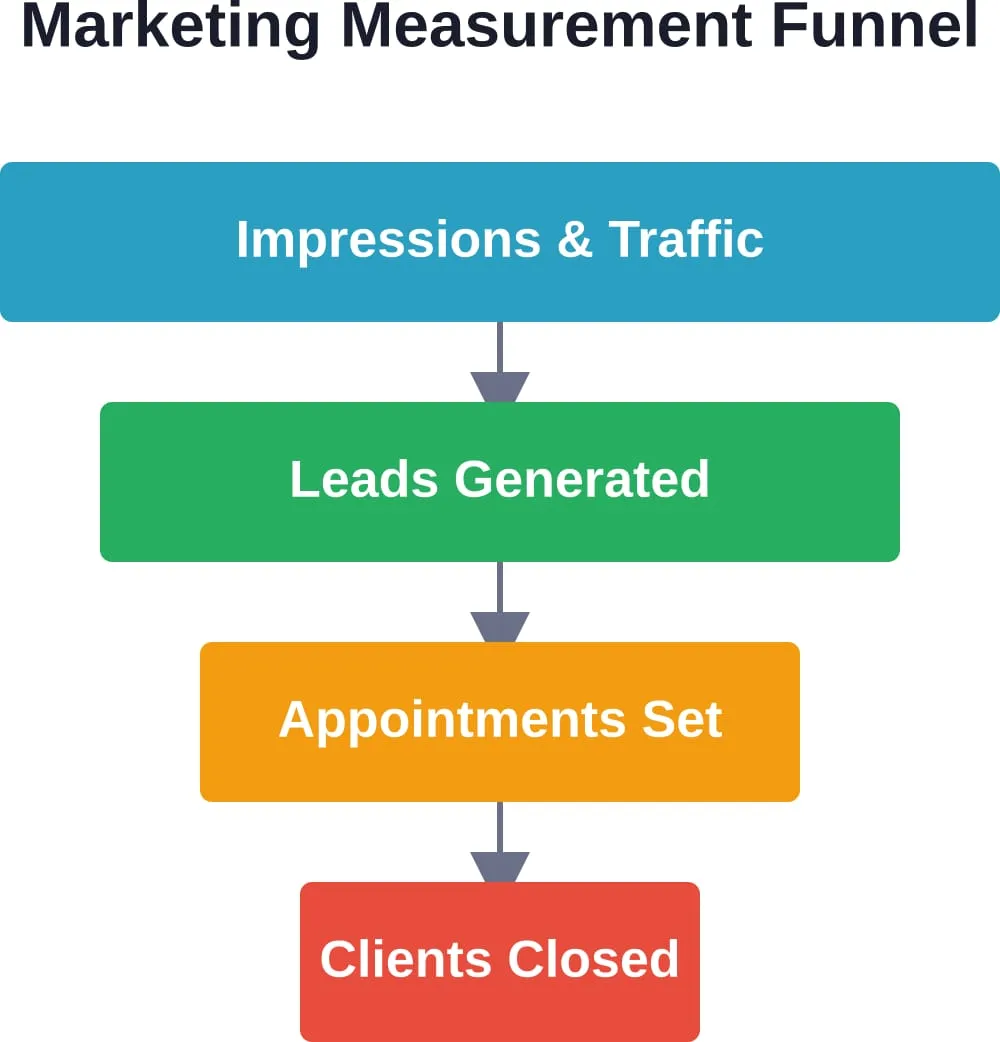
- Lead quality: What percentage of leads are qualified? How many convert to appointments, then to clients?
- Cost per lead: Total marketing spend divided by leads generated. Compare across channels to identify efficiency.
- Cost per acquisition: Marketing spend divided by new clients. This is your true ROI metric.
- Lifetime value: Average revenue per client over their relationship with you. High LTV justifies higher acquisition costs.
- Conversion rates: Website visitor to lead, lead to appointment, appointment to client. Identify drop-off points and optimize.
- Return on ad spend (ROAS): For paid campaigns, revenue generated divided by ad spend. Aim for 3:1 minimum; 5:1+ is excellent.
Tools for Tracking and Analytics
CRM systems centralize data. Popular options: Salesforce, HubSpot, Zoho, industry-specific CRMs like Top Producer (real estate), Encompass (mortgage), or BrokerEngine (business brokers). Track every lead interaction, campaign source, and deal stage.
Google Analytics tracks website behavior: traffic sources, page views, bounce rates, goal completions. Set up conversion tracking for form submissions, phone clicks, and downloads.
Call tracking services (CallRail, CallTrackingMetrics) assign unique phone numbers to campaigns. Know exactly which ad or postcard generated each call.
Social media analytics (native platform insights plus tools like Hootsuite or Sprout Social) measure engagement, reach, follower growth, and link clicks.
Email marketing platforms (Mailchimp, Constant Contact, ActiveCampaign) provide open rates, click rates, unsubscribes, and conversion tracking.
Adjusting Based on Data
Review metrics monthly. What’s working? Double down. What’s flopping? Fix or cut it.
If SEO drives quality leads at low cost, invest more in content creation and technical optimization. If Facebook ads generate high volume but low conversion, refine targeting or improve landing pages.
Test constantly. A/B test email subject lines, ad copy, landing page headlines, calls to action. Small improvements compound over time.
Seasonal adjustments matter. Real estate heats up in spring and summer—ramp up advertising then. Mortgage refinances spike when rates drop—be ready with campaigns. Business sales cluster around year-end and Q1—time outreach accordingly.
Building a Sustainable Marketing System
Marketing isn’t a campaign you run once. It’s a system you build and refine continuously.
Create a Marketing Calendar
Plan 90 days ahead. Schedule social media posts, blog articles, email campaigns, events, and ad launches. Coordinate around market trends, seasons, and holidays.
Batch content creation. Film multiple videos in one session. Write a month of social posts in one afternoon. Design a quarter’s worth of graphics together. Batching saves time and ensures consistency.
Automate Repetitive Tasks
Use scheduling tools (Buffer, Hootsuite, Later) for social media. Set up email automation sequences that trigger based on behavior. Implement chatbots for initial website inquiries.
CRM automation nurtures leads without manual follow-up. When someone downloads a guide, enroll them in a drip campaign. When a lead goes cold, trigger a re-engagement sequence.
Outsource Strategically
Brokers are not necessarily full-time marketers. Identify tasks worth outsourcing: graphic design, video editing, content writing, ad management. Platforms like Fiverr and Upwork connect with freelancers. Marketing agencies offer full-service support but cost more.
Retain strategic control. Outsource execution, but own strategy and compliance review. No one knows the business and clients better than the broker.
Invest in Professional Branding
Brand is reputation visualized. Professional logo design costs around $995—worth every penny. Consistent colors, fonts, and messaging across all materials build recognition and trust.
Brand photography matters. Hire a photographer for headshots, team photos, office shots, and action photos (showing homes, meeting clients, speaking at events). Stock photos scream “generic.”
Emerging Trends in Broker Marketing for 2026 and Beyond
Hyper-Personalization and AI
Clients expect personalized experiences. Generic email blasts don’t cut it anymore. AI tools analyze behavior and preferences to deliver tailored content: property recommendations matching search history, mortgage products aligned with financial profiles, business opportunities fitting investment criteria.
Chatbots and AI assistants handle initial inquiries 24/7, qualify leads, and schedule appointments. Generative AI drafts listing descriptions, email copy, and social media posts (always review and edit—AI isn’t perfect and can’t handle compliance nuances).
Video and Live Streaming
Video consumption continues to explode. Short-form video (TikTok, Instagram Reels, YouTube Shorts) dominates attention. Brokers who embrace video outpace those who don’t.
Live streaming builds authentic connection. Host live Q&A sessions, virtual open houses, market update webinars. Audiences engage more with live content, and platforms prioritize it algorithmically.
Mobile-First Everything
Data shows 75% of investors want mobile engagement. Websites, emails, and content must work flawlessly on smartphones. Mobile-responsive design isn’t optional—it’s baseline.
Mobile apps enhance client experience. Real estate brokers offer property search apps. Mortgage brokers provide rate alerts and application portals. Financial advisors deliver account access and portfolio tracking.
Community-Centric Marketing
Hyper-local, community-focused marketing resonates. Sponsor Little League teams, donate to school fundraisers, organize neighborhood events. Visibility in the community translates to top-of-mind awareness when someone needs your services.
Cause marketing aligns your brand with social impact. Support local charities, participate in Habitat for Humanity builds, sponsor scholarships. Programs like Homes for Heroes offer networks to help first responders, military, veterans, and teachers with homeownership—becoming an affiliate demonstrates values while accessing a qualified client base.
Common Marketing Mistakes Brokers Make
Avoid these pitfalls that waste time and money.
Inconsistent Effort
Marketing requires consistency. Posting on social media for two weeks then ghosting for three months accomplishes nothing. Running Google Ads for one month then stopping just when momentum builds wastes budget.
Commit to sustained effort. Even modest but consistent marketing outperforms sporadic big pushes.
No Clear Target Audience
“Everyone” is not a target market. Real estate brokers: are you focused on first-time buyers, luxury sellers, investors, or downsizers? Mortgage brokers: targeting refi candidates, purchases, or niche products like jumbo loans?
Narrow your focus. Niche positioning makes marketing sharper and more effective. You can expand later once you dominate a segment.
Ignoring Compliance
Cutting corners on compliance invites fines, sanctions, and reputational damage. The SEC, FINRA, state boards, and consumer protection agencies actively monitor advertising. Social media posts count as advertising.
When in doubt, get legal or compliance review. The cost of advice is trivial compared to the cost of violations.
Not Tracking Results
Spending money without measuring ROI is flying blind. If you don’t know which channels produce leads and clients, you’ll waste budget on ineffective tactics while underfunding winners.
Implement tracking from day one. Every campaign needs measurement baked in.
Overcomplicating the Message
Clients don’t care about your credentials, awards, or years in business until they understand how you help them. Lead with benefits, not features. Lead with solutions, not biography.
Clear, simple messaging wins. “I help first-time buyers navigate the mortgage maze and close on time.” “I sell online businesses for maximum value with full confidentiality.” “I create retirement income plans that last.”
Action Plan: Your First 90 Days
Here’s how to launch or revamp your broker marketing in the next three months.
Month 1: Foundation
- Audit current marketing: what exists, what’s working, what’s broken.
- Define your target audience precisely.
- Claim and optimize Google My Business.
- Ensure website is mobile-responsive and loads fast.
- Set up basic tracking (Google Analytics, CRM).
- Review and update all materials for compliance.
- Create or refresh professional branding (logo, colors, templates).
Month 2: Content and Campaigns
- Build email list with lead magnet (guide, checklist, calculator).
- Set up automated email welcome sequence.
- Publish 4-6 blog posts targeting local keywords.
- Launch or optimize social media profiles (pick 2-3 platforms max).
- Post consistently (3-5x/week) on chosen platforms.
- Film 3-5 short videos (intro, FAQs, market update).
- Launch one paid campaign (Google Ads or Facebook, $500-1000 budget to test).
Month 3: Optimize and Scale
- Review analytics: what’s generating leads?
- Double down on top-performing channels.
- Cut or fix underperforming tactics.
- Expand content calendar for next quarter.
- Plan and schedule one local event or workshop.
- Implement referral program for existing clients.
- Set quarterly goals for leads, appointments, and closed deals.
| Marketing Tactic | Setup Time | Ongoing Effort | Typical Cost/Month |
|---|---|---|---|
| Google My Business | 2 hours | 30 min/week | $0 |
| Social Media | 4 hours | 3-5 hours/week | $0-200 |
| Email Marketing | 6 hours | 2 hours/week | $20-100 |
| SEO/Blogging | 8 hours | 4 hours/week | $0-500 |
| Google Ads | 4 hours | 2 hours/week | $500-3,000 |
| Networking Events | 1 hour | 4 hours/month | $100-300 |
Conclusion: Start Marketing Smarter Today
Marketing for brokers in 2026 demands a blend of digital sophistication, personal touch, compliance awareness, and relentless measurement. The brokers who win aren’t necessarily the ones with the biggest budgets—they’re the ones with clear strategies, consistent execution, and data-driven optimization.
Start with the fundamentals. Claim your Google My Business listing, optimize your website for mobile and local search, and pick two social media platforms to post on consistently. Build an email list and nurture it with valuable content. Network in your community and build referral partnerships. Track everything so you know what works.
Layer in paid advertising once organic channels gain traction. Test, measure, scale winners, and cut losers. Stay compliant—regulations protect consumers and your reputation. Review marketing performance monthly and adjust quarterly.
The brokers thriving in 2026 aren’t waiting for business to come to them. They’re creating content, building relationships, running campaigns, and showing up where their clients are. Marketing isn’t an expense—it’s an investment in sustainable growth.
Now get out there and make your marketing work as hard as you do. Your next client is searching right now—make sure they find you.