

Quick Summary: Black Friday marketing ideas range from early bird VIP access and tiered discounts to flash sales, gift guides, and gamified campaigns. With 202.9 million shoppers active during Thanksgiving weekend 2025 and holiday spending surpassing $1 trillion for the first time, strategic Black Friday promotions—including buy-more-save-more offers, limited editions, countdown urgency, and cross-channel final-hour campaigns—drive significant revenue growth for businesses of all sizes.
Black Friday isn’t just another sales event. It’s the single biggest retail moment of the year, and the stakes have never been higher.
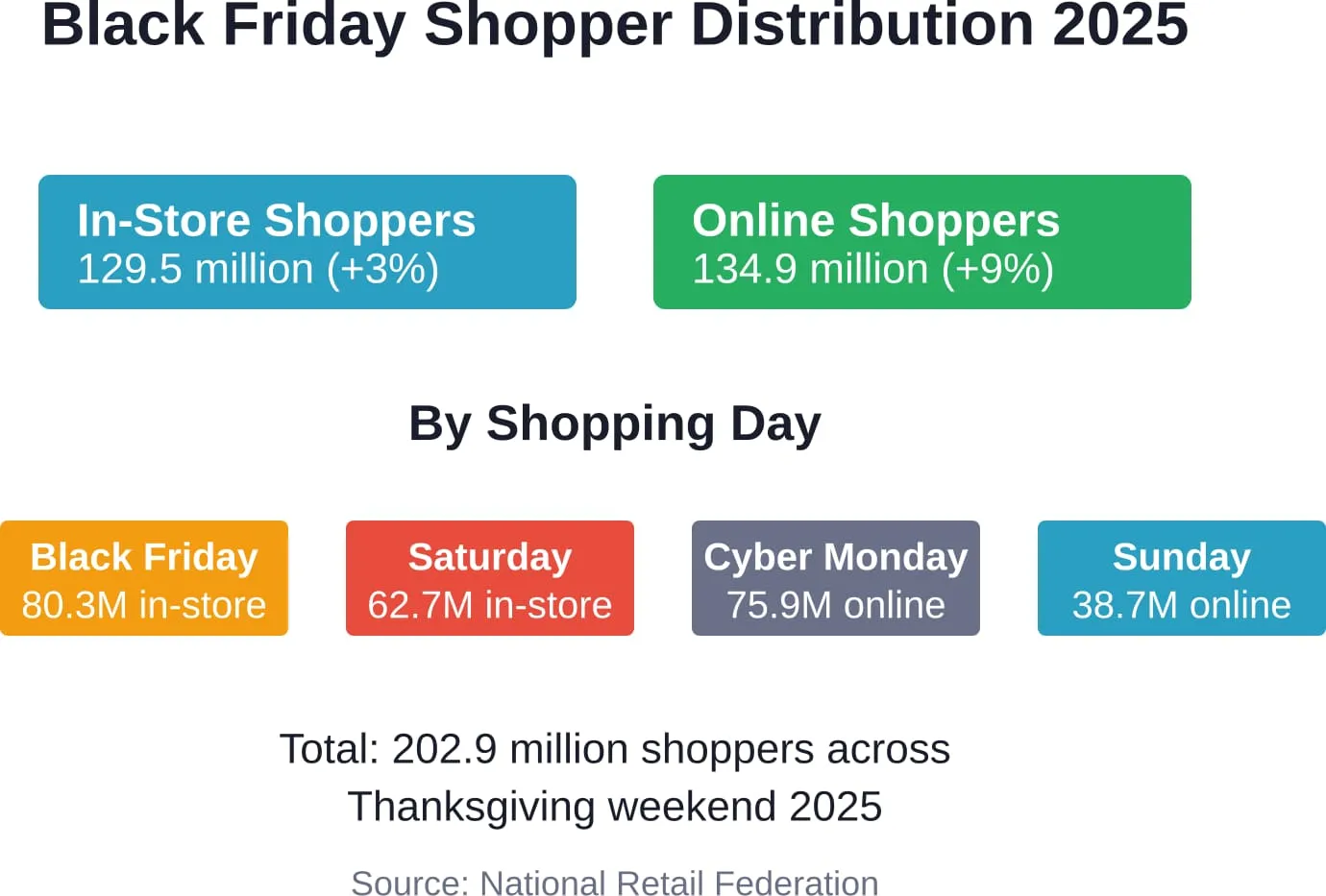
According to the National Retail Federation, a record 202.9 million consumers shopped during the five-day holiday weekend from Thanksgiving Day through Cyber Monday in 2025, up from 197 million shoppers in 2024. Online shopping surged to 134.9 million shoppers, up 9% from 124.3 million the previous year, while in-store traffic climbed to 129.5 million, a 3% increase from 126 million in 2024.
That’s a massive pool of motivated buyers actively hunting for deals. But here’s the thing—every competitor is fighting for the same attention. Generic “20% off” emails won’t cut through the noise anymore.
So what actually works? Let’s break down the marketing ideas that drive results, backed by real data and strategies that top-performing brands use year after year.
Why Black Friday Marketing Demands a Strategic Approach
Black Friday has evolved far beyond doorbusters and midnight store openings. Consumer behavior has shifted dramatically, and timing matters more than ever.
Holiday spending hit a milestone in 2025, surpassing $1 trillion for the first time. Online and non-store sales alone reached between $295.1 billion and $297.9 billion, reflecting 8% to 9% growth from the previous year.
Average per-person holiday spending on gifts and other seasonal items came in at $890. That’s significant purchasing power spread across millions of active buyers.
The takeaway? Black Friday marketing isn’t a one-day sprint. It’s a carefully orchestrated campaign that starts weeks early and extends through Cyber Monday—and sometimes beyond.
Early Bird Marketing Ideas That Build Anticipation
Smart brands don’t wait for Black Friday to make noise. They start building momentum weeks in advance, priming their audience and creating a sense of exclusivity.
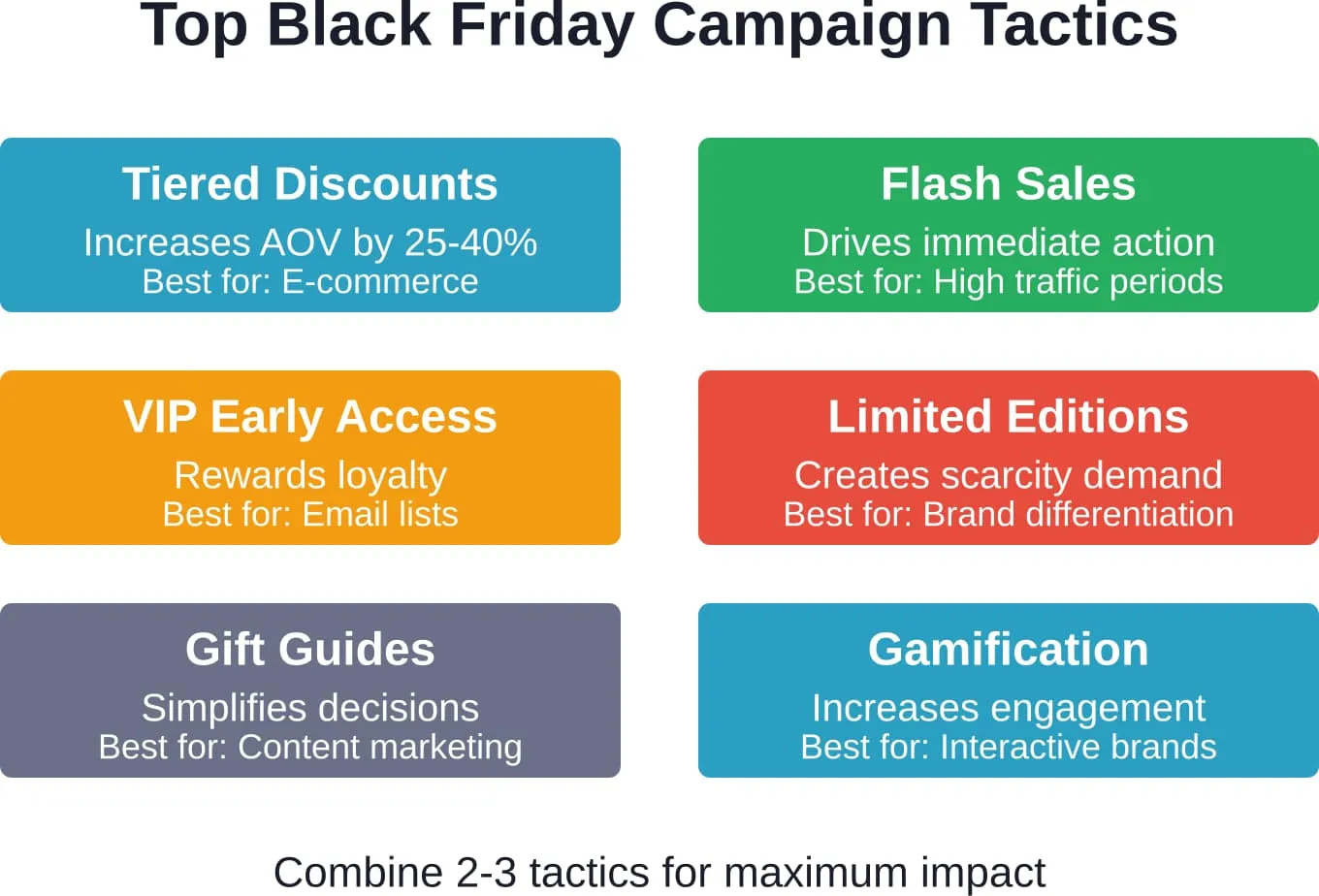
Launch VIP Early Access Programs
Give loyal customers and email subscribers first dibs on Black Friday deals before the public rush. This tactic accomplishes two things: it rewards your best customers and creates urgency through exclusivity.
Set up a tiered access system. Email subscribers get access 48 hours early. Past customers get 24 hours. The general public waits until Black Friday proper.
Psychology is powerful. People hate missing out on exclusive opportunities, and research shows that as much as 40% of people reported feeling angry for missing out on Black Friday deals.
Create Pre-Black Friday Gift Guides
Gift guides solve a real problem—shoppers don’t know what to buy. Publish curated guides segmented by recipient type: “Gifts for Him Under $50,” “Tech Gifts for Remote Workers,” “Stocking Stuffers That Don’t Suck.” Link every item directly to your product pages.
Promote these guides across email, social media, and blog content starting in early November. By the time Black Friday arrives, you’ve already planted purchase ideas in shoppers’ minds.
Build Countdown Campaigns
Countdown timers create urgency, but don’t just slap a generic timer on your homepage. Make the countdown interactive and engaging.
Send daily or weekly “sneak peek” emails revealing one deal per day leading up to Black Friday. Each email includes a countdown timer and teases what’s coming next. This builds habit—subscribers start anticipating your emails and checking back regularly.
Discount Structures That Maximize Revenue
Not all discounts are created equal. The structure of the offer matters just as much as the percentage off.
Implement Tiered “Buy More, Save More” Offers
Flat discounts encourage single-item purchases. Tiered discounts encourage cart building, which directly increases average order value.
Structure it like this: 10% off orders over $50, 15% off orders over $100, and 20% off orders over $150. Shoppers naturally add extra items to hit the next tier, boosting revenue per transaction.
Display the tiers prominently on product pages and in the cart. Show shoppers exactly how much more they need to spend to unlock the next discount level.
Offer Conditional Free Shipping
Shipping costs kill conversions. But offering free shipping on every order tanks margins.
Set a minimum order threshold—typically $75 or higher—to qualify for free shipping. This pushes shoppers to add one or two more items to avoid paying for delivery.
Pair this with your tiered discount structure for a double incentive. Spend $100, get 15% off plus free shipping. Now that’s compelling.
Bundle Products at a Discount
Pre-built bundles simplify decision-making and move inventory faster. Create themed bundles: “Complete Home Office Setup,” “Winter Self-Care Kit,” “Family Game Night Collection.”
Price the bundle at 15-25% less than buying items individually. Shoppers perceive massive value, and inventory that might sit unsold as individual SKUs moves as part of an attractive package.
Flash Sales and Limited-Time Offers
Urgency drives action. Flash sales and time-limited offers tap into fear of missing out, pushing hesitant shoppers to convert immediately.
Run Hourly or Daily Rotating Deals
Keep shoppers checking back repeatedly by rotating featured deals every few hours or daily during Black Friday week.
Promote the schedule in advance: “New deal every 6 hours starting Thursday at midnight.” Send push notifications or SMS alerts when each new deal goes live.
This tactic extends engagement across multiple days instead of concentrating all sales into a single 24-hour window.
Create a “Doorbuster” Lightning Deal
Offer one jaw-dropping deal—50% to 70% off a popular item—available only for the first 100 customers or the first 2 hours of Black Friday.
Promote this aggressively leading up to Black Friday. The extreme discount generates buzz and drives traffic to the site or store, where shoppers inevitably browse and buy other items at regular Black Friday prices.
Deploy Final Hours Countdown Campaigns
As Black Friday or Cyber Monday winds down, send cross-channel “last chance” messages. Email, SMS, social media ads, and on-site banners all scream the same message: deals end in 6 hours, 3 hours, 1 hour.
This creates a final conversion surge from procrastinators and fence-sitters who’ve been browsing all day.
Creative Campaign Ideas That Stand Out
Discounts are table stakes. Creative campaigns differentiate brands and generate organic buzz.
Launch a Limited-Edition Product Drop
Instead of discounting existing inventory, release a limited-edition product available only during Black Friday weekend. Scarcity drives demand, and shoppers perceive exclusive products as more valuable than discounted old stock.
Promote the drop heavily in advance. Set a firm quantity limit—”Only 500 units available”—and watch them sell out.
Gamify the Shopping Experience
Turn Black Friday into an interactive game. Shoppers spin a digital wheel, scratch a virtual card, or play a quick quiz to unlock their discount—anywhere from 10% to 50% off.
Gamification increases engagement time on site and makes the shopping experience memorable. Even shoppers who “lose” and get a smaller discount still feel like they won something.
Partner with Influencers for Exclusive Codes
Give influencers in the brand’s niche unique discount codes to share with their audiences. Each influencer gets a custom code—INFLUENCERNAME15—that tracks conversions back to them.
This extends reach into new audiences while maintaining trackability. Influencers are incentivized to promote aggressively because they can see their direct impact.
Host a Social Media Contest
Run a “Tag a Friend Who Needs This” contest on Instagram or Facebook. Entry requires tagging friends in the comments and following the brand account. Prize: a gift card or free product bundle.
Contests generate massive organic reach as participants tag dozens of friends. Each tag exposes the brand to a new potential customer.
Email Marketing Strategies for Black Friday
Email remains the highest-ROI marketing channel, with an average return of $36 for every dollar spent. Black Friday amplifies that potential.
Segment Lists for Personalized Campaigns
Sending the same generic email to the entire list is a wasted opportunity. Segmentation allows tailored messaging that resonates with specific customer groups.
Segment by purchase history: previous buyers get loyalty rewards and VIP access. Window shoppers who abandoned carts get reminder emails with an extra incentive. New subscribers get welcome discounts.
Research shows segmented and personalized campaigns increase revenue by as much as 760%.
Optimize Send Times Based on Past Data
Generic advice says send emails at 10 AM on weekdays. But what actually works for a specific audience?
Analyze past campaign data to identify when open rates and click-through rates peak. For some audiences, early morning (6-7 AM) performs best. For others, evening (7-9 PM) wins.
During Black Friday week, send multiple emails—but time them strategically. Morning email announces daily deals. Evening email reminds stragglers that deals end at midnight.
Use Dynamic Content to Show Relevant Products
Dynamic email content changes based on recipient data. Shoppers who previously browsed electronics see gadget deals. Shoppers who bought apparel see clothing promotions.
This level of personalization dramatically increases click-through and conversion rates because every recipient sees products they’re actually interested in.
Send Abandoned Cart Reminders with Urgency
Cart abandonment rates spike during Black Friday as shoppers comparison-shop across multiple sites.
Send abandoned cart emails within 1-2 hours of abandonment. Subject line: “You left something behind—deals end in 6 hours!” Include images of the abandoned items, a direct checkout link, and a countdown timer.
For extra push, add a small additional discount—”Here’s 5% more off to complete your order today.”
Social Media Tactics That Drive Traffic
Social media amplifies Black Friday campaigns, driving traffic to product pages and creating viral buzz.
Create Platform-Specific Content
Don’t just cross-post the same content everywhere. Each platform has unique formats and audience expectations:
- Instagram: High-quality product photos, Stories with swipe-up links, Reels showcasing products in action.
- Facebook: Longer-form posts explaining deals, event pages for Black Friday sales, video ads targeting lookalike audiences.
- TikTok: Short, entertaining videos that showcase products creatively—unboxings, transformations, humorous skits.
- Pinterest: Eye-catching graphics and gift guide pins that link directly to product pages. Pinterest drives significant holiday shopping traffic.
Run Targeted Ads with Lookalike Audiences
Upload existing customer lists to Facebook and Instagram, then create lookalike audiences—people who share characteristics with current customers.
Target these lookalikes with Black Friday ads highlighting best-selling products and strongest deals.
Go Live to Showcase Products in Real Time
Live video creates immediacy and authenticity. Host a live shopping event on Instagram, Facebook, or TikTok during Black Friday.
Showcase featured products, answer questions in real time, and offer exclusive discounts available only to live viewers. The interactive format builds excitement and drives impulse purchases.
Leverage User-Generated Content
Encourage customers to share photos of their purchases using a branded hashtag. Repost the best submissions to brand social accounts.
User-generated content serves as authentic social proof, far more persuasive than brand-created ads. Shoppers trust real customer experiences.
Build a Black Friday Lead Pipeline With Lengreo
Black Friday campaigns often start with discounts, emails, and ad ideas. Lengreo can help turn that activity into a more focused lead generation process, using SEO, PPC, content marketing, LinkedIn and email outreach, and appointment setting to reach relevant prospects before the busiest sales window.
This can support businesses that need more than short-term traffic. Lengreo’s work can help improve search visibility, run paid campaigns, reach selected prospects, and create a clearer path from first interest to a real sales conversation.
For Black Friday campaigns, Lengreo can support:
- SEO and content marketing for seasonal visibility
- PPC campaigns for time-sensitive offers
- LinkedIn and email outreach to relevant prospects
- B2B lead generation for active campaigns
- Appointment setting for qualified sales conversations
Contact Lengreo to build a clearer Black Friday lead generation process.
Additional Strategies for Small Businesses
Small businesses can’t always compete on price with major retailers. But they can compete on creativity, personalization, and community connection.
Emphasize Small Business Saturday
Small Business Saturday falls the day after Black Friday. According to the National Retail Federation, 80% of Saturday shoppers consider shopping specifically to support local businesses.
Lean into this. Market the business as locally owned, highlight the community impact of shopping small, and create exclusive Small Business Saturday offers that differentiate from big-box Black Friday deals.
Offer Personalized Service
Large retailers can’t offer white-glove service. Small businesses can.
Provide free gift wrapping, handwritten thank-you notes, personalized product recommendations, or complimentary customization. These touches create memorable experiences that build long-term loyalty.
Collaborate with Other Local Businesses
Partner with complementary local businesses for cross-promotions. A coffee shop and bookstore team up: buy a book, get a free coffee. A boutique and salon offer joint packages.
Collaborative campaigns pool marketing resources and expose each business to the other’s customer base.
Focus on Existing Customers First
Customer acquisition costs are high. Retaining existing customers is far more profitable.
Send existing customers early access invitations, exclusive discounts, or loyalty bonuses. Small increases in customer retention have a massive revenue impact.
| Strategy | Best For | Effort Level | ROI Potential |
|---|---|---|---|
| VIP Early Access | Email subscribers, loyal customers | Low | High |
| Tiered Discounts | E-commerce stores | Medium | High |
| Flash Sales | High-traffic sites, mobile apps | Medium | High |
| Gift Guides | Content-driven brands | Medium | Medium |
| Limited Editions | Brands with production flexibility | High | Very High |
| Gamification | Interactive, tech-savvy brands | High | Medium |
| Influencer Partnerships | Social-media-driven businesses | Medium | High |
Optimizing the Customer Experience
Driving traffic means nothing if the shopping experience frustrates customers. Conversion rate optimization is critical during high-traffic events.
Ensure Website Speed and Mobile Optimization
Slow sites kill conversions. Before Black Friday, stress-test the website. Can it handle 5x or 10x normal traffic? Optimize images, enable caching, use a CDN, and consider temporarily upgrading hosting resources.
Mobile matters enormously—70% of digital ad spend now goes to mobile traffic. The mobile shopping experience must be flawless: fast load times, easy navigation, simple checkout.
Simplify Checkout Process
Every extra click or form field in checkout increases abandonment risk. Enable guest checkout—don’t force account creation. Offer one-click payment options like Apple Pay, Google Pay, or Shop Pay.
Display trust signals prominently: secure checkout badges, money-back guarantees, customer reviews.
Provide Multiple Customer Support Channels
Traffic surges mean support ticket surges. Prepare for it.
Offer live chat with extended hours during Black Friday weekend. Use chatbots to handle common questions: “Where’s my order?” “What’s the return policy?”
Create a comprehensive FAQ page addressing Black Friday-specific questions: deal dates, shipping deadlines, return policies.
Communicate Shipping Deadlines Clearly
Holiday shoppers need to know if purchases will arrive in time for gift-giving. Display shipping deadlines prominently on every page.
“Order by December 18 for delivery by Christmas” removes uncertainty and encourages faster purchasing decisions.
Post-Black Friday Marketing
The campaign doesn’t end Monday night. Smart brands extend momentum and recapture missed opportunities.
Extend Deals Through Cyber Monday
Cyber Monday drew 75.9 million online shoppers in 2025, up from 64.4 million the previous year. That’s massive continued demand.
Keep select deals running through Monday, especially for online-only offers. Promote heavily: “Black Friday prices extended—online only, ends Monday midnight.”
Retarget Window Shoppers
Shoppers who visited the site but didn’t buy are warm leads. Retarget them with ads showcasing the products they viewed, now with an additional discount or urgency message: “Still thinking about it? Take another 10% off.”
Retargeting campaigns typically deliver significantly higher conversion rates than cold prospecting.
Send Thank-You Emails to Buyers
Immediately after purchase, send a warm thank-you email confirming the order and setting expectations for shipping.
Follow up a week later with another email: “Enjoying your purchase? Here are some complementary products” or “Write a review and get 15% off your next order.”
This nurtures the relationship and primes customers for future purchases.
Analyze Campaign Performance
Once the dust settles, dive into the data. Which promotions drove the most revenue? Which channels delivered the best ROI? What was the average order value compared to non-promotion periods?
Document what worked and what flopped. This analysis becomes the strategic foundation for next year’s campaign.
Legal and Ethical Considerations
Aggressive marketing can cross lines. Stay compliant and maintain customer trust.
Avoid Dark Patterns
The Federal Trade Commission released a report in September 2022 highlighting the rise of “dark patterns”—design tactics that trick or manipulate consumers. Examples include hidden fees, difficult-to-cancel subscriptions, and disguised ads.
Don’t use fake countdown timers that reset. Don’t hide the true price until checkout. Don’t make unsubscribe links invisible.
These tactics might boost short-term conversions but destroy long-term trust and can trigger regulatory action.
Be Transparent About Stock Levels
Creating artificial scarcity—claiming limited stock when plenty exists—is deceptive. If advertising a limited quantity, that limitation must be real.
Display honest stock indicators: “Only 3 left in stock” should reflect actual inventory, not a manipulative tactic.
Honor Advertised Prices
If a price is advertised, honor it. Bait-and-switch tactics—advertising one price then charging another at checkout—violate consumer protection laws.
Double-check promotional pricing across all channels before launch. Price discrepancies between email, website, and ads create customer frustration and legal risk.
Measuring Success: Key Metrics to Track
What gets measured gets improved. Track these metrics to evaluate campaign performance.
Revenue and Average Order Value
Total revenue is the obvious metric, but Average Order Value (AOV) reveals whether promotions are encouraging larger purchases or just discounting single items.
Compare Black Friday AOV to normal periods. If AOV dropped significantly, promotions might be too aggressive or not structured to encourage cart building.
Conversion Rate by Channel
Break down conversion rates by traffic source: email, social media, paid ads, organic search, direct traffic.
This reveals which channels deliver the highest-quality traffic and where to allocate budget next year.
Customer Acquisition Cost
Calculate how much was spent on marketing divided by the number of new customers acquired. Compare this to Customer Lifetime Value projections.
If acquisition cost is too high relative to lifetime value, the campaign might generate short-term sales but lose money long-term.
Email Engagement Rates
Track open rates, click-through rates, and conversion rates for Black Friday email campaigns. Segment analysis shows which audience segments responded best.
High open rates but low click-through rates suggest the subject line worked but the email content or offer didn’t resonate.
Return on Ad Spend (ROAS)
For paid advertising, calculate ROAS: revenue generated divided by ad spend. A 3:1 ROAS means every dollar spent on ads generated three dollars in revenue.
Industry benchmarks vary, but according to industry research, 94% of marketers say targeted advertising delivers better ROI.
Final Thoughts: Making Black Friday Work
Black Friday remains the single biggest sales opportunity of the year, but success requires strategic planning, creative execution, and flawless operational delivery.
The brands that win don’t just throw discounts at the wall. They build anticipation early, segment audiences for personalized messaging, create urgency through time-limited offers, and optimize every touchpoint of the customer experience.
Start planning now. The businesses that treat Black Friday as a multi-week strategic campaign—not a single-day event—consistently outperform those that scramble at the last minute.
Test promotional structures in advance. Build email segments. Prepare website infrastructure for traffic surges. Create content calendars spanning early November through Cyber Monday.
And remember: the goal isn’t just maximizing Black Friday revenue. It’s acquiring customers profitably, building relationships that extend beyond the sale, and setting the foundation for long-term growth.
Ready to build a Black Friday campaign that actually drives results? Start with the ideas that align best with the business model, test aggressively, and optimize based on data. The brands that execute thoughtfully—not just loudly—are the ones still seeing returns in January and beyond.