


Quick Summary: Bankruptcy attorneys can grow their practice through strategic digital marketing combining local SEO optimization, targeted pay-per-click campaigns, authentic client testimonials, educational content marketing, community engagement, and compliant social media outreach. Success requires adhering to state bar advertising regulations while implementing a measurable strategy aligned with budget and business goals.
Standing out as a bankruptcy attorney has gotten tougher. Competition in the legal services market continues intensifying, and potential clients scroll past dozens of law firm ads before making contact. Traditional referral networks still matter, but they’re no longer enough on their own.
The reality? Bankruptcy firms are spending 26% more on marketing than they did two years ago. That investment needs to deliver measurable returns, not just vanity metrics.
This guide covers practical marketing ideas tailored specifically for bankruptcy attorneys—from foundational strategy to tactical execution. Some tactics require budget. Others cost nothing but time. All of them work when implemented correctly.
Building Your Foundation: Strategy Before Tactics
Too many bankruptcy lawyers jump straight to tactics—running ads, posting on social media, redesigning websites—without a coherent strategy. That’s backwards, and it burns through budget fast.
A bankruptcy law marketing strategy answers four fundamental questions: what services the firm offers, how it prices them, how it promotes them, and where it delivers them. Strategy and plan aren’t the same thing. Strategy defines the direction. Plan outlines the specific steps to get there.
Here’s what belongs in that strategic framework:
| Strategy Component | Key Questions to Answer |
|---|---|
| Target Market | Who needs bankruptcy services? Chapter 7 consumers? Chapter 13 families? Small business Chapter 11? |
| Service Positioning | What makes this firm different from the 15 other bankruptcy attorneys in town? |
| Budget Allocation | How much goes to paid ads vs. content vs. technology vs. referral development? |
| Success Metrics | What defines a marketing win? Cost per consultation? Case conversion rate? Revenue per client? |
Budget allocation varies based on practice size and market maturity, with firms adjusting percentages based on specific business objectives and market conditions. Those percentages shift based on practice size and market maturity.
Without this foundation, marketing becomes reactive guesswork. With it, every dollar spent connects to a measurable business objective.
Set Up Bankruptcy Attorney Marketing With Lengreo
Bankruptcy attorneys need marketing that makes services easy to understand and gives people a simple way to request a consultation. Lengreo works on the full setup behind that process, including website structure, SEO, paid ads, content, tracking, and lead generation.
Need More Consultation Inquiries?
Lengreo can help with:
- refining service, location, and consultation pages
- improving search visibility for relevant legal queries
- setting up paid campaigns for qualified inquiries
- tracking calls, forms, and lead sources
👉 Contact Lengreo to discuss your marketing setup.
Create a Website That Actually Converts Visitors
A bankruptcy law firm website isn’t a digital brochure. It’s a lead generation machine—or at least it should be.
Most bankruptcy attorney websites fail at their core job: converting visitors into consultation requests. They’re visually fine but strategically empty. Generic stock photos of courtrooms. Vague promises about “aggressive representation.” Contact forms buried three clicks deep.
Sound familiar?
Client-centric websites answer the questions potential clients actually have: Can I keep my house? How much does bankruptcy cost? How long does the process take? Will I ever get credit again?
Those questions need clear answers, presented immediately. Put consultation booking options front and center—phone numbers in the header, contact forms on every page, ideally live chat for visitors who won’t fill out forms.
Speed matters too. Pages that load in two seconds convert three times better than pages that take five seconds. Mobile responsiveness isn’t optional anymore—more than 85% of people use the internet on their phones to find local services.
Here’s what converts:
- Clear value propositions above the fold
- Prominent call-to-action buttons (“Free Consultation,” “Talk to an Attorney Today”)
- Trust signals (bar admissions, years in practice, case results where ethically permitted)
- Educational resources that demonstrate expertise without legal jargon
- Simple navigation (if visitors can’t find what they need in three clicks, they’ll leave)
Test everything. Run different headlines. Try different button colors. Track which pages send visitors to the contact form and which pages send them away.
Master Local SEO to Dominate Your Market
When someone searches “bankruptcy lawyer near me” or “Chapter 7 attorney [city name],” that search represents immediate intent. They’re not researching. They’re shopping.
Local search optimization puts bankruptcy firms in front of those high-intent prospects. It’s not quick, but it compounds over time.
Start with Google Business Profile (formerly Google My Business). Claim the listing. Fill out every field—hours, services, service area, photos, business description. Post updates weekly. Respond to every review, positive or negative.
About 41% of clicks on a search results page go to one of the top three paid ads, but the local map pack (those three businesses with map pins) captures significant organic traffic without ad spend.
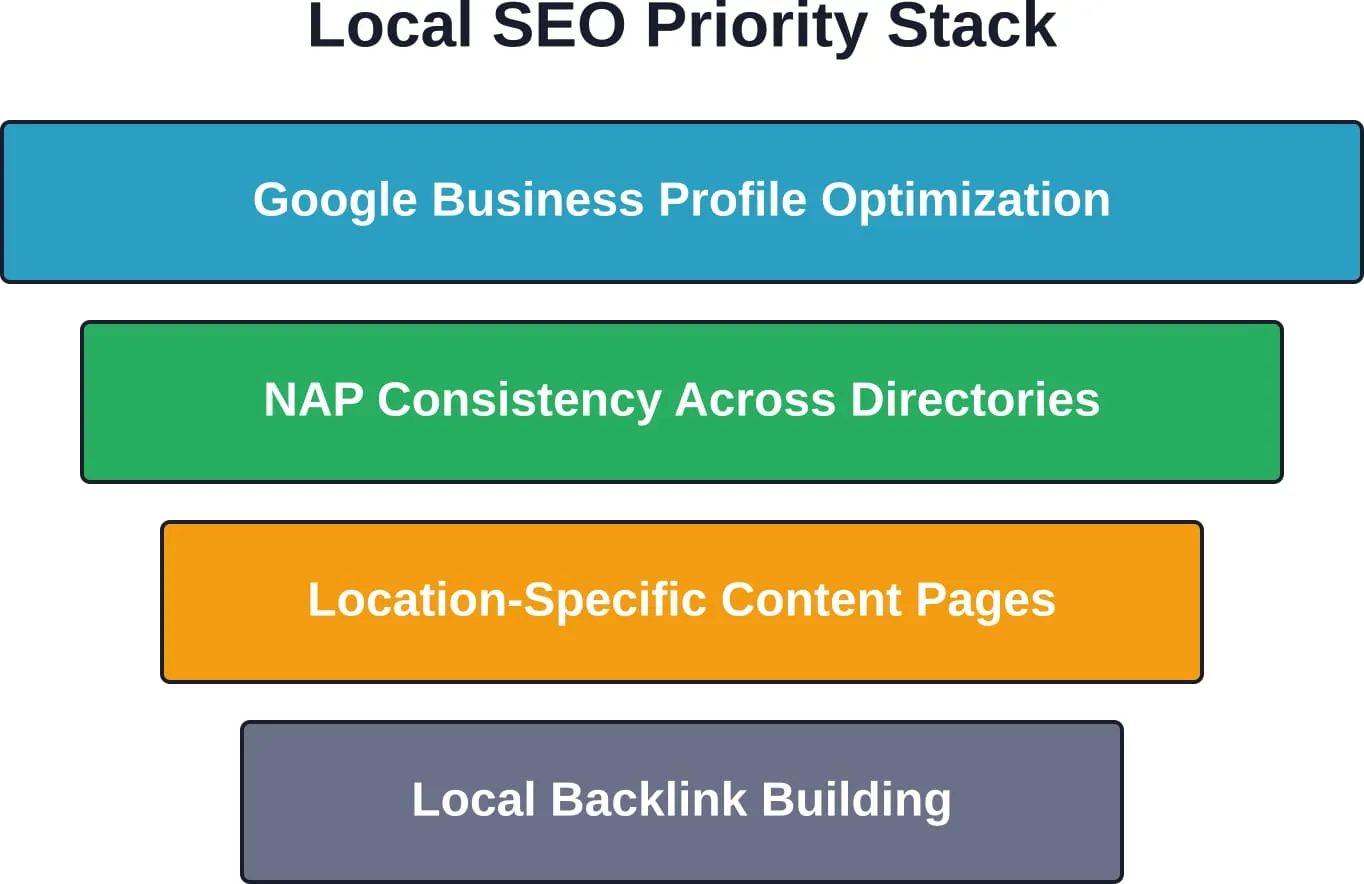
NAP consistency (Name, Address, Phone) across every online directory matters more than most attorneys realize. Inconsistent information confuses search engines. If Yelp shows one phone number, Avvo shows another, and the website shows a third, Google doesn’t know which listing to trust.
Create location-specific content pages for every city or region served. Not thin doorway pages—substantial content answering local questions. “Filing Chapter 7 in [County Name]” with specific information about local court procedures, exemptions, and trustees.
Backlinks from local organizations, chambers of commerce, legal directories, and community websites signal relevance. Sponsor a local event. Speak at a community center. Write a guest column for the local news site. Each of those creates opportunities for legitimate local backlinks.
Run Targeted Pay-Per-Click Campaigns
PPC advertising delivers immediate visibility while SEO builds long-term authority. For every dollar spent on Google Ads, bankruptcy lawyers make an average of $2—but results vary widely depending on campaign structure and targeting.
Focus on Specific Keywords
Broad keywords like “lawyer” attract irrelevant clicks, wasting budget. Specific keywords such as “Chapter 7 bankruptcy attorney [city]” reach people who need exactly the services the firm offers.
Optimize Landing Pages
Traffic should be sent to dedicated landing pages that match the ad message. Each page should focus on one topic, have a clear call to action, and avoid navigation distractions. Poor landing pages can turn clicks into wasted spend.
Use Retargeting to Capture Interested Visitors
Most visitors won’t convert on the first visit. Retargeting campaigns on Facebook and display networks keep the firm visible to users who have already shown interest, lowering cost per click and increasing conversion rates.
Track Key Metrics
Measure cost per click, click-through rate, conversion rate, cost per lead, lead-to-client conversion rate, and revenue per client. These metrics reveal which campaigns are effective and which waste resources.
Set a Realistic Budget
Industry sources suggest that PPC campaigns with $3,000–$5,000 monthly budgets can generate consultation volumes through targeted advertising on high-intent bankruptcy keywords, achieving 12–18% landing page conversion rates when properly managed.
Leverage Client Testimonials and Reviews
Nearly half of all people trust online reviews as much as a personal recommendation. For bankruptcy attorneys, testimonials provide social proof during a deeply stressful decision.
Potential clients want to know: Will this attorney actually help me? Will they treat me with respect? Will the process be as terrifying as I think?
Reviews answer those questions better than any marketing copy.
Building a review strategy starts with asking. Most satisfied clients will leave a review if asked directly. Send a follow-up email after case closure. Include direct links to Google, Avvo, or whatever platforms matter most.
Make it easy. The fewer steps between the request and the submitted review, the higher the completion rate. “Click here to leave a review” beats “Search for us on Google and click the review button.”
Respond to every review. Thank people for positive reviews. Address negative reviews professionally without getting defensive or violating client confidentiality. Potential clients read both the reviews and the responses.
Showcase testimonials prominently on the website—homepage, service pages, about page. Video testimonials outperform text testimonials. Real clients, real stories, real emotions.
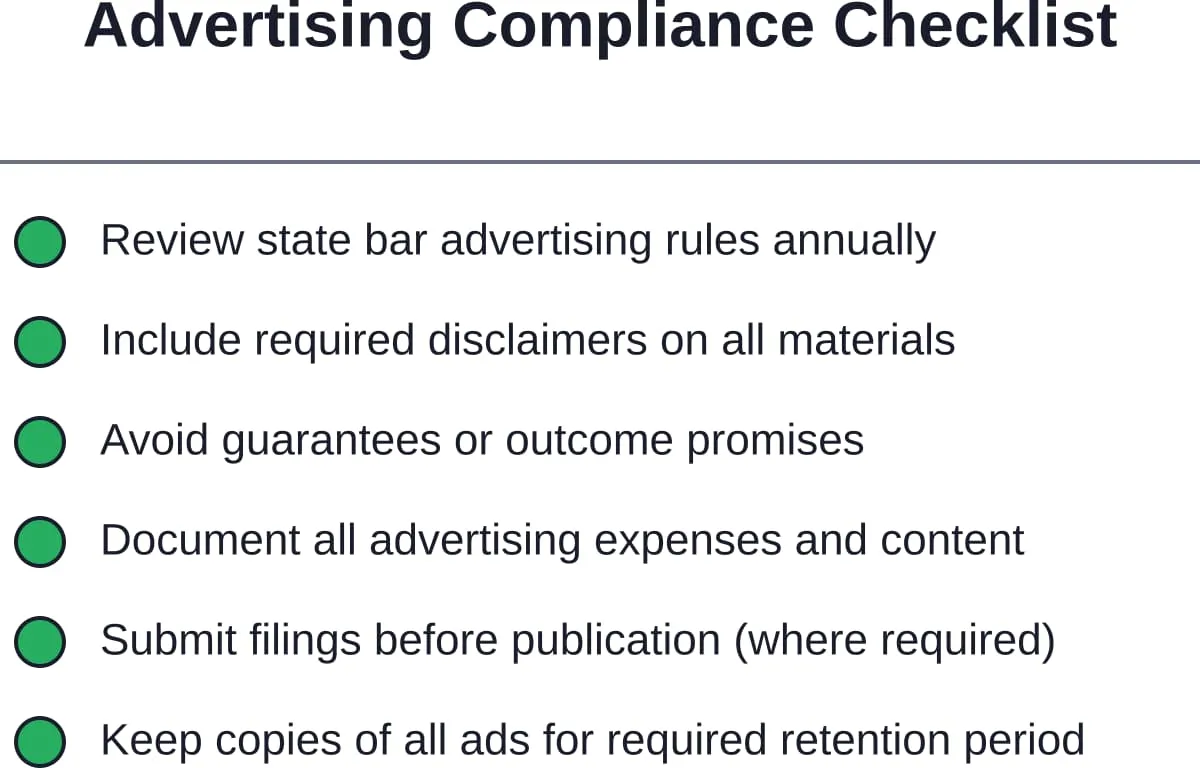
One warning: testimonials must comply with state bar advertising rules. Some states restrict or prohibit client testimonials entirely. Others allow them with specific disclaimers. Check local rules before publishing anything.
Navigate Advertising Compliance and Ethics Rules
Legal advertising operates under tighter restrictions than most industries. State bar associations impose specific rules about what bankruptcy attorneys can and can’t say in marketing materials.
According to the Florida Bar, attorney advertising is subject to filing requirements under Rule 4-7.19 of the Rules Regulating The Florida Bar. Rule 4-7.19 governs these requirements. Other states have different systems, but most regulate legal advertising closely.
Common restrictions include:
- Prohibitions on claiming specialization or expertise without proper certification
- Requirements for specific disclaimers on testimonials or case results
- Restrictions on guarantees or outcome predictions
- Rules about how attorneys can identify their practice areas
- Limitations on direct solicitation methods
Misleading advertisements cause problems even when technically accurate. Advertising free consultations when only a five-minute call is free, but longer consultations carry fees—that’s misleading even if the short consultation is genuinely free.
Admission requirements vary by jurisdiction. According to U.S. Bankruptcy Court rules, only attorneys admitted to the state bar and district court may appear before bankruptcy courts, with specific exceptions for pro hac vice admissions.
When in doubt, consult the state bar’s ethics hotline or review published advertising opinions. Getting it right from the start beats dealing with disciplinary complaints later.
Build Authority Through Content Marketing
Content marketing establishes expertise while feeding SEO efforts. Educational content attracts traffic, builds trust, and positions the firm as the obvious choice when someone finally decides to file.
Blog posts, FAQ pages, guides, and resource libraries all serve this function. The key is answering real questions potential clients actually ask.
What questions? Listen during consultations. Note what every new client wants to know. Those repeated questions become content topics:
- What’s the difference between Chapter 7 and Chapter 13?
- How much debt do I need to file bankruptcy?
- Can I keep my car if I file?
- What happens to my credit score?
- How long does bankruptcy stay on my record?
Each question becomes a detailed blog post or guide page optimized for that specific search query. Comprehensive answers (800-1,500 words) outrank thin content consistently.
Update older content regularly. Search engines favor fresh information. A post from 2020 about bankruptcy exemptions might be outdated if exemption amounts changed. Refresh it with current numbers.
Distribute content beyond the website. Share posts on LinkedIn. Publish excerpts on Medium. Answer questions on legal forums (without direct solicitation). Each distribution channel creates backlinks and visibility.
Video content performs exceptionally well. Short explainer videos answering common questions engage visitors who won’t read long articles. Post them on YouTube, embed them on relevant website pages, share them on social media.
Develop Strategic Referral Networks
Referrals from other attorneys, accountants, financial advisors, and community organizations provide high-quality leads at low acquisition cost.
Building referral networks takes time but pays compound returns. Start by identifying who encounters people with debt problems before they search for a bankruptcy attorney:
- Family law attorneys dealing with divorcing couples
- Real estate attorneys handling foreclosures
- Small business attorneys advising struggling companies
- Accountants working with clients facing tax issues
- Credit counselors who’ve exhausted non-bankruptcy options
Reach out strategically. Offer to serve as a resource when their clients need bankruptcy guidance. Provide educational materials they can share. Speak at their industry events.
Make referring easy. Clear contact information. Fast response times. Updates on referred cases (with client permission). Referral sources who know their clients will be treated well refer more often.
Track referral sources carefully. Which relationships generate the most referrals? Which generate the highest-quality leads? Double down on what works.
Consider reciprocal referrals where ethical. Bankruptcy cases often involve related legal needs—estate planning after discharge, real estate transactions, business restructuring. Referring work back to sources who refer work in strengthens relationships.
Use Social Media Strategically
Social media works differently for bankruptcy attorneys than for consumer brands. Most people don’t follow law firms for entertainment, but a thoughtful social presence still matters—it shapes your digital footprint and informs potential clients before they reach out.
Leverage LinkedIn for Professional Networking
LinkedIn is effective for thought leadership. Share insights about bankruptcy law changes, case precedents, or economic trends affecting filings. Connect with referral sources and participate in relevant professional groups.
Engage Locally on Facebook
Facebook helps with community engagement and retargeting. Join local groups, answer questions carefully (without creating attorney-client relationships), and use sponsored posts targeting specific demographics to build awareness.
Focus on Value, Not Generic Messages
Generic posts like “We care about our clients” don’t resonate. Posts that provide concrete information—such as “Here’s what changed in bankruptcy law this month and what it means for you”—deliver real value to potential clients.
Maintain Consistency Over Frequency
Consistency is more important than posting daily. One high-value post per week outperforms multiple low-effort posts. Consider batch-creating content monthly to maintain a steady presence without constant effort.
Track Effective Channels
Reddit discussions and industry insights suggest referrals, local service ads, Facebook retargeting, and AI-driven marketing platforms perform well for bankruptcy lawyers, generating qualified leads when managed actively.
Measure, Adjust, and Optimize Continuously
Marketing without measurement is gambling. Track what matters:
| Metric | Why It Matters |
|---|---|
| Website Traffic | Indicates visibility and reach |
| Traffic Sources | Shows which channels deliver visitors |
| Conversion Rate | Measures how effectively the site turns visitors into leads |
| Cost Per Lead | Calculates acquisition efficiency |
| Lead-to-Client Rate | Reveals consultation and case acceptance effectiveness |
| Revenue Per Client | Determines overall campaign profitability |
Set up conversion tracking through Google Analytics, call tracking software, and CRM systems. Every consultation request should be traceable to its source.
Review data monthly. Which marketing channels produce the lowest cost per client? Which produce the highest revenue per client? Shift budget toward what works.
Test continuously. Try different ad copy. Experiment with landing page layouts. Test new content topics. Split-test email subject lines.
Small improvements compound. A 10% increase in website conversion rate plus a 10% improvement in lead-to-client conversion equals a 21% increase in total clients from the same traffic.
What worked last year might not work this year. Search algorithms change. Ad platforms adjust. Competitor strategies evolve. Continuous optimization keeps campaigns effective despite changing conditions.
Final Thoughts
Marketing for bankruptcy attorneys isn’t about gimmicks or shortcuts. It’s about strategic visibility, demonstrated expertise, and making it easy for people who need help to find and choose the right attorney.
Start with strategy—define the target market, competitive positioning, and success metrics. Build the foundation with a conversion-focused website and solid local SEO. Layer in paid advertising for immediate results. Add content marketing and referral development for sustainable growth.
Track everything. Adjust based on data. Stay compliant with advertising rules. Test continuously.
The firms that thrive aren’t necessarily the best lawyers—they’re the ones potential clients find first, trust most, and choose most easily. That’s what effective marketing delivers.
Ready to implement these strategies? Start with the highest-impact tactics for current circumstances. Established practice with referral networks? Double down on SEO and content. New practice with limited visibility? Begin with PPC and local optimization. Every practice is different, but the framework remains consistent: strategic planning, tactical execution, continuous measurement, and disciplined optimization.