


Quick Summary: Audiology marketing requires a strategic mix of digital presence, community outreach, and patient relationship management. Effective strategies include local SEO optimization, educational content marketing, patient review generation, and targeted outreach to aging populations—with nearly 55% of adults ages 75+ experiencing disabling hearing loss. Successful practices allocate around 4.8% of gross revenue to marketing and focus on building long-term patient relationships rather than one-time transactions.
The audiology market is expanding rapidly, but patient acquisition isn’t getting any easier. With approximately 30 million Americans (13% of adults ages 12+) with hearing loss in both ears and only 20% of people experiencing hearing loss actively seeking evaluation and amplification, the gap between need and action remains significant.
That gap represents opportunity. But here’s the challenge: roughly $400 million gets spent nationwide each year on hearing healthcare marketing, and much of it focuses on products rather than professional care. Standing out requires strategy, not just spending.
This guide explores practical marketing ideas specifically designed for audiology practices—tactics that attract first-time patients, build referral networks, and create the kind of lasting relationships that turn satisfied patients into advocates.
Understanding the Audiology Market Landscape
Before diving into specific tactics, understanding who needs hearing care matters enormously. The demographics tell a clear story.
According to the National Institute on Deafness and Other Communication Disorders, 13% of U.S. adults ages 12 and older—approximately 30 million people—have hearing loss in both ears. The prevalence increases dramatically with age: 5% of adults ages 45-54 experience disabling hearing loss, jumping to 10% for ages 55-64, then 22% for ages 65-74, and reaching 55% for those 75 and older.
That age distribution matters for targeting. Adults age 50 and over represent 100 million U.S. consumers earning $2.4 trillion annually, with per capita discretionary spending 2.5 times higher than younger households. This demographic accounts for 50% of total consumer spending despite representing a smaller population share.
But there’s a catch. Despite the large population with hearing loss, approximately 85% unmet hearing healthcare need exists among those with hearing loss. Only 20% of people experiencing hearing loss actively seek evaluation and amplification.
Boost Audiology Marketing With Lengreo
Audiology practices need marketing that explains services, hearing tests, and consultation steps clearly while generating real patient inquiries. Lengreo aligns website pages, SEO, paid ads, content, lead generation, appointment setting, and tracking into one connected system.
This structured approach makes it easier for patients to find the right information and reach out, while giving the practice insight into which channels drive results.
Need a Better Setup for Patient Inquiries?
Lengreo can help with:
- refining service, test, and contact pages
- improving local SEO and search visibility
- setting up paid campaigns for consultations
- tracking calls, forms, and lead sources
👉 Contact Lengreo to discuss your marketing setup.
Building Your Digital Foundation
Digital marketing isn’t optional anymore—it’s the primary way potential patients discover audiology services.
Local SEO Optimization
Search engine optimization drives substantially more traffic than social media efforts. More than 28% of people click the first search result they see, making top rankings critical.
Start with Google Business Profile optimization. Claim and fully complete your profile with accurate hours, services, photos, and regular updates. Categories matter—select “Audiologist” as your primary category and add relevant secondary categories like “Hearing Aid Store” or “Medical Clinic.”
Local citations across directories (Healthgrades, Vitals, Yelp) need consistent NAP (name, address, phone) information. Inconsistencies confuse search engines and dilute ranking power.
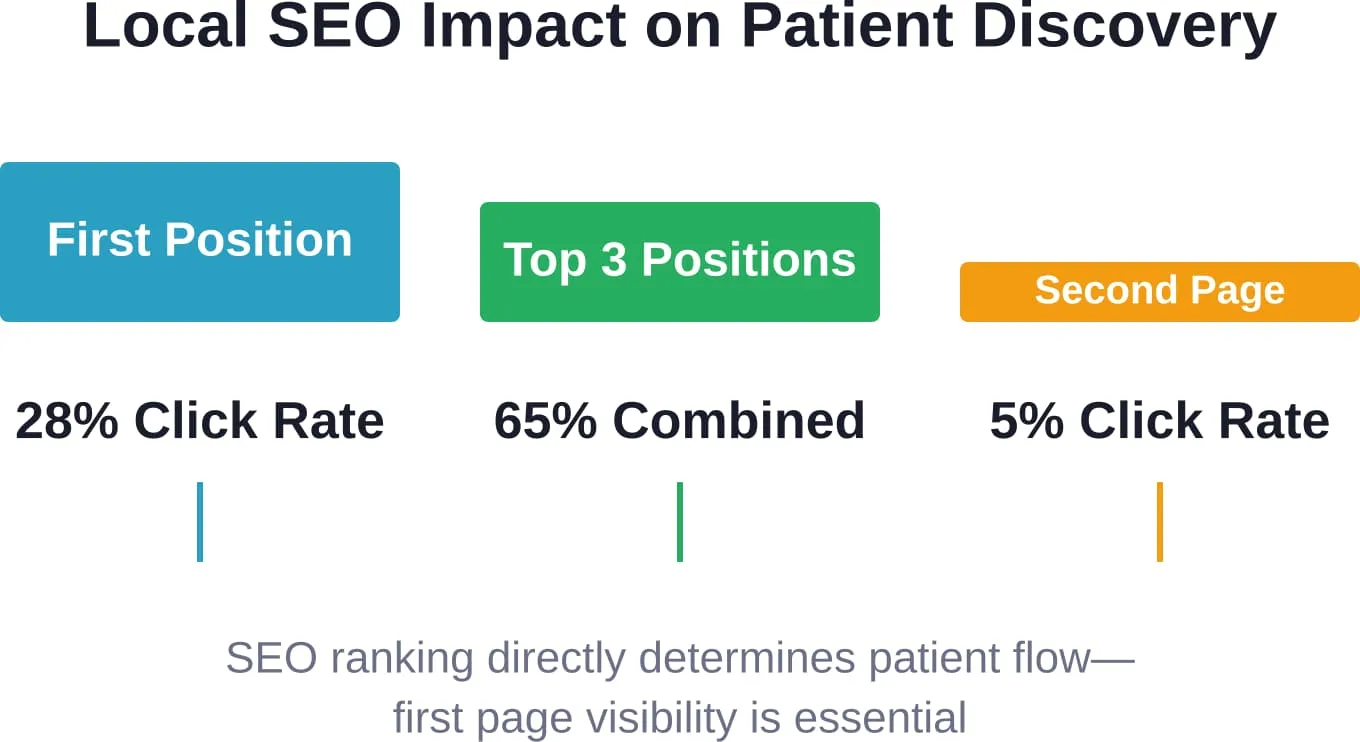
Website technical health impacts rankings too. Mobile responsiveness, page load speed under three seconds, and secure HTTPS connections are non-negotiable baseline requirements.
Content Marketing That Educates
Educational content positions practices as trusted authorities while capturing search traffic. Target common patient questions: “What causes hearing loss?” “How do hearing aids work?” “When should I see an audiologist?”
Blog posts addressing these questions attract people in the research phase—before they’ve chosen a provider. That early visibility builds familiarity and trust.
Video content performs exceptionally well. Simple explanations of hearing tests, device demonstrations, or patient testimonials can be recorded with basic equipment. Authenticity matters more than production polish.
Online Review Generation
Reviews influence decisions heavily in healthcare. Healthcare email campaigns have an average open rate of over 41%, making email an effective channel for review requests.
Implement a systematic approach: after successful appointments, send a brief email thanking patients and including direct links to Google, Facebook, or Healthgrades review pages. Timing matters—send within 24-48 hours while the positive experience remains fresh.
Respond to all reviews, positive and negative. Thoughtful responses to criticism demonstrate professionalism and care, often making a stronger impression than the original complaint.
Community Outreach and Offline Marketing
Digital dominates, but community presence still drives patient acquisition—especially for older demographics who trust in-person interactions.
Free Hearing Screening Events
Public screening events serve dual purposes: community service and lead generation. Partner with senior centers, community centers, libraries, or health fairs to offer brief hearing checks.
The American Academy of Audiology suggests creating visual tracking tools—like a large thermometer poster showing progress toward screening goals (“Screen 1,000 community members”)—to build momentum and demonstrate community impact.
Track screening results. Approximately 13% of adults ages 12 and older have hearing loss in both ears, so screening 100 people typically identifies 10-15 candidates for follow-up evaluations.
Educational Presentations
Offer educational talks at community organizations, retirement communities, and civic groups. Topics might include hearing health basics, tinnitus management, or communication strategies for family members.
Keep presentations educational rather than promotional. The goal is establishing expertise and building trust, not direct selling. Provide handouts with contact information and a clear next-step offer like a complimentary consultation.
Physician Referral Network Development
Primary care physicians remain critical referral sources. But building these relationships requires consistent effort.
Schedule face-to-face meetings with local PCPs, especially those with older patient populations. Bring educational materials they can share with patients. Offer to provide lunch-and-learn sessions for their staff about identifying hearing loss indicators.
Create a simple referral process. Complexity kills referrals. Provide referral pads, offer online referral forms, and ensure rapid scheduling for referred patients. Then close the loop—send referring physicians updates on their patients (with appropriate consent).
| Marketing Channel | Best For | Typical ROI Timeline | Initial Investment |
|---|---|---|---|
| Local SEO | Long-term patient flow | 3-6 months | Medium |
| Google Ads | Immediate patient calls | Immediate | High (ongoing) |
| Community Events | Brand awareness, direct leads | 1-3 months | Low |
| Physician Referrals | High-quality patient flow | 6-12 months | Low |
| Social Media | Engagement, education | 3-6 months | Low |
Patient Retention and Relationship Marketing
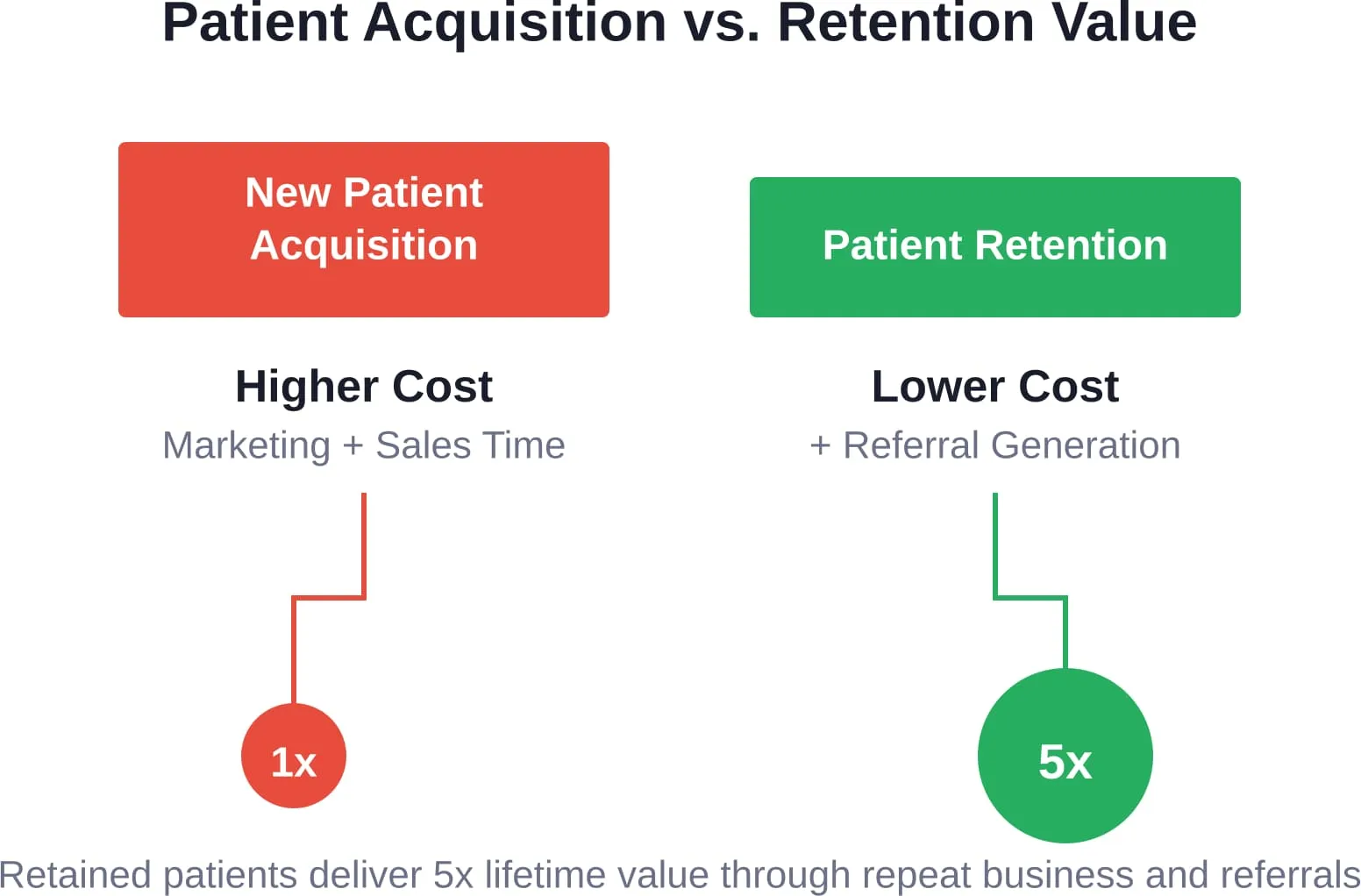
Acquiring new patients costs significantly more than retaining existing ones. Research shows that selling to repeat customers costs less than acquiring new ones, and lost customers typically voice dissatisfaction to at least nine other people.
Email Marketing Automation
Automated email sequences keep your practice top-of-mind without constant manual effort. Create campaigns for various patient journey stages:
- Welcome series for new patients explaining what to expect
- Educational content about hearing health and device care
- Appointment reminders and follow-up check-ins
- Seasonal maintenance reminders (before holidays, travel seasons)
- Re-engagement campaigns for patients who haven’t returned
Personalization increases engagement. Segment lists by device type, purchase date, or hearing loss severity to send relevant content rather than generic blasts.
Loyalty and Referral Programs
Happy patients are the best marketing asset. Loyal customers typically demonstrate higher value through retention and referrals.
Create a formal referral program. Offer incentives like service credits, accessory discounts, or donations to charities of the referrer’s choice. Make the program simple—complicated rules reduce participation.
Recognize patient milestones. Send cards on hearing aid anniversaries, birthdays, or major life events. Small gestures create emotional connections that transcend transactional relationships.
Social Media Engagement
Social media works best for relationship maintenance rather than new patient acquisition in audiology. Use platforms to educate, celebrate patient success stories (with permission), and demonstrate practice personality.
Staff spotlights humanize your practice. Monthly features highlighting team members with short biographies and photos help patients feel connected to the people caring for them.
User-generated content builds authenticity. Encourage patients to share their experiences and repost their content (with permission). Real patient voices carry more credibility than any marketing copy.
Understanding Marketing Budget Allocation
How much should audiology practices spend on marketing? Industry data indicates practices allocate a percentage of gross revenue to marketing.
But allocation matters as much as total spending. A balanced approach might distribute budget across:
- Digital marketing (40%): SEO, website maintenance, paid search
- Patient retention (25%): Email marketing, CRM tools, patient appreciation
- Community outreach (20%): Events, screenings, educational materials
- Traditional advertising (10%): Local publications, sponsorships
- Referral programs (5%): Incentives and tracking systems
Practices in competitive markets or growth phases may need to increase percentages. New practices often allocate 8-12% initially to establish market presence.
Track everything. Understanding patient lifetime value justifies marketing investment and guides budget decisions, with the typical hearing aid patient generating substantial revenue over time when considering the hearing aid replacement cycle and ongoing services.
Adapting to Over-the-Counter Hearing Aids
Over-the-counter hearing aids are now available to consumers, fundamentally changing the hearing care landscape. OTC devices target individuals with mild bilateral hearing loss.
This shift demands marketing evolution. Emphasize professional value beyond product sales:
- Comprehensive diagnostic services: OTC devices serve mild, straightforward hearing loss. Complex cases, asymmetrical losses, or medical pathologies require professional evaluation. Marketing should educate about when professional care matters.
- Customization and fitting expertise: Proper hearing aid fitting involves more than amplification—it requires real-ear measurement, fine-tuning across frequencies, and programming for individual listening environments. Communicate this technical expertise.
- Ongoing support and counseling: Successful hearing aid outcomes depend on adjustment support, troubleshooting, and counseling. OTC devices lack this professional relationship. Market the long-term partnership, not just the transaction.
- Medical oversight: About 13% of OTC hearing-aid candidates show excessive (not impacted) cerumen. Professional evaluation identifies medical conditions requiring intervention before amplification.
Measuring Marketing Effectiveness
Marketing without measurement wastes resources. Track these key performance indicators:
| Metric | What It Measures | Target Benchmark |
|---|---|---|
| Website Traffic | Visibility and interest | 10-15% monthly growth |
| Conversion Rate | Website visitors to appointments | 3-5% |
| Cost Per Lead | Marketing efficiency | Under $150 |
| Cost Per Acquisition | Total cost to gain patient | Under $500 |
| Patient Lifetime Value | Long-term patient revenue | $3,500-5,000 |
| Review Quantity & Rating | Reputation strength | 4.5+ stars, 50+ reviews |
Use tracking phone numbers for offline campaigns to measure call volume by source. Implement UTM parameters on digital campaigns to identify which channels drive website conversions.
Patient surveys reveal how people discovered the practice. A simple intake question—”How did you hear about us?”—generates invaluable source attribution data.
Common Marketing Mistakes to Avoid
Even well-intentioned marketing efforts can backfire. Watch for these pitfalls:
- Product-focused messaging: Marketing hearing aids rather than hearing healthcare commoditizes services. The transformation is better hearing and improved quality of life, not the device itself.
- Inconsistent branding: Mixed messaging, varying logos, or inconsistent tone across channels erodes brand recognition. All marketing materials should reflect unified practice identity.
- Ignoring negative feedback: Unanswered negative reviews damage reputation far more than the original complaint. Address concerns promptly, professionally, and publicly when appropriate.
- Short-term thinking: Effective marketing builds momentum over months and years. Abandoning strategies after weeks prevents success. Commit to consistent execution before evaluating results.
- Neglecting mobile optimization: Most local searches happen on mobile devices. Websites that don’t function well on smartphones lose potential patients immediately.
Moving Forward With Strategic Marketing
The audiology market presents substantial opportunity—millions of Americans experience hearing loss, yet the vast majority never seek treatment. That 85% unmet hearing healthcare need represents potential patients waiting to discover your practice.
Success doesn’t require massive budgets or sophisticated campaigns. It requires consistent execution of fundamental strategies: building strong local search presence, educating your community about hearing health, creating referral relationships with physicians, and nurturing long-term patient relationships.
Start with one or two channels. Master them before expanding. Track results meticulously. Adjust based on data, not assumptions.
The practices that thrive aren’t necessarily those with the largest marketing budgets—they’re the ones that understand their patient demographics, communicate professional value clearly, and maintain consistent visibility in their communities.
Take action this week. Optimize your Google Business Profile. Schedule one physician meeting. Launch a review generation process. Small consistent steps compound into significant patient growth over time.