


Market segmentation is the process of dividing a heterogeneous market into distinct groups of buyers who share similar needs, characteristics or behaviors. These groups – called segments – respond differently to marketing actions, pricing, communication and distribution. The goal is to create more relevant offers and messages instead of using the same approach for everyone.
Companies apply segmentation to both the total available market (market segmentation) and their existing customer base (customer segmentation). While the principles remain the same, customer segmentation usually relies on internal data, whereas market segmentation often combines external research and internal records.
Why Segmentation Became Non-Negotiable
A generic marketing approach wastes resources on people who will never convert and dilutes the message for those who might. Segmentation solves this by concentrating effort where it produces the highest return.
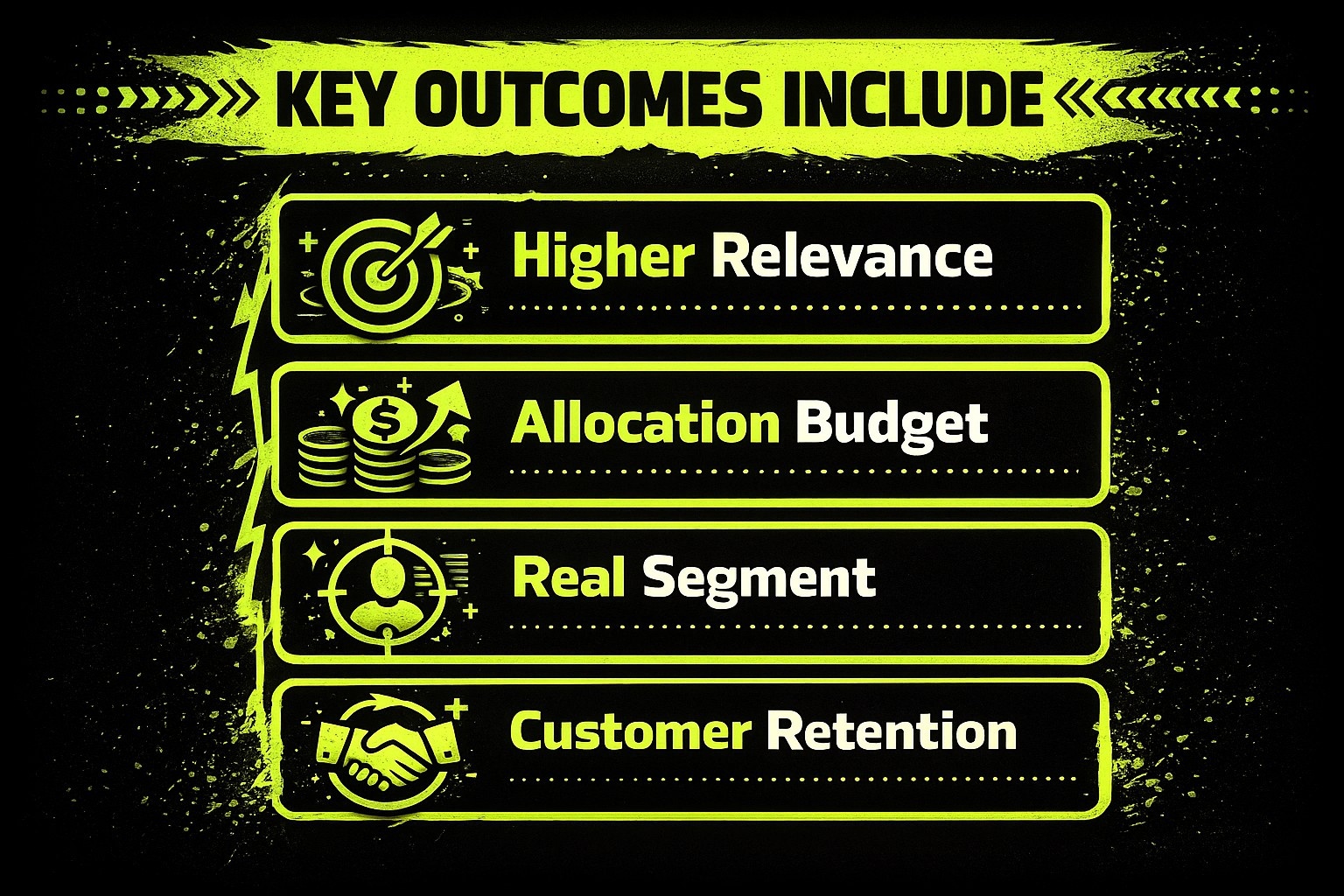
Key outcomes include:
- Higher relevance of marketing messages
- Better allocation of budget across channels and campaigns
- Improved product development based on real segment needs
- Increased customer retention through tailored communication
- Clearer competitive positioning in chosen segments
How We Apply Market Segmentation Strategies at Lengreo
At Lengreo we treat segmentation as the starting point of every client engagement. Before writing a single line of copy or launching a campaign we map the exact firmographic, behavioral and decision-making profiles of the target companies and buyers. This is never guesswork – we combine LinkedIn Sales Navigator data, company databases CRM exports and our own outreach response patterns to build segments that are precise enough to personalize at scale yet large enough to deliver meaningful volume.
The result shows in the numbers we consistently hit for clients: lead costs drop because messages reach only the profiles that match the ideal segment outreach response rates climb because subject lines and value propositions speak directly to segment-specific pain points and sales cycles shorten when marketing and sales work from the same segment playbook. In practice this means we rarely run broad “industry + size” campaigns – instead we layer variables like technology stack budget cycle stage recent funding events or even trigger events (new CTO hired office expansion) to create hyper-targeted account lists and adjust messaging channel mix and follow-up cadence for each segment separately. This disciplined segmentation-first approach is the main reason our clients see 3-6X reductions in cost per lead and sustained double-digit conversion improvements across B2B tech SaaS fintech and professional services verticals.
Market Segmentation Strategies: Core Types
Market segmentation divides a broad target market into subsets of buyers with common needs, characteristics or behaviors that require distinct marketing approaches. Companies use primary segmentation bases, often combined for greater precision.
1. Demographic Segmentation
Demographic segmentation remains the foundation for most marketing campaigns because the data is accurate, inexpensive, and widely available from census bureaus, credit agencies, and ad platforms. Companies group customers by age, gender, income, education, occupation, family status, and generation. A 25-year-old single urban professional has radically different needs and purchasing power than a 45-year-old married suburban parent, even if both buy the same category of product. Fashion, automotive, insurance, banking, and consumer packaged goods rely heavily on demographic variables as the first filter before layering additional criteria.
Most common demographic variables:
- Age brackets and life stage
- Gender and household composition
- Annual household income
- Education level and occupation
- Generation cohort
2. Geographic Segmentation
Location still drives a large portion of consumer behavior. Climate, population density, local culture, language, and regulatory environment create natural differences in demand. A winter jacket campaign in Canada will never work in Singapore, and fast-food menus in Texas differ from those in California for cultural reasons. Retail chains, restaurants, tourism boards, real estate developers, and delivery services use geographic segmentation to decide store locations, product assortments, pricing, and promotional timing. Even digital businesses adjust landing pages, currency, shipping offers, and ad creative by country or region.
Typical geographic layers used in practice:
- Country and language
- Region / state / province
- City size and urban vs rural
- Climate zone and seasonal patterns
- ZIP-code level micro-targeting
3. Psychographic Segmentation
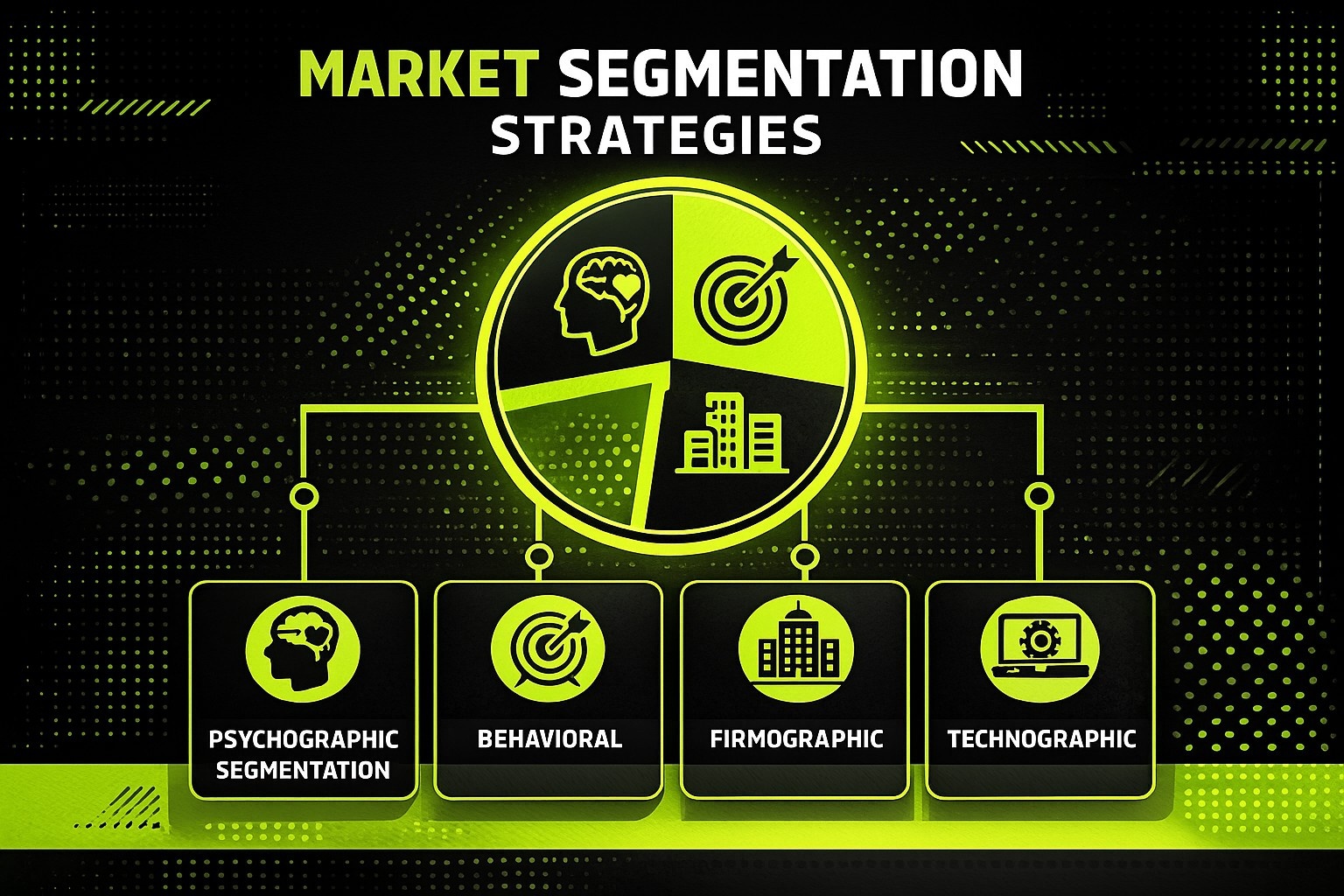
Psychographic segmentation goes beyond “who” the customer is and focuses on “why” they buy. It clusters people by shared values, attitudes, lifestyle choices, interests, and personality traits. An eco-conscious minimalist willing to pay a premium for sustainable materials belongs to a completely different segment than a status-driven luxury seeker, even if both have the same income. Luxury brands, fitness and wellness companies, organic food producers, adventure travel operators, and premium financial services build entire brand identities around psychographic profiles because emotional resonance often outweighs functional benefits in high-involvement categories.
4. Behavioral Segmentation
Behavioral segmentation is widely considered the most powerful because it uses actual observed actions rather than self-reported intentions. Companies track purchase frequency, average order value, product usage rate, loyalty status, benefits sought, occasion of use, and channel preference. A heavy user who buys every month and responds to loyalty rewards requires different messaging and offers than a price-sensitive switcher who only buys on deep discount. E-commerce giants, subscription services, SaaS platforms, and telecom operators achieve the highest incremental ROI from behavioral segmentation because it predicts future revenue with the greatest accuracy.
Key behavioral variables that drive ROI:
- Purchase recency, frequency, and monetary value (RFM)
- Loyalty status and share of wallet
- Primary benefit sought (price, quality, convenience, status)
- Channel preference and omnichannel behavior
- Response patterns to pricing and promotions
5. Firmographic Segmentation (B2B)
In B2B markets, the “person” is the organization itself. Firmographic segmentation replaces personal demographics with company attributes: industry vertical, revenue range, employee count, geographic footprint, technology stack, funding stage, and organizational structure. A 50-person SaaS startup has radically different budget cycles and decision-making processes than a 10,000-employee enterprise in the same sector. Enterprise software, consulting firms, office suppliers, logistics providers, and commercial insurance companies use firmographic data as the primary gatekeeper before adding individual job titles or behavioral signals.
6. Technographic Segmentation
Technographic segmentation classifies buyers by the technology they already use: operating systems, marketing stack, CRM, e-commerce platform, programming languages, or cloud providers. A company running Shopify Plus plus Klaviyo has different needs and sophistication levels than one still on basic WooCommerce. Marketing automation platforms, cybersecurity vendors, development tools, and payment processors target technographic profiles to craft highly relevant messaging and avoid pitching advanced solutions to beginners (or basic tools to sophisticated users).
7. Benefit Segmentation
Benefit segmentation groups customers by the primary advantage they seek from the product rather than by features. In toothpaste, one segment buys for cavity protection, another for whitening, a third for sensitivity relief, and a fourth for fresh breath. Airlines segment business travelers who prioritize schedule and lounge access versus leisure travelers who prioritize price and baggage allowance. Hotels, consumer electronics, skincare, and financial services frequently use benefit segmentation because the same physical product can satisfy multiple distinct needs when positioned correctly.
8. Occasion-Based Segmentation
Occasion-based segmentation focuses on when the purchase or consumption happens: regular everyday use, specific holidays, life milestones (weddings, births, graduations), or situational triggers (moving house, new job, health diagnosis). Florists, gift retailers, greeting card companies, jewelry brands, and insurance providers time the majority of their revenue around predictable occasions. Even everyday categories like chocolate or alcohol shift messaging dramatically between “daily treat” and “Valentine’s Day gift” occasions. Timing and context become the primary segmentation variables instead of the buyer’s permanent characteristics.
Conclusion
Market segmentation is no longer optional – it is the mechanism that turns mass marketing waste into measurable advantage. The eight approaches outlined above give every company, regardless of size or industry, a practical toolkit to stop guessing and start targeting with precision. When demographic, geographic, psychographic, behavioral, firmographic, technographic, benefit, and occasion-based variables are combined and kept current, the outcome is consistently the same: higher response rates, lower acquisition costs, better retention, and clearer product direction. Companies that embed segmentation into daily decision-making – from budget planning to creative execution – build a lasting edge over competitors who still treat all customers the same. In 2025 and beyond, the depth and discipline of your segmentation directly determine how efficiently every marketing dollar is spent and how strongly your brand connects with the people who matter most.