


Getting leads isn’t the challenge – it’s getting the right ones to stick around. The kind who are genuinely interested, not just window shopping or signing up out of curiosity. That’s why effective lead generation isn’t about chasing trends or stuffing your pipeline with noise.
It’s about building a system that brings in people who are a match for what you offer. In this guide, we’ll break down smart, practical strategies that help you connect with real prospects and turn them into real opportunities.
The Role of Marketing in Generating Quality Leads
Lead generation marketing is exactly what it sounds like: using marketing tactics to attract potential customers and turn their interest into action. But the good strategies go beyond capturing emails or getting clicks. Real lead generation marketing is about creating experiences that make the right people stop, pay attention, and willingly move toward a decision.
It can show up in all kinds of ways – through SEO, paid ads, webinars, content, or personalized email sequences. What ties it all together is the goal: get in front of people who match your ideal customer profile, engage them with something valuable, and guide them toward becoming a qualified lead.
The best part? When done right, lead generation marketing doesn’t just feed your pipeline – it makes your sales process faster, smoother, and way more efficient.
What Lead Generation Looks Like When We Do It
At Lengreo, lead generation isn’t just a service line – it’s a discipline we’ve built around clarity, precision, and results. We don’t rely on generic playbooks or recycled funnels. Every strategy we create is shaped by your business model, your sales cycle, and the way your buyers actually make decisions.
We’re not here to flood your CRM with unqualified leads. Instead, we focus on finding and connecting you with decision-makers who are a real fit. Whether we’re running hyper-personalized outreach or building content that speaks directly to pain points, or optimizing your paid ads to cut the cost per lead, the goal stays the same: generate high-value opportunities that move the needle.
Our team integrates directly with yours. We don’t sit on the sidelines – we lead initiatives, test aggressively, adjust fast, and keep communication clear at every step. For us, lead generation works best when it’s not treated like a standalone campaign, but as a living part of your growth engine.
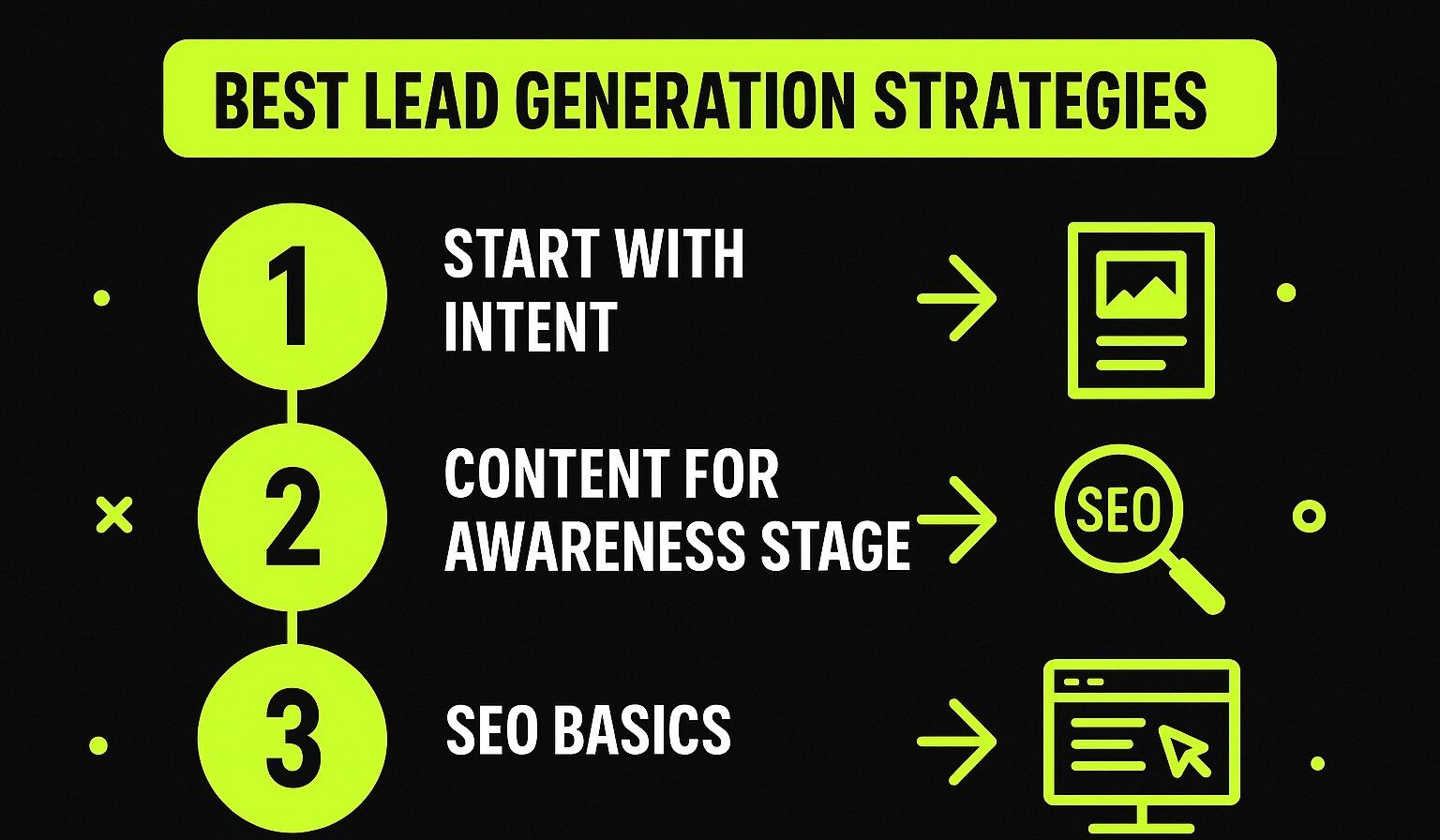
Best Lead Generation Strategies
Below, we’ll break down some of the most effective lead generation tactics, so whether you’re in SaaS, healthcare, eCommerce, or anything in between, you can focus on the approaches that actually contribute to your business growth.
1. Start With Intent, Not Just Awareness
Too many marketing teams focus on traffic and impressions. That’s visibility, but it doesn’t always bring in leads. What works better is understanding intent.
Look for people who are actively trying to solve a problem you can help with. These are some practical ways to find them:
- Use intent data tools to identify companies researching your solution.
- Monitor high-intent keywords (think “best [service] provider for X” not just “what is X”).
- Track buying signals like new hires, funding announcements, or tech stack changes.
The closer you get to decision-making behavior, the better your chances of engaging the right prospects.
2. Build Content for Every Awareness Stage
One blog post isn’t going to do it. You need content that supports the entire journey, especially for complex B2B or high-ticket B2C offers. That means creating different assets for each stage:
- Unaware/Problem-aware: Think educational blog posts, explainer videos, or social content that helps people name their pain points.
- Solution-aware: Use comparison guides, checklists, and case studies to show how your offer stacks up.
- Product-aware/Decision stage: This is where you bring out the proof – demos, trials, live presentations, detailed FAQs, and social proof.
If you’re only publishing one kind of content, you’re leaving deals on the table.
3. Go Beyond SEO Basics
SEO still matters, but not just for pulling in top-of-funnel traffic. When you approach it with lead generation in mind, it becomes a way to reach people who are already comparing options and trying to decide what to buy. This is where bottom-of-funnel content earns its keep.
Pages that compare your company to a competitor, in-depth how-to guides that naturally introduce your solution, and search terms tied to specific locations or niche needs can bring in visitors with real intent. At that stage, SEO isn’t just about showing up on Google. It’s about being present at the exact moment someone is weighing their options and ready to take the next step.
4. Turn Your Website Into a Lead Engine
Your website is not a digital brochure. It should be actively working to move visitors toward conversion.
That means:
- Ditching generic CTAs like “Contact Us” and replacing them with targeted offers.
- Using behavior-based popups or slide-ins (but not in an annoying way).
- Having dedicated landing pages that match the message of your ads or campaigns.
- Offering content upgrades that match the intent of the page – e.g., if they’re reading about pricing, give them a cost calculator.
Don’t treat every visitor the same. Make your site smart enough to meet people where they are.
5. Use Paid Ads With a Smarter Setup
Paid ads can absolutely work for lead generation, but only if you build them with intention. Throwing money at Google or social platforms without clear targeting or a solid offer usually ends the same way: wasted budget and no leads worth chasing. What changes the game is getting specific. Instead of broad demographics, focus on the exact job titles, industries, or company sizes that match your ideal buyer.
Be willing to test different messages and angles to see which one actually clicks. And make sure your ad copy lines up with your landing page – when those two speak the same language, your audience feels like they’re in the right place.
Don’t forget to follow up with retargeting, especially for people who showed interest but didn’t convert on the first visit. And while metrics like click-through rate can be helpful, keep your eyes on the real number that matters: cost per qualified lead. That’s what tells you if your campaigns are doing their job.
6. Remember That Email Isn’t Dead, It Just Needs Better Timing
A good email strategy is still one of the best ways to move leads through the funnel. But blasting the same sequence to every new contact doesn’t cut it anymore.
Instead, focus on:
- Segmenting by behavior: What did they download? What page did they visit?
- Writing emails that sound like a human, not a marketing robot.
- Offering real value in every message – tips, use cases, client stories, etc.
- Using plain text when it fits – sometimes it performs better than flashy templates.
Also, make it ridiculously easy for people to book a call or demo straight from the email.
7. Let People Experience Your Product Early
People trust what they can see and touch. That’s why live demos, free trials, or even short teaser videos go a long way in lead generation, especially for skeptical prospects.
Here are a few ideas that work well:
- A self-serve product tour with no sign-up required.
- A short, custom-recorded demo based on someone’s use case.
- Limited-access trials that solve one specific pain point.
The earlier you give someone a taste of what you offer, the sooner they’ll know if it’s a fit.
8. Use Tools That Actually Save Time
You don’t need a dozen different platforms to build a strong lead generation system, but you do need a setup that works together without creating extra headaches. At the very least, you’ll want something to keep track of your contacts and conversations, another to help you automate outreach and follow-ups, and a way to understand who’s engaging and where leads are coming from.
The key is choosing tools that fit your team’s workflow and actually help move leads forward, not just add more noise. It’s easy to get distracted by new features or trending apps, but the best stack is the one that makes things simpler, faster, and more effective for the way you sell.
9. Partner Up Strategically
Not all leads need to come from your own efforts. Some of the best opportunities come through partnerships.
Here’s what that might look like:
- Co-hosted webinars with companies that target the same audience.
- Cross-promoted content swaps (e.g. guest blogs or newsletter features).
- Affiliate or referral programs with customers or service providers you trust.
- Collaborating on gated content like ebooks or reports.
If you’re in a niche industry, this approach can outperform cold outreach by a mile.
10. Get Serious About Qualifying
Not every lead is worth following up on, and passing the wrong ones to your sales team only wastes time. That’s why it’s so important to build qualification into your process from the start. Ask smarter questions as people engage with your content.
Look at both who they are and how they’re behaving to get a clearer sense of their intent. And make sure your definition of a sales-ready lead matches what your sales team actually needs.
If someone isn’t ready yet, that’s fine – give them value and keep them in your world without forcing the conversation. The more intentional you are about qualifying, the better your close rates will get.
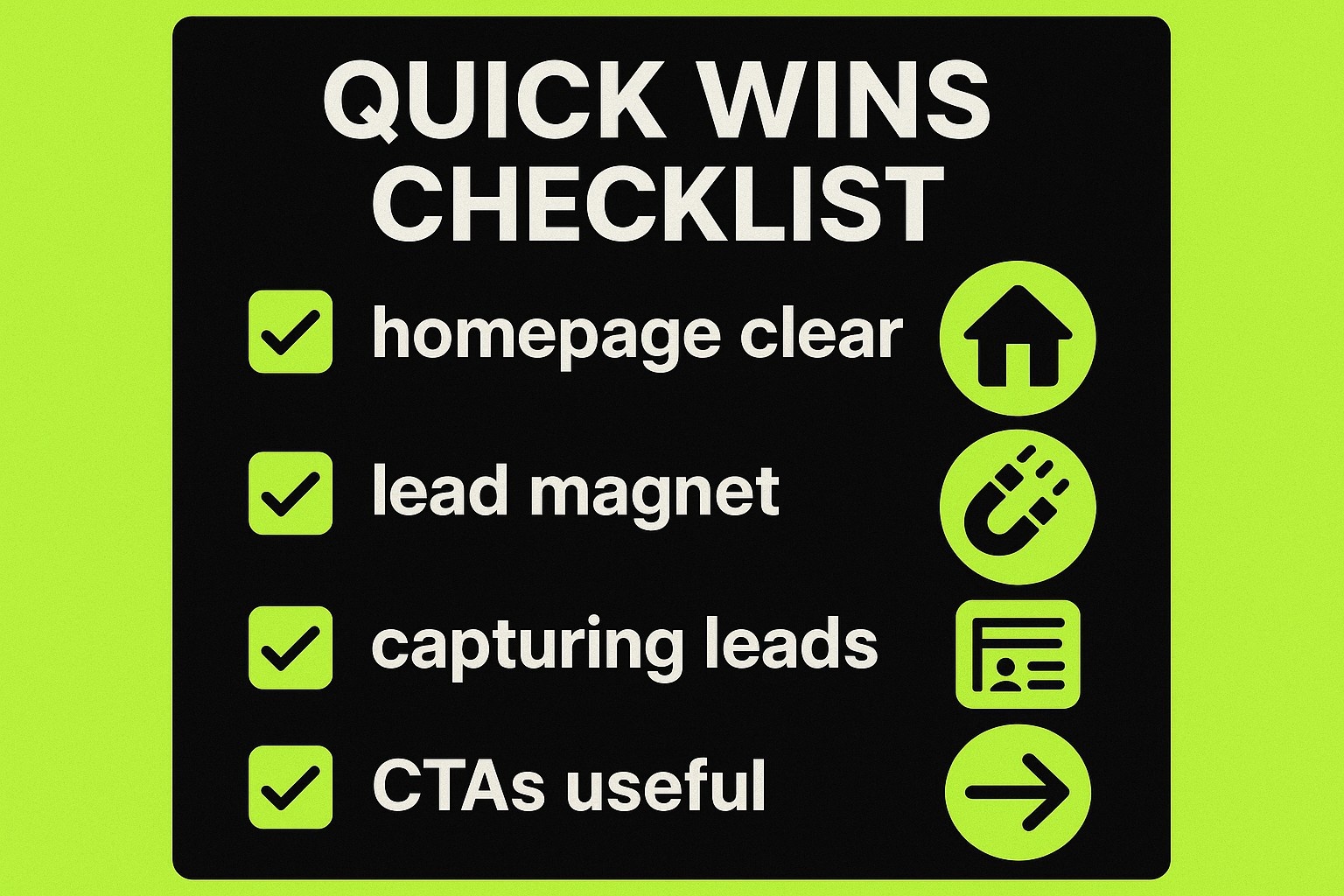
Quick Wins Checklist
Need to audit your lead gen quickly? Here’s a punch list to check:
- Is your homepage clear about who it’s for and what it offers?
- Do you have at least one lead magnet for each stage of awareness?
- Are you capturing leads on blog posts or just letting them bounce?
- Are your CTAs actually useful or just filler?
- Can your sales team quickly access and understand lead data?
If the answer is no to more than two of those, that’s a good place to start.
Final Takeaway: Focus on Quality, Not Volume
If there’s one takeaway from all this, it’s that lead generation isn’t about playing the volume game. It’s about consistency, alignment, and relevance.
Great lead generation marketing doesn’t just attract attention – it earns trust and invites action. And when you’re thoughtful about who you want to reach and how you show up, the right leads start showing up too.
So build with intention. Test what works. Scrap what doesn’t. And remember, sometimes the best strategy isn’t adding more noise – it’s creating clarity.