


Search engine optimization continues to play a central role in digital marketing strategies. As search engines evolve and incorporate more AI features, businesses evaluate the ongoing value of SEO efforts. This article examines the core advantages, potential drawbacks, and practical considerations based on established practices in the field.
SEO involves optimizing websites to improve visibility in organic search results. This process drives traffic from users actively seeking information, products, or services. Unlike paid advertising, organic results do not require ongoing payments per click, allowing established rankings to generate sustained visits over time.
The primary appeal lies in its ability to attract relevant visitors. Search engines prioritize content that aligns with user intent, meaning traffic from SEO often consists of individuals further along in their decision-making process. This relevance contributes to higher engagement rates compared to other channels.
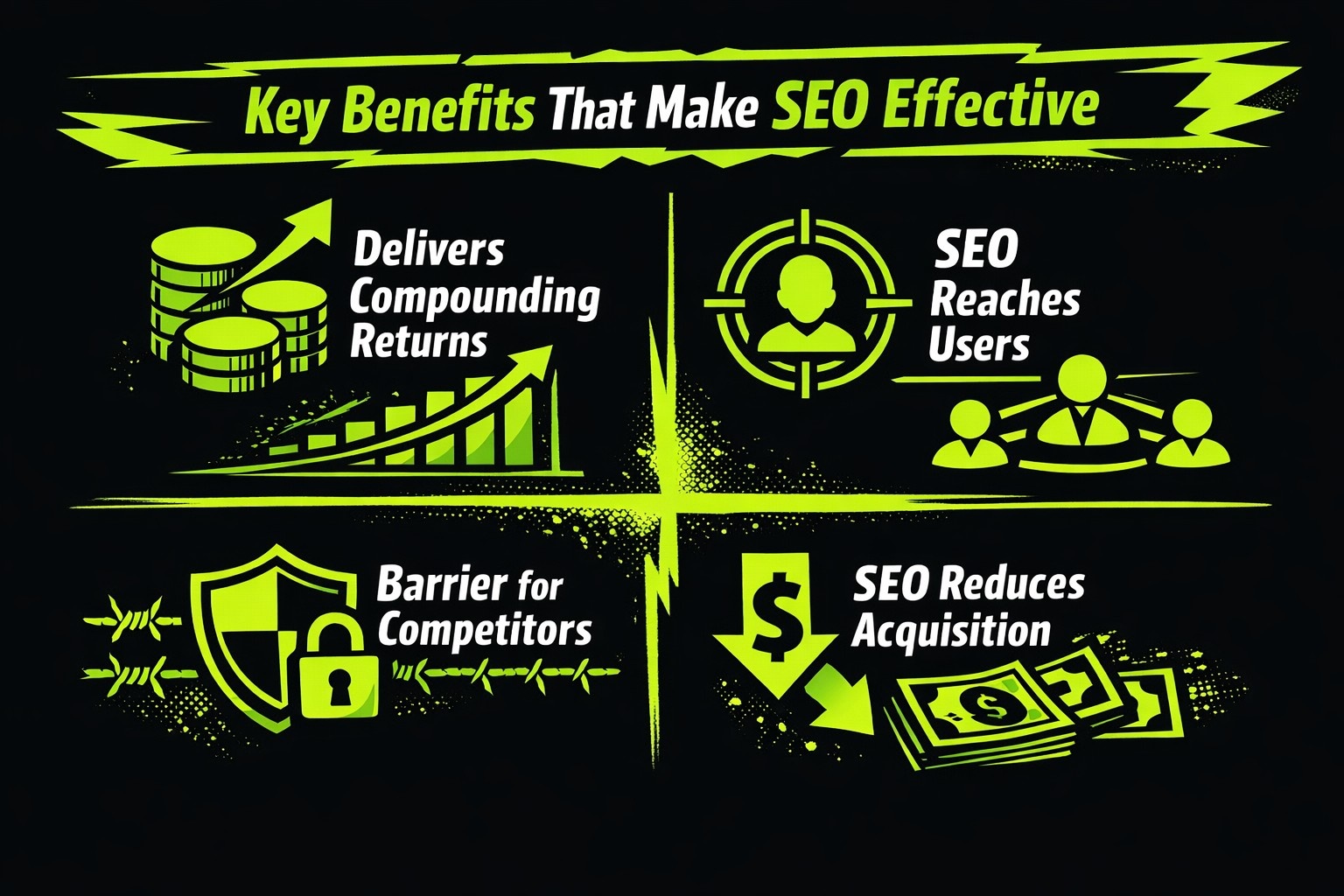
Key Benefits That Make SEO Effective
Several fundamental advantages explain why SEO remains a standard component of many marketing approaches.
First, it delivers compounding returns. Content that achieves strong rankings continues to perform indefinitely, accumulating traffic as the site gains authority. This cumulative effect distinguishes SEO from channels that require constant funding.
Second, SEO reaches users across different stages of awareness. Optimized pages can address initial research queries as well as specific product comparisons, guiding visitors through various phases of consideration.
Third, it creates a barrier for competitors. When one site occupies prominent positions, fewer opportunities remain for others targeting the same terms. This dynamic shifts visibility toward the optimized site.
Fourth, SEO reduces acquisition expenses in the long run. Initial investments in optimization yield traffic that does not incur additional costs per visitor, contrasting with paid campaigns.
- Builds cumulative traffic through persistent rankings
- Addresses multiple points in user journeys
- Limits competitor exposure for shared targets
- Lowers overall cost per acquired visitor
The Timeline for Seeing Results
SEO operates on an extended timeline due to the way search engines evaluate and rank content. New optimizations require crawling, indexing, and assessment against competing pages.
Initial improvements often appear within several months, such as better indexing or minor ranking shifts. More substantial changes, including significant traffic increases, typically develop over half a year or longer.
Consistency in applying optimizations plays a critical role. Regular updates and refinements help maintain momentum as algorithms continue to evolve.
Several core factors determine how quickly SEO efforts translate into visible ranking improvements and traffic growth. These elements interact with each other, so addressing multiple areas simultaneously often produces the strongest acceleration.
Common Phases in SEO Development
- Early stage (first few months): focus shifts toward technical fixes, improved crawl efficiency, and initial content indexing with limited ranking movement
- Mid stage (several months in): individual pages begin to appear in lower positions, small traffic increases emerge, and search consoles show rising impressions
- Mature stage (half a year and beyond): established pages climb into prominent positions, traffic growth becomes consistent, and compounding effects from older content strengthen overall performance
- Long-term phase: new content integrates faster into existing authority clusters, and the site responds more quickly to ongoing optimizations
Site Age and Existing Authority
Search engines tend to extend more initial trust to domains that have operated consistently over longer periods. Older sites typically accumulate natural signals such as backlinks, content history, and user engagement patterns that newer domains lack.
This accumulated authority allows new optimizations to take effect more rapidly. When a well-established site publishes fresh content or makes technical adjustments, search engines process and evaluate those changes against a backdrop of existing positive signals. As a result, ranking shifts can occur faster compared to sites starting from minimal trust levels.
Newer domains, by contrast, often face a longer validation phase. Search algorithms apply greater scrutiny to prevent low-quality sites from gaining quick prominence. Building foundational authority through consistent, high-quality output becomes essential before significant progress accelerates.
Competition Level
The number and strength of existing pages targeting the same keywords directly impacts timeline expectations. Highly competitive terms often feature multiple entrenched results from authoritative domains with extensive optimization histories.
Displacing these established pages requires not only superior content but also comparable or greater authority signals. Comprehensive strategies that address on-page elements, technical performance, and off-site factors become necessary to close the gap.
Less competitive keyword spaces present fewer barriers. When fewer high-authority pages dominate the top positions, targeted optimizations can secure visibility within shorter periods. Identifying these opportunities through careful research allows teams to prioritize efforts that deliver earlier returns while building toward more challenging terms.
Technical Foundation
A robust technical infrastructure forms the baseline for all other SEO activities. Sites with clean code structure, proper indexing directives, and efficient server performance enable search engines to crawl and interpret content without friction.
Core issues such as slow page speeds, broken redirects, duplicate content problems, or poor mobile rendering create obstacles that delay progress. Search engines may deprioritize sites exhibiting these deficiencies until resolved, regardless of content quality.
Addressing technical debt early establishes a stable platform for subsequent improvements. Fast-loading pages, secure connections, clear site architecture, and schema implementation all contribute to smoother evaluation cycles. Once foundational elements align with current standards, content and authority-building efforts compound more effectively.
Content Volume and Consistency
The existing library of indexed pages influences how quickly new material gains traction. Sites with substantial relevant content provide internal linking opportunities and topical depth that reinforce new additions.
Regular publishing schedules signal ongoing relevance to search algorithms. Consistent output in targeted topic clusters helps establish topical authority faster than sporadic updates. When combined with proper interlinking, this approach accelerates the integration of new pages into overall site performance.
Resource Allocation and Execution Quality
The depth and coordination of implemented changes also shape timelines. Comprehensive strategies that simultaneously address technical, content, and authority aspects generally progress faster than isolated efforts.
Thorough execution matters equally. Partial implementations or overlooked details can prolong evaluation periods as search engines reconcile conflicting signals. Coordinated approaches that maintain alignment across all optimization layers support steadier advancement.
- Involves dedicated time for research and planning across multiple disciplines
- Requires ongoing monitoring and adjustment based on performance data
- Benefits from clear prioritization of high-impact tasks over scattered activity
- Gains momentum when teams maintain alignment between short-term fixes and long-term goals
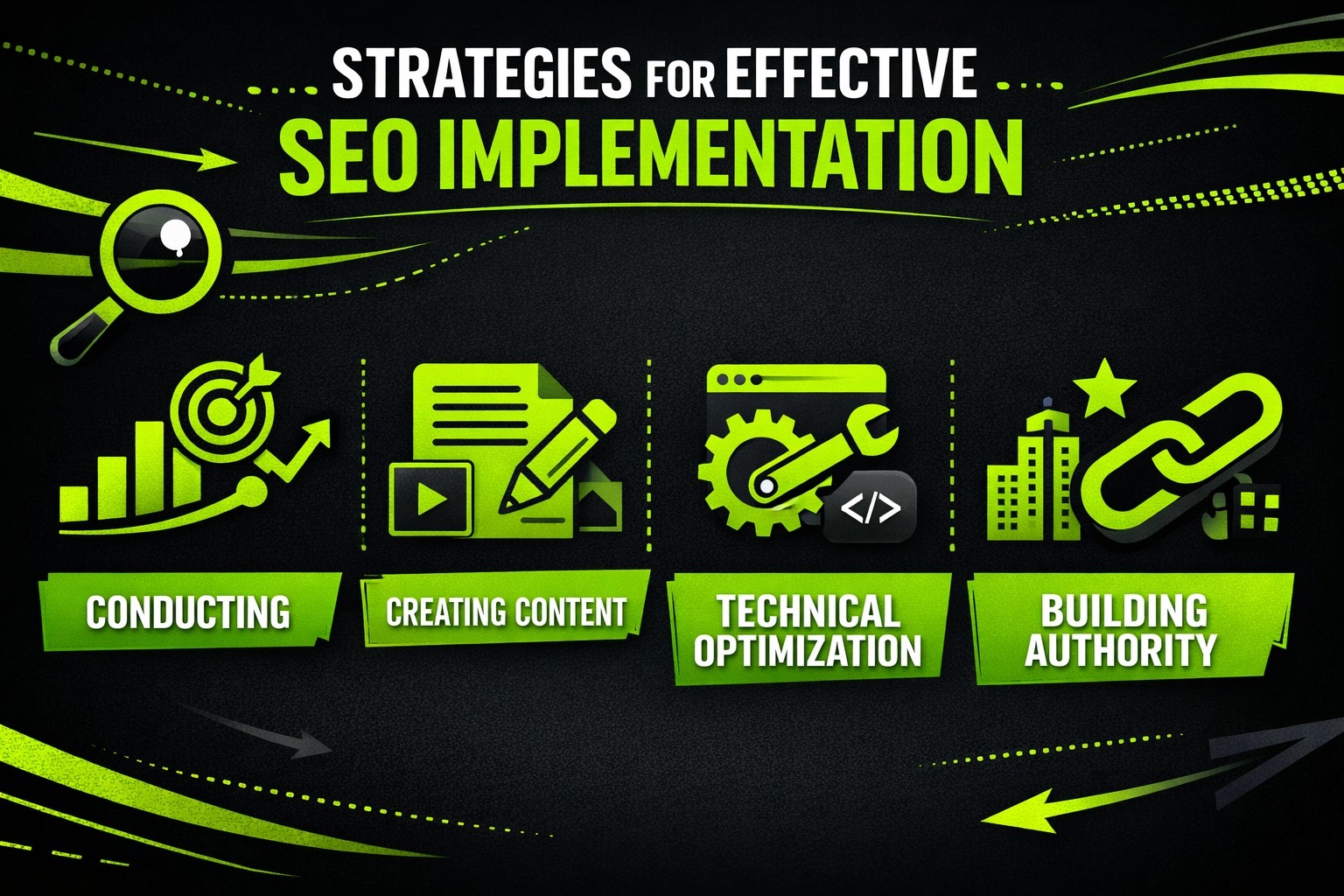
Strategies for Effective SEO Implementation
Success in SEO depends on a structured approach that prioritizes quality, relevance, and alignment with search engine evaluation criteria. Isolated tactics rarely deliver sustained results, while coordinated efforts across multiple areas produce measurable improvements over time.
Conducting Thorough Keyword Research
Keyword research forms the foundation of any optimization strategy. The process involves identifying the specific terms and phrases potential customers use when searching for products, services, or solutions.
Effective research goes beyond obvious product names. It includes related questions, problems, and informational queries that indicate different stages of user intent. This broader view helps uncover opportunities to reach audiences early in their decision process.
Tools provide insights into general search volume and intent categories. Analyzing these patterns guides prioritization toward terms that balance relevance with achievable ranking potential.
- Examine direct terms related to core offerings
- Include problem-based queries that reflect customer pain points
- Review question formats commonly used during research phases
- Assess supporting terms that reinforce topical coverage
Creating Comprehensive Content
Content serves as the primary vehicle for demonstrating relevance to both users and search engines. Pages that thoroughly address the target query while providing clear, practical value tend to perform better in rankings.
Structure plays a significant role in effectiveness. Logical organization with appropriate headings, concise paragraphs, and supporting elements improves readability and signals depth to search algorithms.
Incorporating signals of expertise remains essential. Detailed explanations, accurate information, and real-world context help establish authority on the topic. Content that anticipates follow-up questions and provides complete coverage often secures stronger positions.
Technical Optimization Essentials
Technical elements determine whether search engines can properly access, interpret, and evaluate site content. A solid foundation ensures that other optimization efforts are not undermined by underlying issues.
Core requirements include full mobile compatibility, fast loading across devices, and clean site architecture. Proper indexing directives prevent duplication problems and ensure all relevant pages are considered.
Additional technical considerations involve secure connections, efficient code delivery, and structured data implementation. These components facilitate better understanding of page purpose and content relationships.
- Ensure responsive design across all device types
- Optimize image delivery and resource loading
- Implement clear URL structures and internal linking
- Use structured data to clarify content elements
Building Authority Through Links
External links from other sites continue to function as important endorsement signals. Search engines interpret relevant connections as indicators of trustworthiness and topical authority.
Sustainable link acquisition focuses on creating content that naturally attracts references from related sources. This approach avoids risks associated with artificial manipulation while building genuine credibility.
Internal linking also contributes significantly. Strategic connections between related pages distribute authority throughout the site and guide users toward deeper engagement.
Monitoring existing link profiles helps identify opportunities for improvement. Removing or disavowing harmful connections protects overall site standing while positive acquisitions strengthen performance.
Why SEO Remains a Core Investment at Lengreo
We run a B2B digital marketing agency at Lengreo, where SEO forms a core part of what we deliver to clients in sectors like biotech, SaaS, cybersecurity, and IT. From our daily work, we see firsthand why SEO remains a worthwhile investment for most businesses that rely on online discovery.
We focus on strategies that build sustained organic visibility – thorough keyword research, technical optimizations, link building, and content planning. These efforts help clients attract relevant traffic without constant ad spend, and the results tend to compound as authority grows. In our experience, when companies commit to consistent, quality-driven SEO, it lowers acquisition costs over time and supports steady lead flow, especially in competitive B2B spaces. We have applied these same principles across various client projects, observing how proper implementation addresses extended timelines and evolving search features. For us, SEO proves its worth through practical outcomes rather than quick fixes, making it a foundational channel for businesses with searchable demand.
Conclusion
SEO maintains its position as a foundational digital strategy for businesses where search plays a role in customer discovery. Its ability to generate sustained, relevant traffic without ongoing per-click costs provides lasting value. While AI integrations and extended timelines present challenges, targeted implementation focused on quality and user needs continues to deliver results. The decision ultimately hinges on alignment with audience behavior and willingness to commit to ongoing refinement.