


Tracking your rankings sounds simple – until you realize you’re staring at 15 charts, 6 tools, and zero clarity on what’s actually working. Keyword position is part of the picture, sure, but it doesn’t tell you if that traffic is sticking around, converting, or doing anything useful. To really understand your SEO performance, you have to connect rankings with user behavior, search intent, and actual business outcomes. That’s where things get interesting.
What “Tracking SEO Rankings” Really Means
When most people talk about tracking SEO rankings, they’re thinking about positions in Google. Did a page move from page two to page one? Did a keyword climb a few spots or drop overnight? That kind of visibility still matters, but on its own, it doesn’t say much about whether SEO is actually working.
Real tracking starts when you look past positions and ask what those rankings are producing. A keyword can rank well and still bring the wrong audience, or no meaningful traffic at all. That’s why rankings only make sense when you connect them to impressions, clicks, and how people behave once they land on the page.
In practice, tracking SEO rankings means following the whole chain, not just the headline number. Visibility, engagement, and conversion all need to be read together. If rankings rise but clicks stay flat, something is off. If traffic grows but users leave immediately, the problem is elsewhere. SEO tracking is less about celebrating position changes and more about understanding whether search is contributing to real, measurable progress.
Lengreo’s Approach to Meaningful SEO Tracking
At Lengreo, we don’t chase rankings just to see numbers go up. We track SEO performance to understand what’s driving qualified traffic, how that traffic behaves, and whether it’s contributing to pipeline. Rankings are part of the picture – but only useful when tied to intent, engagement, and outcomes. For every keyword we monitor, we look at its role in the full journey, from impression to conversion.
We combine keyword tracking tools with Google Search Console and behavior data to spot what’s moving and why. If a page climbs but bounce rate spikes, we dig in. If visibility increases but clicks don’t follow, we check the snippet. Our reporting is structured around what helps decision-making – so clients don’t just see what changed, but what to do next.
We also share insights through our social channels, especially on Instagram and LinkedIn. That’s where we break down wins, talk through strategy, and show how campaigns perform in the real world – not just in dashboards. For us, SEO isn’t a checkbox – it’s one of the levers we use to grow companies that want measurable progress.
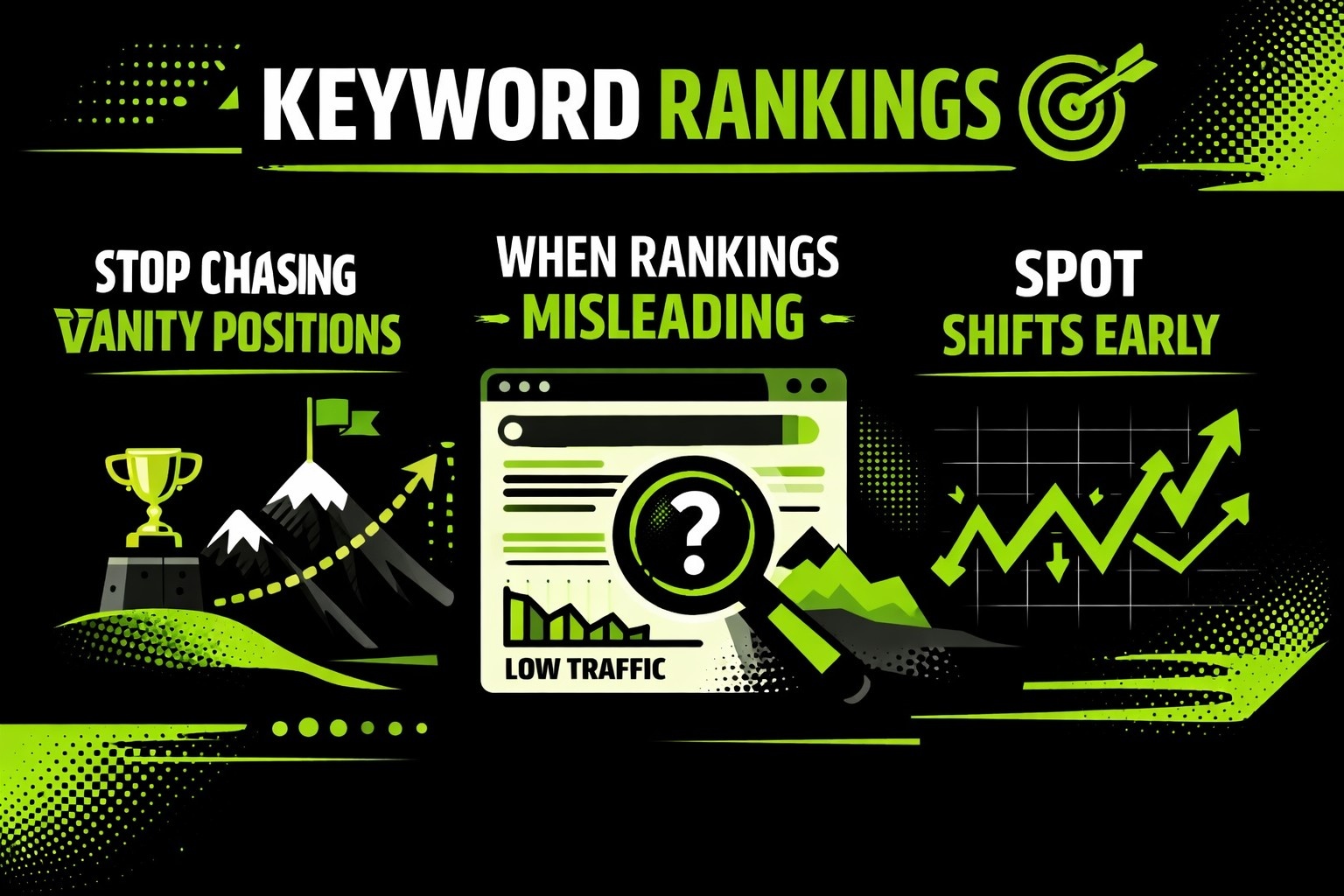
Keyword Rankings – Still Worth Tracking (If You Do It Right)
Keyword rankings aren’t dead. But how you track them – and what you do with that data – makes all the difference. If you’re just watching numbers shift in a vacuum, you’re wasting time. But when you treat rankings as part of a bigger feedback loop, they can still tell you a lot about what’s working and what isn’t.
Stop Chasing Vanity Positions
Not every keyword that ranks matters. This happens often – pages end up ranking in the top 3 for low-intent keywords that drive traffic but don’t convert, don’t engage, and ultimately don’t contribute to the business. That kind of ranking looks good on a report, but it’s not helping. So the first step is simple: track the right terms. Focus on keywords that are tied to intent, not just search volume.
Know When Rankings Are Misleading
Search results aren’t static. Personalized results, location-based shifts, SERP features, and constant testing by Google mean that your “average position” doesn’t always reflect what a real person sees. This is why ranking data is always paired with click‑through rates and real behavior metrics. If you’re ranking #4 but barely getting any clicks, the issue might be with your snippet – or the keyword may just not be worth the effort.
Use Rankings to Spot Shifts Early
That said, rankings are still one of the earliest signals you’ll get when something changes – good or bad. A sudden drop can flag technical issues, lost backlinks, or an algorithm shift. A slow climb might mean your new content is picking up traction. They don’t obsess over daily swings, but they do track trends. Especially when testing new content types or optimizing for new segments, rankings help reveal which direction things are heading – often before it shows up in the pipeline.
Tracking keyword positions isn’t about chasing wins for the sake of it. It’s about watching the right signals, in the right places, and knowing how to read them in context. That’s where the real value is.
Pulling Real SEO Data from Google Search Console
If you’re not using Google Search Console regularly, you’re missing out on the most honest SEO data you can get. It’s not modeled, it’s not estimated – it’s straight from the source. They use it daily to see what’s actually happening in the search results, not just what they assume based on tools or expectations. Here’s what they typically pull from GSC and why it matters:
- Search queries: These show the exact terms people are typing when your site appears. Not the keywords you planned for, but the ones you’re actually showing up for. That gap is usually more interesting than expected.
- Impressions: This tells you how often your pages were seen in search. It’s a visibility metric – helpful for spotting rising interest before clicks happen. If impressions are up and clicks aren’t, something in the snippet likely needs work.
- Clicks: The real signal. If people are clicking, you’re doing something right – at least at the surface level. If they’re not, it’s worth looking at your title tags, meta descriptions, or whether you’re ranking for the wrong kind of intent.
- CTR (Click-through rate): A direct connection between visibility and engagement. Low CTR with high impressions usually means your SERP presence isn’t standing out. It’s one of the quickest ways to flag underperforming pages.
- Page-level performance: They can drill down into individual URLs to see how those pages perform over time. This helps track which ones are gaining traction and which may need support – whether through content updates, internal links, or technical improvements.
- Country-level data: This is especially useful when targeting multiple markets. It’s not uncommon for pages to rank in unexpected regions based on how Google interprets the content – valuable context before investing in translation or localized landing pages.
Search Console doesn’t tell them everything, but it shows what’s real. Before they make changes to any client’s content, this is where they start – no assumptions, just data.
Going Beyond Search – Why Google Analytics Still Matters
Ranking is only half the story. Just because someone finds the site doesn’t mean they’ll stick around, explore, or take meaningful action. That’s where Google Analytics becomes essential – it shows what happens after the click. For them, that’s often where the most valuable insights emerge.
They look at bounce rates, time on page, and session flow – not because it’s standard practice, but because it reveals whether the content is actually working. If users land and leave right away, something’s misaligned – maybe the wrong audience, maybe a slow load, or maybe a disconnect between the promise and what’s delivered. If users stay, engage, and move deeper into the site, that signals a different kind of relevance.
Conversion tracking is the other piece they don’t skip. Whether it’s a form submission, a product view, a download, or a direct purchase, they tie rankings and traffic to real business outcomes. It’s never just about inflating numbers – it’s about knowing if SEO is supporting growth or simply filling reports.
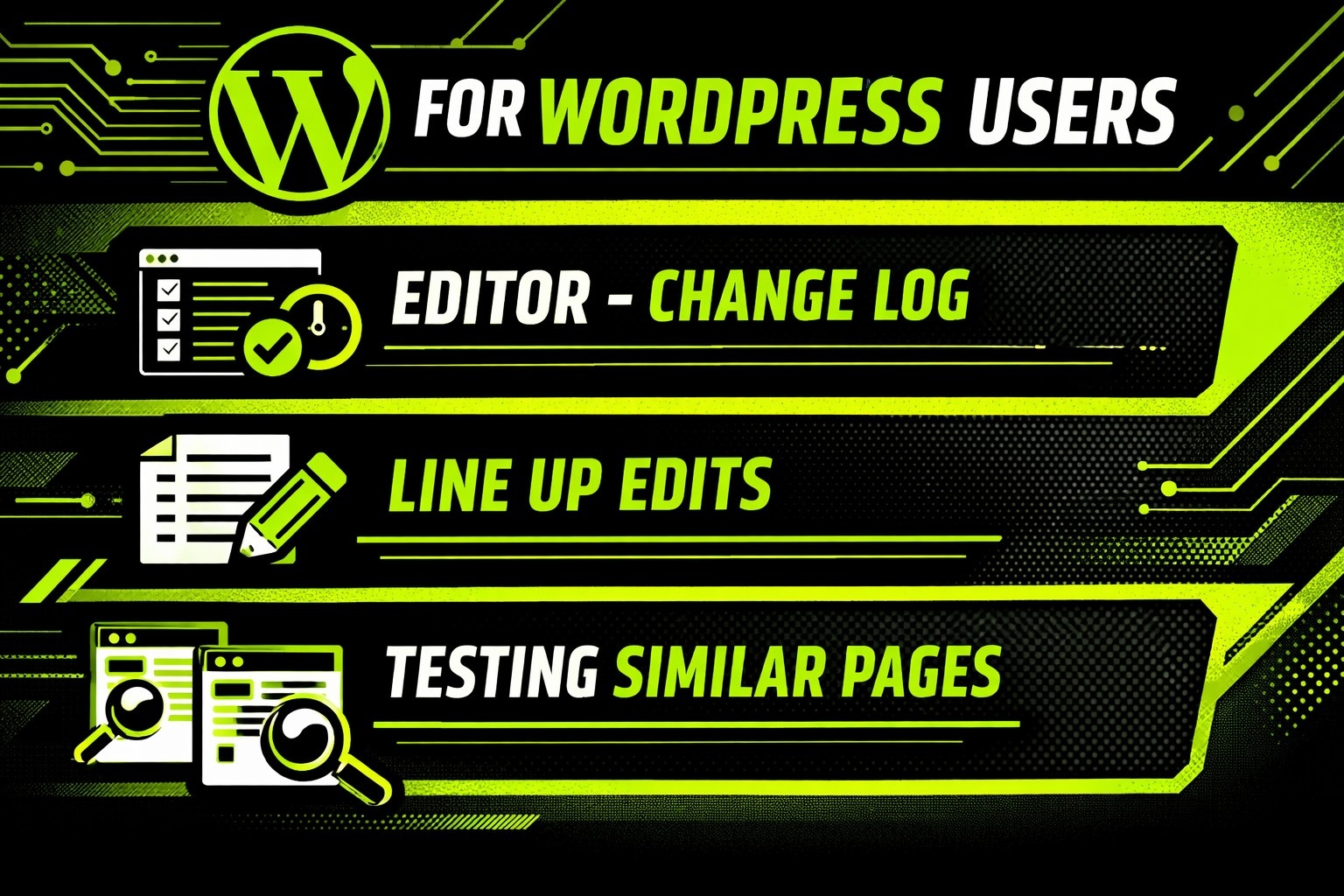
For WordPress Users: Tracking SEO Changes Without Overcomplicating It
If you’re working in WordPress, tracking SEO changes doesn’t have to mean adding more plugins or building a full analytics stack. What matters is knowing what changed, when it changed, and whether it moved the needle. Everything else is just process.
1. Use Your Editor Like a Change Log
Start simple. Keep a record of every meaningful SEO edit – whether it’s a new title, a reworked intro, or added internal links. You can do this directly in the post editor (even as draft comments or in a shared doc). It sounds basic, but when you circle back to measure impact, those notes save time and guesswork. Especially when multiple people are touching content across different sprints.
2. Line Up Your Edits With Search Console Data
After making changes, keep an eye on Google Search Console. Look at how impressions, clicks, and CTR shift in the days and weeks that follow. Even without automation, this kind of side-by-side check is often enough to spot which edits helped – and which ones didn’t land. It’s particularly useful when refreshing older pages or tweaking meta tags.
3. Testing Similar Pages? Compare Their Behavior
If you’re running content variations – say, two landing pages targeting the same topic – track the differences up front. Then measure how users interact with each version: bounce rates, time on page, and conversion behavior. You don’t need anything fancy, just a system for checking whether your assumptions are playing out.
You don’t need to track everything automatically to stay on top of your SEO changes. You just need a clear process and a way to connect edits with outcomes. WordPress gives you enough flexibility to build that system – without turning it into another project.
SEO Rank Tracking Tools Compared
There are plenty of tools out there, but most teams don’t need all of them. What matters is picking the right combination based on what needs to be measured and how that data feeds into decision-making. Here’s how the most common ones compare:
- Google Search Console: Gives raw, direct data from Google – no guesswork. Shows which queries trigger impressions, how often pages are seen, clicked, and what kind of CTR they’re getting. Not built for competitor tracking, but essential for understanding visibility and search behavior.
- Google Analytics: Helps track what users do after they land on the site. Time on page, bounce rate, navigation flow, and conversion behavior give context to ranking movements. When combined with Search Console, it fills in the “what happened next” part of the story.
- Ahrefs: Strong for keyword tracking, link profiles, and competitive comparisons. Their organic keyword reports are easy to filter and useful for spotting slow declines or quick wins. Often used by SEO teams running audits or aggressive backlink strategies.
- Semrush: Broader in scope – covers SEO, content, ads, and some brand monitoring. Works well for companies where SEO overlaps with paid and content workflows. Slightly heavier UI, but solid for running multi-channel campaigns from one place.
- Manual search checks: Still useful, especially when teams want to see what the real SERP looks like – localized results, featured snippets, or layout shifts. No tool fully replaces opening an incognito window and seeing what users actually see.
Most teams use two or three of these tools together. What matters isn’t having the biggest stack – it’s knowing what you’re measuring and why it matters for growth.
Bringing It All Together: A Realistic SEO Monitoring Habit
Tracking SEO doesn’t need to become another full-time job. What does matter is building a habit that fits the way your team already works. Most of the time, that means weekly check-ins on rankings and traffic shifts, with a deeper review once a month to look at engagement, conversions, and whether any of the recent changes are actually driving growth.
It helps to look at things in layers. Daily or weekly? Use Search Console to spot early movement. Monthly? Dig into Analytics to see what users did once they landed. Quarterly? Step back and evaluate which topics or funnels are pulling their weight. That rhythm makes it easier to avoid jumping at every small dip or spike and keeps attention where it belongs – on trends, not noise.
Ultimately, SEO tracking isn’t about obsessing over numbers. It’s about getting better at seeing what matters early, fixing what isn’t working, and doubling down where there’s real traction. The tools are there. The data is there. The real work is making sure it gets read in a way that supports decisions – not just reports.
Conclusion
SEO tracking isn’t about chasing perfect charts or reacting to every small shift. It’s about creating a system that helps you make better decisions, faster. Whether you’re a solo marketer or part of a bigger team, the goal is the same – connect visibility to real outcomes and spot opportunities before they go cold.
If rankings drop, you want to know why. If they climb, you want to know what triggered it. That only happens when you’re tracking with context. Not just keywords, but the whole journey: impressions, clicks, behavior, conversions. That’s where the real picture starts to form – and where SEO stops being a black box.