


Most people don’t struggle with Google because it’s complicated. They struggle because they say too much.
Google works best when you give it signals, not full sentences. Keywords do exactly that. They strip a search down to intent and remove everything that doesn’t help the engine understand what you want.
This article explains how to search using only keywords on Google, why it often works better than natural language, and how to adjust your phrasing to get cleaner, more relevant results, without using advanced operators or SEO tools. Just the search bar and a bit of intent awareness.
No theory. Just how people who search a lot actually do it.
What Searching by Keywords Really Means
Searching by keywords does not mean typing random words and hoping Google figures it out. It means identifying the core idea behind what you are looking for and expressing it with as little noise as possible.
Instead of asking Google a question the way you would ask a person, you give it signals. Those signals are usually nouns and modifiers. Topics, objects, problems, formats.
For example, there is a meaningful difference between typing a long question about improving SEO and simply searching for “SEO audit checklist” or “technical SEO issues site”.
Keyword searches strip away politeness, filler, and explanation. What remains is intent.
Why Keywords Still Matter Even With Smarter Search
Google is much better at understanding language than it used to be. It can interpret synonyms, intent, and context. But smarter interpretation does not mean keywords stopped mattering.
Most web content is still created, structured, and indexed around topics and phrases. Titles, headings, URLs, internal links, and anchor text are all built on keyword logic. Even when Google interprets meaning, it still relies on those textual signals.
When you search using keywords, you align your query with how information is actually organized on the web. That alignment is why keyword searches often feel cleaner and more focused.
Lengreo: From Keyword Search to Measurable Business Outcomes
At Lengreo, we treat keyword search as a signal of real intent, not just a research exercise. Even as search becomes more conversational and AI-driven, keywords still reveal what people are actively trying to solve. That insight shapes how we build every growth strategy.
We focus on keywords that indicate action, not vanity volume. By mapping keyword intent to business goals, competitive context, and the sales funnel, we help clients attract traffic that is more likely to convert. This applies across SEO, demand generation, and paid campaigns.
Rather than relying on pre-built lists or generic frameworks, we continuously refine keyword strategy based on performance data and user behavior. The same principle that makes keyword-only searches effective for users applies here as well: observe results, adjust signals, and improve outcomes over time.
For us, keyword-based discovery is not outdated. It is still one of the most reliable ways to drive measurable growth.
The Problem With Full-Sentence Searches
Full-sentence searches are convenient, but they introduce uncertainty.
When you type a question, Google has to decide what part of that sentence matters most. It often expands the query, blends intents, and pulls in content that is only loosely related.
This is why full questions sometimes return a mix of beginner guides, listicles, videos, ads, and opinion pieces. Google tries to be helpful by covering every angle.
Keyword searches narrow that scope. They remove tone and phrasing, leaving only the subject itself. As a result, the search engine has fewer assumptions to make.
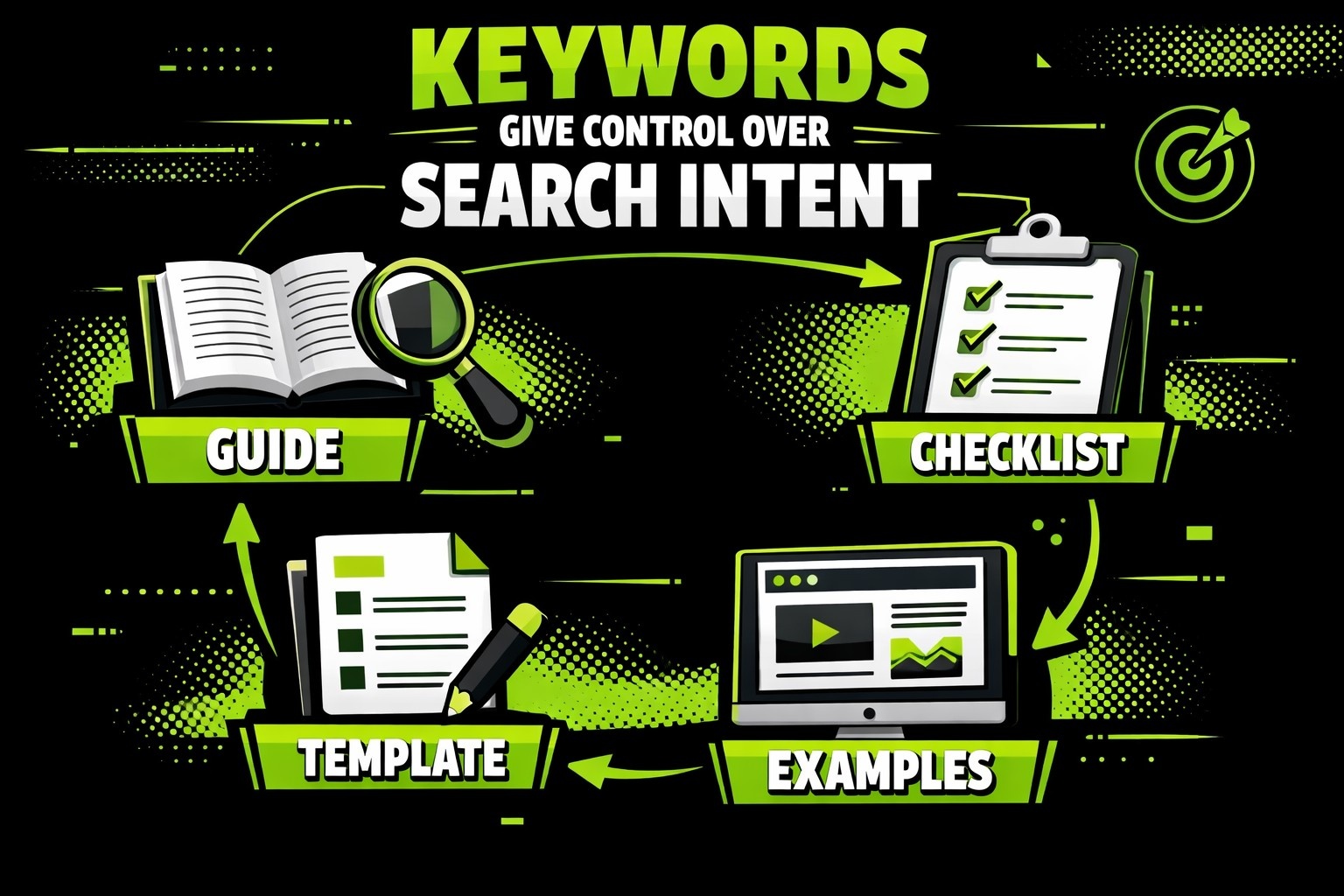
Keywords Give You Control Over Search Intent
Keywords alone are powerful. Modifiers make them precise.
Common useful modifiers include:
- guide
- checklist
- template
- examples
- pricing
- comparison
- tools
- framework
For instance:
- keyword research tools
- keyword research tools free
- keyword research tools comparison
Each version shifts intent without changing the core topic.
This is one reason keyword searching still works so well. You can shape results without relying on Google to guess.
You are not asking Google to guess what you want. You are telling it directly.
How Experienced Searchers Actually Use Google
People who research for a living rarely type long questions. Writers, marketers, analysts, and developers tend to search in fragments.
They start with a core concept, scan the results, and adjust based on what they see. If the results are too broad, they narrow them. If they are too narrow, they loosen the query.
This process feels natural once you get used to it. Searching becomes a conversation with the results page, not with Google itself.
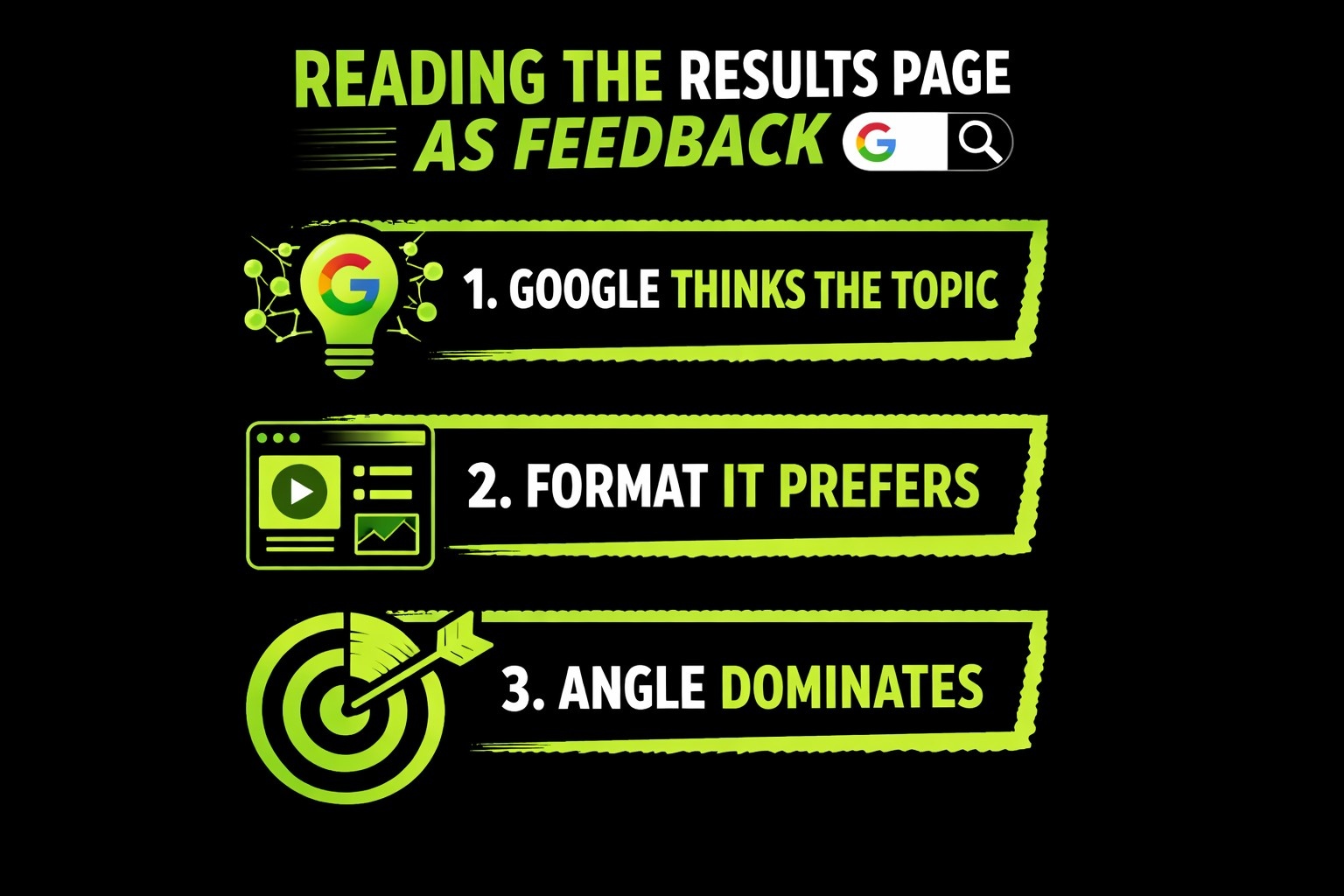
Reading the Results Page as Feedback
Keyword searches are not one-and-done.
The results page tells you:
- What Google thinks the topic is
- What format it prefers
- What angle dominates
If you search:
- content gap analysis
And see:
- Tool pages
- SaaS landing pages
- Few blog posts
That tells you something about intent.
If you search:
- content gap analysis example
And see:
- Tutorials
- Walkthroughs
- Screenshots
That modifier changed everything.
Keyword searching works best when you observe and respond, not when you force a query.
Why Keyword Searches Are Better for Research
If you are researching a topic in depth, keyword searches give you access to how that topic is discussed across the web.
They surface terminology, common angles, and recurring patterns. You start seeing how people frame problems, not just how they explain them.
This is especially useful when you want to go beyond surface-level summaries. Keyword searches often lead to documentation, case studies, technical posts, and specialized resources that conversational searches skip.
Avoiding Noise in Modern Search
Search results today are crowded in ways they weren’t a few years ago. Ads sit at the top, AI summaries try to answer before you click, videos and widgets compete for space, and sometimes the actual links feel almost secondary. For quick answers, that can be useful. For real research, it often gets in the way.
Keyword-based searches tend to cut through that noise. Because they are more specific and less conversational, they often trigger more traditional result sets. You see fewer broad explanations and fewer attempts to summarize the topic for you. Instead, you get closer to the original sources, the pages that actually contain the information rather than interpretations of it.
That difference matters if you care about accuracy or depth. It is also why many professionals still default to keyword searches. As search interfaces evolve and add more layers, keyword-based queries remain one of the simplest ways to keep results grounded and usable.
Keywords and Expertise Signals
Google pays close attention to how a query is phrased. Simple, conversational questions often suggest that the searcher is new to the topic and looking for an introduction. Short, focused keyword queries tend to signal familiarity and intent.
That signal affects what Google chooses to show. Keyword searches are more likely to surface specialized articles, technical documentation, and in-depth resources, especially when the terms used are precise and industry-specific. You are less likely to be routed through beginner-level explanations or generic overviews.
In that sense, keyword searching is not just a technical choice. It is a positioning choice. You are telling Google how seriously you want the topic treated and how much context you already have.
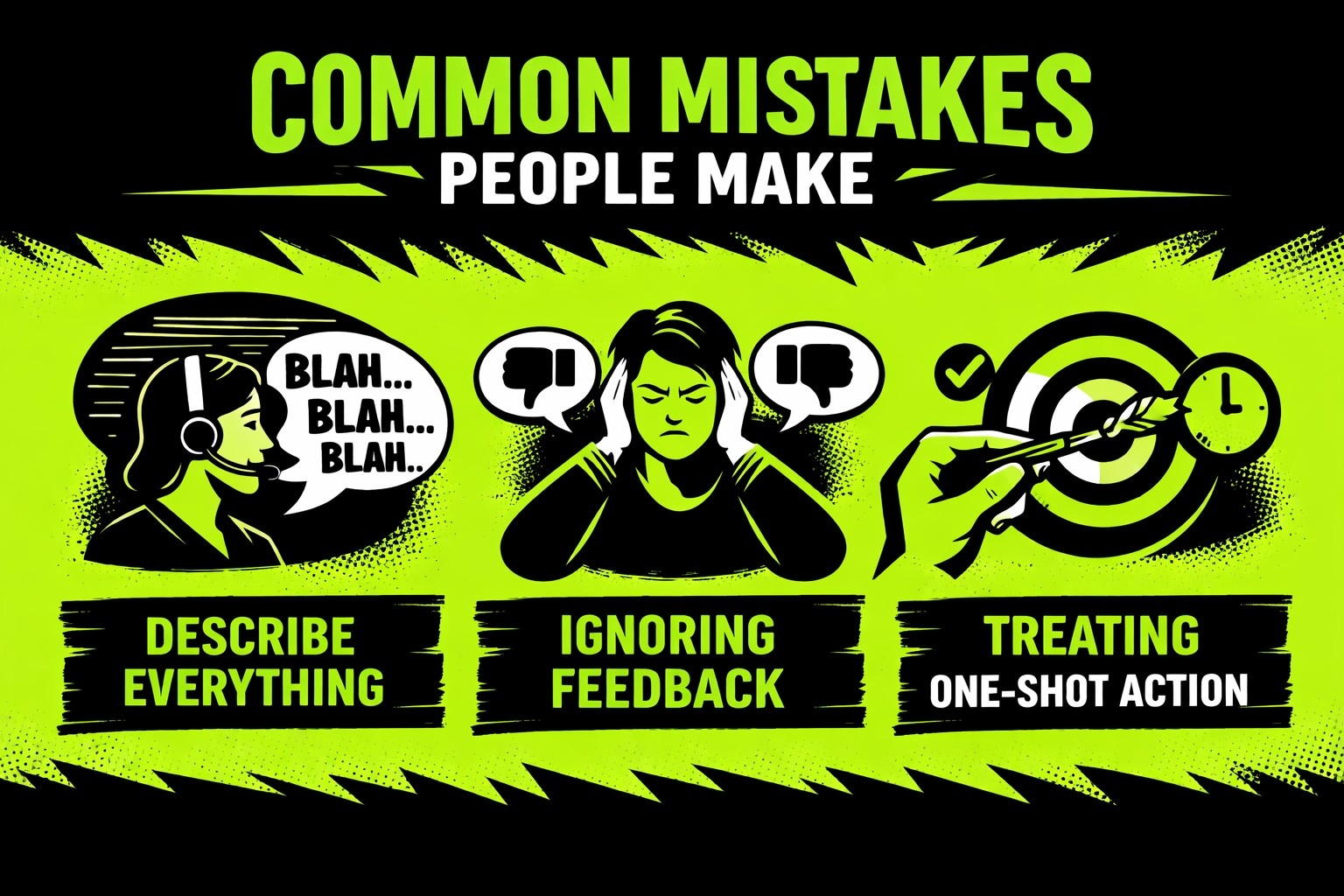
Common Mistakes People Make
- Trying to describe everything in a single query. Adding too many conditions, qualifiers, or ideas at once often makes the search less precise, not more. When a query tries to cover intent, format, audience, and constraints all at once, Google has to decide which parts matter and which can be ignored. The result is often a diluted set of results that only partially match what you had in mind.
- Ignoring the feedback from the results page. If the results do not line up with what you were expecting, it is usually a signal that the query needs adjustment. The mix of pages, formats, and angles on the results page tells you how Google interpreted your keywords. Treating that page as feedback, rather than a failure, helps you refine the search much faster.
- Treating search as a one-shot action. Keyword searching works best as a process, not a single attempt. Experienced searchers rarely get it perfect on the first try. They adjust wording, add or remove a term, or change the modifier based on what appears. Each iteration moves the search closer to the result they actually want.
Why This Still Works in an AI-Driven Search World
AI summaries and conversational search interfaces may look new, but they are still built on the same foundation. The answers they generate come from indexed pages that have been discovered, organized, and ranked using keyword-based systems. The layer on top has changed, but the underlying structure has not.
When you understand how keyword search works, it becomes easier to understand where AI-generated answers come from and why certain sources are selected while others are ignored. You start to see which pages are considered authoritative, which ones are treated as background, and how topics are framed before they ever reach an AI summary.
Keyword searching is not in competition with AI-driven search. It quietly supports it. The better you understand keyword-based discovery, the clearer the modern search landscape becomes.
Final Thoughts
Searching by only keywords is not a shortcut or an outdated habit. It is a practical skill.
It helps you control intent, reduce noise, and access deeper information. It trains you to think clearly about what you are actually looking for.
As search becomes more abstract and automated, keyword searching remains one of the most direct ways to stay grounded in how information is structured and discovered.
Google may speak in sentences now. It still listens best to keywords.