

Quick Summary: Small businesses can dramatically improve their SEO by focusing on three core areas: optimizing their Google Business Profile for local visibility, creating targeted content that answers customer questions, and ensuring their website’s technical foundation is solid. Most small businesses see measurable results within 3-6 months by prioritizing these fundamentals over complex tactics.
Search engine optimization remains one of the most cost-effective ways for small businesses to attract customers. But here’s the thing: SEO in 2026 looks different than it did even two years ago.
Google now handles 89.62% of all global searches, according to a March 2025 report from data research firm Statista. That dominance means getting found on Google isn’t optional—it’s essential for survival.
The challenge? Most small business owners don’t have time to become SEO experts. Budgets are tight, resources are limited, and the technical jargon can feel overwhelming.
This guide cuts through the noise. It focuses on what actually moves the needle for small businesses: practical strategies that drive real traffic without requiring a marketing degree or massive budget.
Why SEO Matters More Than Ever for Small Businesses
When potential customers need a product or service, their first instinct is to search online. Local searches often have high commercial intent—people are ready to buy, hire, or visit.
Unlike paid advertising, SEO builds long-term visibility. A well-optimized website continues attracting customers months and years after the initial work, without ongoing ad spend.
The competitive landscape has shifted, too. AI-powered search features like Google’s AI Overviews are changing how results appear, but the underlying principles remain consistent: create valuable content that genuinely helps people.
According to Google’s own documentation, focusing on visitor needs and providing unique, valuable content keeps businesses ahead regardless of how search evolves. That core goal hasn’t changed.
Grow Small Business With SEO
Improving SEO for small business requires a focused and scalable approach, and LENGREO builds strategies that generate consistent traffic and leads over time. The key is targeting the right opportunities and building authority step by step.
- local and niche SEO
- content and on page optimization
- lead generation systems
If you want to scale your business with SEO, contact LENGREO to get started.
Understanding How Search Engines Actually Work
Before diving into tactics, understanding the basics helps prioritize efforts effectively.
Search engines use automated programs called crawlers to discover and index web pages. When someone searches, algorithms analyze billions of pages to surface the most relevant, trustworthy results.
Google evaluates hundreds of signals, but several factors consistently matter most:
- Relevance: Does the content match what the searcher wants?
- Authority: Is the source credible and trustworthy?
- User experience: Is the page fast, mobile-friendly, and easy to navigate?
- Location: For local searches, proximity to the searcher matters significantly
The search landscape has evolved with AI. When AI Overviews appear in results, users clicked traditional links just 8% of the time, compared to 15% without AI summaries—a 46.7% drop, according to research cited in search industry analysis.
That doesn’t mean SEO is dead. It means tactics need adaptation. Businesses appearing in AI-generated summaries still gain visibility and authority, even if click patterns shift.
Start With Your Google Business Profile
For small businesses with physical locations or service areas, nothing delivers faster SEO impact than optimizing a Google Business Profile (formerly Google My Business).
This free tool puts business information directly in Google Search and Maps. When someone searches for services near them, well-optimized profiles appear prominently—often above traditional website results.
Setting Up and Optimizing Your Profile
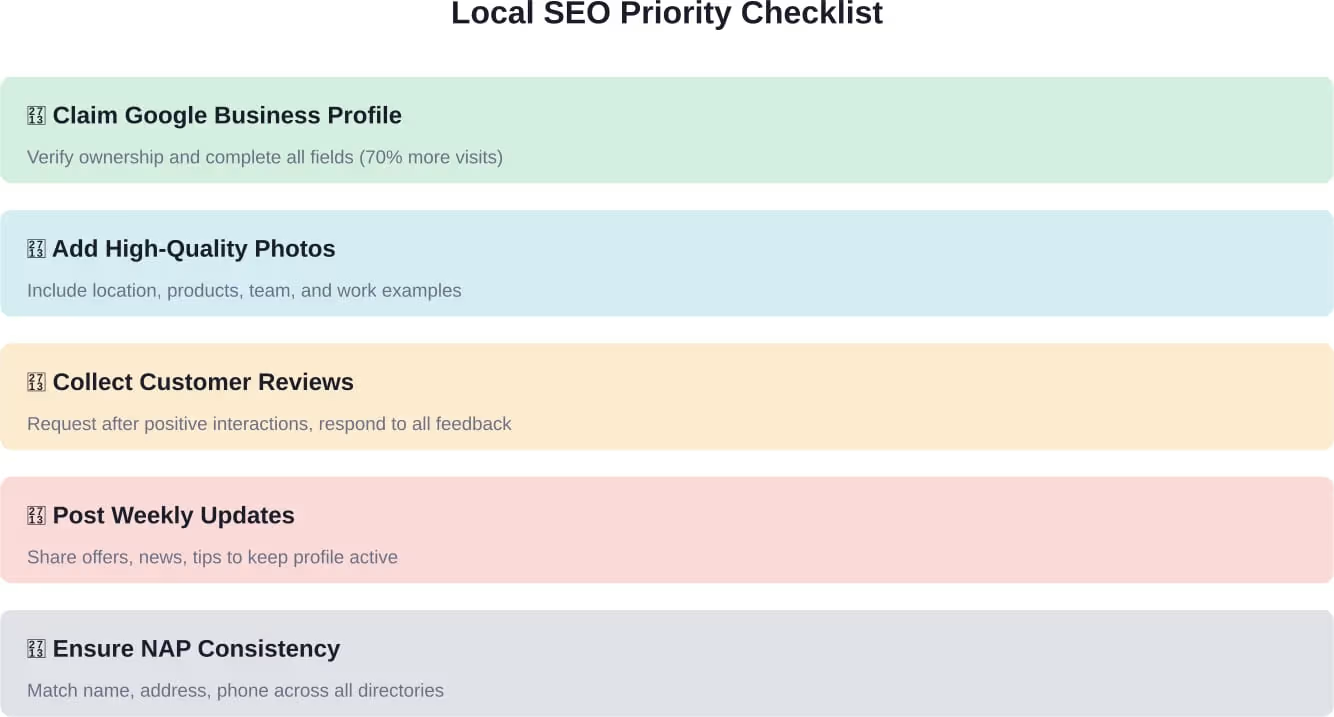
First step: claim and verify the listing if that hasn’t happened already. Google sends a verification code by mail or phone.
Complete every single field. Businesses with complete Google Business Profiles are 70% more likely to be visited by users. That means filling in:
- Accurate business hours (including holidays)
- Phone number and website
- Detailed business description using relevant keywords naturally
- Business categories (primary and secondary)
- Service areas or physical address
- Attributes (women-owned, wheelchair accessible, etc.)
Photos make a substantial difference. Add high-quality images of the location, products, team, and work. Businesses with photos receive more clicks and engagement than those without.
Getting and Managing Reviews
Reviews directly impact local search rankings. More reviews, particularly recent ones, signal active customer engagement to Google.
Create a simple process for requesting reviews after positive customer interactions. Send follow-up emails with a direct link to the review page.
Respond to every review—positive and negative. Thoughtful responses show potential customers that the business values feedback and handles issues professionally.
Regular Updates and Posts
Google Business Profiles allow posting updates, offers, and announcements. These appear in search results and keep the profile active.
Post weekly if possible: new products, special offers, events, or helpful tips related to the business. Each post provides fresh content for Google to index.
Keyword Research: Finding What Customers Actually Search
Effective SEO starts with understanding exactly what potential customers type into search engines. Guessing wastes time and effort.
Keyword research reveals the specific phrases people use, how often they search them, and how competitive those terms are.
Tools for Finding Keywords
Several free and paid tools help identify valuable keywords:
- Google Search Console: Shows which keywords already drive traffic to the site
- Google’s autocomplete: Start typing a search and see what Google suggests—these are common searches
- People Also Ask: Questions appearing in search results reveal related topics customers care about
- Competitor research: Analyze which keywords competitors rank for
Focus on keywords with clear commercial or local intent. Someone searching “best Italian restaurant downtown Seattle” is ready to make a decision, unlike someone searching “what is Italian food.”
Long-Tail Keywords: The Small Business Advantage
Competing for broad terms like “pizza” or “plumber” is nearly impossible for small businesses. National chains and established sites dominate those searches.
Long-tail keywords—more specific phrases with lower search volume—offer better opportunities. Instead of “accounting,” target “small business tax accountant in Austin” or “CPA for freelancers.”
These longer phrases may have fewer monthly searches, but they attract highly qualified traffic. Conversion rates on long-tail keywords typically exceed broader terms because the searcher’s intent is clearer.
Local Keywords for Local Businesses
Adding location modifiers transforms generic keywords into local opportunities. “Emergency dentist” becomes “emergency dentist near downtown Portland.”
Include neighborhood names, nearby landmarks, and surrounding areas the business serves. Someone in a specific neighborhood often searches using that neighborhood name.
Creating Content That Ranks and Converts
Content remains the foundation of SEO. Without valuable, relevant content, technical optimization alone won’t drive meaningful results.
But content for small businesses shouldn’t mean hiring a full-time writer or publishing daily blog posts. Strategic content creation delivers better ROI.
Answer Real Customer Questions
The most effective content directly answers questions customers actually ask. Those questions become:
- Service or product pages
- FAQ sections
- Blog posts or guides
- How-to tutorials
Listen to questions that come up during sales calls, in emails, or from customer service interactions. Each question represents a potential search someone else is conducting.
For example, a kitchen countertop maker might answer “Are marble countertops still in?” with an article on current countertop trends. That targets a specific search while showcasing expertise.
Prioritize Depth Over Frequency
One comprehensive, well-researched article per month outperforms five shallow posts. Google’s algorithms increasingly reward content depth and expertise.
Comprehensive doesn’t mean lengthy for its own sake. It means thoroughly covering a topic, anticipating follow-up questions, and providing actionable information.
According to Google’s documentation on creating content for AI experiences, the focus should be on unique, non-commodity content that provides genuine value. Content that works in traditional search also performs in AI-generated summaries.
Optimize Content Structure
Even excellent content fails if it’s poorly structured. Making content scannable and accessible improves both SEO and user experience:
- Use descriptive headings and subheadings (H2, H3 tags)
- Keep paragraphs short—two to three sentences maximum
- Include bullet points and numbered lists where appropriate
- Add images with descriptive alt text
- Use bold text sparingly to highlight key points
Write naturally. Keyword stuffing hurts more than it helps. Include target keywords in the title, first paragraph, a few subheadings, and naturally throughout—but prioritize readability.
| Content Type | Best For | Update Frequency |
|---|---|---|
| Service Pages | Describing what the business offers with local keywords | Annually or when services change |
| Blog Posts | Answering customer questions, showcasing expertise | 1-4 posts per month |
| FAQ Pages | Targeting question-based searches | Quarterly additions |
| Location Pages | Businesses serving multiple areas | Annually or when expanding |
| Case Studies | Demonstrating results and building trust | Quarterly (2-4 per year) |
Technical SEO Fundamentals
Technical SEO ensures search engines can properly crawl, index, and understand website content. While it sounds complex, several fundamental fixes deliver significant impact.
Mobile Optimization Is Non-Negotiable
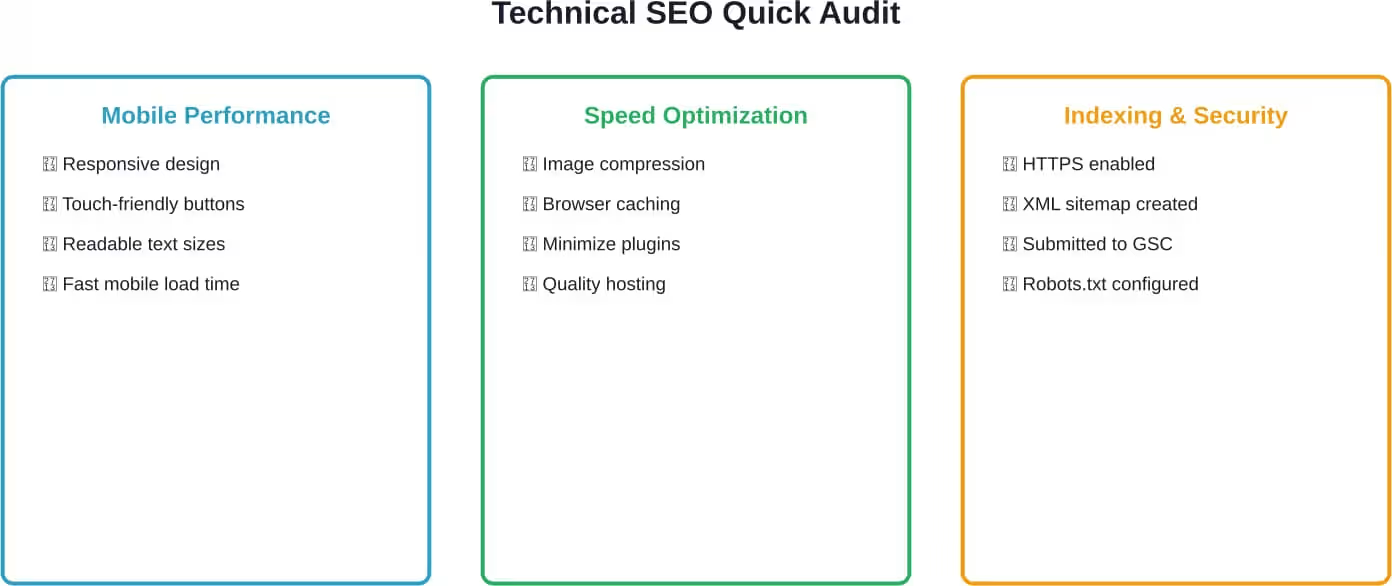
Google uses mobile-first indexing, meaning it primarily evaluates the mobile version of websites for ranking. If a site doesn’t work well on mobile devices, rankings suffer across all devices.
Test the site on actual mobile devices. Pages should:
- Load quickly (under 3 seconds)
- Display properly without horizontal scrolling
- Have buttons and links large enough to tap easily
- Use readable text sizes without zooming
Most modern website platforms and themes are mobile-responsive by default, but custom code or older templates may have issues.
Site Speed Matters
Slow websites frustrate users and rank lower. Google explicitly considers page speed as a ranking factor.
Common speed improvements include:
- Compressing and optimizing images (largest culprit for most sites)
- Enabling browser caching
- Minimizing unnecessary plugins or scripts
- Using a content delivery network (CDN) for faster global loading
- Choosing quality hosting (cheap hosting often means slow servers)
Google’s free PageSpeed Insights tool identifies specific issues and suggests fixes.
HTTPS Security
Websites without HTTPS (the secure protocol) display “Not Secure” warnings in browsers. That warning alone drives visitors away.
HTTPS also provides a ranking boost. Installing an SSL certificate is often free through hosting providers and takes minimal technical knowledge.
XML Sitemap and Robots.txt
An XML sitemap lists all important pages on a website, helping search engines discover and index content efficiently. Most website platforms generate sitemaps automatically.
Submit the sitemap through Google Search Console to ensure Google knows about all pages.
The robots.txt file tells search engines which pages not to crawl (like admin pages or duplicate content). Most sites need only a basic robots.txt file, which website platforms typically create automatically.
Building Local Citations and Backlinks
Search engines measure authority partly through external signals: citations (mentions of the business name, address, and phone number) and backlinks (other websites linking to yours).
NAP Consistency Across Directories
NAP stands for Name, Address, Phone number. Consistency across all online directories builds trust with search engines.
If a business listing shows “123 Main St.” on one directory and “123 Main Street” on another, search engines may view them as different entities, diluting SEO value.
Ensure the business is listed consistently on:
- Google Business Profile
- Yelp
- Industry-specific directories
- Chamber of Commerce sites
- Local business associations
Claim and update listings on all relevant directories. Even if they don’t drive direct traffic, they strengthen local SEO signals.
Earning Quality Backlinks
Backlinks from reputable websites signal authority and trustworthiness. But quality matters far more than quantity—one link from a respected industry publication outweighs dozens from low-quality directories.
Realistic link-building strategies for small businesses:
- Local partnerships: Collaborate with complementary local businesses and link to each other
- Local news and press: Pitch newsworthy stories to local media outlets
- Industry associations: Join relevant organizations that list member websites
- Guest contributions: Write articles for industry blogs or local publications
- Sponsor local events: Event websites often link to sponsors
- Create linkable assets: Original research, useful tools, or comprehensive guides others want to reference
Avoid paying for links or participating in link schemes. Google penalizes manipulative link-building, and penalties can devastate rankings.
Measuring SEO Performance
SEO without measurement is guesswork. Tracking the right metrics reveals what’s working and where to adjust efforts.
Essential SEO Metrics
Google Search Console provides free, invaluable data directly from Google:
- Impressions: How often the site appears in search results
- Clicks: How many people click through to the site
- Average position: Where the site ranks for various queries
- Click-through rate (CTR): Percentage of impressions that result in clicks
Google recently introduced weekly and monthly views in Search Console, making it easier to identify trends beyond daily fluctuations.
Google Analytics tracks on-site behavior:
- Organic traffic: Visitors arriving from search engines
- Bounce rate: Percentage of visitors who leave immediately
- Pages per session: How many pages visitors view
- Conversion rate: Percentage completing desired actions (purchases, form fills, calls)
Setting Realistic Expectations
SEO is a long-term strategy. Ranking improvements rarely happen overnight.
Most businesses start seeing meaningful results within three to six months of consistent effort. Competitive industries may take longer; less competitive niches may see faster gains.
Track progress monthly rather than daily. Search rankings fluctuate naturally—daily position checks create unnecessary stress. Monthly trends matter more than individual days.
Adapting to AI and Evolving Search
The search landscape is changing with AI-powered features like Google’s AI Overviews and new AI search modes. But here’s what hasn’t changed: fundamental quality principles.
According to Google’s official guidance on performing well in AI experiences, the same core advice applies: focus on visitors and provide unique content that meets their needs.
The overlap between traditional SEO and optimization for AI search (sometimes called GEO—Generative Engine Optimization) is approximately 90%, according to Amsive.
Optimizing for AI-Generated Results
Content appearing in AI-generated summaries tends to share characteristics:
- Clear, direct answers to specific questions
- Well-structured information using headings and lists
- Factual accuracy with credible sources
- Comprehensive coverage of topics
- Natural, conversational language
Essentially, the same qualities that make content valuable to human readers also make it useful for AI systems to reference.
One shift worth noting: providing clear, concise answers early in content matters more. AI systems often pull from introductory paragraphs or direct answer sections.
Common SEO Mistakes Small Businesses Make
Knowing what to avoid saves time and prevents setbacks.
- Neglecting local optimization: Small businesses with physical locations that ignore Google Business Profile and local SEO miss their biggest opportunity.
- Targeting overly competitive keywords: Trying to rank for broad terms dominated by national brands wastes effort. Focus on niche, long-tail, and local keywords instead.
- Creating thin content: Publishing short, shallow content that doesn’t truly help visitors won’t rank and won’t convert.
- Ignoring technical issues: Slow load times, mobile problems, or indexing errors undermine all other SEO efforts.
- Buying links or using black-hat tactics: Shortcuts lead to penalties. Stick with legitimate strategies.
- Expecting instant results: SEO takes time. Impatience leads to abandoning strategies before they deliver results.
- Not tracking performance: Without measurement, there’s no way to know what’s working or where to improve.
Prioritizing SEO Efforts With Limited Resources
Small business owners wear many hats. Dedicating hours daily to SEO isn’t realistic.
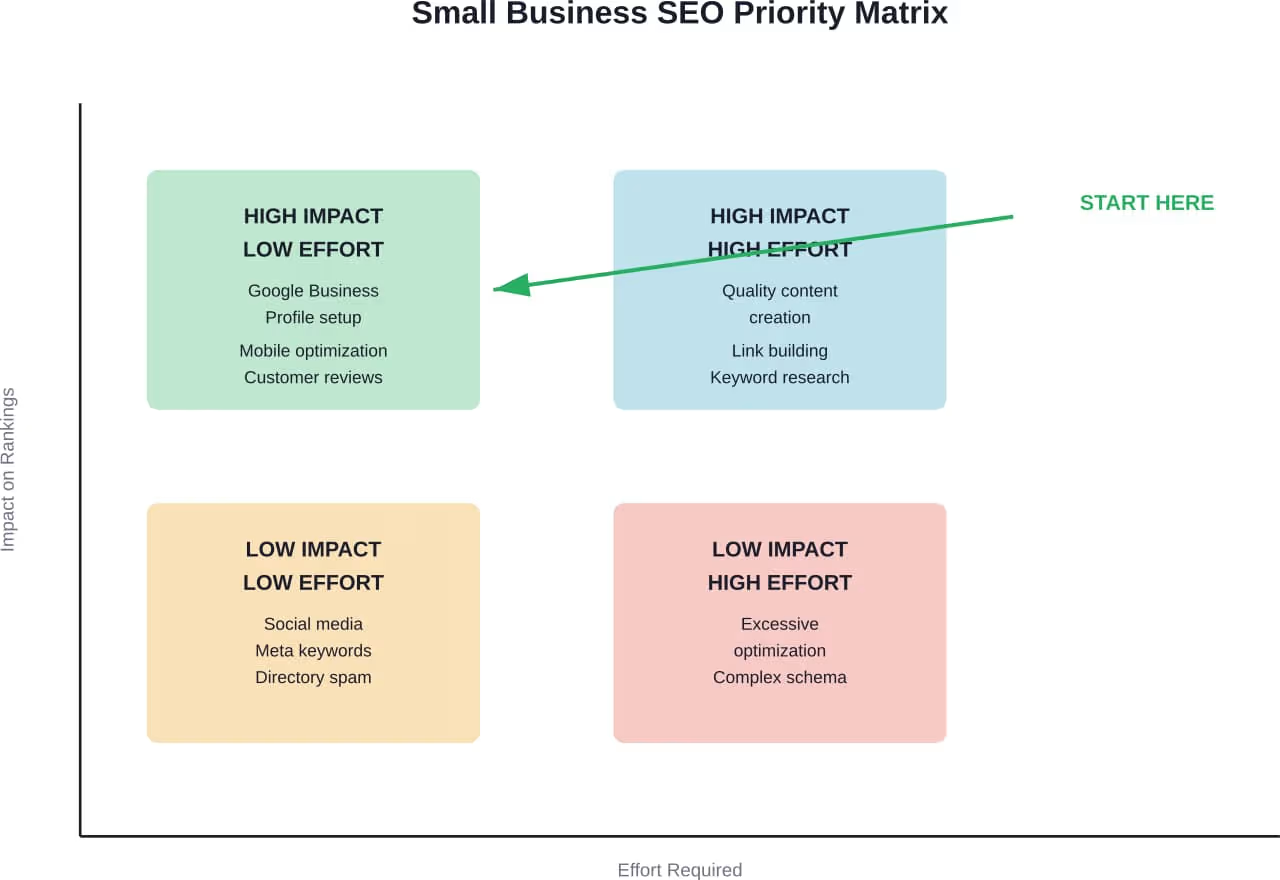
The key is prioritization: focusing on high-impact activities rather than trying to do everything.
The 80/20 Approach
Roughly 20% of SEO activities drive 80% of results for small businesses. That 20% typically includes:
- Optimizing Google Business Profile completely
- Creating 1-2 pieces of high-quality content monthly
- Ensuring the website is mobile-friendly and fast
- Building consistent local citations
- Collecting customer reviews regularly
Master those fundamentals before worrying about advanced tactics like schema markup or international SEO.
When to DIY and When to Hire Help
Many SEO fundamentals are learnable and manageable for business owners or staff:
- Google Business Profile management
- Content creation (especially for service businesses with expertise to share)
- Basic keyword research
- Monitoring Google Search Console and Analytics
Technical SEO and link building often benefit from professional help, especially for businesses without technical staff.
When hiring, look for transparent providers who explain their work and avoid guarantees of specific rankings (no one can guarantee rankings—that’s a red flag).
Moving Forward With SEO
SEO for small businesses doesn’t require massive budgets or technical expertise. It requires consistency, patience, and focus on fundamentals.
Start with the highest-impact activities: optimize the Google Business Profile, ensure the website is fast and mobile-friendly, and create content that genuinely helps potential customers.
Track progress monthly using Google Search Console and Analytics. Adjust based on what the data reveals rather than guessing.
Remember that competitors are also investing in SEO. Staying competitive means treating SEO as an ongoing process, not a one-time project.
The businesses that win at SEO aren’t necessarily those with the biggest budgets—they’re the ones that consistently provide value, earn trust, and make their expertise discoverable when customers are searching.
Ready to improve search visibility? Start with one action today: claim and optimize that Google Business Profile, conduct keyword research for one service offering, or audit the website’s mobile experience. Small, consistent steps compound into significant results over time.